
Lanceleaf Blanketflower (Gaillardia aestivalis)
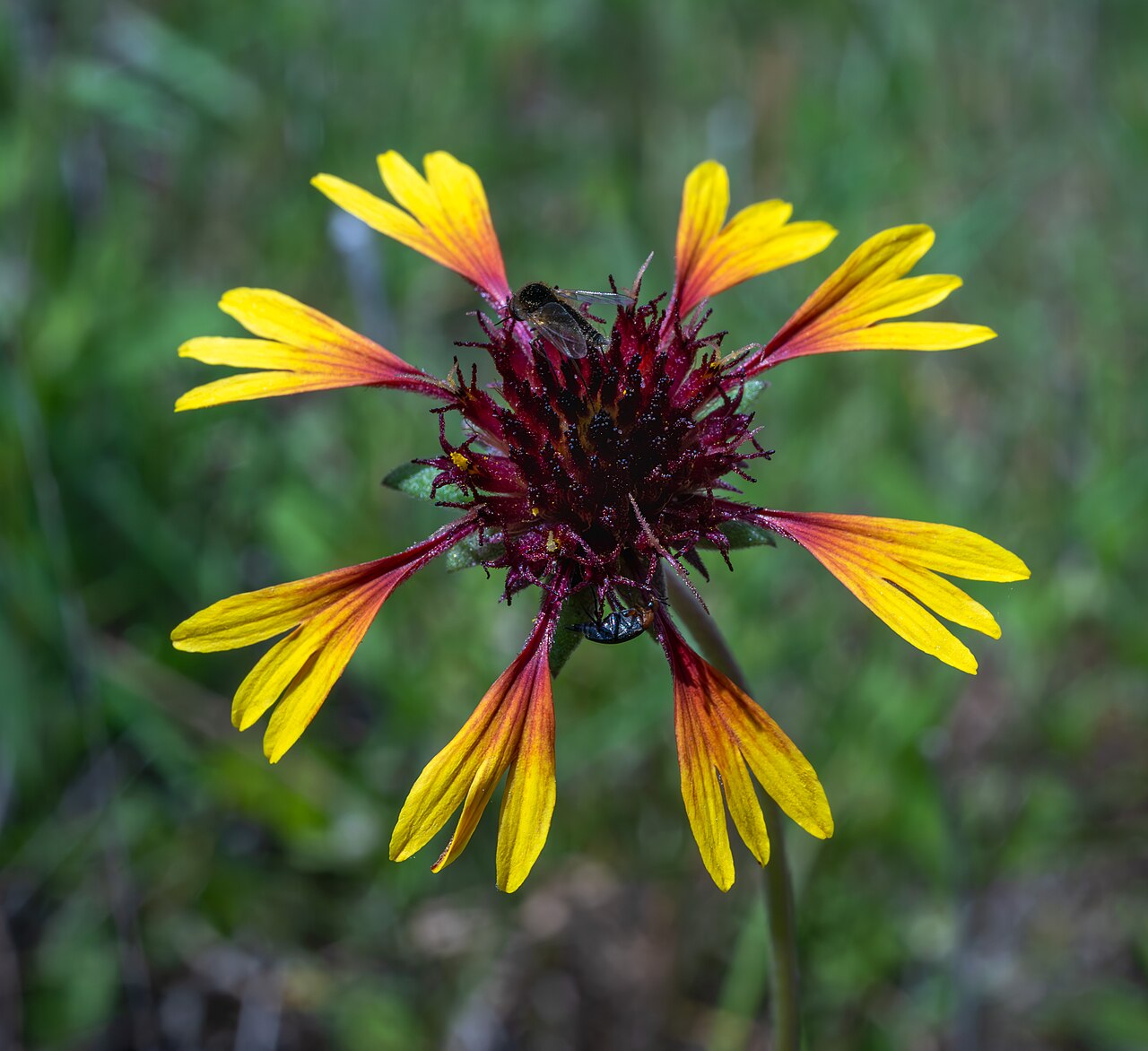
Gaillardia aestivalis, known as Lanceleaf Blanketflower, sand blanketflower or prairie gaillardia, is a native wildflower of dry, sandy, sunny places across the southeastern and south-central United States. From late spring into fall it carries long-stalked flower heads with a domed, often reddish-purple center and, usually, a ring of three-toothed rays that may be yellow, red and yellow, purple, or nearly white. Some heads have no rays at all. It is an annual to short-lived perennial in the aster family (Asteraceae), 1 to 2 feet tall.
It is a close cousin of the much more familiar Indian Blanket (Gaillardia pulchella), the coastal blanketflower sold in almost every Florida garden center. Lanceleaf blanketflower is an inland plant of sandhills, scrub edges, sandy pinelands and old fields, and it is better adapted than its coastal cousin to deep, dry, infertile sand. The Florida Native Plant Society calls it smooth-headed blanket flower, a name that points to the main technical difference between the two species.
Lanceleaf blanketflower is less often sold than Indian blanket, but seed is available from some native seed suppliers and plants appear at native plant sales. This guide covers how to identify it, where it grows in Florida and beyond, and how to grow it in a sunny, sandy wildflower garden for native bees and butterflies.
Identification
Lanceleaf blanketflower looks like a slender, more delicate Indian blanket. The best clues are its narrow, mostly basal leaves, its long, nearly leafless flower stalks, and its smooth flower-head base.
Stems & Growth Habit
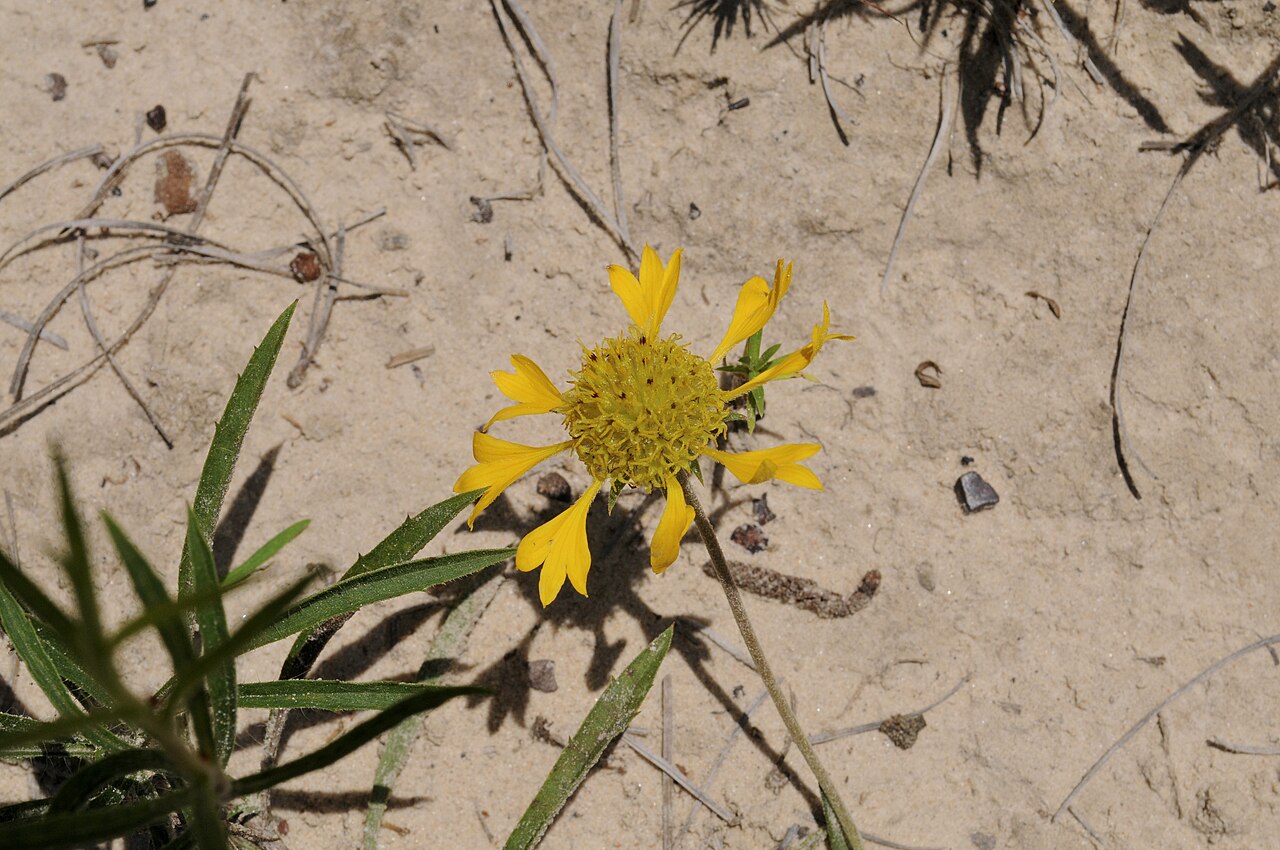
Plants are annual or short-lived perennials, with one to several stems from a taproot, usually 1 to 2 feet tall. Stems are slender, branching, and covered in soft hairs. Most of the leaves are on the lower part of the plant, and the upper stems are long and nearly bare beneath each flower head.
Leaves
The leaves are alternate, 2 to 4 inches long, lance-shaped to oblanceolate, and soft-hairy on both surfaces. They are usually untoothed or have a few shallow teeth. Lower leaves are larger than upper ones, and the upper stem leaves are small and few. The narrow leaves give the species its common name.
Flowers
Each flower head is about 1 to 2 inches across. When present, the 6 to 10 ray florets are wedge-shaped and cut into three lobes at the tip, like those of other blanketflowers. Ray color is highly variable: yellow, red with yellow tips, purple-red, or white to pink. The central disk is rounded to globe-shaped and usually reddish-purple, sometimes yellow. Many populations, especially of var. aestivalis, regularly produce heads without rays, which look like small purple buttons.
The most reliable technical difference from Indian blanket is the receptacle, the base of the head beneath the disk florets. In G. aestivalis it lacks the long bristles found in G. pulchella, which is why it is called “smooth-headed.”
Fruit & Seeds
After flowering, the disk becomes a round seed head of small, hairy achenes, each topped with scales (a pappus) that help it catch the wind. Seeds are dispersed over the season.
Varieties
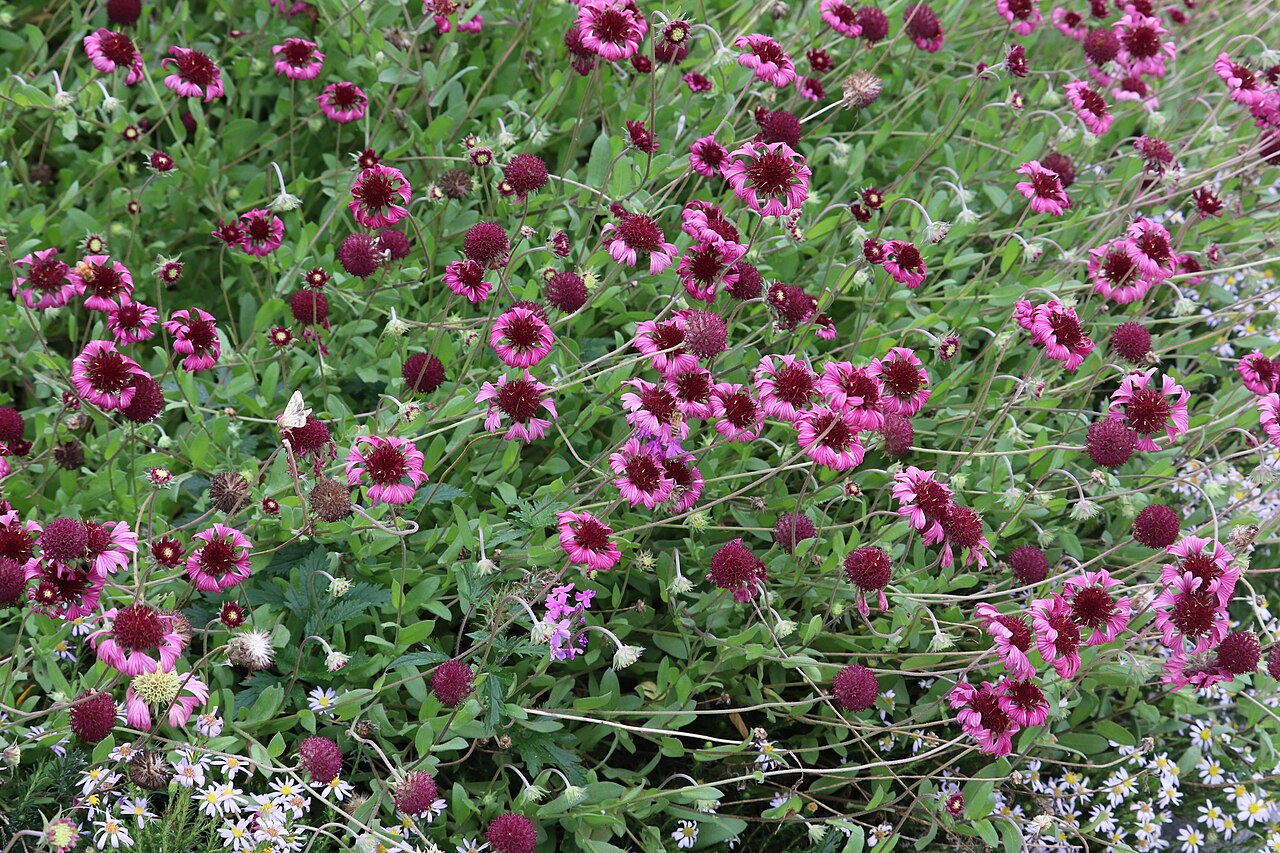
Three varieties are usually recognized. Var. aestivalis is the widespread form, including in Florida. Var. flavovirens, with all-yellow heads, grows mainly in eastern Texas and nearby states. Var. winkleri, Winkler’s blanketflower, is a rare variety with white to pink or purple rays that grows in a few counties of the southeast Texas pinelands; it has become popular in gardens as a source of colorful selections.
Quick Facts
| Scientific Name | Gaillardia aestivalis (accepted by USDA PLANTS and the Atlas of Florida Plants; syn. G. lanceolata) |
| Family | Asteraceae (aster family) |
| Plant Type | Annual to short-lived perennial wildflower |
| Mature Height | 1–2 ft |
| Mature Spread | About 1 ft |
| Growth Rate | Fast |
| Sun Exposure | Full sun to part sun |
| Water Needs | Low; drought tolerant once established |
| Soil Type | Deep, well-drained sand or sandy loam |
| Soil pH | About 5.0–7.0 (acidic to neutral) |
| Bloom Time | April–October; mainly summer and fall in Florida |
| Flower Color | Variable: yellow, red and yellow, purple-red, white or pink rays; reddish-purple or yellow disk |
| Fall Color | None notable |
| Fruit | Round head of small hairy achenes |
| Deer Resistant | Moderate; the hairy leaves are not a favorite |
| USDA Hardiness Zones | 6–9 |
Native Range
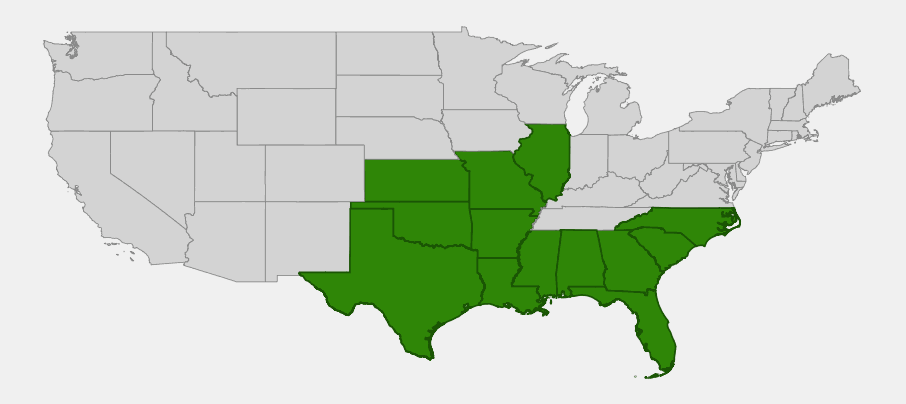
Lanceleaf blanketflower is native to the southeastern and south-central United States. USDA PLANTS and the Lady Bird Johnson Wildflower Center record it from 13 states: North Carolina, South Carolina, Georgia, Florida, Alabama, Mississippi, Louisiana, Arkansas, Missouri, Illinois, Kansas, Oklahoma and Texas. It is most common on the sandy Coastal Plain from the Carolinas to east Texas and in sandy parts of the Ozarks and southern Great Plains, and it is rare at the northern edge of its range in Illinois and Kansas.
In Florida, the Atlas of Florida Plants lists it as native, mainly in the Panhandle and the northern half of the peninsula. Observations are most frequent around Tallahassee, Bristol and the Apalachicola National Forest region, in Jackson County, and along the Gulf Coast at Panacea, with scattered records south to Volusia and Orange counties near Orlando. It is absent from south Florida, where Indian blanket is the common blanketflower of open sandy sites.
Its habitats are open, dry and sandy: longleaf pine sandhills, sandy oak woodlands, the edges of scrub, dry sandy roadsides and old fields. It often appears after soil disturbance or fire, and it can be common along sandy roadsides, which is why FNPS lists ruderal sites among its habitats.
📋 Regional plant lists featuring Lanceleaf Blanketflower: North & South Florida · Alabama, Georgia & Mississippi · North & South Carolina · Arkansas, Louisiana, Eastern Oklahoma & Eastern Texas · Illinois, Iowa & Missouri · Nebraska, Kansas & Eastern Colorado
Growing & Care Guide
Lanceleaf blanketflower is easy to grow in the right place: full sun and sharply drained, sandy soil that many other garden flowers find too poor and dry. It is less common in the nursery trade than Indian blanket, so look for plants at native plant sales or grow it from seed sold by native seed suppliers. Choose seed or plants from sources within its native range where possible, especially in Florida.
Light
Give it full sun. It tolerates part sun, such as a few hours of shade in the afternoon, but in shade it flops and flowers poorly.
Soil & Water
Plant in deep, well-drained sand or sandy loam. Poor, dry soil suits it well, and rich or heavily watered soil makes it short-lived and prone to root rot. Water new plants and seedlings until they are established; afterward it rarely needs watering except during long droughts. It is not salt tolerant, so it is a poor choice for beachfront gardens, where Indian blanket is a better fit.
Planting Tips
Sow seed in fall or early spring directly on bare, loosened sand and press it in lightly; do not bury it deeply. Container plants can go in spring through early fall, 12 inches apart. Grow it in drifts with other sandhill wildflowers such as spotted beebalm, butterfly weed, blazing stars and goldenasters, where it can reseed into gaps.
Pruning & Maintenance
Deadheading extends the bloom season, but leave some heads to ripen if you want the plant to reseed. Because individual plants are short-lived, reseeding is how a patch persists. Cut back or mow tired plants in late fall or winter, and avoid heavy mulch, which prevents seedlings from establishing.
Propagation
It is easiest to grow from seed, which germinates readily in warm soil without special treatment. Seedlings often bloom the first year. Avoid planting cultivated Indian blanket or hybrid blanketflowers nearby if you want to keep a local population true to type, as Gaillardia species can hybridize.
Landscape Uses
- Sandhill and dry meadow gardens: thrives in poor, deep sand in full sun
- Pollinator gardens: long bloom season and special value to native bees
- Roadside and old-field plantings: reseeds readily on open, disturbed sandy soil
- Sandhill restoration: part of the diverse wildflower layer of longleaf pine sandhills within its range
- Containers and rock gardens: compact enough for a sunny pot with sandy, fast-draining mix
Wildlife & Ecological Value
Like other blanketflowers, lanceleaf blanketflower is a long-blooming source of nectar and pollen on dry, sandy sites where flowers can be scarce in late summer.
For Pollinators
The Xerces Society, through the Lady Bird Johnson Wildflower Center, lists it as having special value to native bees. Its open heads attract many kinds of bees, including bumble bees, sweat bees and leafcutter bees, as well as butterflies, skippers, wasps and beetles. FNPS also notes visits by hummingbirds. Because it blooms over many months, it bridges gaps between spring and fall wildflowers.
For Birds
After flowering, the seed heads are eaten by seed-eating birds. FNPS mentions chickadees, titmice and warblers, and finches and sparrows also feed on blanketflower seeds. Leaving the seed heads standing into fall provides food.
For Mammals
The hairy leaves are not a preferred food for deer or rabbits, although young plants are sometimes browsed.
Ecosystem Role
In sandhills, lanceleaf blanketflower is one of many wildflowers that bloom between the longleaf pines and wiregrass, adding to the diversity that supports a rich community of insects. It is quick to colonize bare sand after fire or disturbance, which makes it a useful early wildflower in restoration plantings.
Cultural & Historical Uses
The genus Gaillardia was named in honor of Gaillard de Charentonneau, an 18th-century French magistrate and patron of botany. The species name aestivalis means “of summer,” a reference to its long summer bloom. Older references often call this species Gaillardia lanceolata, a name that survives in the common name lanceleaf blanketflower.
The common name blanketflower is usually explained as a comparison between the bold, patterned flowers and the colorful woven blankets of the American Southwest. The name was first applied to its western and coastal relatives and later extended to the whole genus.
Var. winkleri, a rare variety of the southeast Texas sandhills, has become a garden plant in recent decades. Seed strains with white, pink and purple flowers are now sold, bringing attention to a variety that is limited in the wild to only a few counties.
Frequently Asked Questions
How is lanceleaf blanketflower different from Indian blanket?
Lanceleaf blanketflower (G. aestivalis) is an inland plant of dry sand with narrow, mostly basal leaves, and its flower-head base lacks long bristles. Indian blanket (G. pulchella) is a bushier, leafier coastal plant with bristly receptacles and usually red-and-yellow rays. Indian blanket is much more common in nurseries.
Is lanceleaf blanketflower perennial?
It is an annual to short-lived perennial. Individual plants usually last one to a few years, but a patch persists by reseeding if the soil is left open.
Why do some flowers have no petals?
Many lanceleaf blanketflower plants produce heads without ray florets, so they look like small purple buttons. This is normal for the species, especially var. aestivalis.
Does it need good soil?
No. It prefers poor, deep, well-drained sand. Rich soil and frequent watering shorten its life and can cause root rot.
Where can I buy lanceleaf blanketflower?
It is less common than Indian blanket. Check native seed suppliers, native plant society sales and native nurseries in the Southeast and Texas. Florida gardeners should look for Florida-sourced seed.

Looking for a nursery that carries Lanceleaf Blanketflower?
Browse our native plant nursery directory: Alabama & Arkansas · Florida & Georgia · Illinois & Kansas · Louisiana, Mississippi & Missouri · North Carolina & Oklahoma · South Carolina & Texas