
Coastalplain Chaffhead (Carphephorus corymbosus)
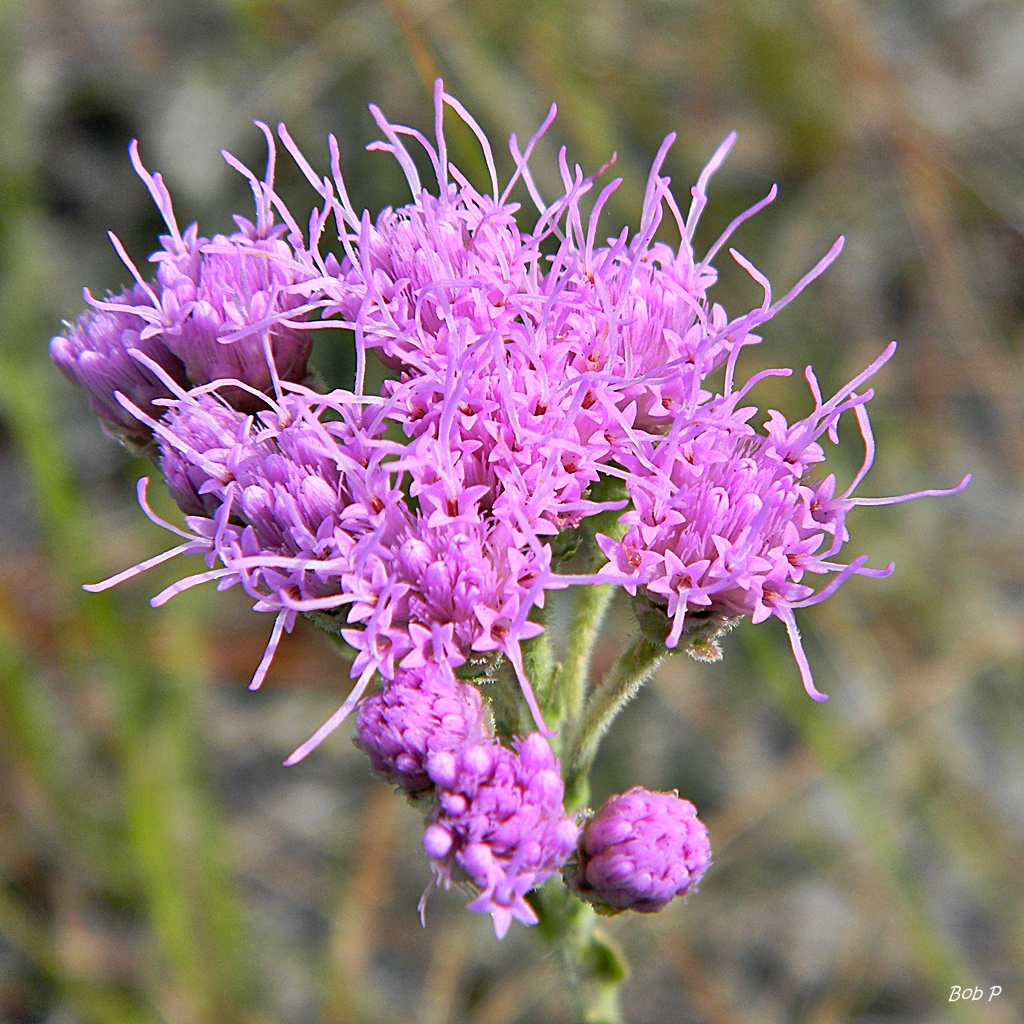
Carphephorus corymbosus, known as Coastalplain Chaffhead or Florida paintbrush, is a showy fall wildflower of the sandy pinelands of Florida, southern Georgia and coastal South Carolina. From late summer into fall, its sturdy stems, up to about 4 feet tall, are topped with broad, flat-topped clusters of rounded, bright pink-purple to lavender flower heads that look like small paintbrushes dipped in color. It belongs to the aster family (Asteraceae), in the same tribe as blazing stars and Joe-Pye weeds.
The name chaffhead refers to the small, papery scales (chaff) among the florets on the flower head. Carphephorus comes from the Greek for “chaff-bearing”, and corymbosus describes the flat-topped flower cluster, a corymb. Florida paintbrush is the name most Floridians know, and it suits the way the flowers seem to paint whole flatwoods purple after a good fire year. It is not related to the Indian paintbrushes (Castilleja).
Coastalplain chaffhead is one of the best native wildflowers for attracting butterflies in Florida, and it is increasingly available from native plant nurseries and wildflower seed growers. This guide covers how to recognize it, where it grows, how to grow it and why it matters to pollinators in pine flatwoods and sandhills.
Identification
Several chaffheads and their relatives grow in the southeastern pinelands. Coastalplain chaffhead stands out for its tall stems, broad, flat-topped clusters and relatively large, bright pink-purple heads.
Stems & Leaves
It is a perennial herb with a basal rosette of leaves and one or several upright flowering stems 1½ to 4 feet tall. The basal leaves are spoon-shaped to narrowly oblanceolate, about 2 to 8 inches long, and somewhat thick. Stem leaves are smaller and become narrower and scale-like toward the top. Stems and leaves are covered with short hairs and tiny glands. Outside the flowering season, the plant is easily overlooked as a low rosette in the grass.
Flowers
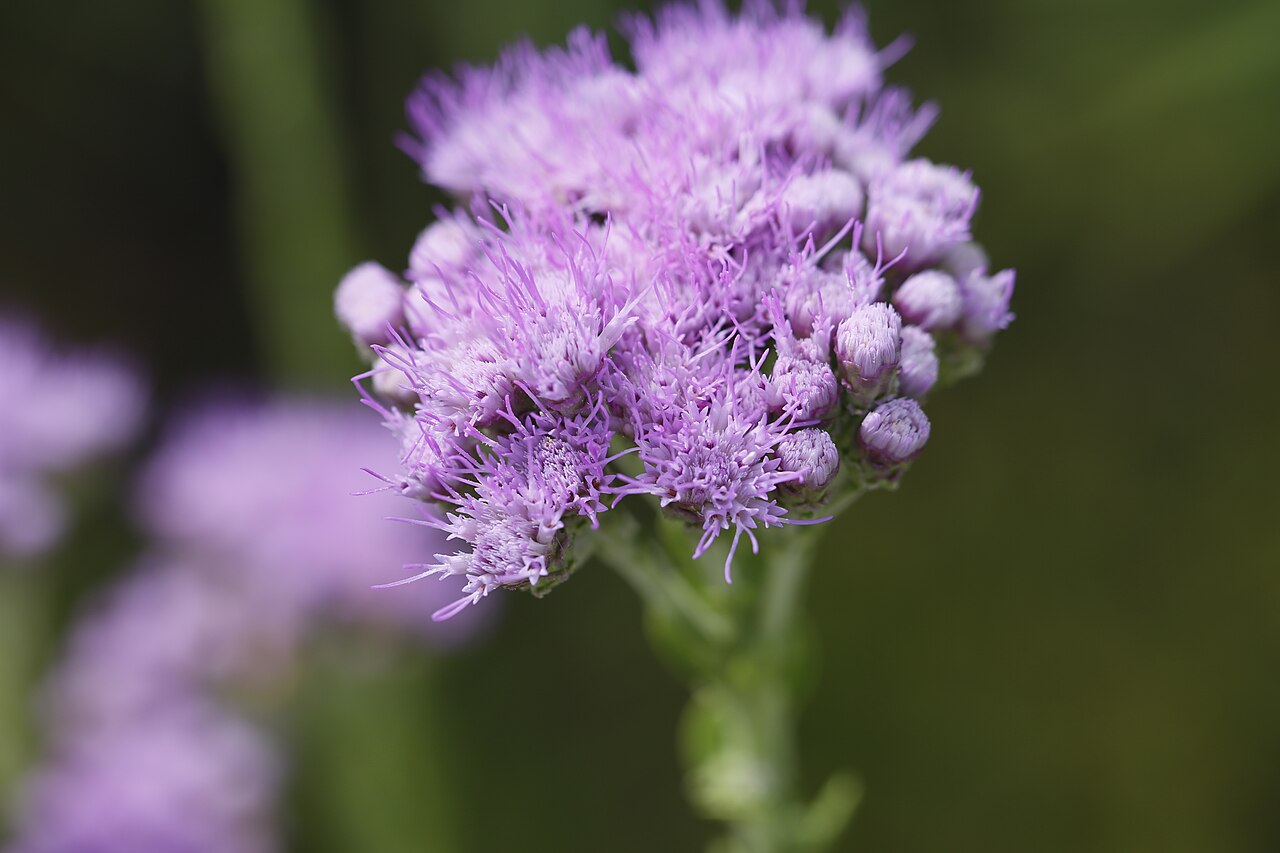
Flowers appear from late summer through fall, mostly August to November, sometimes into December in south Florida. The stems end in a broad, flat-topped or slightly rounded cluster of many flower heads. Each head is about ½ inch across and made only of disc florets, with no petal-like rays. The florets are bright pinkish purple to lavender, with long, protruding, thread-like styles. The bracts beneath the head are in several overlapping rows and are often purplish and hairy.
Coastalplain chaffhead can be confused with hairy chaffhead (C. paniculatus), which has a narrow, elongated flower cluster and smaller heads, and with vanillaleaf (C. odoratissimus), which has very large, smooth basal leaves with a vanilla scent and many small, pale heads. Blazing stars (Liatris) have similar flowers but carry them in long spikes.
Fruit & Seeds
After flowering, each floret produces a small, ribbed seed-like fruit (cypsela) tipped with a tuft of tan bristles (pappus). The seeds ripen in late fall and early winter and are spread by the wind.
Root
Plants grow from a short, thick rootstock with fibrous roots. They survive fire underground, then send up new leaves and often flower more heavily in the following season.
Quick Facts
| Scientific Name | Carphephorus corymbosus |
| Family | Asteraceae (aster family) |
| Plant Type | Herbaceous perennial wildflower |
| Mature Height | 1.5–4 ft in flower |
| Mature Spread | 1–1.5 ft |
| Growth Rate | Moderate |
| Sun Exposure | Full sun to light shade |
| Water Needs | Low to moderate; drought tolerant once established |
| Soil Type | Well-drained acidic sand |
| Soil pH | About 4.5–6.0 |
| Bloom Time | August–November (sometimes into December in south Florida) |
| Flower Color | Pinkish purple to lavender |
| Fall Color | None; basal rosette persists through winter |
| Fruit | Small cypsela with a bristly pappus |
| Deer Resistant | Moderately; occasionally browsed |
| USDA Hardiness Zones | 8–10 |
Native Range
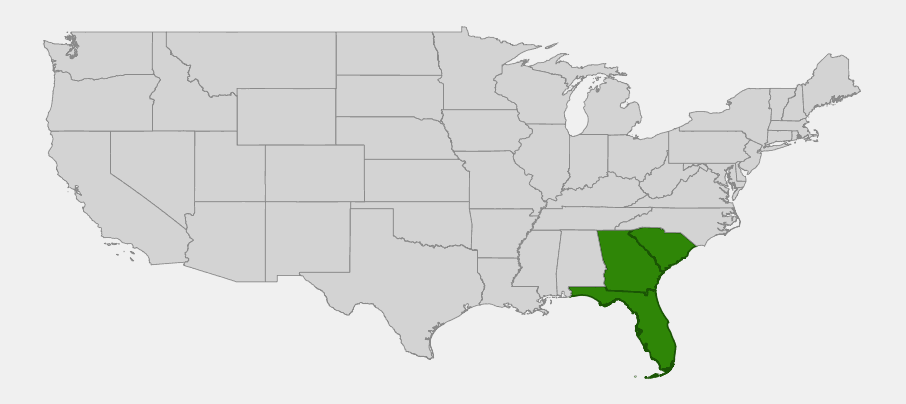
Coastalplain chaffhead is a Southeastern Coastal Plain endemic. USDA PLANTS records it from Florida, Georgia and South Carolina. It is most common in Florida, where it grows from the Panhandle through most of the peninsula, especially in central and south-central Florida. In Georgia it is mainly found in the southeastern Coastal Plain, and in South Carolina it is uncommon and limited to the southern coastal counties.
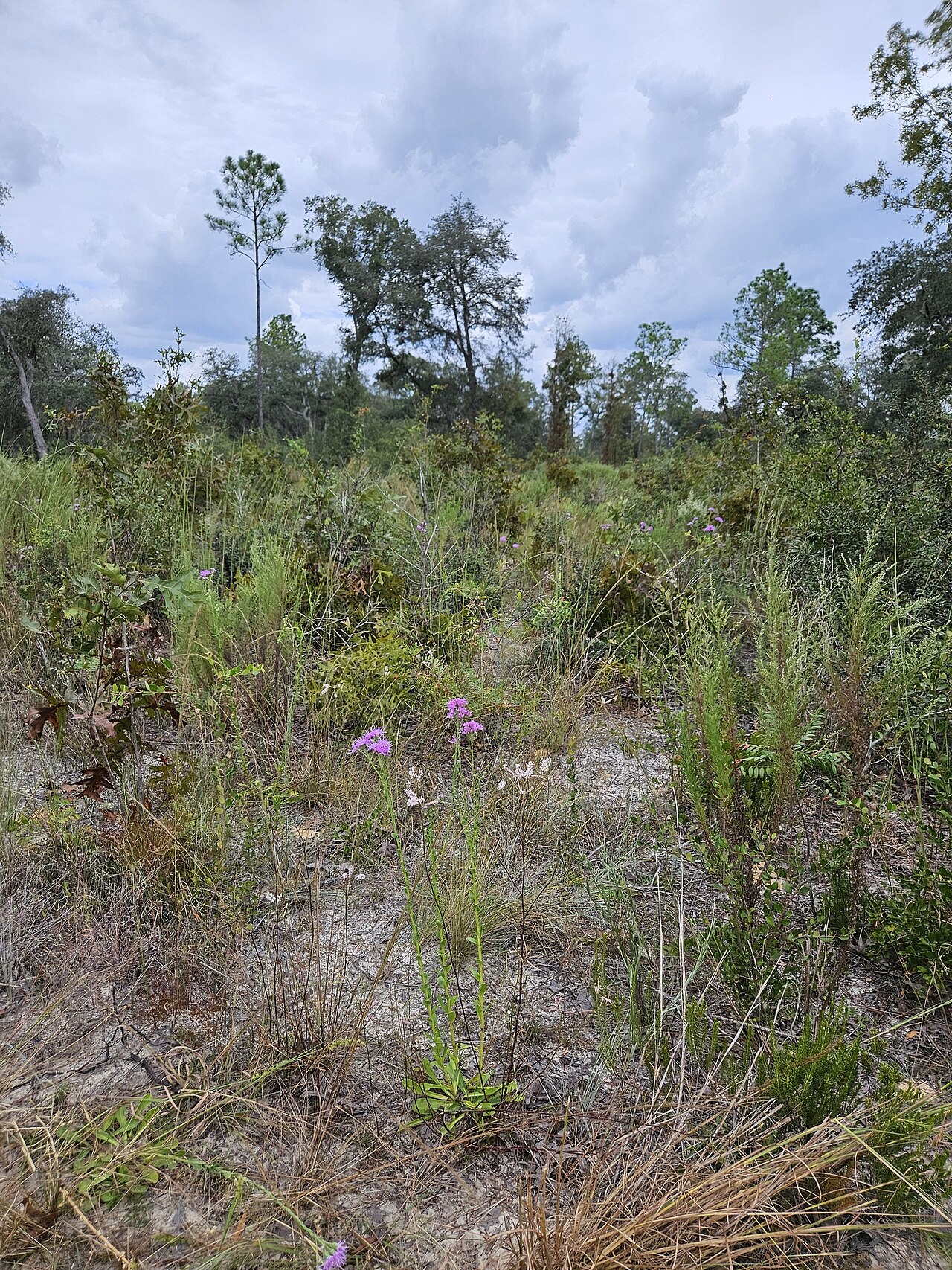
It grows in open, sunny, sandy habitats: pine flatwoods, scrubby flatwoods, sandhills, dry prairies and the edges of scrub. In south-central Florida it is especially characteristic of palmetto flatwoods and dry prairies. It also colonizes disturbed but unplowed ground such as powerline corridors, firebreaks and roadsides, where its fall flowers are often very visible.
Like most flatwoods wildflowers, it depends on frequent fire. Burns clear away litter, shrubs and saw palmetto, and plants flower most heavily in the first year or two afterward. Where fire is excluded for many years, chaffhead declines as shrubs close in. Conversion of flatwoods to pasture, pine plantations and development has reduced its habitat.
📋 Regional plant lists featuring Coastalplain Chaffhead: North & South Florida · Alabama, Georgia & Mississippi · North & South Carolina
Growing & Care Guide
Coastalplain chaffhead is easy to grow in sunny, sandy, well-drained gardens in its native range. Start with nursery-grown plants or seed from a native wildflower seed producer.
Light
Plant it in full sun for the best flowering and sturdiest stems. It tolerates light shade but will flower less and may lean toward the light.
Soil & Water
It needs acidic, well-drained sand, the kind found in most Florida flatwoods and sandhills. It will tolerate seasonally moist sand but not wet, mucky or heavy soils. Water young plants during their first growing season, then only during long droughts. Avoid fertilizer, which encourages weak, floppy stems and competing weeds.
Planting Tips
Plant container plants in spring or early summer, about 12 to 18 inches apart. Groups of several plants give the best show and attract more butterflies. Keep the crown at soil level and mulch lightly, if at all, since thick mulch can rot the rosette and suppresses self-sown seedlings.
Pruning & Maintenance
Leave flower stalks standing through late fall so the seeds can ripen and disperse. Cut them back in winter. In a meadow or natural area, mowing or a prescribed burn in late winter keeps the planting open and stimulates flowering. Remove taller, competing plants that shade the rosettes.
Propagation
Grow it from seed collected in late fall or early winter, when the heads become fluffy. Sow seed on the surface of a sandy mix or directly into prepared, bare sandy soil in fall or winter, and press it in lightly without burying it deeply. Germination can be erratic. Older plants can sometimes be divided in winter, but they recover slowly.
Landscape Uses
- Butterfly gardens: one of the best fall nectar plants for butterflies in Florida
- Pine flatwoods and sandhill restoration: a characteristic fall wildflower of these communities
- Wildflower meadows: combine with blazing stars, goldenrods and native grasses on sandy soil
- Roadside and powerline plantings: tolerates open, disturbed, sandy sites
- Cut flowers: long-lasting flower clusters for arrangements
Wildlife & Ecological Value
When coastalplain chaffhead blooms in fall, it is often one of the busiest nectar sources in the flatwoods.
For Pollinators
The flowers attract large numbers of butterflies, including swallowtails, sulphurs, skippers, hairstreaks, and monarchs and other migrating butterflies passing through Florida in fall. Bees, wasps, flies and beetles also visit. The flat-topped clusters provide a good landing platform for butterflies.
For Birds
Small seed-eating birds may eat the seeds in winter. Birds also forage among the stems for insects.
For Mammals
Deer and other herbivores occasionally browse the plants. The rosettes provide minor cover for small animals.
Ecosystem Role
Coastalplain chaffhead is part of the diverse, fire-adapted ground cover of Florida flatwoods and sandhills. Its late-season flowers help support pollinators through fall, a time when many other plants have finished flowering. Its response to fire also makes it a good indicator of healthy, regularly burned pinelands.
Cultural & Historical Uses
Thomas Nuttall first described this plant in the early 19th century, and John Torrey and Asa Gray later placed it in Carphephorus, as reflected in its author citation, (Nutt.) Torr. & A. Gray. The genus Carphephorus is small and entirely southeastern, with most of its species on the Coastal Plain.
The common name Florida paintbrush is used widely in Florida and appears in many wildflower guides and nursery catalogs. It reflects the way the flower clusters look like brushes dipped in purple paint, and the way blooming plants color flatwoods after a fire.
Today coastalplain chaffhead is a favorite of Florida native plant gardeners and butterfly enthusiasts, and it is among the native wildflowers offered as seed for restoration and roadside plantings in Florida. Its spectacular fall displays are a strong argument for regular prescribed fire in Florida’s pinelands.
Frequently Asked Questions
Why is it called Florida paintbrush?
The flat-topped clusters of fuzzy, bright purple flower heads look like small paintbrushes dipped in paint. It is not related to the Indian paintbrushes (Castilleja), which are in a different family.
Does coastalplain chaffhead attract butterflies?
Yes. It is one of the best fall nectar plants for butterflies in Florida, attracting swallowtails, skippers, sulphurs, hairstreaks, monarchs and many others, as well as bees.
When does coastalplain chaffhead bloom?
Mainly from August to November, sometimes into December in south Florida. Flowering is often heaviest in the year after a fire.
Can I grow coastalplain chaffhead in clay soil?
It is best in well-drained, acidic sand. In heavy clay or wet soil it usually rots. If your soil is heavy, grow it in a raised bed with a sandy mix.
How is it different from blazing star?
Both have fuzzy, purple flower heads made only of disc florets, but blazing stars (Liatris) carry their heads in long, narrow spikes. Coastalplain chaffhead carries them in broad, flat-topped clusters.

Looking for a nursery that carries Coastalplain Chaffhead?
Browse our native plant nursery directory: Florida & Georgia · South Carolina