
Long Key Locustberry (Byrsonima lucida)
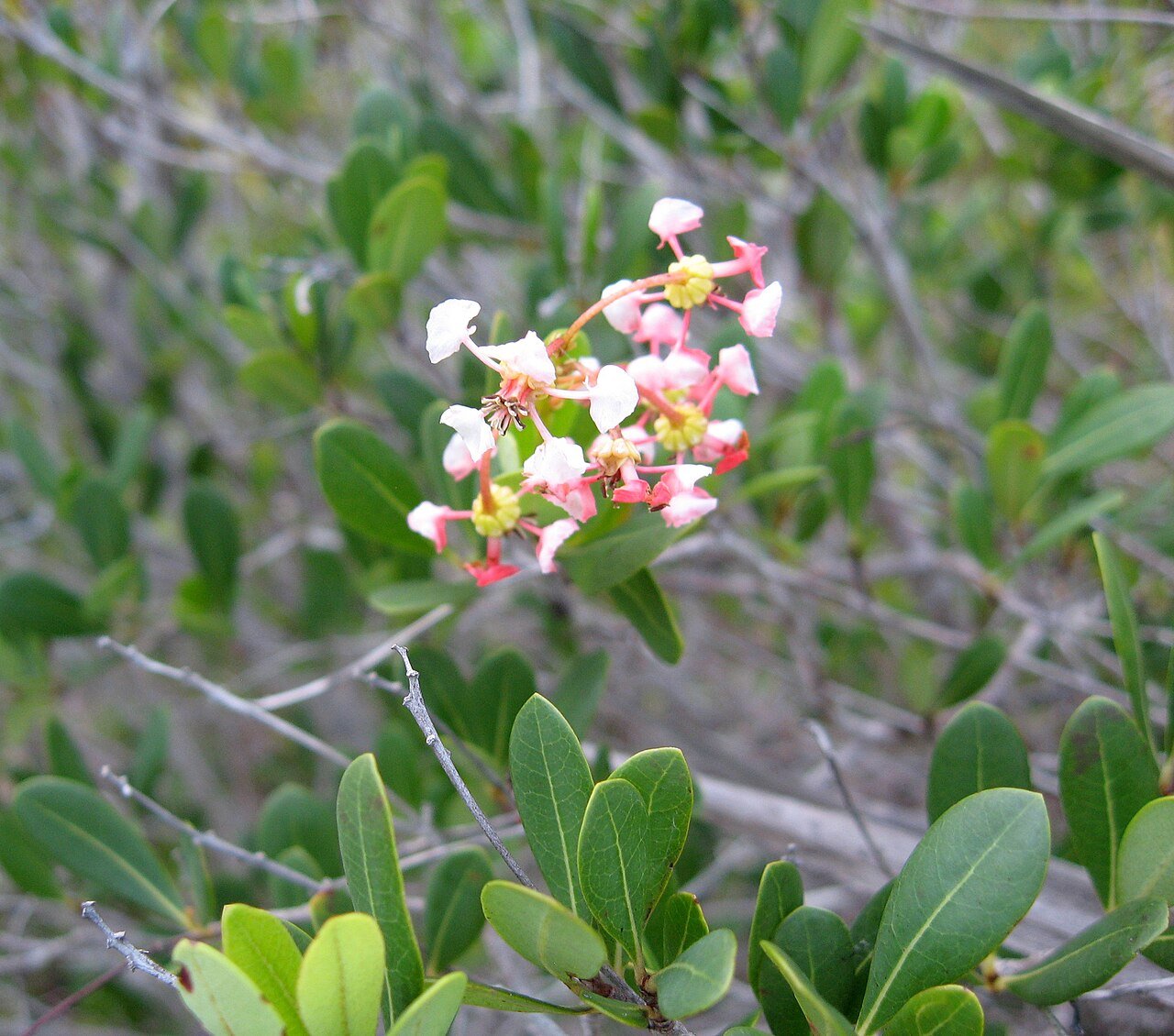
Byrsonima lucida, known as Long Key Locustberry or simply locustberry, is an evergreen shrub or small tree of the pine rocklands and rockland hammocks of South Florida and the Florida Keys. It is one of the most colorful native shrubs in the region. Its flower clusters open white, and the petals turn pink and then deep rose red as they age, so a single cluster often shows all three colors at once. It belongs to the Malpighiaceae, the family of the Barbados cherry, and it is the only member of its large tropical genus native to the United States.
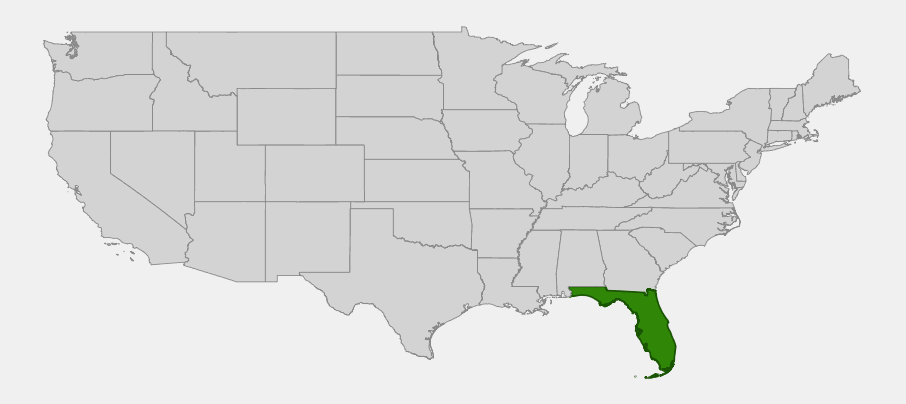
Locustberry is also native throughout much of the Caribbean, including the Bahamas, Cuba, Hispaniola, Puerto Rico and the U.S. Virgin Islands, where it is also called clam cherry. In Florida it reaches the northern edge of its range, growing only in Miami-Dade County and the Keys, and it is listed as Threatened by the State of Florida (Florida Department of Agriculture and Consumer Services). Its pine rockland habitat has been reduced to a small fraction of its original extent.
For South Florida gardeners, locustberry is a superb small flowering shrub for sunny, rocky, well-drained sites. It feeds butterflies, supports a specialized native oil-collecting bee, and serves as a caterpillar host for the Florida duskywing. Buy nursery-propagated plants from native nurseries, and never dig plants or collect seed from the wild.
Identification
Locustberry is easiest to identify when its multi-colored flower clusters are open. At other times, look for its thick, glossy, spoon-shaped leaves crowded near the branch tips and its slender gray branches.
Growth Habit
Long Key locustberry is usually a compact, multi-stemmed shrub 5 to 15 feet tall, though in sheltered hammocks it can become a small tree and, rarely, considerably taller. In the open pine rocklands, where fire periodically burns it back, it often stays low and bushy. The bark is smooth and gray, and the branches are slender and often slightly zigzag.
Leaves
The leaves are opposite, simple and evergreen, broadest above the middle and tapering to the base, about 1 to 2½ inches long. They are thick, leathery and glossy, with smooth margins and a rounded or slightly notched tip, and they tend to cluster near the ends of the twigs. New growth may have a reddish tint.
Flowers
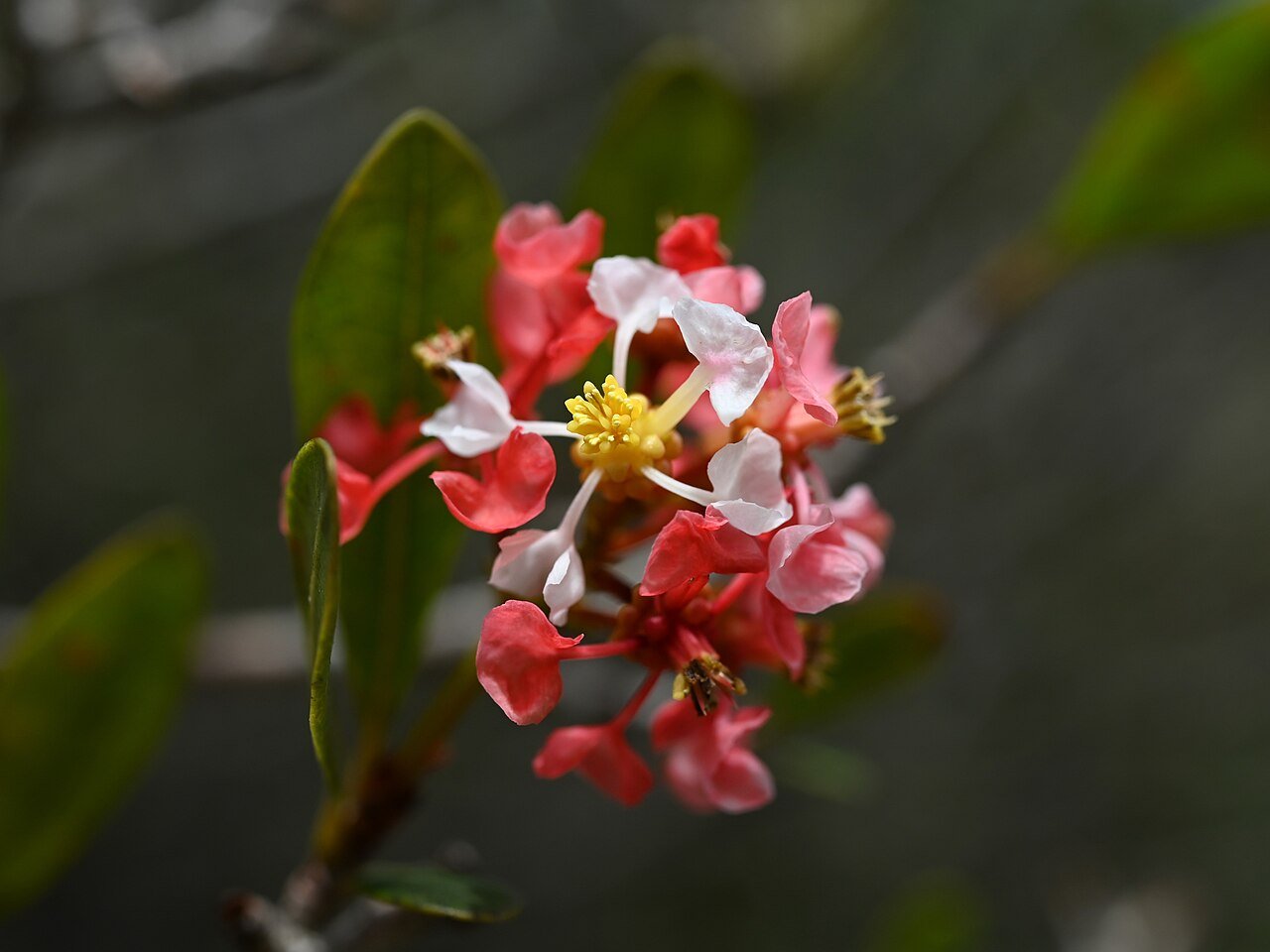
The flowers are borne in short, upright clusters at the branch tips, mainly from late winter to early summer, with scattered flowers at other times of year. Each flower is about ½ inch across, with five spoon-shaped petals on slender stalks (a feature typical of the family) surrounding a cluster of yellow stamens. The petals open white and age to pink and finally deep rose red. At the base of the flower, the calyx carries paired oil glands instead of nectar.
Fruit & Seeds
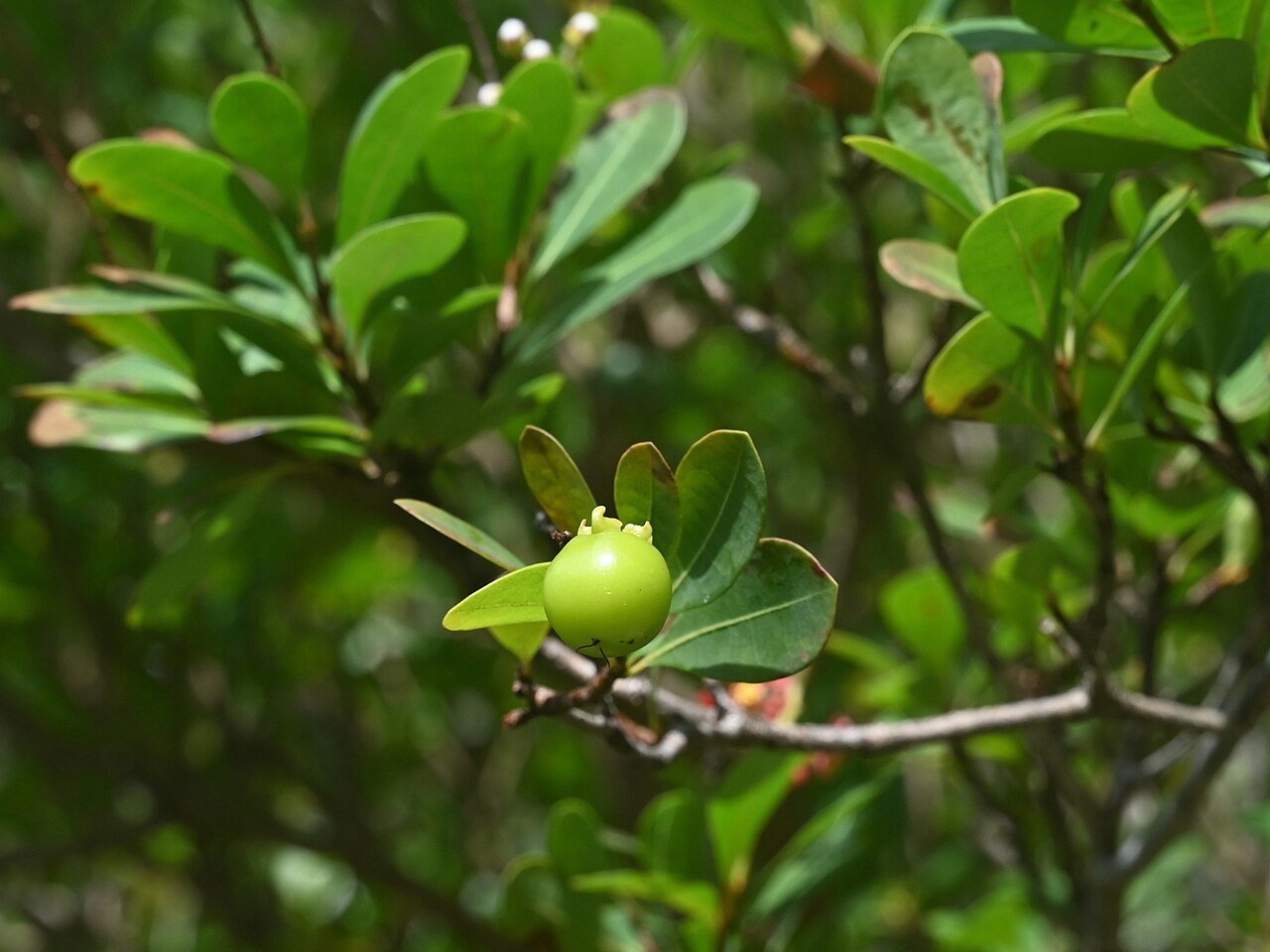
The fruit is a small, round drupe about ⅓ inch across, green at first and ripening to orange, reddish or brownish in late spring and summer. Each contains a hard stone with one to a few seeds. Birds and other wildlife eat the ripe fruit.
Quick Facts
| Scientific Name | Byrsonima lucida (syn. Byrsonima cuneata) |
| Family | Malpighiaceae (Barbados cherry family) |
| Plant Type | Evergreen shrub or small tree |
| Mature Height | 5–15 ft (rarely taller) |
| Mature Spread | 4–10 ft |
| Growth Rate | Slow |
| Sun Exposure | Full sun to partial shade |
| Water Needs | Low; drought tolerant once established |
| Soil Type | Well-drained limestone rock, marl or sand |
| Soil pH | Alkaline (calcareous) |
| Bloom Time | Mainly late winter to early summer; scattered flowers year-round |
| Flower Color | White, aging to pink and rose red |
| Fall Color | None; evergreen |
| Fruit | Small round drupe, orange to reddish brown when ripe |
| Deer Resistant | Moderately |
| USDA Hardiness Zones | 10A–11 |
Native Range
In the United States, Long Key locustberry grows naturally only in southern Florida and in Puerto Rico and the U.S. Virgin Islands. USDA PLANTS lists it as native to the lower 48 states (Florida), Puerto Rico and the Virgin Islands. The Lady Bird Johnson Wildflower Center describes its Florida range as the southeastern tip of the peninsula and the Keys. Beyond U.S. territory it ranges through the Bahamas, Cuba, Hispaniola and the Lesser Antilles.
In Florida it is a plant of the Miami Rock Ridge and the Florida Keys. It grows in pine rocklands, the open, fire-maintained slash pine forests on exposed limestone, and in rockland hammocks and coastal limestone woodlands. In the Lower Keys it is a common shrub of the pine rocklands on Big Pine Key and neighboring islands. Its English name refers to Long Key in the Middle Keys.
More than 98 percent of the pine rocklands outside Everglades National Park have been lost to development, which is why locustberry is listed as Threatened by the State of Florida. It also depends on periodic fire, which keeps its habitat open. Gardeners can help by growing nursery-propagated plants, which provides habitat for its associated insects, while leaving wild populations undisturbed.
📋 Regional plant lists featuring Long Key Locustberry: North & South Florida
Growing & Care Guide
Long Key locustberry is an excellent, long-lived shrub for South Florida landscapes, provided it gets sun and sharp drainage. It is slow-growing and stays compact, making it suitable for small yards. Because it is listed as Threatened in Florida, buy only nursery-propagated plants from reputable native nurseries; never dig plants or collect seed from wild populations.
Light
Full sun gives the most compact plants and the heaviest flowering. It also grows in partial shade at the edge of a hammock planting, though it becomes more open and flowers less.
Soil & Water
Plant it in well-drained limestone, marl or sand. It thrives in the alkaline, rocky soils of the Miami Rock Ridge and the Keys and does not need soil amendments. Water regularly during the first several months; after that it tolerates long dry periods. It tolerates some salty wind but not direct salt spray or salt-water flooding, so keep it away from the immediate shoreline.
Planting Tips
Locustberry is reliably hardy only in zones 10A to 11; a light frost can damage it in colder spots. Plant it as a specimen, a small hedge or in a cluster of three to five plants, combined with other pine rockland shrubs and wildflowers. Since it is state-listed as Threatened, start with nursery-grown plants only.
Pruning & Maintenance
Little pruning is needed. Shape it lightly after the main flowering season if you want a denser shrub, and remove any dead wood. Avoid heavy shearing, which removes flower buds. Don’t fertilize heavily; it is adapted to poor soils.
Propagation
Long Key locustberry is propagated mainly from seed. Clean the pulp from ripe fruit and sow the seeds promptly in a well-drained mix. Germination can be slow and erratic. Cuttings are difficult to root. Growing it from seed is best left to native nurseries.
Landscape Uses
- Pine rockland gardens: a signature flowering shrub for sunny, rocky South Florida landscapes
- Butterfly gardens: a nectar source for many butterflies and a host for the Florida duskywing
- Small flowering hedge or specimen: compact, evergreen and colorful for much of the year
- Habitat restoration: in pine rockland and hammock restorations within its native range
- Wildlife gardens: fruits feed birds and the oil-rich flowers support specialized native bees
Wildlife & Ecological Value
Long Key locustberry has some of the most specialized insect relationships of any South Florida shrub, along with broader value for butterflies and birds.
For Pollinators
Like most members of its family, locustberry produces floral oils from glands on the calyx instead of nectar. These oils are collected by female oil-collecting bees, which mix them with pollen to provision their nests. In South Florida, locustberry is a key host plant for Centris errans, a rare native oil-collecting bee of the pine rocklands, and its fate is closely tied to the survival of locustberry. Other bees visit the flowers for pollen.
For Butterflies
The flowers are visited by many South Florida butterflies for pollen and the small amounts of nectar some flowers provide. Locustberry is the larval host for the Florida duskywing (Ephyriades brunnea), a dark skipper of the pine rocklands and Keys whose caterpillars feed on its leaves.
For Birds
Mockingbirds, catbirds and other birds eat the ripe fruits, and the dense branches provide cover and nesting sites.
For Mammals
Small mammals eat fallen fruit, and in the Lower Keys the shrubs grow in the pine rocklands used by the endangered Key deer.
Ecosystem Role
Locustberry is a characteristic member of the pine rockland shrub layer, one of the most endangered ecosystems in the United States. It resprouts after fire and helps maintain the diverse understory that supports pine rockland insects, birds and mammals.
Cultural & Historical Uses
The genus Byrsonima comes from the Greek word byrsa, meaning hide or leather, a reference to the use of the tannin-rich bark of some species for tanning leather. The species name lucida means shining, for the glossy leaves. In parts of the Caribbean the plant is also known as clam cherry.
Several tropical relatives, including nance (Byrsonima crassifolia), are grown for their edible fruit in Mexico and Central America. The small fruits of Long Key locustberry have been eaten in the Caribbean, but they are not widely used and are best left to wildlife.
In Florida, locustberry has become a favorite of native plant gardeners in Miami-Dade County and the Keys, both for its long season of color and for its role in conserving pine rockland wildlife. It is widely recommended for pine rockland restoration and for backyard habitat gardens in South Florida.
Frequently Asked Questions
Is Long Key locustberry endangered?
The State of Florida lists it as Threatened, mainly because most of its pine rockland habitat has been lost. Buy nursery-propagated plants and never collect plants or seed from the wild.
Why are the flowers different colors?
Each flower opens white and changes to pink and then deep rose red over several days. Because flowers in a cluster open at different times, a single cluster often shows all three colors.
Can locustberry grow outside South Florida?
It is a tropical plant and grows reliably outdoors only in zones 10A to 11. It is native in Florida only in Miami-Dade County and the Keys, and also in Puerto Rico and the U.S. Virgin Islands.
Does locustberry attract butterflies?
Yes. Many butterflies visit its flowers, and it is the caterpillar host for the Florida duskywing. Its oil-producing flowers also support specialized native bees.
Is locustberry fruit edible?
The small fruits have been eaten in the Caribbean, but they are not a significant food. In gardens they are best left for birds and other wildlife.

Looking for a nursery that carries Long Key Locustberry?
Browse our native plant nursery directory: Florida