
Snowberry (Chiococca alba)
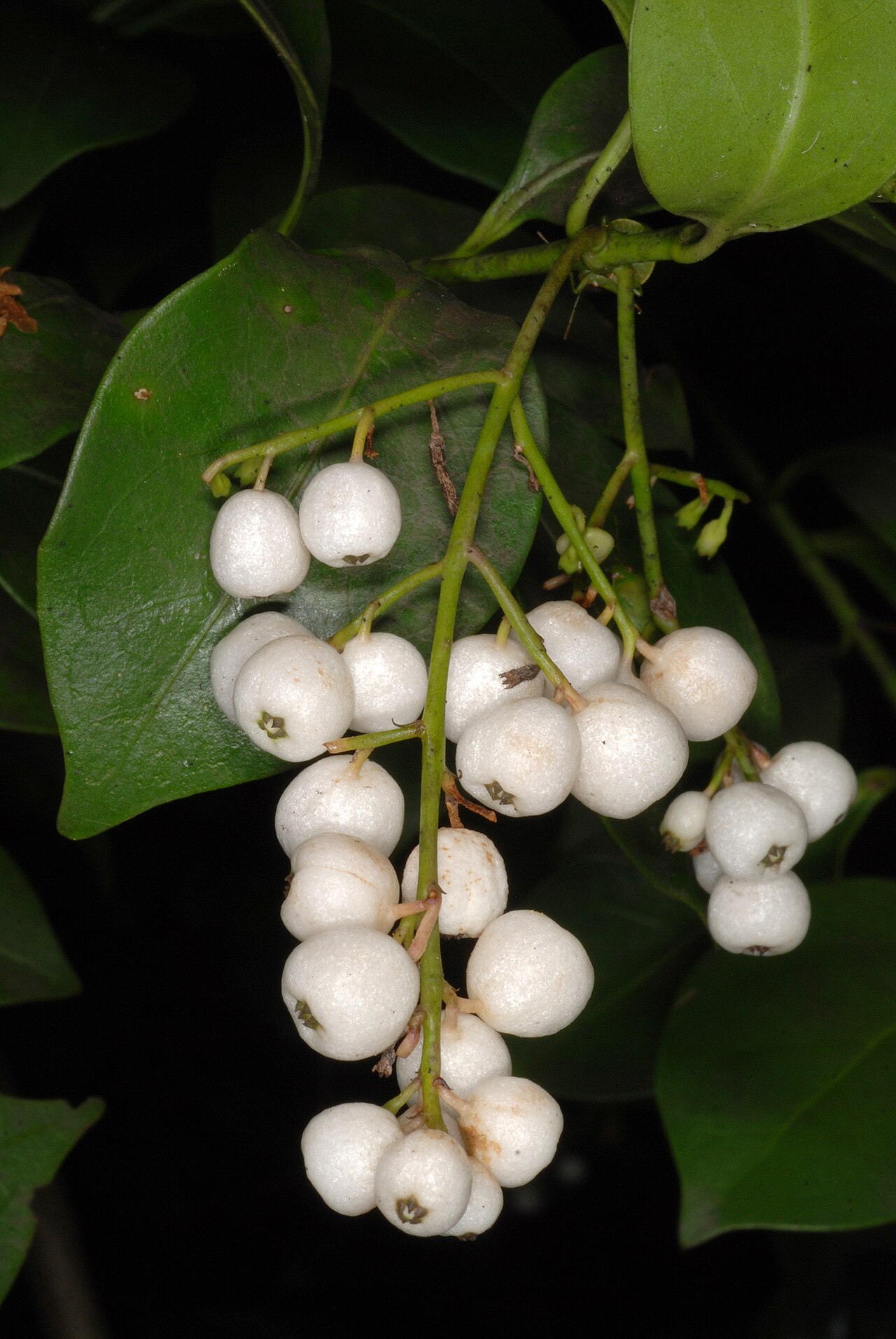
Chiococca alba, known in Florida as Snowberry and also as milkberry, West Indian milkberry (the USDA PLANTS common name), David’s milkberry or cahinca, is an evergreen, sprawling shrub or woody vine of coastal hammocks and thickets in the American tropics and subtropics. Its glossy leaves, sprays of small, creamy yellow, bell-shaped flowers and, above all, its drooping clusters of pure white berries make it one of the most ornamental native shrubs of central and south Florida. It belongs to the coffee family (Rubiaceae).
Despite the shared name, this snowberry is not related to the northern common snowberry (Symphoricarpos albus), a deciduous shrub in the honeysuckle family. The resemblance is only in the white fruit. Curiously, Linnaeus originally described Chiococca alba as a honeysuckle, Lonicera alba, before it was moved to its own genus in the coffee family. The genus name comes from Greek words meaning “snow” and “berry”.
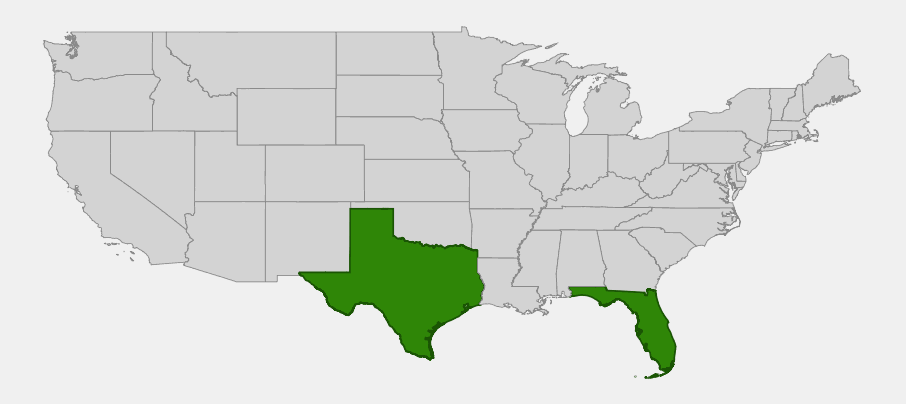
In the United States, snowberry grows in central and south Florida and in the extreme southern tip of Texas. It is also native to Bermuda, Mexico, the Caribbean, including Puerto Rico and the U.S. Virgin Islands, Central America and tropical South America. It is a versatile garden plant that can be grown as a mounding shrub, an informal hedge or a vine on a fence or trellis, and it provides food for birds. This guide covers how to recognize and grow it.
Identification
Snowberry is easy to identify when in fruit, thanks to its hanging clusters of white berries. Out of fruit, look for its opposite, glossy leaves, arching or climbing stems, and small, yellowish, bell-shaped flowers.
Stems & Habit
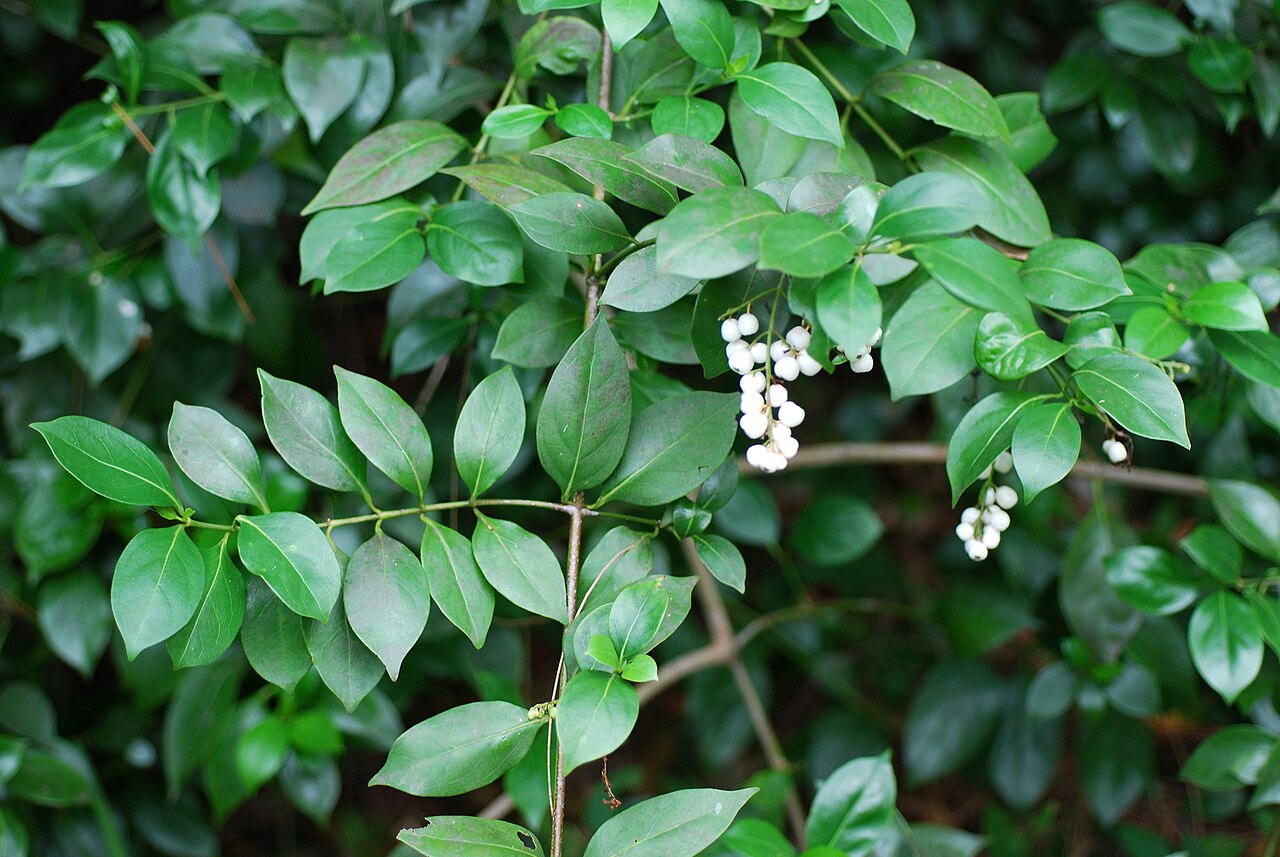
Snowberry is an evergreen shrub with long, arching stems that sprawl, scramble or climb over other plants. In the open it forms a mound 3 to 8 feet tall and wide. With support, it can climb as a woody vine to about 20 feet. The stems are slender, smooth and pale gray-brown. The plant has no tendrils or thorns. It climbs by leaning and twining its branches through neighboring shrubs and trees.
Leaves
The leaves are opposite, simple, smooth-edged and leathery, about 2 to 4 inches long, elliptic to ovate or broadly lance-shaped, with pointed tips. They are glossy dark green above and paler beneath. Small, triangular stipules between the paired leaf stalks, typical of the coffee family, help separate it from other shrubs with similar leaves.
Flowers
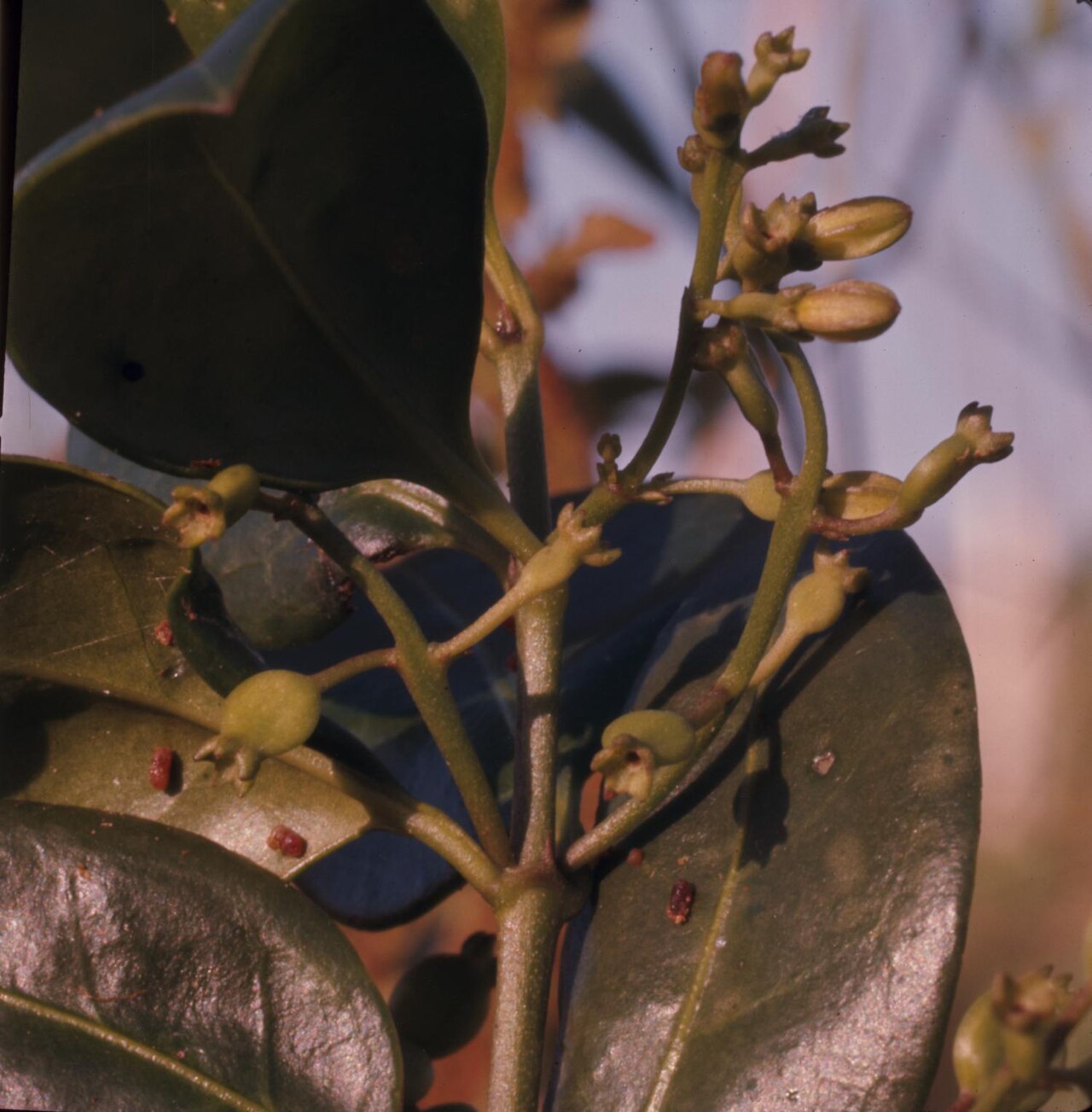
Flowers can appear at almost any time of year in south Florida, with peaks in spring and fall. They are borne in one-sided, hanging clusters (racemes or small panicles) from the leaf axils, each with several to many flowers. Each flower is tubular to bell-shaped, about ¼ to ½ inch long, with five pointed, spreading lobes. They are creamy white to pale yellow, deepening to yellow as they age, and are lightly fragrant.
Fruit
The fruit is the plant’s showiest feature: a small, round, flattened drupe about ¼ inch across, pure white and somewhat translucent when ripe, containing two flattened seeds. Fruits hang in clusters and remain on the plant for weeks. Flowers and fruit often occur together.
Quick Facts
| Scientific Name | Chiococca alba (syn. Lonicera alba) |
| Family | Rubiaceae (coffee family) |
| Plant Type | Evergreen sprawling shrub or woody vine |
| Mature Height | 3–8 ft as a shrub; to about 20 ft climbing with support |
| Mature Spread | 4–8 ft |
| Growth Rate | Moderate |
| Sun Exposure | Part shade to full sun |
| Water Needs | Low to moderate; drought tolerant once established |
| Soil Type | Well-drained sand, shell, limestone or loam |
| Soil pH | About 6.0–8.5 (tolerates alkaline soils) |
| Bloom Time | Year-round in south Florida, peaking in spring and fall |
| Flower Color | Creamy white to yellow |
| Fall Color | None; evergreen |
| Fruit | Small, pure white berries (drupes) in hanging clusters |
| Deer Resistant | Moderately; occasionally browsed |
| USDA Hardiness Zones | 9b–11 |
Native Range
Snowberry is widespread in the American tropics and subtropics. In the United States, USDA PLANTS records it as native in Florida and Texas, as well as in Puerto Rico and the U.S. Virgin Islands. The Lady Bird Johnson Wildflower Center describes its native range as peninsular Florida and southernmost Texas south to tropical South America. Outside the United States, it grows in Bermuda, Mexico, the Caribbean, Central America, the Galápagos and much of tropical South America.
In Florida it is mostly found from the central peninsula south through the Keys, with scattered populations farther north along the coasts. It grows in coastal and tropical hammocks, shell mounds, coastal strand and dune thickets, the edges of mangroves, and pine rocklands. In Texas it is limited to the Lower Rio Grande Valley, where it grows in thorn scrub, chaparral, palm groves and brushy woodlands.
Because it tolerates some salt spray, drought and alkaline soils, snowberry is common in coastal habitats. Many of its Florida habitats have been heavily developed, but it remains frequent in parks and preserves and is widely planted.
📋 Regional plant lists featuring Snowberry: North & South Florida · South & West Texas
Growing & Care Guide
Snowberry is an adaptable, low-maintenance shrub for central and south Florida and south Texas gardens. It is widely available from native plant nurseries.
Light
It grows in part shade to full sun. In full sun it is denser and fruits more heavily, but leaves may yellow in hot, dry, exposed sites. In shade it becomes more open and vine-like and produces fewer berries.
Soil & Water
Snowberry tolerates many well-drained soils, including sand, shell and limestone, and it handles alkaline conditions well. It is moderately salt-tolerant and suits coastal gardens set back from the beach. Water regularly until established, then only in prolonged dry spells. It does not need fertilizer, though a light feeding in spring can improve the color of plants in poor sand.
Planting Tips
Plant in spring or summer in frost-free areas. Space plants 3 to 5 feet apart for a hedge. To grow it as a vine, plant it at the base of a fence, trellis or open tree and guide the long stems as they grow. It also works well along the edge of a hammock or woodland, where it can lean on other shrubs.
Pruning & Maintenance
Prune as needed to control size or shape. It can be kept as a dense shrub with regular trimming or left loose and natural. Heavy shearing reduces flowers and fruit. Remove frost-damaged stems in late winter. It is generally free of serious pests.
Propagation
Grow it from seed or cuttings. Clean the white pulp from ripe seeds and sow them fresh in a well-drained mix; germination can be slow. Semi-hardwood cuttings taken in warm months root fairly easily. Layering, by pinning a low stem to the ground until it roots, also works.
Landscape Uses
- Informal hedges and screens: dense evergreen growth with ornamental white fruit
- Fences and trellises: its long stems can be trained as a woody vine
- Coastal gardens: tolerates salt spray, sand and alkaline soils
- Wildlife gardens: fruits for birds and flowers for pollinators
- Hammock edge restoration: a natural component of tropical hammocks and coastal thickets
Wildlife & Ecological Value
Snowberry provides fruit, flowers and cover through much of the year in Florida’s coastal hammocks and thickets.
For Pollinators
The small, fragrant flowers attract bees, wasps, flies and small butterflies. Because the plant can bloom much of the year in south Florida, it provides a fairly steady nectar source.
For Birds
Birds eat the white berries, including mockingbirds and other fruit-eating songbirds, both resident and migratory. They spread the seeds through the hammocks. The dense tangles of stems also provide cover and nesting sites.
For Mammals
Small mammals may eat fallen fruits. The roots contain compounds with strong effects on the body, and the plant should be considered toxic to people and pets if eaten.
Ecosystem Role
Snowberry is a characteristic shrub and vine of tropical hammock edges and coastal thickets in Florida. It fills openings and edges, helping to form the dense, protected margins of hammocks. Its fruits are one of many that support resident and migratory birds.
Cultural & Historical Uses
Carl Linnaeus described the plant in 1753 as Lonicera alba, a honeysuckle. Patrick Browne had already created the genus Chiococca in 1756 for related plants, and in 1893 A. S. Hitchcock formally moved Linnaeus’s species into it, creating the combination Chiococca alba. It is the type species of the genus. The Bermuda population was once described as a separate species, C. bermudiana, but many botanists now include it in C. alba.
Snowberry has a long history in traditional medicine in the American tropics. Its roots, known as cahinca root, were used in folk medicine as a diuretic, purgative, emetic and to treat diarrhea and other ailments, and they were sold commercially in Europe and the United States in the 19th century. The roots are potent and potentially toxic. They should not be used without medical guidance.
Today snowberry is valued as an ornamental and wildlife plant by native plant gardeners in Florida and south Texas. Its white fruits stand out against dark foliage, making it a distinctive native alternative to exotic hedge plants.
Frequently Asked Questions
Is this snowberry the same as common snowberry?
No. Chiococca alba is a tropical evergreen shrub or vine in the coffee family, native to Florida and south Texas. Common snowberry (Symphoricarpos albus) is a deciduous northern shrub in the honeysuckle family. They share a name only because both have white berries.
Are snowberry berries edible?
They are not considered edible for people. The plant, especially the root, contains strong compounds once used in folk medicine, and it should be treated as potentially toxic. Birds eat the berries safely.
Can snowberry be grown as a vine?
Yes. Its long, arching stems will climb a fence, trellis or tree with a little guidance, reaching up to about 20 feet. Without support it forms a mounding shrub.
Is snowberry salt tolerant?
It is moderately salt tolerant and grows naturally in coastal hammocks and dune thickets. It does well in coastal gardens but not on beachfront sites with direct salt spray.
How cold-hardy is snowberry?
It is a tropical plant suited to zones 9b through 11. Light frost can damage its leaves and stem tips, but established plants usually recover. It is not reliable in north Florida or most of Texas.
