
Florida Calamint (Calamintha dentata)
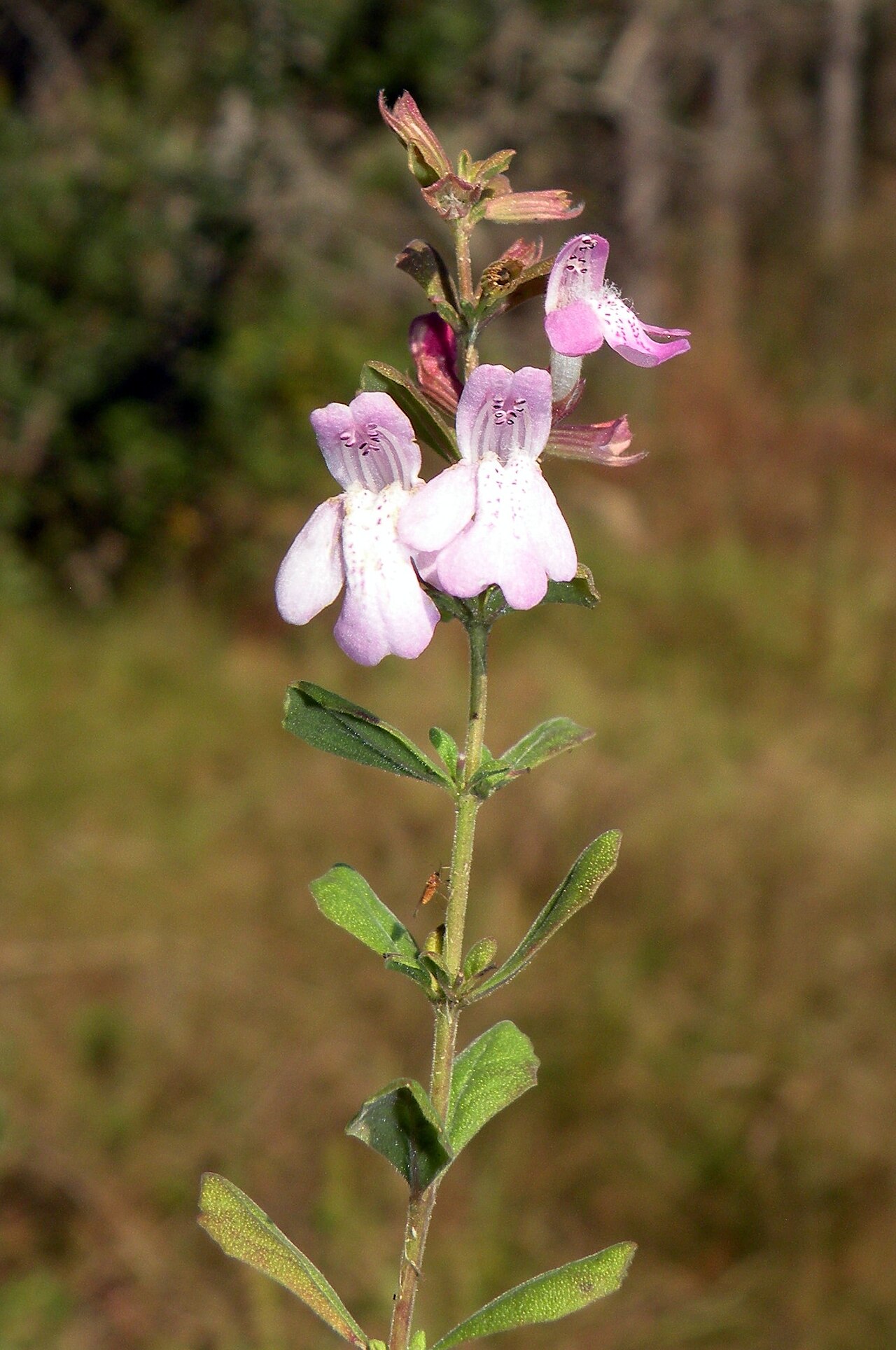
Calamintha dentata, known as Florida Calamint or toothed savory, is a small, aromatic shrub of the mint family (Lamiaceae) native to the sandhills of the Florida Panhandle, with a single disjunct population in southeastern Georgia. It forms a twiggy mound 1 to 2 feet tall with small, toothed, minty-smelling leaves, and over a long season from spring into fall it carries pale lavender-pink, two-lipped flowers spotted with purple.
Nurseries and the Florida Native Plant Society generally use the name Calamintha dentata, and so does this page. USDA PLANTS and several recent references place it in the genus Clinopodium as Clinopodium dentatum (USDA symbol CLDE4). Both names refer to the same plant.
Florida calamint is listed as Threatened by the State of Florida (FDACS Regulated Plant Index). It is an excellent small shrub for dry, sunny, sandy gardens in north Florida and a favorite of bees and butterflies, and it is occasionally available from native nurseries. Buy only nursery-propagated plants and never collect from the wild.
Identification
Florida has four native shrubby calamints, and they are easy to tell apart by flower color, leaf shape and location. Florida calamint is the only one with toothed leaves and pale lavender-pink flowers in the Panhandle sandhills.
Stems & Habit
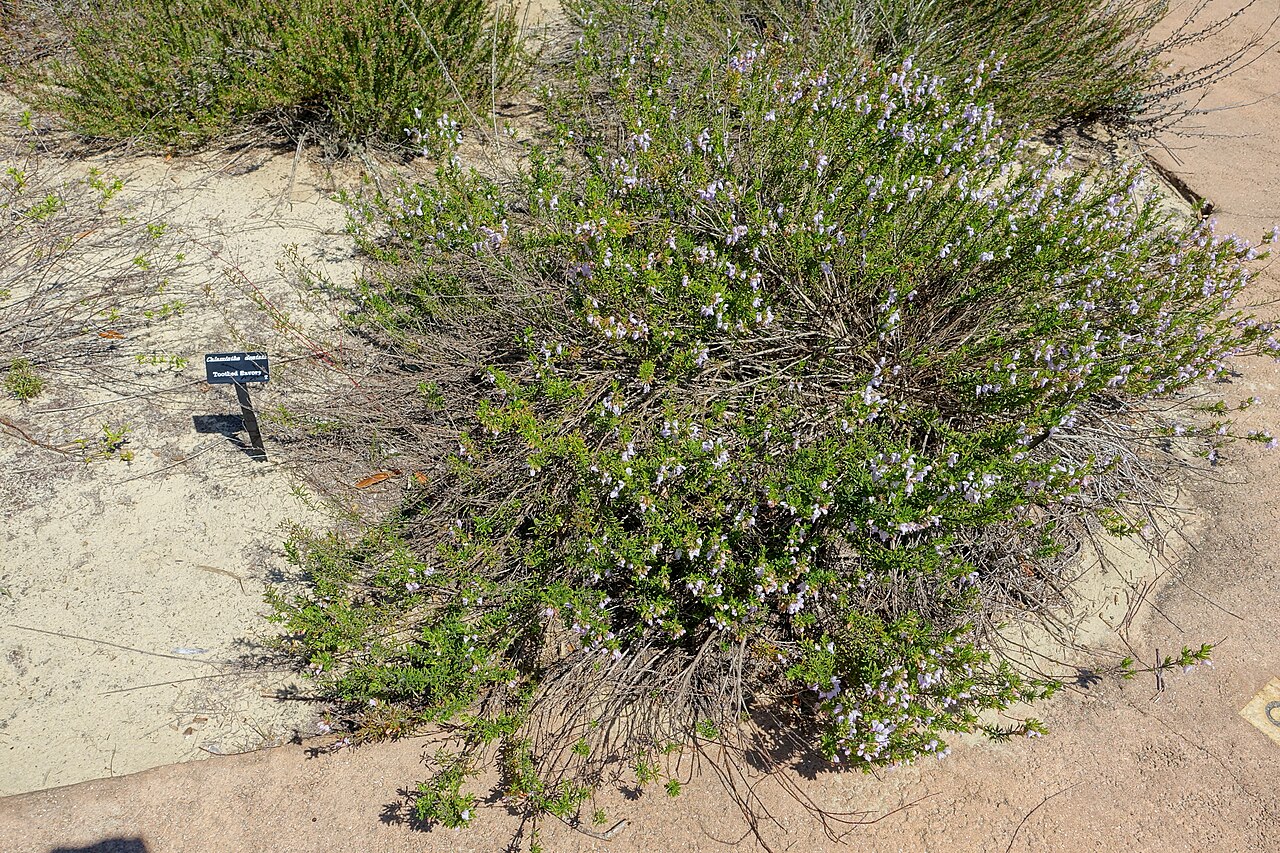
It is a low, much-branched shrub, usually 1 to 2 feet tall (occasionally to about 28 inches) and 1½ to 3 feet wide. The stems are square in cross-section, as in most mints, becoming woody and gray-brown with peeling bark at the base. The plant is evergreen or nearly so in mild winters.
Leaves
The leaves are opposite, small (about ½ inch long), elliptic to oval, with a few small teeth along the upper edges, the trait behind the name dentata (“toothed”). They are gray-green and dotted with glands that release a strong, minty-herbal fragrance when brushed or crushed. Smaller leaves are often clustered in the axils.
Flowers
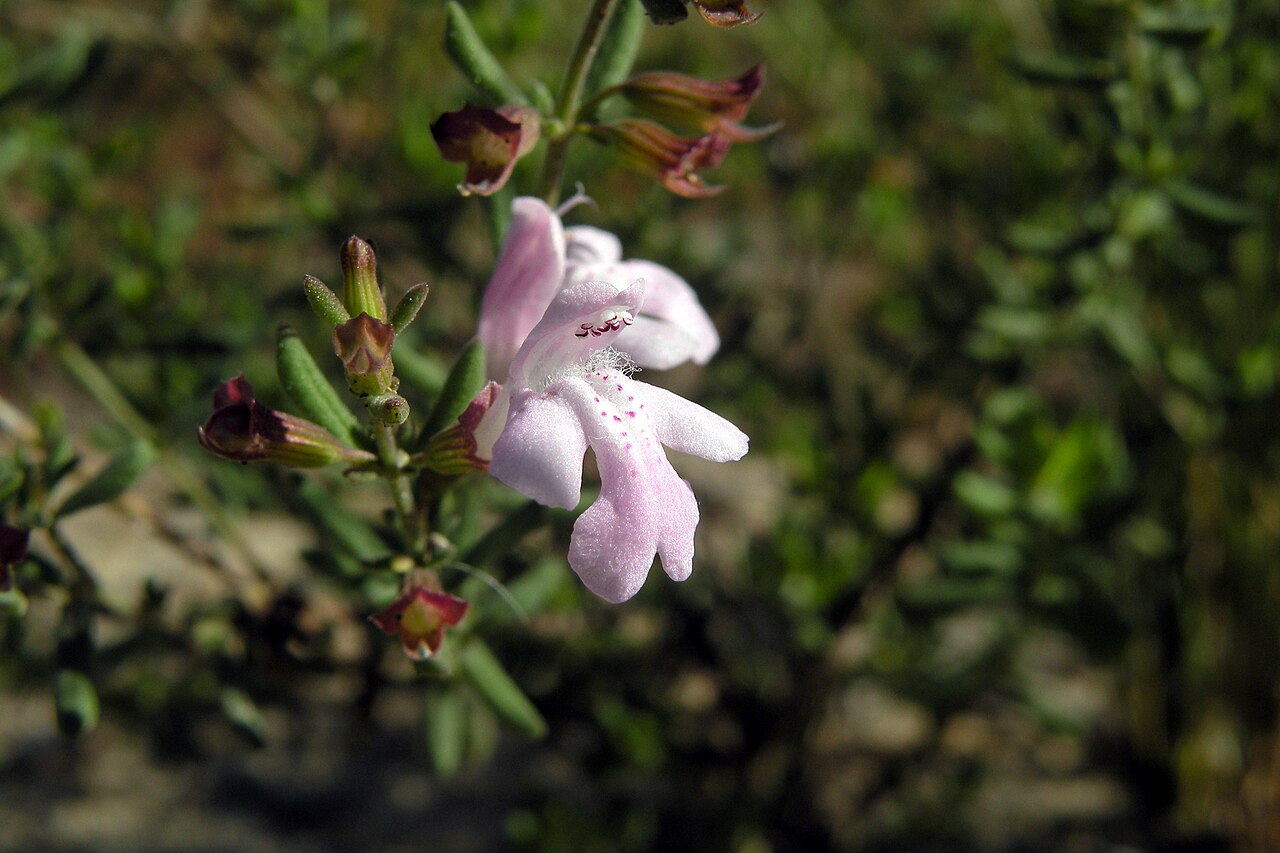
The flowers grow in small clusters in the leaf axils along the upper stems. Each is about ¾ inch long, tubular and two-lipped, pale pink to lavender or nearly white, with a broad, three-lobed lower lip marked with purple spots. The calyx is often reddish. Flowering is heaviest in spring and summer but can continue sporadically into late fall; LBJ records bloom from April through December.
Red basil or scarlet calamint (C. coccinea) has bright red, tubular flowers and grows mainly near the coast. Ashe’s calamint (C. ashei) of central Florida scrub has narrow, rolled leaves without teeth and rose-lavender flowers.
Fruit & Seeds
Each flower can produce up to four tiny, smooth nutlets, which ripen inside the persistent calyx and drop near the plant.
Quick Facts
| Scientific Name | Calamintha dentata; USDA accepts Clinopodium dentatum (CLDE4) |
| Family | Lamiaceae (mint family) |
| Plant Type | Small aromatic evergreen shrub |
| Mature Height | 1–2 ft (occasionally to about 28 in) |
| Mature Spread | 1½–3 ft |
| Growth Rate | Moderate |
| Sun Exposure | Full sun |
| Water Needs | Low; very drought tolerant once established |
| Soil Type | Deep, dry, well-drained sand |
| Soil pH | About 4.5–6.5 |
| Bloom Time | Spring–fall (recorded April–December) |
| Flower Color | Pale lavender-pink with purple spots |
| Fall Color | None; evergreen or nearly so |
| Fruit | Tiny nutlets inside the persistent calyx |
| Deer Resistant | Yes; strongly aromatic foliage |
| USDA Hardiness Zones | 8–9 |
Native Range
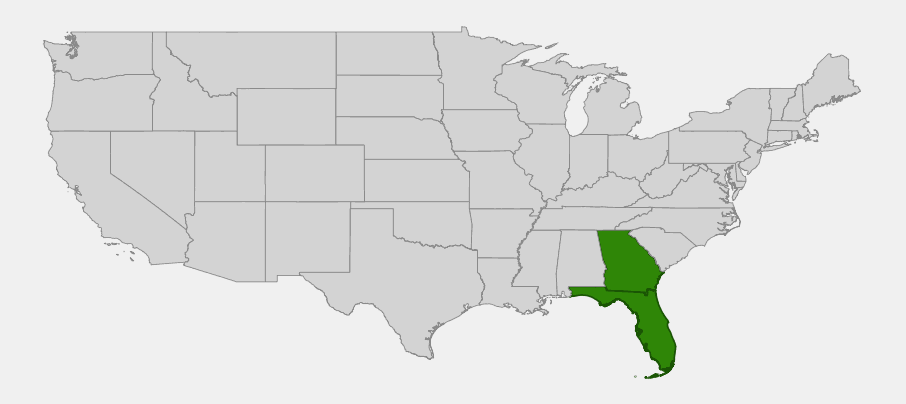
Florida calamint grows in the central and western Florida Panhandle and in one disjunct population in Tattnall County, Georgia, according to the Lady Bird Johnson Wildflower Center. USDA PLANTS records it from Florida and Georgia. Because of the Georgia population it is not a Florida endemic, though nearly all of its range lies in Florida.
In Florida it occurs mainly in the sandhills of the Apalachicola River region and adjacent Panhandle counties, an area rich in rare and endemic plants. Its habitat is dry, open, sandy ground: longleaf pine–turkey oak sandhills, open pine and pine-oak woodlands, old fields and sandy roadsides. It is often most visible on road shoulders and firebreaks, where the sand is open and sunny.
It is listed as Threatened by the State of Florida (FDACS Regulated Plant Index). Its main threats are loss of sandhill habitat to development and pine plantations and the lack of fire, which lets shrubs and hardwoods shade out low, sun-loving plants.
📋 Regional plant lists featuring Florida Calamint: North & South Florida · Alabama, Georgia & Mississippi
Growing & Care Guide
Florida calamint is a rewarding small shrub for hot, sunny, sandy gardens in north Florida and the nearby Coastal Plain, but it needs excellent drainage and is short-lived in rich or wet soil. It is occasionally available from Florida native nurseries. Because it is a state-listed species, buy only nursery-propagated plants and never collect plants or cuttings from the wild.
Light
Give it full sun. In partial shade it becomes open and leggy and flowers poorly.
Soil & Water
Plant it in deep, well-drained, sandy soil. It tolerates drought very well once established and should be watered only during its first growing season and in extreme droughts. Heavy clay, poorly drained spots, frequent irrigation and fertilizer are the most common causes of failure; it is prone to root rot in wet soil.
Planting Tips
Plant it in spring or early in the rainy season on a slight mound or slope if your soil is not naturally sandy. Space plants 2 to 3 feet apart. Use a thin layer of coarse mulch or leave the sand bare, as in nature; thick organic mulch holds too much moisture around the stems. It is well suited to rock gardens, dry borders and the edges of sunny paths, where people will brush against it and release its fragrance.
Pruning & Maintenance
Trim it lightly after the main spring flush of flowers to keep it compact and encourage more blooms. Avoid cutting deep into old, bare wood. Plants are naturally fairly short-lived (several years), so allow a few seedlings to grow as replacements.
Propagation
It roots readily from softwood cuttings of nursery plants taken in spring or early summer. It can also be grown from seed, which should be surface-sown and kept just moist. Volunteer seedlings often appear in bare sand near established plants.
Landscape Uses
- Dry, sandy gardens: a compact, evergreen accent for hot, sunny sites with poor soil
- Pollinator gardens: long flowering season with heavy bee and butterfly visitation
- Rock gardens and path edges: where the aromatic foliage can be brushed and enjoyed
- Sandhill restoration: in the Florida Panhandle within its native range, using propagated stock
- Containers: in a deep pot with a very sandy, fast-draining mix
Wildlife & Ecological Value
Florida calamint is a small shrub that feeds a large number of insects, and its long bloom season makes it valuable when other sandhill wildflowers are not flowering.
For Pollinators
The flowers are visited heavily by native bees, including bumblebees and small solitary bees, and by butterflies and skippers. The spotted lower lip acts as a landing platform and nectar guide. Bee flies and other flower flies also visit.
For Birds
It has little direct food value for birds, but the insects it attracts feed sandhill birds such as Bachman’s sparrow, eastern bluebird and brown-headed nuthatch.
For Mammals
The strongly aromatic, oil-rich foliage is generally avoided by deer and rabbits.
Ecosystem Role
Florida calamint is part of the low, sunny groundcover of fire-maintained sandhills. Like many sandhill shrubs, its seeds germinate best in open, bare sand after fire or other disturbance. Its aromatic oils help protect it from herbivores and may also reduce competition near the plant.
Cultural & Historical Uses
Florida calamint was first described in the nineteenth century and has been placed in several genera since. Mint-family taxonomy has shifted repeatedly: older works put the North American shrubby calamints in Satureja (savory), giving the common name toothed savory; Florida references and nurseries use Calamintha; and USDA PLANTS and some current floras use Clinopodium, a broad genus that includes the European calamints.
The genus name Calamintha comes from Greek words meaning “beautiful mint.” Many calamints are fragrant enough to be used for herbal tea or seasoning, and the European species have a long history in herbal medicine. Florida calamint’s rarity and state-listed status mean it should not be harvested from the wild for such uses.
Today Florida calamint is promoted by the Florida Native Plant Society and native nurseries as a pollinator plant for dry, sandy landscapes, and nursery-grown plants have helped make it available to gardeners without taking plants from wild populations.
Frequently Asked Questions
Is Florida calamint endangered?
It is listed as Threatened by the State of Florida (FDACS Regulated Plant Index). It is not federally listed. Buy only nursery-propagated plants and never collect from the wild.
Is Florida calamint the same as Clinopodium dentatum?
Yes. Calamintha dentata is the name used by most Florida nurseries and the Florida Native Plant Society. USDA PLANTS accepts Clinopodium dentatum (symbol CLDE4). Older books call it Satureja dentata.
Can I use Florida calamint as an herb?
Its leaves are strongly minty-aromatic, and related calamints are used for tea. Because it is a state-listed plant, never harvest it from the wild. If you grow your own from nursery plants, use it only in small amounts, as its safety as a food herb has not been well studied.
Why did my Florida calamint die?
The usual causes are poor drainage, too much water, or rich soil. It needs deep sand and full sun and rots easily in wet ground. It is also naturally fairly short-lived, so allow seedlings to replace older plants.
Does it attract butterflies and bees?
Yes. Its long-blooming flowers are heavily visited by bumblebees, solitary bees, butterflies and skippers, making it one of the best small native shrubs for pollinators in dry sandy gardens.

Looking for a nursery that carries Florida Calamint?
Browse our native plant nursery directory: Florida & Georgia