
Fourpetal St. John’s-wort (Hypericum tetrapetalum)
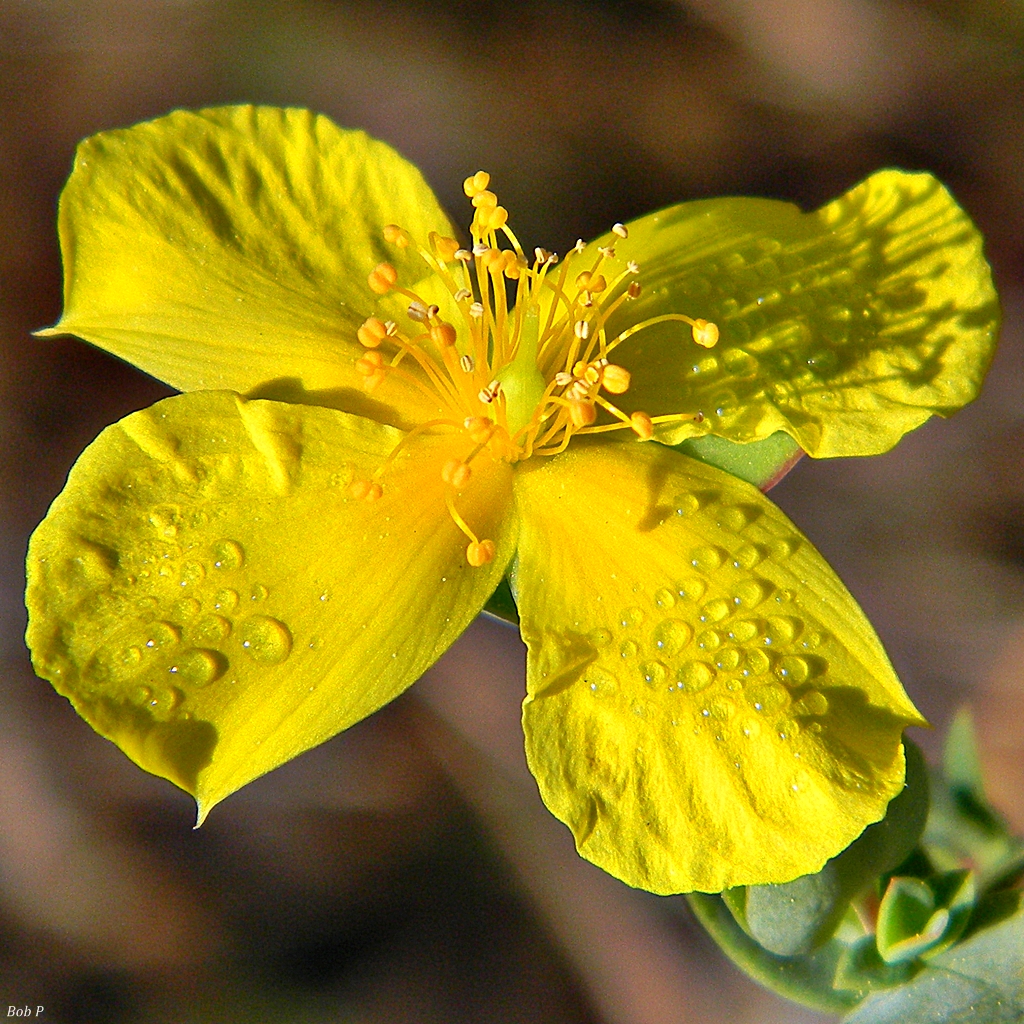
Hypericum tetrapetalum, Fourpetal St. John’s-wort (USDA: fourpetal St. Johnswort), is a small, few-branched shrub of Florida’s pine flatwoods and wet prairies, with soft blue-green leaves and bright lemon-yellow flowers. As its name says, each flower has four petals, unlike the five of most St. John’s-worts, and they are held above two large, leaf-like sepals. It belongs to the St. John’s-wort family (Hypericaceae, included in Clusiaceae in some references) and was formerly placed in the genus Ascyrum.
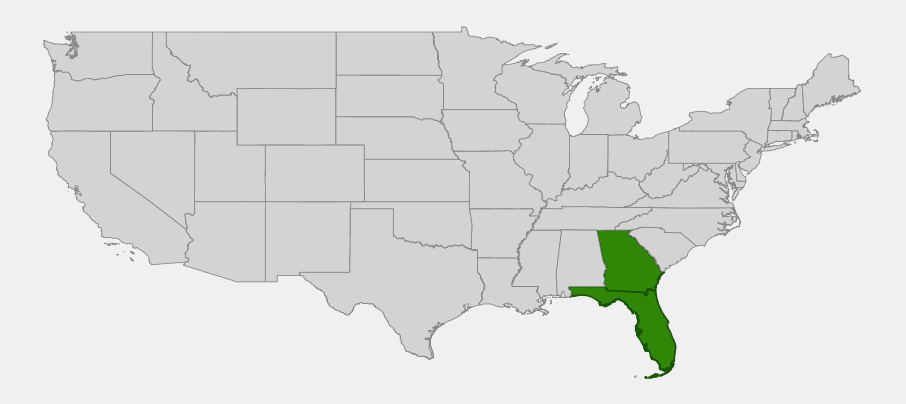
Fourpetal St. John’s-wort is native only to Florida and southern Georgia in the United States, and it also grows in Cuba. It is one of the most familiar wildflowers of Florida flatwoods, where its flowers can appear in almost any month. The Lady Bird Johnson Wildflower Center describes it as a small, few-branched shrub with bright yellow flowers growing in wet pinelands, hammocks and prairies.
In gardens it is a compact, long-blooming native shrub for moist, sunny or lightly shaded sites, and Florida native nurseries grow it regularly. This guide covers how to tell it apart from its look-alikes, where it grows, and how to grow it.
Identification
Several four-petaled St. John’s-worts grow in Florida, including St. Andrew’s cross (Hypericum hypericoides) and St. Peter’s-wort (H. crux-andreae). Fourpetal St. John’s-wort stands out for its broad, clasping, blue-green leaves and its large, nearly round outer sepals.
Form & Stems
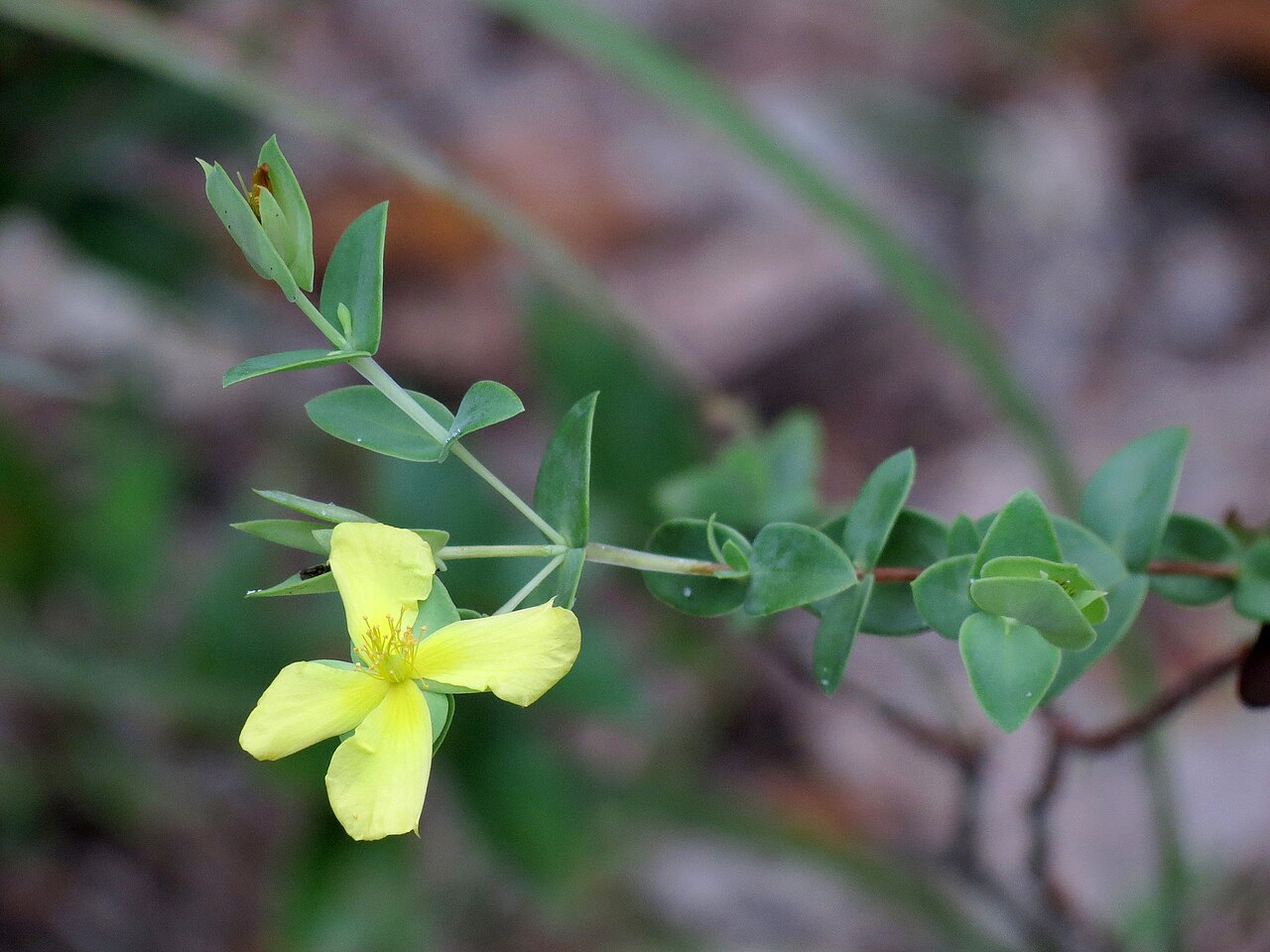
It is a small shrub, usually 1 to 2 feet tall and occasionally up to about 3 feet, with a few upright to arching branches from a woody base. The stems are reddish brown, slightly two-edged when young, and become woody and peeling with age.
Leaves
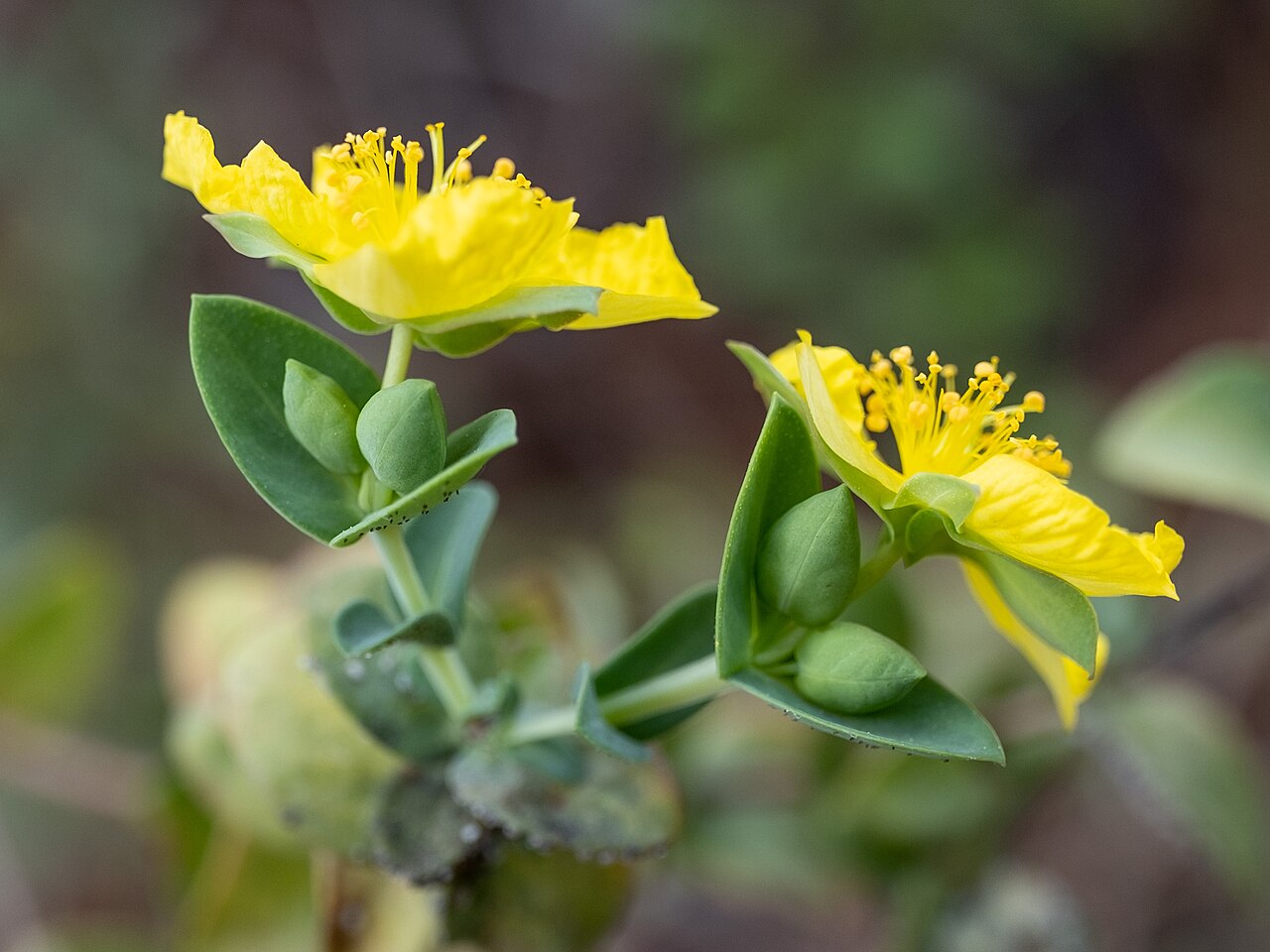
Leaves are opposite, stalkless and clasp the stem, broadly oval to heart-shaped, about ½ to 1 inch long, smooth, and a soft blue-green to gray-green. They are dotted with tiny glands, as in most St. John’s-worts. The broad, clasping leaves are one of the best ways to tell it apart from St. Andrew’s cross, which has narrow leaves that taper at the base.
Flowers
Flowers are about ¾ to 1 inch across, borne singly or a few together at the ends of branches. Each has four bright yellow petals, often slightly asymmetrical, and a dense brush of many yellow stamens around a single pistil. Beneath the petals are two large, broad, nearly round outer sepals and two tiny inner ones. The large sepals persist and enclose the developing fruit. In Florida flowers can appear year-round, most abundantly from spring into summer.
Fruit
The fruit is a small, egg-shaped capsule hidden between the two large sepals. It splits open when ripe to release many tiny seeds.
Quick Facts
| Scientific Name | Hypericum tetrapetalum (syn. Ascyrum tetrapetalum) |
| Family | Hypericaceae (St. John’s-wort family; Clusiaceae in some references) |
| Plant Type | Small evergreen to semi-evergreen shrub or subshrub |
| Mature Height | 1–2 ft (occasionally to 3 ft) |
| Mature Spread | 1–2 ft |
| Growth Rate | Moderate |
| Sun Exposure | Full sun to part shade |
| Water Needs | Moderate to high; moist soil, tolerates short dry spells |
| Soil Type | Acidic sand |
| Soil pH | Acidic (about 4.5–6.5) |
| Bloom Time | Year-round in Florida; heaviest spring–summer |
| Flower Color | Bright lemon yellow |
| Fall Color | None; blue-green leaves persist in mild winters |
| Fruit | Small capsule enclosed by two large sepals |
| Deer Resistant | Moderately |
| USDA Hardiness Zones | 8–11 |
Native Range
USDA PLANTS records fourpetal St. John’s-wort as native in only two states, Florida and Georgia. The Lady Bird Johnson Wildflower Center gives its distribution as Georgia south throughout Florida. In Georgia it is limited to the southern Coastal Plain near the Florida line. Outside the United States it grows in Cuba.
In Florida, the Atlas of Florida Plants lists it as native, and it is widespread in the peninsula and present in parts of the Panhandle. It grows in mesic and wet pine flatwoods, wet prairies, the edges of marshes, cypress domes and ponds, scrubby flatwoods and hammock edges, usually on moist, acidic sand.
Like other flatwoods shrubs, it is adapted to frequent fire. It resprouts from its woody base after burning and often flowers heavily in the first year or two afterward.
📋 Regional plant lists featuring Fourpetal St. John’s-wort: North & South Florida · Alabama, Georgia & Mississippi
Growing & Care Guide
Fourpetal St. John’s-wort is a small, tidy shrub that brings soft blue-green foliage and cheerful yellow flowers to Florida gardens for much of the year. It is sold by many Florida native nurseries. It does best in conditions that mimic moist flatwoods: acidic sandy soil, good light and no fertilizer.
Light
Full sun to part shade. It flowers most heavily in sun, and it also does well under high, open pines where it gets bright, filtered light.
Soil & Water
Plant it in acidic, sandy soil that stays moist but not waterlogged. It tolerates seasonally wet soil and short dry spells once established, but in very dry, fast-draining sand it needs occasional watering during droughts. Avoid alkaline soils, rich amendments and fertilizer.
Planting Tips
Plant container-grown shrubs about 2 feet apart in groups at the front of a native border, along a path, or in the moist edges of a rain garden. It combines well with other flatwoods plants such as gallberry, saw palmetto and native grasses.
Pruning & Maintenance
It needs little care. Older plants can become leggy; cut them back by about half in late winter to encourage bushy new growth. Individual plants are fairly short-lived in gardens, so let a few seedlings grow to replace them.
Propagation
Grow it from seed sown on the surface of moist, sandy soil, or from softwood cuttings taken in spring or early summer and rooted in a humid propagation chamber.
Landscape Uses
- Native borders and foundation plantings: a compact, blue-green shrub for the front of the bed
- Pollinator gardens: pollen-rich flowers for native bees for much of the year
- Rain gardens and moist edges: on the upper margins of swales and ponds
- Flatwoods restoration: within its native range in Florida and southern Georgia
- Containers: a small, long-blooming shrub for patios
Wildlife & Ecological Value
Fourpetal St. John’s-wort supports insects in the flatwoods through much of the year, when its flowers are often among the few open.
For Pollinators
Its flowers have no nectar but produce plenty of pollen, which attracts bumblebees, sweat bees and other native bees. Bees often buzz the flowers to shake pollen loose from the many stamens.
For Birds
The small seeds have limited value as bird food, but the dense, low shrubs give cover to ground-foraging birds in flatwoods.
For Mammals
Mammals rarely browse it. Like other St. John’s-worts, it may contain hypericin, which can make grazing animals sensitive to sunlight, as the Lady Bird Johnson Wildflower Center notes.
Ecosystem Role
It is part of the shrubby groundcover of Florida’s fire-maintained pine flatwoods, resprouting after burns and helping hold sandy soils in place. St. John’s-worts also feed the caterpillars of several native moths.
Cultural & Historical Uses
Lamarck described this plant as Hypericum tetrapetalum in 1797. Because of its four petals and paired sepals, it was later moved to the genus Ascyrum, and older field guides list it as Ascyrum tetrapetalum. Later studies of the genus showed that Ascyrum does not stand apart from Hypericum, so it has returned to its original name.
The Lady Bird Johnson Wildflower Center notes that many St. John’s-worts have a long history of use as herbal remedies, and warns that they can cause extreme sensitivity to sunlight in some people and poisoning in animals that eat large quantities. Fourpetal St. John’s-wort is not a recognized medicinal plant and should not be used as one.
Today it is one of the most commonly planted native St. John’s-worts in Florida, valued as a small, long-blooming shrub that fits easily into residential landscapes and flatwoods restorations.
Frequently Asked Questions
How do I tell fourpetal St. John’s-wort from St. Andrew’s cross?
Both have four yellow petals. Fourpetal St. John’s-wort has broad, oval to heart-shaped leaves that clasp the stem and large, nearly round outer sepals. St. Andrew’s cross (Hypericum hypericoides) has narrow leaves that taper to the base and narrow, X-shaped flowers.
Is fourpetal St. John’s-wort evergreen?
In most of Florida it keeps its blue-green leaves through the year, though some may drop during cold or very dry periods.
Where does it grow naturally?
It is native to Florida and southern Georgia, and to Cuba. It grows in pine flatwoods, wet prairies and the edges of ponds and marshes.
Does it need wet soil?
It prefers moist, acidic sand and tolerates seasonal wetness, but it is not an aquatic plant. In dry sandy gardens, water it during droughts.
Will it attract pollinators?
Yes. Its pollen-rich flowers attract bumblebees and other native bees through much of the year in Florida.

Looking for a nursery that carries Fourpetal St. John’s-wort?
Browse our native plant nursery directory: Florida & Georgia