
Seacoast Marsh Elder (Iva imbricata)
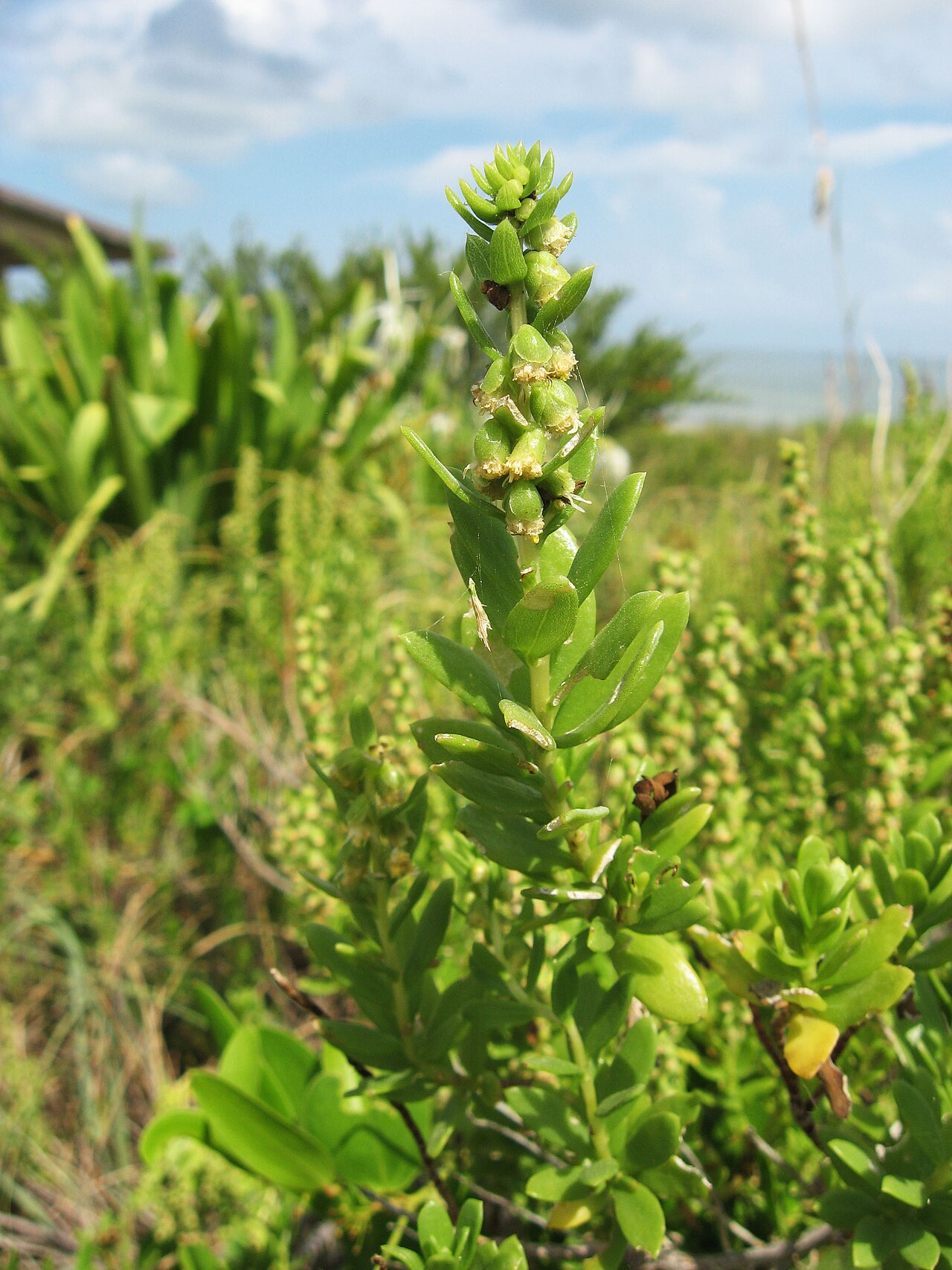
Iva imbricata, the Seacoast Marsh Elder, also called dune marsh-elder or seacoast marshelder (the spelling used by the Atlas of Florida Plants), is a low, fleshy-leaved shrub of beaches and coastal dunes. It grows along the Atlantic and Gulf coasts of the United States from southeastern Virginia to Texas, and in the Bahamas and Cuba. It belongs to the aster family (Asteraceae) and is a close relative of the ragweeds.
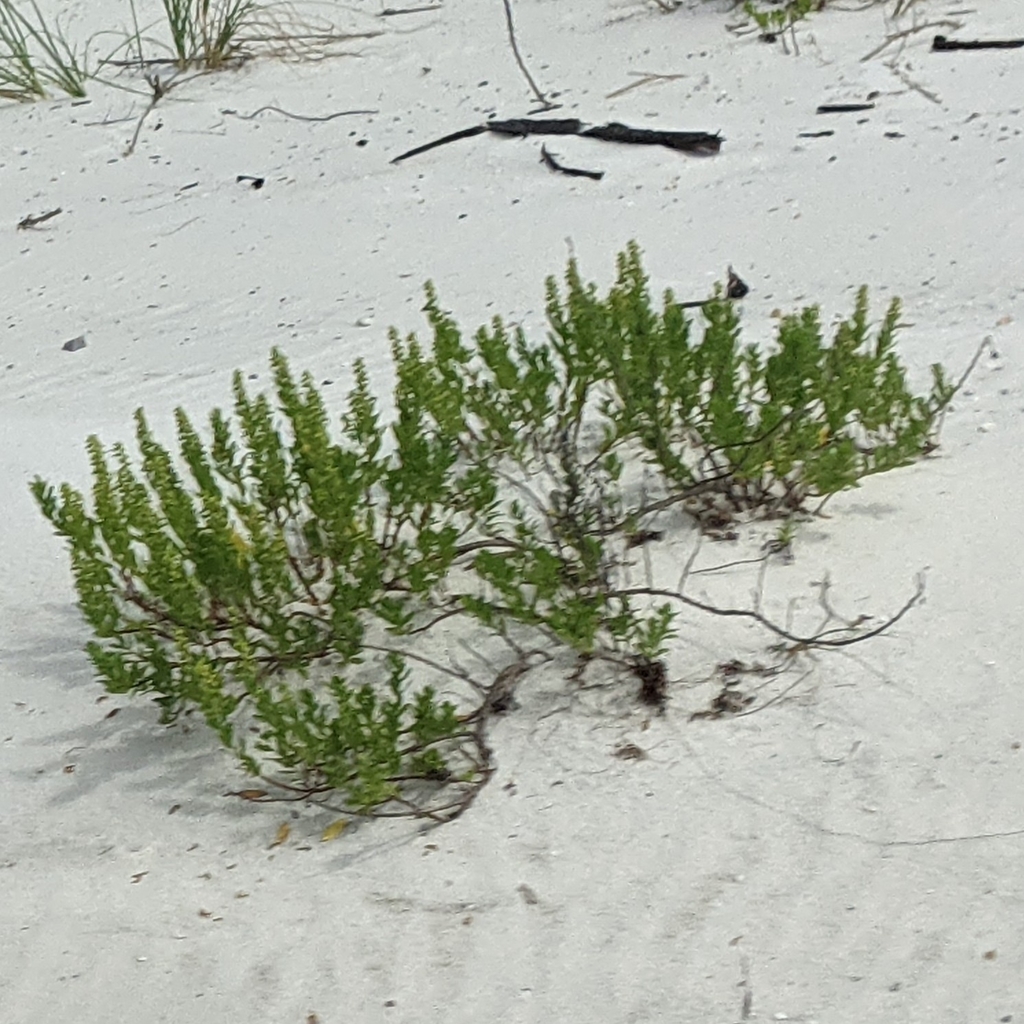
This is one of the most salt-tolerant shrubs on the southeastern coast. It often grows farther seaward than any other woody plant, on the upper beach and the face of the foredune, where it is regularly blasted by salt spray and sometimes washed by storm tides. Its branches spread over the sand, and as blowing sand buries them they root and send up new shoots. Over time a single plant can build a low mound, which makes it a valuable dune-building and dune-stabilizing plant.
Seacoast marsh elder is not grown for showy flowers. Its blooms are small, greenish and wind-pollinated. Coastal gardeners, dune restoration crews and beachfront property owners value it for something else: a tough, evergreen, light green groundcover shrub that holds sand in places almost nothing else will grow. This guide covers how to identify it, where it grows and how to use it in coastal plantings.
Identification
Seacoast marsh elder is easy to recognize once you know its habitat. On the open beach or foredune, a low, sprawling shrub with thick, smooth, light green leaves and leafy spikes of tiny greenish flower heads is almost certainly this species. Its relative, the taller marsh elder (Iva frutescens), grows on the edges of salt marshes rather than on the beach.
Stems & Growth Habit
It is a perennial subshrub, usually 1 to 3 feet tall, woody at the base with greener, more herbaceous upper stems. The stems are smooth and often reddish or brown when older. Plants spread outward across the sand, and stems buried by drifting sand root at the nodes, so a colony may form a low hummock several feet across.
Leaves
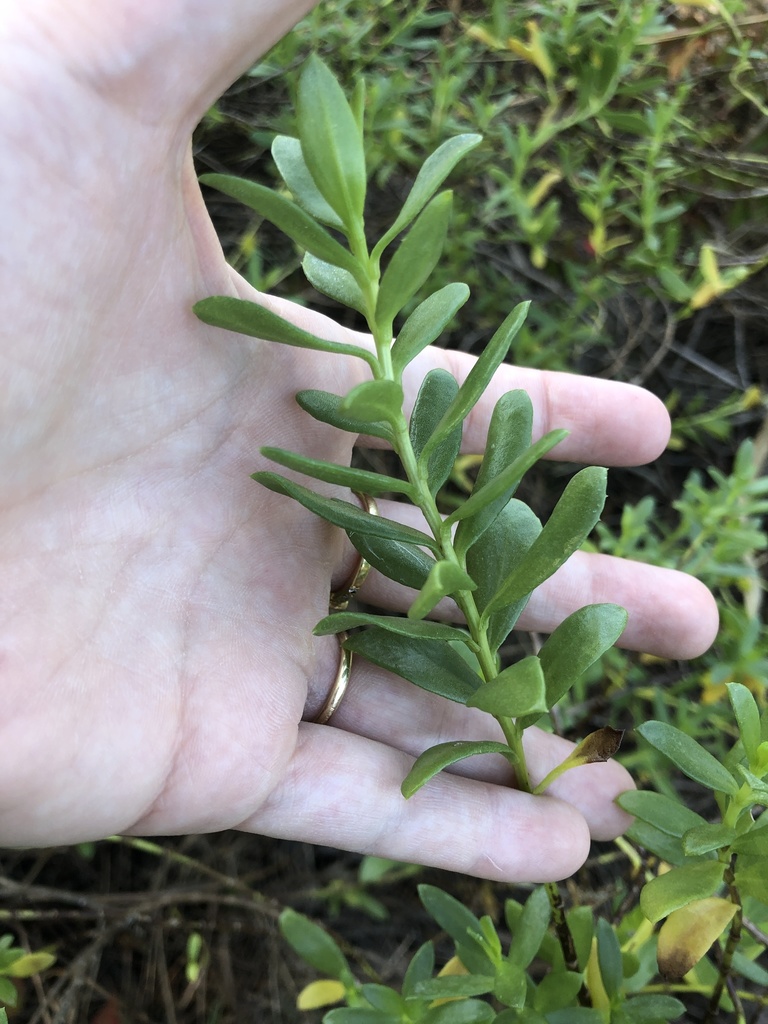
The leaves are the best field mark. They are thick and succulent, about 1 to 2½ inches long and roughly a quarter to half an inch wide, narrowly oblong to lance-shaped, mostly with smooth edges, and light green to slightly grayish. They are smooth or only finely hairy. Lower leaves are often opposite, while those on the upper stems are alternate. They are crowded and overlapping along the stems, which is the source of the name imbricata (Latin for overlapping like roof tiles).
Flowers
The flower heads are small, about a quarter inch across, nodding, and borne singly in the axils of leafy bracts along the upper stems, forming slender spikes. Each head has a cup of green, overlapping phyllaries and a few to about 17 tiny disc florets, with no ray flowers. The flowers are whitish to greenish, sometimes tinged pink or yellow. Bloom time is mainly late summer and fall (about July to October), and in south Florida flowering can continue into winter.
Fruit & Seeds
Each fertile floret produces a small, dark, smooth, wedge-shaped seed (a cypsela) a few millimeters long, without a pappus. The seeds drop near the plant or are carried by wind, waves and storm tides along the shore. Germination in the wild tends to be sparse, and most spread on established dunes is vegetative, from buried stems.
Quick Facts
| Scientific Name | Iva imbricata Walter |
| Family | Asteraceae (aster family) |
| Plant Type | Evergreen perennial subshrub |
| Mature Height | 1–3 ft |
| Mature Spread | 2–4 ft or more; spreads by rooting stems |
| Growth Rate | Moderate to fast |
| Sun Exposure | Full sun |
| Water Needs | Low once established; well-drained sand |
| Soil Type | Beach and dune sand; tolerates salt spray and occasional overwash |
| Soil pH | About 6.5–8.5 (neutral to alkaline beach sand) |
| Bloom Time | July–October (into winter in south Florida) |
| Flower Color | Greenish-white, sometimes pink- or yellow-tinged |
| Fall Color | None; evergreen |
| Fruit | Small dark cypselae |
| Deer Resistant | Yes; rarely browsed |
| USDA Hardiness Zones | 7–11 |
Native Range
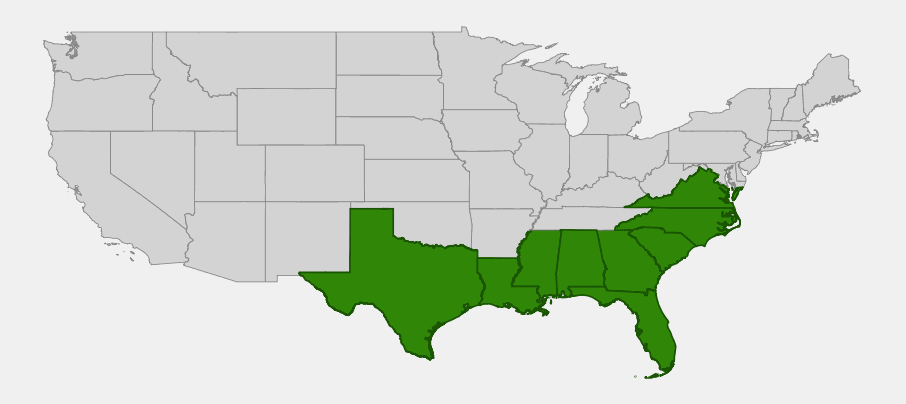
Seacoast marsh elder is strictly coastal. USDA PLANTS and the Lady Bird Johnson Wildflower Center record it as native in nine states: Virginia, North Carolina, South Carolina, Georgia, Florida, Alabama, Mississippi, Louisiana and Texas. Its northern limit is in southeastern Virginia, and on the Gulf it reaches the barrier islands of south Texas. It also grows on the coasts of the Bahamas and Cuba.
In Florida it occurs on beaches around almost the whole coast, from the Panhandle barrier islands through the peninsula to the Florida Keys. It is a plant of the upper beach, the foredune, dune blowouts and overwash flats, and it sometimes grows on the sandy edges of brackish marshes near the shore. The U.S. Army Corps of Engineers wetland plant list rates it Facultative Wetland (FACW), reflecting its tolerance of tidal flooding along the coast.
Within this narrow coastal band, the plant’s abundance rises and falls with storms. Hurricanes can bury or wash away whole colonies, but surviving stems and stranded fragments root quickly, and the plant is often one of the first woody species to recolonize a damaged dune. Beach driving, heavy foot traffic and coastal development have reduced it in some areas.
📋 Regional plant lists featuring Seacoast Marsh Elder: North & South Florida · Alabama, Georgia & Mississippi · North & South Carolina · Maryland, Virginia & West Virginia · Arkansas, Louisiana, Eastern Oklahoma & Eastern Texas · South & West Texas
Growing & Care Guide
Seacoast marsh elder is one of the easiest dune plants to grow and is regularly used in dune restoration along the Southeast coast. In a garden setting it is best for oceanfront yards, beach walkovers and other spots exposed to wind, salt and sun. Buy nursery-grown plants. Disturbing wild dune plants is harmful to the dune, and in many coastal areas it is regulated, so work with local permits and rules when planting on the beach itself.
Light
Give it full sun. It does not tolerate much shade and becomes leggy and sparse under trees.
Soil & Water
Plant in pure sand or very sandy, fast-draining soil. It thrives in salty, nutrient-poor sand and does not need fertilizer or soil amendments, which mainly encourage weeds. Water new plantings regularly for the first few weeks until roots reach moist sand below the surface. After that it is drought tolerant and normally needs no irrigation, even in summer.
Planting Tips
Plant small plugs or containers about 2 to 3 feet apart, a little deeper than they grew in the pot, since the stems root where buried. The best planting time on the coast is late spring through summer, when rain is regular. Combine it with sea oats, coastal panic grass and beach morning glory to stabilize a dune more quickly than any one species alone. Use sand fencing or plant behind it on very exposed sites.
Pruning & Maintenance
Very little maintenance is needed. It can be trimmed lightly to keep it off paths and walkovers, but avoid shearing it into a hedge. After storms, leave any partly buried plants in place: they will grow up through the new sand. Remove invasive species such as beach naupaka, where they occur, so they do not overrun it.
Propagation
It is easily propagated from stem cuttings, and this is how most nursery and restoration stock is produced. Take 4 to 6 inch cuttings from healthy stems in spring or summer and root them in moist sand or a sandy mix. Seed can also be sown, but germination is usually low and slower than cuttings.
Landscape Uses
- Dune restoration: a proven sand-trapping shrub for foredunes and damaged dune faces
- Oceanfront landscaping: a low, salt-proof evergreen for beachfront yards and walkovers
- Erosion control: holds loose sand on exposed slopes where grasses alone are not enough
- Coastal xeriscaping: needs no irrigation or fertilizer once established
- Wildlife cover: gives low shelter for shorebirds, lizards and small dune animals
Wildlife & Ecological Value
Seacoast marsh elder does not feed many animals directly, but it is an important structural plant on the dune. Its low, dense mounds trap sand, create shelter from wind and sun, and help build the dune habitat that many coastal species depend on.
For Pollinators
Like the ragweeds, marsh elders are wind-pollinated. The tiny flowers produce light, dry pollen and no showy display, so they attract relatively few pollinators. Small insects such as flies and small bees sometimes visit the flowers to collect pollen.
For Birds
Shorebirds, sparrows and other birds use the mounds for cover on open beaches, and some beach-nesting birds nest near clumps of dune vegetation. Small seed-eating birds may take some of the seeds.
For Mammals
On some barrier islands, beach mice shelter and forage among the dune plants it helps hold in place. The foliage is rarely eaten by deer or rabbits.
Ecosystem Role
Its main role is as a dune builder. Stems spread across the beach and catch wind-blown sand, and new shoots grow up through each layer of sand that buries them. The result is a series of low hummocks that may later be colonized by sea oats and other dune grasses. Because it tolerates salt spray and short-term flooding better than most woody plants, it marks the seaward edge of shrub growth on many southeastern beaches.
Cultural & Historical Uses
The species was described by Thomas Walter in his Flora Caroliniana (1788), one of the first floras of the southeastern United States, based on plants from the South Carolina coast. Its genus name, Iva, was used by Linnaeus, and the species epithet imbricata refers to the overlapping, shingle-like leaves.
Common names vary. USDA PLANTS uses “seacoast marsh elder,” the Atlas of Florida Plants uses “seacoast marshelder,” and many coastal guides use “dune marsh-elder” or simply “beach elder.” The shared name “marsh elder” links it to its relative Iva frutescens, a larger shrub of salt marsh edges.
Today the plant is mostly known to coastal ecologists, dune restoration programs and beachfront landscapers. Native plant nurseries in Florida and the Carolinas grow it for dune plantings, often alongside sea oats, and it is recommended in many coastal planting guides for beachfront properties along the Southeast and Gulf coasts.
Frequently Asked Questions
Is seacoast marsh elder the same as marsh elder?
No. They are related species in the same genus. Seacoast marsh elder (Iva imbricata) is a low shrub of beaches and dunes with thick, fleshy leaves. Marsh elder (Iva frutescens) is a taller shrub, often 3 to 10 feet, with toothed leaves, and it grows along the edges of salt marshes.
Can it be planted on the beach?
Yes, it is one of the standard plants for dune restoration in the Southeast. Work on the beach and dune is regulated in many coastal states and counties, so check local rules and permits before planting on the dune itself, and use nursery-grown plants.
Does it cause hay fever?
Marsh elders are wind-pollinated relatives of ragweed, and their pollen can contribute to fall allergies in some people. Because this species grows in small populations on the beach and is usually low, it is not normally a major allergy source in home landscapes.
How salt tolerant is it?
Very. It tolerates constant salt spray, salty sand and occasional overwash by storm tides, and it often grows closer to the water than any other woody plant on the beach.
How do I propagate it?
Stem cuttings root readily in moist sand during spring and summer. Seed can be sown, but germination is generally low.

Looking for a nursery that carries Seacoast Marsh Elder?
Browse our native plant nursery directory: Alabama · Florida & Georgia · Louisiana & Mississippi · North Carolina · South Carolina, Texas & Virginia