
Eastern False Dragonhead (Physostegia purpurea)
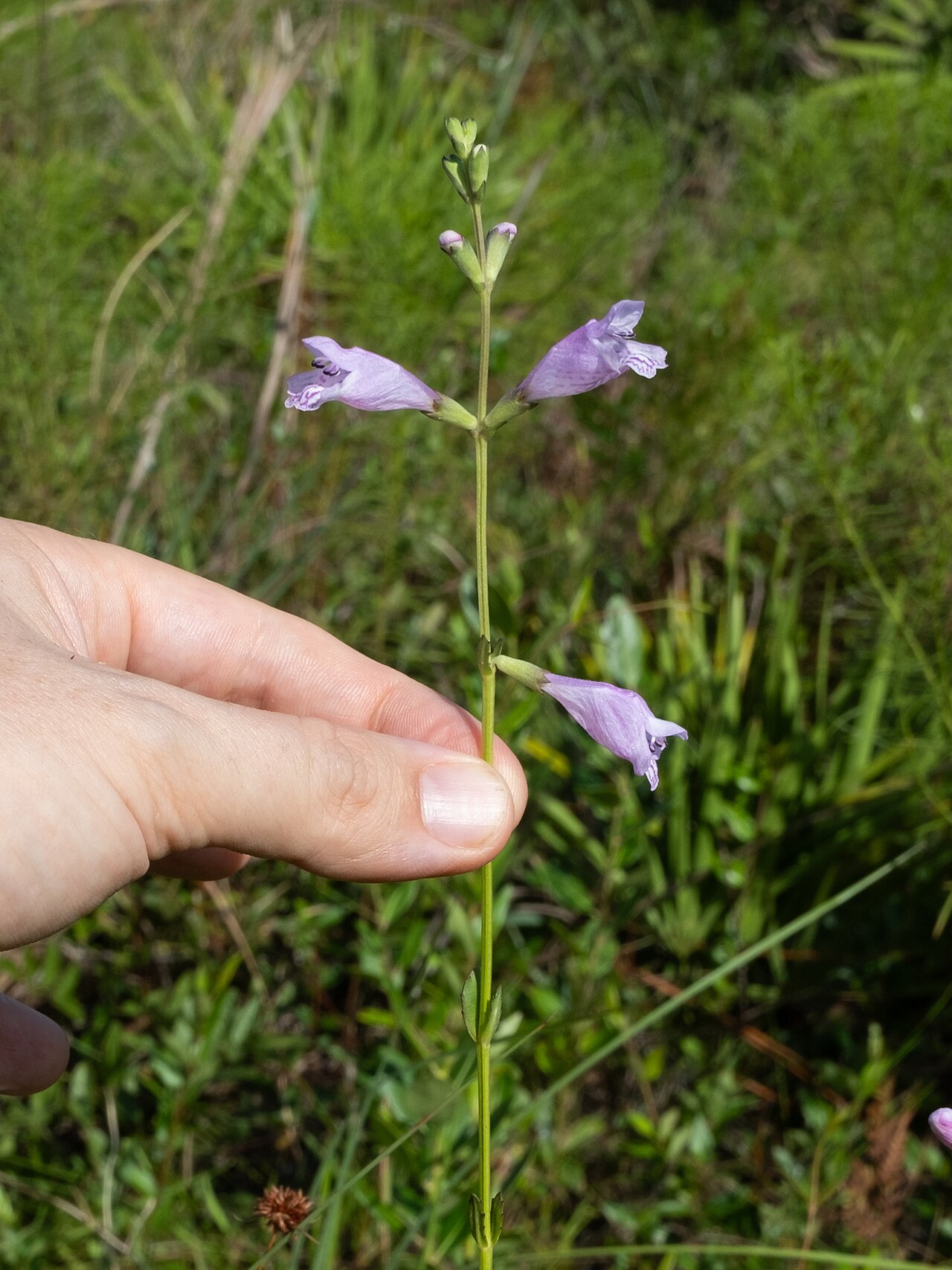
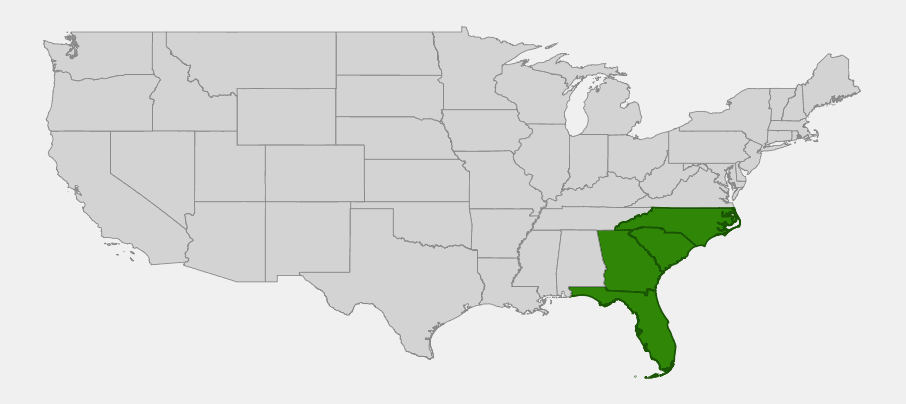
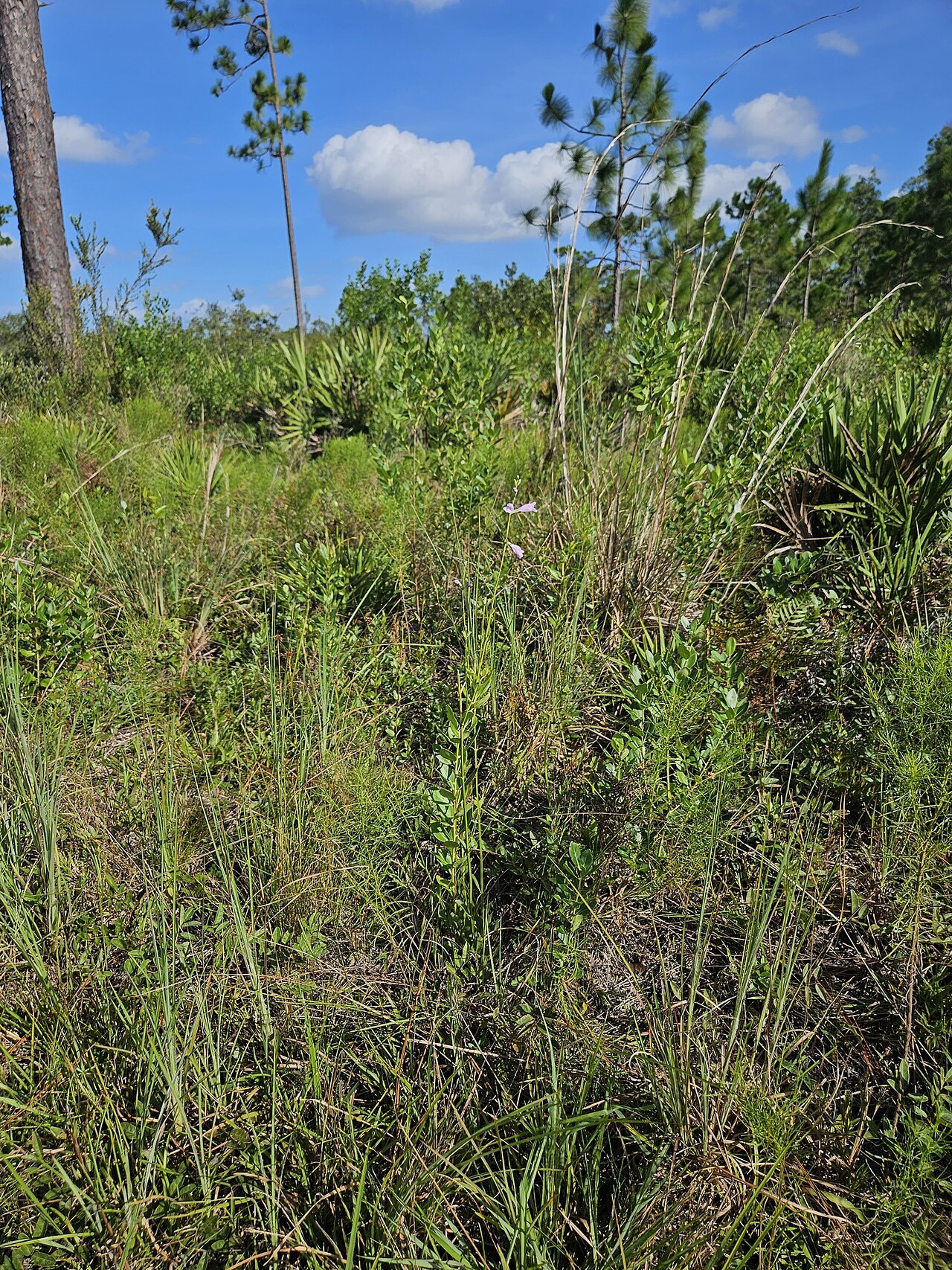
Physostegia purpurea, the Eastern False Dragonhead, is a slender perennial wildflower of the mint family (Lamiaceae) native to the southeastern Coastal Plain. USDA PLANTS records it from Florida, Georgia, South Carolina and North Carolina. It grows in wet pine flatwoods and savannas, wet prairies, marsh edges, seepage areas and wet roadside ditches, usually in sun and in sandy or peaty soil that is wet for part of the year.
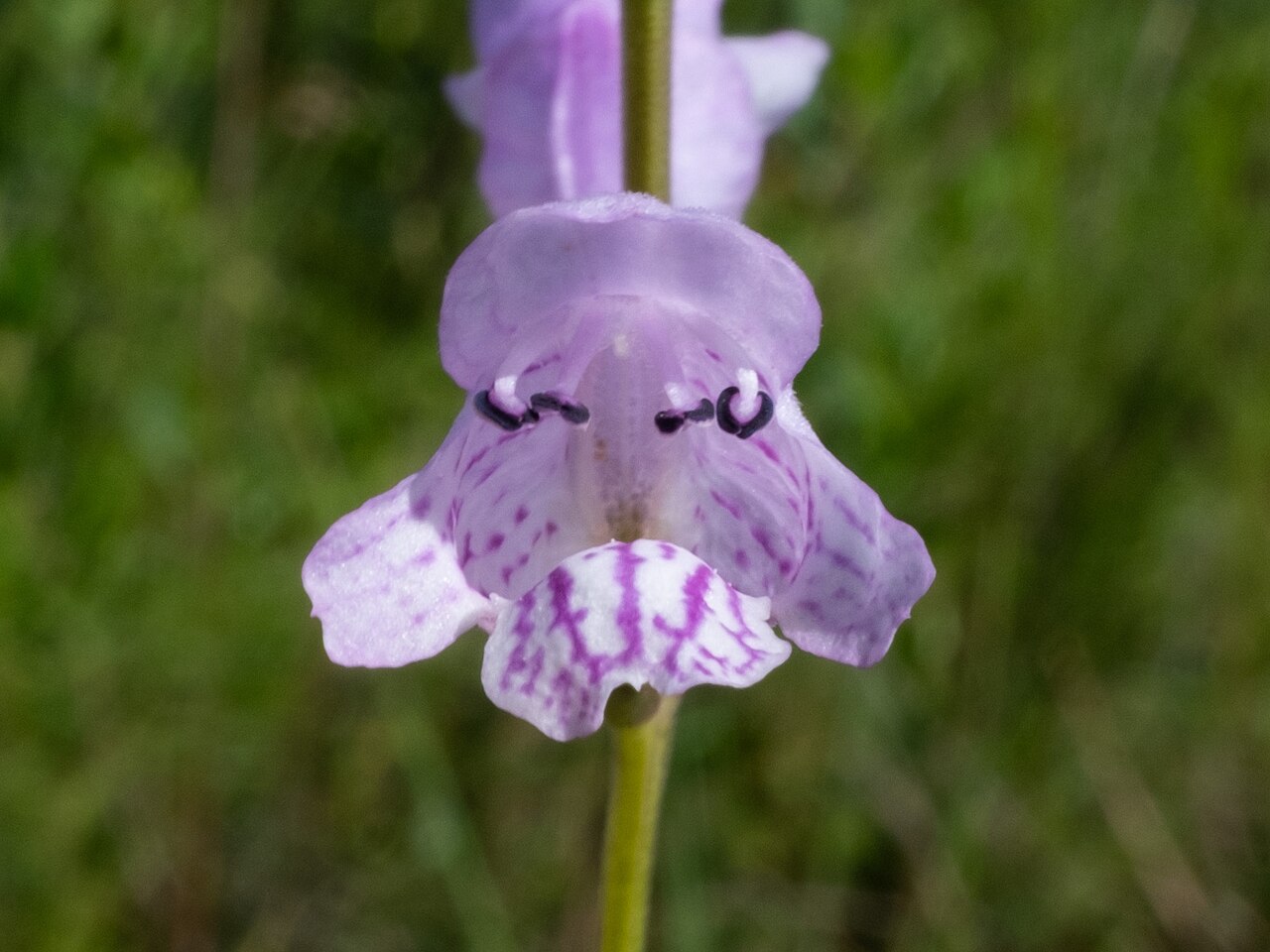
From spring into summer, the square stems rise 1 to 4 feet and end in slender spikes of two-lipped, lavender to purplish-pink flowers, about an inch long, that resemble small snapdragons. The lower lip is pale and spotted or streaked with purple. The leaves are largest near the base of the plant and become smaller and more bract-like up the stem, giving the plant a narrow, wand-like look.
Eastern false dragonhead is a close relative of the popular obedient plant (Physostegia virginiana), but it is a more delicate, Coastal Plain species that is rarely sold. Older references list it under names such as Dracocephalum purpureum, Physostegia denticulata (as used by Small) and Physostegia obovata. This guide covers how to recognize it, where it grows and how to grow it in wet, sunny native gardens.
Identification
False dragonheads (genus Physostegia) share square stems, opposite leaves and spikes of two-lipped flowers that often line up in rows. Eastern false dragonhead is recognized by its leaves, which are broadest at the base of the plant and quickly shrink upward, its relatively few-flowered, loose spikes and its wet, sunny Coastal Plain habitats.
Stems & Roots
The plant grows from short rhizomes and fibrous roots and may form small clumps or loose colonies. The stems are erect, square in cross-section, smooth, and usually unbranched below the flower spike, ranging from about 1 to 4 feet tall.
Leaves
The leaves are opposite. The lower ones are the largest, obovate to spatula-shaped (widest toward the tip), and narrowed at the base, with shallow, rounded teeth or nearly smooth edges. Upward they become narrower, shorter and fewer, so the upper stem below the flowers has only small, widely spaced leaves. This change in leaf size from bottom to top is a good field mark that separates it from obedient plant, whose leaves are more uniform along the stem.
Flowers
The flowers are carried in one or a few loose terminal spikes. Each is tubular and two-lipped, about ¾ to 1 inch long, lavender to pale purple or pinkish, with a hooded upper lip and a three-lobed lower lip that is paler and marked with purple spots or streaks. They open from the bottom of the spike upward. The main bloom time is spring to early summer, roughly April to July, with scattered flowers later into September.
Fruit & Seeds
Each pollinated flower produces four small, smooth, brown nutlets inside the persistent calyx. The seeds are released as the calyces dry in summer and fall.
Quick Facts
| Scientific Name | Physostegia purpurea (Walter) S.F. Blake (syn. Dracocephalum purpureum, Physostegia obovata, P. denticulata sensu Small) |
| Family | Lamiaceae (mint family) |
| Plant Type | Herbaceous perennial wildflower |
| Mature Height | 1–4 ft |
| Mature Spread | 1–2 ft; may form loose colonies |
| Growth Rate | Moderate |
| Sun Exposure | Full sun to light shade |
| Water Needs | Moderate to high; moist to wet soil |
| Soil Type | Wet sand, peaty sand or loam |
| Soil pH | About 4.5–6.5 (acidic) |
| Bloom Time | April–July (scattered flowers to September) |
| Flower Color | Lavender to pale purple or pinkish, with purple spots |
| Fall Color | None notable |
| Fruit | Small brown nutlets in the persistent calyx |
| Deer Resistant | Moderately |
| USDA Hardiness Zones | 7–10 |
Native Range
Eastern false dragonhead is a plant of the southeastern Atlantic and Gulf Coastal Plain. USDA PLANTS and the Lady Bird Johnson Wildflower Center list it as native in Florida, Georgia, South Carolina and North Carolina. In Florida it is widespread from the Panhandle through north and central Florida into the southern peninsula.
It grows in seasonally wet, open habitats: wet pine flatwoods and savannas, wet prairies, the edges of marshes, cypress domes and depression ponds, seepage slopes, and wet ditches and roadsides. The U.S. Army Corps of Engineers wetland plant list rates it Facultative Wetland (FACW), meaning it usually occurs in wetlands but sometimes in moist uplands.
Like many plants of the southeastern pinelands, it depends on frequent fire or other disturbance to keep its habitat open and sunny. Where fire is excluded and shrubs and trees close in, it declines. It is not listed as endangered or threatened by the state of Florida.
📋 Regional plant lists featuring Eastern False Dragonhead: North & South Florida · Alabama, Georgia & Mississippi · North & South Carolina
Growing & Care Guide
Eastern false dragonhead is not common in the nursery trade, but it is occasionally offered by southeastern native plant nurseries and seed suppliers. It is a good choice for wet, sunny spots in Coastal Plain gardens. Start with nursery-grown plants or seed, rather than digging plants from the wild.
Light
Give it full sun to light shade. It flowers most heavily in sun, and in too much shade the stems become weak and flowering declines.
Soil & Water
Plant it in moist to wet, acidic soil: sandy or peaty ground in a rain garden, a wet meadow, a pond edge or a low spot in the yard. It tolerates short periods of standing water and moderate drying once established, but it does best where the soil stays moist through spring and early summer. It does not need fertilizer.
Planting Tips
Plant in fall or early spring, spacing plants about 12 to 18 inches apart, and group several together for a better display, since individual plants are slender. Combine it with grasses and other wetland wildflowers such as meadow beauties, blazing stars and pitcher plants in a bog or wet savanna garden.
Pruning & Maintenance
Little care is needed. Remove spent flower spikes if you do not want seed, or leave them to self-sow. Cut the old stems back in late winter. In a naturalistic planting, an occasional controlled burn or annual mowing in winter helps keep competing shrubs out, mimicking the fires of its native habitat.
Propagation
Divide established clumps in late winter or early spring. Seed can be sown outdoors in fall or after a period of cold, moist stratification in spring, and seedlings often bloom in their second year. Stem cuttings taken in late spring may also root.
Landscape Uses
- Rain gardens: a spring and early summer bloomer for sunny, wet sites
- Wet savanna and bog gardens: pairs well with pitcher plants, meadow beauties and grasses
- Pollinator gardens: attracts bees and other pollinators with long-tubed flowers
- Wetland and pineland restoration: within its Coastal Plain range, from seed or propagated plants
- Naturalized meadows: adds slender spikes of color among native grasses
Wildlife & Ecological Value
Eastern false dragonhead is a modest but useful wildlife plant in wet pinelands and savannas, where it adds nectar in late spring and early summer.
For Pollinators
The two-lipped flowers are well suited to bees, especially bumblebees and other medium to large bees that can push into the tube. The purple spots and lines on the lower lip act as nectar guides. Butterflies and hummingbirds may also visit the flowers.
For Birds
It has little direct food value for birds, but the insects it supports are food for insect-eating birds of open pinelands and wet meadows.
For Mammals
Deer and rabbits sometimes eat the young growth. It is otherwise of little importance to mammals.
Ecosystem Role
As a component of the diverse groundcover of wet pine flatwoods and savannas, it contributes to the high plant diversity that makes these fire-maintained ecosystems among the richest in North America. It responds well to periodic fire, which clears competing vegetation and encourages flowering.
Cultural & Historical Uses
The species was first described by Thomas Walter in his Flora Caroliniana (1788), based on plants from the South Carolina Coastal Plain, and he placed it in a different genus. It was later also treated as Dracocephalum purpureum. The American botanist Sidney Fay Blake later moved it to Physostegia. The genus name comes from Greek words meaning “bladder covering,” referring to the calyx that inflates slightly around the developing fruit.
Botanists have long debated how to divide the southeastern false dragonheads, and several names have been applied to this plant over the years, including Physostegia obovata and Physostegia denticulata as interpreted by John Kunkel Small in his southeastern floras. Current treatments, including USDA PLANTS and the Atlas of Florida Plants, use Physostegia purpurea.
Unlike its widely grown relative, the obedient plant, eastern false dragonhead has remained largely a wildflower of the pinelands rather than a garden plant. Native plant enthusiasts in Florida and the Carolinas are beginning to grow it in rain gardens and pineland restorations, where its soft lavender spikes are a welcome sight in late spring.
Frequently Asked Questions
How is eastern false dragonhead different from obedient plant?
Obedient plant (Physostegia virginiana) is a larger, more widespread species with fairly uniform leaves along the stem and dense flower spikes in late summer. Eastern false dragonhead is more slender, with its largest leaves near the base, looser spikes, and mostly spring to early summer bloom in the Coastal Plain.
How does it differ from slenderleaf false dragonhead?
Slenderleaf false dragonhead (P. leptophylla) has narrow, more uniform leaves along the stem and grows mainly in swamps, wet woods and tidal marsh edges. Eastern false dragonhead has broader lower leaves that shrink upward and grows in open, sunny flatwoods and savannas.
Does eastern false dragonhead spread aggressively?
No. It grows from short rhizomes and may form small clumps or loose colonies, but it is not aggressive like some forms of obedient plant.
Can it grow in a dry yard?
It needs moist to wet soil, at least in spring and early summer. It is not suited to dry sandy sites.
When does it bloom?
Mainly from April to July, with scattered flowers into late summer.

Looking for a nursery that carries Eastern False Dragonhead?
Browse our native plant nursery directory: Florida & Georgia · North Carolina · South Carolina