
Spanish Cedar (Cedrela odorata)
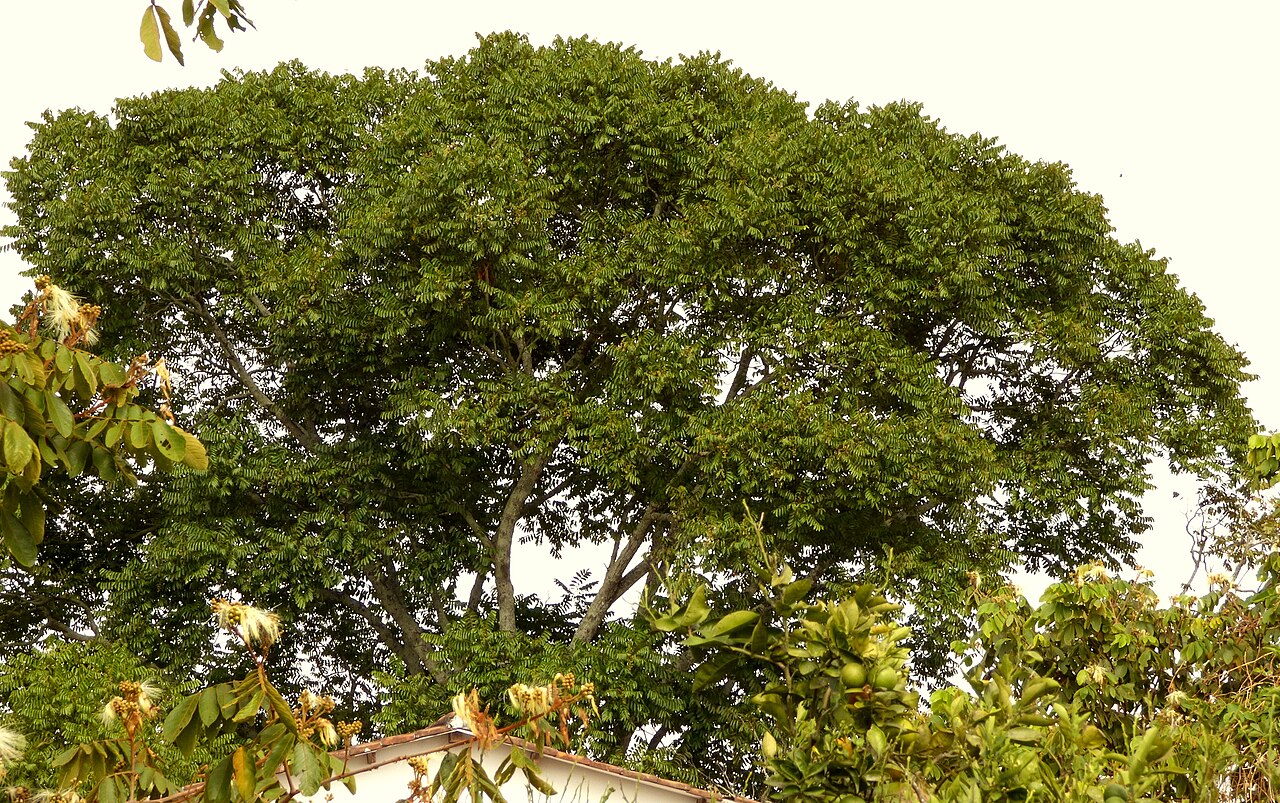
Cedrela odorata, known in English as Spanish Cedar and in Puerto Rico as cedro or cedro hembra del país, is a large native tree of the mahogany family (Meliaceae). USDA PLANTS lists it under the name Spanish cedar. It is not a true cedar at all: the name comes from its aromatic, insect-repelling wood, which smells like that of the true cedars (Cedrus) and has long been used for clothes chests and cigar boxes.
Spanish cedar is the most widespread and commercially important species of its genus. It grows naturally from Mexico through Central America and the West Indies to Argentina, and USDA PLANTS lists it as native in Puerto Rico. On the island it grows in moist and wet forests and is most common on limestone soils, often as scattered trees among other species, according to the USDA Forest Service silvics of Puerto Rico’s trees.
Over centuries of logging, large Spanish cedars have become scarce through much of the tropics. This guide covers how to recognize the tree, where it grows in Puerto Rico, how to grow it successfully (including its main pest, the mahogany shoot borer), its value to wildlife, and its long history as one of the most valued timbers of the Americas.
Identification
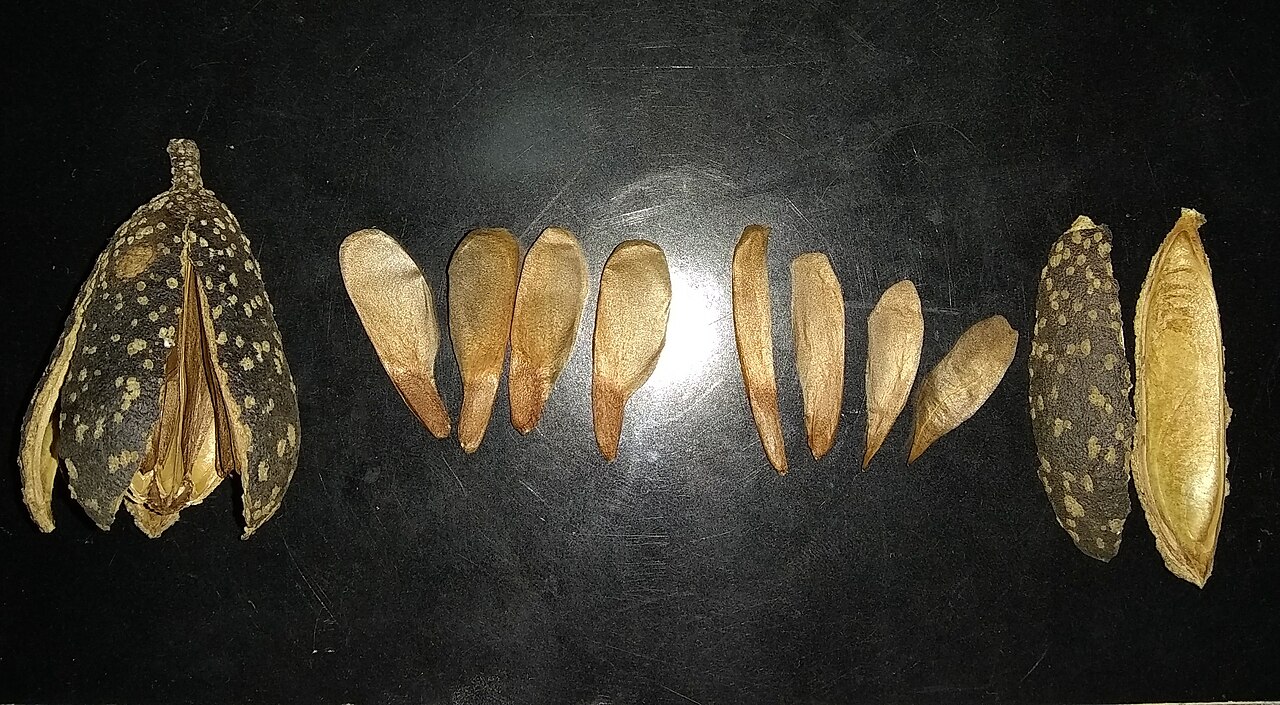
Spanish cedar is a tall, deciduous tree with a straight, clean trunk, a light, open crown and large, feathery, pinnately compound leaves. In fruit it is unmistakable: clusters of woody capsules near the branch tips split open like stars to release winged seeds.
Form & Bark
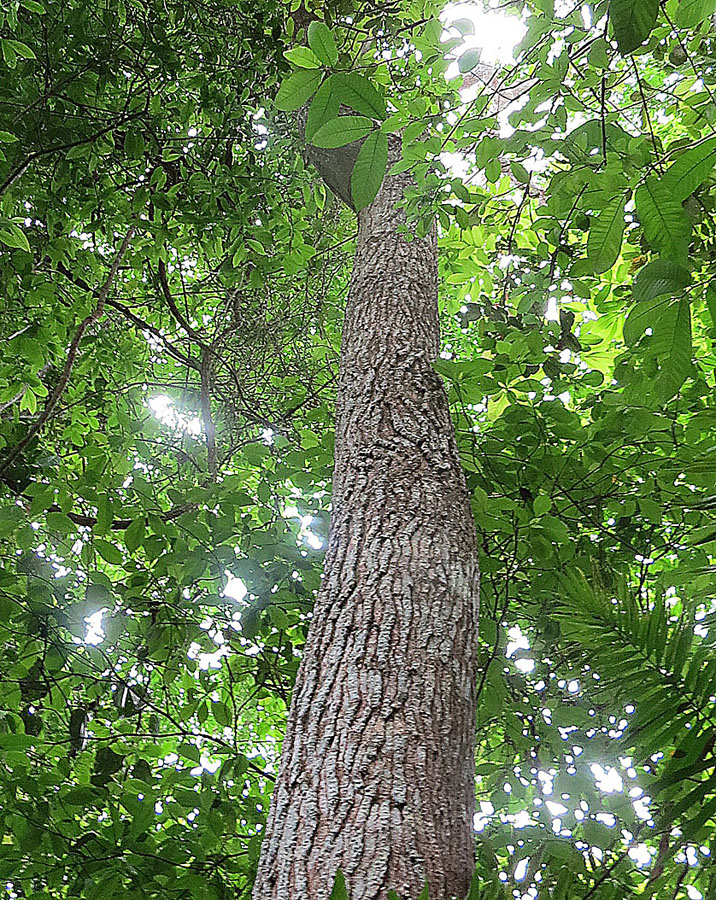
Large trees reach about 100 to 130 feet (30–40 m) tall, with a straight, clear trunk often 50 to 65 feet (15–20 m) long below the first branch, and narrow buttresses at the base. Young trees have smooth, grayish bark that gradually develops vertical fissures and becomes somewhat brownish as the tree matures. The crown is open and thin, with light green foliage.
Leaves
The leaves are large, alternate and pinnately compound, with many leaflets. Trees of the West Indian form, on which the species was first described, have smooth foliage with leaflets that sit directly on the leaf axis; trees from Central and South America (once called Cedrela mexicana) are often hairy, with larger leaves and stalked leaflets. Spanish cedar is deciduous, dropping its leaves in the dry season and flushing new ones at the start of the rains.
Flowers
The tree flowers at the start of the rainy season, from about May to August in the West Indies, as the new leaves expand. Large, branched clusters carry many small, five-parted, greenish-white flowers. Male and female flowers occur in the same cluster, and the female flowers open first.
Fruit & Seeds
The fruit is a woody capsule borne near the branch tips. It takes about 9 to 10 months to ripen, maturing in the following dry season, then splits from the top while still on the tree. Each capsule releases 40 to 50 winged seeds about ¾ to 1 inch (20–25 mm) long, including the wing, which are spread by the wind. Trees begin fruiting at about 10 to 12 years old.
Quick Facts
| Scientific Name | Cedrela odorata L. |
| Family | Meliaceae (mahogany family) |
| Plant Type | Large deciduous tree |
| Mature Height | 60–100 ft; up to about 130 ft |
| Mature Spread | Open, thin crown; spreading on older trees |
| Growth Rate | Fast once established |
| Sun Exposure | Full sun (light shade tolerated as a seedling) |
| Water Needs | Moderate; best with a 2–5 month dry season |
| Soil Type | Very well-drained, well-aerated soils; often limestone clays |
| Soil pH | Adaptable; drainage matters more than pH |
| Bloom Time | About May–August in the West Indies |
| Flower Color | Greenish white |
| Fall Color | None; leaves drop in the dry season |
| Fruit | Woody, star-like capsule releasing 40–50 winged seeds |
| Deer Resistant | Not rated (no deer in Puerto Rico) |
| USDA Hardiness Zones | Frost-free tropics (about zones 10b–12) |
Native Range
Spanish cedar is native across the American tropics, from about 26° north on the Pacific coast of Mexico through Central America and the West Indies to the lowlands and foothills of most of South America, reaching about 28° south in Argentina. USDA PLANTS lists it as native in Puerto Rico. It has been planted widely in Africa, Asia and the Pacific for timber, and it has become invasive in some places outside its range, such as the Galápagos Islands.
In Puerto Rico, Spanish cedar grows in the subtropical moist and wet forest zones but is most common in the moist zone on soils derived from limestone, including the karst country of the north. It also grows on acid volcanic soils where drainage is good. Throughout its range it occurs as scattered individuals in mixed semi-evergreen and semi-deciduous forests rather than in pure stands, and it is never very common.
Good drainage and soil aeration matter more to this tree than soil pH. In wetter areas it is found almost only on ridgetops, upper slopes, roadsides and the ruins of old buildings, where water drains quickly. It thrives where yearly rainfall is about 47 to 95 inches (1,200–2,400 mm) with a dry season of two to five months, and it does poorly on heavy, waterlogged soils.
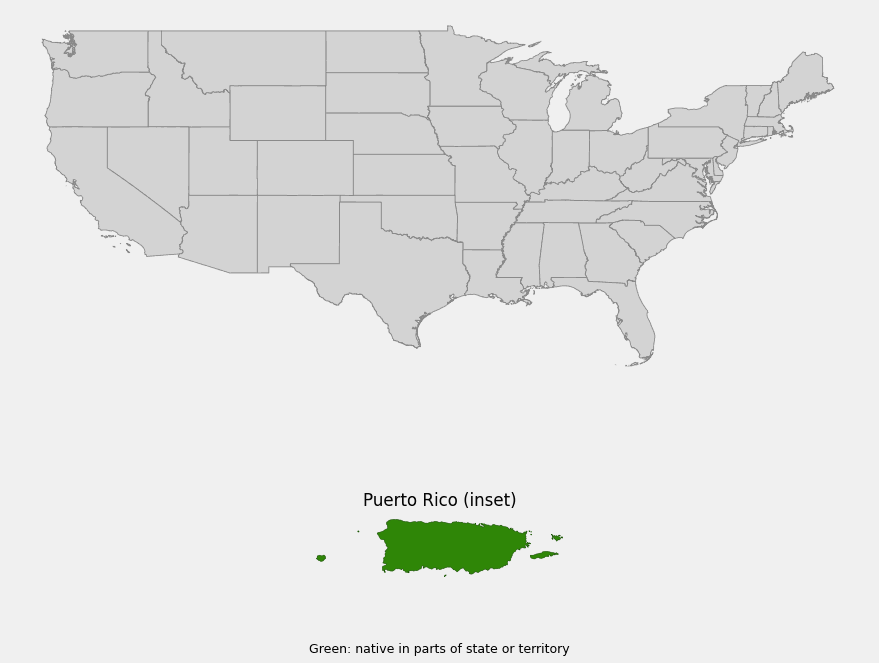
📋 Regional plant lists featuring Spanish Cedar: Puerto Rico
Growing & Care Guide
Spanish cedar grows fast and makes a handsome shade tree in Puerto Rico, but it is more particular about soil than its relative mahogany. Get the drainage right and plan for the shoot borer, and it is a rewarding native tree for large properties.
Light
Give it full sun. Seedlings tolerate some shade, but saplings and older trees are light-demanding and do not tolerate shade or weed competition. Seedlings raised in shade can scorch when moved into full sun and then become more vulnerable to insects, so harden nursery plants off gradually.
Soil & Water
Excellent drainage is the key. Plant on slopes, rises or loose, well-aerated soils, never in heavy clay that stays wet. Limestone-derived soils are ideal, and the tree also grows on well-drained acid volcanic soils. It tolerates a long dry season, dropping its leaves, but grows slowly and stays stunted where rainfall is below about 40 inches (1,000 mm) a year.
Planting Tips
Plant at the start of the rainy season. Seedlings have very shallow roots and are easily damaged by weeding or digging nearby, so mulch rather than hoe around them. The mahogany shoot borer (Hypsipyla grandella), a moth larva that tunnels into fast-growing shoot tips, is the most serious pest: it kills the leader and causes bushy, multi-stemmed trees. Attacks are less frequent on scattered trees mixed with other species, under light shade, and in strongly seasonal climates, so avoid planting Spanish cedar in dense pure blocks.
Pruning & Maintenance
If the shoot borer kills the leader, select the strongest new shoot and remove competing ones to restore a single trunk. Vigorous saplings usually outgrow the borer after three or four years. The tree tolerates some hurricane damage to the crown and often resprouts, but it does not resprout easily when cut down, and it is not fire-resistant.
Propagation
Grow from seed collected from capsules just before they open in the dry season. The seed loses viability quickly unless stored very dry and cool, so sow fresh. Germination is rapid, usually within two to four weeks, and viability can reach 90 percent. Seedlings can grow about 3 feet (1 m) in the first year under good conditions. Grafting and air layering are also possible.
Landscape Uses
- Shade and street tree: an important shade and urban ornamental tree in the West Indies
- Coffee and cacao shade: used successfully as plantation shade in Trinidad
- Karst and limestone restoration: a native canopy tree for well-drained limestone sites
- Mixed native plantings: best scattered among other native trees to reduce shoot-borer damage
- Fine woodworking (traditional): aromatic, rot- and termite-resistant timber
Wildlife & Ecological Value
Spanish cedar is a scattered but long-lived member of Puerto Rico’s moist limestone forests, where trees with more than 100 growth rings are not unusual.
For Pollinators
The many small, greenish-white flowers open with the new leaves at the start of the rainy season and attract small insects such as bees and moths, which carry pollen between flowers.
For Birds
Birds use the tall, open crowns for perching and foraging for insects. The seeds are dry and winged, dispersed by the wind rather than by birds.
For Mammals
Spanish cedar is not known as an important food plant for mammals in Puerto Rico.
Ecosystem Role
As a fast-growing, light-demanding tree, Spanish cedar appears after fires and along fence lines and ruins, and the USDA Forest Service describes it as a moderately long-lived late-successional species. Its scattered pattern in natural forests is part of what protects it from the shoot borer, whose populations build up where host trees are crowded together.
Cultural & Historical Uses
The aromatic, insect-repellent resin in the heartwood gives the tree its names cedro, cedro hembra and Spanish cedar. The wood is attractive, fairly light (specific gravity about 0.4), easy to work, and naturally resistant to rot and termites, making it suitable for outdoor construction. Its main traditional use has been in chests and closets for storing clothes, and it is the classic wood for cigar boxes and humidors.
Spanish cedar remains in high demand wherever it is available in tropical America, and it is used for plywood and fine decorative veneer. Because of heavy logging and poor regeneration, natural stands are thin: in one large Mexican forest region, natural forests yielded about one-eighth as much cedar timber as mahogany. Neotropical populations of Cedrela are now listed in Appendix II of CITES, which regulates international trade in the timber.
Attempts to grow Spanish cedar in plantations in Latin America largely failed for decades, due to wet, poorly drained sites, the shoot borer and a misunderstanding of the tree’s light needs. Success came with drier sites, line plantings and the taungya system, in which trees are planted among farmers’ food crops.
Frequently Asked Questions
Is Spanish cedar native to Puerto Rico?
Yes. USDA PLANTS lists Cedrela odorata as native in Puerto Rico, where it is called cedro or cedro hembra and grows mainly in moist forests on limestone soils.
Is Spanish cedar a true cedar?
No. True cedars (Cedrus) are conifers from the Old World. Spanish cedar is a broadleaf tree of the mahogany family whose wood happens to smell similar to cedar.
Why do my Spanish cedar saplings lose their tops?
The usual culprit is the mahogany shoot borer (Hypsipyla grandella), a moth larva that tunnels into growing tips. Planting trees scattered among other species, giving light shade when young, and training a new leader after damage all help. Strong saplings generally outgrow the problem after a few years.
What soil does Spanish cedar need?
Well-drained, well-aerated soil above all. It does best on limestone-derived soils and also grows on well-drained volcanic soils, but it fails on heavy, waterlogged ground.
What native trees grow with Spanish cedar in Puerto Rico?
In the moist limestone forests it grows with trees such as gumbo limbo (almácigo), pigeon plum (uvilla), úcar, cupey and moca. For another fast-growing native timber tree, see capá prieto. Its relative West Indian mahogany is native to South Florida.

Looking for a nursery that carries Spanish Cedar?
Our nursery directory does not yet include Puerto Rico. Browse the native plant nursery directory by state: Alabama–Arkansas · California · Colorado–Hawaii · Idaho–Kansas · Kentucky–Montana · Nebraska–Oklahoma · Oregon · Pennsylvania–Virginia · Washington · West Virginia–Wyoming