
White Avens (Geum canadense)
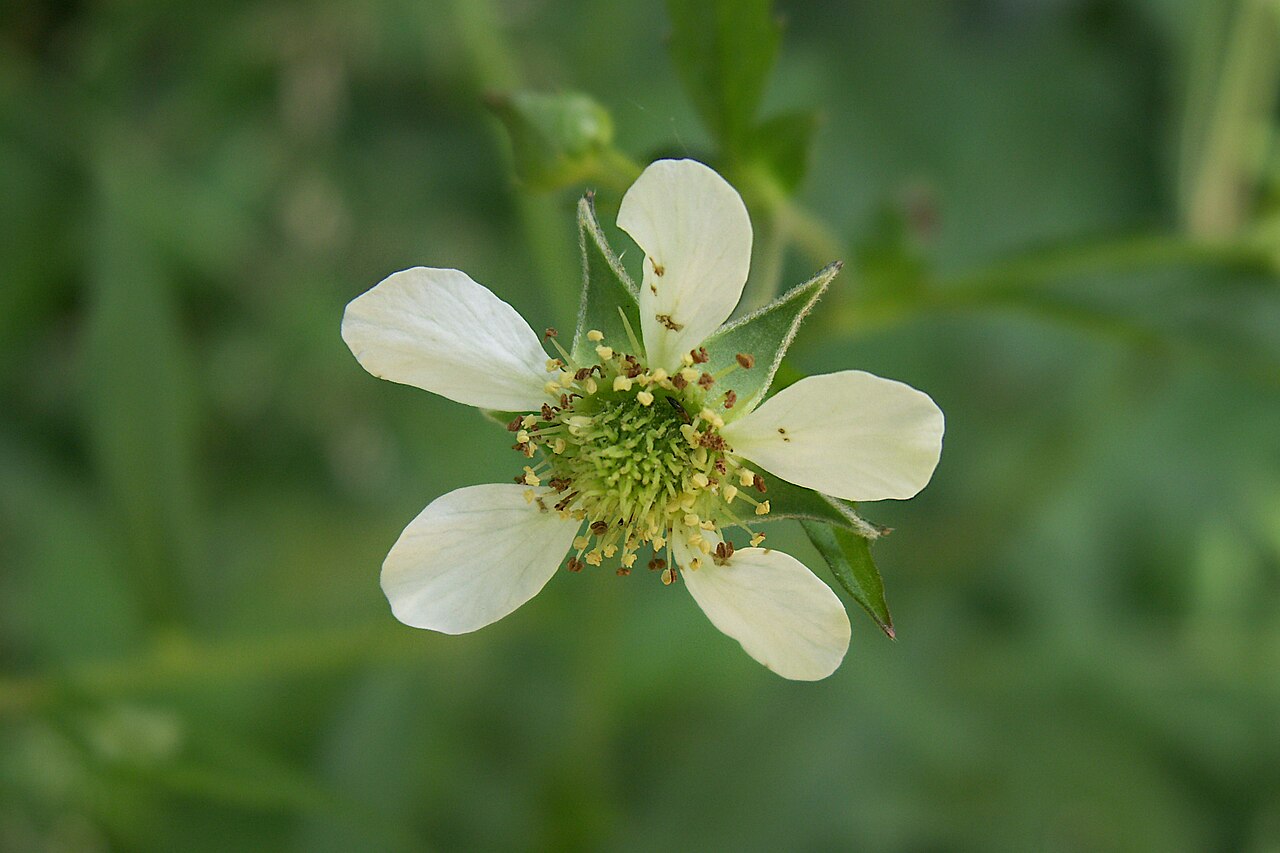
Geum canadense, known as White Avens or Canada avens, is a common woodland wildflower of eastern and central North America. It is a loose, branching perennial 1 to 3 feet tall, with small white, five-petaled flowers from late spring through summer. The flowers are followed by round, bristly seed heads that break apart into hooked burs, which stick to socks, pant legs and the fur of passing animals.
White avens is a member of the rose family (Rosaceae), and its flowers resemble small, simple roses or strawberry flowers. It grows in shady and partly shady places: deciduous woods, woodland edges, thickets, floodplain forests, and disturbed, shady ground in parks and yards. It is one of the few native wildflowers that holds its own in shady urban settings, and it often appears uninvited at the edge of gardens and along fences.
Although it is not a showy plant, white avens is useful for gardeners who want easy native cover for dry to moist shade, and it supports small native bees and other insects. This guide covers how to identify it and tell it from its relatives, where it grows, and how to grow and manage it in a garden.
Identification
Several Geum species grow in eastern woods. White avens is the most common, and its white petals that are as long as or longer than the sepals are the best clue.
Stems & Growth Habit
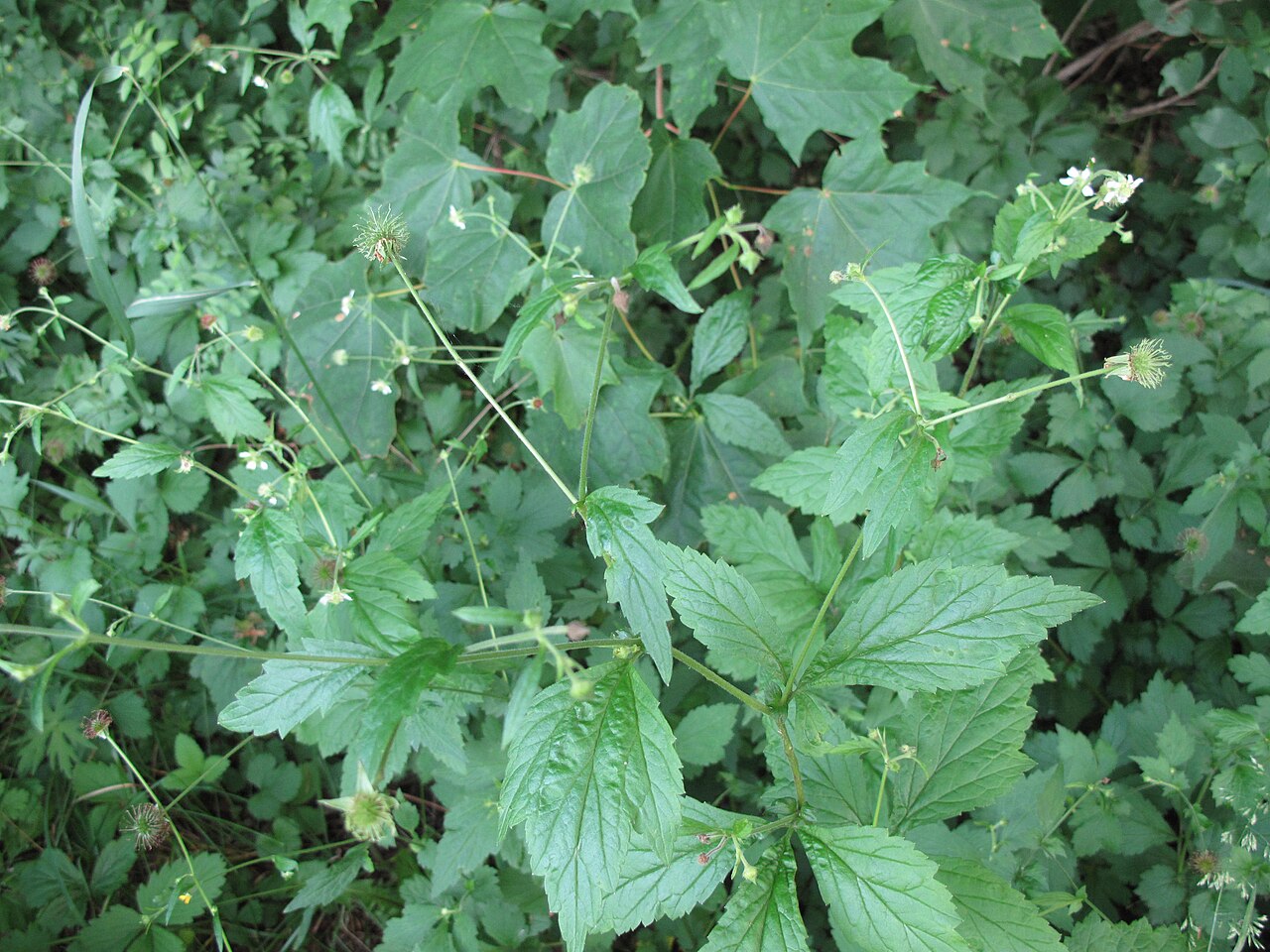
The plant grows from a short, thick rootstock and forms a rosette of basal leaves. In late spring it sends up one or more slender, branching flowering stems 1 to 3 feet tall. The stems are green, sometimes tinged purple, and finely hairy, though usually less hairy than those of related species. The overall habit is loose and open, with flowers widely scattered at the ends of long branches.
Leaves
The basal leaves are long-stalked and very variable. Some are simple and rounded with toothed edges, others are divided into three leaflets, and a few have extra small leaflets along the stalk. The basal rosette often stays green through winter, turning dark green or purplish. Leaves on the stem are alternate and usually divided into three toothed, pointed leaflets, becoming smaller and simpler toward the top. At the base of each stem leaf are small leaf-like stipules.
Flowers
Flowers appear from late May or June into August. Each is about a half-inch across, with five rounded white petals that are about as long as or longer than the green, triangular sepals between them. In the center is a green, dome-shaped cluster of many pistils, surrounded by a ring of numerous stamens with yellowish anthers. The flowers face upward or outward and sit on long, slender stalks.
Rough avens (Geum laciniatum) has stiffly hairy stems, larger stipules and smaller, often greenish-white petals. Cream avens (Geum virginianum) has pale cream petals that are shorter than the sepals. Yellow avens species have yellow flowers.
Fruit & Seeds
After flowering, the center enlarges into a round, bristly head about a half-inch wide made up of many small dry fruits (achenes). Each achene ends in a long, jointed style. When the fruit ripens, the upper part of the style breaks off, leaving a sharp hook. The ripe heads come apart easily, and the hooked achenes catch on fur, feathers and clothing, which is how the plant spreads through woods and along trails.
Quick Facts
| Scientific Name | Geum canadense Jacq. |
| Family | Rosaceae (rose family) |
| Plant Type | Herbaceous perennial wildflower |
| Mature Height | 1–3 ft |
| Mature Spread | 1–2 ft |
| Growth Rate | Moderate to fast; reseeds readily |
| Sun Exposure | Part shade to full shade; tolerates some sun |
| Water Needs | Medium; dry to moist soil |
| Soil Type | Loam, clay or sandy loam; tolerates compacted and disturbed soil |
| Soil pH | About 5.5–7.5 |
| Bloom Time | Late May–August |
| Flower Color | White |
| Fall Color | Basal leaves stay green to purplish through winter |
| Fruit | Round head of hooked achenes (burs) that cling to fur and clothing |
| Deer Resistant | Moderately; occasionally browsed |
| USDA Hardiness Zones | 3–9 |
Native Range
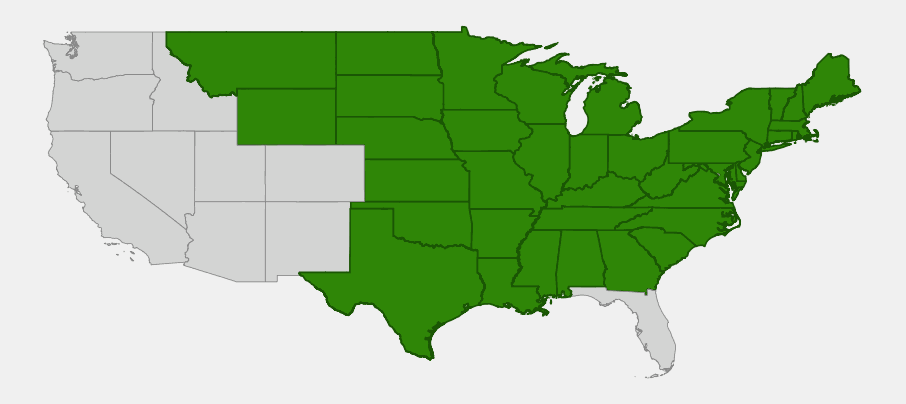
White avens is one of the most widespread woodland wildflowers in eastern and central North America. USDA PLANTS records it from 38 states and the District of Columbia, from Maine and the Great Lakes south to Georgia, Alabama, Mississippi, Louisiana and Texas, and west across the Great Plains to North and South Dakota, Montana and Wyoming. In Canada it grows from Ontario and Quebec to New Brunswick, Nova Scotia and Prince Edward Island. It is absent from Florida.
It is most common in the Midwest, the Ohio and Mississippi valleys, the Appalachians and the Northeast, where it grows in almost every kind of deciduous woodland, from dry upland oak woods to moist floodplain forests. In the Great Plains it follows wooded stream valleys and shelterbelts west to the Rocky Mountain foothills.
White avens tolerates disturbance well. It grows in second-growth woods, along trails and fences, in shady city lots and at the edges of lawns, and it often increases where the forest canopy has been opened or the ground disturbed. This adaptability is the reason it is one of the most frequently encountered native wildflowers in shady urban and suburban areas.
📋 Regional plant lists featuring White Avens: New York, Pennsylvania & Northern New Jersey · Idaho, Eastern Oregon & Eastern Washington · Ohio & Indiana · Montana & Wyoming · Michigan, Wisconsin & Eastern Minnesota · Kentucky & Tennessee · Nebraska, Kansas & Eastern Colorado · Connecticut, Massachusetts & Rhode Island · New Hampshire, Maine & Vermont · Maryland, Virginia & West Virginia · Delaware, Southern New Jersey & Long Island · Illinois, Iowa & Missouri · Alabama, Georgia & Mississippi
Growing & Care Guide
White avens is one of the easiest native plants for shade. It is not grown for a dramatic display but as a reliable, low-maintenance filler and groundcover for informal woodland gardens, and it is common enough that it often shows up on its own. Nursery plants and seed are available from native plant suppliers.
Light
It grows in part shade to fairly deep shade under deciduous trees, and also in sunnier spots if the soil is not too dry. Plants in deep shade flower less but still form healthy rosettes.
Soil & Water
White avens tolerates a wide range of soils, including clay, loam and compacted soil, and conditions from moist to fairly dry. It does best in average, moist, well-drained soil with some organic matter. Once established, it needs no watering in most years and no fertilizer.
Planting Tips
Set plants about 12 to 18 inches apart in spring or fall. Use them among ferns, woodland sedges and spring ephemerals, or as a filler under shrubs. Because its burs stick to clothing and pets, avoid planting it directly beside paths you use often.
Pruning & Maintenance
It needs little care. To reduce reseeding and burs, cut the flowering stems back after they finish blooming, before the seed heads ripen. The basal rosettes will remain green. Pull unwanted seedlings while they are young; older plants develop a tough rootstock. Leave fallen leaves in place as mulch.
Propagation
It grows easily from seed sown outdoors in fall or after a month or two of cold, moist stratification. Clumps can also be divided in spring or fall. In most gardens, the plant provides its own seedlings, which can be moved to where you want them.
Landscape Uses
- Shade and woodland gardens: an easy, adaptable filler under trees and shrubs
- Naturalized areas: establishes quickly on shady, disturbed ground
- Urban and small-yard plantings: tolerates compacted soil, dry shade and competition from tree roots
- Habitat gardens: supports small native bees and other pollinators in summer
- Woodland restoration: a common understory species in eastern deciduous forests
Wildlife & Ecological Value
White avens is a modest plant, but it has a long flowering season in the shade, when few other woodland plants bloom, and its seed dispersal method is a classic example of how plants hitch rides on animals.
For Pollinators
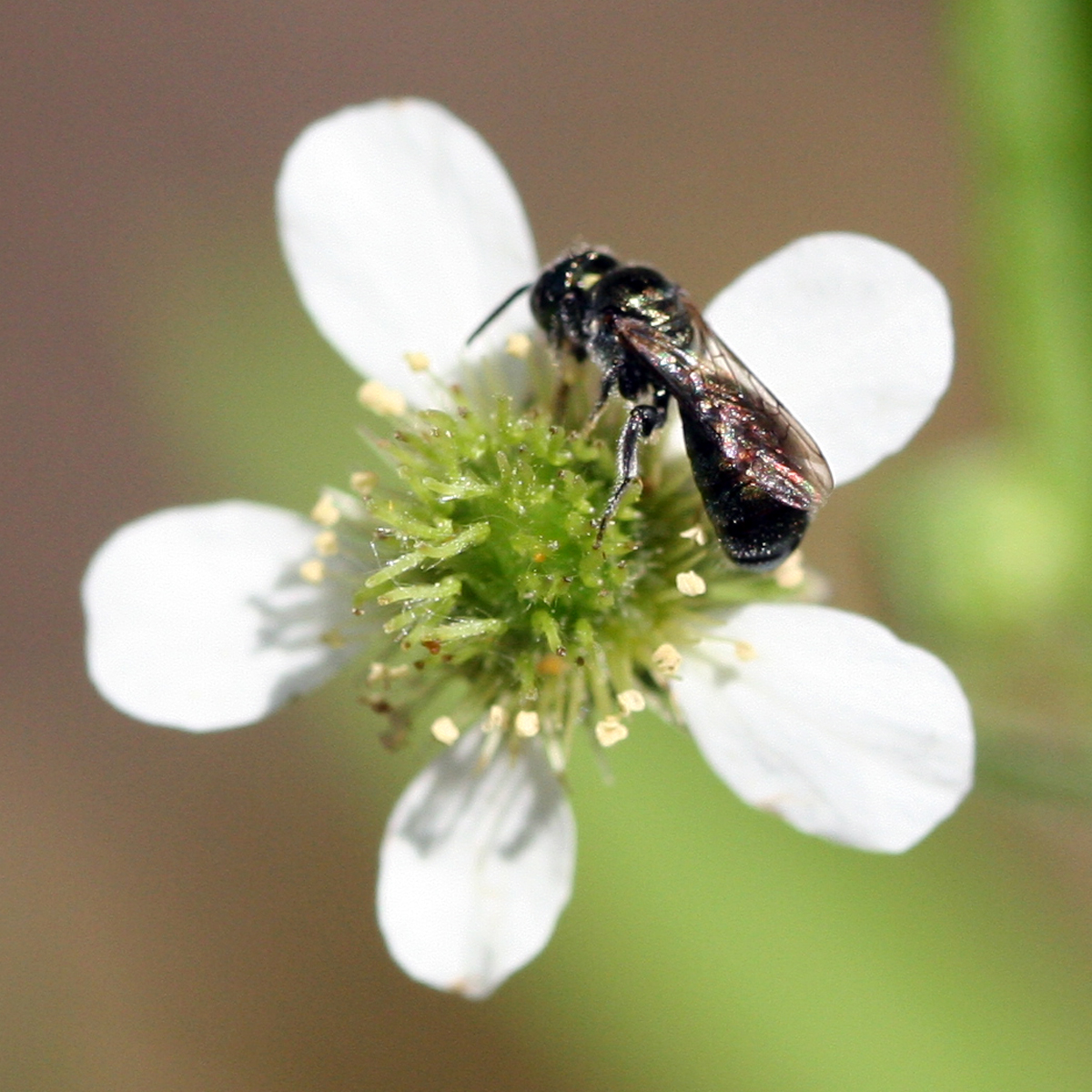
The open, saucer-shaped flowers offer easy access to pollen and a little nectar. Most visitors are small bees, including sweat bees, small carpenter bees and masked bees, along with flower flies and other small flies. Because it blooms through midsummer in shade, it provides food when spring woodland flowers are finished.
For Birds
Its seeds are not a major bird food, but wild turkeys and other ground-foraging birds may eat some. The plant provides low cover on the forest floor and supports insects eaten by woodland birds.
For Mammals
Deer and rabbits browse it occasionally. Mammals such as deer, raccoons, foxes and dogs carry its burs in their fur and spread the seeds along trails and through woods.
Ecosystem Role
White avens is a common plant of the forest floor and forest edge that quickly covers disturbed ground and holds the soil. Its hooked achenes are an example of epizoochory, seed dispersal by attachment to the outside of animals. The caterpillars of some moths feed on its leaves.
Cultural & Historical Uses
The species was described in 1772 by the Austrian-Dutch botanist Nikolaus Joseph von Jacquin from plants grown from North American seed. The genus name Geum is an old Latin name used by Pliny for a related European plant, herb bennet (Geum urbanum), whose roots have a clove-like scent and were once used to flavor ale and to keep away moths.
Several Native American peoples, including the Cherokee, Iroquois and Meskwaki, used the roots of white avens and related species in traditional medicine, mainly as an astringent for digestive complaints and in remedies for women’s health. Like many members of the rose family, its roots contain tannins. Modern sources do not recommend it as a remedy.
Today white avens is known to most people as an unassuming woodland plant or as a “weed” at the edge of a shady yard. For native plant gardeners, it is a dependable, adaptable species that can fill the shady corners where little else grows.
Frequently Asked Questions
Is white avens a weed?
It is a native wildflower, but it seeds freely and often appears on its own in shady gardens and lawns. If you like it, let it fill shady corners. If not, pull seedlings when small or cut the stems before the burs ripen.
How do I get white avens burs off my clothes and pets?
The hooked achenes come off most easily by hand or with a comb when dry. Cutting back the flower stems in midsummer, before the seed heads ripen, prevents most burs in the first place.
How is white avens different from rough avens?
Rough avens (Geum laciniatum) has bristly-hairy stems, larger stipules at the base of the leaves and smaller petals that are shorter than the sepals. White avens has smoother stems and white petals as long as or longer than the sepals.
Does white avens grow in shade?
Yes. It is one of the most shade-tolerant summer-blooming native wildflowers and grows well under deciduous trees, even in dry shade with root competition.
Do pollinators use white avens?
Yes. Small native bees and flower flies are the main visitors, and the plant flowers for much of the summer, when few other woodland plants bloom.

Looking for a nursery that carries White Avens?
Browse our native plant nursery directory: Alabama & Arkansas · Connecticut, Delaware & Georgia · Illinois, Indiana, Iowa & Kansas · Kentucky, Louisiana, Maine, Maryland, Massachusetts, Michigan, Minnesota, Mississippi, Missouri & Montana · Nebraska, New Hampshire, New Jersey, New York, North Carolina, North Dakota, Ohio & Oklahoma · Pennsylvania, Rhode Island, South Carolina, South Dakota, Tennessee, Texas, Vermont & Virginia · West Virginia, Wisconsin & Wyoming