
Pale Jewelweed (Impatiens pallida)
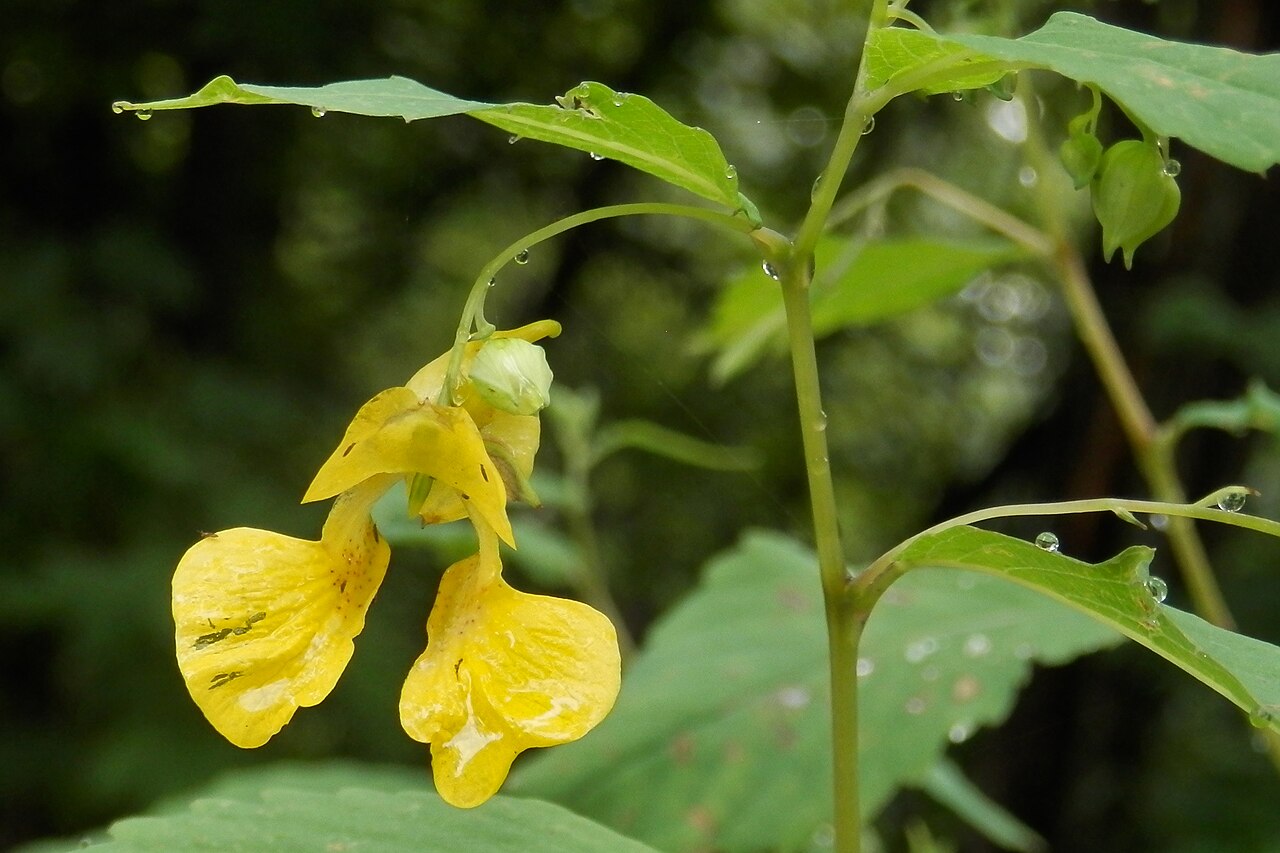
Impatiens pallida, known as Pale Jewelweed, yellow jewelweed or pale touch-me-not, is a tall, succulent annual wildflower of moist eastern woods. From midsummer into fall it carries pale lemon-yellow flowers shaped like little hanging horns or pouches, dangling from thread-thin stalks. Its ripe seed pods burst open explosively when touched, scattering seeds in every direction, which is the source of the names touch-me-not and Impatiens (Latin for “impatient”).
Pale jewelweed is a member of the balsam or touch-me-not family (Balsaminaceae), the same family as the garden impatiens. It is the larger, yellow-flowered relative of the better-known orange jewelweed, or spotted touch-me-not (Impatiens capensis), and the two often grow together. Pale jewelweed generally prefers richer, shadier and often limestone-influenced soils: moist ravines, wooded floodplains, seepy slopes and stream banks. In good years it forms dense stands taller than a person’s waist.
For gardeners, pale jewelweed is an easy, self-sowing native annual for moist shade, and an important late-summer food plant for hummingbirds and bumblebees. This guide covers how to identify it and tell it from orange jewelweed, where it grows, and how to grow it.
Identification
Pale jewelweed is easy to recognize as a jewelweed by its succulent stems, soft leaves and pouch-shaped flowers. Its pale yellow color and the shape of the spur set it apart from orange jewelweed.
Stems & Growth Habit
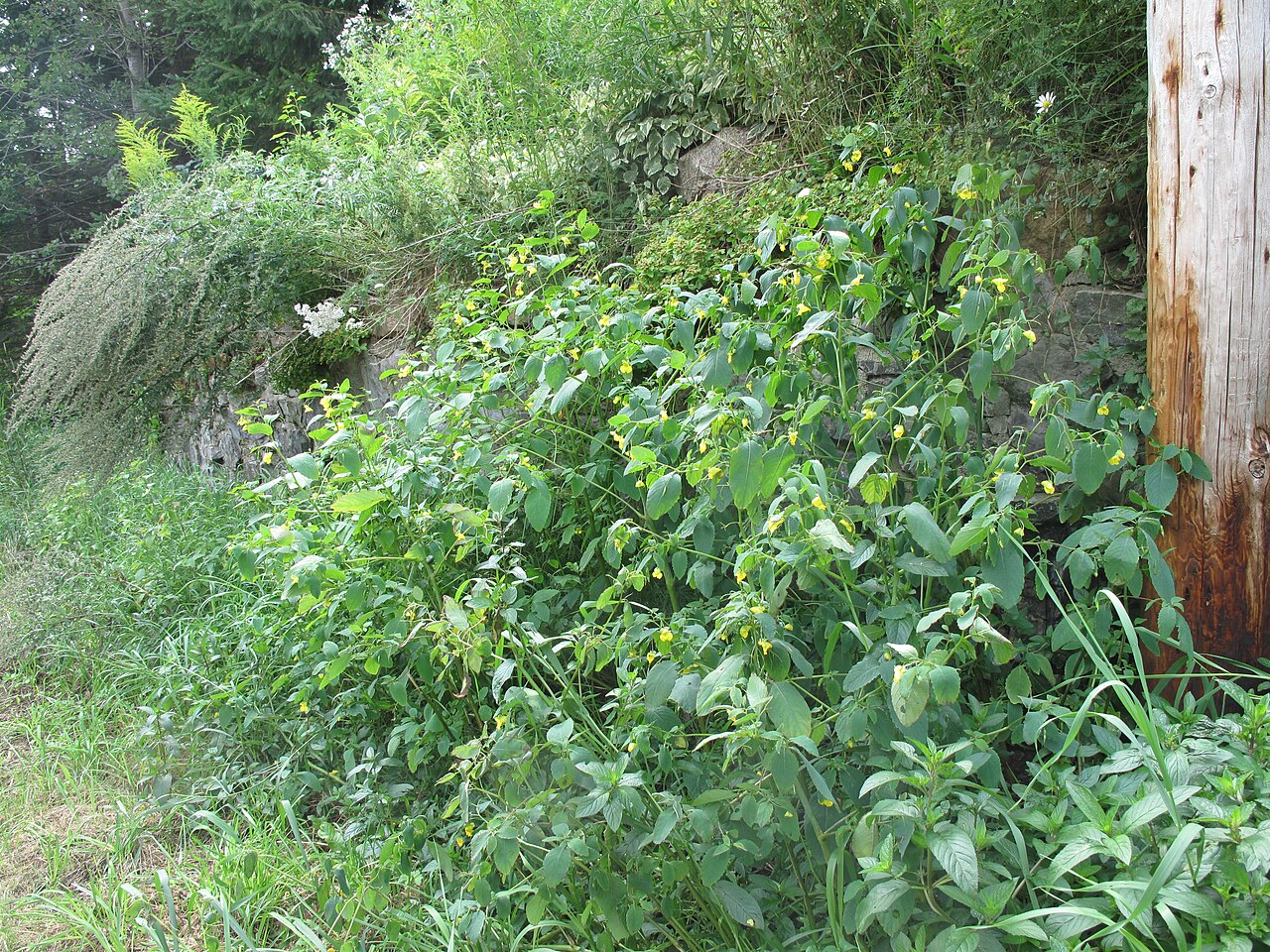
Pale jewelweed is an annual, growing each year from seed. By midsummer it reaches 2 to 5 feet tall, sometimes more. The stems are smooth, pale green and somewhat translucent, thick and juicy at the base, and swollen at the nodes. They branch freely and snap easily. Plants usually grow in dense colonies.
Leaves
The leaves are alternate, thin and soft, egg-shaped to elliptic, 1½ to 4 inches long, with coarse, rounded teeth along the edges. They are bluish green and slightly waxy, and water droplets bead up on them, sparkling in the sun, one possible origin of the name jewelweed. When dipped in water, the leaves look silvery because of a layer of trapped air.
Flowers
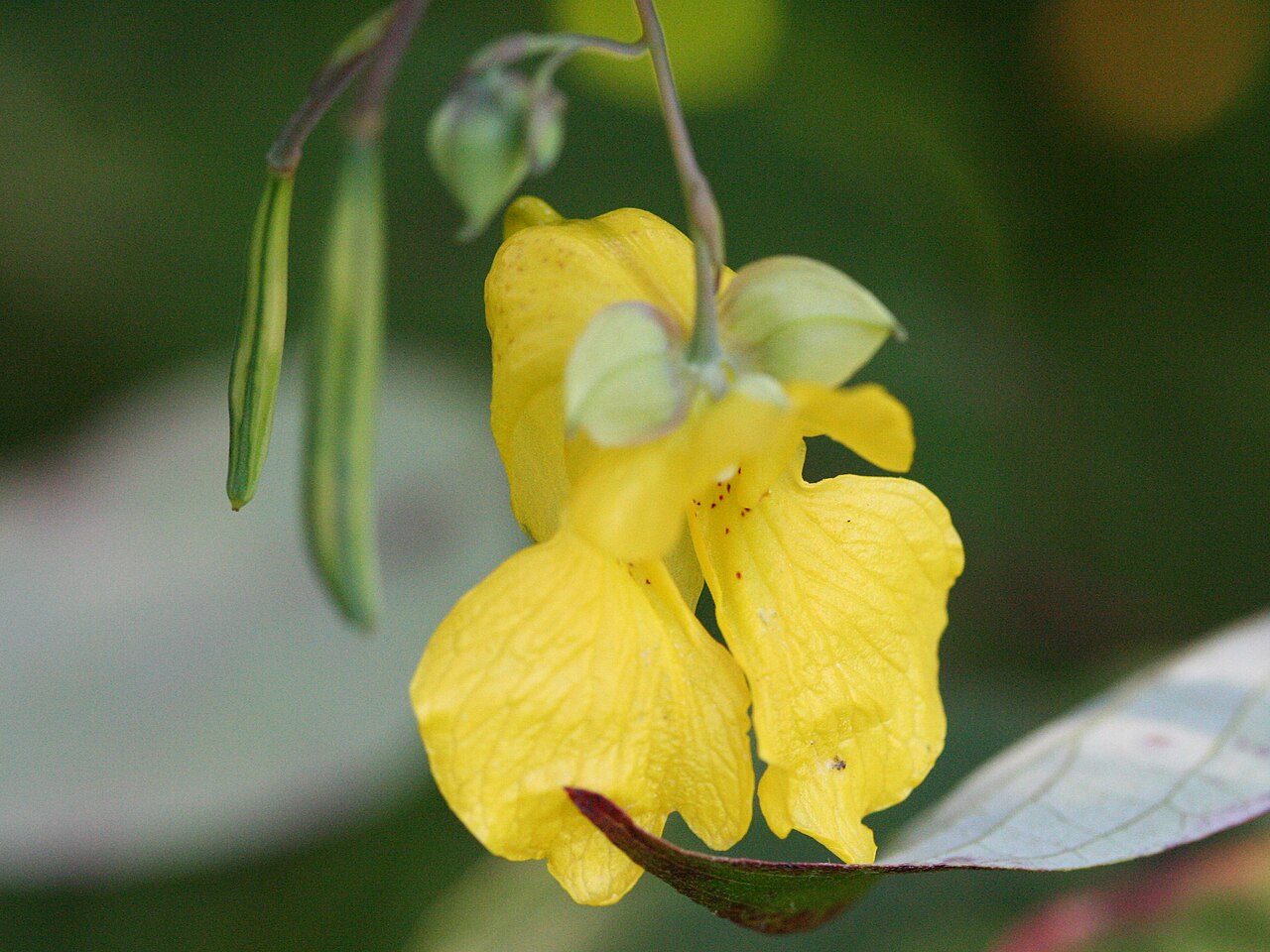
Flowers appear from July to September, often into early October. They hang singly or in small groups from slender stalks in the upper leaf axils. Each flower is about 1 to 1½ inches long, pale lemon yellow, sometimes with a few small reddish-brown spots in the throat. One of the sepals forms a large, deep pouch that narrows into a short spur. On pale jewelweed the spur is short and bends down at a sharp angle beneath the pouch, while on orange jewelweed it is longer and curls forward under the flower. In addition to its showy flowers, the plant also produces tiny, closed, self-pollinating flowers that set seed without opening.
Fruit & Seeds
The fruit is a slender, ribbed green capsule about an inch long. When ripe, the capsule’s five valves are under tension, and a light touch makes them curl back suddenly, throwing the seeds up to several feet. The seeds are oblong and ridged. Inside, they are pale green to bluish green and have a nutty taste. Many fall near the parent plant, which is why jewelweed forms such dense stands.
Quick Facts
| Scientific Name | Impatiens pallida Nutt. |
| Family | Balsaminaceae (touch-me-not family) |
| Plant Type | Annual wildflower; reseeds to form colonies |
| Mature Height | 2–5 ft (occasionally taller) |
| Mature Spread | 1–2 ft per plant; forms large colonies |
| Growth Rate | Fast |
| Sun Exposure | Part shade to full shade |
| Water Needs | High; consistently moist to wet soil |
| Soil Type | Rich, moist loam; often over limestone; also silty floodplain soils |
| Soil pH | About 6.0–7.5 |
| Bloom Time | July–September (into October) |
| Flower Color | Pale lemon yellow, sometimes with reddish-brown spots |
| Fall Color | None; plants die at the first frost |
| Fruit | Explosive capsule that throws its seeds several feet |
| Deer Resistant | No; deer browse it readily |
| USDA Hardiness Zones | Annual; grows in zones 3–8 |
Native Range
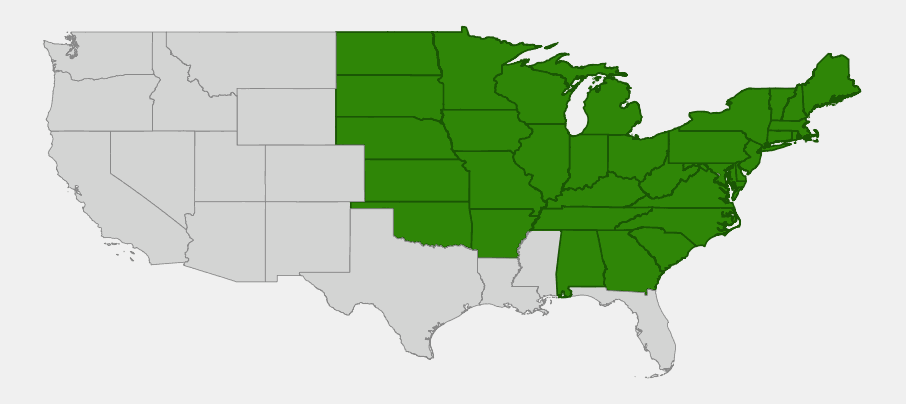
Pale jewelweed is native to eastern and central North America. USDA PLANTS records it from 33 states and the District of Columbia, from Maine and New England south through the Appalachians to Georgia and Alabama, and west across the Midwest to the Dakotas, Nebraska, Kansas and Oklahoma. In Canada it grows in Ontario, Quebec, New Brunswick, Nova Scotia and Newfoundland. It is absent from Florida and most of the Gulf Coast.
It is most common in the Appalachian region, the Ohio Valley, the Great Lakes states and the Northeast, especially in hilly country with limestone or other base-rich rocks. It is generally less common and more local than orange jewelweed. Toward the Coastal Plain, the Great Plains and the southern edge of its range it becomes scattered and is limited to moist ravines and wooded stream valleys.
Within its range it grows in rich, moist woods and their openings: floodplain and bottomland forests, wooded seeps and springs, shaded stream banks, ravines, the bases of moist cliffs and the edges of swamps. It often appears in large numbers after disturbance, such as tree falls or logging, that lets in more light while the soil stays moist.
📋 Regional plant lists featuring Pale Jewelweed: New York, Pennsylvania & Northern New Jersey · Ohio & Indiana · Michigan, Wisconsin & Eastern Minnesota · Kentucky & Tennessee · Nebraska, Kansas & Eastern Colorado · Connecticut, Massachusetts & Rhode Island · New Hampshire, Maine & Vermont · Maryland, Virginia & West Virginia · Delaware, Southern New Jersey & Long Island · Illinois, Iowa & Missouri · Alabama, Georgia & Mississippi
Growing & Care Guide
Pale jewelweed is easy to grow in a moist, shady spot. Since it is an annual, you establish it once by seed, and from then on it reseeds itself every year. It is rarely sold as plants, because seedlings dislike being moved, but seed is available from some native seed suppliers.
Light
It grows best in part shade to full shade, for example under deciduous trees or on the north side of a building. In full sun it will grow only if the soil stays wet, and the leaves may wilt on hot afternoons.
Soil & Water
The key requirement is consistently moist soil. Rich, loamy, slightly acidic to neutral soils are best, and it thrives in soil with plenty of organic matter. Plants wilt quickly in dry weather but usually recover when watered. It does not need fertilizer.
Planting Tips
Sow fresh seed in fall where you want the plants to grow, pressing it lightly into the soil surface. The seeds need a winter of cold, moist conditions to germinate, and they lose viability quickly if they dry out, so do not store them dry for long. Seedlings appear in early spring and can be thinned to about 12 inches apart.
Pruning & Maintenance
Little care is needed. Pinching the tips of young plants in early summer produces bushier plants. Pull out excess seedlings in spring if the colony spreads farther than you want; the shallow roots come out easily. Leave dead plants in place over winter or compost them.
Propagation
It is propagated only by seed. Collect ripe pods by enclosing them in a paper bag before touching them, since they burst at the slightest touch. Sow the seed outdoors right away. Once a colony is established, it renews itself every year.
Landscape Uses
- Hummingbird gardens: a top late-summer nectar plant for ruby-throated hummingbirds
- Moist shade gardens: fills damp, shady spots with lush foliage and yellow flowers
- Stream banks and rain garden edges: in shady, moist sites within its range
- Woodland restoration: quickly covers bare, moist soil in openings and floodplains
- Children’s gardens: the exploding seed pods are endlessly entertaining
Wildlife & Ecological Value
Pale jewelweed is an important plant for wildlife in moist woods in late summer, when many spring wildflowers have long since finished.
For Pollinators
The pouch-shaped flowers are adapted to ruby-throated hummingbirds and bumblebees, which reach the nectar in the spur while brushing against the stamens and stigma at the top of the pouch. Large bees such as bumblebees crawl right into the flower. Some bees and other insects steal nectar by biting holes in the spur. The flowers of the plant are first male, releasing pollen, and later female, which encourages cross-pollination. In addition, the closed self-pollinating flowers guarantee some seed every year.
For Birds
Ruby-throated hummingbirds rely on jewelweeds during their fall migration in late summer. Seed-eating birds such as grouse and some songbirds eat the seeds, and the dense stands give cover to ground-feeding birds.
For Mammals
White-tailed deer browse jewelweed heavily, and in areas with many deer it may be greatly reduced. White-footed mice and other small mammals eat the seeds.
Ecosystem Role
Jewelweeds are important native annuals in moist forests, filling gaps and stabilizing soil on shady stream banks. Their leaves feed the caterpillars of several moths, including some hawk moths. Because the explosive seed dispersal throws seeds only a few feet, colonies tend to persist for many years in the same place, spreading slowly downstream or downhill.
Cultural & Historical Uses
Thomas Nuttall described Impatiens pallida in 1818, naming it for its pale color (pallida). Jewelweeds have a long history in folk medicine. Many Native American peoples, including the Cherokee, Iroquois and Potawatomi, and later settlers, rubbed the juicy stems on skin rashes, especially poison ivy, insect bites and nettle stings. Controlled studies have not shown clear benefits for poison ivy rash, although the cool, wet juice may soothe the skin.
The seeds have a mild, nutty taste and are sometimes eaten in small amounts as a trail snack. The leaves and stems, however, contain calcium oxalate and other compounds that can upset the stomach, and the plant should not be eaten as a vegetable. The juice has also been used as a yellow dye.
For many people, the first encounter with jewelweed is as a child, discovering that the ripe pods explode at a touch. This “touch-me-not” behavior has made jewelweed a favorite plant for nature walks and children’s gardens.
Frequently Asked Questions
What is the difference between pale jewelweed and orange jewelweed?
Pale jewelweed has pale yellow flowers with a short spur bent sharply downward. Orange jewelweed (Impatiens capensis) has orange flowers with reddish-brown spots and a longer spur that curls forward under the flower. Pale jewelweed is usually taller and prefers richer, shadier sites.
Does jewelweed cure poison ivy?
It is a traditional folk remedy, and the cool juice may feel soothing, but controlled studies have not shown that it works better than washing the skin with soap and water. See a doctor for severe reactions.
Is pale jewelweed an annual?
Yes. It dies at the first frost and returns each year from seed. In a moist, shady site it reseeds reliably and forms a permanent colony.
Is pale jewelweed edible?
The seeds are edible in small amounts and taste a little like walnuts. The leaves and stems contain calcium oxalate and other compounds and are not recommended as food.
Why are they called touch-me-nots?
The ripe seed pods are under tension and burst open when touched, throwing the seeds several feet. The genus name Impatiens means “impatient” for the same reason.

Looking for a nursery that carries Pale Jewelweed?
Browse our native plant nursery directory: Alabama & Arkansas · Connecticut, Delaware & Georgia · Illinois, Indiana, Iowa & Kansas · Kentucky, Maine, Maryland, Massachusetts, Michigan, Minnesota & Missouri · Nebraska, New Hampshire, New Jersey, New York, North Carolina, North Dakota, Ohio & Oklahoma · Pennsylvania, Rhode Island, South Carolina, South Dakota, Tennessee, Vermont & Virginia · West Virginia & Wisconsin