
Spinystar (Escobaria vivipara)
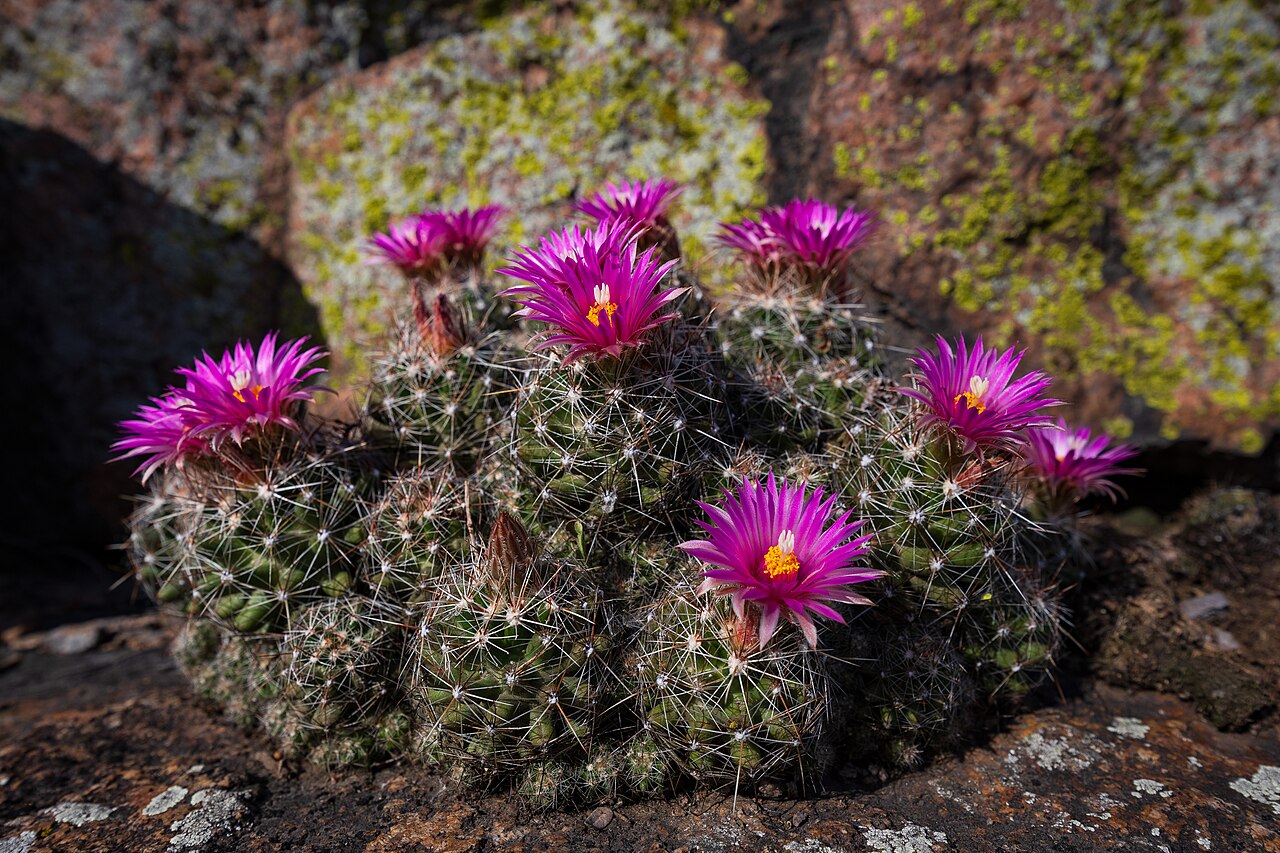
Escobaria vivipara, known as Spinystar, pincushion cactus or beehive cactus, is a small, ball-shaped cactus with one of the widest ranges of any North American cactus. It grows from the deserts of California and Arizona across the Great Basin and Rocky Mountains to the prairies of Minnesota, Manitoba and Alberta. Stems are usually only 1 to 6 inches tall, densely covered with star-shaped spine clusters, and in late spring they produce surprisingly large, brilliant magenta-pink flowers.
Spinystar has been placed in several genera, so you will see it under different names. It was long called Coryphantha vivipara, many references now use Escobaria vivipara (the name accepted by USDA PLANTS), and a 2021 molecular study moved Escobaria into the genus Pelecyphora, as Pelecyphora vivipara. All refer to the same plant. It belongs to the cactus family (Cactaceae).
Its extraordinary cold hardiness makes spinystar one of the few cacti that can be grown outdoors in northern rock gardens. Buy only nursery-grown plants, never dig wild cacti. Wild-collected plants usually die, and some varieties are rare and protected. This guide covers identification, native range, care and the plant’s role in grassland and desert ecosystems.
Identification
Spinystar is a small cactus that can be hard to spot among grasses and rocks until it blooms. Look for its star-patterned spine clusters, the grooves on its tubercles and, in late spring, its large pink flowers.
Stems & Tubercles
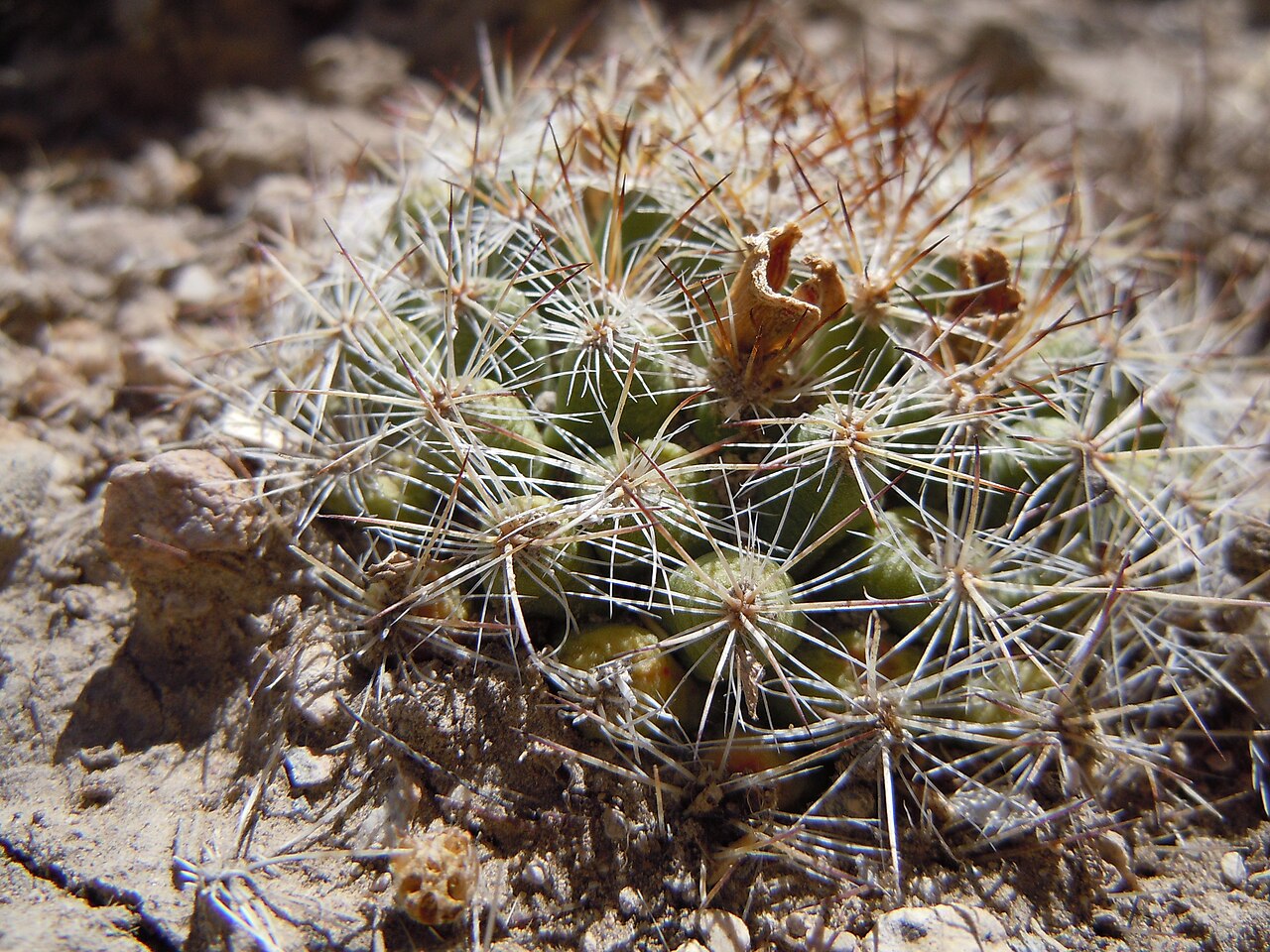
Stems are spherical to egg-shaped or short-cylindrical, 1 to 6 inches tall and 1 to 3 inches wide, growing singly or forming clumps of several to dozens of heads, especially in the Southwest. The surface is made of nipple-like tubercles, each with a narrow groove along its upper side, a feature shared with Coryphantha and other close relatives. Flowers and new offsets grow from the base of this groove.
Spines
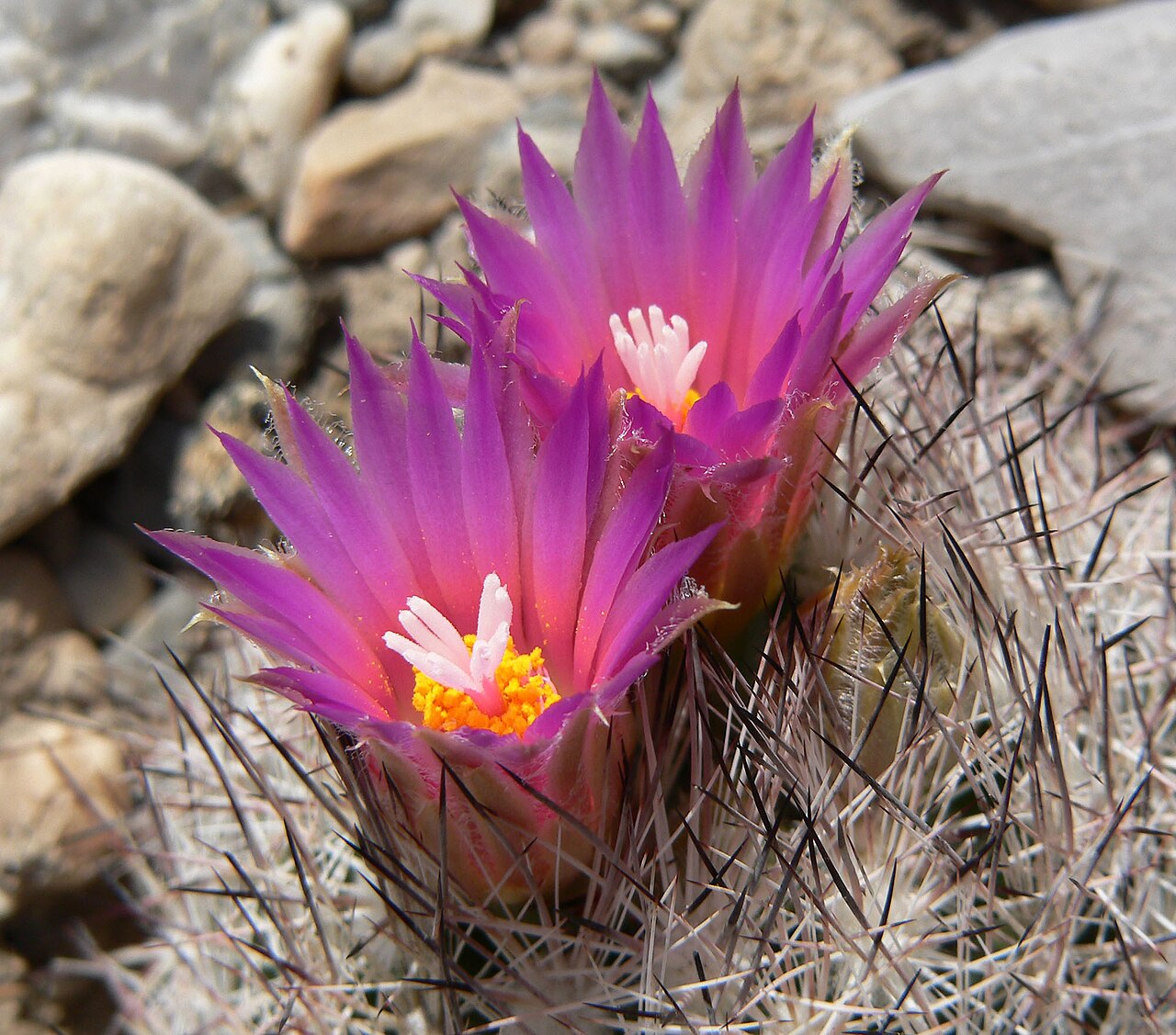
Each spine cluster (areole) has 12 to about 40 thin, straight, white or grayish radial spines spreading flat like a star, and 3 to 10 stouter central spines that point outward. The central spines are often white at the base and tipped with pink, red, brown or black. The spines are dense enough to partly hide the green stem. Spine color and number vary among the many named varieties.
Flowers
The flowers appear near the top of the stem from May to July, depending on elevation and latitude. They are 1 to 2 inches across, with many narrow, pointed, bright magenta, pink or purplish tepals, sometimes with a pale or greenish stripe, numerous stamens, and a white to pink stigma with several lobes. A few southwestern forms have pale or straw-colored flowers. Flowers open in sunshine, usually over a few days. Spinystar blooms later than the similar nipple cactus (Coryphantha missouriensis), which has yellowish flowers on the northern plains.
Fruit & Seeds
The fruits are oval to egg-shaped berries about ½ to 1 inch long, green and fleshy when ripe, sometimes turning brownish. They ripen in mid to late summer and contain many small, reddish-brown, pitted seeds. The fruits are reported to be edible, but they are small and best left for wildlife.
Quick Facts
| Scientific Name | Escobaria vivipara (syn. Coryphantha vivipara, Pelecyphora vivipara) |
| Family | Cactaceae (cactus family) |
| Plant Type | Small globular cactus, solitary or clumping |
| Mature Height | 1–6 in |
| Mature Spread | 1–3 in per stem; clumps to 1 ft or more |
| Growth Rate | Slow |
| Sun Exposure | Full sun |
| Water Needs | Very low; drought tolerant |
| Soil Type | Rocky, gravelly or sandy, very well-drained soil |
| Soil pH | About 6.5–8.5 |
| Bloom Time | May–July |
| Flower Color | Magenta, pink or purple; rarely pale |
| Fall Color | None; evergreen stems may shrink and redden in winter |
| Fruit | Green, fleshy, oval berry |
| Deer Resistant | Yes |
| USDA Hardiness Zones | 3–9 |
Native Range
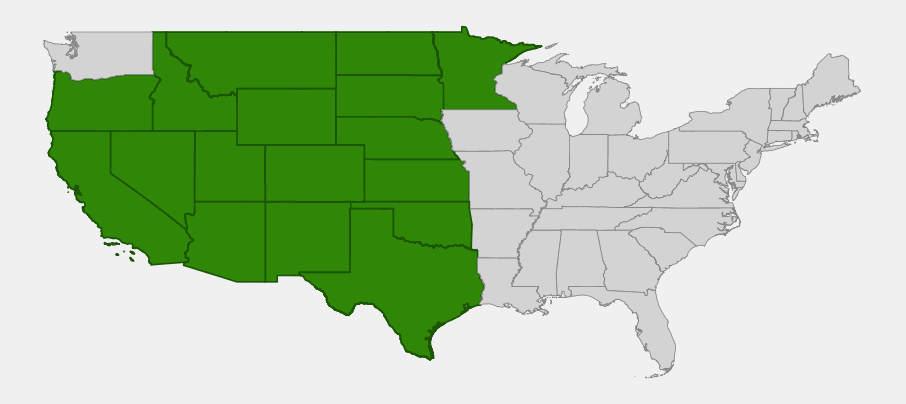
Spinystar has a vast range. The Lady Bird Johnson Wildflower Center describes it as native from central Canada south to southeastern Oregon and southeastern California, and east to the Great Plains from Minnesota to western Texas; it also grows in northern Mexico. USDA PLANTS lists it in 17 states and in Alberta, Saskatchewan and Manitoba, where it is one of the northernmost cacti in North America.
Across this range it grows in very different landscapes. On the northern Great Plains it is a plant of shortgrass and mixed-grass prairie, rocky outcrops, badlands and gravelly hilltops. In the Rocky Mountains and Great Basin it grows in sagebrush steppe and pinyon-juniper woodland and up into open ponderosa pine forest. In the Southwest it grows on rocky desert slopes and among oaks and junipers, and in southern California and Nevada it reaches the Mojave Desert.
Because the species is so widespread and variable, botanists have described a number of varieties, including var. vivipara of the Great Plains, var. arizonica and var. bisbeeana of Arizona, var. neomexicana of New Mexico and Texas, var. rosea of the Great Basin mountains, and var. alversonii (the foxtail cactus) and var. deserti of the Mojave Desert. Some of these are rare and protected. At the eastern edge of its range, in Minnesota, it is known only from rock outcrops in the western part of the state.
📋 Regional plant lists featuring Spinystar: Idaho, Eastern Oregon & Eastern Washington · Montana & Wyoming · Michigan, Wisconsin & Eastern Minnesota · Nebraska, Kansas & Eastern Colorado · Utah & Western Colorado · Arizona & New Mexico
Growing & Care Guide
Spinystar is a rewarding small cactus for rock gardens, troughs and dry, sunny beds, even in cold climates. Always buy nursery-grown plants or grow your own from seed. Never dig cacti from the wild: wild-collected plants rarely survive, collecting harms native populations, and some varieties are legally protected.
Light
Give it full sun. In the hottest desert areas, a little afternoon shade from a rock or shrub is acceptable, as plants often grow in the partial protection of grasses or shrubs in the wild. Too much shade makes the stems stretch and reduces flowering.
Soil & Water
Perfect drainage is essential. Plant in gritty, gravelly or sandy soil, on a raised bed, slope or in a trough, and add crushed rock or coarse sand to heavier soil. Water sparingly during the growing season and not at all in winter. Wet soil in cold weather is the most common cause of loss. In regions with wet winters, a rain cover or a spot under an overhang helps.
Planting Tips
Plant in spring or early summer so roots establish before winter. Set the plant at the same depth as in its pot and top-dress with gravel to keep the base dry. Handle with folded newspaper or tongs. Pair it with other dry-land natives such as blue grama, buckwheats and small penstemons, which have similar needs.
Pruning & Maintenance
No pruning is needed. Pull weeds by hand and keep fallen leaves off the plants. In winter the stems shrink, wrinkle and may turn reddish or purplish as they dehydrate to avoid freezing damage. This is normal, and they plump up again in spring. Do not water them to “help” in winter.
Propagation
Grow from seed sown on gritty mix in warm conditions; seedlings are slow and may take several years to flower. Clumping plants can also be propagated by removing offsets in late spring or summer, letting the cut surface dry for a few days before planting. Buy seeds and plants only from reputable nurseries that propagate their own stock.
Landscape Uses
- Rock gardens and crevice gardens: a cold-hardy cactus for gritty, sunny sites
- Troughs and containers: small enough for trough gardens and pots kept dry in winter
- Xeriscapes and prairie gardens: pairs with shortgrass prairie grasses and wildflowers
- Pollinator gardens: large flowers visited by native bees
- Education and conservation: an example of a cactus adapted to cold northern climates
Wildlife & Ecological Value
Spinystar is a small plant with a big range, and it plays a modest but real role in the ecology of dry grasslands, shrublands and deserts.
For Pollinators
The large, bright flowers attract native bees, including bumble bees and other medium-sized bees, as well as beetles that crawl among the stamens. Cactus bees and other specialist bees that visit cactus flowers may also use them. The flowers open in sunshine and close at night, typically lasting a few days.
For Birds
Birds such as thrashers, larks and sparrows eat the fleshy fruits and seeds, and in doing so they help disperse the seeds. The plant itself offers little cover.
For Mammals
Rodents, rabbits and other small mammals eat the fruits and occasionally gnaw the stems in drought, when water is scarce. Larger animals generally avoid the spiny stems.
Ecosystem Role
Spinystar is well adapted to harsh conditions: shallow, spreading roots absorb water quickly after rains, the stems store water, and the dense spines shade the surface and reduce water loss. In winter, the plants dehydrate to avoid freezing damage. In prairies and shrublands, it is one of many small plants that contribute to biological diversity on rocky and gravelly sites.
Cultural & Historical Uses
Thomas Nuttall described the plant in the early nineteenth century as Cactus viviparus, from plants collected on the upper Missouri River. The species name means “bearing live young,” a reference to the offsets that clumping plants produce. It was later placed in Mammillaria, then in Coryphantha, then in Escobaria, a genus named for the Mexican brothers Rómulo and Numa Escobar, and most recently in Pelecyphora.
Several Plains and Southwestern Indigenous peoples are reported to have eaten the fruits of small cacti like spinystar, and ethnobotanical records include medicinal uses. These were small, opportunistic foods rather than staples.
Today spinystar is a favorite of cold-hardy cactus growers, and selections from the northern plains are grown in rock gardens in climates far colder than most people expect for a cactus. Its popularity has also led to wild collecting, which is why buying nursery-propagated plants matters.
Frequently Asked Questions
Is spinystar the same as Coryphantha vivipara?
Yes. Spinystar has been called Coryphantha vivipara, Escobaria vivipara and, most recently, Pelecyphora vivipara. USDA PLANTS uses Escobaria vivipara. All these names refer to the same species.
Can spinystar survive cold winters?
Yes. It is one of the most cold-hardy cacti in North America, growing wild in Alberta, Saskatchewan and Manitoba. The key to winter survival is dry soil: it tolerates deep cold, but not cold combined with wet soil.
Can I dig spinystar from the wild?
No. Wild-collected cacti rarely survive transplanting, digging harms native populations, and some varieties are rare and protected by law. Buy nursery-grown plants or grow them from seed.
When does spinystar bloom?
Usually from May to July, depending on elevation and latitude. The large magenta-pink flowers open in sunshine and last a few days.
How big does spinystar get?
Individual stems are usually 1 to 6 inches tall and 1 to 3 inches wide. Some plants form clumps of many heads up to a foot or more across over many years.

Looking for a nursery that carries Spinystar?
Browse our native plant nursery directory: Arizona · California · Colorado · Idaho & Kansas · Minnesota & Montana · Nebraska, Nevada, New Mexico, North Dakota & Oklahoma · Oregon · South Dakota, Texas & Utah · Wyoming