
Glacier Lily (Erythronium grandiflorum)
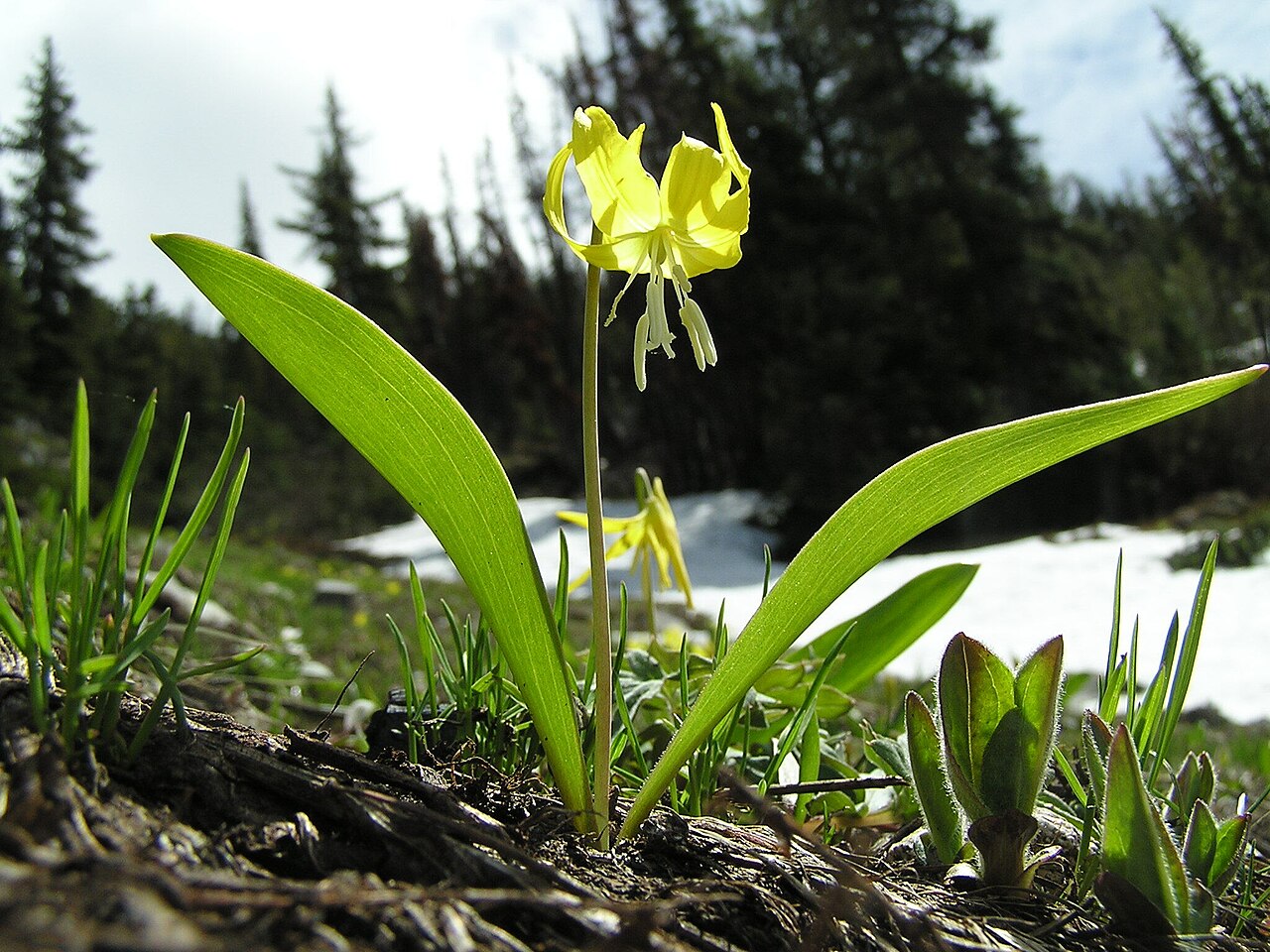
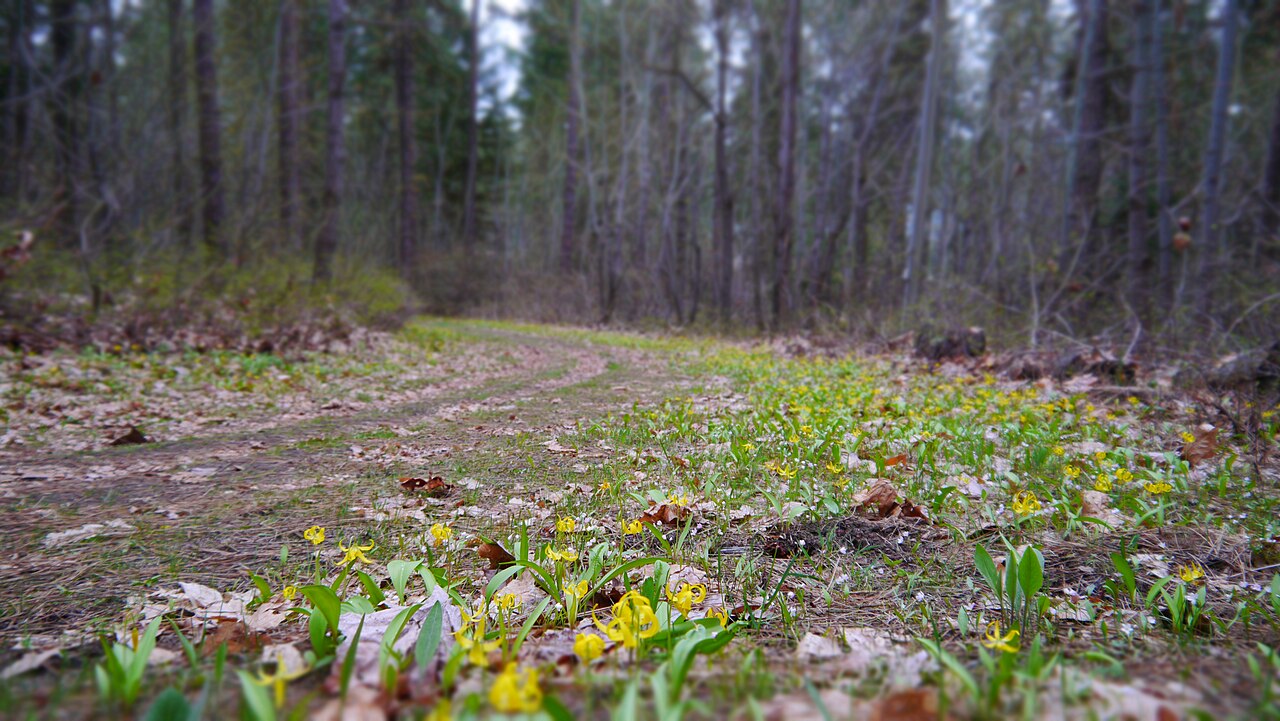
Erythronium grandiflorum, the Glacier Lily, is known to USDA as yellow avalanche-lily and is also called yellow fawn lily or dogtooth violet. It is one of the first and most beloved wildflowers of the western mountains. As the snow retreats in spring, its two broad, glossy green leaves and nodding, bright yellow flowers push up through the wet soil, often right at the edge of melting snowbanks. In good years, glacier lilies carpet whole subalpine meadows and open forests in gold.
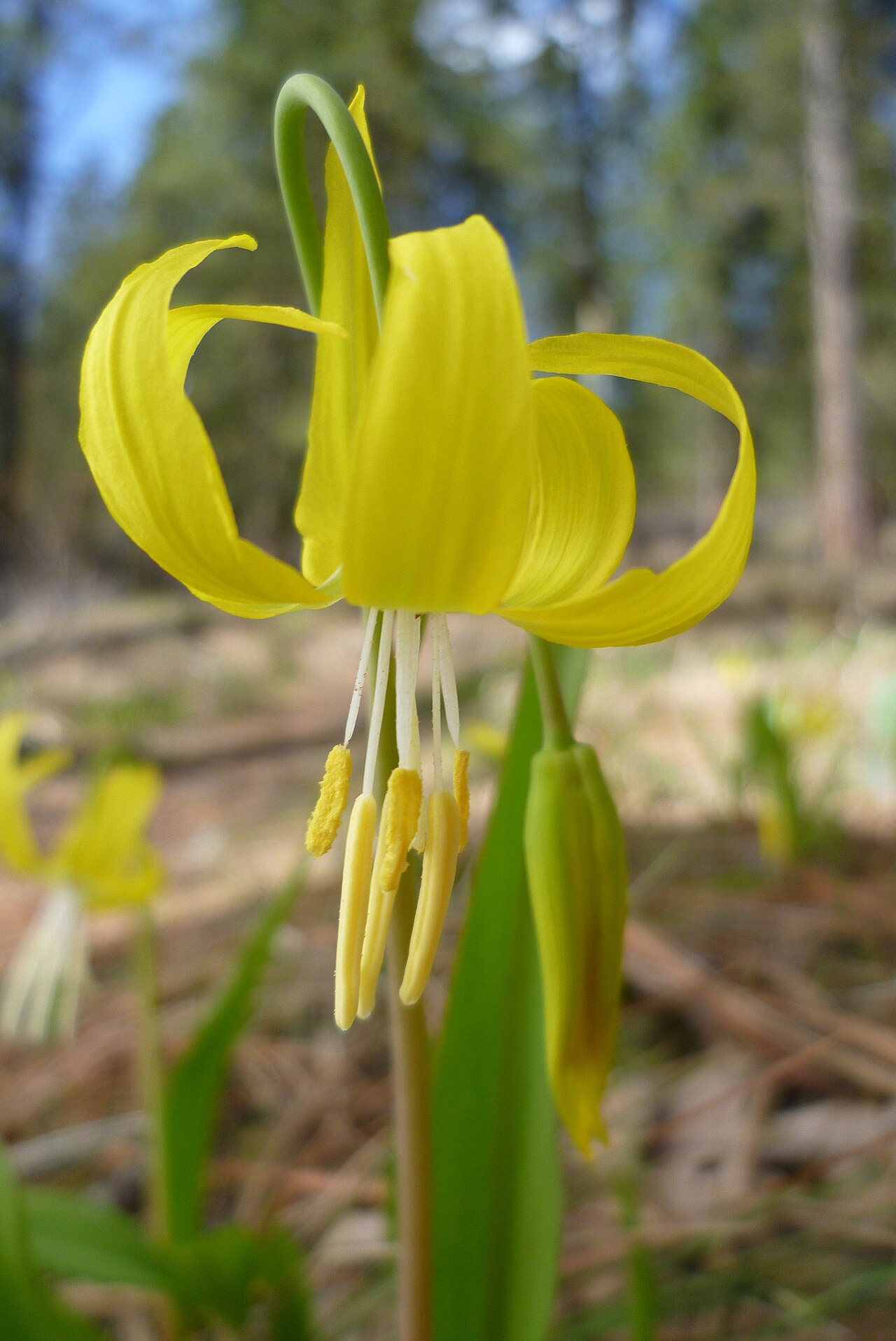
Each flower has six slender, yellow tepals (petals and sepals that look alike) that curve sharply back toward the stem, giving the flower the look of a small, golden turban or shuttlecock. Long stamens hang below, and their anthers vary from white or yellow to red or purple from one population to the next. Glacier lily belongs to the lily family (Liliaceae) and grows from a deep, elongated corm.
Glacier lily grows from British Columbia and Alberta south through the Cascades, Rocky Mountains and other western ranges to northern California, Utah, Colorado and New Mexico. Its corms were once an important food for several Native American peoples, and they are still a favorite food of grizzly bears and other wildlife. Today, wild plants should be enjoyed but not dug: they grow slowly, and their deep corms take years to develop. This guide covers identification, range, ecology and growing tips.
Identification
Glacier lily is easy to recognize: no other western spring wildflower combines two broad, unmottled leaves with a nodding, bright yellow, lily-like flower whose tepals curve strongly backward. Several related Erythronium species with white, cream or pink flowers grow in western forests, and some of them have mottled leaves.
Corm & Roots
Each plant grows from a slender, elongated corm buried several inches deep, often 2 to 6 inches below the surface. Young plants produce a single leaf and no flowers. Only when the corm has grown large enough, usually after several years, does the plant produce two leaves and a flowering stalk.
Leaves
Flowering plants have two basal leaves, broadly lance-shaped to oblong, 4 to 8 inches long, bright green and glossy, without the mottling found on many other fawn lilies. They emerge as soon as the snow melts and wither by early to mid summer.
Flowers
A leafless stalk 6 to 12 inches tall rises between the leaves, bearing one to three (occasionally more) nodding flowers. Each flower is about 1 to 2 inches across, with six bright yellow tepals that curve back toward the stalk. Six stamens and a three-lobed stigma hang below. Anther color varies by population from white or cream to yellow, red or purple. The flowers bloom from March at low elevations to July or August high in the mountains, typically within days of snowmelt.
Fruit & Seeds
After flowering, each flower forms an upright, three-sided capsule that ripens in summer and splits to release small, flat seeds. The capsules are often eaten by wildlife. Seedlings take several years to reach flowering size.
Quick Facts
| Scientific Name | Erythronium grandiflorum |
| Family | Liliaceae (lily family) |
| Plant Type | Herbaceous perennial from a corm; spring ephemeral |
| Mature Height | 6–12 in |
| Mature Spread | 3–6 in per plant; can form large colonies |
| Growth Rate | Slow (several years from seed to flower) |
| Sun Exposure | Full sun to partial shade |
| Water Needs | High in spring (snowmelt moisture); dry in summer dormancy |
| Soil Type | Well-drained loam or gravelly soil, rich in organic matter |
| Soil pH | About 5.5–7.0 |
| Bloom Time | March–August, soon after snowmelt (later at high elevations) |
| Flower Color | Bright yellow; anthers white, yellow, red or purple |
| Fall Color | None; leaves wither by midsummer |
| Fruit | Upright three-sided capsule with flat seeds |
| Deer Resistant | No; browsed by deer, elk and other wildlife |
| USDA Hardiness Zones | 3–7 |
Native Range
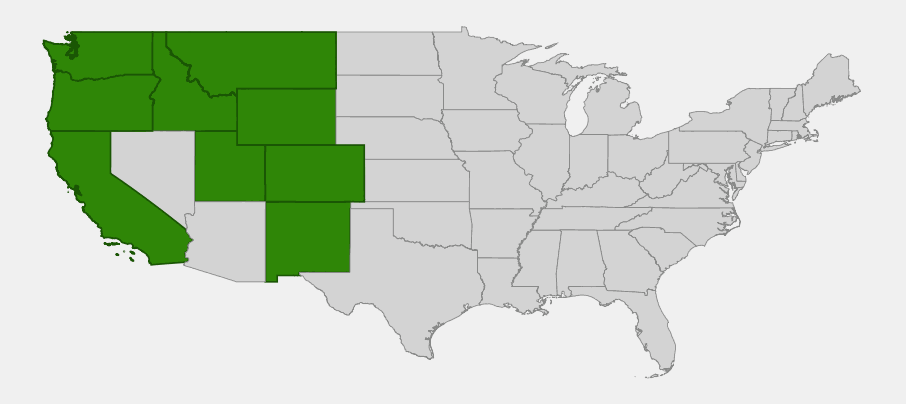
Glacier lily is native to western North America. USDA PLANTS records it in nine states: Washington, Oregon, Idaho, Montana, Wyoming, California, Utah, Colorado and New Mexico. In Canada it grows in British Columbia and Alberta. It is most abundant in the Cascades, the northern and central Rocky Mountains, and the mountains of Idaho, Montana and Wyoming.
At the edges of its range it becomes more local. In California it grows mainly in the far north, in the Klamath Mountains and the Cascade Range. In Oregon it is found mostly in the Cascades and the mountains of the northeast, and in Utah, Colorado and New Mexico it is a plant of the Rockies and other high ranges. It is a well-known spring flower in Glacier, Yellowstone, Grand Teton, Mount Rainier and North Cascades national parks.
Glacier lily grows in subalpine and montane meadows, open conifer and aspen forests, sagebrush slopes and along the edges of retreating snowbanks, from foothill elevations in the inland Northwest to above 11,000 feet in the southern Rockies. It depends on the reliable moisture of snowmelt in spring, and its flowering follows the snow line upward through the season.
📋 Regional plant lists featuring Glacier Lily: Idaho, Eastern Oregon & Eastern Washington · Montana & Wyoming · Utah & Western Colorado
Growing & Care Guide
Glacier lily can be grown in gardens with cold winters and dry summers, especially in the mountain West, but it is slow and somewhat challenging, particularly in hot, humid or mild-winter climates. Start only with seed or nursery-propagated corms from reputable sources. Do not dig wild plants: their corms are deep and fragile, transplanting usually fails, and digging damages wild populations that take years to recover.
Light
Give glacier lily full sun to partial shade. In the wild it grows in open meadows and light forest, often in spots that are sunny in spring and partly shaded later in the season.
Soil & Water
It needs well-drained, humus-rich soil that is evenly moist in spring and drier in summer, similar to soils that receive snowmelt and then dry out. Avoid summer irrigation once the leaves wither, since wet, warm soil can rot dormant corms.
Planting Tips
Plant corms in fall about 3 to 4 inches deep, or sow fresh seed outdoors in fall so it receives natural cold, moist stratification over winter. Seedlings produce a single small leaf for several years before flowering. Mark the location, since plants disappear completely in summer.
Pruning & Maintenance
Little care is needed. Allow the leaves to wither naturally so the corm can store energy, and leave the seed capsules to ripen if you want plants to spread. Mulch lightly with leaf litter or fine gravel.
Propagation
Grow from seed, which requires several months of cold, moist conditions to germinate. Expect four years or more from seed to flower. Established clumps occasionally produce offsets, which can be separated in late summer while dormant.
Landscape Uses
- Mountain and rock gardens: for cold-winter gardens with good drainage
- Woodland edges: under aspen or open conifers at higher elevations
- Meadow and restoration plantings: within its native range, from seed
- Spring wildflower viewing: one of the classic snowmelt wildflowers of western national parks
- Pollinator support: an early-season source of pollen and nectar
Wildlife & Ecological Value
Glacier lily is an important early-season resource for many animals in western mountains, from pollinators to bears.
For Pollinators
Glacier lily blooms when few other flowers are open, so it is an important early food source for queen bumblebees emerging from hibernation, as well as solitary bees and flies. Studies in the Rocky Mountains have examined how earlier snowmelt affects the timing of glacier lily flowering and the bees that depend on it.
For Birds
Glacier lilies have little direct value for birds, though some birds may eat seeds, and the meadows where they grow are important feeding areas for many mountain birds.
For Mammals
The corms are a favorite food of grizzly bears and black bears, which dig them up in spring and early summer, often turning over large patches of meadow. Ground squirrels, pocket gophers and other rodents also eat the corms. Deer, elk, bighorn sheep and mountain goats graze the leaves, flowers and seed pods.
Ecosystem Role
Bear digging turns over the soil and may create openings where seedlings can establish. Its early flowering ties it closely to snowmelt timing, making it a useful indicator of how changes in snowpack affect mountain plants and the animals that depend on them.
Cultural & Historical Uses
The corms of glacier lily were an important traditional food for several Native American peoples of the interior Northwest and northern Rockies, who harvested them in spring and summer and ate them fresh, cooked or dried. This knowledge is part of their cultural heritage. Today, digging wild corms is not encouraged, since plants grow slowly and populations can be damaged by harvesting.
The genus name Erythronium comes from the Greek word for red, a reference to the pink or purple flowers of the European dogtooth violet, E. dens-canis. The species name grandiflorum means “large-flowered”. The plant was collected by the Lewis and Clark Expedition in 1806 and later described by the American botanist Frederick Pursh.
For hikers and naturalists, the appearance of glacier lilies at the edge of melting snow is one of the most anticipated signs of spring in the mountains. It is also a favorite subject for photographers in parks such as Glacier, Mount Rainier and Yellowstone.
Frequently Asked Questions
Is glacier lily the same as yellow avalanche-lily?
Yes. Yellow avalanche-lily is the USDA common name for Erythronium grandiflorum. It is also called glacier lily, yellow fawn lily and dogtooth violet.
When do glacier lilies bloom?
They bloom soon after the snow melts, from March at lower elevations to July or August near treeline. The bloom follows the snow line upward through the season.
Are glacier lily corms edible?
They were a traditional food for several Native American peoples. However, wild plants grow slowly and should not be dug. Many are also in national parks and other areas where plant collection is prohibited.
Can I grow glacier lilies in my garden?
Yes, in cold-winter climates with well-drained soil that is moist in spring and dry in summer. Use seed or nursery-propagated corms, never wild-dug plants. Expect several years before seedlings flower.
Why do bears dig up glacier lilies?
Grizzly and black bears dig the nutritious corms in spring and early summer. Their digging is a natural part of mountain meadow ecology.

Looking for a nursery that carries Glacier Lily?
Browse our native plant nursery directory: California · Colorado · Idaho · Montana · New Mexico · Oregon · Utah · Washington · Wyoming