
Narrowleaf Mountainmint (Pycnanthemum tenuifolium)
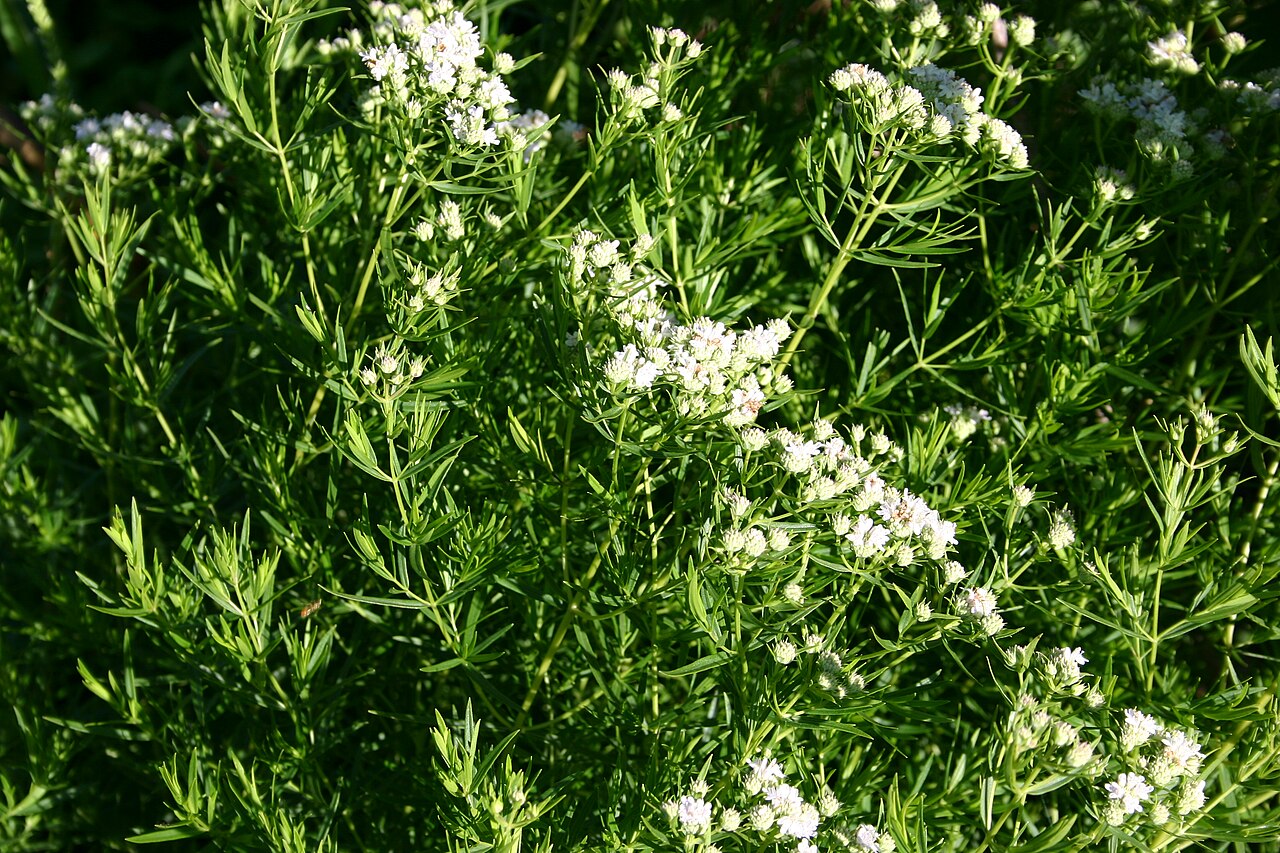
Pycnanthemum tenuifolium, known as Narrowleaf Mountainmint, is a compact, fine-textured native mint of prairies, meadows, open woods and old fields across the eastern and central United States. From early to late summer its stiff, upright stems are topped with dense, flat clusters of small white flowers, often tinged with lavender and dotted with purple, set among very narrow, needle-like leaves.
Like other mountain mints, it is one of the most popular plants with pollinators in a summer garden. Its flowers attract a remarkable variety of native bees, wasps, flies, beetles and small butterflies. The whole plant has a strong, pleasant minty scent, which helps make it unappealing to deer and rabbits.
Narrowleaf mountainmint is easy to grow, adaptable to dry or moist soils, and less aggressive than many mints. It is a natural choice for pollinator gardens, meadows and sunny borders throughout its range. Related plants on this site include Virginia mountain mint and silverleaf mountain mint.
Identification
Narrowleaf mountainmint is a bushy perennial, usually 20 to 30 inches tall and occasionally to 3 feet. Its very narrow leaves set it apart from the other common mountain mints.
Stems
The stems are square in cross section, as in other mints, and stiffly erect, branching in the upper part. They are smooth or nearly so, without the lines of hairs found on the stems of Virginia mountain mint. Plants form compact clumps that slowly expand by short rhizomes.
Leaves
The leaves are opposite, stalkless, linear and very narrow, mostly 1 to 2 inches long and only about ⅛ inch wide or less, with smooth edges. They are bright green and crowded along the stems, giving the plant a fine, almost needle-like texture. Crushed leaves smell strongly of mint. Virginia mountain mint has somewhat wider, lance-shaped leaves, and silverleaf mountain mint has much broader, silvery-white upper leaves.
Flowers
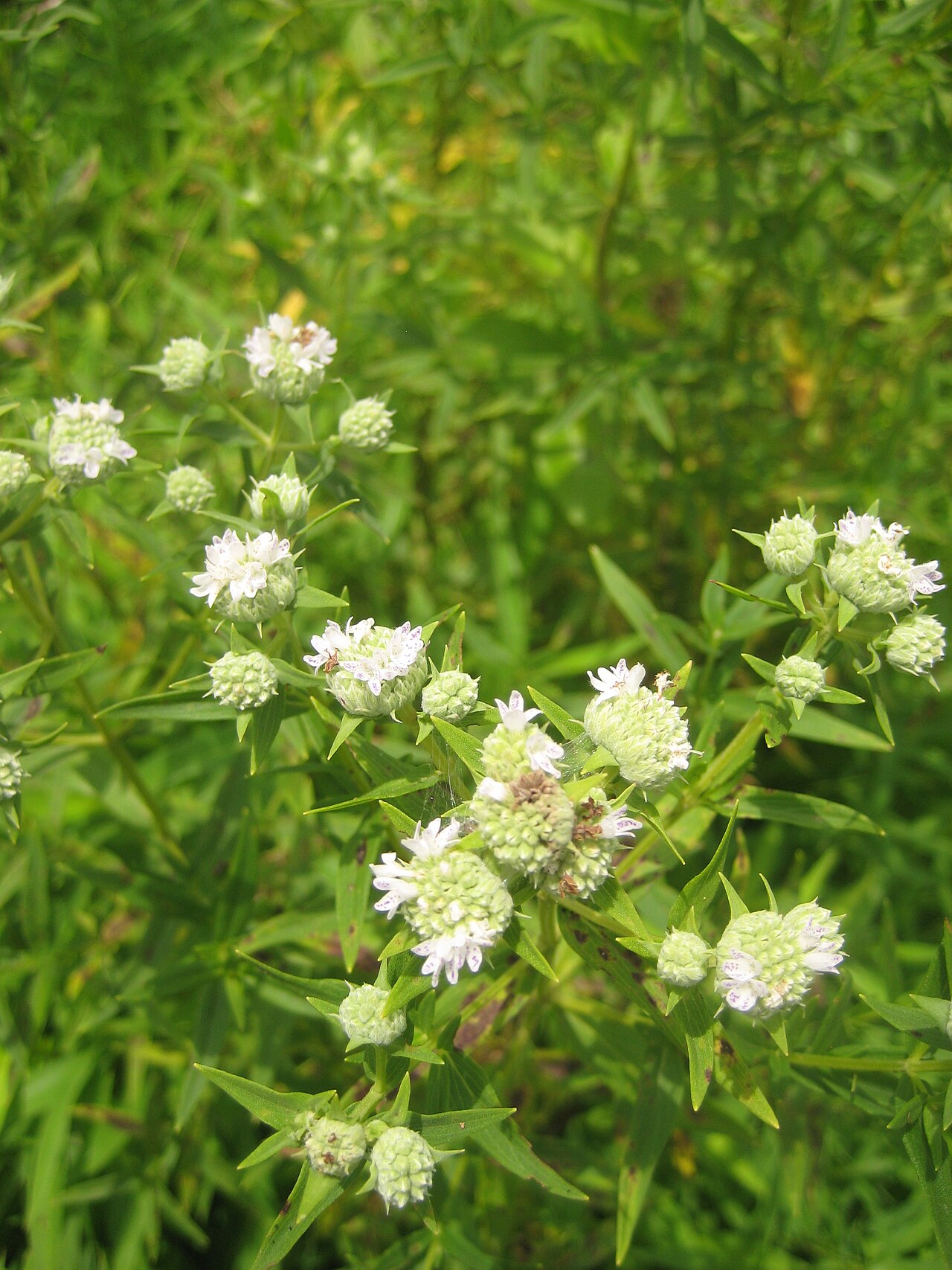
The flowers are crowded into small, dense, rounded heads about ½ inch across, which are grouped into flat-topped clusters at the ends of the branches. Each tiny flower is two-lipped, white to pale lavender, with small purple spots on the lower lip. Only a few flowers in each head open at once, so a plant can bloom for six weeks or more, mainly from June to August and sometimes into September.
Fruit & Seeds
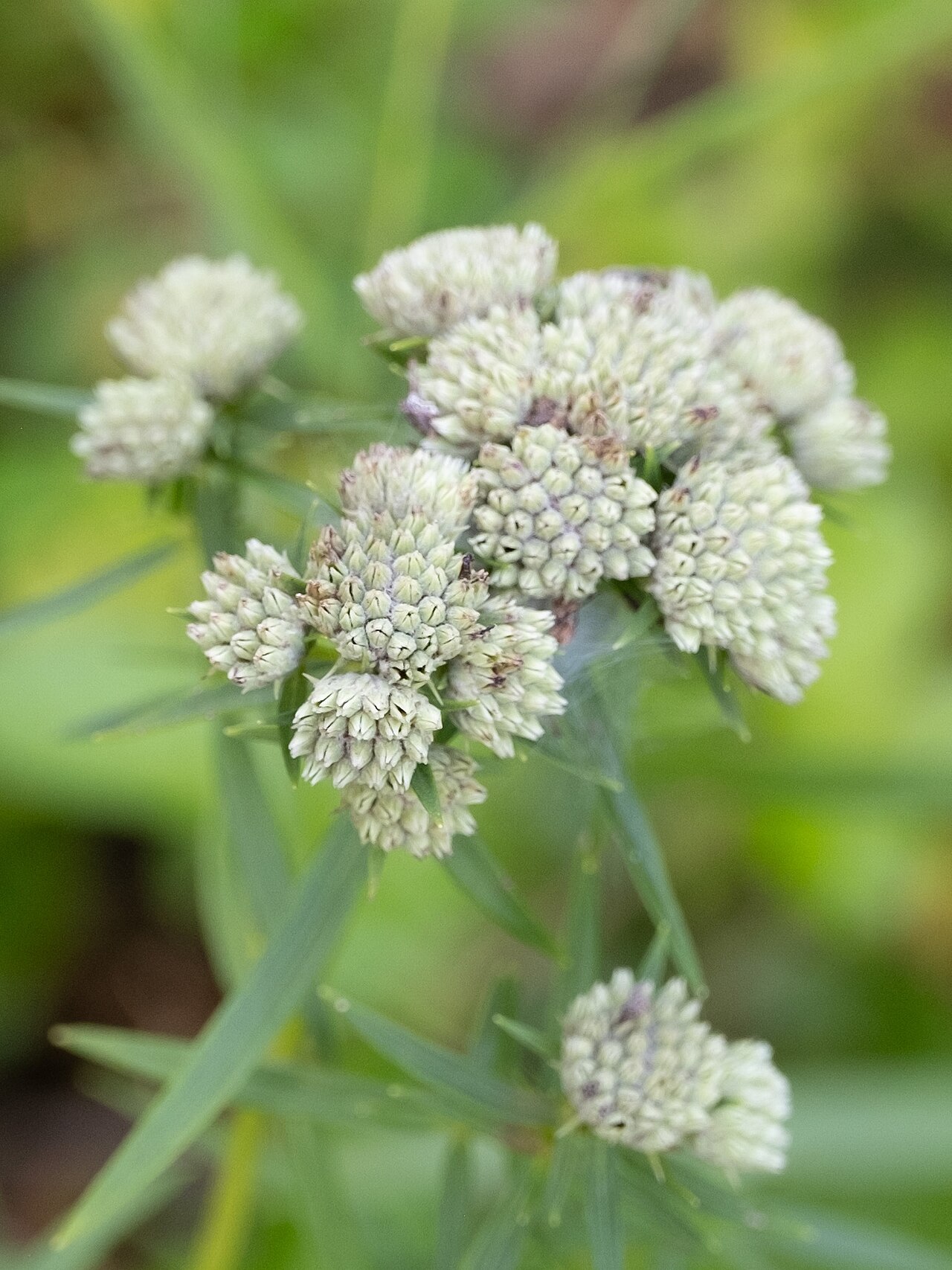
Each flower produces four tiny, dark nutlets. After flowering, the heads of persistent bracts and calyces turn gray or tan and stay on the plant into winter. They remain fragrant and look attractive in dried arrangements.
Quick Facts
| Scientific Name | Pycnanthemum tenuifolium |
| Family | Lamiaceae (mint family) |
| Plant Type | Herbaceous perennial wildflower |
| Mature Height | 1½–3 ft |
| Mature Spread | 1½–2 ft; slowly spreads by rhizomes |
| Growth Rate | Moderate |
| Sun Exposure | Full sun to part shade |
| Water Needs | Low to moderate |
| Soil Type | Sandy, loamy, clay or rocky soils, dry to moist |
| Soil pH | About 5.0–7.0 (acidic to neutral) |
| Bloom Time | June–September |
| Flower Color | White to pale lavender with purple spots |
| Fall Color | Foliage yellows; gray seed heads persist |
| Fruit | Tiny dark nutlets in persistent heads |
| Deer Resistant | Yes; strongly aromatic and rarely browsed |
| USDA Hardiness Zones | 4–8 |
Native Range
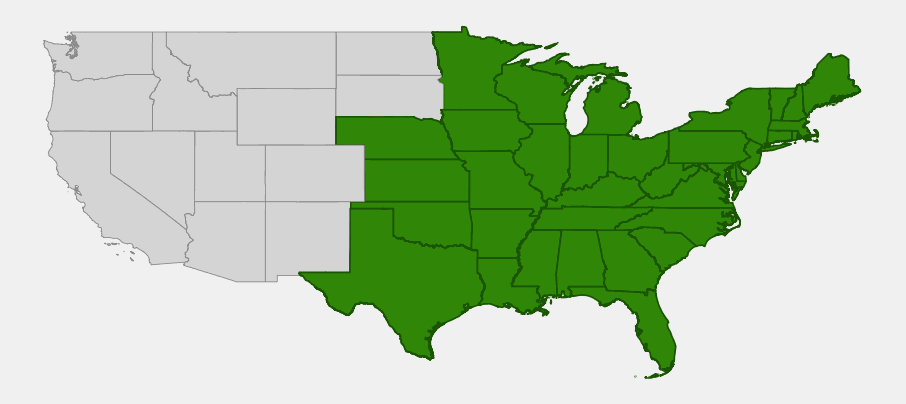
Narrowleaf mountainmint is widespread in eastern and central North America. The Lady Bird Johnson Wildflower Center gives its native distribution as Maine to Georgia, west to Wisconsin, Iowa, eastern Kansas and eastern Texas. USDA PLANTS records it in 35 states and the District of Columbia, from New England and the Great Lakes south to Florida and the Gulf Coast, and west to Minnesota, Nebraska, Kansas and Oklahoma. In Canada it reaches southern Ontario and Quebec.
It is most common in the Appalachian, Piedmont, Ozark and Midwestern regions, where it grows in remnant prairies, glades, meadows and old fields. At the northern and western edges of its range it is less frequent, and in the Deep South it is mostly found in upland sites rather than on the coastal plain.
Typical habitats include upland prairies, dry, rocky open woods, pine barrens and post oak woods, as well as low, moist meadows and fens. This range of habitats, from dry to wet, shows how adaptable the species is.
📋 Regional plant lists featuring Narrowleaf Mountainmint: New York, Pennsylvania & Northern New Jersey · Ohio & Indiana · Michigan, Wisconsin & Eastern Minnesota · Kentucky & Tennessee · Nebraska, Kansas & Eastern Colorado · Connecticut, Massachusetts & Rhode Island · New Hampshire, Maine & Vermont · Maryland, Virginia & West Virginia · Delaware, Southern New Jersey & Long Island · Illinois, Iowa & Missouri · Alabama, Georgia & Mississippi · North & South Florida · North & South Carolina · Arkansas, Louisiana, Eastern Oklahoma & Eastern Texas
Growing & Care Guide
Narrowleaf mountainmint is one of the easiest native perennials to grow. It is widely available from native plant nurseries, adapts to many soils, and needs very little care once established.
Light
Plant it in full sun for the most compact plants and heaviest bloom. It also tolerates part shade, especially afternoon shade in the South, though plants in shade grow taller and looser.
Soil & Water
It grows in sandy, loamy, clay or rocky soils, from dry to moist. The Lady Bird Johnson Wildflower Center rates its water use as medium and its drought tolerance as moderate, so water during long dry spells in the first year. After that, it rarely needs watering. Rich soil and fertilizer are not needed.
Planting Tips
Space plants about 18 to 24 inches apart. They look best in groups of three or more, and they combine well with taller, coarser prairie plants such as coneflowers and blazing stars, which contrast with their fine foliage. Spring or fall planting both work well.
Pruning & Maintenance
Little maintenance is needed. Leave the seed heads standing through winter for texture and insect habitat, and cut the old stems back in early spring. Plants spread slowly by rhizomes and are much better behaved than true mints, but clumps can be divided every few years if they grow larger than you want.
Propagation
Grow it from seed, divisions or cuttings. Seeds are tiny and need light to germinate; sow them on the soil surface in fall or after a month or so of cold, moist stratification. Divide clumps in spring, or take stem cuttings in early summer, which root easily.
Landscape Uses
- Pollinator gardens: a top-rated nectar plant for bees, wasps and butterflies
- Prairie and meadow plantings: fine texture among grasses and bold wildflowers
- Sunny borders: compact, tidy clumps with a long bloom season
- Deer-resistant plantings: strong mint scent discourages browsing
- Rain gardens and edges: tolerates both moist and dry soils
- Dried arrangements: fragrant flower and seed heads
Wildlife & Ecological Value
Mountain mints are famous among gardeners for the sheer number and variety of insects they attract. Narrowleaf mountainmint is no exception.
For Pollinators
The small, open flowers provide easily reached nectar for a wide range of insects, including native bees such as sweat bees, small carpenter bees and leafcutter bees, as well as honeybees, many kinds of wasps, flower flies, soldier beetles and small butterflies such as hairstreaks and skippers. Because the flowers open gradually over many weeks, a single plant can feed insects for much of the summer.
For Birds
Birds benefit mainly from the many insects that visit the plant, including predatory wasps and flies. The persistent seed heads and stems offer some winter cover, and small seed-eating birds may pick at them.
For Mammals
Deer and rabbits seldom eat it because of its strong aromatic oils. That makes it a useful plant where browsing is heavy.
Ecosystem Role
By drawing in so many predatory and parasitic wasps, narrowleaf mountainmint helps support the natural insect predators that keep garden pests in check. In prairies and meadows, it adds a mid-summer nectar source between the early and late bloomers, and its stems provide overwintering sites for some insects.
Cultural & Historical Uses
The genus name Pycnanthemum comes from Greek words meaning dense flower, referring to the tightly packed flower heads. The epithet tenuifolium means slender-leaved. The German botanist Heinrich Schrader described the species in the early nineteenth century.
Mountain mints have a long history of use as a tea herb and seasoning. Native American peoples and early settlers used several species as a flavoring and in home remedies. The leaves have a strong peppermint-like flavor. Like pennyroyal, many mountain mints contain the compound pulegone, so they should be used only in small amounts, and not at all during pregnancy.
Older books sometimes confused narrowleaf mountainmint with the more coastal Pycnanthemum flexuosum, a name that some references have incorrectly applied to it. The Lady Bird Johnson Wildflower Center notes that P. flexuosum is a similar and closely related species that is more coastal.
Frequently Asked Questions
Is narrowleaf mountainmint invasive?
No. It is a native wildflower that spreads slowly by short rhizomes. It is far better behaved than garden mints such as spearmint, and clumps are easy to divide or reduce.
How is narrowleaf mountainmint different from Virginia mountain mint?
Narrowleaf mountainmint has very narrow, needle-like leaves about ⅛ inch wide or less and smooth stems. Virginia mountain mint has wider, lance-shaped leaves and lines of hairs along the stem angles.
Does narrowleaf mountainmint attract pollinators?
Yes. It is one of the best summer pollinator plants, attracting native bees, wasps, flies, beetles and small butterflies over a long bloom season.
Is narrowleaf mountainmint deer resistant?
Yes. Its strong mint scent and flavor make deer and rabbits avoid it in most situations.
Can I make tea from narrowleaf mountainmint?
The leaves have a strong mint flavor and have traditionally been used for tea. Use only small amounts, because mountain mints can contain pulegone, and avoid it during pregnancy.

Looking for a nursery that carries Narrowleaf Mountainmint?
Browse our native plant nursery directory: Alabama & Arkansas · Connecticut, Delaware, Florida & Georgia · Illinois, Indiana, Iowa & Kansas · Kentucky, Louisiana, Maine, Maryland, Massachusetts, Michigan, Minnesota, Mississippi & Missouri · Nebraska, New Hampshire, New Jersey, New York, North Carolina, Ohio & Oklahoma · Pennsylvania, Rhode Island, South Carolina, Tennessee, Texas, Vermont & Virginia · West Virginia & Wisconsin