
California Cudweed (Pseudognaphalium californicum)
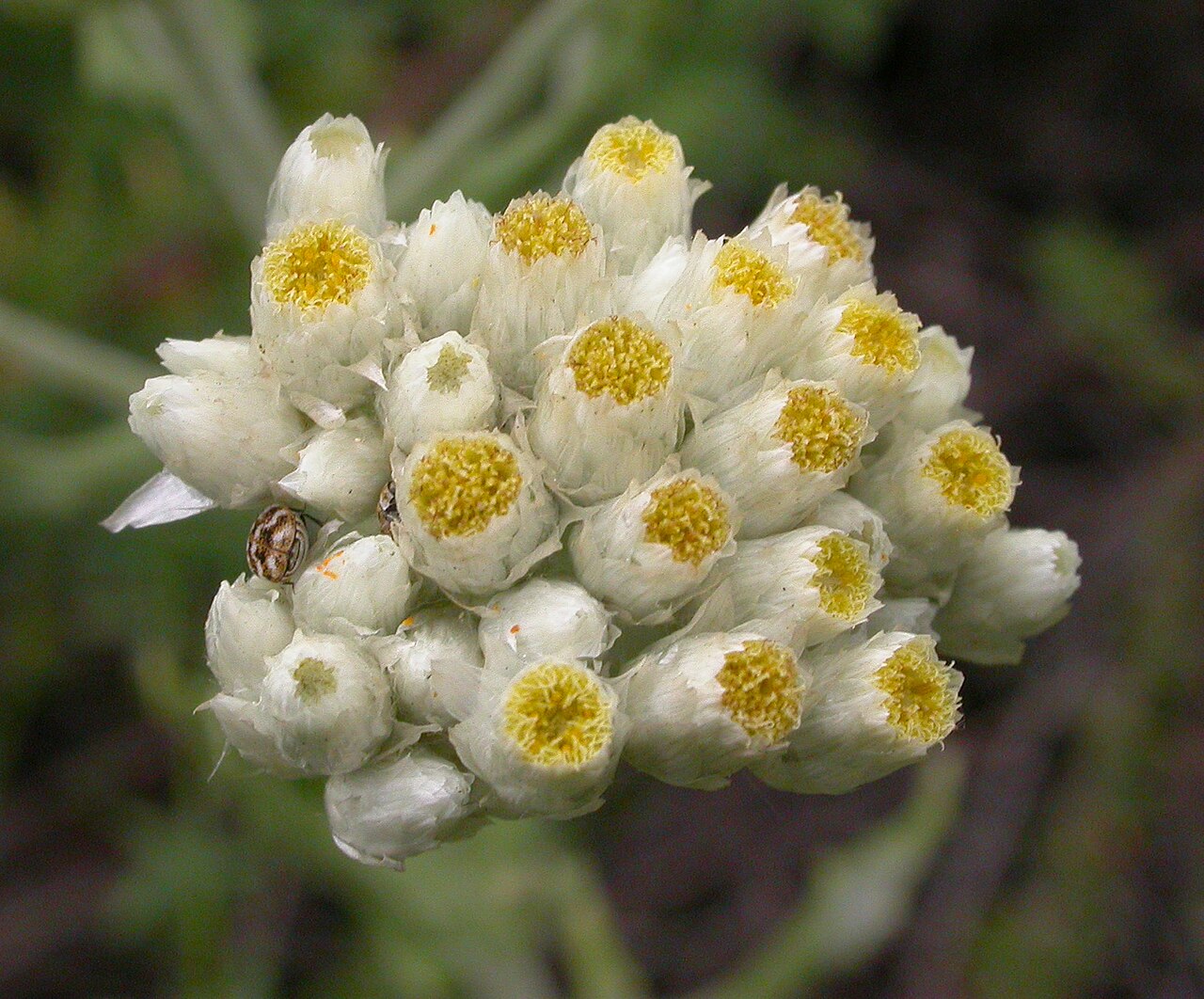
Pseudognaphalium californicum, known as California Cudweed, ladies’ tobacco, California rabbit tobacco or California everlasting, is a fragrant native wildflower of the Pacific coast in the sunflower family (Asteraceae). It is an annual or biennial that forms a rosette of sticky green leaves in its first season and then sends up branched stems 1 to 2½ feet tall, topped in spring and early summer with broad clusters of pearly white, papery flower heads.
Its most memorable trait is its scent. The glandular leaves and stems give off a sweet, resinous fragrance that people variously describe as citrus, curry or maple syrup, and on a warm day it can perfume a whole hillside of chaparral. The papery flower heads keep their shape and color when dried, which is why it is called an “everlasting.”
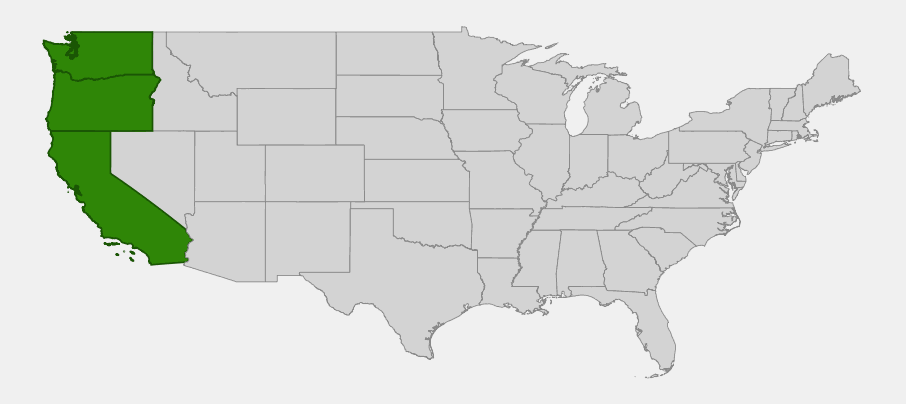
USDA PLANTS lists it under the name ladies’ tobacco. It grows from Washington to Baja California and is a common plant of open, sunny, often recently disturbed or burned ground. This guide covers identification, range, how to grow it from seed, and its value as a caterpillar food plant for the American lady butterfly.
Identification
California cudweed is the greenest and most fragrant of the West Coast cudweeds. Its sticky, scented green leaves and large clusters of bright white heads distinguish it from the gray-woolly cudweeds and everlastings that share its range.
Growth Form
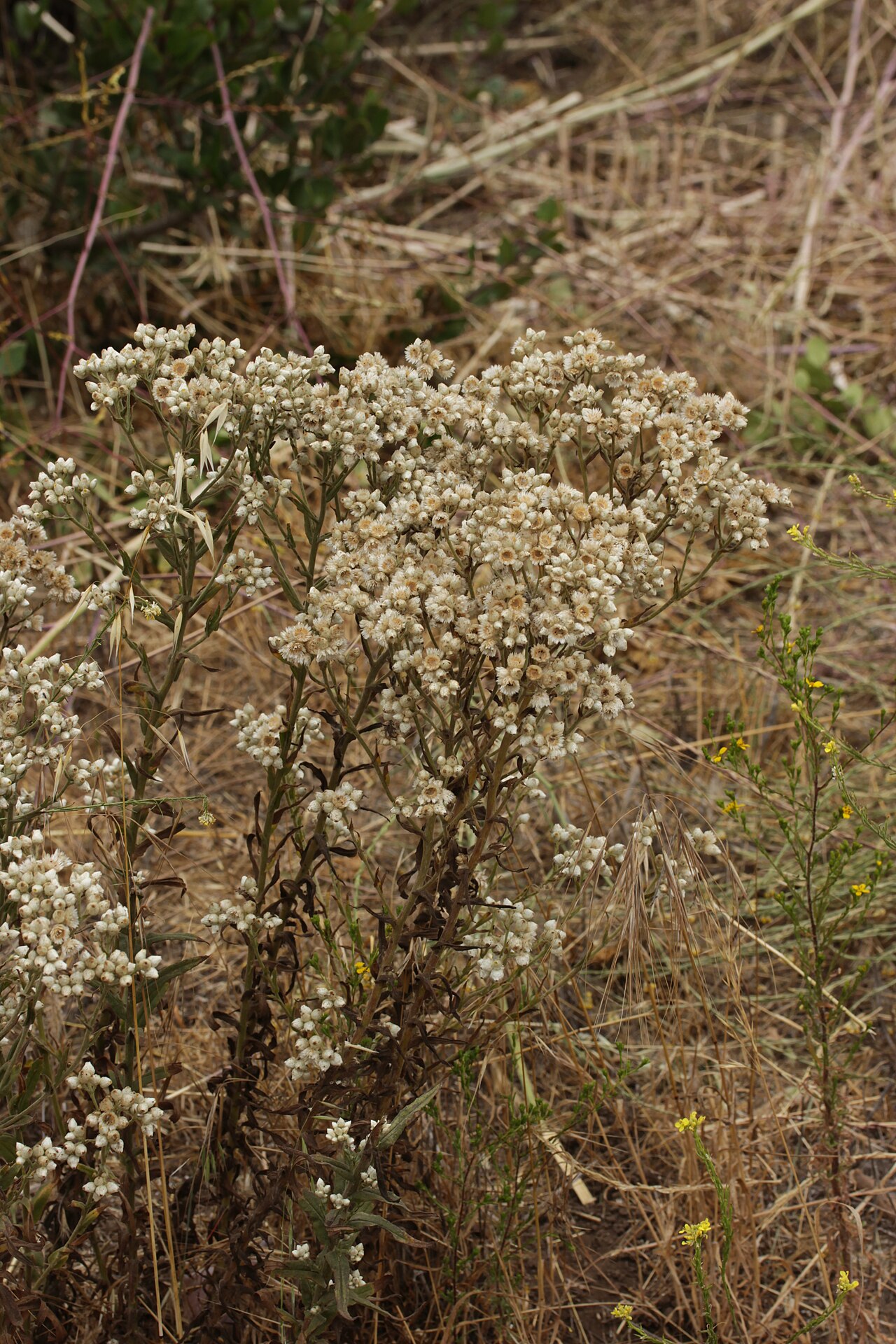
An annual or biennial herb. First-year plants form a low rosette; flowering plants have one or a few erect stems 8 to 32 inches (20–80 cm) tall, branching in the upper part to carry the flower clusters.
Leaves
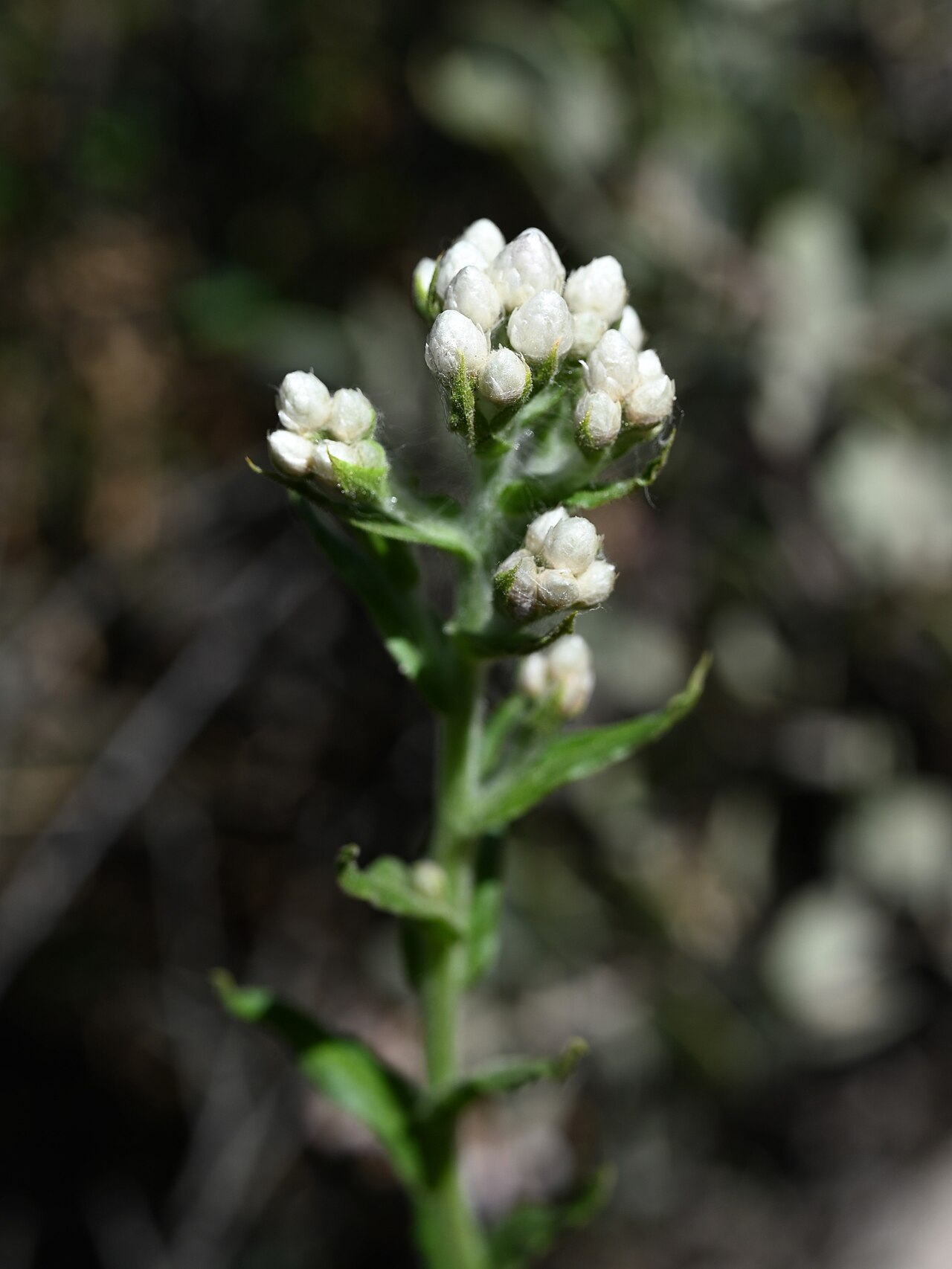
The leaves are narrow, lance-shaped to linear, mostly 1 to 4 inches long (occasionally longer on rosettes), with bases that run a short way down the stem. They are green on both sides and covered with tiny glandular hairs that make them sticky and strongly aromatic, rather than coated in white wool like many related species.
Flower Heads
The flower heads are about ¼ inch long and crowded into broad, rounded to flat-topped clusters. Each head is wrapped in several rows of papery, shining bracts (phyllaries) that are bright white, sometimes tinged pink, around a center of tiny yellowish disk florets. There are no ray petals. Flowering runs mainly from about March to July, with dry heads persisting into summer.
Fruit & Seeds
The fruits are tiny achenes, each with a ring of fine bristles (pappus) that carries it on the wind once the heads open and dry.
Similar Species
Several other cudweeds share its range, including Pseudognaphalium ramosissimum (pink everlasting, with pink-tinged heads) and gray-woolly species such as P. stramineum, whose leaves are covered in white wool. Pearly everlasting (Anaphalis margaritacea) is a spreading perennial with gray-woolly leaves. In the East, the closely related rabbit tobacco (P. obtusifolium) fills a similar niche.
Quick Facts
| Scientific Name | Pseudognaphalium californicum |
| Family | Asteraceae (sunflower family) |
| Plant Type | Annual or biennial herb |
| Mature Height | 1–2½ ft |
| Mature Spread | 1–1½ ft |
| Growth Rate | Fast |
| Sun Exposure | Full sun |
| Water Needs | Low; summer-dry |
| Soil Type | Well-drained sandy, gravelly or rocky soil; tolerates poor soil |
| Soil pH | About 5.5–7.5 |
| Bloom Time | March–July |
| Flower Color | White, papery heads with yellowish centers |
| Fall Color | None; dry heads stay silvery tan |
| Fruit | Tiny achenes with a bristly, wind-borne pappus |
| Deer Resistant | Yes; strongly aromatic and sticky |
| USDA Hardiness Zones | 7–10 |
Native Range
California cudweed is native to the Pacific coast of North America, from Washington south through Oregon and California into Baja California, Mexico. USDA PLANTS records it in California, Oregon and Washington. It is most common in California, where it grows throughout the Coast Ranges, the foothills of the Sierra Nevada, and the coastal and inland valleys and mountains of southern California, and it becomes less common northward through western Oregon into western Washington.
It is a plant of open, sunny, well-drained places: chaparral and coastal sage scrub, grassy slopes, oak woodland openings, sandy flats, road banks and other disturbed ground. Like many chaparral wildflowers it often appears in abundance in the first few years after a fire, when bare soil and light are plentiful.
Most populations grow at low to middle elevations, from near the coast into the foothills, where winters are mild and wet and summers are dry.
📋 Regional plant lists featuring California Cudweed: California & Nevada · Western Oregon & Western Washington
Growing & Care Guide
California cudweed is an easy plant for sunny, dry native gardens on the West Coast. Because it is an annual or biennial, it is best grown from seed and allowed to reseed itself in open, unmulched patches of soil.
Light
Plant it in full sun. In shade it grows lanky and flowers sparsely.
Soil & Water
Any well-drained soil works, including poor, sandy, gravelly or rocky ground. Water seedlings only if winter rains fail; once established it needs no summer water, and summer irrigation tends to make it floppy and short-lived.
Planting Tips
Scatter seed in fall on bare soil and press it in lightly; do not bury it deeply. Leave some open ground without heavy mulch so it can reseed. It fits well into a chaparral or meadow planting with California poppy, California sagebrush and native bunchgrasses.
Pruning & Maintenance
No pruning is needed. Leave flowering stems standing until the seed has blown away, then pull or cut the dead plants. Thin seedlings if they come up too thickly.
Propagation
Grow it from seed, sown in fall where it is to grow. Light seems to help germination, so sow on the surface. Rosettes transplant poorly once their taproot is established, so move them only when small.
Landscape Uses
- Butterfly gardens: caterpillar food for the American lady butterfly
- Fragrance gardens: sweet, resinous scent on warm days
- Chaparral and meadow gardens: white flower clusters in late spring
- Dried flowers: papery heads that keep their shape and color
- Restoration and erosion control: fast cover on bare, disturbed or burned ground within its range
Wildlife & Ecological Value
California cudweed is short-lived, but it plays a useful role on bare ground and is an important plant for one familiar butterfly.
For Pollinators
Cudweeds and everlastings are the main caterpillar food plants of the American lady butterfly (Vanessa virginiensis), whose larvae hide in silk-tied shelters among the woolly or sticky leaves and flower heads. Small bees, flies and wasps visit the small flowers for pollen and nectar.
For Birds
Small seed-eating birds may pick seeds from the dry heads, and the soft, fluffy seed heads can be used as nest material.
For Mammals
Its strong scent and sticky foliage make it unappealing to deer and rabbits, which usually leave it alone.
Ecosystem Role
As a quick colonizer of bare, disturbed and burned soil, it helps cover and stabilize open ground in the early years after fire or disturbance, before longer-lived shrubs and perennials fill in.
Cultural & Historical Uses
The name Pseudognaphalium means “false Gnaphalium,” and the plant was long known as Gnaphalium californicum. The Greek gnaphalon means a lock of wool, a reference to the woolly coats of many species in the group, though this one is notably green and sticky.
Names such as “ladies’ tobacco” and “rabbit tobacco” reflect a long history of using cudweeds as aromatic smoking and medicinal herbs. Several California Indigenous peoples used California cudweed as a medicinal plant, for example in teas and poultices. These are traditional uses, not recommendations; do not use it medicinally without expert guidance.
Today it is valued by native plant gardeners and restoration practitioners, and its fragrant, papery flower heads are popular with people who make dried arrangements from native plants grown in their own gardens.
Frequently Asked Questions
Why is it called ladies’ tobacco?
Cudweeds were historically smoked or used as aromatic herbs, which gave rise to names like ladies’ tobacco and rabbit tobacco. USDA PLANTS uses ladies’ tobacco as its common name for this species.
What does California cudweed smell like?
Its sticky, glandular leaves give off a sweet, resinous scent that people describe as citrus, curry or maple syrup. The fragrance is strongest on warm days.
Is California cudweed an annual or a perennial?
It is an annual or biennial. It often forms a rosette in its first season, flowers in spring or summer, sets seed and then dies, but it reseeds readily in open ground.
What butterfly uses California cudweed?
It is a caterpillar food plant of the American lady butterfly, which lays its eggs on cudweeds and everlastings.
Can I dry the flowers?
Yes. Cut stems when the heads are fully formed but before they open into fluff, and hang them upside down in a dry, shaded place. The papery white heads keep their shape for a long time.

Looking for a nursery that carries California Cudweed?
Browse our native plant nursery directory: California · Oregon · Washington