
Slender Vetch (Vicia ludoviciana)
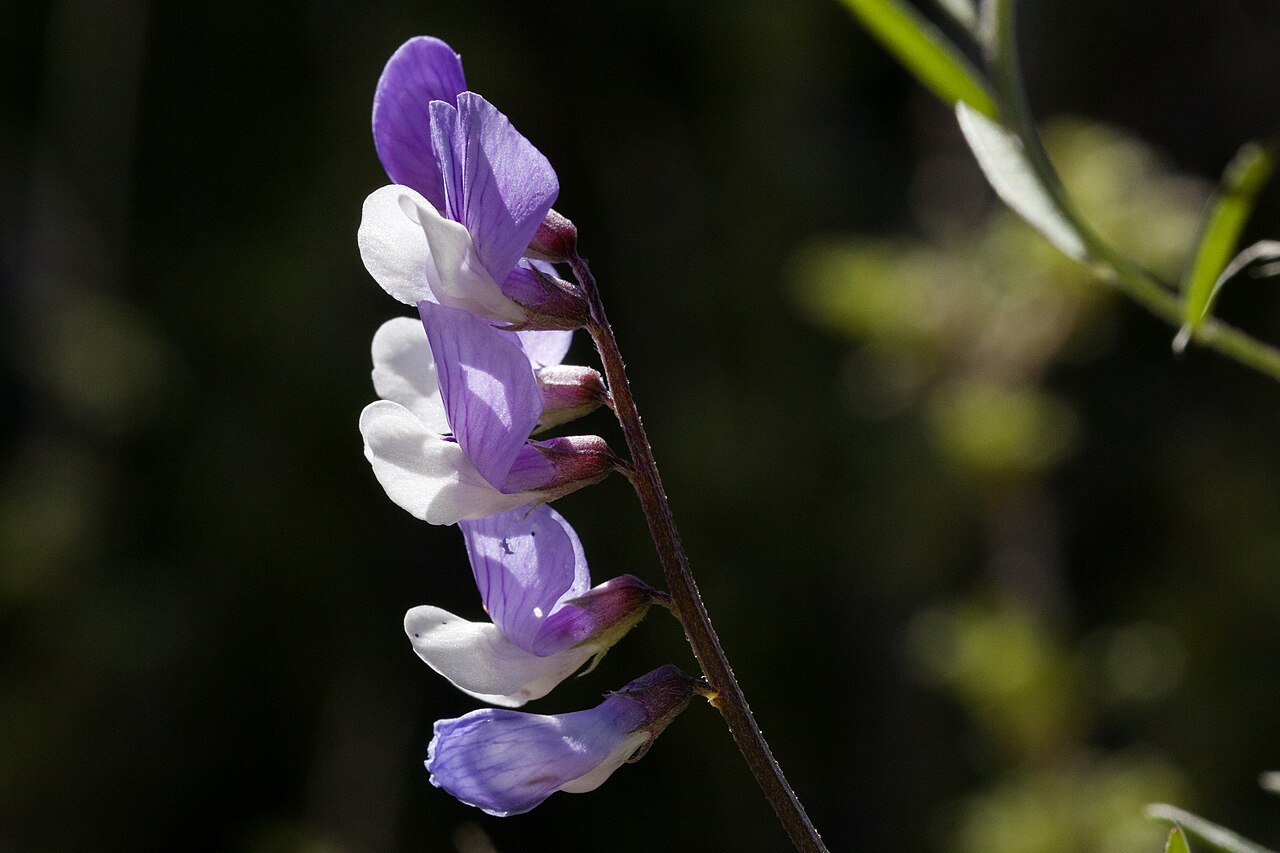
Vicia ludoviciana, known as Slender Vetch (USDA: Louisiana vetch), is a delicate native annual vine of the pea family (Fabaceae). It is also called deer pea vetch and Louisiana vetch. Its thin, trailing stems scramble through grasses and over low shrubs with the help of branched tendrils at the tips of its leaves. In early spring it produces small, slender clusters of blue, lavender or purple-and-white pea flowers.
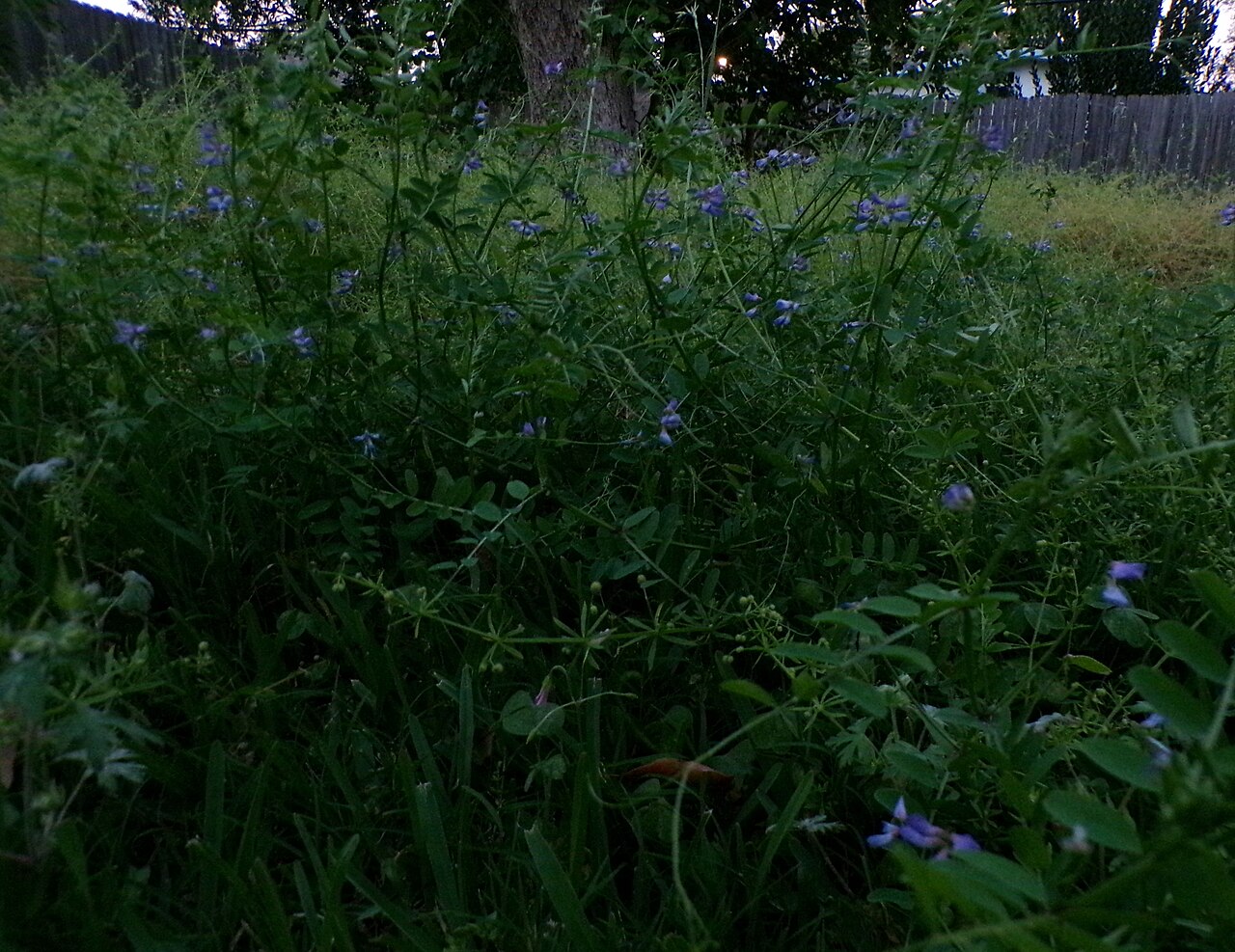
Slender vetch is a cool-season annual. Seeds sprout in fall or winter, the plants grow through the cool months, and they bloom from about February to May before setting flat seed pods and dying back in early summer heat. It is common across Texas and the southern Plains and is also found from the Gulf Coast to the deserts and mountains of the Southwest, often in open woods, prairies, roadsides, fields and lawns.
Like other legumes, it hosts nitrogen-fixing bacteria in its roots, enriching the soil. It feeds early bees and is browsed by deer, which gives it the name deer pea vetch. It is a good choice for meadow and wildflower plantings in the South and Southwest, where it fills in between bunchgrasses and spring wildflowers. Unlike the introduced hairy vetch and common vetch, it is a native plant that is not considered invasive.
Identification
Slender vetch is a small, wiry vine. Look for pinnately compound leaves ending in tendrils, few-flowered clusters of small blue to purple pea flowers on long stalks, and smooth, flat pods in late spring.
Stems & Growth Habit
The stems are thin, angled and mostly smooth or lightly hairy. They trail along the ground or climb through other plants, usually reaching 1 to 3 feet long; the Lady Bird Johnson Wildflower Center notes stems sprawling or climbing up to about 6 feet in good conditions. Plants often form loose tangles in grass and low brush.
Leaves
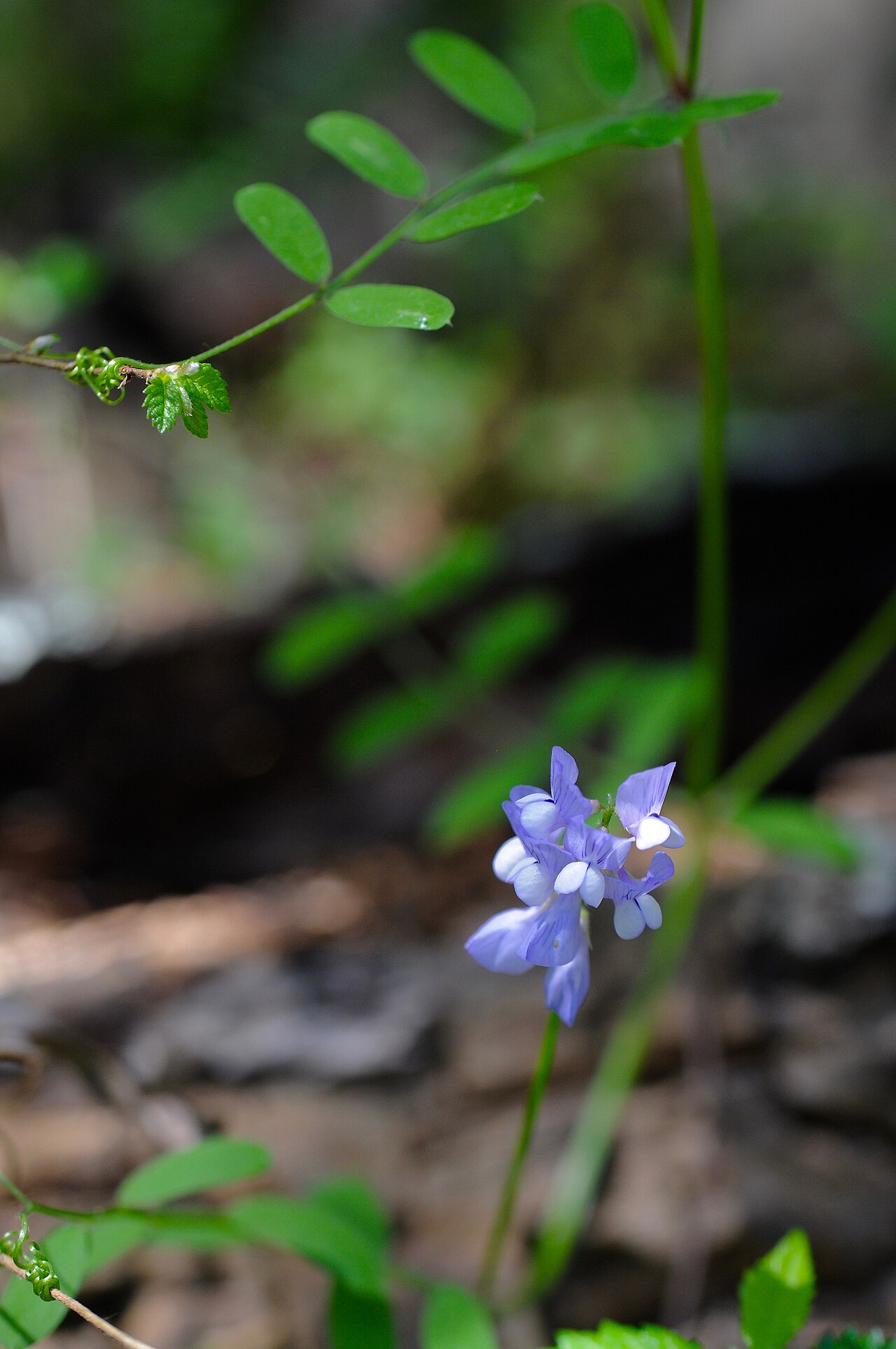
The leaves are alternate and pinnately compound, with several pairs of narrow, oblong to linear leaflets, each about 1/4 to 1 inch long. The central leaf stalk ends in a branched tendril that wraps around nearby stems. Small stipules sit at the base of each leaf.
Flowers
The flowers are borne on long stalks from the leaf axils, in loose, one-sided clusters of one to many flowers. Each pea-shaped flower is about 1/4 to 1/2 inch long, blue, lavender or purple, often with paler or white wings and keel. Bloom time is about February to May, earlier in the south and at low elevations. Plants in Texas with larger flowers and more flowers per stalk are sometimes separated as Leavenworth’s vetch (subspecies leavenworthii).
Fruit & Seeds
The fruit is a flat, smooth pod about 1 to 1 1/4 inches long, containing a few round seeds. Pods ripen and split in late spring or early summer, scattering the seeds, which lie dormant through the summer heat and germinate in fall.
Look-alikes
American vetch (Vicia americana) is a perennial with broader leaflets and larger, purple flowers. Introduced hairy vetch (Vicia villosa) has dense, long, one-sided spikes of 10 to 40 flowers and hairy stems. Common vetch (Vicia sativa) has larger flowers borne singly or in pairs right in the leaf axils, not on long stalks. Slender vetch’s small, few-flowered clusters on long stalks and very narrow leaflets help separate it.
Safety
Slender vetch is not known as a significant poisonous plant, and deer and livestock graze it. As with other wild vetches, the seeds should not be eaten by people, since some Vicia seeds contain compounds that can be harmful in quantity.
Quick Facts
| Scientific Name | Vicia ludoviciana |
| Family | Fabaceae (pea family) |
| Plant Type | Cool-season annual vine |
| Mature Height | Stems 1–3 ft long, sprawling or climbing |
| Mature Spread | 1–3 ft |
| Growth Rate | Fast |
| Sun Exposure | Full sun to part shade |
| Water Needs | Low to medium |
| Soil Type | Sandy, loamy, clay or rocky; well-drained |
| Soil pH | Slightly acidic to alkaline |
| Bloom Time | February–May |
| Flower Color | Blue, lavender or purple, often with white |
| Fall Color | None; dies back in early summer |
| Fruit | Flat, smooth pod about 1 in long |
| Deer Resistant | No; browsed by deer |
| USDA Hardiness Zones | Annual; grows wild in roughly zones 6–10 |
Native Range
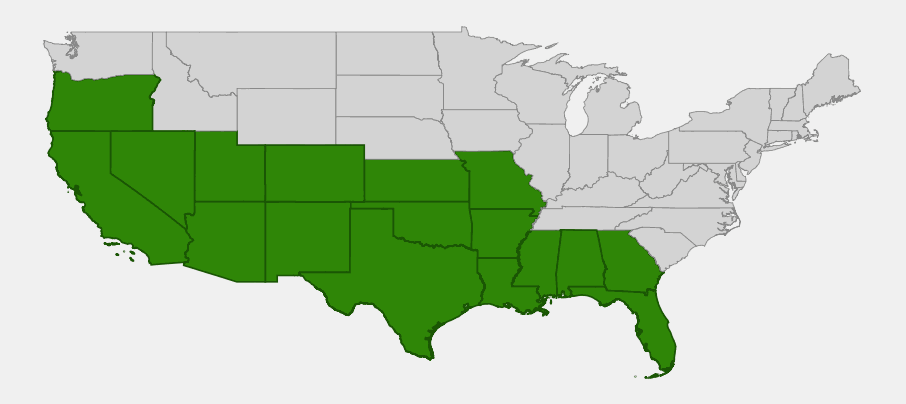
Slender vetch is native to the southern and western United States and northern Mexico. USDA PLANTS lists it as native in the lower 48 states, with records from Alabama, Arizona, Arkansas, California, Colorado, Florida, Georgia, Kansas, Louisiana, Mississippi, Missouri, Nevada, New Mexico, Oklahoma, Oregon, Texas and Utah. It is most common in Texas, Oklahoma and Louisiana, where it is one of the familiar spring wildflowers of prairies, roadsides and open woods.
East of Texas it grows in scattered places along the Gulf Coastal Plain, from Louisiana and Arkansas to Mississippi, Alabama, Georgia and the Florida Panhandle. West of Texas it occurs in canyons, desert grasslands and mountain foothills of New Mexico, Arizona, southern Colorado, Utah and Nevada, and in parts of California. The Oregon record is an outlying one, far from the core of the range.
It grows in sandy, loamy, clay and rocky soils in prairies, open oak and pine woods, woodland edges, stream banks, rocky slopes and canyons, as well as on roadsides, in fields and in lawns. In the Southwest it is often found in the shelter of shrubs and rocks, where a little extra moisture lingers in spring.
📋 Regional plant lists featuring Slender Vetch: Idaho, Eastern Oregon & Eastern Washington · Nebraska, Kansas & Eastern Colorado · Utah & Western Colorado · Arizona & New Mexico · Illinois, Iowa & Missouri · Alabama, Georgia & Mississippi · North & South Florida · Arkansas, Louisiana, Eastern Oklahoma & Eastern Texas · South & West Texas · California & Nevada
Growing & Care Guide
Slender vetch is easy to grow from seed in sunny, informal plantings in the South and Southwest. It is rarely sold as a plant, but seed is sometimes offered by regional native seed suppliers, often as part of wildflower mixes. Grow it like a cool-season wildflower: sow in fall, enjoy the spring bloom, and let it reseed.
Light
Full sun to part shade. It blooms best in sun but also grows well at woodland edges and under open trees, where it can climb through shrubs.
Soil & Water
It grows in most well-drained soils, from sand to clay and rocky soil, and does not need fertilizer, since it fixes its own nitrogen. Winter and spring rain is usually enough. In dry winters in the desert Southwest, an occasional watering helps seedlings establish.
Planting Tips
Sow seed in early to mid-fall, scattering it over bare soil and raking it in lightly, ideally just before a rain. Scarifying the hard seed coat (rubbing it lightly with sandpaper) or soaking the seed overnight improves germination. Mix it with bunchgrasses and other spring wildflowers so it has stems to climb.
Pruning & Maintenance
No pruning is needed. Let the plants finish blooming and set seed before mowing in early summer, so they can reseed for next year. In lawns, simply raise the mower height in spring to enjoy the flowers. The dead stems break down quickly in summer.
Propagation
Grow it from seed. Collect ripe pods as they turn brown in late spring, before they split, and store the seed dry over summer. Sow in fall. Established patches reseed themselves reliably.
Landscape Uses
- Wildflower meadows: a delicate spring companion for bluebonnets and paintbrush
- Pollinator gardens: early-season nectar and pollen for native bees
- Soil improvement: a native, nitrogen-fixing alternative to introduced vetches
- Woodland edges: scrambling through shrubs and open oak and pine woods
- Wildlife plantings: spring browse for deer and seeds for ground-feeding birds
Wildlife & Ecological Value
Slender vetch is a modest-looking plant with real value for wildlife, especially in late winter and early spring when little else is green.
For Pollinators
The pea flowers are visited by native bees, including small solitary bees and bumble bees, which are strong enough to open the keel and reach the nectar and pollen. Vetches and other legumes are larval host plants for several small butterflies, and their foliage feeds the caterpillars of various moths.
For Birds
Ground-feeding birds such as quail, doves and sparrows eat the seeds that drop from the pods in early summer, and insects on the plants provide food for insect-eating birds.
For Mammals
As its name deer pea vetch suggests, white-tailed deer browse the tender spring growth, and rabbits and livestock also graze it. It provides protein-rich green forage at a time when warm-season grasses are still dormant.
Ecosystem Role
Like other legumes, slender vetch forms partnerships with nitrogen-fixing bacteria in root nodules, adding nitrogen to the soil as the plants die and decompose. As a cool-season annual, it covers soil through winter and spring and fills the gaps between warm-season grasses in prairies and open woods.
Cultural & Historical Uses
The species name ludoviciana means “of Louisiana.” The naturalist Thomas Nuttall, who explored and collected widely in the South and West, described the species in the 1800s. In that era “Louisiana” often meant the vast former Louisiana Territory, and many plants of the Great Plains and Gulf region carry the same epithet, a reminder of how much of the continent that territory once covered.
The common name deer pea vetch is widely used in Texas and Louisiana and reflects the plant’s value as early spring browse. Wildlife managers and native-plant enthusiasts in the region recognize native vetches as useful wildlife food, and slender vetch has appeared in some native seed mixes for wildlife and roadside plantings.
Vetches have been grown around the world as cover crops and forage because of their ability to fix nitrogen. Most cultivated vetches in North America are introduced species from Europe and Asia, such as hairy vetch and common vetch, which can become weedy. Slender vetch offers a native alternative for gardeners and land managers who want the soil benefits of a legume without introducing a non-native plant.
Frequently Asked Questions
Is slender vetch native?
Yes. It is native to the southern and western United States, from the Gulf Coast and Texas to the Southwest, and to northern Mexico. Introduced vetches such as hairy vetch and common vetch look similar but come from Europe and Asia.
Is slender vetch an annual?
Yes. It is a cool-season annual that sprouts in fall or winter, blooms in spring and dies in early summer after setting seed.
Is slender vetch a weed in lawns?
It often appears in lawns in Texas and the Gulf states, but it is a native wildflower that disappears by summer and adds nitrogen to the soil. Raising the mower in spring lets you enjoy the flowers and keeps it reseeding.
Why is it called deer pea vetch?
Deer browse its tender spring leaves and stems, and it is valued as early-season wildlife food in Texas and Louisiana.
How do I tell slender vetch from hairy vetch?
Hairy vetch has hairy stems and long, dense, one-sided spikes of 10 to 40 purple flowers. Slender vetch has mostly smooth stems, very narrow leaflets and only a few small flowers on each long stalk.

Looking for a nursery that carries Slender Vetch?
Browse our native plant nursery directory: Alabama, Arizona & Arkansas · California · Colorado, Florida & Georgia · Kansas · Louisiana, Mississippi & Missouri · Nevada, New Mexico & Oklahoma · Oregon · Texas & Utah