
Little Sweet Betsy (Trillium cuneatum)
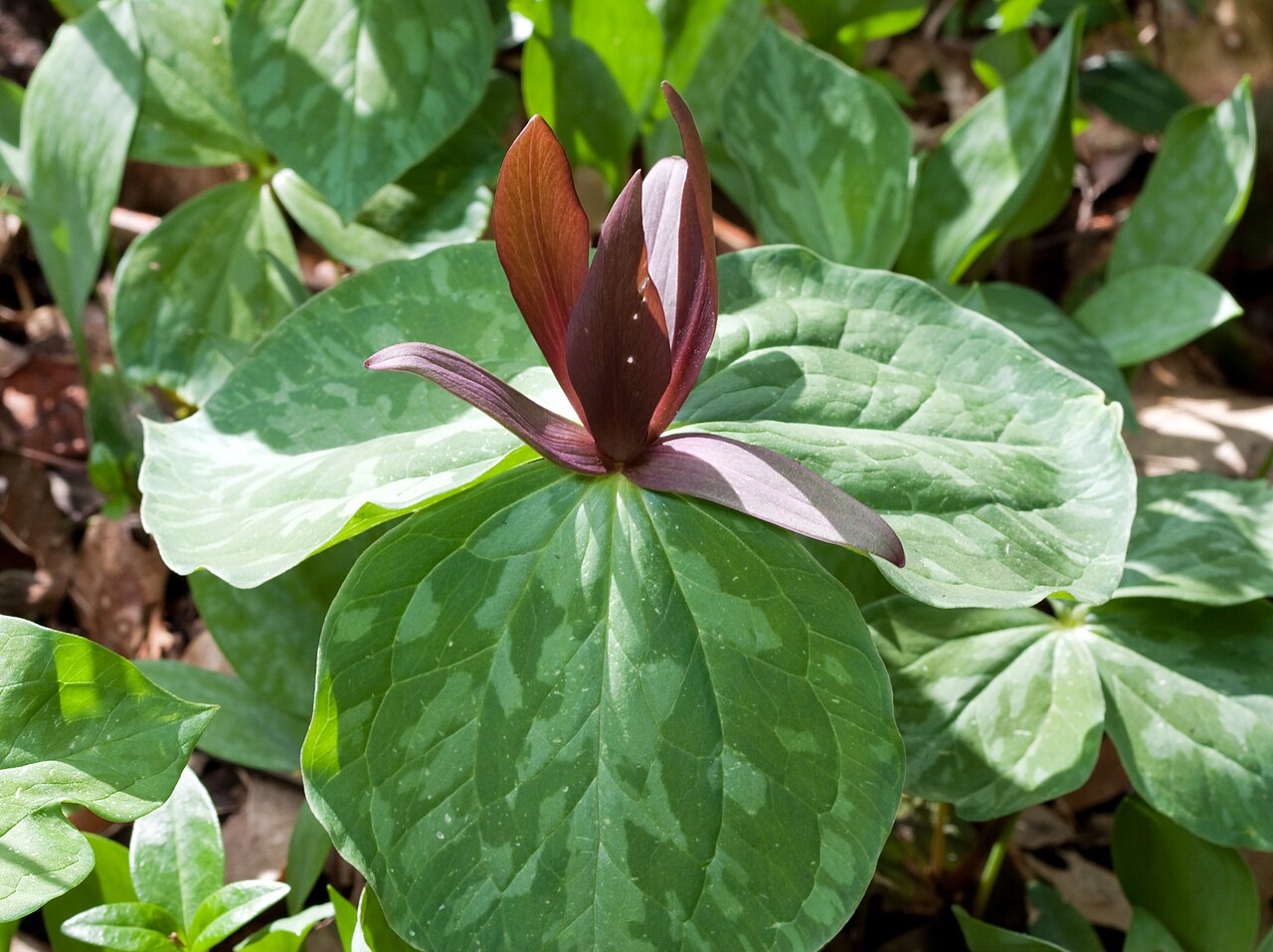
Trillium cuneatum, known as Little Sweet Betsy, sweet Betsy, large toadshade, purple toadshade, whip-poor-will flower or bloody butcher, is a spring wildflower of rich hardwood forests in the southeastern United States. It is the largest of the eastern sessile (stalkless) trilliums: a whorl of three broad, silver-mottled leaves on a stout stem up to about 18 inches tall, with a single upright maroon flower sitting directly on the leaves.
It blooms from about early March to late April, depending on latitude, and the flowers have a sweet, fruity scent often compared to bananas. Petals are usually deep maroon, but bronze, green and yellow forms also occur. It is especially common from southern Kentucky through central Tennessee to northern Alabama, where it can carpet wooded slopes in early spring.
This guide covers how to identify it, where it grows, how to grow it in a shady woodland garden, and its role in the forest. One rule comes first: never dig wild trilliums. Buy only nursery-propagated plants, because many trilliums sold as “nursery grown” have in fact been collected from the wild.
Identification
Little sweet Betsy belongs to the sessile trilliums, whose upright flowers sit directly on the leaves without a flower stalk. Its size, strongly mottled leaves and sweet scent help separate it from its relatives.
Stem & Leaves
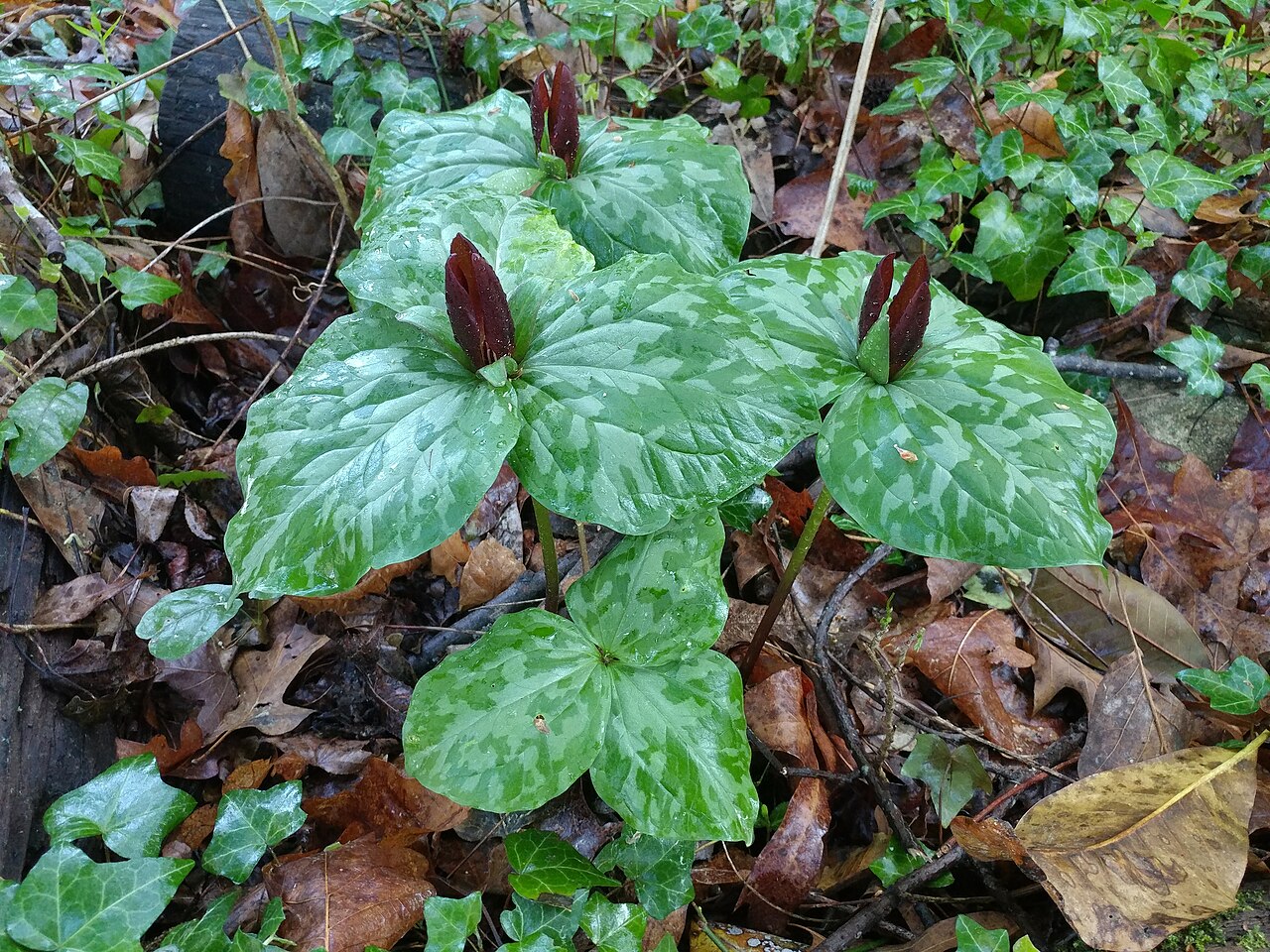
Each plant rises from a thick underground rhizome as a single stout stem, usually 8 to 18 inches tall. At the top is a whorl of three stalkless leaves (botanically, bracts), broadly oval to nearly round and up to about 6 inches long. They are usually boldly mottled with silvery-gray and several shades of green, though the mottling fades as the season goes on.
Flowers
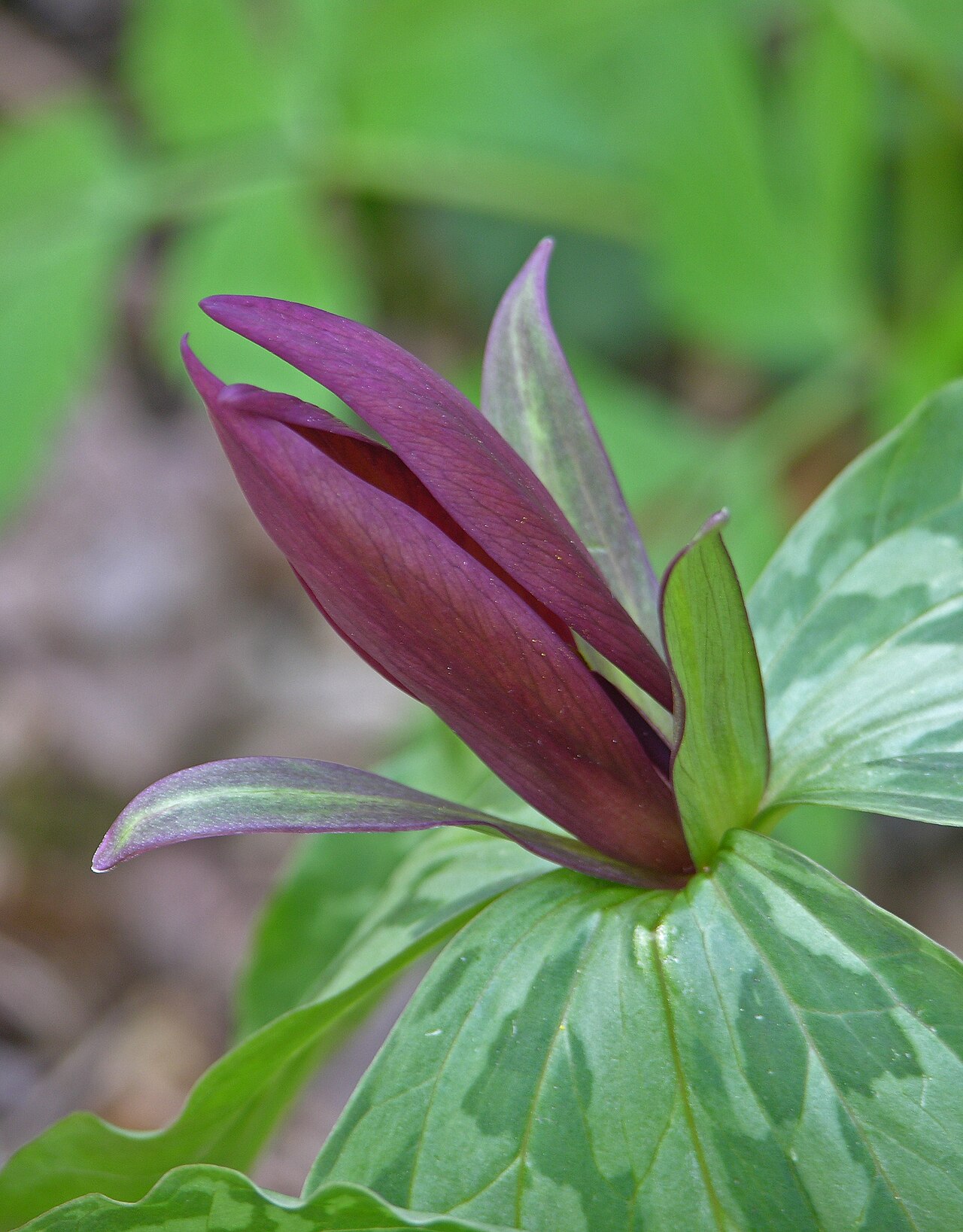
The single flower sits directly in the center of the leaves. The three green to maroon sepals spread outward, and the three erect petals are usually 1½ to 3 inches long, broadest above the middle and tapering to a narrow, wedge-shaped base. The petals are typically maroon to brownish-purple, sometimes bronze, green or yellow; a form lacking purple pigment (Trillium cuneatum f. luteum) appears here and there among purple plants. The flowers have a sweet, fruity scent.
Fruit & Seeds
After flowering, the ovary swells into a fleshy, ridged, greenish to purplish berry that ripens in late spring or early summer. The seeds carry small fatty appendages (elaiosomes) that attract ants.
Similar Species
Toadshade (Trillium sessile) is a much smaller plant with shorter petals and plainer leaves, and it is more common north and west of sweet Betsy’s range. Yellow trillium (Trillium luteum), a close relative in the same species complex, has lemon-yellow, lemon-scented flowers. Spotted wakerobin (Trillium maculatum) of the coastal plain has petals that are broadest near the tip and often sharply narrowed. Older references sometimes call this species Trillium hugeri, a name now treated as a synonym.
Quick Facts
| Scientific Name | Trillium cuneatum |
| Family | Melanthiaceae (bunchflower family) |
| Plant Type | Herbaceous perennial from a rhizome; spring ephemeral |
| Mature Height | 8–18 in |
| Mature Spread | 8–12 in; slowly forms clumps |
| Growth Rate | Slow |
| Sun Exposure | Part shade to full shade |
| Water Needs | Moderate; moist in spring, tolerates summer dryness while dormant |
| Soil Type | Rich, humusy loam; often over limestone or other base-rich rock |
| Soil pH | About 6.0–7.5 |
| Bloom Time | March–April |
| Flower Color | Maroon to brownish-purple; sometimes bronze, green or yellow |
| Fall Color | None; leaves die back by early summer |
| Fruit | Fleshy, ridged greenish to purplish berry with ant-dispersed seeds |
| Deer Resistant | No; deer browse trilliums heavily |
| USDA Hardiness Zones | 5–8 |
Native Range
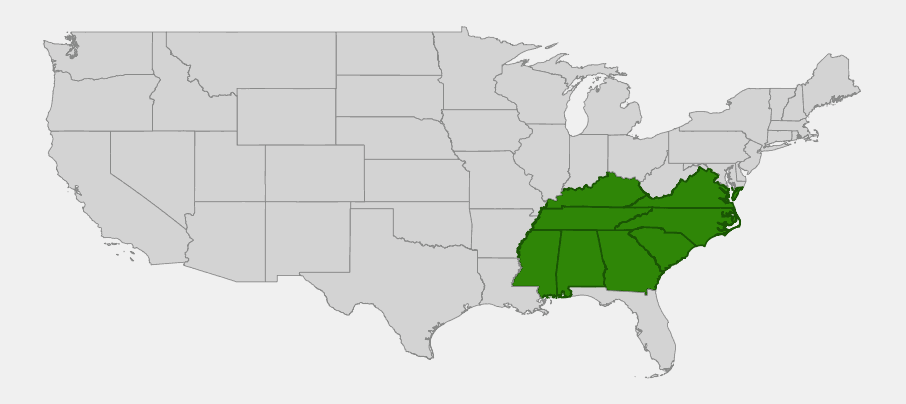
Little sweet Betsy is a southeastern endemic. It is native from Kentucky and Tennessee south to Georgia, Alabama and Mississippi, and east into North and South Carolina, and USDA PLANTS also records it as native in Virginia, at the northeastern edge of its range. It is most abundant from southern Kentucky through the Nashville Basin and central Tennessee to northern Alabama.
Because it is a popular garden trillium, it has also been planted well beyond its native range. USDA PLANTS lists it in Illinois, Maryland and Pennsylvania, but the Biota of North America Program (BONAP) treats those populations, and others in Michigan, as introduced, so they are not shown on the map. Plants seen in gardens and parks farther north are usually cultivated.
It grows in rich, moist deciduous woods, on wooded slopes, coves and ravines, and on stream terraces, often over limestone or other base-rich rock, at low to middle elevations.
📋 Regional plant lists featuring Little Sweet Betsy: Kentucky & Tennessee · Maryland, Virginia & West Virginia · Alabama, Georgia & Mississippi · North & South Carolina
Growing & Care Guide
Little sweet Betsy is one of the most garden-worthy trilliums for shady gardens in the Southeast, and it is fairly adaptable once established. It is slow, though: plants take several years to reach flowering size. Buy only from nurseries that propagate their own trilliums, and never dig plants from the wild.
Light
Plant in part to full shade under deciduous trees. Like other spring ephemerals, it does most of its growing in early spring, while sunlight still reaches the forest floor, and goes dormant by early summer. Avoid hot, sunny spots.
Soil & Water
Give it rich, loose, moist but well-drained soil with plenty of leaf mold or compost, ideally neutral to slightly acidic or over limestone. Keep the soil evenly moist from late winter through flowering. Once dormant it tolerates summer dryness well, but avoid soggy soil, which can rot the rhizome.
Planting Tips
Plant dormant rhizomes in late summer or fall about 2 to 3 inches deep, or set out potted plants in early spring. Space them 8 to 12 inches apart in loose groups. Companion plants such as Christmas fern, wild ginger and foamflower fill the space after the trilliums go dormant.
Pruning & Maintenance
No pruning is needed. Leave the leaves in place until they yellow on their own; the plant needs them to store energy for next year. Mulch with shredded leaves each fall. Protect plants from deer with fencing or repellents where browsing is heavy.
Propagation
Divide established clumps carefully in late summer after the plants go dormant, keeping a growing bud with each piece of rhizome. Seed is slow: sow fresh seed outdoors as soon as the fruit ripens, without letting it dry out. Germination can take two years, and seedlings may need five years or more to bloom.
Landscape Uses
- Woodland gardens: a bold, early accent with mottled leaves and upright maroon flowers
- Shade gardens: paired with ferns, wild ginger and foamflower that fill in for summer
- Native plant collections: one of the easiest and largest of the sessile trilliums
- Woodland restoration: within its native range, using nursery-propagated plants
- Fragrance gardens: its sweet, fruity scent is noticeable up close on warm spring days
Wildlife & Ecological Value
Little sweet Betsy is part of the famous spring wildflower display of southeastern hardwood forests, and like other trilliums it relies on insects for pollination and on ants to plant its seeds.
For Pollinators
The upright, scented flowers attract beetles, flies and some bees, which crawl among the stamens and carry pollen between plants. Its flowers bloom early, when few other food sources are available to these insects.
For Birds
It has little direct value to birds, but it grows in the leaf litter of rich woods where ground-foraging birds such as wood thrushes and wild turkeys feed.
For Mammals
White-tailed deer browse trilliums readily, and heavy deer populations have reduced trilliums in many forests. Small mammals may eat the fruits and seeds.
Ecosystem Role
Each seed carries a fatty elaiosome that ants carry back to their nests. The ants eat the appendage and discard the seed underground or in their refuse piles, often a good place for it to sprout. This ant dispersal, called myrmecochory, is typical of trilliums and many other woodland wildflowers.
Cultural & Historical Uses
The naturalist Constantine Samuel Rafinesque described Trillium cuneatum in 1840. The species name means “wedge-shaped,” for the way each petal narrows to its base. Botanists now treat it as part of a variable species complex together with yellow trillium and spotted wakerobin, and it may eventually be split into several species.
Its many folk names, including sweet Betsy, bloody butcher (for the dark red flowers) and whip-poor-will flower, reflect how familiar it is in the Southeast. Trilliums are not food plants: do not eat the berries or rhizomes, and keep children and pets from chewing on them.
Never dig wild trilliums. Trilliums grow slowly from seed, and wild collecting for the plant trade has harmed many populations. Some plants sold as “nursery grown” have simply been dug from the woods and held in pots. Buy only from nurseries that state their plants are propagated (grown from seed or division), and leave wild plants where they are.
Frequently Asked Questions
Is little sweet Betsy the same as toadshade?
Not quite. “Large toadshade” is one of its common names, but the plant usually called toadshade is Trillium sessile, a smaller relative with shorter petals and plainer leaves.
Can I dig little sweet Betsy from the woods?
No. Never dig wild trilliums. Collecting harms slow-growing populations, and transplanted plants often fail. Buy only plants that the nursery has propagated itself.
Why does my trillium disappear in summer?
It is a spring ephemeral. After flowering and fruiting the leaves yellow and die back, usually by early summer, and the plant rests underground until the next spring. This is normal.
What does little sweet Betsy smell like?
The flowers have a sweet, fruity scent that many people compare to bananas. The scent is strongest on warm spring days.
Will it grow outside the Southeast?
It is hardy roughly in USDA zones 5 to 8 and is often grown in woodland gardens farther north, where it may persist and spread. For restoration or wild areas, choose trilliums native to your own region.

Looking for a nursery that carries Little Sweet Betsy?
Browse our native plant nursery directory: Alabama · Georgia · Kentucky & Mississippi · North Carolina · South Carolina, Tennessee & Virginia