
Sweetbush (Bebbia juncea)
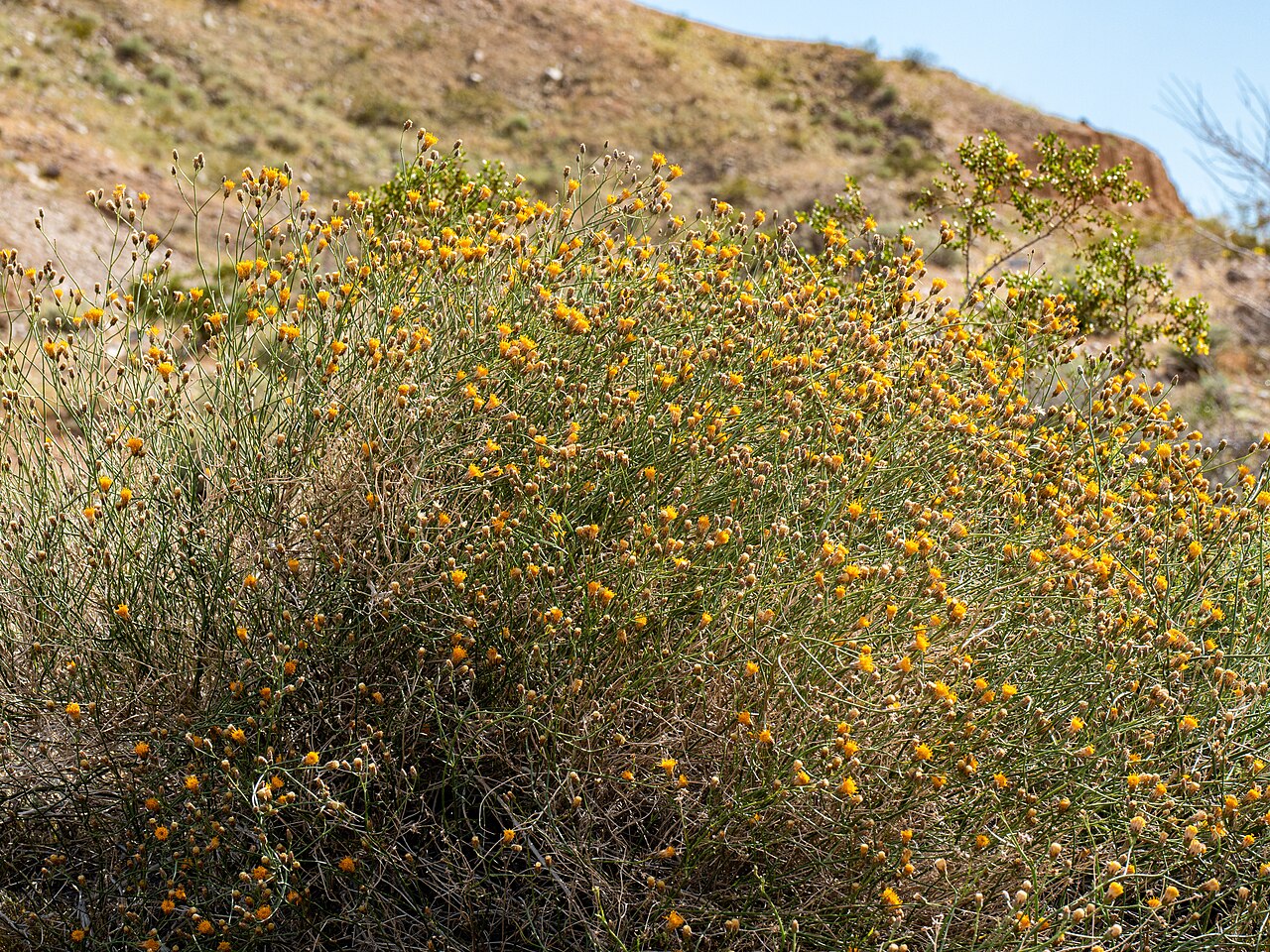
Bebbia juncea, known as Sweetbush, is a rounded, broom-like desert shrub of the sunflower family (Asteraceae) native to the deserts of the American Southwest and northwestern Mexico. It forms a dense, tangled mound of slender green stems, usually 2 to 4 feet tall and wide, that look almost leafless for most of the year. The species name juncea means “rush-like,” a good description of those smooth green stems.
For much of the year sweetbush is easy to overlook among the creosote bush and bursage of desert washes. After rain it changes completely: the stems are tipped with hundreds of small, rayless, golden-yellow to orange flower heads with a sweet fragrance. Those flowers are among the best butterfly plants of the low deserts. Sweetbush can bloom in spring, summer and fall whenever there is enough moisture, so it offers nectar over a long season.
For gardeners in the low and middle deserts, sweetbush is a tough, low-water native shrub for wash-themed plantings, butterfly gardens and natural areas. It tolerates intense heat, reflected sun and very poor, rocky soil, and it needs little care once established. The genus honors Michael Schuck Bebb, a 19th-century American botanist known for his work on willows.
Identification
Sweetbush is best identified by its combination of green, rush-like stems, very few leaves and rayless yellow-orange flower heads held at the stem tips. Crushed stems and flowers have a sweet smell.
Growth Form
Sweetbush is a rounded, much-branched shrub or subshrub usually 2 to 4 feet tall and as wide, occasionally taller in protected canyons. The many slender stems grow from a woody base and form a dense, tangled mound. The stems stay green and carry out most of the plant’s photosynthesis, a common adaptation of desert shrubs that drop their leaves in drought.
Stems & Leaves
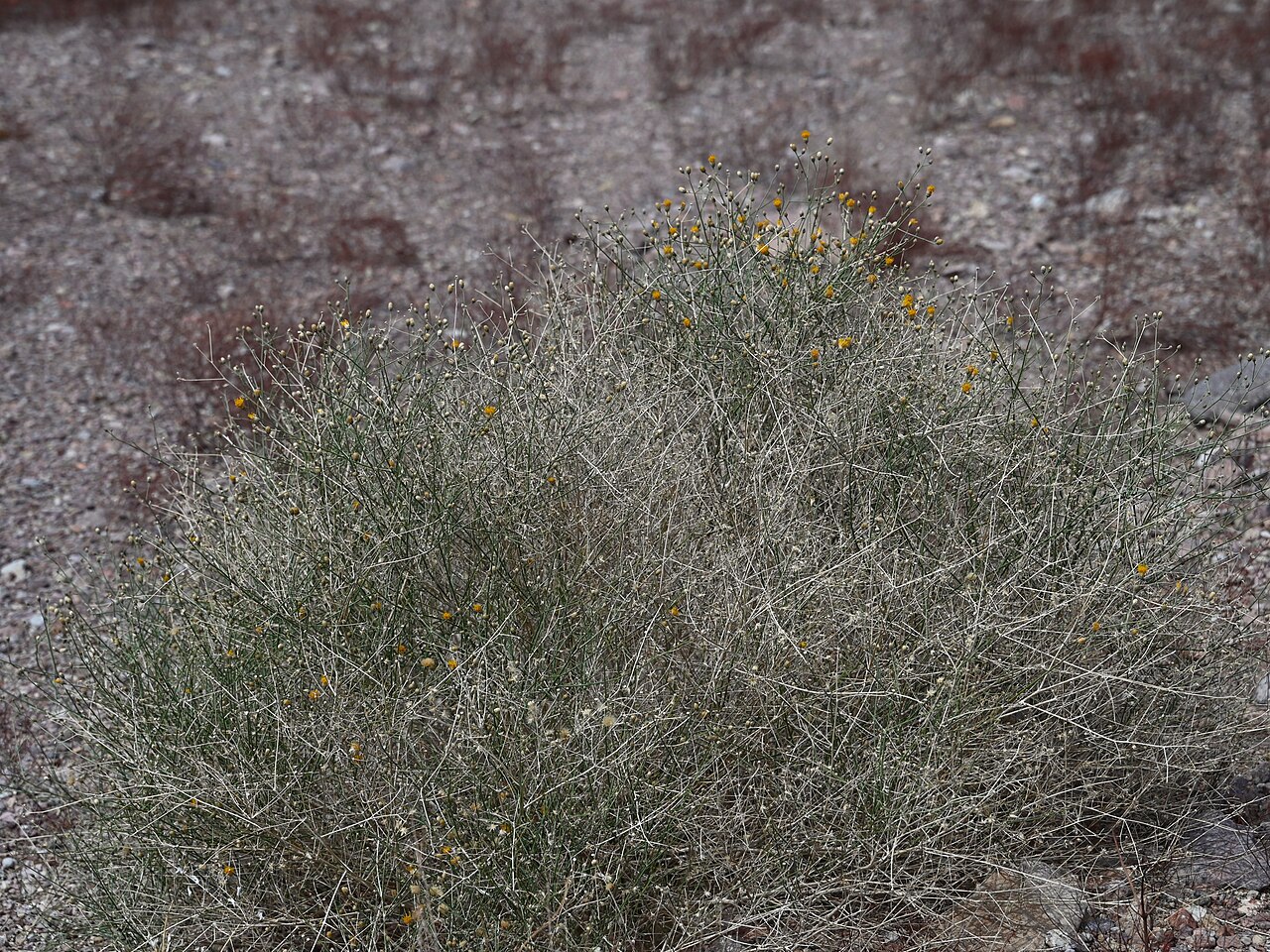
The stems are thin, green, and smooth to rough-hairy, depending on the plant. Leaves are few, small and narrow, usually linear or with a few teeth or lobes, and up to about 1 1/2 inches long. They appear mainly on new growth after rain and fall off quickly when the soil dries, leaving the bare green broom of stems.
Flowers
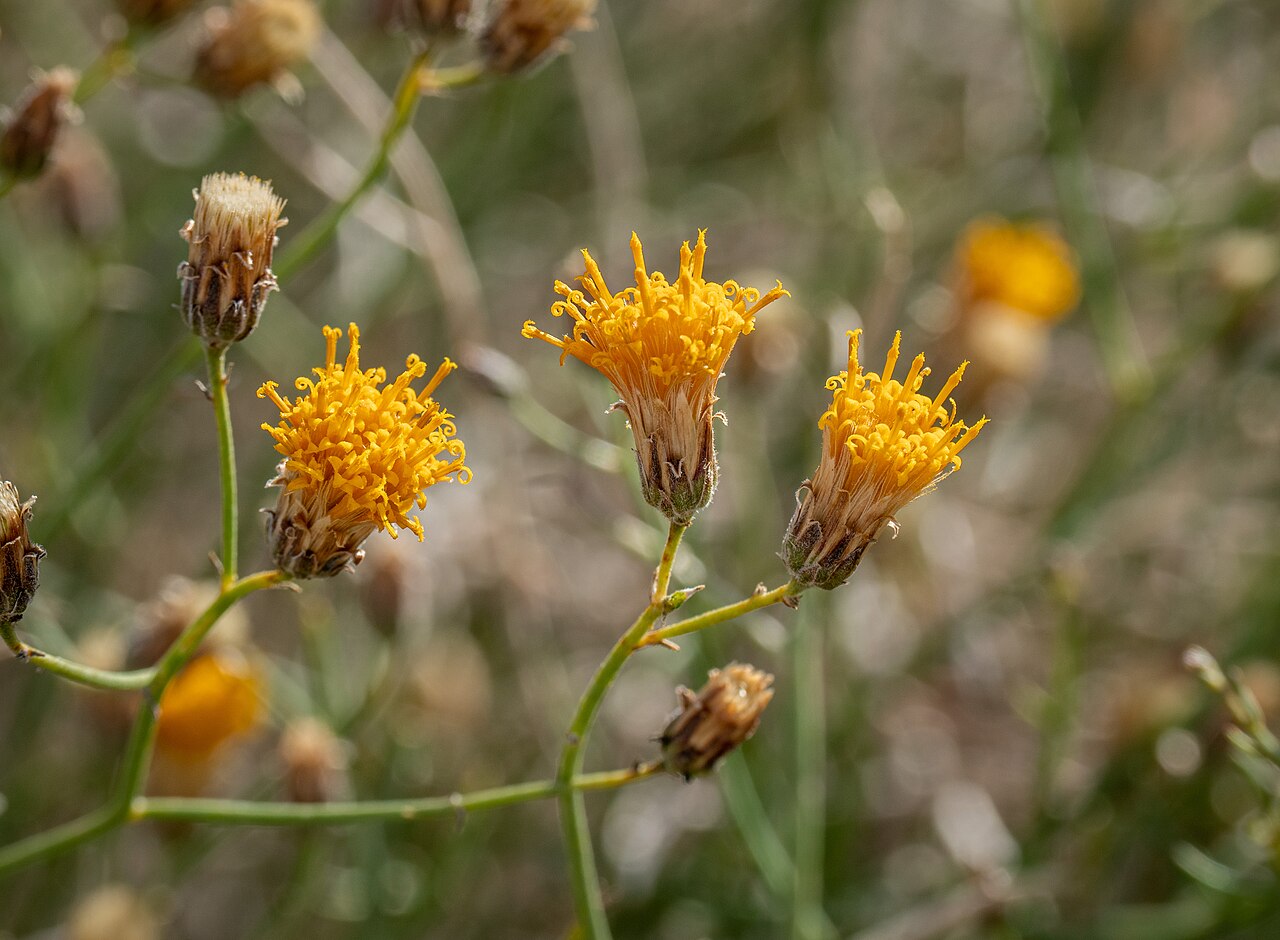
The flower heads are about 1/2 inch across and are made up only of small, tubular disk flowers, with no petal-like ray flowers. They are golden yellow to orange, with long, protruding styles that give each head a soft, shaggy look. Heads are borne singly or a few together at the ends of the stems. The flowers have a sweet, honey-like scent, the source of the common name. The main bloom is in spring, with more flowers after summer rains and into fall; in some years plants flower nearly all year.
Fruit & Seeds
Each flower produces a small, dry, hairy achene (cypsela) topped with a ring of feathery bristles that carries it on the wind. The fluffy seed heads are often present on the plant along with fresh flowers.
Varieties
Most plants in the United States belong to var. aspera, which has rough-hairy stems. The typical var. juncea, with smoother stems, is found mainly in Baja California and northwestern Mexico, with some records reaching southern California.
Look-alikes
Turpentine broom (Thamnosma montana) has similar green, nearly leafless stems but purple flowers and a strong citrus smell. Desert broom (Baccharis sarothroides) also has green broom-like stems, but its flower heads are small and whitish, on separate male and female plants. Rabbitbrush species have yellow flowers in clusters and more leaves. The rayless, shaggy orange heads on single stalks set sweetbush apart.
Quick Facts
| Scientific Name | Bebbia juncea |
| Family | Asteraceae (aster or sunflower family) |
| Plant Type | Drought-deciduous shrub or subshrub |
| Mature Height | 2–4 ft (occasionally to 5 ft or more) |
| Mature Spread | 2–4 ft |
| Growth Rate | Moderate to fast with occasional water |
| Sun Exposure | Full sun |
| Water Needs | Very low once established; occasional deep watering in summer |
| Soil Type | Rocky, gravelly or sandy, well-drained |
| Soil pH | Neutral to alkaline |
| Bloom Time | Mainly April–July; also after summer and fall rains |
| Flower Color | Golden yellow to orange |
| Fall Color | None; green stems year-round |
| Fruit | Small achenes with feathery bristles |
| Deer Resistant | Moderate; may be browsed when tender |
| USDA Hardiness Zones | 8–11 |
Native Range
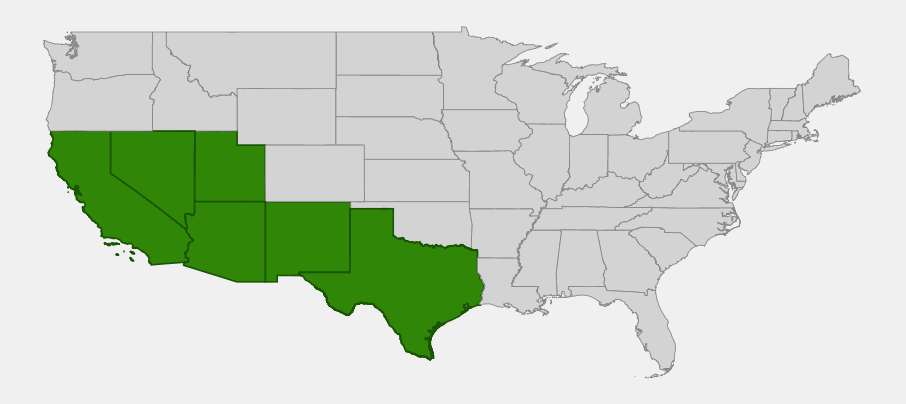
Sweetbush is native to the Mojave, Sonoran and northern Chihuahuan Deserts. USDA PLANTS lists it as native in six states: Arizona, California, Nevada, Utah, New Mexico and Texas. It also ranges south into Baja California, Sonora and other parts of northwestern Mexico. The Lady Bird Johnson Wildflower Center describes its range as California east to Utah and Texas.
In California it grows in the Mojave and Colorado Deserts and in dry foothills of the southern part of the state. It is common in southern Nevada, extreme southwestern Utah around St. George, and across much of southern and western Arizona. In New Mexico and Texas it is at the eastern edge of its range, occurring in the southwest of New Mexico and in the Trans-Pecos of West Texas, including the Big Bend region.
Typical habitats are low-elevation rocky hillsides, desert scrub, gravelly washes and arroyo banks, and canyons, generally below about 5,000 feet. It is often most abundant along washes, where runoff gives it a little more water than the surrounding flats.
📋 Regional plant lists featuring Sweetbush: Utah & Western Colorado · Arizona & New Mexico · South & West Texas · California & Nevada
Growing & Care Guide
Sweetbush is one of the easier desert natives to grow in low- and mid-elevation desert gardens. It wants sun, heat and sharp drainage, and it rewards a little extra water with more flowers. It is not suited to cold, wet climates or heavy, poorly drained soil.
Light
Plant it in full sun. It handles reflected heat from walls and paving well. In shade it becomes sparse and flowers poorly.
Soil & Water
Use rocky, gravelly or sandy soil with fast drainage; it does well in unamended native desert soil. Water regularly the first summer to establish it. After that it survives on rainfall in most desert areas, but a deep watering every two to four weeks in the hottest months keeps it green and blooming. Overwatering, especially in heavy soil, causes rank growth and root rot.
Planting Tips
Plant in fall or early spring so roots can grow before summer heat. Give it a spot along a dry wash, a slope or the edge of a gravel garden, where its loose, airy form fits in. It combines well with brittlebush, desert marigold, globemallow and other desert wildflowers. Do not fertilize.
Pruning & Maintenance
Sweetbush needs little maintenance. If a plant becomes woody or untidy, cut it back by about half in late winter; it resprouts quickly. Remove dead stems as needed. In a drought it may look dull and drop its few leaves; it greens up again after rain or a deep watering.
Propagation
Grow it from fresh seed sown in spring or late summer in a sandy mix; germination is usually good without special treatment. Plants may self-sow in gardens with some water. Buy plants or seed from native plant nurseries and seed suppliers of the Southwest rather than collecting wild plants.
Landscape Uses
- Butterfly gardens: a top nectar shrub for desert butterflies
- Dry wash plantings: looks natural among boulders and gravel
- Xeriscapes: very low water use once established
- Erosion control on slopes: tough, fast-establishing desert shrub
- Habitat restoration: common in desert washes and scrub
Wildlife & Ecological Value
Sweetbush is a valuable wildlife plant in the low deserts because it flowers over a long season and often blooms when few other shrubs do.
For Pollinators
The sweet-scented flower heads are visited heavily by butterflies, including painted ladies, checkerspots, metalmarks and queens, and by native bees and other insects. Gardeners in Arizona and southern California often list it among the best butterfly plants for desert gardens.
For Birds
Seed-eating birds such as sparrows and finches eat the seeds, and the dense, tangled stems give cover to small birds such as quail and wrens. Insect-eating birds forage on the many insects the flowers attract.
For Mammals
The green stems may be browsed by deer, desert bighorn sheep and rabbits, and the shrub provides shade and cover for small mammals and reptiles.
Ecosystem Role
As a common shrub of washes and rocky slopes, sweetbush helps stabilize gravelly soils and gives structure to desert plant communities. Its long and repeated flowering supports pollinators through dry periods when many other plants are dormant.
Cultural & Historical Uses
The genus Bebbia was named in honor of Michael Schuck Bebb (1833–1895), an American botanist who specialized in willows (Salix); Bebb willow (Salix bebbiana) is also named after him. The species name juncea comes from Juncus, the rushes, and refers to the plant’s green, rush-like stems.
The common name sweetbush refers to the sweet fragrance of the flowers. The plant is also sometimes called chuckwalla’s delight, because chuckwallas, large desert lizards, are reported to eat its flowers. It is a familiar sight to hikers in places such as Joshua Tree, Anza-Borrego, Organ Pipe Cactus and Lake Mead.
Sweetbush has become more popular in desert landscaping as interest in native, low-water and pollinator-friendly plants has grown. It is offered by native plant nurseries and botanical garden plant sales in Arizona, southern Nevada and southern California, and it is used in revegetation of disturbed desert sites.
Frequently Asked Questions
Why does sweetbush look leafless?
It drops its small leaves when the soil dries. Its green stems carry out photosynthesis instead, which reduces water loss in the desert heat. New leaves appear briefly after rain.
When does sweetbush bloom?
The main bloom is in spring, but it flowers again after summer and fall rains. With occasional garden watering it can bloom for much of the year.
Is sweetbush good for butterflies?
Yes. Its sweet-scented flower heads are among the most popular nectar sources for butterflies in the low deserts, and they also attract native bees.
Can I grow sweetbush outside the desert?
It needs heat, sun and very good drainage and is hardy to roughly USDA zone 8. It usually fails in cold, wet winters and in heavy clay soil.
How much water does sweetbush need?
Water it regularly the first summer. After that it survives on rainfall in most desert areas, but a deep watering every few weeks in summer keeps it greener and flowering.

Looking for a nursery that carries Sweetbush?
Browse our native plant nursery directory: Arizona · California · Nevada & New Mexico · Texas & Utah