
Largeflower Fairybells (Prosartes smithii)
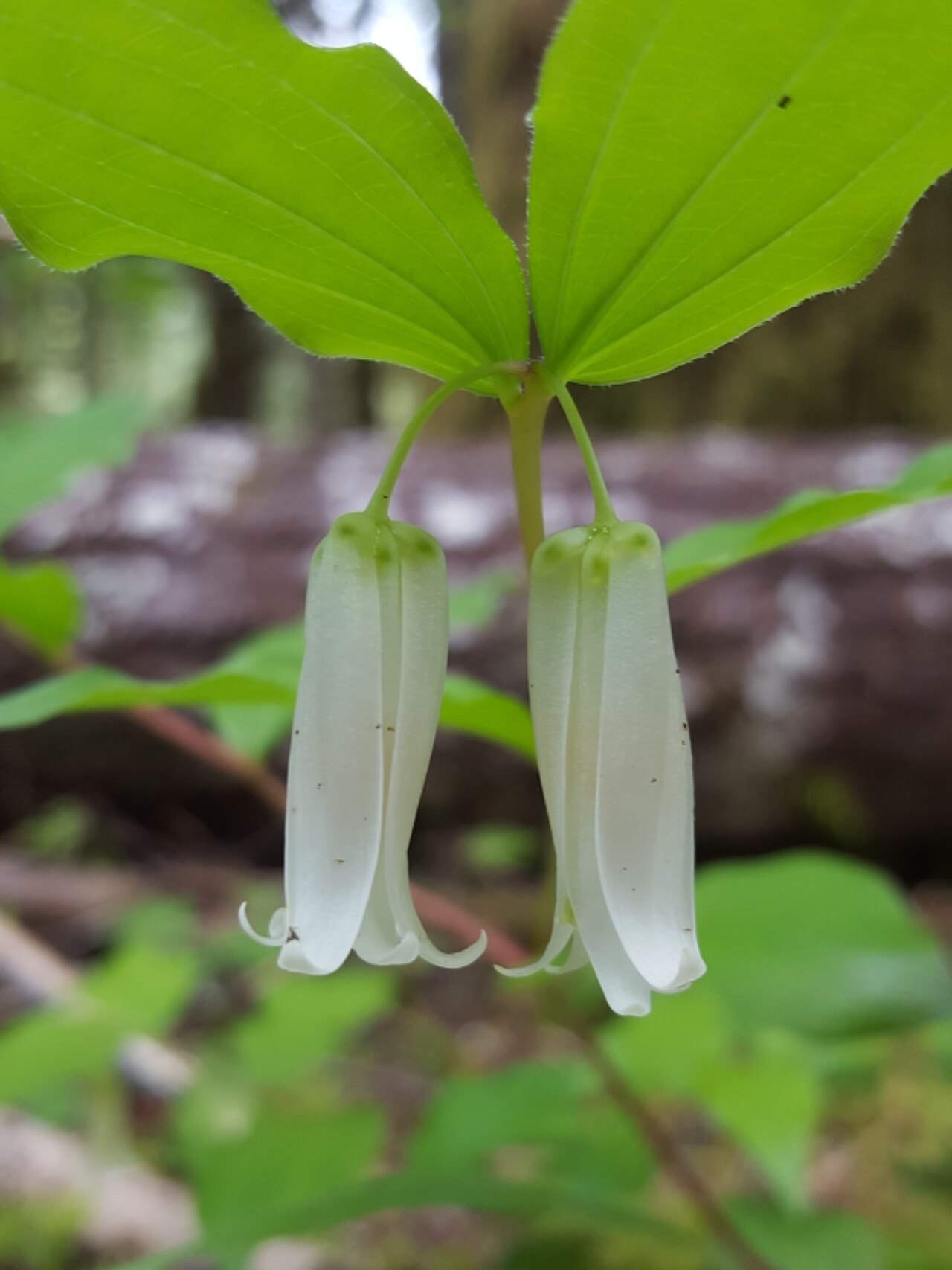
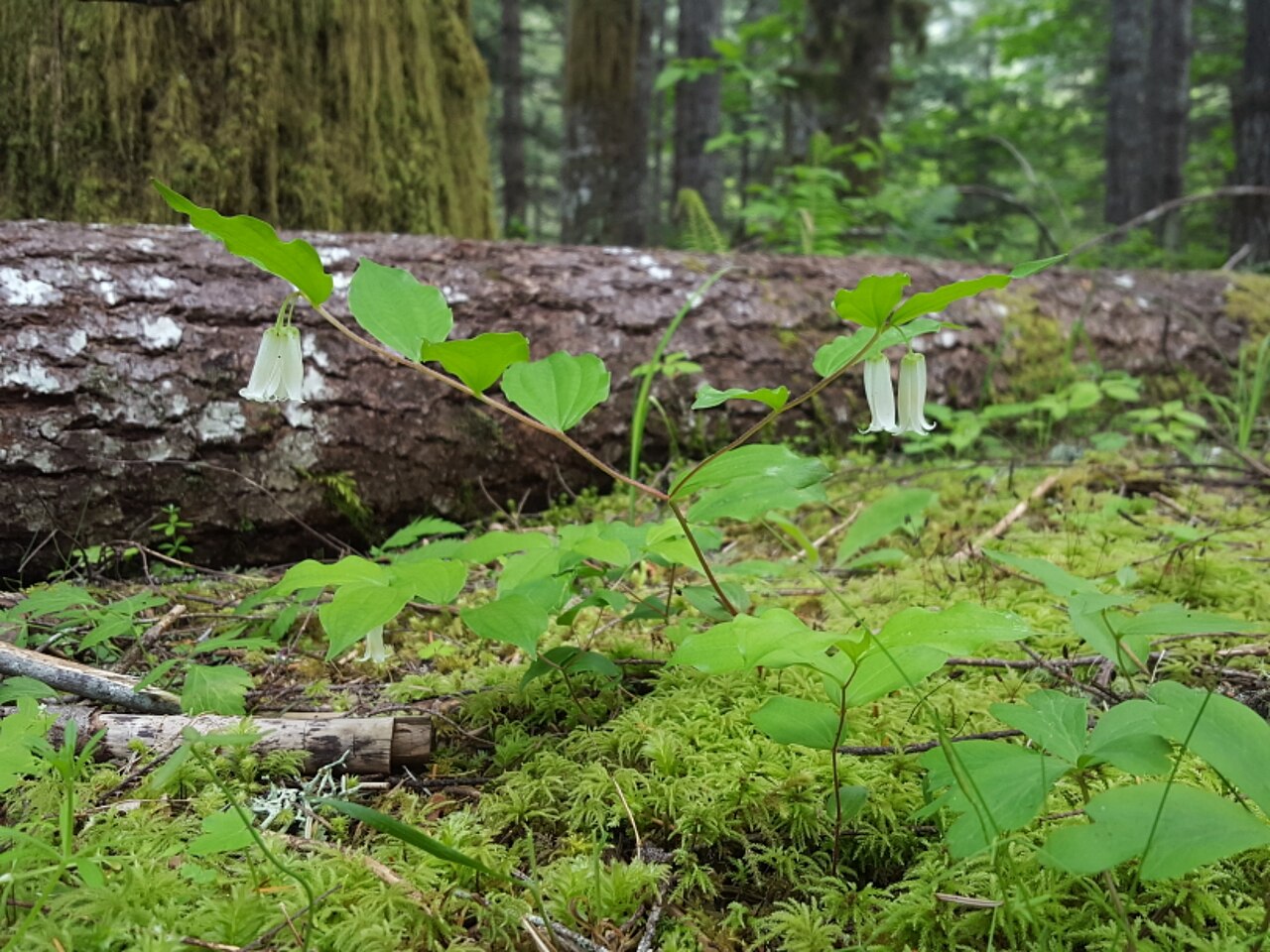
Prosartes smithii, known as Largeflower Fairybells or Smith’s fairybells, is a graceful woodland perennial of the moist coastal forests of the Pacific Northwest and northern California. It belongs to the lily family (Liliaceae). Older books list it as Disporum smithii; that genus is now limited to Asian species. The plant forms branching, arching stems 1 to 3 feet tall with broad, pointed, strongly veined leaves.
In spring, creamy white, narrowly bell-shaped flowers up to an inch long hang in small clusters beneath the leaves at the ends of the branches. They are the largest flowers of any North American fairybells, which gives the plant its common name. By late summer they are replaced by plump, yellow-orange to orange berries that birds and small mammals eat.
Largeflower fairybells grows west of the Cascade Range from southern British Columbia (Vancouver Island) through western Washington and Oregon to the coast ranges of central California, in redwood, Douglas-fir and mixed evergreen forests. It is a lovely, low-maintenance plant for shady native gardens within its range, spreading slowly by rhizomes.
Identification
Look for a branched, arching woodland plant with broad, glossy, parallel-veined leaves and long, narrow, creamy white bells that hang from the tips of the branches, usually in groups of two or three.
Stems & Leaves
The stems are 1 to 3 feet tall and branch in the upper part, giving the plant an open, spreading shape. The leaves are alternate, ovate to oblong, 2 to 5 inches long, with a pointed tip and a rounded or slightly clasping base. They have prominent parallel veins and smooth or slightly wavy edges, and the undersides are slightly hairy along the veins.
Flowers
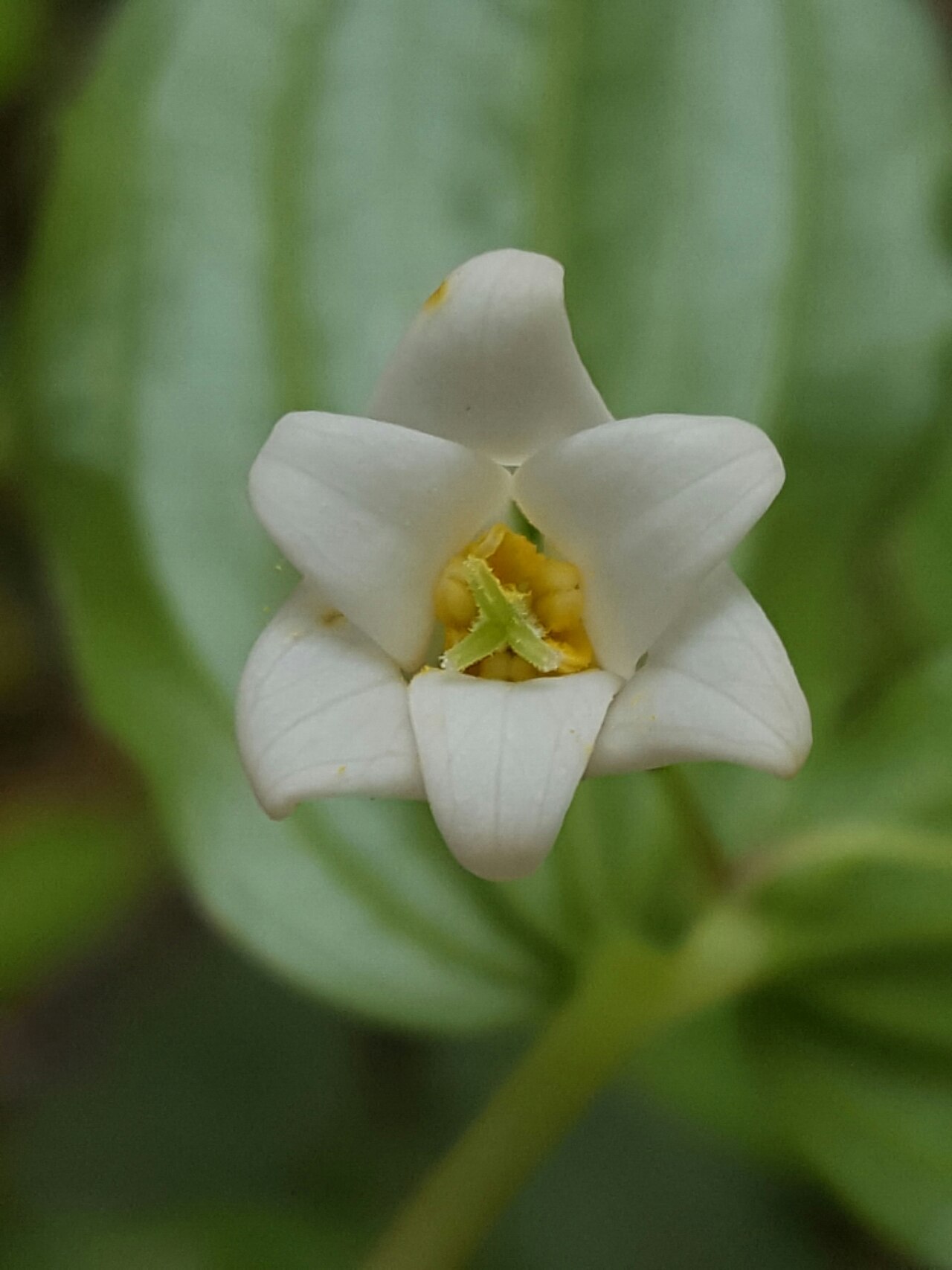
One to several (usually two or three) flowers hang on slender stalks from the tips of the branches, partly hidden beneath the leaves. Each is a narrow, cylindrical bell 1/2 to 1 inch long, made of six creamy white to greenish-white tepals that overlap for most of their length and flare only slightly at the tip. The stamens remain inside the bell. Bloom time is March to June.
Fruit & Seeds
The fruit is a smooth, egg-shaped berry about 1/2 inch long, ripening yellow-orange to orange in summer, with several seeds.
Roots
The plant spreads by slender underground rhizomes, forming loose patches over time.
Look-alikes
Hooker’s fairybells (P. hookeri) has smaller, more open, flaring flowers with stamens that stick out past the tepals, and red berries. Rough-fruited fairybells (P. trachycarpa) of the Rockies has velvety berries. Twisted-stalks (Streptopus) bear their small flowers singly along the stem rather than at the branch tips, and false Solomon’s seals (Maianthemum) have upright clusters of tiny white flowers.
Safety
Fairybells berries are not considered a food plant, and the toxicity of this species is not well documented. Treat the berries as inedible and keep children from eating them.
Quick Facts
| Scientific Name | Prosartes smithii |
| Family | Liliaceae (lily family) |
| Plant Type | Herbaceous perennial woodland wildflower |
| Mature Height | 1–3 ft |
| Mature Spread | 1–2 ft; slowly spreading by rhizomes |
| Growth Rate | Slow to moderate |
| Sun Exposure | Part shade to full shade |
| Water Needs | Medium; moist soil, some summer moisture |
| Soil Type | Rich, humusy, well-drained forest loam |
| Soil pH | Acidic to neutral (about 5.0–7.0) |
| Bloom Time | March–June |
| Flower Color | Creamy white to greenish white |
| Fall Color | Leaves turn yellow before dying back |
| Fruit | Yellow-orange to orange berry in summer |
| Deer Resistant | Moderate; occasionally browsed |
| USDA Hardiness Zones | 7–9 |
Native Range
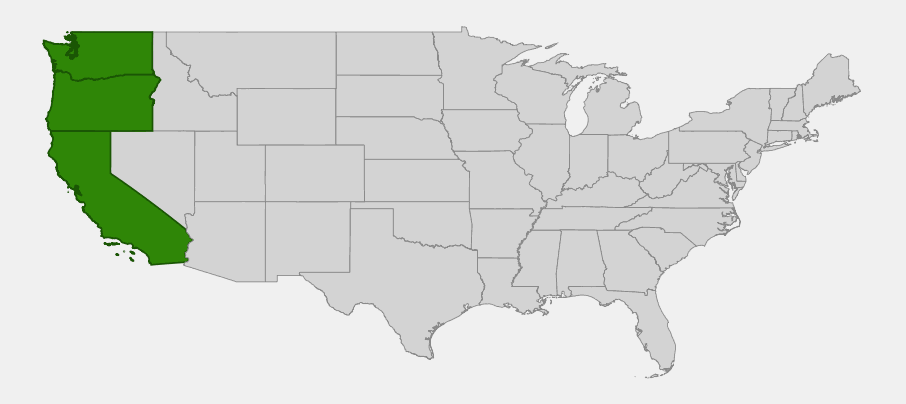
Largeflower fairybells is a Pacific coastal species. USDA PLANTS lists it as native in Canada and the lower 48 states, with records from Washington, Oregon and California, and in Canada from British Columbia, where it grows on southern Vancouver Island and the adjacent mainland.
In Washington and Oregon it grows west of the Cascade crest, from the Olympic Peninsula and Puget Sound lowlands through the Coast Range, Willamette Valley foothills and the western slopes of the Cascades, including the Columbia River Gorge. In California it follows the North Coast Ranges and Klamath region south through the redwood belt to the Santa Cruz Mountains. It does not grow in the dry interior east of the Cascades.
It grows in moist, shaded coniferous and mixed forests, including coast redwood, Douglas-fir, western hemlock and mixed evergreen forests, often along streams and on shaded slopes with deep, humus-rich soil.
📋 Regional plant lists featuring Largeflower Fairybells: Western Oregon & Western Washington · California & Nevada
Growing & Care Guide
Largeflower fairybells is a quietly elegant plant for shady gardens in the Pacific Northwest and coastal northern California. It needs shade and some moisture but otherwise asks for little. Buy nursery-propagated plants from native plant nurseries; do not dig plants from the wild.
Light
Plant it in part to full shade, under trees or on the north side of buildings. It tolerates morning sun in cool coastal gardens but scorches in hot afternoon sun.
Soil & Water
It prefers deep, rich, well-drained soil with plenty of organic matter, like a forest floor. Keep it evenly moist in spring and give occasional deep watering in dry summers, especially inland; established plants under trees tolerate some summer dryness by going dormant early.
Planting Tips
Plant in fall or early spring, 1 to 2 feet apart. Combine it with sword fern, redwood sorrel, vanilla leaf, inside-out flower and western trillium in a woodland planting. A layer of leaf mulch keeps the roots cool and moist.
Pruning & Maintenance
Leave the stems to die back naturally in fall and let fallen leaves remain as mulch. Watch for slugs on new shoots in spring. Little other care is needed.
Propagation
Divide the rhizomes in fall or very early spring. Seeds from ripe berries can be cleaned and sown outdoors in fall; they need a cold, moist period and may take more than one season to germinate, and seedlings grow slowly.
Landscape Uses
- Woodland gardens: a graceful plant for moist shade under conifers
- Fern and shade gardens: combines well with sword fern, vanilla leaf and wild ginger
- Native plant gardens in the Pacific Northwest: a low-care regional native for shade
- Wildlife gardens: berries feed birds and small mammals
- Forest restoration: a component of the herb layer in coastal forests
Wildlife & Ecological Value
Largeflower fairybells is part of the rich herb layer of Pacific coastal forests and provides food for pollinators, birds and mammals.
For Pollinators
The hanging flowers are visited by bumble bees and other bees early in the season, which must crawl up into the tubular bells to reach the nectar and pollen.
For Birds
The ripe orange berries are eaten by forest birds, which spread the seeds.
For Mammals
Small mammals eat the fallen berries, and deer browse the foliage occasionally.
Ecosystem Role
As a slowly spreading, long-lived woodland plant, it contributes to the understory cover of coastal forests. Its berries ripen in summer, when relatively few other fruits are available on the forest floor.
Cultural & Historical Uses
The species was first described by William Jackson Hooker as Uvularia smithii, a relative of the eastern bellworts. Its name honors Sir James Edward Smith, an English botanist who founded the Linnean Society of London. It was later moved to Disporum and then to Prosartes.
For many years the North American fairybells were included in the Asian genus Disporum. Studies of their DNA and structure showed that the North American species are not close relatives of the Asian ones, and they are now placed in Prosartes, a name originally proposed by David Don. Gardeners will still find this plant sold as Disporum smithii.
The name fairybells comes from the delicate hanging flowers, and the group is sometimes also called mandarins. Largeflower fairybells is a familiar spring sight on trails through redwood and Douglas-fir forests from northern California to the Olympic Peninsula.
Frequently Asked Questions
Is largeflower fairybells the same as Disporum smithii?
Yes. Disporum smithii is an older name for the same plant. North American fairybells are now placed in the genus Prosartes.
How is it different from Hooker’s fairybells?
Largeflower fairybells has longer, narrower, cylindrical flowers with stamens hidden inside the bell, and yellow-orange berries. Hooker’s fairybells has shorter, flaring flowers with stamens sticking out, and red berries.
Where can I see it in the wild?
In shady, moist forests west of the Cascades, from the Olympic Peninsula and Puget Sound area through western Oregon to the redwood forests of northern and central coastal California, blooming in spring.
Can I grow it in my garden?
Yes, if you have part to full shade and rich, moist soil, especially in the Pacific Northwest or coastal California. Buy plants from a native plant nursery.
Are the berries edible?
They are not considered a food. Treat them as inedible and leave them for birds and wildlife.

Looking for a nursery that carries Largeflower Fairybells?
Browse our native plant nursery directory: California · Oregon · Washington