
Spreading Phlox (Phlox diffusa)
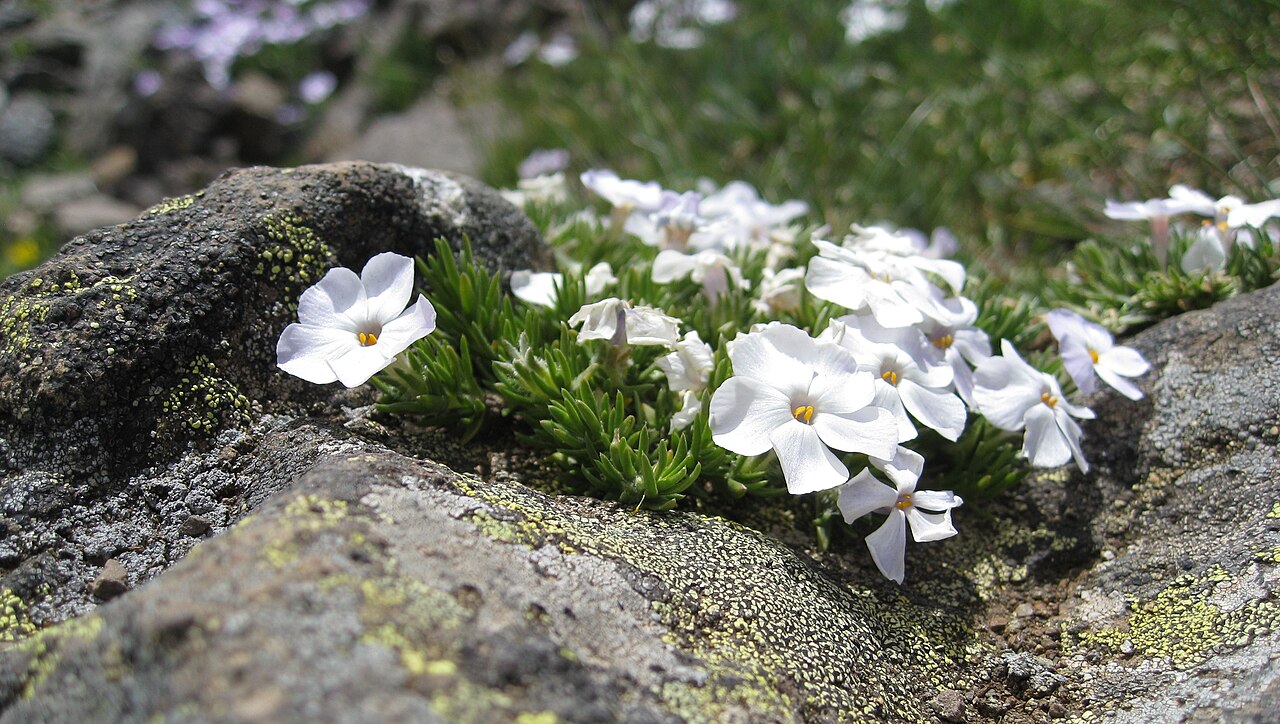
Phlox diffusa, known as Spreading Phlox, is a low, mat-forming wildflower of dry, rocky mountain slopes in the Pacific Northwest, California and the northern Great Basin. It belongs to the phlox family (Polemoniaceae). Its woody-based stems sprawl over rock and gravel to form loose mats or cushions only 2 to 4 inches tall, covered with short, needle-like leaves.
In late spring and summer, the mats almost disappear under a blanket of fragrant, five-petaled flowers in white, pink or lavender, each about 1/2 to 3/4 inch across. Spreading phlox is one of the showiest plants of open ridges, rocky meadows and subalpine slopes in the Cascades, Olympics, Sierra Nevada and nearby mountains, often blooming within days of snowmelt.
The core range runs from southern British Columbia south through Washington and Oregon to the mountains of California and western Nevada, and east into Idaho and western Montana. Rock gardeners prize it for its tight mats and generous bloom, but it needs sharp drainage, full sun and cool nights to thrive.
Identification
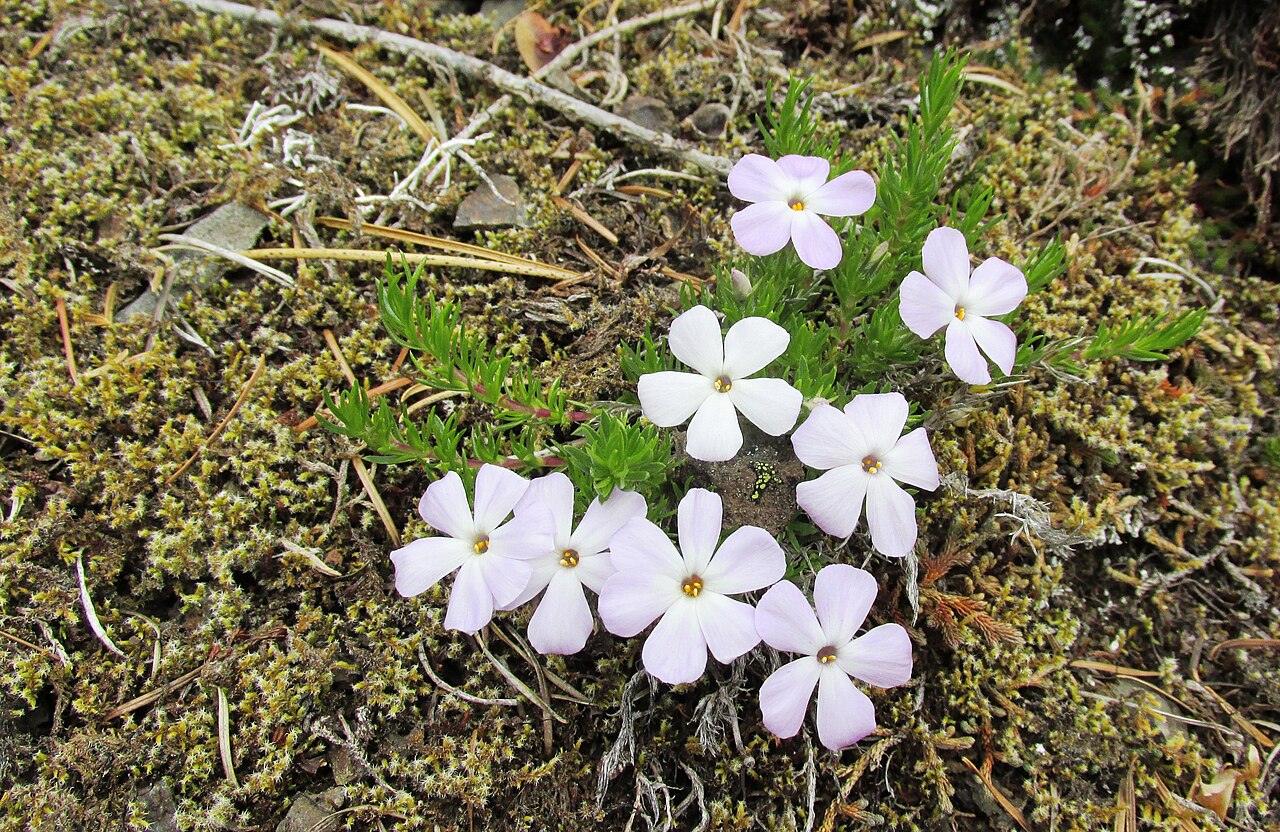
Look for a low, sprawling mat of short, sharp, needle-like leaves on open rocky ground in the mountains, covered in late spring or summer with white to pink, flat-faced, five-lobed flowers.
Growth Form
Spreading phlox forms loose mats or low cushions 2 to 4 inches tall and often 6 to 18 inches or more across. The stems are woody at the base and spread along the ground, often rooting as they go. Old dead leaves persist on the lower stems.
Leaves
The leaves are opposite, narrow and needle-like, about 1/4 to 3/4 inch long, green, stiff and sharp-pointed. They may have a few cobwebby hairs near the base but are not densely woolly.
Flowers
The flowers are borne singly at the tips of short branches, sitting almost directly on the mat. Each flower has a slender tube about as long as the calyx and five flat, rounded petal lobes, forming a disk about 1/2 to 3/4 inch across. Colors range from white to pink, lilac or pale blue, and the flowers are often fragrant. Bloom time is May to August, depending on elevation.
Fruit & Seeds
Each flower produces a small, three-parted capsule containing a few seeds, held inside the dried calyx.
Look-alikes
Hood’s phlox (Phlox hoodii) forms tighter, more woolly cushions with very short leaves and grows in sagebrush and plains. Tufted phlox (P. caespitosa) has sticky, glandular leaves. Cushion phlox (P. pulvinata) forms dense alpine cushions. In the Rocky Mountains and Great Basin, several of these mat-forming phloxes are difficult to tell apart, which helps explain why state-level records for spreading phlox vary between sources.
Quick Facts
| Scientific Name | Phlox diffusa |
| Family | Polemoniaceae (phlox family) |
| Plant Type | Mat-forming perennial with a woody base (subshrub) |
| Mature Height | 2–4 in |
| Mature Spread | 6–18 in or more |
| Growth Rate | Slow |
| Sun Exposure | Full sun |
| Water Needs | Low; dry, well-drained soil |
| Soil Type | Rocky, gravelly or sandy, very well-drained soil |
| Soil pH | Slightly acidic to slightly alkaline (about 6.0–8.0) |
| Bloom Time | May–August (depending on elevation) |
| Flower Color | White, pink, lavender or pale blue |
| Fall Color | Evergreen to semi-evergreen mat |
| Fruit | Small three-parted capsule |
| Deer Resistant | Moderate; low, sharp-leaved mats are seldom browsed heavily |
| USDA Hardiness Zones | 4–8 |
Native Range
Spreading phlox is native to western North America. The Lady Bird Johnson Wildflower Center describes its range as the mountains of California and western Nevada north to southern British Columbia and northwestern Montana, and it also grows in southwestern Alberta. It is common in the Olympic Mountains, the Cascade Range on both sides of the crest, the Klamath region and the Sierra Nevada, and in the mountains of northern and central Idaho and western Montana.
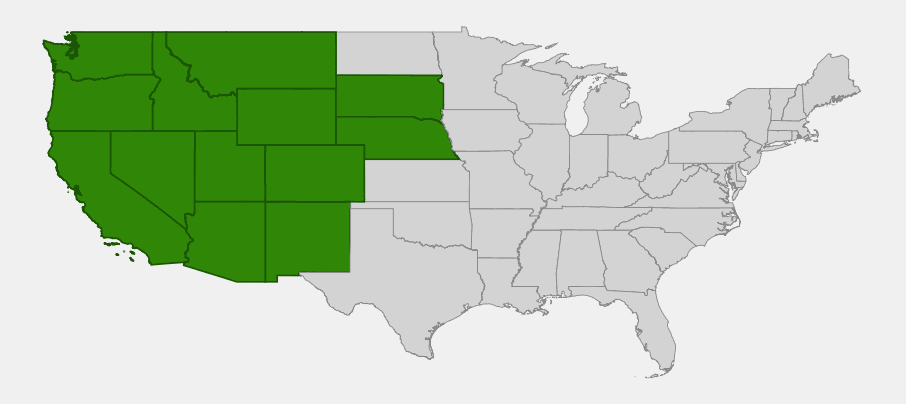
USDA PLANTS lists it from 13 states: Washington, Oregon, California, Idaho, Nevada, Montana, Wyoming, Utah, Colorado, Arizona, New Mexico, South Dakota and Nebraska. The records from the Rocky Mountain and Great Plains states lie far east of the core range, and are not reflected in current wildflower observation data. Many may represent related mat-forming phloxes or older, broader concepts of the species, so the species should be considered rare or doubtful there.
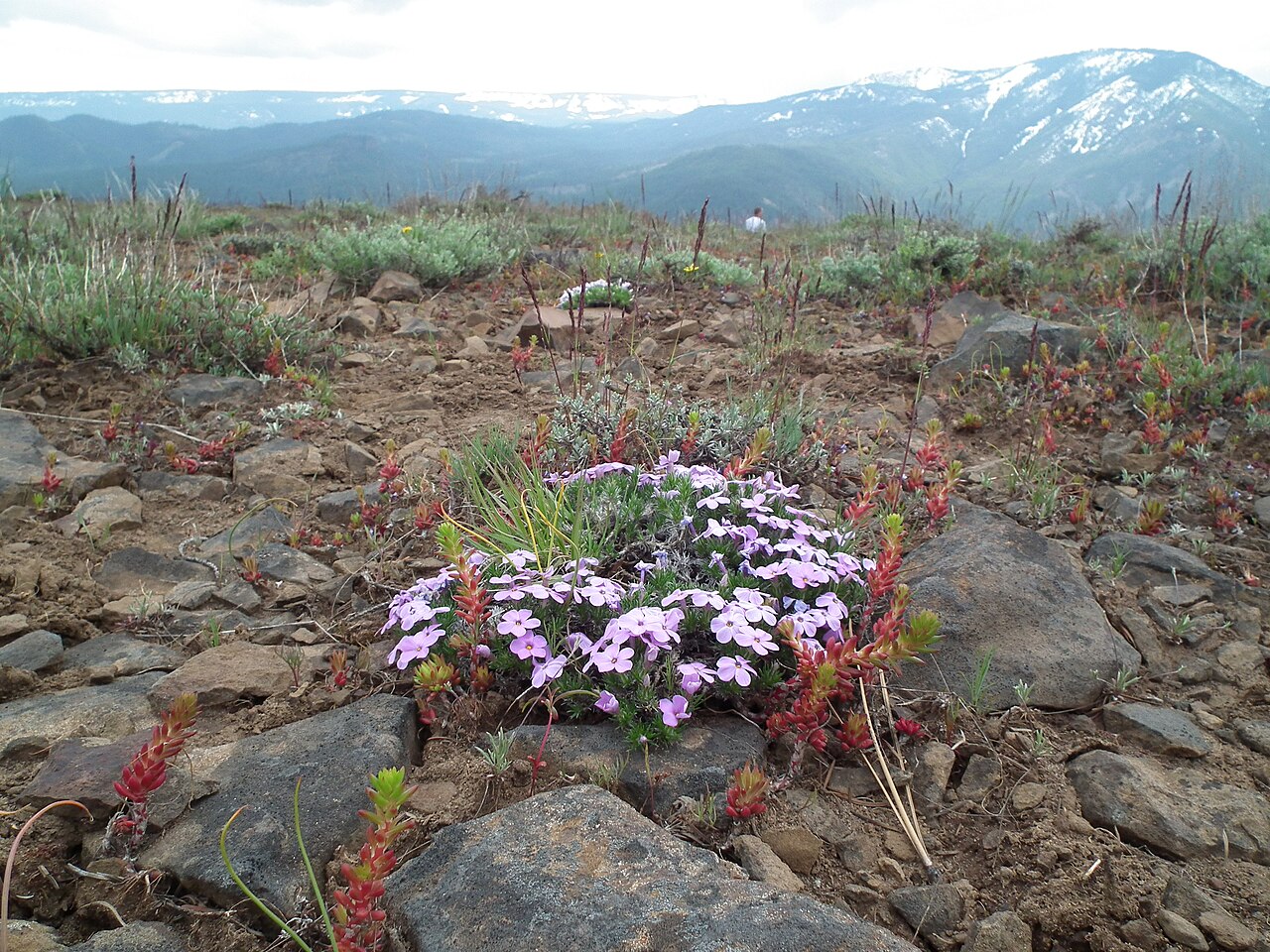
It grows on dry, open, rocky sites: ridges, talus slopes, gravelly flats, pumice and volcanic soils, open subalpine forests and alpine fell-fields, as well as sagebrush slopes at middle elevations. It typically grows where snow melts early and the soil drains quickly.
📋 Regional plant lists featuring Spreading Phlox: Idaho, Eastern Oregon & Eastern Washington · Montana & Wyoming · Western Oregon & Western Washington · California & Nevada
Growing & Care Guide
Spreading phlox is a choice plant for rock gardens, troughs and dry, sunny slopes in the West, especially where nights are cool. It is less easy in hot, humid lowland climates. Buy nursery-propagated plants from native or alpine plant nurseries; wild plants do not transplant well.
Light
Give it full sun. In hot inland gardens, light afternoon shade can help, but too much shade makes the mats loose and reduces flowering.
Soil & Water
Sharp drainage is essential. Plant it in gritty, rocky or sandy soil, in a raised bed, between rocks or on a slope. Water regularly the first season; once established it needs little water. Avoid wet winter soil and overhead summer watering in hot weather, which can cause rot.
Planting Tips
Plant in spring or early fall, about 12 inches apart. Tuck it between stones in a rock garden or crevice garden, at the edge of a dry wall or in a trough. Top-dress around the crown with gravel to keep it dry. Combine it with buckwheats, stonecrops, penstemons and pussytoes.
Pruning & Maintenance
Shear lightly after flowering to tidy the mat and encourage compact growth. Remove weeds by hand, since the low mats are easily overgrown. Do not fertilize; rich soil makes the plants weak.
Propagation
Take stem cuttings in early summer after flowering and root them in a gritty, well-drained mix. Rooted pieces can also be separated from the edges of established garden mats. Seed is difficult to collect and germinate; fresh seed sown in fall and left outdoors for winter cold gives the best results.
Landscape Uses
- Rock and crevice gardens: a low, flowering mat between stones
- Troughs and alpine gardens: compact growth suits containers with gritty mix
- Dry slopes and xeriscapes: a water-thrifty groundcover in cool western climates
- Pollinator gardens: spring and early summer nectar for butterflies, moths and bees
- Subalpine restoration: helps cover and stabilize dry, rocky soil
Wildlife & Ecological Value
On dry, rocky mountain slopes, spreading phlox provides an abundant early-season nectar source and helps hold thin soils in place.
For Pollinators
The long, narrow flower tubes hold nectar that is easiest for long-tongued insects to reach. Butterflies, day-flying moths, bee flies and long-tongued bees visit the fragrant flowers. In the high mountains, its mass bloom shortly after snowmelt is an important food source when few other flowers are open.
For Birds
The plant offers little direct food for birds, but it is part of open rocky habitats used by birds such as horned larks, rosy-finches, ptarmigan and grouse.
For Mammals
Pikas, marmots and ground squirrels live in many of the same rocky habitats and may nibble on low plants like phlox, but it is not a major forage plant.
Ecosystem Role
As a long-lived mat-former, spreading phlox stabilizes gravelly and pumice soils on exposed slopes, traps windblown soil and organic matter and creates sheltered microsites where other small plants and insects can live.
Cultural & Historical Uses
The genus name Phlox comes from the Greek word for flame, a name originally used for a plant with bright flowers. The species name diffusa means spreading or loosely branched, describing its sprawling growth.
North America is the center of diversity for phloxes, with dozens of species ranging from tall garden phloxes of the East to cushion plants of the western mountains. The mat-forming western phloxes, including spreading phlox, are among the most admired plants in rock gardening, and alpine garden societies have long grown them.
For hikers in the Cascades, Olympics and Sierra Nevada, spreading phlox is one of the signature wildflowers of rocky ridges and summits in early summer, when its fragrant white and pink mats line the trails.
Frequently Asked Questions
Where does spreading phlox grow?
Its core range is the mountains of the Pacific Northwest, California, western Nevada, Idaho and western Montana, plus southern British Columbia and Alberta. USDA also lists scattered records farther east, which are rare or uncertain.
Can I grow spreading phlox in my garden?
Yes, in full sun and very well-drained, gritty soil, especially in western gardens with cool nights. It suits rock gardens, crevices and troughs. It struggles in hot, humid climates and wet soil.
How is it different from creeping phlox?
Creeping phlox (Phlox subulata) is an eastern species often sold for gardens. Spreading phlox is a western mountain species with a looser, more sprawling habit and is better adapted to dry, rocky sites in the West.
Does spreading phlox attract pollinators?
Yes. Its fragrant, long-tubed flowers attract butterflies, moths, bee flies and long-tongued bees.
When does it bloom?
From May at lower elevations to July or August in the high mountains, usually soon after the snow melts.

Looking for a nursery that carries Spreading Phlox?
Browse our native plant nursery directory: Arizona · California · Colorado · Idaho · Montana · Nebraska, Nevada & New Mexico · Oregon · South Dakota & Utah · Washington · Wyoming