
Common Elephant’s Foot (Elephantopus tomentosus)
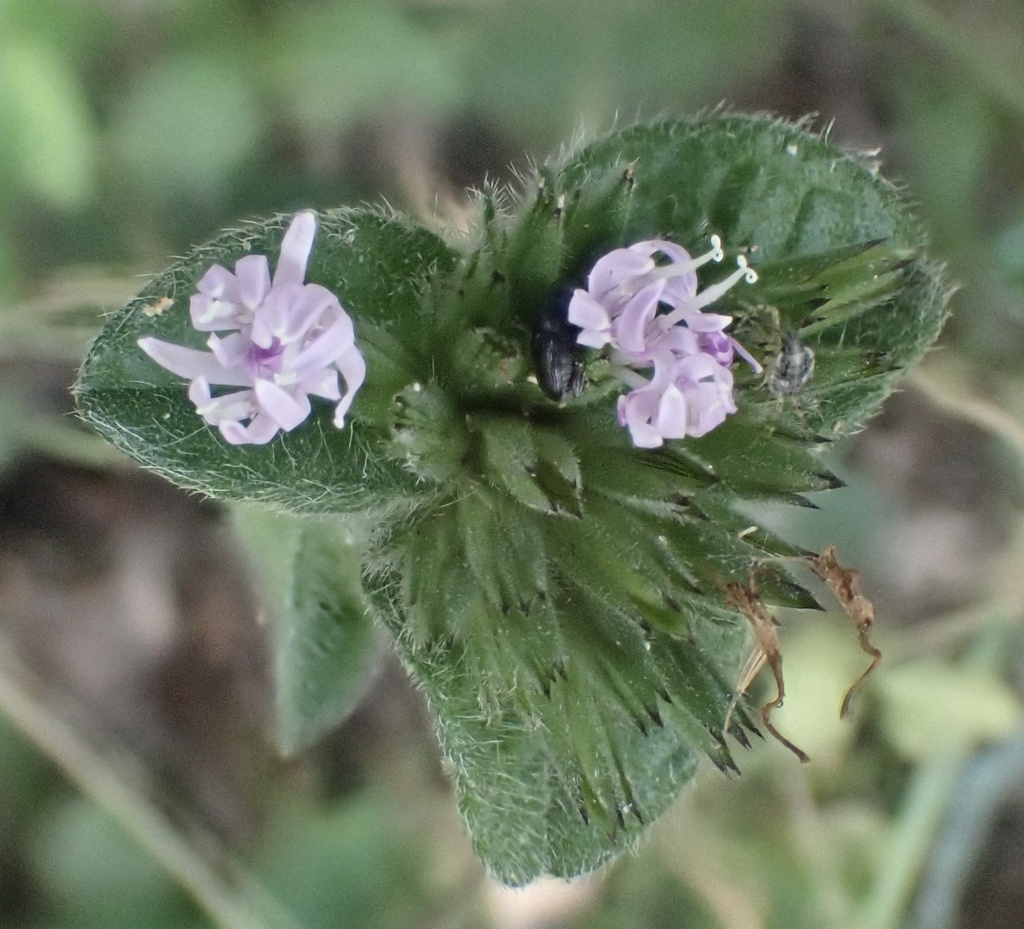
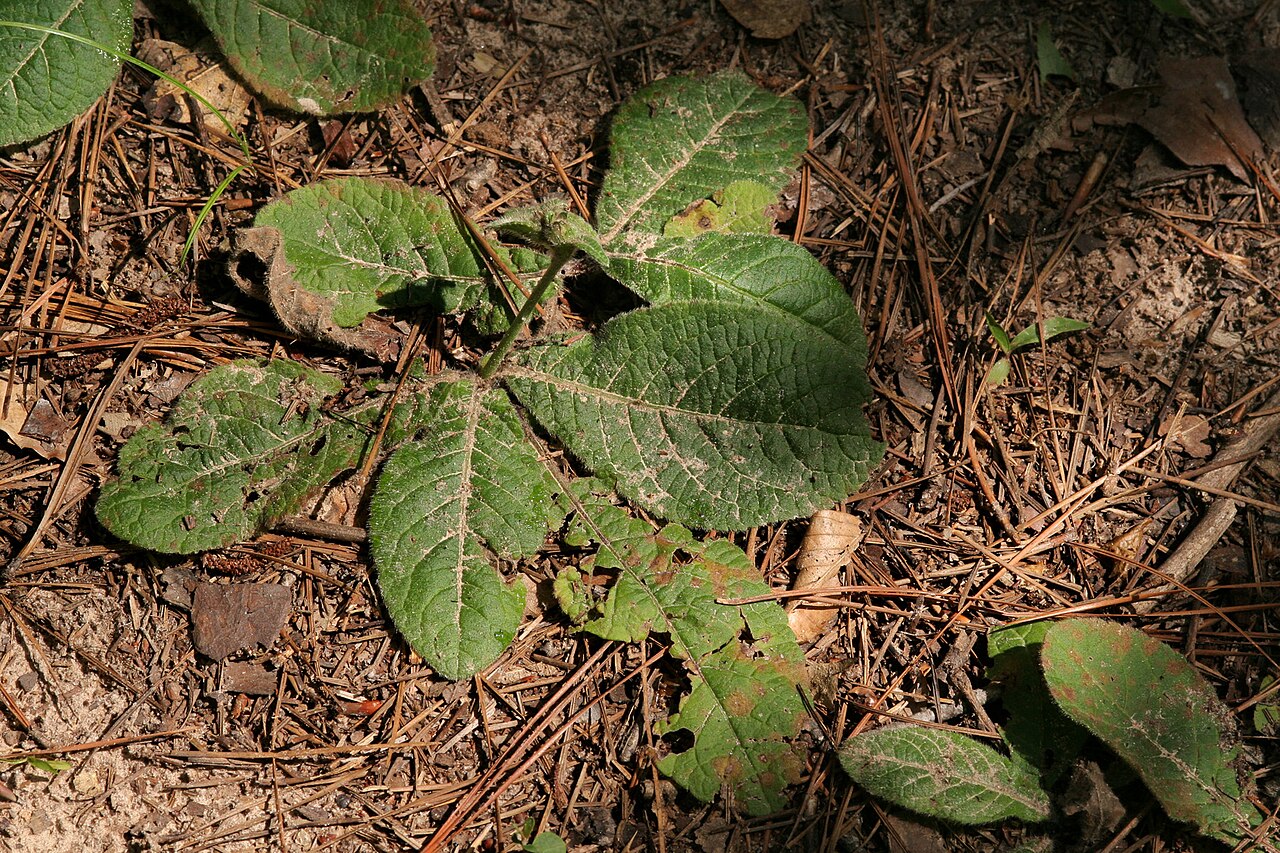
Elephantopus tomentosus, known as Common Elephant’s Foot or devil’s grandmother (the USDA name), is a native perennial wildflower of dry open woods, pine flatwoods and woodland edges across the southeastern United States. It belongs to the aster family (Asteraceae) and is related to the ironweeds. Its most distinctive feature sits at ground level: a flat rosette of large, broad, softly hairy leaves pressed against the soil like a footprint.
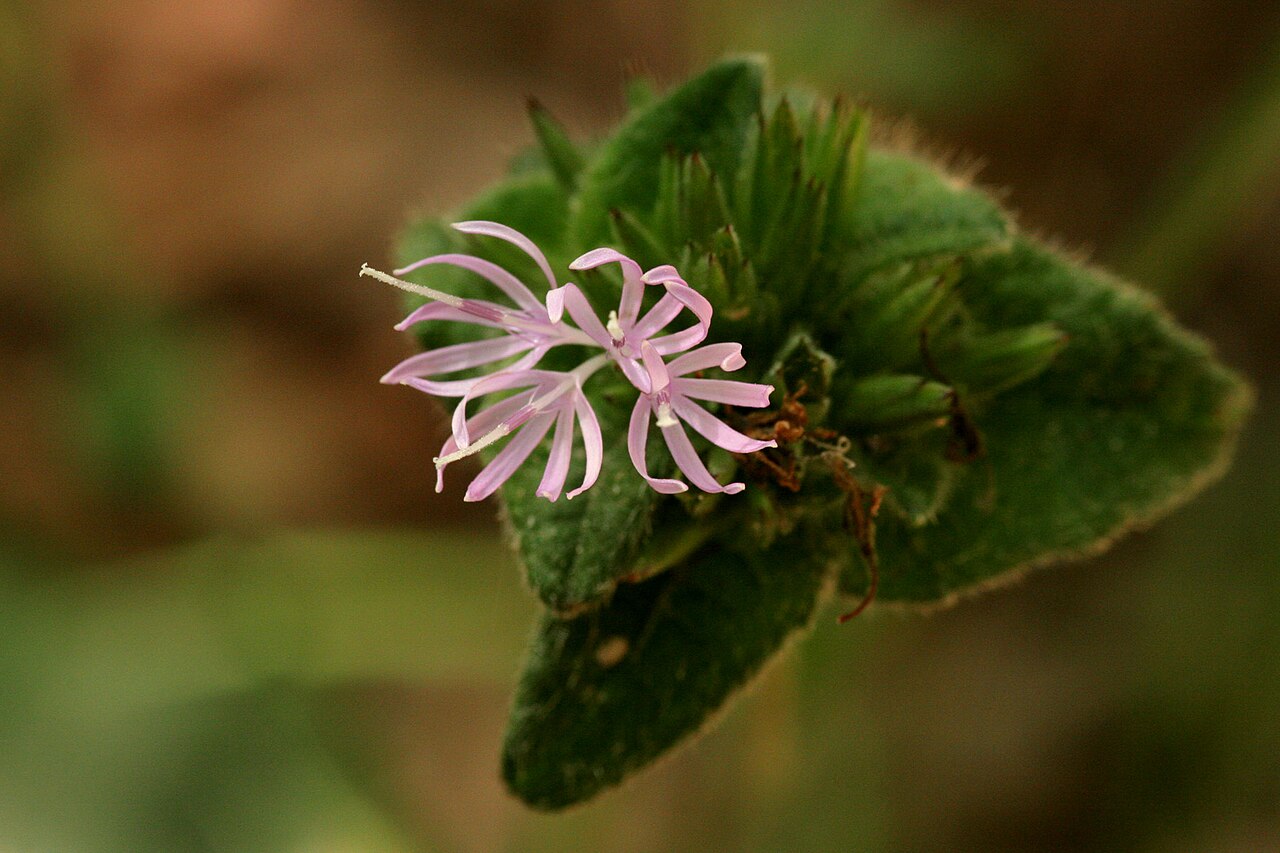
From midsummer into fall, a slender, forked and nearly leafless stem rises from the rosette to about 1 to 2 feet. Each branch tip holds a small cluster of pale pink to lavender flowers, made of several tiny flower heads packed together on a collar of three broad, triangular, hairy bracts. The florets are deeply cut into narrow lobes, giving each cluster a starry, lacy look.
Common elephant’s foot is a quiet plant that most people walk past until they notice the rosettes covering the floor of a pine or oak woodland. It is tough, shade-tolerant and drought-tolerant once established, and its late-season flowers give small bees and butterflies a reliable source of nectar in dry woodland gardens across the South.
Identification
Look for common elephant’s foot in dry to moist open woods from late summer into fall. A ground-hugging rosette of broad hairy leaves, a nearly bare forked stem, and pink flower clusters on three leafy bracts identify it.
Growth Habit
Plants form a flat basal rosette that persists through the growing season. The flowering stem is upright, about 1 to 2 feet tall, hairy, and branches into a few forks near the top. Stem leaves are few and much smaller than the basal ones, so the plant looks almost leafless above the rosette. Plants grow from a short, thick crown with fibrous roots and often form scattered patches.
Leaves
The basal leaves are oblong to broadly oval, about 4 to 10 inches long and 1 1/2 to 3 inches wide, with blunt tips and shallowly toothed or wavy edges. They lie flat on the ground, are rough and softly hairy on both surfaces (the species name tomentosus means woolly or densely hairy), and have a prominent network of veins. In winter the rosette often survives in a flattened, darkened state.
Flowers
Flowers appear from about July or August to October, sometimes into November in the Deep South. Each branch tip carries a rounded cluster about 3/4 inch across, made of several small heads with only a few florets each. The florets are pale pink, lavender or rarely white, with five slender lobes split down one side, so they look like tiny hands. The cluster sits on three broad, triangular, densely hairy leafy bracts.
Fruit & Seeds
Each floret produces a small, ribbed, hairy achene topped by a few stiff bristles that widen at the base. The seeds are spread by animals and passing feet, as well as by gravity, and colonies often build up slowly around older plants.
Look-alikes
Leafy elephant’s foot (Elephantopus carolinianus) has large leaves all along its stems and lacks a persistent flat rosette. Smooth elephant’s foot (E. nudatus) of the coastal plain is similar but has nearly hairless or only sparsely hairy leaves; tall elephant’s foot (E. elatus) of Florida and the Gulf Coast is taller with shaggier stems. Rosettes alone can be confused with mullein or plantain, but those lack the forked stem and pink flower clusters.
Quick Facts
| Scientific Name | Elephantopus tomentosus |
| Family | Asteraceae (aster family) |
| Plant Type | Herbaceous perennial wildflower with a basal rosette |
| Mature Height | 1–2 ft in flower (rosette a few inches) |
| Mature Spread | 1–1.5 ft |
| Growth Rate | Slow to moderate |
| Sun Exposure | Part shade to full sun |
| Water Needs | Low to medium; dry to average soil |
| Soil Type | Sandy, loamy or clay soils; tolerates poor soil |
| Soil pH | About 5.0–7.0 (acidic to neutral) |
| Bloom Time | July or August–October |
| Flower Color | Pale pink to lavender, rarely white |
| Fall Color | None notable; rosette persists |
| Fruit | Small hairy achene with a few stiff bristles |
| Deer Resistant | Generally not browsed; rough hairy leaves |
| USDA Hardiness Zones | 6–10 |
Native Range
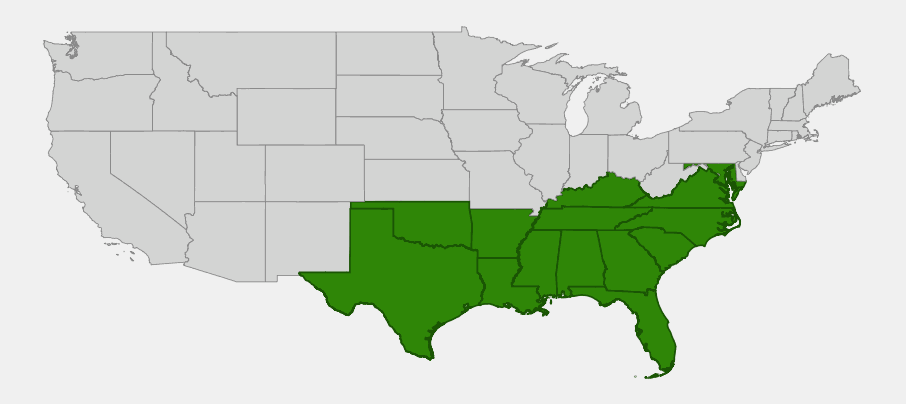
Common elephant’s foot is native to the southeastern United States. USDA PLANTS lists it as native in the lower 48 states and records it from 14 states: from Maryland and Virginia south through the Carolinas and Georgia to Florida, and west through Kentucky, Tennessee, Alabama and Mississippi to Arkansas, Louisiana, eastern Oklahoma and eastern Texas. The Atlas of Florida Plants lists it as native in Florida, where it occurs mainly in the northern part of the state.
It is most common on the Coastal Plain and Piedmont from the Carolinas to Louisiana. It becomes scarce at its northern limit in Maryland and Kentucky. In Oklahoma it is confined to the forested southeast, and in Texas it is a plant of the eastern Pineywoods and Big Thicket rather than the dry south and west.
Typical habitats are dry to moist open woods, pine and oak-pine forests, pine flatwoods and sandhills, woodland edges, clearings and roadsides. It favors well-drained, often sandy or acidic soils and light shade, and it tolerates the periodic fires that keep southeastern pine woods open.
📋 Regional plant lists featuring Common Elephant’s Foot: Kentucky & Tennessee · Maryland, Virginia & West Virginia · Alabama, Georgia & Mississippi · North & South Florida · North & South Carolina · Arkansas, Louisiana, Eastern Oklahoma & Eastern Texas
Growing & Care Guide
Common elephant’s foot is an easy, long-lived native for dry shade and open woodland gardens. It is occasionally sold by southeastern native plant nurseries and is simple to start from seed. Buy nursery-grown plants or seed rather than digging rosettes from the wild.
Light
It grows in part shade to full sun. Light shade under pines or high oaks is the most natural setting, and plants in deep shade bloom sparsely. In full sun it stays more compact and flowers more heavily if the soil is not baked dry.
Soil & Water
It tolerates sandy, loamy or clay soils and is at home in poor, acidic, well-drained ground. Once established it is quite drought-tolerant and needs no supplemental water except during extended droughts. Avoid wet, poorly drained sites.
Planting Tips
Plant in spring or fall about 12 inches apart, setting the crown at soil level so the rosette lies flat. Because the rosette needs light and room, keep it free of heavy mulch and taller groundcovers. It looks best in groups in woodland edges, pine-straw beds and naturalized areas.
Pruning & Maintenance
Little care is needed. Leave the seed heads standing into winter, then cut old stems back in late winter. Rake leaves off the rosettes in fall so they are not smothered. It self-sows modestly; unwanted seedlings are easy to remove. Pests and diseases are rarely a problem.
Propagation
Sow fresh seed outdoors in fall, or give it a few weeks of cold, moist stratification and sow on the surface of a sandy mix in spring. Established clumps can be divided in early spring.
Landscape Uses
- Dry shade gardens: a tough groundcover-like rosette under pines and oaks
- Woodland edges: late pink flowers when little else blooms
- Pollinator gardens: late-summer and fall nectar for small bees and butterflies
- Naturalized areas: pine-straw beds, sandhill and flatwoods plantings
- Restoration: understory plantings in southeastern pine and oak woodlands
Wildlife & Ecological Value
Common elephant’s foot blooms late, when many woodland plants are done, and its rosettes stay green for most of the year in the South.
For Pollinators
The flowers are visited by small native bees, honey bees, skippers, hairstreaks and other small butterflies, and flies. Because the florets are open and shallow, short-tongued insects can reach the nectar easily.
For Birds
Small seed-eating birds may pick at the seed heads in fall and winter, and quail and other ground-foraging birds use the open woodland habitat where it grows.
For Mammals
The rough, hairy leaves are not a preferred browse, and deer generally leave the rosettes alone. Wildlife use of the plant beyond that is not well documented.
Ecosystem Role
As a late-blooming understory herb of fire-maintained pine woods, it helps supply flowers in the gap between summer wildflowers and the last asters. The flat rosettes cover patches of bare ground and help hold soil on sandy slopes.
Cultural & Historical Uses
The genus name Elephantopus comes from the Greek words for elephant and foot, a reference to the broad, flat rosette leaves that spread over the ground. The species name tomentosus means densely hairy. The USDA common name “devil’s grandmother” is one of several old folk names for the plant in the South; another is tobacco weed, because the rosette leaves resemble young tobacco leaves.
Elephant’s foot species have been used in traditional medicine in the Americas and Asia, and the rosette leaves were reportedly used in Southern folk remedies. These uses are not proven, and the plant should not be used as a home remedy.
For gardeners, common elephant’s foot is a modest but dependable plant. Its rosettes give a tidy, textured groundcover in dry shade, and its pink flower clusters add a late show where few other plants will bloom.
Frequently Asked Questions
Why is it called elephant’s foot?
The name refers to the large, flat rosette leaves that spread across the ground like the footprint of an elephant. The genus name Elephantopus means elephant foot in Greek.
How is common elephant’s foot different from leafy elephant’s foot?
Common elephant’s foot keeps a flat rosette of large leaves at the base and has a nearly leafless flowering stem. Leafy elephant’s foot has big leaves all along its stems and no lasting rosette.
Does common elephant’s foot grow in dry shade?
Yes. It is one of the better natives for dry, sandy or acidic shade under pines and oaks in the Southeast, and it is drought-tolerant once established.
When does it bloom?
From about July or August into October, with small pink to lavender flower clusters at the branch tips.
Is it invasive?
No. It is native to the southeastern United States. It self-sows modestly and is easy to control.

Looking for a nursery that carries Common Elephant’s Foot?
Browse our native plant nursery directory: Alabama & Arkansas · Florida & Georgia · Kentucky, Louisiana, Maryland & Mississippi · North Carolina & Oklahoma · South Carolina, Tennessee, Texas & Virginia