
Pancake Pricklypear (Opuntia chlorotica)
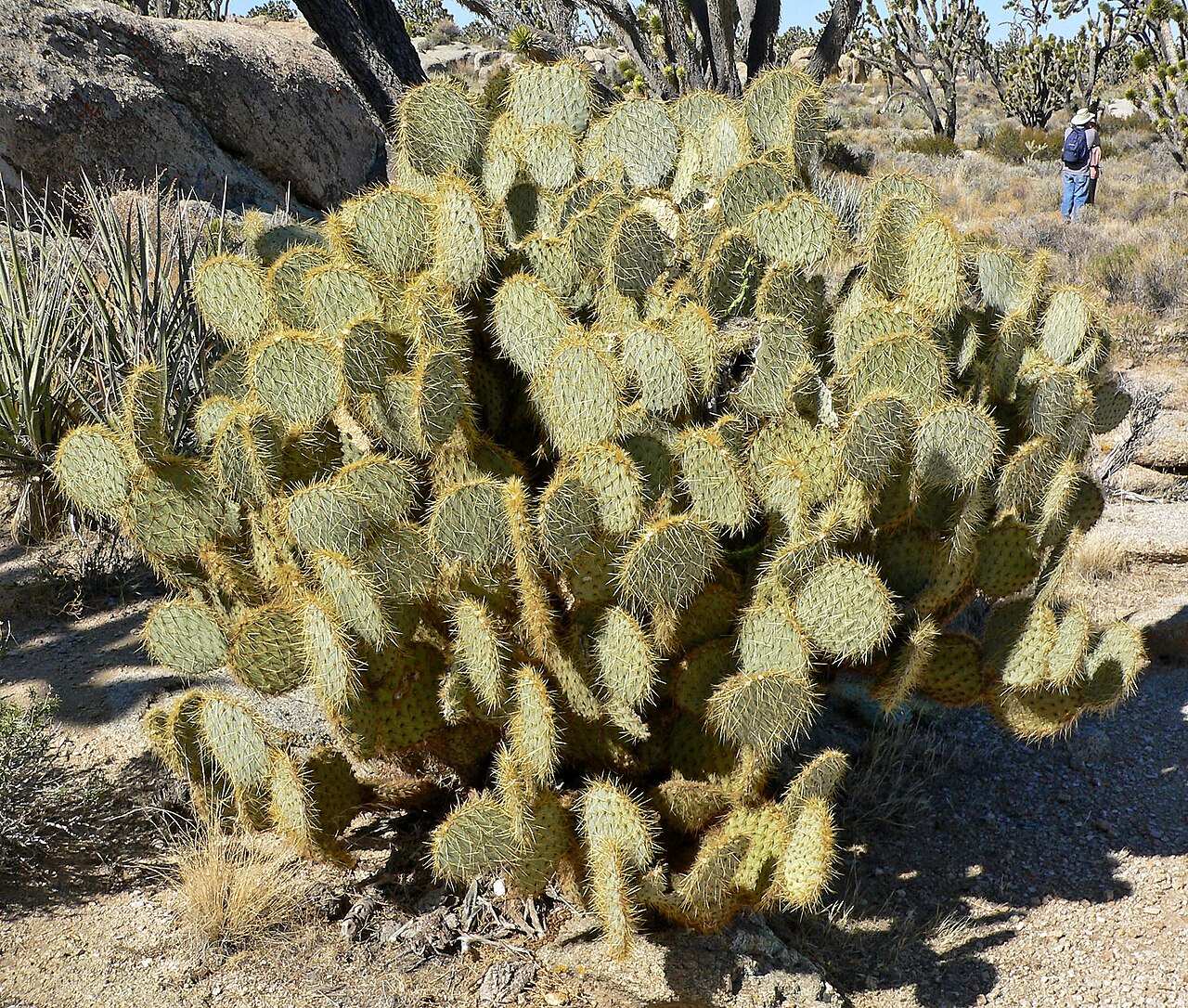
Opuntia chlorotica, known as Pancake Pricklypear, dollarjoint pricklypear, flapjack pricklypear or clock-face pricklypear, is an upright, shrubby to tree-like cactus of the desert mountains of the American Southwest. It usually grows 3 to 7 feet tall (occasionally to about 8 feet), often with a short but distinct trunk, and carries nearly perfectly round, flat, bluish- to yellow-green pads that look like a stack of pancakes.
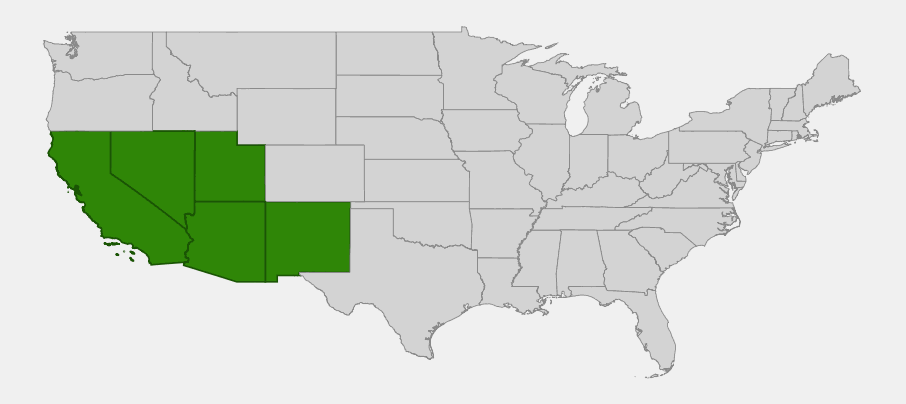
It is native to southeastern California, southern Nevada, southwestern Utah, Arizona and southwestern New Mexico, and south into Baja California and Sonora, Mexico. It grows on rocky, often granite slopes, canyon walls, mesas and bajadas, from the creosote bush and Joshua tree country of the Mojave Desert up into desert grassland, chaparral and pinyon-juniper woodland.
In late spring it bears bright yellow flowers that are busy with native bees, followed by fleshy, purplish-gray fruits. For desert gardeners it is a striking, sculptural cactus with an unusually tidy, upright form, and its straw-yellow spines glow when backlit by low sun.
Identification
Look for an upright, often trunk-forming prickly pear with almost circular, flat pads and straw-yellow spines that point downward, against a pale, slightly bluish pad surface.
Growth Habit
Pancake pricklypear is an erect, shrubby or small tree-like cactus, usually 3 to 7 feet tall and nearly as wide. Older plants develop a short, woody, spiny trunk with ascending branches of stacked pads, which gives it a more upright, tree-like look than most prickly pears.
Pads
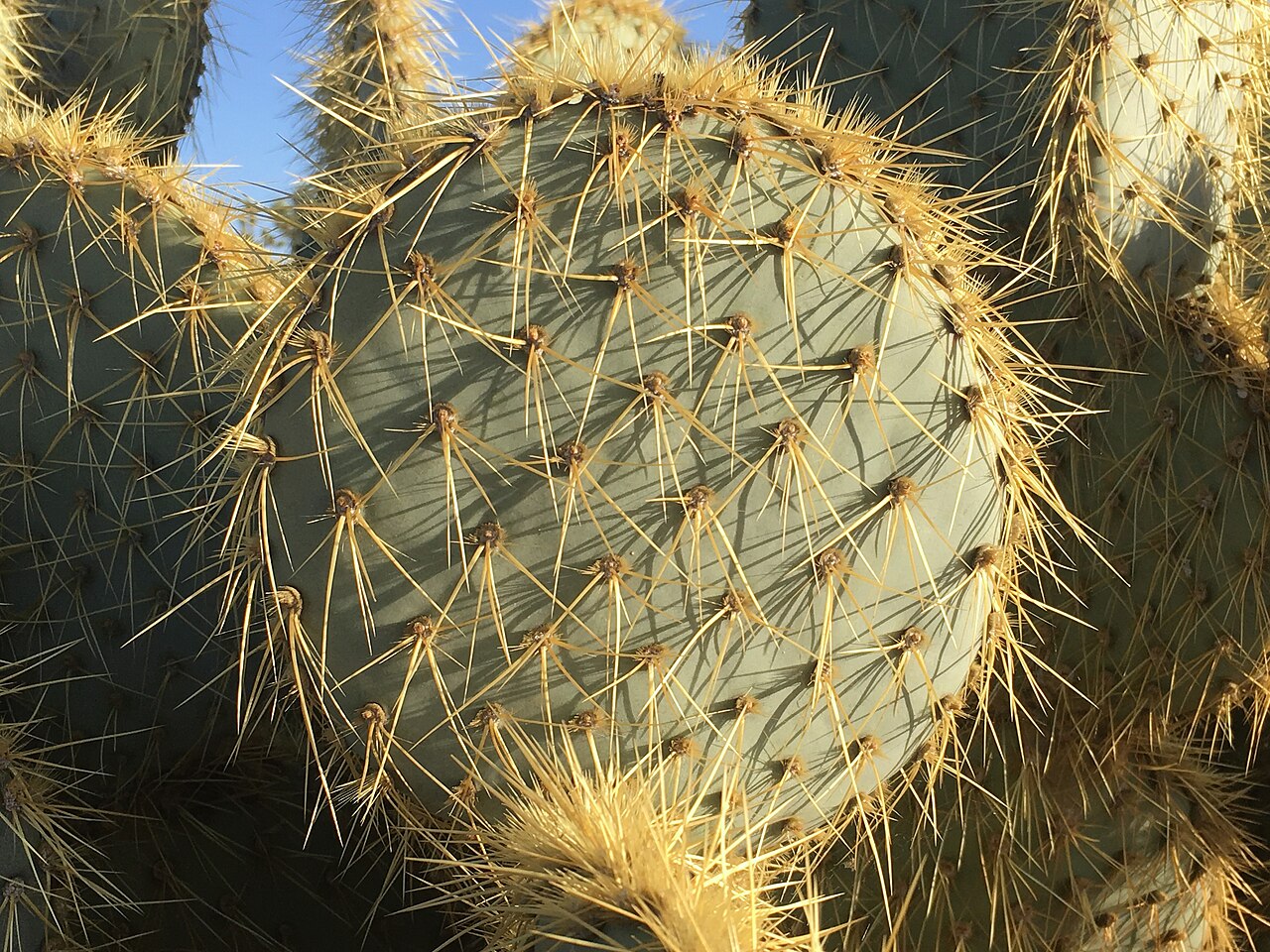
The pads (stem segments) are flat and nearly round, typically 6 to 8 inches across, and pale bluish-green to yellowish-green, often with a waxy bloom. The species name chlorotica refers to this pale, yellowish-green color. The areoles carry tufts of short, barbed, yellow glochids.
Spines
The spines are yellow to straw-colored, slender, and up to about 1 1/2 inches long. Several spines grow from most of the upper areoles and they typically angle downward (deflexed), lying close to the pad. Lower areoles may have few spines or none.
Flowers
The flowers are about 1 1/2 to 3 inches across, with bright yellow, sometimes reddish-tinged tepals, many yellow stamens and a green stigma. They open from about April to June, depending on elevation and spring rain.
Fruit
The fruit is egg-shaped, about 1 1/2 inches long, fleshy and purplish-red to grayish-purple when ripe. It has no long spines but carries tufts of glochids.
Look-alikes
Engelmann pricklypear (Opuntia engelmannii) is broader and sprawling rather than trunk-forming, with larger, often oval pads and white to yellow spines. Beavertail cactus (Opuntia basilaris) is low, with grayish to purplish pads that have no long spines and magenta flowers. Blind pricklypear (Opuntia rufida) of Texas and Mexico has spineless pads with reddish-brown glochids. Pancake pricklypear's combination of round pads, downward-pointing yellow spines and an upright, trunked form is distinctive.
Quick Facts
| Scientific Name | Opuntia chlorotica |
| Family | Cactaceae (cactus family) |
| Plant Type | Upright, shrubby to tree-like cactus |
| Mature Height | 3–7 ft (occasionally to about 8 ft) |
| Mature Spread | 3–6 ft |
| Growth Rate | Slow |
| Sun Exposure | Full sun |
| Water Needs | Very low; extremely drought tolerant |
| Soil Type | Rocky, gravelly or sandy, very well-drained soils; often granite |
| Soil pH | Neutral to alkaline (about 6.5–8.5) |
| Bloom Time | April–June |
| Flower Color | Yellow, sometimes tinged red |
| Fall Color | None; evergreen pads |
| Fruit | Fleshy, purplish-red to gray-purple, egg-shaped, with glochids |
| Deer Resistant | Yes; spines deter most browsing |
| USDA Hardiness Zones | About 8–10 (hardy to brief hard frosts in dry soil) |
Native Range
USDA PLANTS lists pancake pricklypear as native in five states: Arizona, California, Nevada, Utah and New Mexico. Its range continues south into Baja California and Sonora, Mexico.
In California it grows in the eastern Mojave and Colorado (Sonoran) deserts, including Joshua Tree National Park and the Mojave National Preserve. It reaches southern Nevada around Las Vegas and the Newberry Mountains, extreme southwestern Utah, much of western and central Arizona, and the southwestern corner of New Mexico in Hidalgo and Grant counties.
It favors rocky, well-drained sites: granite slopes and boulder piles, canyon walls, mesas and bajadas, usually at about 2,000 to 6,000 feet. It is often found in the upper desert where creosote bush and Joshua tree mix with blackbrush, desert grassland, chaparral and pinyon-juniper woodland.
📋 Regional plant lists featuring Pancake Pricklypear: Arizona & New Mexico · California & Nevada · Utah & Western Colorado
Growing & Care Guide
Pancake pricklypear is an easy, very low-water cactus for desert and dry-climate gardens. The keys are full sun and soil that drains fast; it is far more likely to die from wet soil than from drought.
Light
Give it full sun. In shade it grows thin and leans toward the light, and the pads lose their compact, round shape.
Soil & Water
Plant in rocky, gravelly or sandy soil that drains quickly; a slope or raised mound is ideal in heavier soils. Water occasionally during the first warm season to help roots establish. After that, natural rainfall is usually enough in its native range; in very hot, low deserts an occasional deep summer soak keeps pads plump. Avoid regular irrigation and never let it sit in wet soil, especially in winter.
Planting Tips
Plant in spring or early summer when soils are warm. Handle pads with thick gloves, folded newspaper or tongs; the tiny glochids lodge easily in skin. Give it space away from paths, since its pads and glochids are easy to brush against. It makes a bold, upright accent among boulders and other desert shrubs.
Pruning & Maintenance
It needs very little care. Remove damaged or rotting pads by cutting at the joint with a long knife. Clear fallen leaves and debris from around the base so it stays dry. It is hardy to brief hard frosts when dry, but cold, wet winters are a risk outside arid climates.
Propagation
Pads root easily: cut a healthy pad, let the cut end dry and callus for one to two weeks, then set it upright in dry, gritty soil and water lightly once roots form. It also grows from seed cleaned from ripe fruit, sown in warm weather on a gritty mix, though seedlings are slow. Buy plants or pads from legal, nursery-grown sources rather than collecting from the wild.
Landscape Uses
- Desert and xeric gardens: a sculptural, upright cactus that needs almost no water
- Rock gardens and slopes: thrives among boulders in fast-draining soil
- Pollinator gardens: yellow spring flowers are full of pollen for native bees
- Barrier plantings: dense spines discourage foot traffic
- Wildlife gardens: fruit and pads feed birds, reptiles and mammals
Wildlife & Ecological Value
Like other prickly pears, pancake pricklypear supports a surprising amount of desert wildlife through its flowers, fruit and protective cover.
For Pollinators
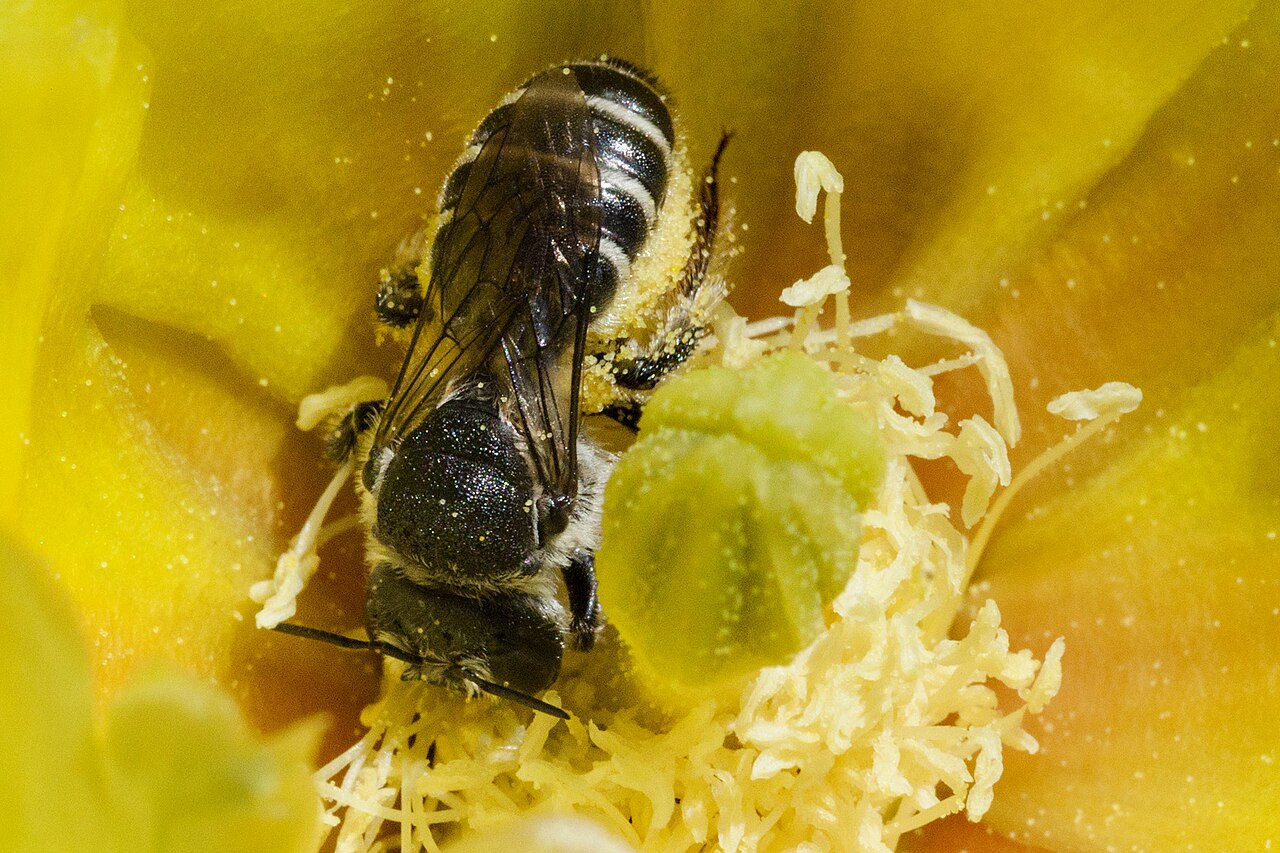
The flowers produce abundant pollen and attract native bees, including cactus-specialist bees such as Diadasia and Lithurgopsis, as well as beetles. Bees often roll in the pollen-laden stamens, which close around them when touched.
For Birds
Cactus wrens, thrashers and other desert birds eat the fruit and seeds, and its spiny branches give cover to small birds and nesting wrens.
For Mammals
Pack rats, ground squirrels, javelina and desert tortoises eat the fruit, and some animals gnaw on the pads for moisture in dry seasons. Woodrats often build their nests at the base, using fallen pads for protection.
Ecosystem Role
Its fleshy pads store water through long droughts, and its spiny clumps create sheltered microhabitats for seedlings, insects and small animals. As a common cactus of rocky desert slopes, it helps define the plant community of the upper Mojave and Sonoran deserts.
Cultural & Historical Uses
The species name chlorotica comes from a Greek root meaning “pale green” or “yellowish-green,” describing its pale pad color. It was described by George Engelmann and John Milton Bigelow from collections made during the Pacific Railroad surveys of the 1850s.
Its common names, pancake, flapjack, dollarjoint and clock-face pricklypear, all describe the round, flat pads. Like other prickly pears, its fruits and young pads were eaten by Indigenous peoples of the Southwest after the glochids were carefully removed, usually by rubbing or singeing.
Pollen and packrat-midden studies show that pancake pricklypear grew in parts of Arizona during the last ice age, and it remains a characteristic cactus of the desert ranges in parks such as Joshua Tree National Park and Mojave National Preserve.
Frequently Asked Questions
Why is it called pancake pricklypear?
Its pads are almost perfectly round and flat, and they stack on top of each other like a pile of pancakes. It is also called dollarjoint and clock-face pricklypear for the same reason.
How tall does pancake pricklypear get?
Usually 3 to 7 feet, sometimes a bit more. Unlike many prickly pears that sprawl near the ground, it grows upright and often forms a short trunk.
Is the fruit edible?
Prickly pear fruits are generally edible once the tiny glochids are removed, and Indigenous peoples of the Southwest used them. Pancake pricklypear fruits are fairly small and less juicy than cultivated prickly pears, so they are better left for wildlife unless you are sure of your identification and handle them carefully.
How do I remove glochids from my skin?
Use tweezers for visible ones, then press a piece of strong tape or a thin layer of white glue onto the area and peel it off after it dries. Wearing thick gloves and using tongs prevents most problems.
Can I grow it outside the desert?
It can grow in other dry climates with full sun and fast-draining soil, but it dislikes cold, wet winters and humid summers. In wetter regions, grow it in a gritty raised bed or a container that can be kept dry in winter.

Looking for a nursery that carries Pancake Pricklypear?
Browse our native plant nursery directory: Arizona · California · Nevada & New Mexico · Utah