
Frémont’s Phacelia (Phacelia fremontii)
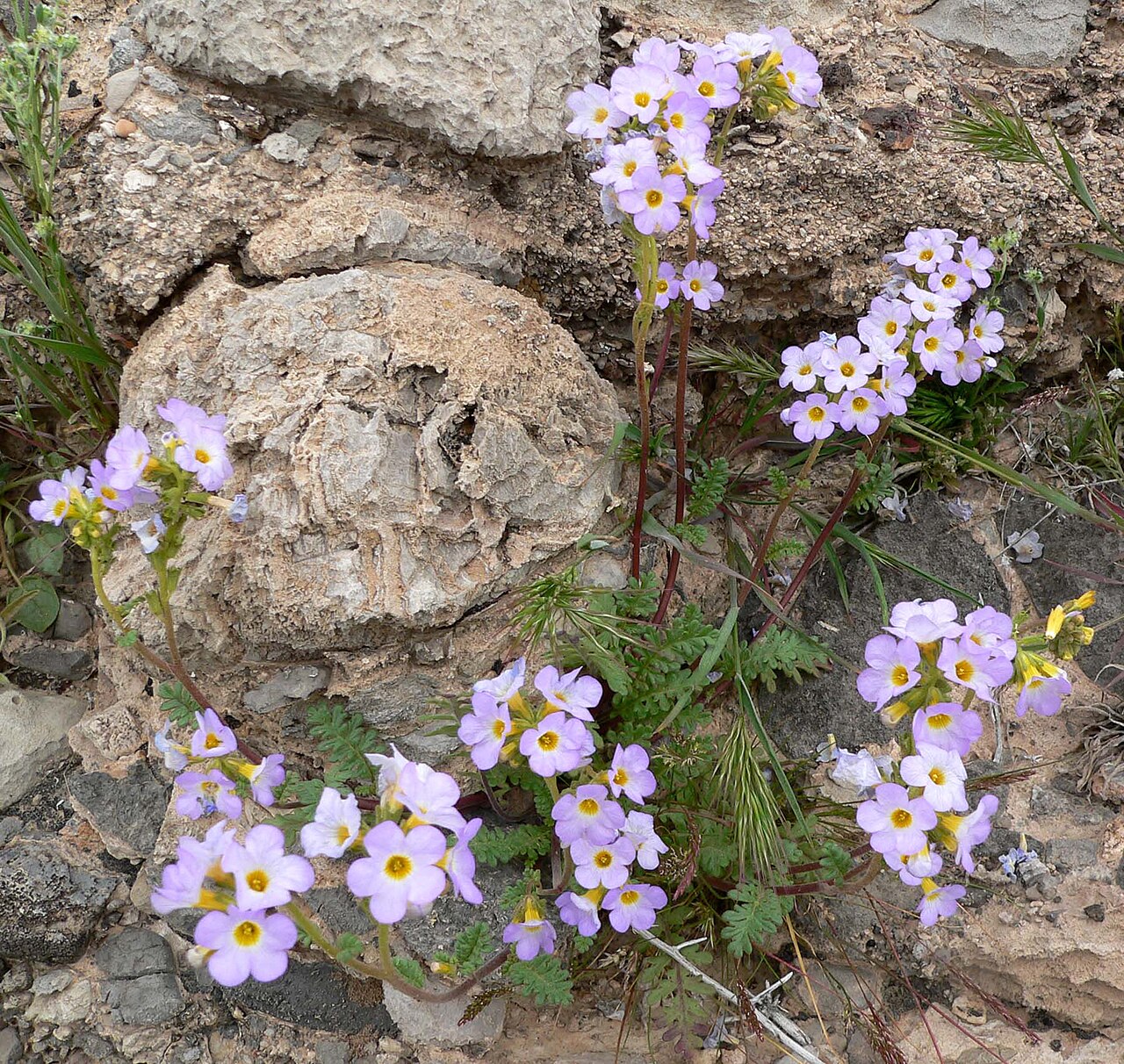
Phacelia fremontii, known as Frémont’s Phacelia (also called yellowthroats or Frémont’s scorpionweed), is a low spring annual of the deserts and dry valleys of the Southwest. It belongs to the borage family (Boraginaceae; formerly the waterleaf family, Hydrophyllaceae). Its open, bell- to bowl-shaped flowers are lavender, blue-purple or pinkish with a bright yellow throat, a color pattern that sets it apart from most other desert phacelias.
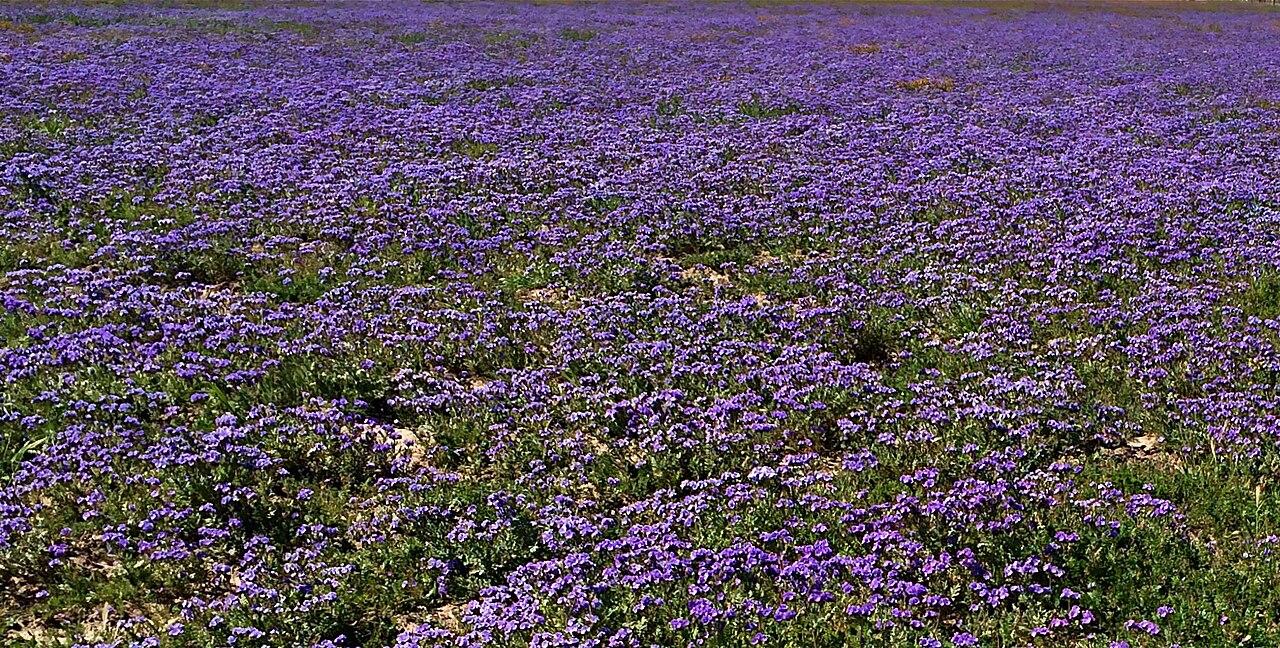
It grows only a few inches to about a foot tall, with deeply lobed, slightly sticky leaves and coiled clusters of flowers that unroll as they open. After a wet winter it blooms from about March to June, from creosote bush scrub in the Mojave Desert up to pinyon-juniper woodland, and in the San Joaquin Valley and the Carrizo Plain it can tint whole hillsides purple. The Xerces Society lists it as having special value to native bees.
Safety note: many phacelias can cause an itchy contact rash in sensitive people because of their glandular hairs. Frémont’s phacelia is less notorious than some, but it is sensible to wear gloves when handling plants or collecting seed. It can be grown from seed in dry, sunny gardens in its native range.
Identification
Look for a small, spreading annual with deeply lobed, slightly sticky leaves and coiled clusters of lavender to blue-purple flowers that each have a bright yellow throat, on sandy or gravelly ground in spring.
Stems & Habit
Frémont’s phacelia is an aromatic annual with one or several stems that branch from the base and spread along the ground or stand upright, usually 2 to 12 inches (5 to 30 cm) long. Plants on poor ground in dry years may be just an inch or two tall with a single flower cluster. The stems are hairy and become glandular (sticky) toward the flowers.
Leaves
The leaves are mostly near the base, about 3/5 to 2 inches (15 to 50 mm) long, and deeply lobed or divided into rounded, toothed leaflets, giving them a somewhat ladder-like or oak-leaf look. They are gray-green to green and hairy. Young rosettes in winter are a flat cluster of these lobed leaves pressed against the ground.
Flowers
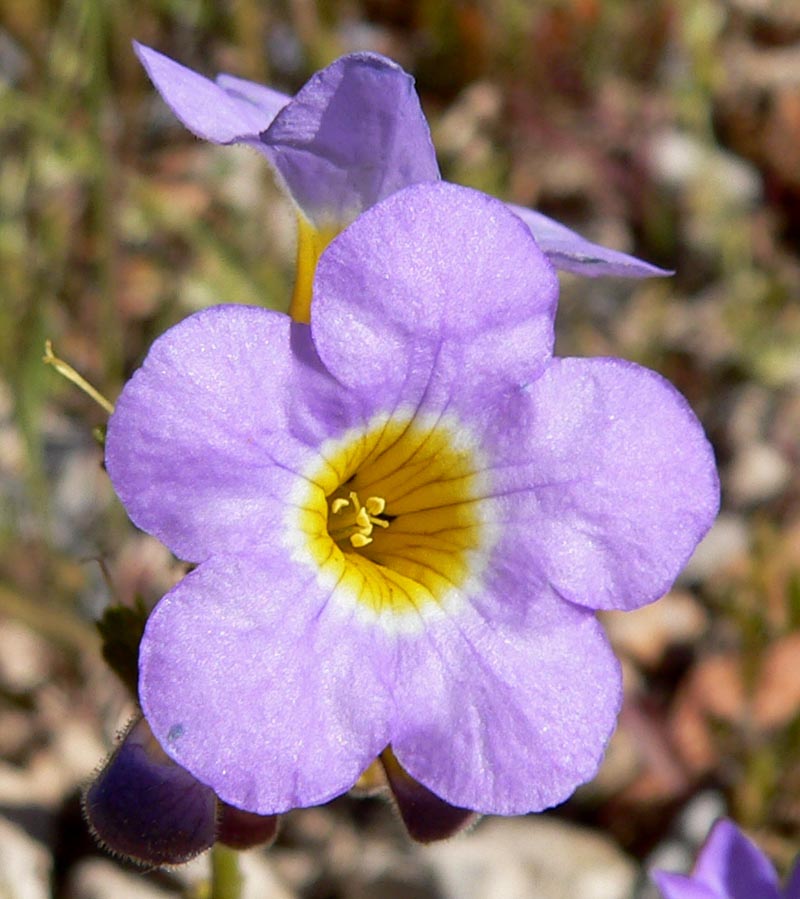
The flowers are held in coiled, one-sided clusters (scorpioid cymes) that uncoil as the buds open. Each corolla is funnel- to bell-shaped and broadly open at the mouth, up to about 3/4 inch (1.5 to 2 cm) long, lavender, blue, pink or purple with a yellow tube and throat, often with a white ring between the yellow and the purple. The calyx lobes are narrow, 3 to 5 mm long, with short glandular hairs. Bloom time is about March to June, earlier at low elevations.
Fruit & Seeds
Each flower produces a small oval capsule that splits to release a handful of tiny, pitted to ridged seeds. Plants dry up and die after seeding in late spring. The seeds stay in the soil until fall or winter rains trigger germination, and some may wait through dry years.
Look-alikes
The yellow throat is the best field mark. Notch-leaf scorpionweed (Phacelia crenulata) has violet flowers with a white throat and long protruding stamens. Distant Phacelia (P. distans) and Lacy Phacelia (P. tanacetifolia) have fern-like leaves and smaller, pale blue flowers without yellow. California Bluebells (P. campanularia) has deep gentian-blue flowers and rounded, unlobed leaves. Purple mat (Nama demissa) is a ground-hugging relative with pink-purple flowers and narrow, unlobed leaves.
Safety & Conservation
Like other phacelias, this plant has glandular hairs that can irritate the skin of sensitive people. Wear gloves when handling it, and do not eat it. Frémont’s phacelia is widespread and is ranked G4 (apparently secure) by NatureServe. It is not of conservation concern, but desert wildflower displays are easily damaged by trampling and off-road driving, so stay on trails when enjoying them.
Quick Facts
| Scientific Name | Phacelia fremontii |
| Family | Boraginaceae (borage family); formerly Hydrophyllaceae |
| Plant Type | Winter annual wildflower |
| Mature Height | 2–12 in |
| Mature Spread | 4–12 in |
| Growth Rate | Fast |
| Sun Exposure | Full sun |
| Water Needs | Very low; relies on winter rain |
| Soil Type | Sandy or gravelly, well-drained soils |
| Soil pH | About 6.5–8.5 |
| Bloom Time | March–June |
| Flower Color | Lavender, blue, pink or purple with a yellow throat |
| Fall Color | None; annual, dies after seeding |
| Fruit | Small oval capsule with tiny pitted seeds |
| Deer Resistant | Generally; hairy, aromatic foliage is not favored |
| USDA Hardiness Zones | Annual; grows where zones 5–10 occur |
Native Range
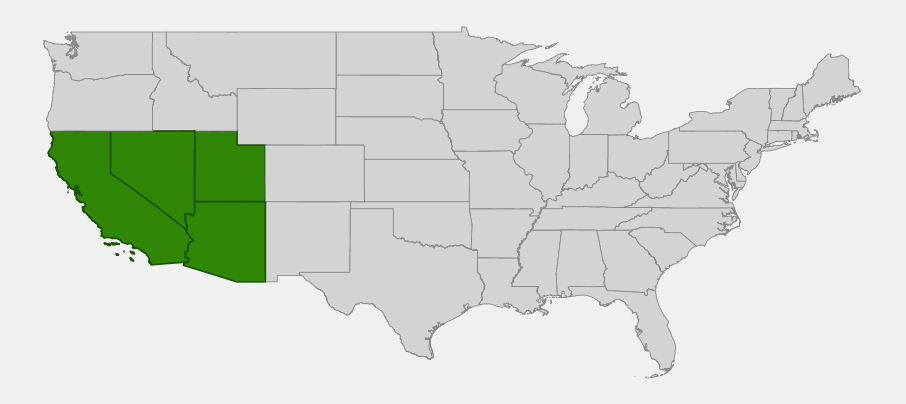
Frémont’s phacelia is native to the southwestern United States. USDA PLANTS lists it as native in Arizona, California, Nevada and Utah. It is named for John C. Frémont, the explorer whose expeditions in the 1840s collected many plants of the Great Basin and California.
In California it grows in the Mojave Desert, the southern San Joaquin Valley and the Inner Coast Ranges (including the Carrizo Plain), the Tehachapi Mountains, the eastern Sierra Nevada foothills, and the White and Inyo Mountains. Beyond California it is found across southern Nevada (Red Rock Canyon, the Spring Mountains), northern and western Arizona, and southern Utah, including the slopes around Zion National Park.
It grows in open, sunny places with sandy or gravelly soil: desert flats and washes, rocky slopes, grassland, creosote bush and blackbrush scrub, Joshua tree woodland and pinyon-juniper woodland, from low valleys to over 7,000 feet in the desert mountains. It is often most abundant on open or disturbed ground and in years with good winter rain.
📋 Regional plant lists featuring Frémont’s Phacelia: Utah & Western Colorado · Arizona & New Mexico · California & Nevada
Growing & Care Guide
Frémont’s phacelia is a true desert annual: it lives on winter rain, blooms in spring and is gone by summer. It is easy to grow from seed in dry, sunny gardens within its range and will reseed where it is happy.
Light
Full sun. In shade it becomes leggy and flowers poorly.
Soil & Water
It needs sandy, gravelly or rocky soil with sharp drainage. Do not amend or fertilize; rich soil makes weak, floppy plants. In most years, winter rain is enough. In a very dry winter, water deeply every two to three weeks from germination until buds form, then stop.
Planting Tips
Sow seed directly in fall, before the first winter rains, on bare, raked ground in full sun. Press the seed into the surface or cover it very lightly. It does not transplant well, so avoid starting it in pots. It looks best sown in drifts with other spring annuals such as desert chia, goldfields, poppies and lupines.
Pruning & Maintenance
No pruning is needed. Leave the plants in place until the capsules are dry so they can drop seed for next year, then pull or cut the dead stems. Keep competing weeds, especially non-native grasses, under control in winter, since they can crowd out the low rosettes. Wear gloves when handling plants.
Propagation
Seed only. Collect dry capsules in late spring and store seed dry until fall. Many desert phacelia seeds have some dormancy; fall sowing outdoors lets winter cold and moisture break it naturally. Expect uneven germination over more than one year.
Landscape Uses
- Desert wildflower gardens: a low, colorful spring annual for gravel gardens
- Pollinator gardens: valued by native bees for nectar and pollen
- Restoration seeding: native annual for disturbed or burned desert and grassland sites
- Rock gardens: fits between stones and in gravel mulch
- Wildflower viewing: part of spring displays from Red Rock Canyon to the Carrizo Plain
Wildlife & Ecological Value
Frémont’s phacelia flowers early in the year, when few other foods are available to insects, and it is an important bee plant in the desert.
For Pollinators
The Xerces Society lists Frémont’s phacelia as having special value to native bees. Mining bees, small sweat bees, mason bees and bumblebees visit the open flowers for nectar and the plentiful pollen, and bee flies and butterflies also visit. The yellow throat acts as a nectar guide that points insects to the center of the flower.
For Birds
Seed-eating birds such as sparrows, juncos and finches forage for the small seeds on the ground, and insect-eating birds hunt the bees and other insects drawn to the flowers.
For Mammals
The small seeds are gathered by desert rodents such as kangaroo rats and pocket mice. Larger mammals generally do not favor the hairy, aromatic foliage.
Ecosystem Role
As a winter annual, it turns good rain years into a pulse of flowers and seed, then survives dry years as a seed bank in the soil. On open and disturbed ground it helps to hold soil and feed pollinators while shrubs recover.
Cultural & Historical Uses
The species was described by John Torrey from specimens collected by John C. Frémont on his expeditions across the West in the 1840s. The genus name Phacelia comes from the Greek phakelos, “bundle,” referring to the crowded flower clusters, and the common name yellowthroats describes the bright yellow center of each flower.
Frémont’s phacelia is one of the wildflowers that color the Carrizo Plain and the hills of the southern San Joaquin Valley in a good spring, together with goldfields, hillside daisies and other annuals. In the Mojave Desert it is a familiar sight along trails at Red Rock Canyon and in Death Valley after wet winters.
Related phacelias on this site include California Bluebells, Lacy Phacelia, Distant Phacelia and Silverleaf Phacelia. Lacy phacelia is widely grown as a cover crop for bees, and Frémont’s phacelia shows the same strong appeal to native bees in its desert home.
Frequently Asked Questions
How do I recognize Frémont’s phacelia?
Look for a low annual with deeply lobed leaves and lavender to purple, open, bell-shaped flowers that have a bright yellow throat. Most other desert phacelias lack the yellow center.
Is Frémont’s phacelia an annual?
Yes. It germinates after fall or winter rain, blooms from about March to June and dies after setting seed.
Can Frémont’s phacelia cause a rash?
Many phacelias have glandular hairs that can cause an itchy rash in sensitive people. Frémont’s phacelia is not known as one of the worst, but wear gloves when handling it to be safe.
Is it good for bees?
Yes. The Xerces Society lists it as having special value to native bees, which visit the flowers heavily for nectar and pollen.
How do I grow Frémont’s phacelia from seed?
Scatter seed on bare, well-drained, sandy or gravelly soil in full sun in fall before winter rains. Do not fertilize or give summer water, and let plants drop seed to return the next year.

Looking for a nursery that carries Frémont’s Phacelia?
Browse our native plant nursery directory: Arizona · California · Nevada · Utah