
Leafy Elephant’s-Foot (Elephantopus carolinianus)
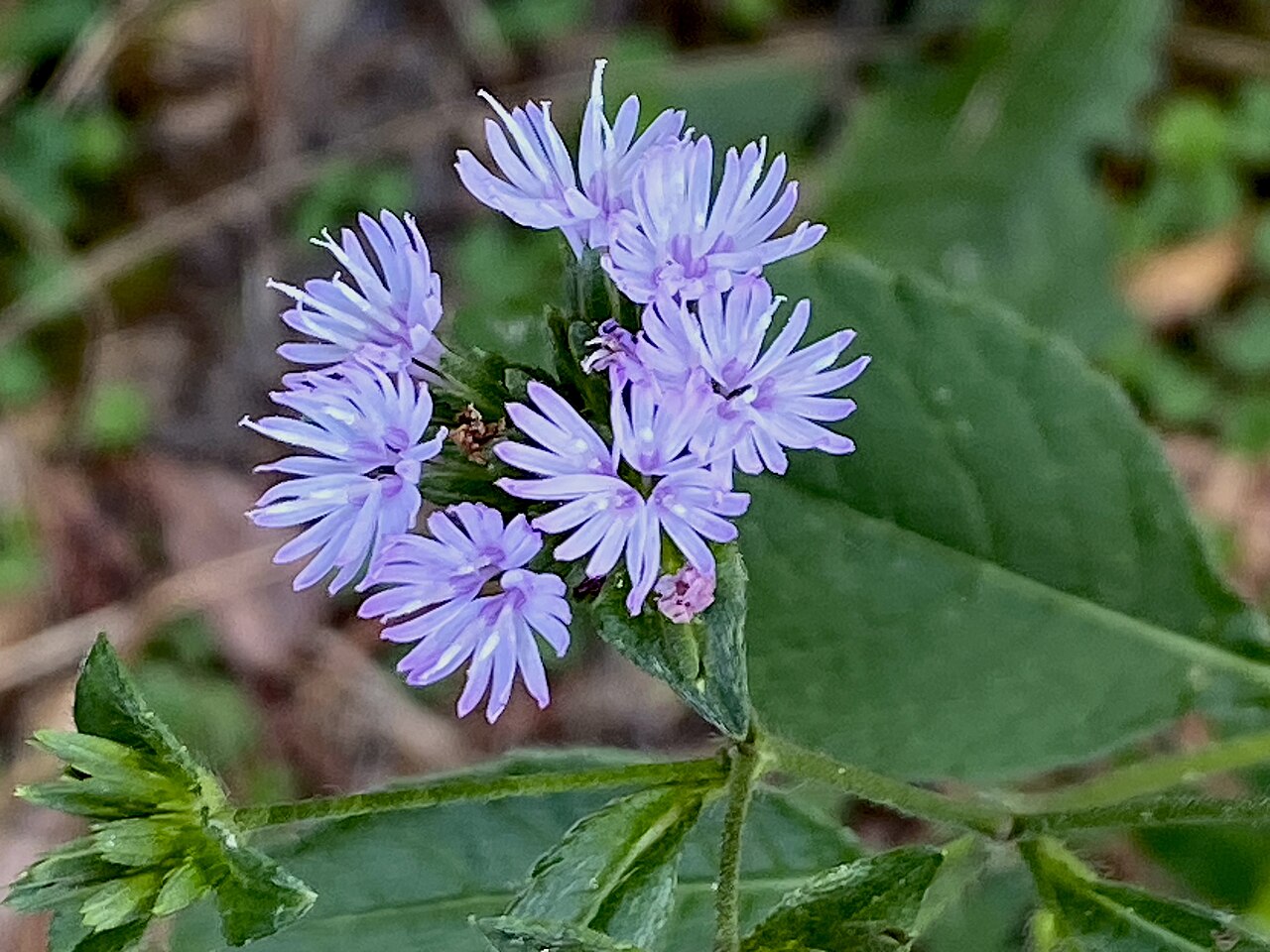
Elephantopus carolinianus, known as Leafy Elephant’s-Foot (USDA: Carolina elephantsfoot), is a native perennial wildflower of open woods, woodland edges and shaded clearings across the southeastern and south-central United States. It is a member of the aster family (Asteraceae) and belongs to the same tribe as the ironweeds. Plants grow about 1 to 3 feet tall, occasionally taller, with branching, hairy stems clothed in broad, soft, toothed leaves.
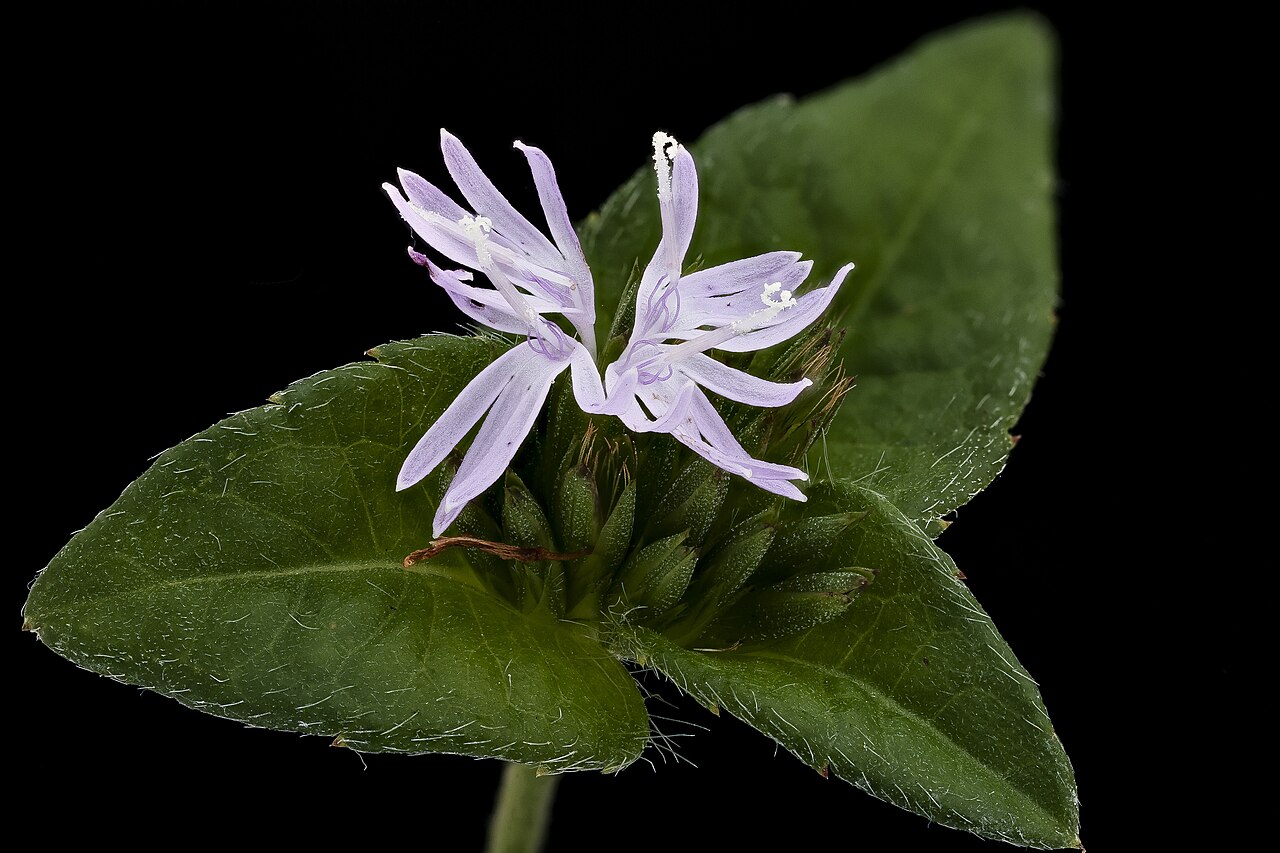
From late summer into fall, the branch tips carry small clusters of pale lavender to pinkish flowers. Each cluster is made up of many tiny flower heads packed together and set on a collar of three leafy, triangular bracts. The flowers have no true rays, but their deeply divided florets give each cluster a lacy, starry look. The common name comes from the genus name, from the Greek for “elephant’s foot,” a reference to the broad, flat basal leaves of some species in the genus.
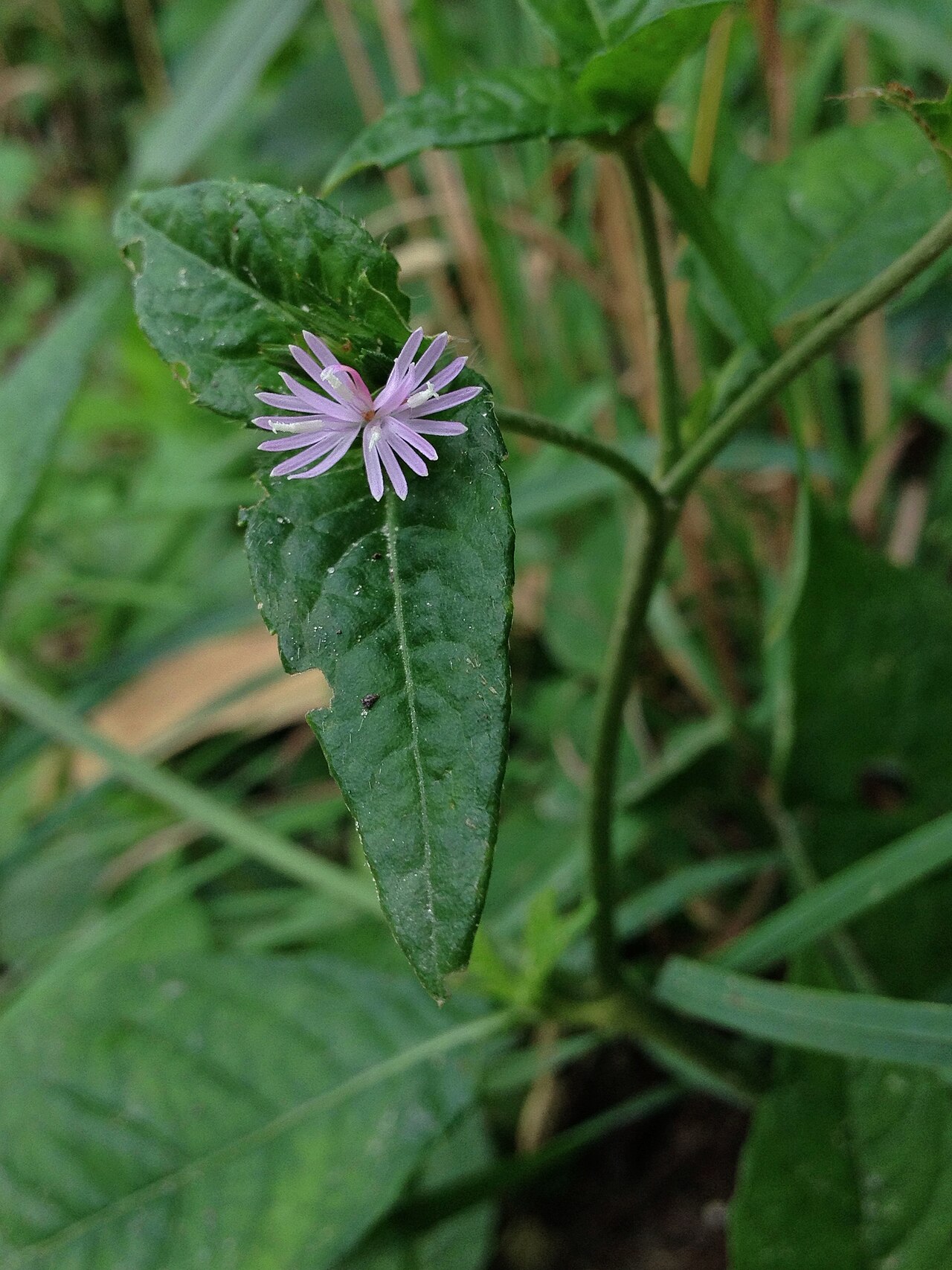
Leafy elephant’s-foot is the one member of its genus whose stems are leafy all the way up, which separates it from the more familiar elephant’s-foot species that have a flat rosette of leaves at the base and nearly leafless flowering stems. It is an easy, shade-tolerant native for woodland gardens, and its late flowers feed bees, butterflies and other pollinators at a time when few woodland plants are blooming.
Identification
Look for leafy elephant’s-foot in late summer and fall in partly shaded woods and edges. The combination of leafy, hairy stems and lavender flower clusters sitting on three leafy bracts identifies it.
Growth Habit
Plants are upright to sprawling, about 1 to 3 feet tall, and the Lady Bird Johnson Wildflower Center notes stems up to about 4 feet long. The stems are branched in the upper part, often forking repeatedly, and are covered with spreading hairs. The plant grows from a short, fibrous-rooted crown.
Leaves
The leaves are alternate along the stem, broadly elliptic to ovate, thin and soft, about 3 to 8 inches long on the lower stem and smaller above. They are toothed or scalloped along the edges and softly hairy, especially on the underside. The lower leaves narrow to a winged stalk. Any basal leaves usually wither by flowering time, so the plant does not have the persistent rosette of its relatives.
Flowers
From August to October, each branch tip carries a rounded cluster about 3/4 to 1 inch across. The cluster is made of many small heads, each with only a few florets. The florets are pale lavender, pink-purple or nearly white, with five slender, unequal lobes that make them look ray-like. Each cluster sits on three broad, triangular, leaf-like bracts.
Fruit & Seeds
Each floret produces a small, ribbed, hairy achene topped by a few stiff, bristle-tipped scales (the pappus). The seeds drop near the parent or cling to fur and clothing, and plants often form loose colonies over time.
Look-alikes
Elephant’s-foot (Elephantopus tomentosus) and its relatives such as E. nudatus and E. elatus have a flat rosette of large leaves pressed to the ground and nearly leafless flowering stems. Leafy elephant’s-foot is the only one with large leaves along the stem. Ironweeds (Vernonia) have larger, separate heads of deep purple disk flowers without the three leafy bracts. False elephant’s-foot (Pseudelephantopus spicatus), found in the Deep South, has heads in a long spike.
Quick Facts
| Scientific Name | Elephantopus carolinianus |
| Family | Asteraceae (aster family) |
| Plant Type | Herbaceous perennial wildflower |
| Mature Height | 1–3 ft (stems up to about 4 ft) |
| Mature Spread | 1–2 ft |
| Growth Rate | Moderate; self-sows readily |
| Sun Exposure | Part shade to light shade; tolerates sun with moisture |
| Water Needs | Medium; average to moist soil |
| Soil Type | Loam, sandy loam or clay with organic matter |
| Soil pH | About 5.5–7.0 (slightly acidic to neutral) |
| Bloom Time | August–October |
| Flower Color | Pale lavender, pink-purple to whitish |
| Fall Color | None notable |
| Fruit | Small hairy achene with a few bristle-tipped scales |
| Deer Resistant | Not well documented |
| USDA Hardiness Zones | 6–9 |
Native Range
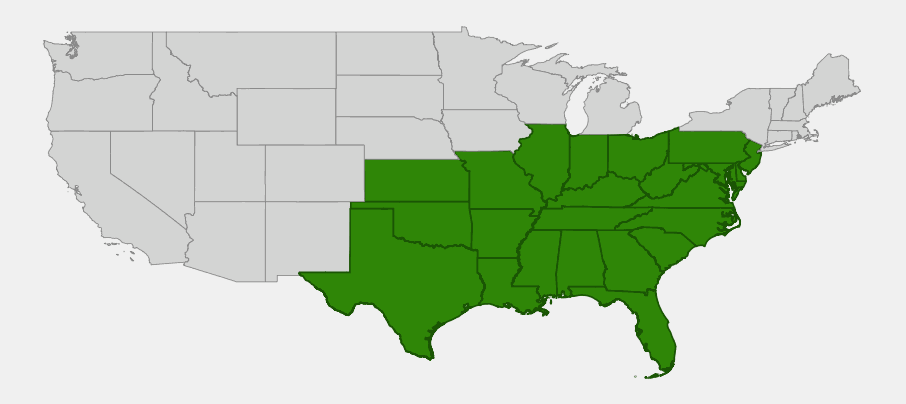
Leafy elephant’s-foot is native to the eastern and south-central United States. USDA PLANTS lists it as native in the lower 48 states and records it from 23 states and the District of Columbia, from New Jersey and Pennsylvania west through Ohio, Indiana, Illinois and Missouri to southeastern Kansas and Oklahoma, and south to Florida and Texas.
It is most common in the Southeast and the lower Mississippi Valley, from the Carolinas and Georgia west through Tennessee, Arkansas and Louisiana. It becomes scarce near its northern limit in New Jersey, Pennsylvania and the southern Midwest. In Oklahoma and Kansas it grows in the wooded eastern parts, and in Texas it is a plant of the eastern Pineywoods and Post Oak regions rather than the dry south and west.
Typical habitats are moist to fairly dry open woods, woodland edges and clearings, stream terraces and bottomland forests, trails, roadsides and old fields reverting to woods. It favors light shade and soils that stay at least moderately moist, and it often appears along shady paths where the ground has been lightly disturbed.
📋 Regional plant lists featuring Leafy Elephant’s-Foot: New York, Pennsylvania & Northern New Jersey · Ohio & Indiana · Kentucky & Tennessee · Nebraska, Kansas & Eastern Colorado · Maryland, Virginia & West Virginia · Delaware, Southern New Jersey & Long Island · Illinois, Iowa & Missouri · Alabama, Georgia & Mississippi · North & South Florida · North & South Carolina · Arkansas, Louisiana, Eastern Oklahoma & Eastern Texas
Growing & Care Guide
Leafy elephant’s-foot is an easy, low-maintenance native for partly shaded gardens. It is occasionally offered by native plant nurseries in the Southeast and is easy to grow from seed. Buy nursery-grown plants or seed rather than digging from the wild.
Light
Part shade or light, dappled shade is ideal, such as under high tree canopies or on the east side of a building. It tolerates full sun only where the soil stays moist; in hot, dry sun the leaves scorch and the plant looks ragged.
Soil & Water
It grows in loam, sandy loam or clay soils with some organic matter, slightly acidic to neutral. Average to moist soil suits it best, and established plants tolerate short dry spells in shade. Water new plants regularly during their first summer.
Planting Tips
Plant in spring or fall about 12 to 18 inches apart. It works best in informal woodland borders, at the edge of trees and shrubs, and in naturalized areas where it can spread by seed. Its late-season bloom pairs well with woodland asters, goldenrods and inland sea oats.
Pruning & Maintenance
Little care is needed. Leave the seed heads standing through fall for wildlife, then cut stems back in late winter. It self-sows freely in suitable conditions; pull unwanted seedlings in spring or deadhead after flowering if you want to limit spread. It has no serious pest or disease problems.
Propagation
Sow fresh seed in fall outdoors or press it onto the surface of moist potting mix after a few weeks of cold, moist stratification; it germinates readily. Established clumps can be divided in early spring.
Landscape Uses
- Woodland gardens: late color in part shade under trees
- Naturalized areas: self-sows into loose colonies along paths and edges
- Pollinator gardens: late-summer and fall nectar for bees and butterflies
- Shade borders: a companion for ferns, sedges and woodland asters
- Restoration: understory and edge plantings in southeastern woodlands
Wildlife & Ecological Value
Leafy elephant’s-foot blooms when many woodland plants have finished, so it is a useful late-season food source in shady habitats.
For Pollinators
The flowers are visited by small native bees, honey bees, skippers and other small butterflies, bee flies and other insects. The open florets make nectar and pollen easy for short-tongued insects to reach.
For Birds
Small seed-eating birds may pick at the seed heads in fall and winter, and the plant adds cover to woodland edges used by ground-foraging birds.
For Mammals
Wildlife use of leafy elephant’s-foot is not well documented. The rough, hairy foliage is not considered a preferred browse plant.
Ecosystem Role
As a late-blooming understory herb, it helps fill the gap in floral resources between summer wildflowers and the last asters. Its bristly seeds travel on animals and clothing, helping it colonize trails, edges and openings in woodlands.
Cultural & Historical Uses
The genus name Elephantopus was used by Linnaeus and combines the Greek words for elephant and foot. It probably refers to the broad, flat basal leaves of the original species, which spread across the ground like a large footprint. The species name carolinianus means “of Carolina,” where early botanists collected it.
Several Elephantopus species have been used in traditional medicine in the Americas and Asia, mainly the rosette-forming elephant’s-foot species. Specific traditional uses of leafy elephant’s-foot are not well documented, and it should not be used as a home remedy.
For gardeners, leafy elephant’s-foot is a modest but useful plant. It rarely draws attention in nurseries, but it fills shady corners with soft green foliage and an unexpected show of lavender flowers late in the season, when most woodland plants are finished.
Frequently Asked Questions
How do I tell leafy elephant’s-foot from other elephant’s-foot species?
Leafy elephant’s-foot has large leaves all along its stems. Other species, such as Elephantopus tomentosus, have a flat rosette of leaves on the ground and nearly leafless flowering stems.
Does leafy elephant’s-foot grow in shade?
Yes. It grows best in part shade or light shade and is one of the few late-blooming wildflowers for woodland gardens.
Is leafy elephant’s-foot invasive?
No. It is native to the eastern and southern United States. It can self-sow freely in good conditions, but unwanted seedlings are easy to pull.
When does leafy elephant’s-foot bloom?
From about August to October, with pale lavender flower clusters at the ends of the branches.
Is it good for pollinators?
Yes. Its late flowers attract small bees, skippers and other butterflies when few woodland plants are in bloom.

Looking for a nursery that carries Leafy Elephant’s-Foot?
Browse our native plant nursery directory: Alabama & Arkansas · Delaware, Florida & Georgia · Illinois, Indiana & Kansas · Kentucky, Louisiana, Maryland, Mississippi & Missouri · New Jersey, North Carolina, Ohio & Oklahoma · Pennsylvania, South Carolina, Tennessee, Texas & Virginia · West Virginia