
Catalina Mariposa Lily (Calochortus catalinae)
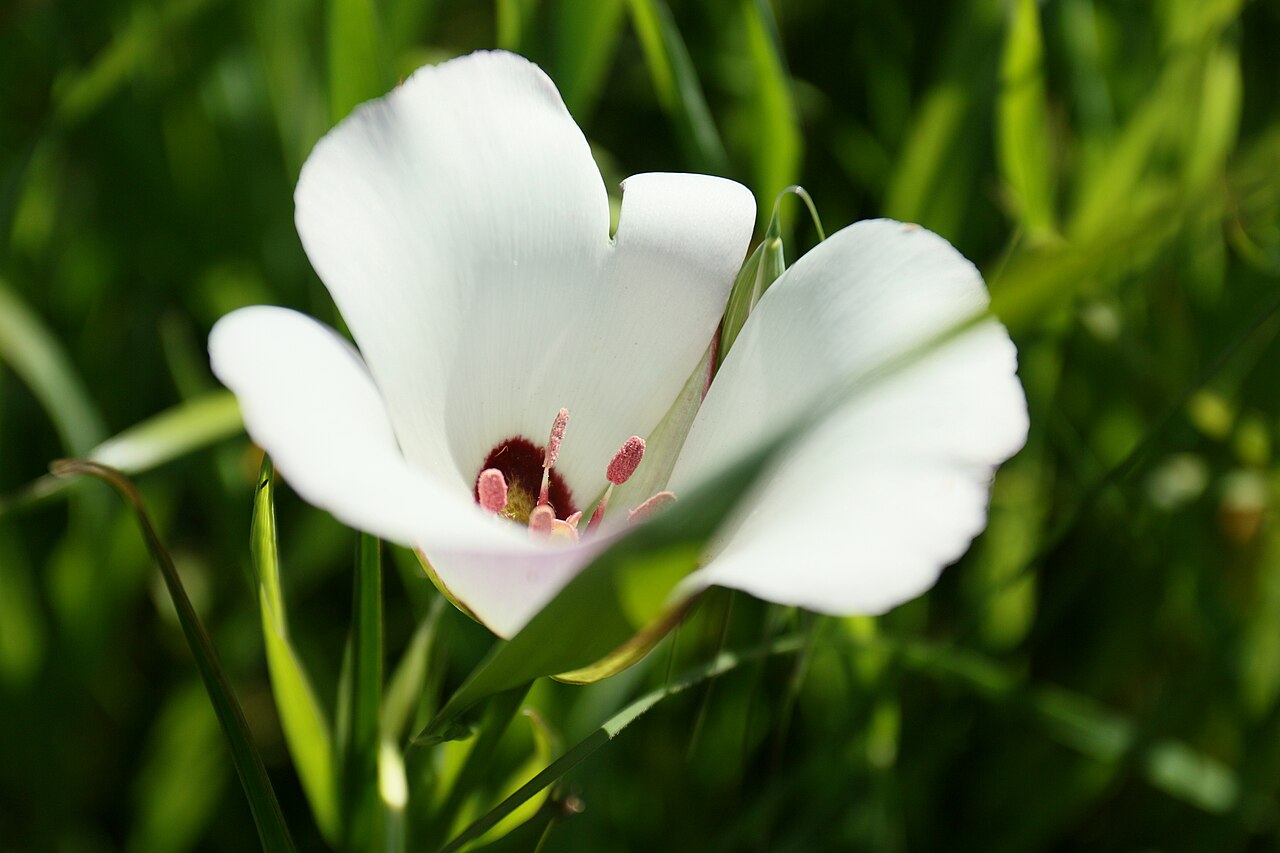
Calochortus catalinae, known as Catalina Mariposa Lily or Santa Catalina mariposa lily, is a spring-blooming bulb of coastal southern California. Its upright, cup-shaped flowers are white to pale pink or lavender, with a dark reddish-purple spot at the base of each petal, and they open on slender stems among grasses from late winter into spring. It is named for Santa Catalina Island, where it was first collected, but it also grows on the other Channel Islands and on the mainland from the Central Coast to San Diego County.
It is one of the earliest mariposa lilies to bloom, often flowering from February to May, well before most of its relatives. Like other mariposa lilies, it is a member of the lily family (Liliaceae) and grows from a small, deep bulb. The leaves appear in winter, the plant flowers in spring, and then it goes dormant through the long, dry summer.
The California Native Plant Society includes Catalina mariposa lily in its Inventory of Rare and Endangered Plants as California Rare Plant Rank 4.2, a watch list of plants with a limited distribution, because much of its coastal grassland habitat has been lost to development. It is not state or federally listed. Gardeners should grow it only from nursery-grown bulbs or seed and never dig bulbs from the wild.
Identification
Look in spring for an upright, white to pale pink, three-petaled cup on a slender stem among grasses, with a dark red-purple spot at the base of each petal and narrow, grass-like leaves at the base.
Growth Habit
The plant grows from a small, rounded, deep bulb. A single long, narrow, grass-like basal leaf appears in winter and often withers by flowering time. The flowering stem is usually 8 to 24 inches tall, sometimes branched, and carries one to several flowers.
Leaves
The basal leaf is linear, flat and grass-like, about 4 to 12 inches long. Smaller, narrow leaves grow along the stem. The leaves are easy to miss among grasses.
Flowers
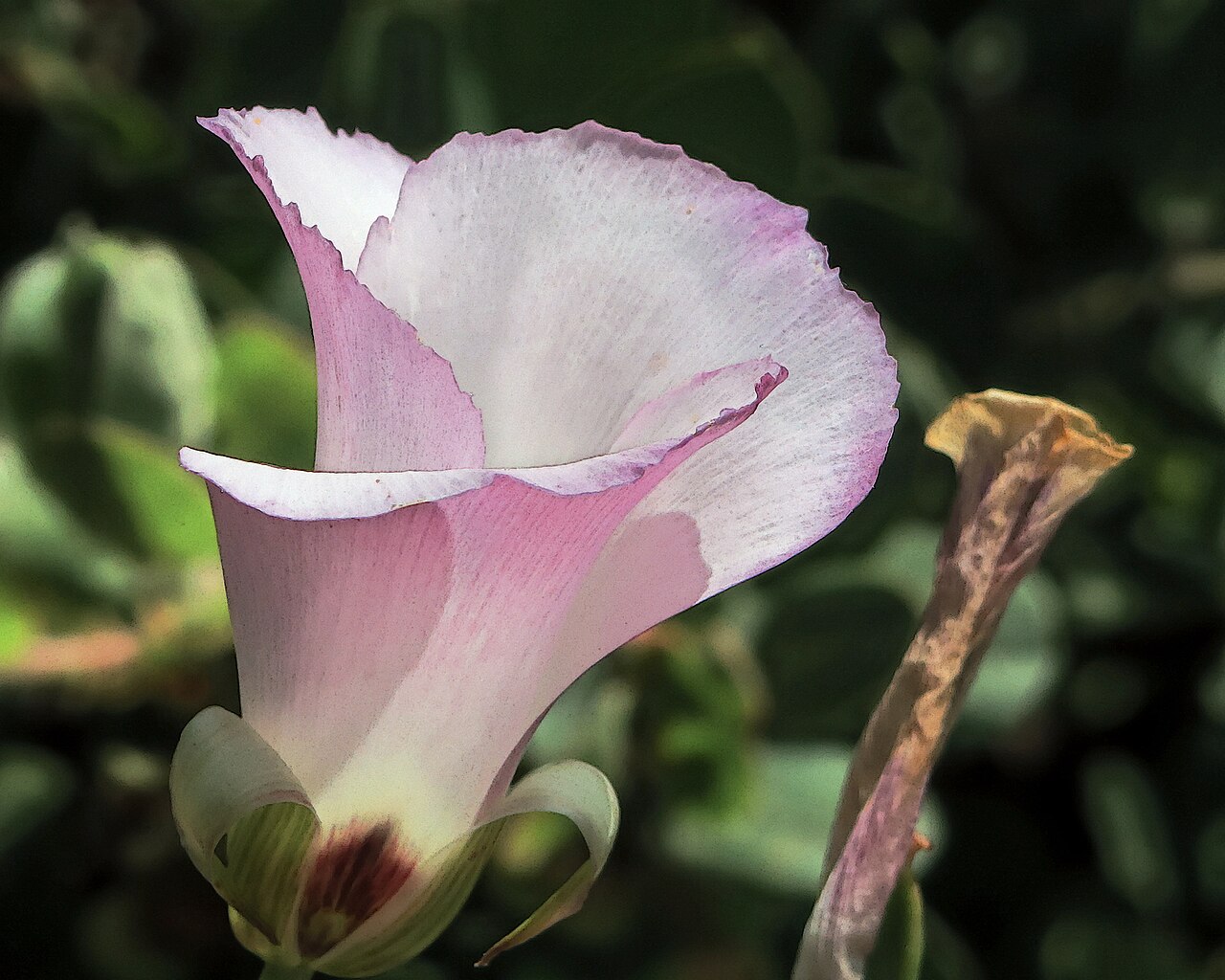
The flowers are erect, open bowls about 1 1/2 to 2 1/2 inches across. The three broad petals are white, often tinged pink or lavender, with a large, dark reddish-purple to maroon spot at the base and a few hairs near the nectar gland. The three sepals are narrower and purplish. Anthers are usually pale or pinkish. Flowering is mainly February to May.
Fruit
The fruit is an upright, narrow, three-angled capsule about 1 to 2 inches long that splits open in early summer to release flat, pale seeds.
Look-alikes
Other mariposa lilies grow in southern California. Butterfly mariposa lily (C. venustus) has a dark blotch in the middle of each petal and grows mainly farther north and inland. Splendid mariposa lily (C. splendens) is lavender without a dark basal spot, and Plummer’s mariposa lily (C. plummerae) has very hairy petals. The early bloom time and the dark spot at the very base of white petals help identify Catalina mariposa lily.
Quick Facts
| Scientific Name | Calochortus catalinae |
| Family | Liliaceae (lily family) |
| Plant Type | Perennial bulb |
| Mature Height | 8–24 in |
| Mature Spread | 3–6 in |
| Growth Rate | Slow (several years from seed to flower) |
| Sun Exposure | Full sun to light part shade |
| Water Needs | Moist in winter and spring; dry in summer |
| Soil Type | Clay, loam or rocky soil; well-drained in summer |
| Soil pH | Neutral to slightly alkaline (about 6.0–8.0) |
| Bloom Time | February–May |
| Flower Color | White to pale pink or lavender with dark red-purple basal spots |
| Fall Color | None; dormant in summer and fall |
| Fruit | Narrow, upright, three-angled capsule |
| Deer Resistant | No; bulbs and flowers are eaten by rodents and deer |
| USDA Hardiness Zones | 8–11 |
Native Range
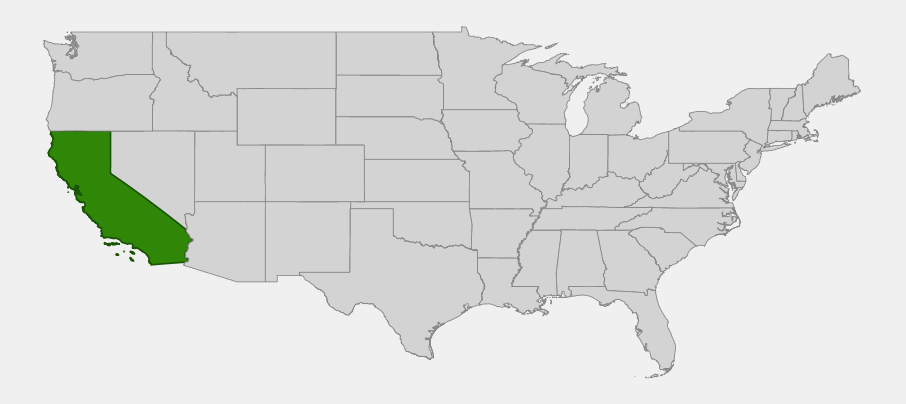
Catalina mariposa lily is endemic to coastal southern and south-central California. USDA PLANTS lists it as native only in California. It grows on the Channel Islands, including Santa Catalina Island, and on the mainland in the Santa Monica Mountains and other Transverse Ranges, the outer South Coast Ranges, the Santa Ana Mountains and nearby foothills of the Peninsular Ranges, south into San Diego County.
It is a plant of lower elevations near the coast, usually below about 2,000 feet. Much of this zone in Los Angeles, Orange and San Diego counties has been developed, which is why the species is on the California Native Plant Society’s watch list (Rank 4.2). It is still fairly common in protected areas such as the Santa Monica Mountains and on the Channel Islands.
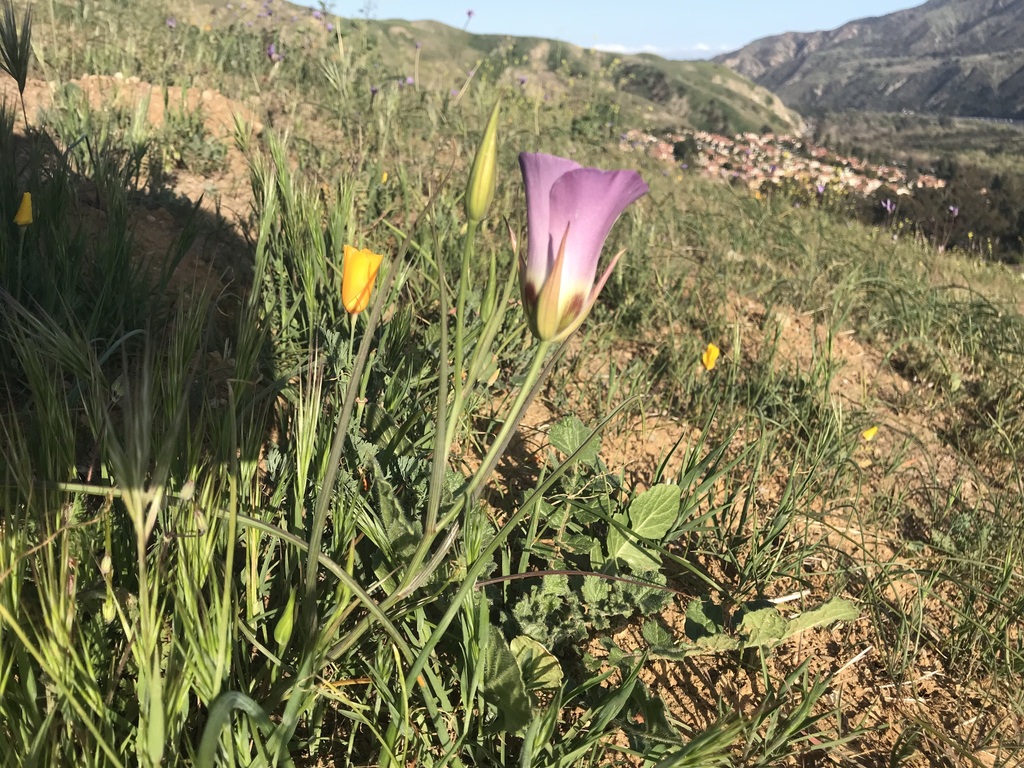
Its habitats are open grasslands, coastal sage scrub, openings in chaparral and oak woodland, often on heavier clay or rocky soils that are moist in winter and spring and bake dry in summer.
📋 Regional plant lists featuring Catalina Mariposa Lily: California & Nevada
Growing & Care Guide
Catalina mariposa lily is one of the easier mariposa lilies to grow in southern California, as long as it gets winter moisture and a completely dry summer. Buy bulbs or seed from a native nursery or seed company that grows its own stock; never dig plants from the wild.
Light
Full sun, or light part shade in hot inland gardens.
Soil & Water
It grows in clay, loam or rocky soil, but drainage must be good enough that bulbs do not sit in wet soil. Water only during the cool season if winter rains fail. Stop watering once the leaves yellow after bloom and keep the bulbs dry all summer; summer irrigation is the most common cause of loss.
Planting Tips
Plant bulbs in fall about 2 to 4 inches deep. They do well in pots of gritty mix, in rock gardens, or among bunchgrasses and low perennials that are not watered in summer. Group several bulbs together for a better display, and protect them from gophers with wire baskets if needed.
Pruning & Maintenance
Let the leaves and stems die back naturally after flowering so the bulb can store energy. Leave seed capsules to ripen if you want seed. Keep the area weeded so grasses do not smother young plants.
Propagation
Grows from seed sown in fall in deep pots or in place; seedlings take about three to five years to reach flowering size. Some plants also produce small offset bulbs. Collect seed only from garden plants or with permission.
Landscape Uses
- Southern California native gardens: an early spring bulb for dry-summer gardens
- Meadow and grassland plantings: blooms among native bunchgrasses
- Containers: grows well in pots kept dry in summer
- Rock gardens: a delicate accent among stones
- Restoration: coastal grassland and sage scrub plantings
Wildlife & Ecological Value
Catalina mariposa lily adds early spring flowers to coastal grasslands and scrub.
For Pollinators
Its open, bowl-shaped flowers are visited by native bees and beetles, which come for pollen and nectar from the glands at the base of the petals.
For Birds
It is not an important food plant for birds, but the grasslands where it grows are habitat for birds such as meadowlarks and sparrows.
For Mammals
Gophers and other rodents eat the bulbs, and deer and rabbits sometimes eat the flowers and stems.
Ecosystem Role
As a native bulb of coastal grasslands, it is part of the spring wildflower community that has disappeared from much of developed coastal southern California. Its presence is a sign of relatively intact native grassland or scrub.
Cultural & Historical Uses
The genus name Calochortus comes from Greek words meaning beautiful grass, referring to the grass-like leaves. “Mariposa” is the Spanish word for butterfly, a name given to these lilies for their colorful, wing-like petals. The species name catalinae refers to Santa Catalina Island.
Native peoples in many parts of California roasted or steamed the bulbs of mariposa lilies as food. Wild bulbs should not be dug today, especially of a watch-list species like this one.
The species was described by Sereno Watson in the 19th century from collections on Santa Catalina Island. It appears in early illustrated works on North American wildflowers, including a watercolor by Mary Vaux Walcott in her series on North American wild flowers.
Frequently Asked Questions
Is Catalina mariposa lily rare?
It is on the California Native Plant Society watch list as Rank 4.2, meaning it has a limited distribution. It is not state or federally listed.
When does Catalina mariposa lily bloom?
It is one of the earliest mariposa lilies, blooming mainly from February to May.
Does it grow only on Catalina Island?
No. It grows on several Channel Islands and on the mainland of coastal southern California, including the Santa Monica and Santa Ana Mountains.
How do I grow mariposa lilies?
Plant bulbs in fall in well-drained soil, water only in the cool season, and keep them completely dry in summer.
Can I dig bulbs from the wild?
No. Buy nursery-grown bulbs or seed. Digging wild bulbs harms populations, and it is not allowed on public lands.

Looking for a nursery that carries Catalina Mariposa Lily?
Browse our native plant nursery directory: California
