
Sarsaparilla Vine (Smilax pumila)
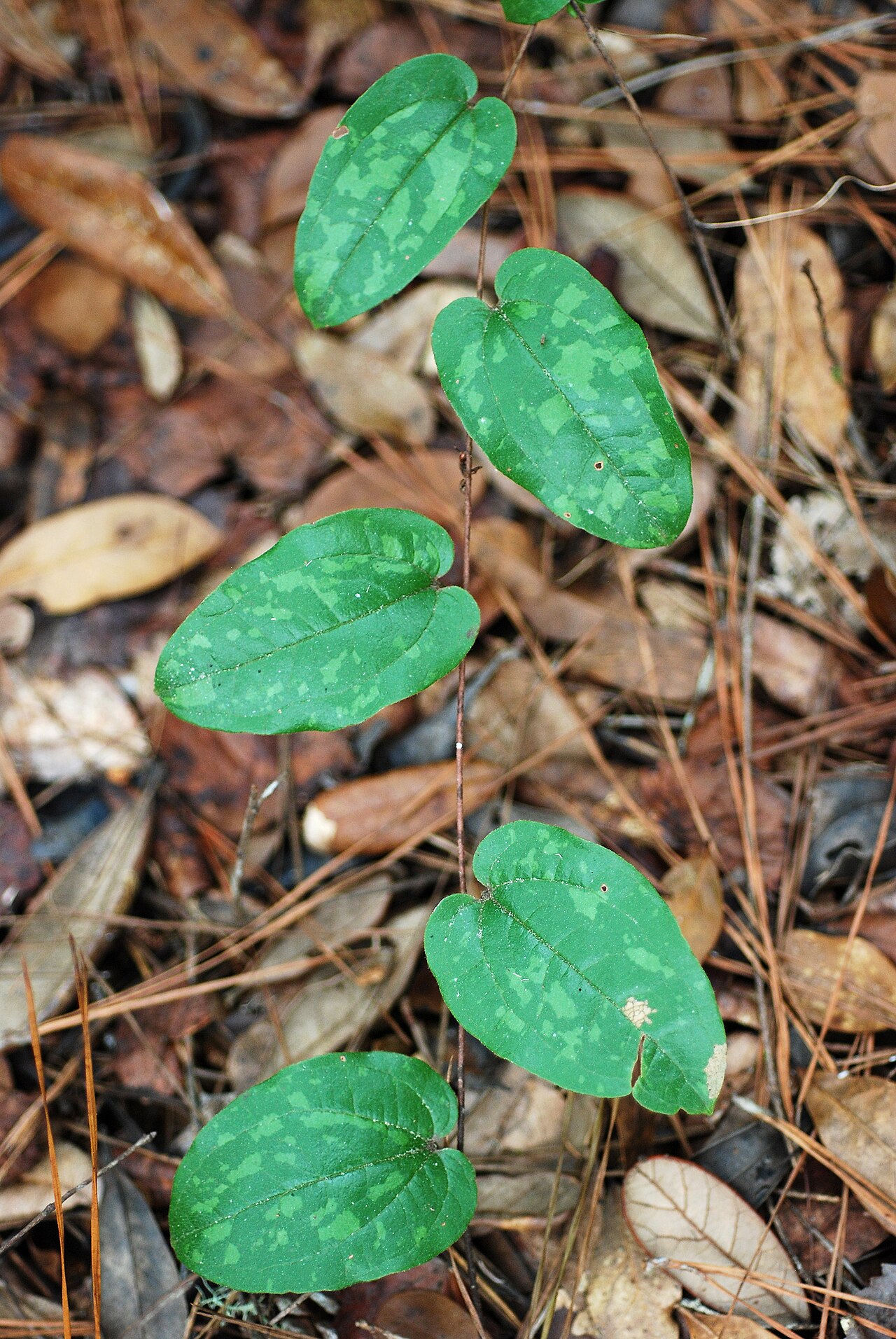
Smilax pumila, known as Sarsaparilla Vine (USDA: sarsparilla vine) or dwarf greenbrier, is a low, trailing evergreen vine of the southeastern Coastal Plain. It belongs to the greenbrier family (Smilacaceae). Unlike most of its thorny relatives, it is soft and nearly or entirely unarmed, with velvety stems, heart-shaped leaves often marbled with pale green, and bright red berries.
This is a ground-hugging plant of shady, sandy pinelands, oak and pine woods, and hammocks from South Carolina to Florida and west to eastern Texas and southern Arkansas. Its stems rarely climb more than a few feet; instead they sprawl through leaf litter and low shrubs, rooting along the way. It flowers in fall, and female plants carry bright red berries through the winter.
Sarsaparilla vine makes an unusual, well-behaved evergreen groundcover for dry, shady southern gardens. It is not known to be toxic, but its berries are not a food for people. Leave them for the birds.
Identification
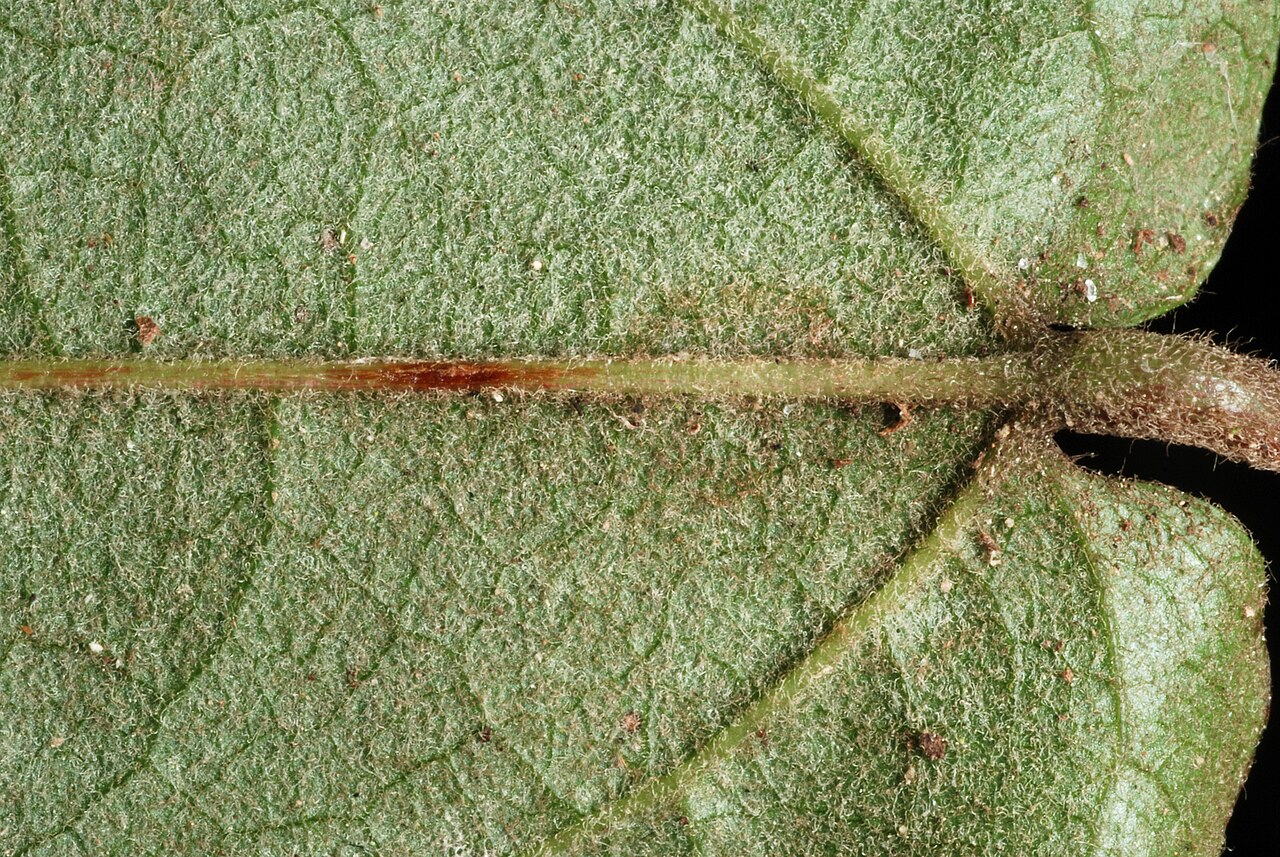
In the field, look for a low, unarmed vine with soft, fuzzy stems and heart-shaped leaves that are green above and densely velvety beneath, often with pale mottling.
Growth Habit
A low, evergreen, trailing or weakly climbing vine, usually under 3 feet tall, with stems that run along the ground through leaf litter and sometimes over low shrubs. It spreads by slender rhizomes and creeping stems that root at the nodes, forming loose patches. Tendrils at the leaf bases help it cling to nearby plants.
Stems
The stems are slender, round and covered with short, rusty or tan, woolly hairs. Most are completely unarmed, and any prickles are few and weak. This sets it apart from the many prickly greenbriers of the Southeast.
Leaves
The leaves are alternate, evergreen, egg- to heart-shaped, 1 1/2 to 4 inches long, with a rounded or notched base and a pointed tip. They have three to five main veins running lengthwise. The upper surface is dull to slightly shiny dark green, often marbled with pale green, while the lower surface is densely covered with soft, felt-like hairs.
Flowers
Plants are either male or female. In fall, from about September to November, small, rounded clusters of tiny, cream to yellowish flowers form at the leaf bases. They are fragrant but easily overlooked under the leaves.
Fruit
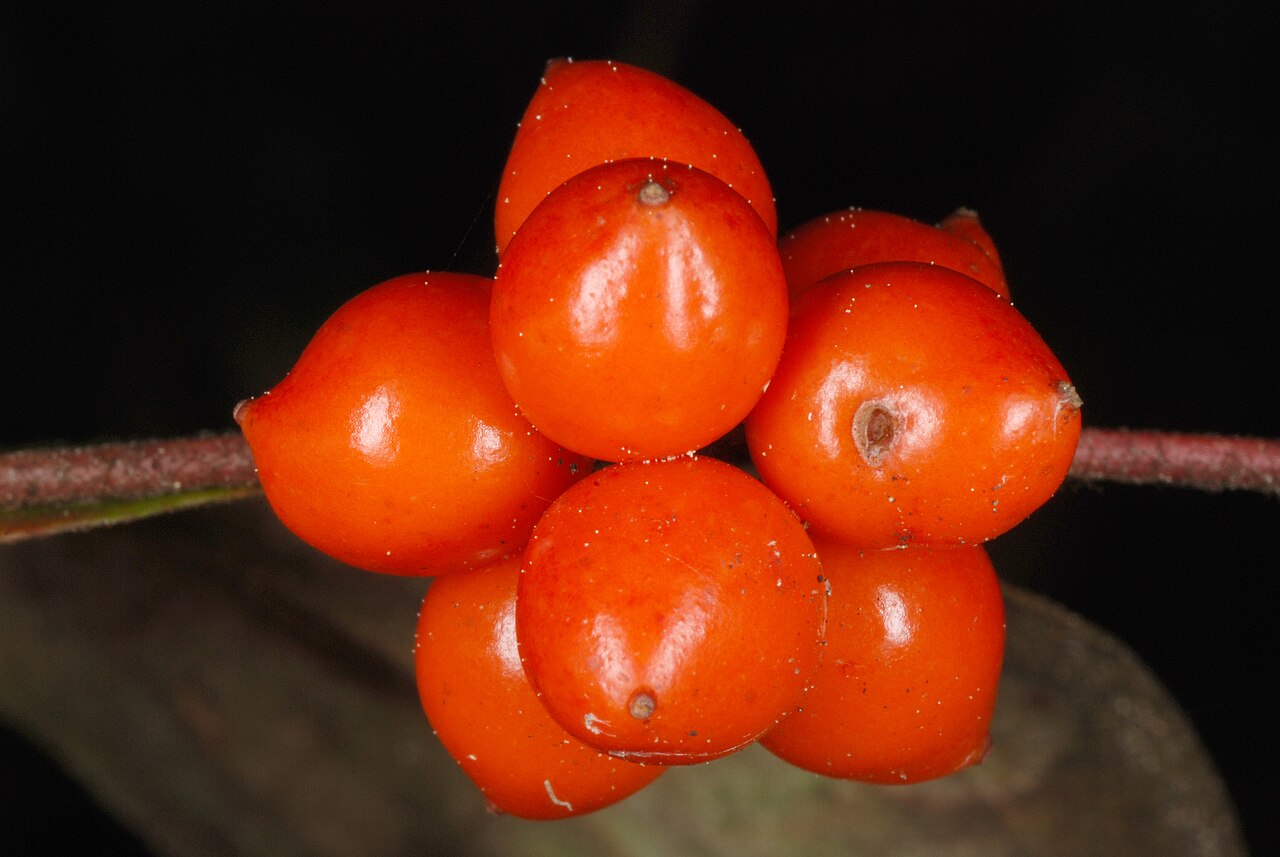
Female plants produce clusters of egg-shaped berries about 1/4 to 1/3 inch long with a small pointed tip. They ripen to glossy bright red or orange-red in fall and winter and may stay on the vine for months. Each berry holds one or two seeds.
Look-alikes
Most other southeastern greenbriers, such as saw greenbrier (Smilax bona-nox), earleaf greenbrier (S. auriculata) and glaucous greenbrier (S. glauca), have prickly stems, smooth or whitened leaf undersides and dark blue to black berries. Partridgeberry (Mitchella repens) also trails with red berries, but it has small, paired, rounded leaves.
Quick Facts
| Scientific Name | Smilax pumila |
| Family | Smilacaceae (greenbrier family) |
| Plant Type | Low, trailing evergreen vine |
| Mature Height | 6 in–3 ft |
| Mature Spread | 3–6 ft, slowly spreading |
| Growth Rate | Slow to moderate |
| Sun Exposure | Part shade to shade |
| Water Needs | Low to medium; tolerates dry, sandy soil |
| Soil Type | Sandy, well-drained, acidic |
| Soil pH | About 4.5–6.5 (acidic) |
| Bloom Time | September–November |
| Flower Color | Cream to yellowish (inconspicuous) |
| Fall Color | Evergreen |
| Fruit | Glossy red berry with a pointed tip, on female plants |
| Deer Resistant | No; deer browse greenbriers |
| USDA Hardiness Zones | 8–10 |
Native Range
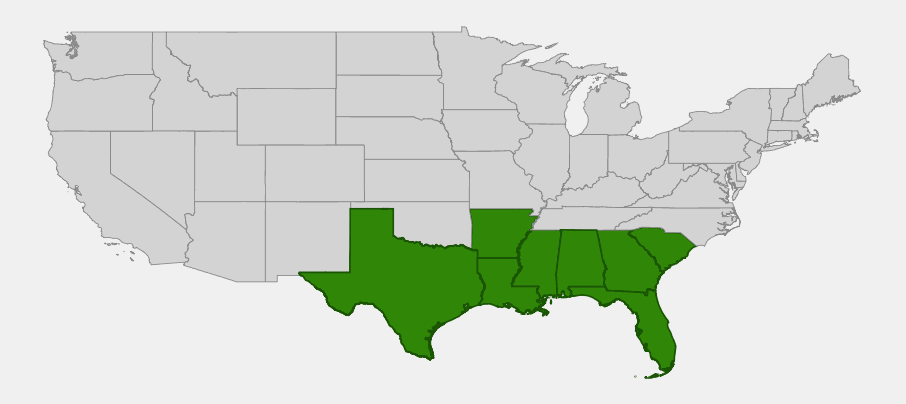
Sarsaparilla vine is a southeastern Coastal Plain species. USDA PLANTS lists it as native in Alabama, Arkansas, Florida, Georgia, Louisiana, Mississippi, South Carolina and Texas. It ranges from southern South Carolina south through Georgia into central Florida, and west along the Gulf Coastal Plain to Louisiana, southern Arkansas and eastern Texas.
In Texas it is a plant of the Pineywoods and the eastern Gulf Coastal Plain; iNaturalist records are concentrated in the forests of East Texas between Houston and the Louisiana border, and it does not extend into South or West Texas. In Florida it is most common in the northern and central parts of the state.
It grows in dry to moist, sandy, acidic soils in shaded or partly shaded places: longleaf and loblolly pine woods, mixed pine and oak forests, sandhills, upland hammocks and the shady edges of bayheads. It often trails through pine straw and oak leaves under a canopy of pines, oaks and hollies.
📋 Regional plant lists featuring Sarsaparilla Vine: Alabama, Georgia & Mississippi · North & South Florida · North & South Carolina · Arkansas, Louisiana, Eastern Oklahoma & Eastern Texas
Growing & Care Guide
Sarsaparilla vine is seldom sold, but native plant nurseries in the Southeast occasionally offer it. It is a low-maintenance evergreen groundcover for dry, shady, sandy sites where lawn grasses struggle.
Light
It grows best in part shade to fairly deep shade under pines and oaks. It tolerates some morning sun but scorches and dries out in hot, full sun.
Soil & Water
Give it well-drained, acidic, sandy or loamy soil with a natural layer of leaf litter or pine straw. Once established it tolerates dry spells; water during long droughts in its first year. Avoid heavy fertilizer and wet, poorly drained soils.
Planting Tips
Plant container plants in fall or early spring, about 2 feet apart, under trees or among shrubs. Mulch with pine straw or shredded leaves, which mimic its natural setting. Plant several to ensure both male and female plants if you want berries.
Pruning & Maintenance
It needs little care. Trim stray stems that climb into shrubs, and leave fallen leaves in place to protect its shallow roots. Because it is unarmed, it is easy to handle, unlike most greenbriers.
Propagation
Sow cleaned seed from ripe berries outdoors in fall; germination is slow and may take more than a year. Rooted stems and rhizome pieces can be dug and replanted from your own plants in fall or winter.
Landscape Uses
- Shade groundcover: an evergreen carpet under pines and oaks
- Woodland gardens: soft, unarmed alternative to thorny greenbriers
- Bird gardens: red berries held into winter and spring
- Pineland restoration: a native groundcover of sandy southern woods
- Low-maintenance slopes: holds sandy soil in dry shade
Wildlife & Ecological Value
Sarsaparilla vine is a small but useful part of the ground layer in southern pine and oak woods.
For Pollinators
The small, fragrant fall flowers are visited by small bees and flies, offering late-season nectar and pollen when few other woodland plants are blooming.
For Birds
The red berries are eaten by songbirds and other birds, which spread the seeds. Because the berries persist through winter, they provide food in the lean season.
For Mammals
White-tailed deer browse the evergreen leaves and tender stems of greenbriers, and small mammals eat fallen fruit. The low, tangled stems provide cover for small animals.
Ecosystem Role
As an evergreen groundcover, it shades and holds sandy soils, and its leaf litter and creeping stems help build the forest floor. Greenbriers are host plants for several moth caterpillars, including the turbulent phosphila (Phosphila turbulenta).
Cultural & Historical Uses
The name sarsaparilla originally referred to tropical American Smilax species whose roots were used to flavor drinks and in traditional medicine. The common name of this species reflects that family connection; root beer and sarsaparilla drinks were historically flavored with roots of various Smilax and other plants. Sarsaparilla vine itself is not a commercial source, and it should not be harvested from the wild.
Its scientific name pumila means “dwarf,” for its low stature compared with the high-climbing greenbriers. USDA PLANTS spells its common name “sarsparilla vine,” a variant spelling of the more usual “sarsaparilla.”
For botanists, sarsaparilla vine is a useful indicator of dry, sandy pine and oak woods in the Coastal Plain. Its soft, mottled leaves and red berries make it one of the most attractive and least troublesome members of the greenbrier genus.
Frequently Asked Questions
Does sarsaparilla vine have thorns?
Usually not. Its stems are soft and woolly, with no prickles or only a few weak ones, unlike most greenbriers.
Is sarsaparilla vine invasive or aggressive?
No. It spreads slowly by creeping stems and rhizomes and stays low, forming loose patches rather than climbing tangles.
Why doesn’t my plant have berries?
Plants are male or female, and only females produce berries. Grow several plants to be sure of both sexes.
Are the berries edible?
They are not a food for people. Leave them for birds, which spread the seeds.
How can I tell sarsaparilla vine from other greenbriers?
Look for fuzzy, unarmed stems, leaves with a velvety underside and red rather than blue-black berries.

Looking for a nursery that carries Sarsaparilla Vine?
Browse our native plant nursery directory: Alabama & Arkansas · Florida & Georgia · Louisiana & Mississippi · South Carolina & Texas