
Schott’s Pygmycedar (Peucephyllum schottii)
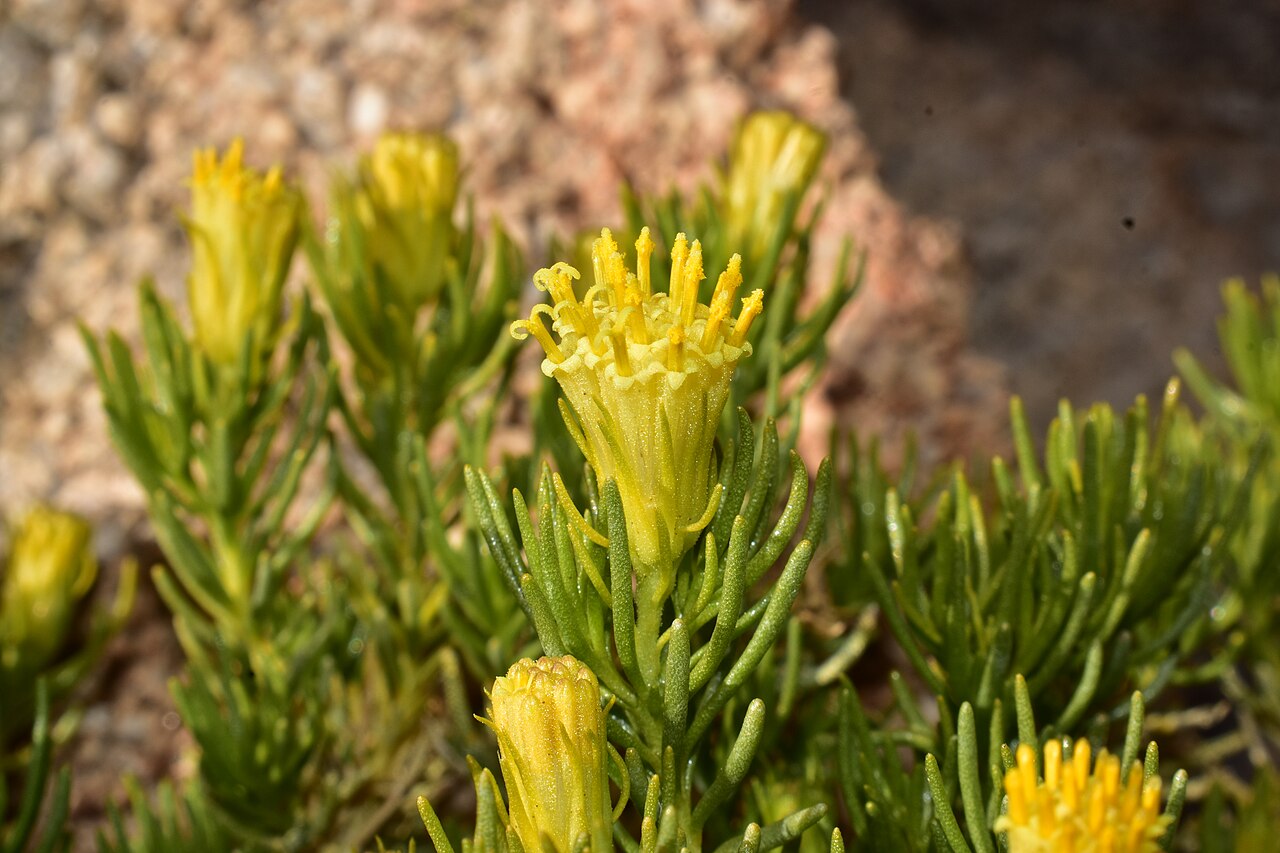
Peucephyllum schottii, known as Schott’s Pygmycedar (also pygmy cedar or desert fir), is an evergreen desert shrub that looks like a small conifer but is actually a member of the aster family (Asteraceae). Its dense, rounded crown of bright to dark green, needle-like leaves stands out on the bare rocky slopes and washes of the Mojave and Sonoran deserts. In late winter and spring it produces small, yellow, rayless flower heads at the tips of its branches.
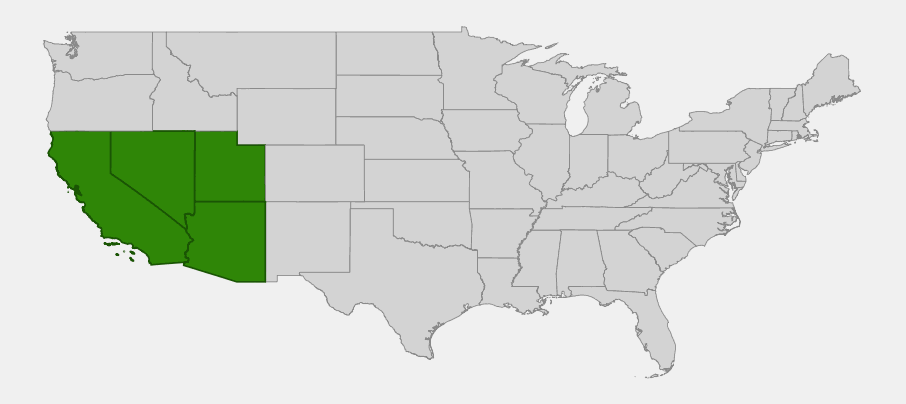
It grows in southeastern California, southern Nevada, southwestern Utah and western Arizona, and south into Baja California and Sonora in Mexico. It is the only species in its genus. It is one of the hardiest shrubs in some of North America’s hottest and driest places, including Death Valley and the Lake Mead area.
For desert gardeners, pygmycedar offers year-round green color, a neat shape and great drought tolerance. It needs full sun, fast drainage and very little water once established, and it is best suited to low-desert gardens in the Southwest.
Identification
Look for a rounded, evergreen shrub with crowded, needle-like, resin-dotted leaves, like a small fir or cedar, growing on rocky desert slopes, with yellow, button-like flower heads at the branch tips in spring.
Growth Habit
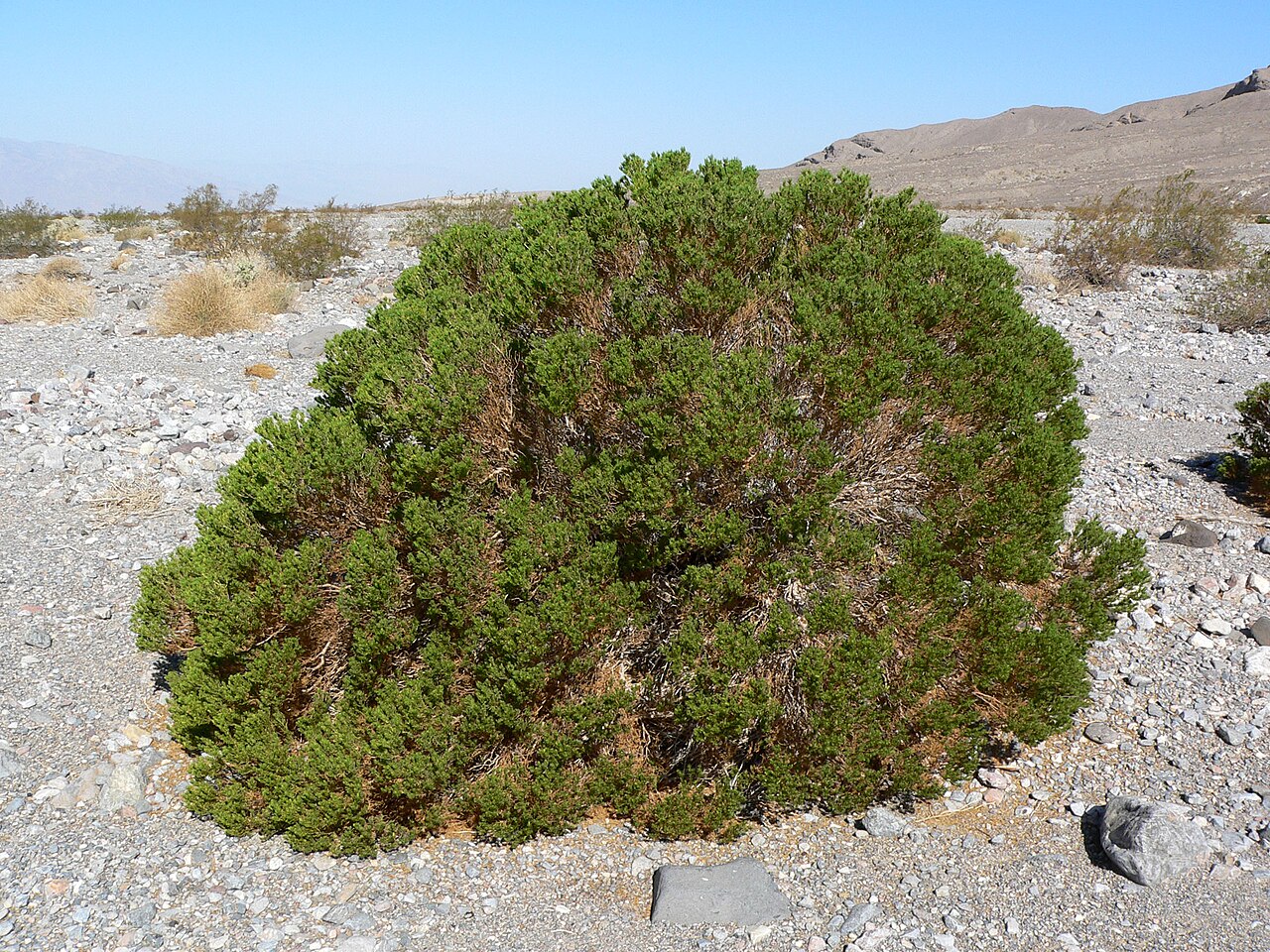
Pygmycedar is a much-branched, rounded shrub, usually 2 to 6 feet tall and wide, occasionally taller. Older stems have gray to brown bark, and leaves crowd the ends of the branches. In severe drought it may drop many leaves and look partly dead, then green up again after rain.
Leaves
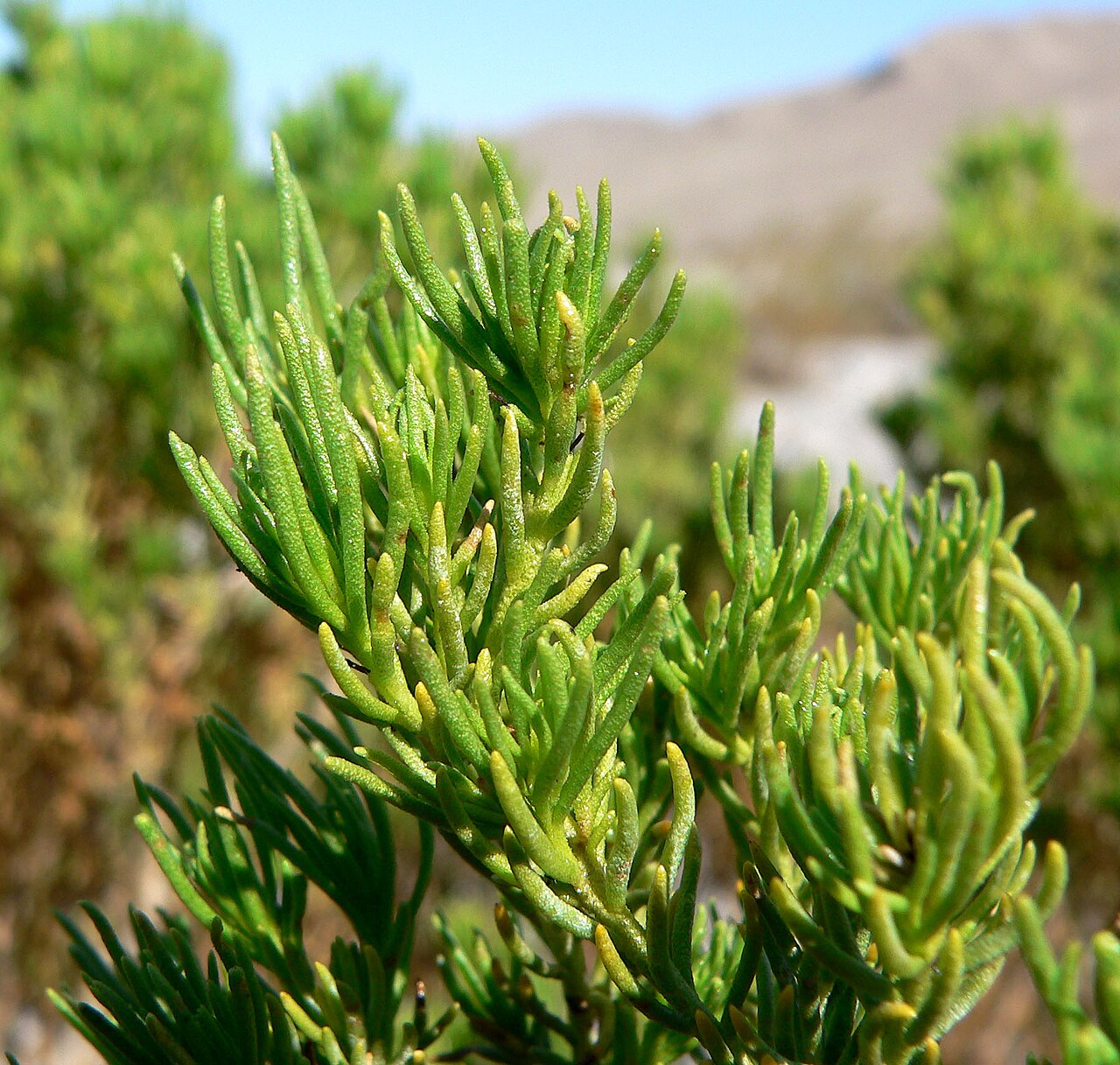
The leaves are evergreen, alternate, linear and nearly round in cross-section, about 1/2 to 1 inch long, and crowded near the branch tips. They are bright to dark green, smooth and dotted with tiny resin glands, and they are slightly sticky and aromatic when crushed. Together they give the plant the look of a dwarf conifer.
Flowers
The flower heads are borne singly at the tips of short, leafy branches. Each head is about 1/2 inch long and narrow, made up of a few dozen small, yellow tubular disk flowers, with no ray flowers. The flowers sometimes have reddish tips. Bloom time is mostly late winter to spring, from about December to May, and sometimes again after fall rains.
Fruit
The fruits are small, hairy achenes topped with a tuft of whitish to tawny bristles (pappus) that helps the wind carry them.
Look-alikes
Its needle-like leaves set it apart from most desert shrubs. Sweetbush (Bebbia juncea) has yellow, rayless heads too, but it has rush-like, mostly leafless green stems. Mormon tea (Ephedra) has jointed green stems with scale-like leaves and no flower heads. Creosote bush has small, paired leaflets and yellow five-petaled flowers.
Quick Facts
| Scientific Name | Peucephyllum schottii |
| Family | Asteraceae (aster family) |
| Plant Type | Evergreen desert shrub |
| Mature Height | 2–6 ft (occasionally taller) |
| Mature Spread | 2–6 ft |
| Growth Rate | Slow to moderate |
| Sun Exposure | Full sun |
| Water Needs | Very low |
| Soil Type | Rocky, gravelly or sandy, fast-draining soil |
| Soil pH | Neutral to alkaline (about 7.0–8.5) |
| Bloom Time | December–May; sometimes after fall rains |
| Flower Color | Yellow (rayless heads) |
| Fall Color | None; evergreen |
| Fruit | Hairy achenes with bristly pappus |
| Deer Resistant | Yes; resinous foliage is seldom browsed |
| USDA Hardiness Zones | 8–10 |
Native Range
Schott’s pygmycedar is native to the Mojave and Sonoran deserts. USDA PLANTS lists it as native in California, Nevada, Utah and Arizona. In Mexico it grows in Baja California and northwestern Sonora.
In California it grows across the eastern Mojave and Colorado deserts, including Death Valley, Joshua Tree and Anza-Borrego. It reaches southern Nevada around Lake Mead and the Las Vegas area, extreme southwestern Utah in Washington County, and western Arizona, including the Grand Canyon region, Lake Mead and the lower Colorado River valley south toward Yuma.
It grows on rocky hillsides, cliffs, canyon walls, gravelly washes and alluvial fans, often on limestone or volcanic rock, from below sea level in Death Valley to about 5,000 feet. It is one of the few shrubs that grows on very hot, dry, barren slopes.
📋 Regional plant lists featuring Schott’s Pygmycedar: Utah & Western Colorado · Arizona & New Mexico · California & Nevada
Growing & Care Guide
Pygmycedar is a tough, low-care shrub for hot desert gardens. It is rarely sold, so look for it at native plant nurseries and botanic garden sales in the Southwest. The key to success is excellent drainage and very little water.
Light
Full sun. It thrives in intense heat and reflected light and becomes leggy in shade.
Soil & Water
Plant it in rocky, gravelly or sandy soil that drains fast; it rots in heavy or poorly drained soils. Water deeply every week or two during the first warm season, then reduce to occasional deep watering in long dry spells. Established plants in the low desert can survive on rainfall alone but look greener with a deep watering once a month in summer.
Planting Tips
Plant it in fall or winter so roots can grow before summer heat. Space plants 4 to 6 feet apart. It works well on rocky slopes, in gravel gardens and with cacti, agaves and other desert shrubs. Avoid placing it in irrigated beds or lawns.
Pruning & Maintenance
It keeps a neat, rounded shape without pruning. Remove dead branches after severe drought or cold. Do not fertilize. It is hardy to about the low 20s °F and may be damaged by hard freezes outside the low desert.
Propagation
It can be grown from fresh seed sown in a gritty mix in fall or winter, or from semi-hardwood cuttings. Germination can be erratic, and seedlings need very sharp drainage.
Landscape Uses
- Desert gardens: year-round green structure in hot, dry landscapes
- Rock gardens and slopes: holds rocky banks and gravel slopes
- Xeriscapes: needs almost no water once established
- Pollinator plantings: late-winter and spring flowers for desert bees
- Habitat restoration: for disturbed desert slopes and washes
Wildlife & Ecological Value
Pygmycedar provides evergreen cover and early flowers in some of the most barren desert habitats.
For Pollinators
Its flowers provide nectar and pollen for native desert bees, flies and butterflies in late winter and spring, when few other plants may be blooming on rocky slopes.
For Birds
The dense, evergreen crown provides shade and cover for desert birds such as sparrows, wrens and gnatcatchers, and some birds eat the seeds.
For Mammals
It provides shade and cover for lizards, rodents and other small animals. Its resinous foliage is rarely eaten.
Ecosystem Role
As one of the few shrubs that grows on hot, barren rocky slopes, it helps stabilize soil and creates small patches of shade where other plants and animals can survive.
Cultural & Historical Uses
The genus name Peucephyllum comes from Greek words meaning “fir leaf,” describing its needle-like leaves. The species name honors Arthur Schott, a German-born naturalist who collected plants and animals for the United States and Mexican Boundary Survey in the 1850s.
Its common names pygmy cedar and desert fir describe its resemblance to a small conifer, even though it is in the same family as sunflowers and asters. It is the only species in the genus Peucephyllum.
Pygmycedar is a familiar plant to hikers in Death Valley and Lake Mead National Recreation Area, where its dark green crowns stand out against pale canyon walls. Its resinous leaves give off a pleasant scent on hot days.
Frequently Asked Questions
Is Schott’s pygmycedar a cedar?
No. Despite its conifer-like leaves, it is a flowering shrub in the aster family, related to sunflowers and daisies.
How much water does pygmycedar need?
Very little. Once established, it needs only occasional deep watering in the hottest, driest months, and in the low desert it can survive on rainfall alone.
When does pygmycedar bloom?
Mostly from late winter to spring, roughly December to May, with yellow, rayless flower heads at the branch tips.
Can I grow pygmycedar outside the desert?
Only in hot, dry climates with fast-draining soil. It dislikes humidity, heavy soil and hard freezes.
Where can I see it in the wild?
Look on rocky slopes and washes in Death Valley, Joshua Tree, Anza-Borrego and Lake Mead National Recreation Area, and along the lower Colorado River.

Looking for a nursery that carries Schott’s Pygmycedar?
Browse our native plant nursery directory: Arizona · California · Nevada · Utah

