
Sidebells Penstemon (Penstemon secundiflorus)
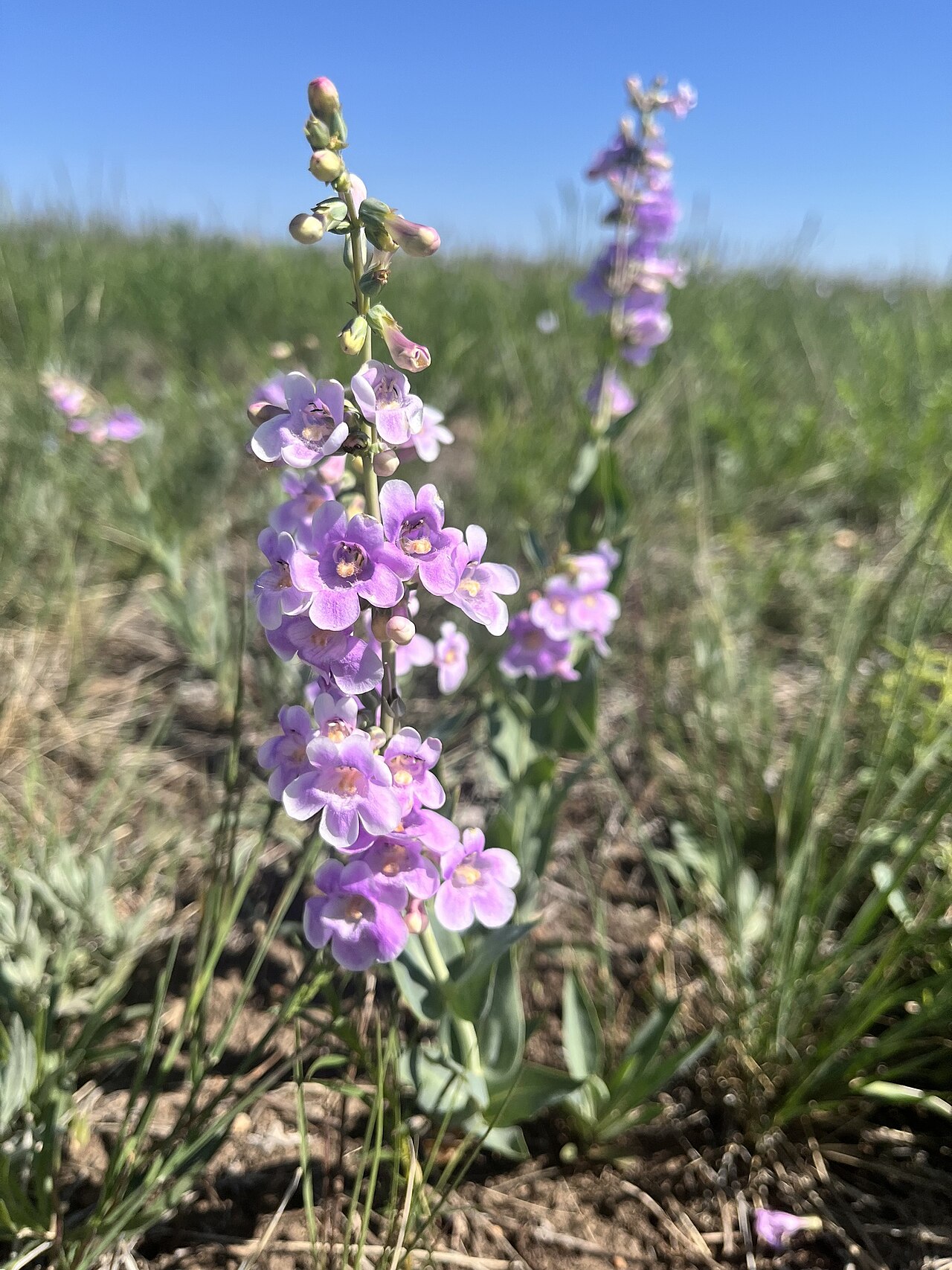
Penstemon secundiflorus, known as Sidebells Penstemon or sidebells beardtongue, is a spring-blooming wildflower of the southern Rocky Mountain foothills and nearby plains. It is named for its flowers, which tend to line up on one side of the stem, like a row of little bells.
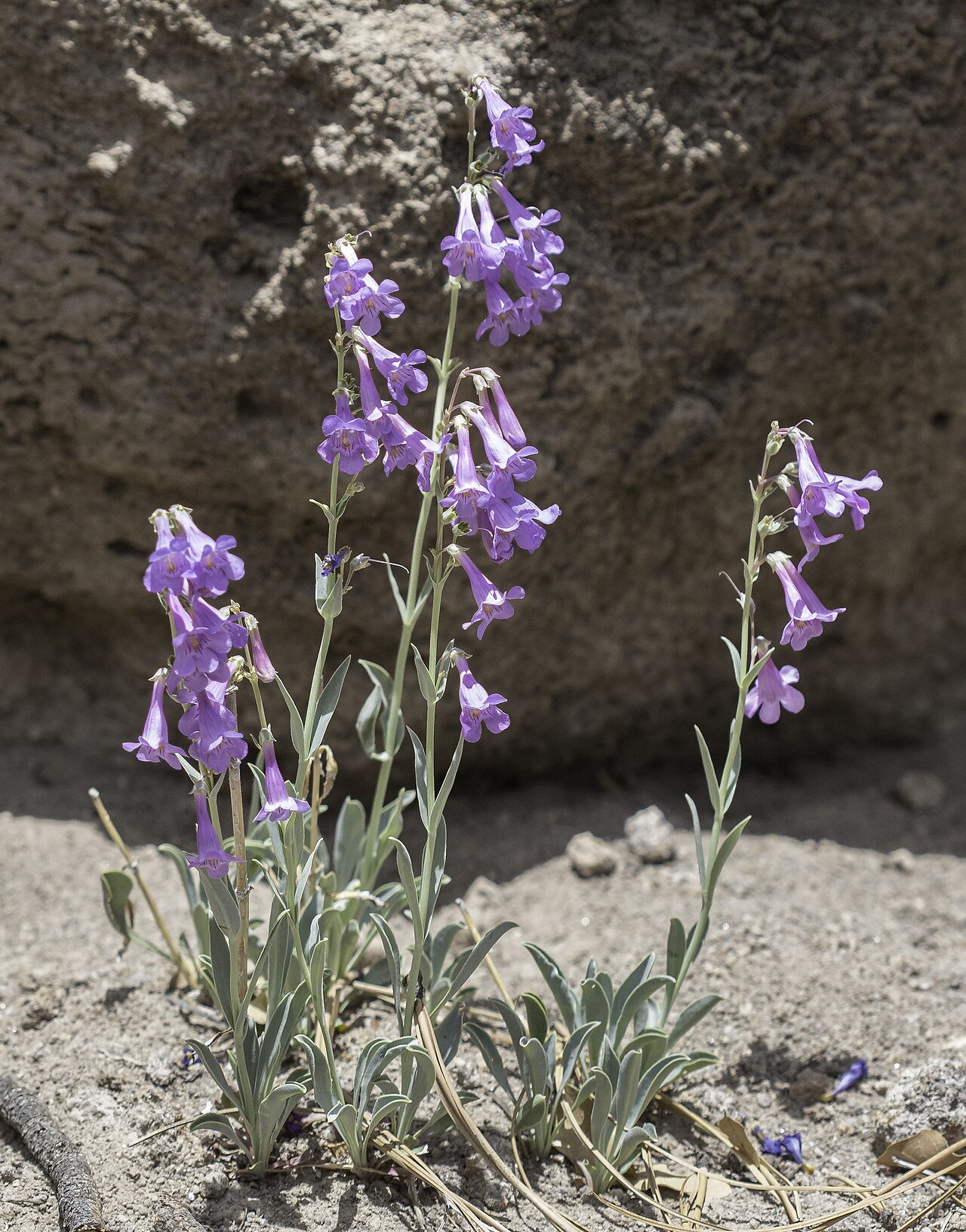
From a low clump of smooth, thick, blue-gray leaves, it sends up one or several stems 6 to 24 inches tall in late spring, lined with lavender, pink-lavender or blue-purple tubular flowers. The combination of soft lilac flowers and silvery-blue foliage makes it one of the prettiest penstemons of the Front Range.
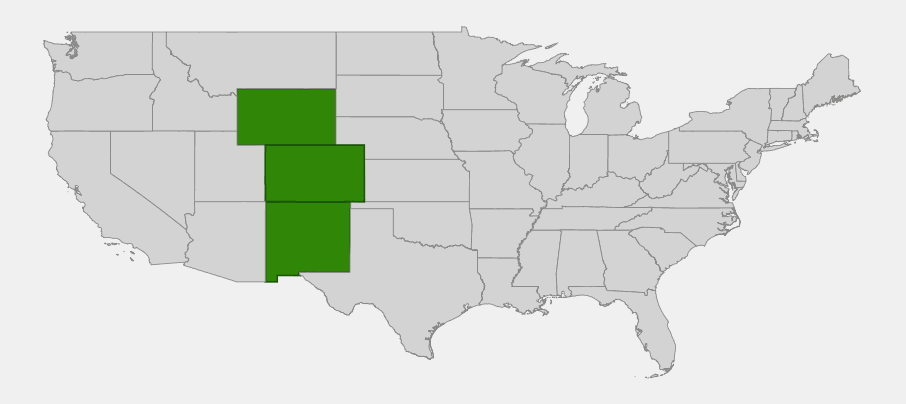
It grows wild only in southeastern Wyoming, Colorado and New Mexico, in shortgrass prairie, open foothill grasslands and ponderosa pine woodlands. In gardens it is a tough, drought-tolerant perennial for sunny, well-drained sites in the Rocky Mountain region and other dry climates, and a magnet for native bees.
Identification
Look for a low clump of smooth, blue-gray leaves with upright stems of lavender to pink-purple tubular flowers mostly facing one side of the stem, blooming in late spring.
Growth Habit
A clump-forming perennial with one to several upright, unbranched flowering stems 6 to 24 inches tall rising from a basal rosette. The entire plant is smooth (hairless) and has a waxy, blue-gray bloom.
Leaves
Basal leaves are oblong to spoon-shaped, thick and somewhat leathery. Stem leaves are opposite, lance-shaped to oval, and partly clasp the stem. All are blue-green to gray-green with smooth edges.
Flowers
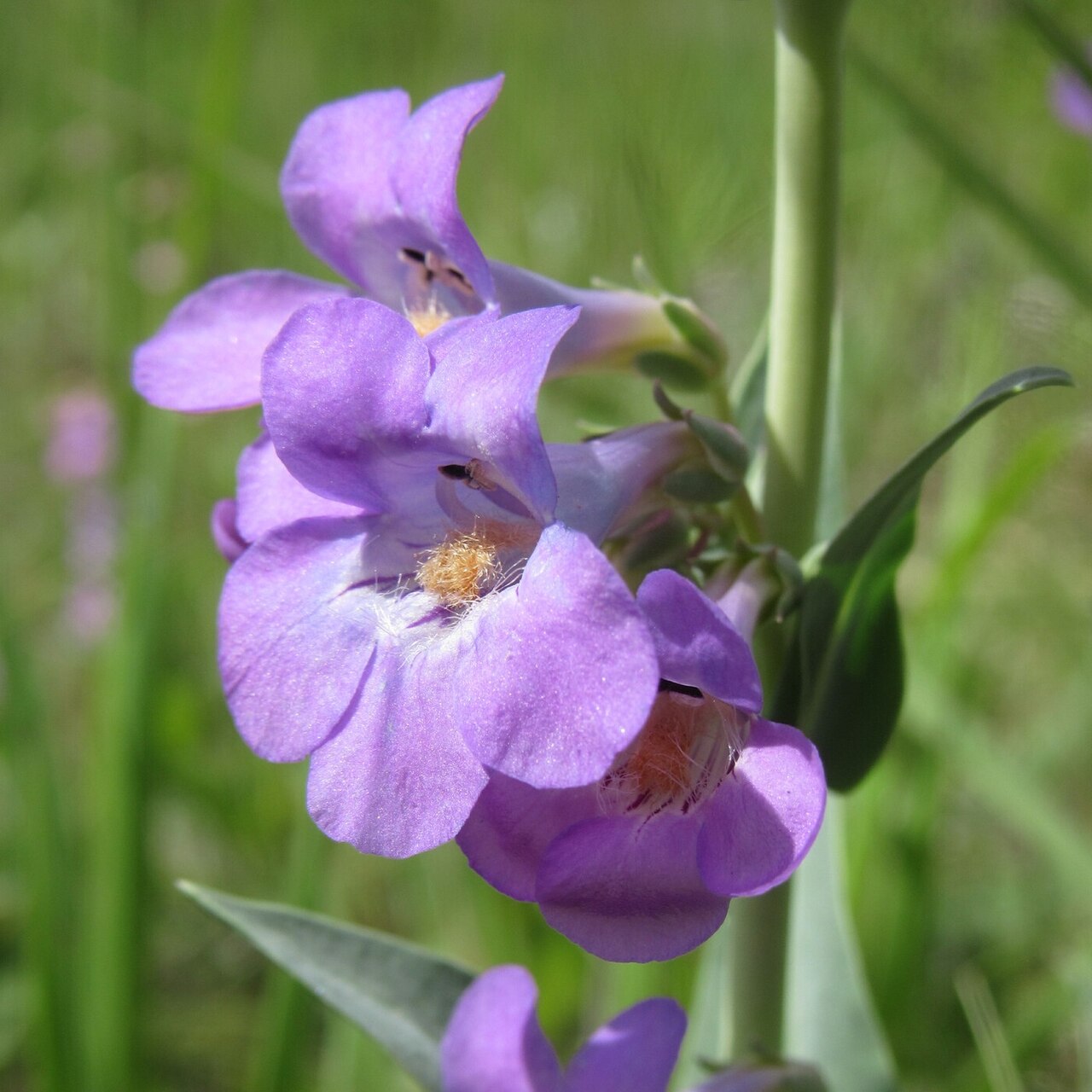
Tubular, two-lipped flowers about 3/4 to 1 inch long, lavender, pink-lavender or blue-purple, often with a paler throat marked with darker guidelines. They grow in a narrow, interrupted spike, mostly turned to one side of the stem (secund). The sterile staminode inside the flower is bearded with golden-yellow hairs. Bloom is mainly from May to June.
Fruit
The fruit is a small, hard, egg-shaped capsule that splits in late summer to release many small, angular seeds.
Look-alikes
Pagoda penstemon (Penstemon angustifolius) also has smooth blue-gray leaves, but its flowers are sky blue and arranged in whorls all around the stem. Front Range beardtongue (Penstemon virens) has smaller, deep blue-violet flowers and bright green, glandular-hairy upper parts. Rocky Mountain penstemon has deep blue-purple flowers and narrower green leaves.
Quick Facts
| Scientific Name | Penstemon secundiflorus |
| Family | Plantaginaceae (plantain family) |
| Plant Type | Herbaceous perennial wildflower |
| Mature Height | 6–24 in |
| Mature Spread | 6–12 in |
| Growth Rate | Moderate |
| Sun Exposure | Full sun |
| Water Needs | Low; drought tolerant once established |
| Soil Type | Sandy, gravelly or rocky, well-drained soil |
| Soil pH | Neutral to slightly alkaline (about 6.5–8.0) |
| Bloom Time | Late spring (May–June) |
| Flower Color | Lavender, pink-lavender or blue-purple |
| Fall Color | None notable |
| Fruit | Small dry capsule |
| Deer Resistant | Moderately |
| USDA Hardiness Zones | 4–8 |
Native Range
Sidebells penstemon is native to a small part of the interior West. USDA PLANTS records it in three states: Wyoming, Colorado and New Mexico.
It is most common along the eastern foothills of the Rocky Mountains in Colorado, from the Wyoming border south past Denver and Colorado Springs, and it extends into southeastern Wyoming and south through the mountains and mesas of northern and central New Mexico. It also grows in some intermountain parks and valleys.
It grows in shortgrass prairie, foothill grasslands, mountain meadows, ponderosa pine and pinyon-juniper woodlands, on sandy, gravelly or rocky soils, from about 5,000 to 9,500 feet.
📋 Regional plant lists featuring Sidebells Penstemon: Montana & Wyoming
Growing & Care Guide
Sidebells penstemon is an easy, rewarding native for dry, sunny gardens in the Rocky Mountain region. Like most western penstemons, it wants lean soil and sharp drainage, and it is short-lived in rich, wet garden beds.
Light
Full sun. In shade it flowers poorly and stems flop.
Soil & Water
Plant in sandy, gravelly or rocky soil with excellent drainage. Water to establish, then only during long dry spells. Avoid heavy clay, rich compost, fertilizer and frequent irrigation, which lead to crown rot and short life.
Planting Tips
Plant in spring or early fall in a rock garden, xeric border, gravel mulch bed or native meadow. Use gravel rather than bark mulch around the crown. Combine with blue grama, buckwheats and other dryland natives.
Pruning & Maintenance
Cut flower stems back after bloom if you want a tidy look, or leave some to ripen seed so the plant can reseed. Plants may be short-lived, typically a few years, but self-sown seedlings often replace them.
Propagation
Grow from seed sown outdoors in fall, or give it 8 to 12 weeks of cold, moist stratification before spring sowing. Seedlings often bloom in their second year. Collect seed only where permitted.
Landscape Uses
- Xeriscapes: thrives with little water in lean soil
- Rock gardens: compact rosettes with tall flower spikes
- Pollinator gardens: a favorite of native bees
- Prairie and meadow plantings: fits shortgrass prairie restorations
- Foliage contrast: blue-gray leaves complement green and silver plants
Wildlife & Ecological Value
Sidebells penstemon is an important late-spring nectar and pollen source in foothill grasslands and open woodlands.
For Pollinators
Its flowers are visited mainly by native bees, including bumble bees, mason bees and specialist Osmia and Anthidium bees, as well as pollen wasps that specialize on penstemons. Hummingbirds visit occasionally.
For Birds
Seed-eating birds feed on the small seeds in late summer, and the plant is part of grassland habitats used by many prairie birds.
For Mammals
Deer, elk and rabbits may browse the foliage and flower stems, especially in spring.
Ecosystem Role
It is part of the diverse wildflower community of Front Range foothill grasslands, a habitat that has been reduced by urban growth. Remaining populations on open space and refuges help support native bee diversity.
Cultural & Historical Uses
The species name secundiflorus comes from the Latin secundus (here meaning “turned to one side”) and flos (flower), describing the one-sided flower spikes. The genus name Penstemon refers to the fifth stamen, a sterile staminode that is often bearded, which also gives the group the name “beardtongue.”
George Bentham described the species in 1846 from specimens collected on early expeditions to the Rocky Mountains.
Penstemons are the largest genus of flowering plants native only to North America, with more than 250 species, and the Rocky Mountain region is one of their centers of diversity. Sidebells penstemon is a common sight in Colorado Front Range open space parks in May and June.
Frequently Asked Questions
Why is it called sidebells penstemon?
Because the bell-shaped flowers tend to grow on one side of the stem rather than all around it.
When does sidebells penstemon bloom?
Mainly in May and June, depending on elevation.
Is sidebells penstemon drought tolerant?
Yes. Once established, it needs little or no supplemental water in its native region. Too much water is a bigger danger than too little.
Does sidebells penstemon attract pollinators?
Yes. It is visited mainly by native bees, including bumble bees and penstemon specialists.
Why did my penstemon die after a couple of years?
Penstemons are often short-lived, especially in rich or wet soil. Grow it in lean, well-drained soil and let it reseed to keep it in the garden.

Looking for a nursery that carries Sidebells Penstemon?
Browse our native plant nursery directory: Colorado · New Mexico · Wyoming

