
Tall Rattlesnake Root (Prenanthes altissima)
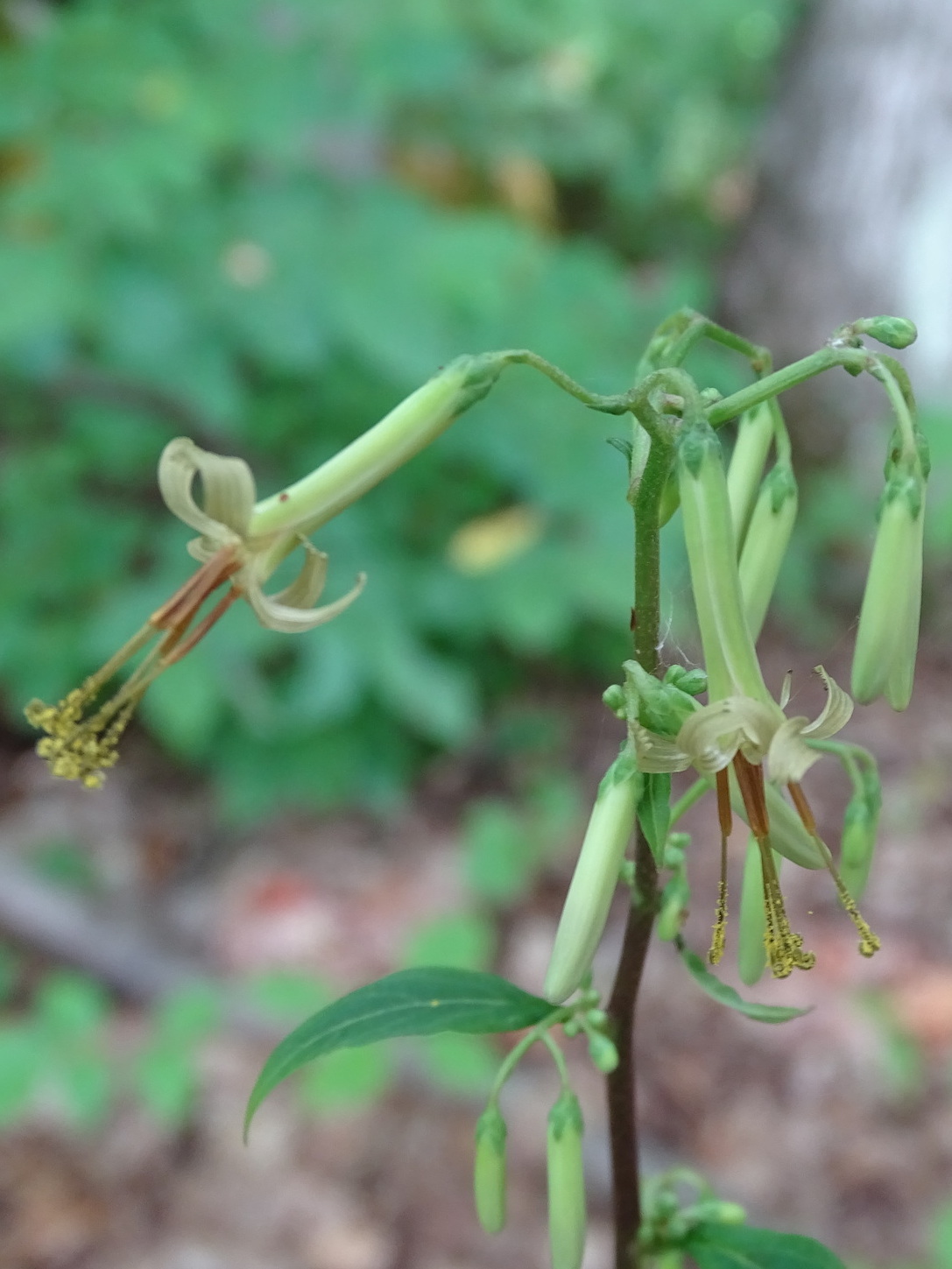
Prenanthes altissima, known as Tall Rattlesnake Root or tall white lettuce, is a woodland perennial in the aster family (Asteraceae). It grows in rich, moist forests across eastern North America, from Newfoundland and Ontario south to Georgia and west to Missouri, Oklahoma and east Texas. Some recent floras place it in the genus Nabalus as Nabalus altissimus.
For most of the year it is easy to overlook: just a scattering of oddly shaped leaves on the forest floor, some lobed like a maple leaf and others shaped like an arrowhead. In late summer and fall a slender stem 2 to 6 feet tall rises and arches, hung with many small, drooping, greenish-white to cream flower heads that look like tiny bells or lanterns.
It is a member of the dandelion and lettuce tribe, with milky sap and fluffy, wind-carried seeds. In shade gardens and woodland restorations it adds late-season flowers for bees and an interesting, airy vertical accent among ferns, asters and goldenrods.
Identification
Look for a tall, slender woodland plant with milky sap, very variable leaves (many lobed or arrowhead-shaped), and narrow, nodding, greenish-cream flower heads with about five florets each in late summer.
Growth Habit
Tall rattlesnake root is an herbaceous perennial from a thick, tuberous root. Young plants make only a rosette of basal leaves. Flowering plants send up a single smooth stem 2 to 6 feet tall (occasionally taller) that is green to slightly purplish and often arches near the top. All parts contain a milky sap.
Leaves
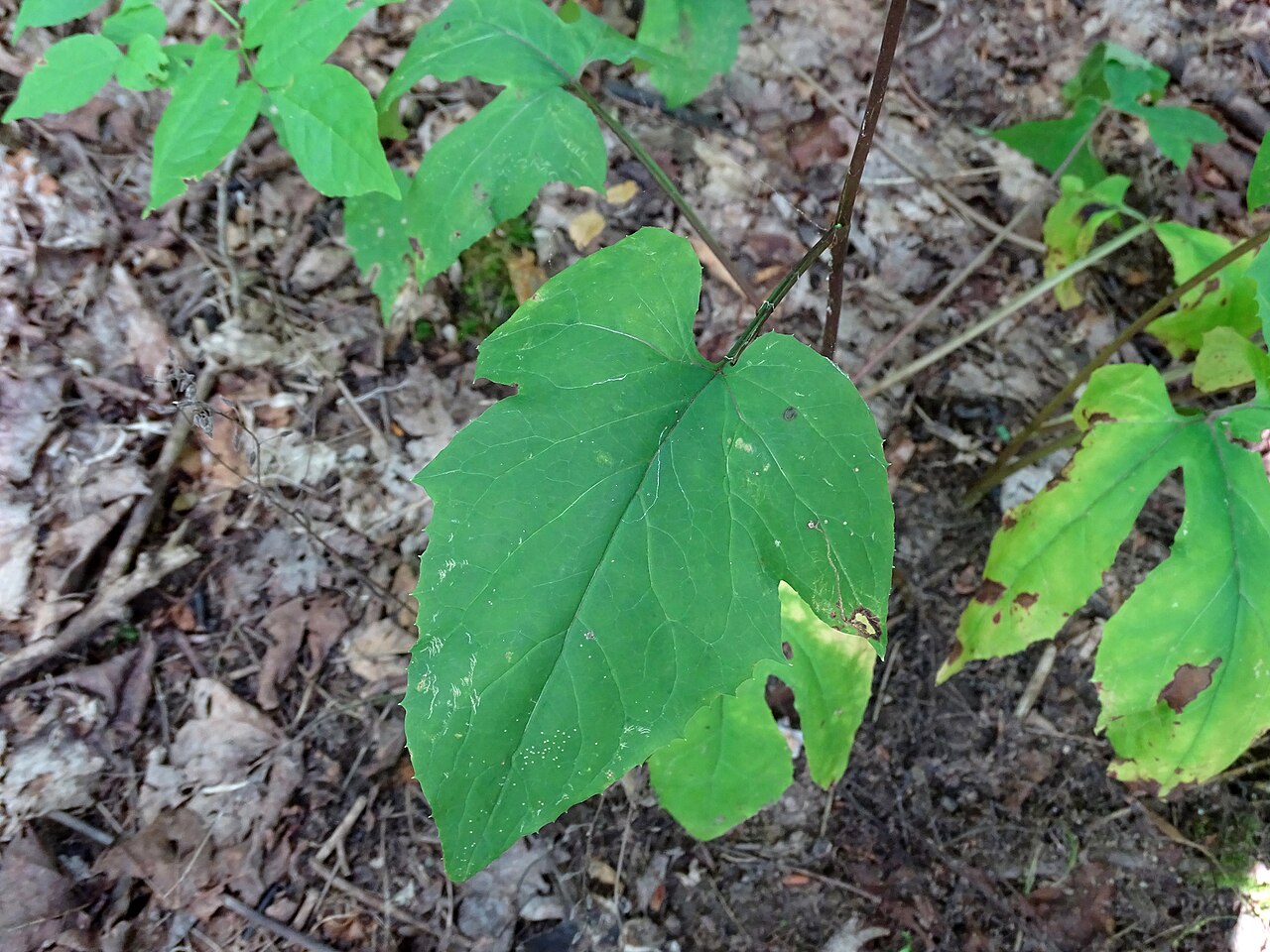
Leaves are alternate and remarkably variable. Lower and middle leaves have long stalks and may be heart-shaped, triangular, arrowhead-shaped or deeply cut into three to five lobes, 2 to 6 inches long, with irregularly toothed edges. Leaves become smaller, short-stalked and simpler toward the top of the stem.
Flowers
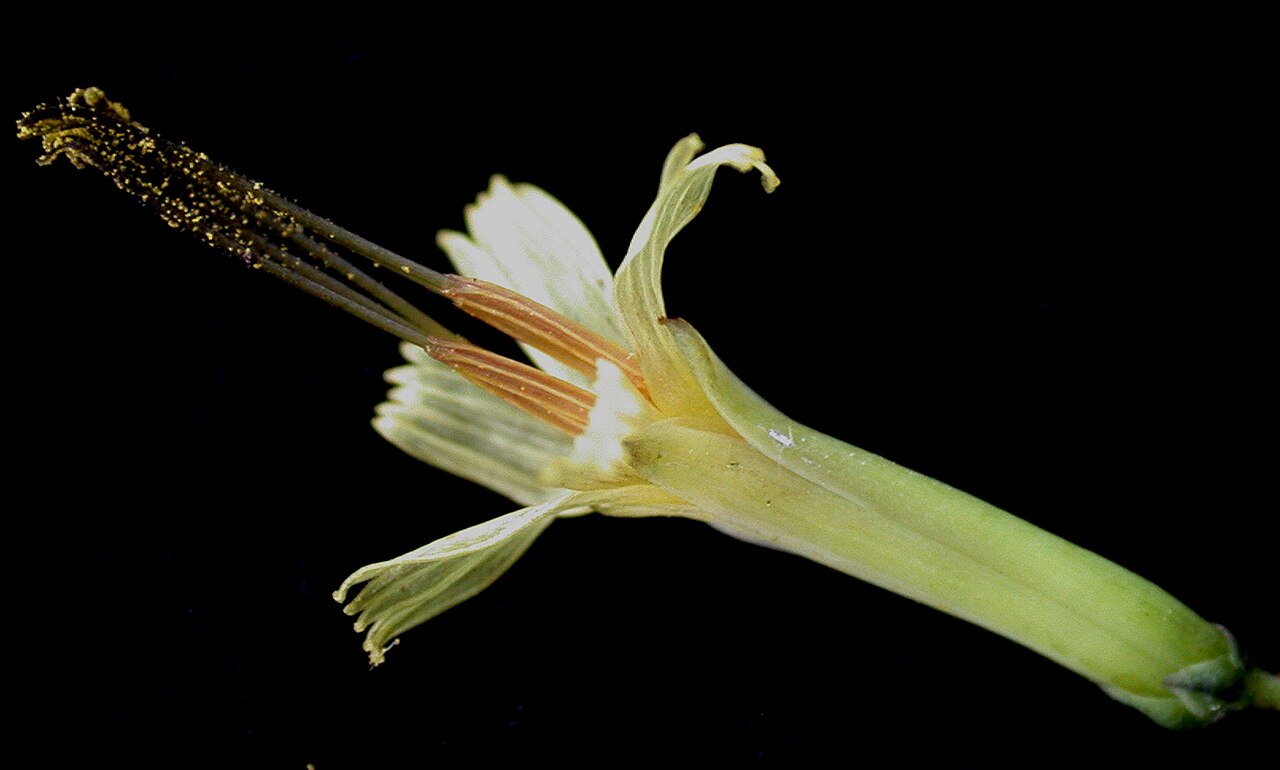
From August to October, small flower heads hang in loose clusters from the leaf axils and stem tip. Each head is a narrow cylinder about 1/2 inch long made of about five smooth, green bracts, with about five to six creamy white to pale yellow-green florets. All the florets are strap-shaped (ray-type), as in dandelions, with tips that curl back and long, forked styles that stick out.
Fruit & Seeds
Each floret produces a slender, ribbed seed (achene) topped with a tuft of creamy to pale tan bristles (pappus) that carries it on the wind in fall.
Look-alikes
White rattlesnake root (P. alba) has a purplish, waxy stem, purplish bracts, 8 to 12 pinkish-white florets per head and a cinnamon-brown pappus. Other rattlesnake roots (Prenanthes / Nabalus) have hairy bracts or more florets. Tall rattlesnake root’s smooth green bracts, about five florets per head and pale pappus set it apart.
Quick Facts
| Scientific Name | Prenanthes altissima (syn. Nabalus altissimus) |
| Family | Asteraceae (aster family) |
| Plant Type | Herbaceous perennial |
| Mature Height | 2–6 ft |
| Mature Spread | 1–2 ft |
| Growth Rate | Moderate |
| Sun Exposure | Part shade to full shade |
| Water Needs | Medium; moist, well-drained soil |
| Soil Type | Rich loam, humusy woodland soil |
| Soil pH | About 5.0–7.0 |
| Bloom Time | August–October |
| Flower Color | Greenish-white to cream |
| Fall Color | Leaves may turn yellowish; fluffy seed heads |
| Fruit | Slender achenes with pale, fluffy pappus |
| Deer Resistant | Low; deer browse it |
| USDA Hardiness Zones | 3–8 |
Native Range
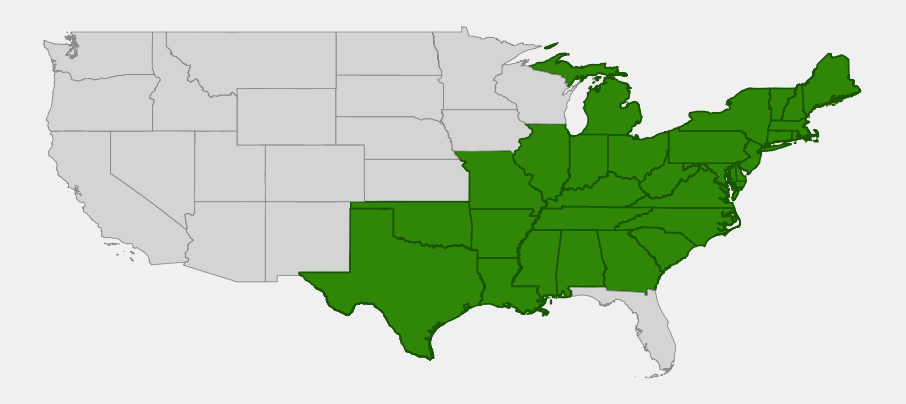
Tall rattlesnake root is native to eastern North America, from Newfoundland, the Maritime provinces, Quebec and Ontario south to Georgia, Alabama and Mississippi, and west to Michigan, Illinois, Missouri, Arkansas, eastern Oklahoma, Louisiana and east Texas. USDA PLANTS lists it as native in 29 states.
It is most common in the Appalachian Mountains, the Northeast and the Ohio Valley. It becomes local toward the edges of its range, in the Coastal Plain of the Southeast and in Oklahoma, Louisiana and Texas, where it is limited to rich, moist woods.
Its habitat is moist deciduous and mixed forest, including wooded slopes, ravines, stream terraces, forest edges, clearings and trailsides. It often comes up after light disturbance such as treefalls or selective logging.
📋 Regional plant lists featuring Tall Rattlesnake Root: Alabama, Georgia & Mississippi · North & South Carolina · Maryland, Virginia & West Virginia · Kentucky & Tennessee · Arkansas, Louisiana, Eastern Oklahoma & Eastern Texas · Illinois, Iowa & Missouri · Ohio & Indiana · Michigan, Wisconsin & Eastern Minnesota · New York, Pennsylvania & Northern New Jersey · Delaware, Southern New Jersey & Long Island · Connecticut, Massachusetts & Rhode Island · New Hampshire, Maine & Vermont
Growing & Care Guide
Tall rattlesnake root is rarely sold, but a few native plant nurseries and seed suppliers in the East offer it. It is easy to grow from seed in a shady woodland garden and asks for little care.
Light
Part shade to full shade, such as under deciduous trees or along a woodland edge. Morning sun is fine.
Soil & Water
Rich, moist but well-drained woodland soil with plenty of leaf litter suits it best. It tolerates average garden soil and short dry spells once established.
Planting Tips
Plant young plants in spring or fall, or sow seed directly in fall. Place it among lower woodland plants, where its tall, arching flower stems can lean over ferns, sedges and woodland asters. Mark the spot, because plants that do not flower stay as small basal rosettes.
Pruning & Maintenance
No pruning is needed. Leave stems standing until the seeds disperse, then cut them back. Leave fallen leaves in place as mulch. Protect young plants from deer if browsing is heavy.
Propagation
Grow from seed collected in fall. Sow it outdoors in fall, or give it about 60 days of cold, moist stratification before spring sowing. Plants take two or more years to reach flowering size. The tuberous roots can be divided carefully in early spring. Do not dig plants from the wild.
Landscape Uses
- Woodland and shade gardens: late-season flowers in dry or moist shade
- Pollinator support: fall pollen and nectar for bees in the forest
- Naturalistic plantings: airy, arching stems among ferns and woodland asters
- Forest restoration: native understory perennial for rich, moist woods
- Interest for plant enthusiasts: odd, variable leaves and nodding, lantern-like flowers
Wildlife & Ecological Value
Tall rattlesnake root is a modest but useful late-season plant for forest wildlife.
For Pollinators
Bumble bees, small native bees, honey bees and syrphid flies visit the drooping flowers for pollen and nectar in late summer and fall, when few other forest plants are blooming.
For Birds
Small birds such as goldfinches and juncos may eat the seeds, and the fluffy pappus is sometimes used as nesting material.
For Mammals
White-tailed deer and rabbits browse the leaves and stems, and heavy browsing can keep plants from flowering.
Ecosystem Role
As a late-flowering forest perennial, it helps carry pollinators through the end of the season. It also hosts several insects that feed on plants in the lettuce tribe, and its wind-dispersed seeds let it colonize small openings in the forest.
Cultural & Historical Uses
The name “rattlesnake root” comes from the old use of the roots of this and related species as a folk remedy for snakebite, a use with no medical support. Linnaeus named the species in 1753; altissima means “tallest.”
Some Indigenous peoples used rattlesnake roots in teas and poultices for various ailments. Because its sap is milky and bitter, like that of wild lettuce, it has also been called “tall white lettuce.”
Based on DNA studies, some botanists now separate the North American species from the Old World genus Prenanthes and place them in Nabalus, so tall rattlesnake root also appears as Nabalus altissimus in recent floras.
Frequently Asked Questions
Why does tall rattlesnake root have so many different leaf shapes?
The species is known for variable leaves. Lower leaves are often lobed or arrowhead-shaped, while upper leaves are small and simple, and the mix changes from plant to plant.
How do I tell tall rattlesnake root from white rattlesnake root?
Tall rattlesnake root has a green stem, smooth green bracts, about five creamy florets per head and pale pappus. White rattlesnake root has a purplish, waxy stem, purplish bracts, more florets and cinnamon-brown pappus.
Does it really cure snakebite?
No. The name comes from an old folk remedy, and it should not be used to treat snakebite.
When does tall rattlesnake root bloom?
From about August to October.
Can I grow it in shade?
Yes. It is a forest plant that grows best in part to full shade with rich, moist soil.

Looking for a nursery that carries Tall Rattlesnake Root?
Browse our native plant nursery directory: Alabama & Arkansas · Connecticut, Delaware & Georgia · Illinois & Indiana · Kentucky, Louisiana, Maine, Maryland, Massachusetts, Michigan, Mississippi & Missouri · New Hampshire, New Jersey, New York, North Carolina, Ohio & Oklahoma · Pennsylvania, Rhode Island, South Carolina, Tennessee, Texas, Vermont & Virginia · West Virginia

