
Grouse Whortleberry (Vaccinium scoparium)
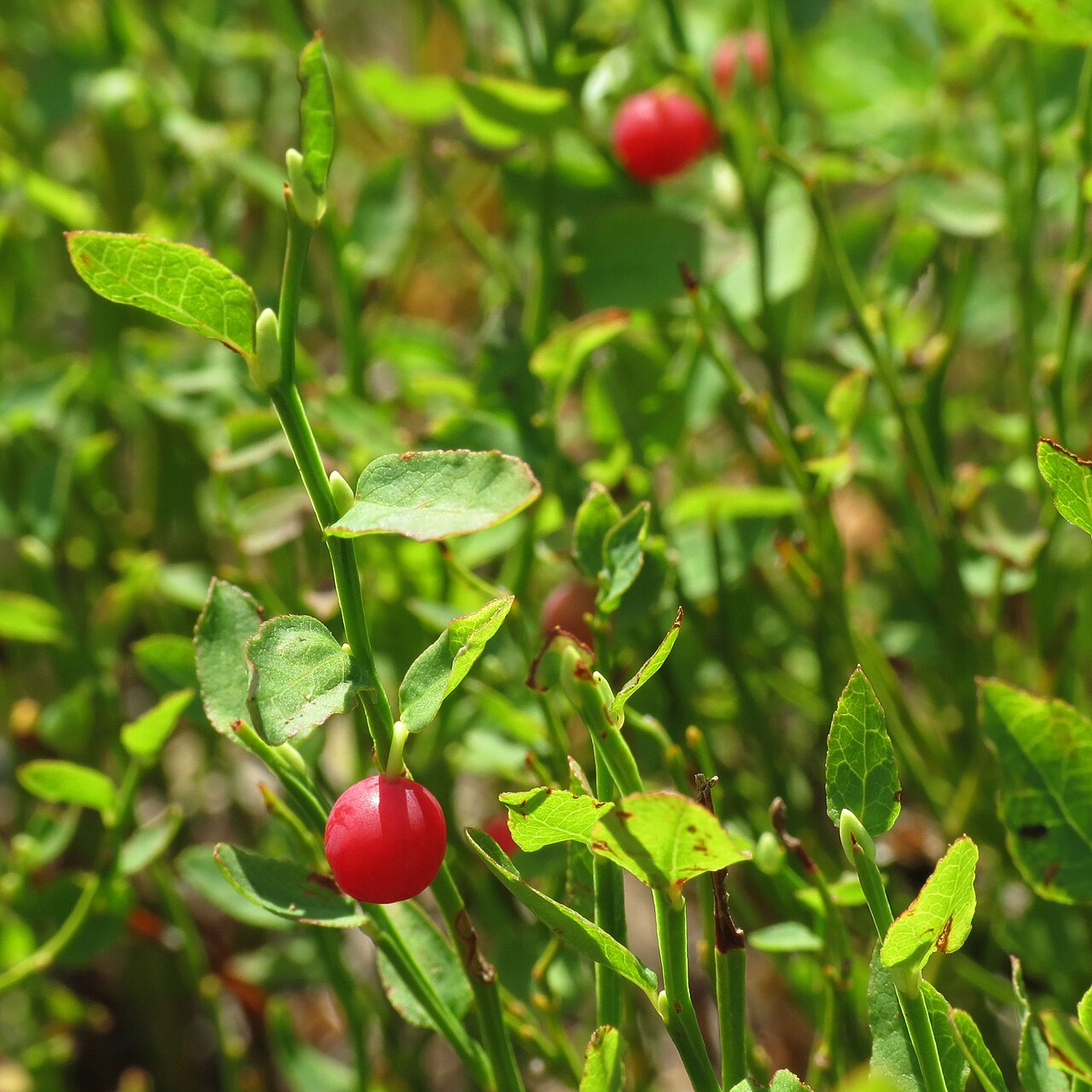
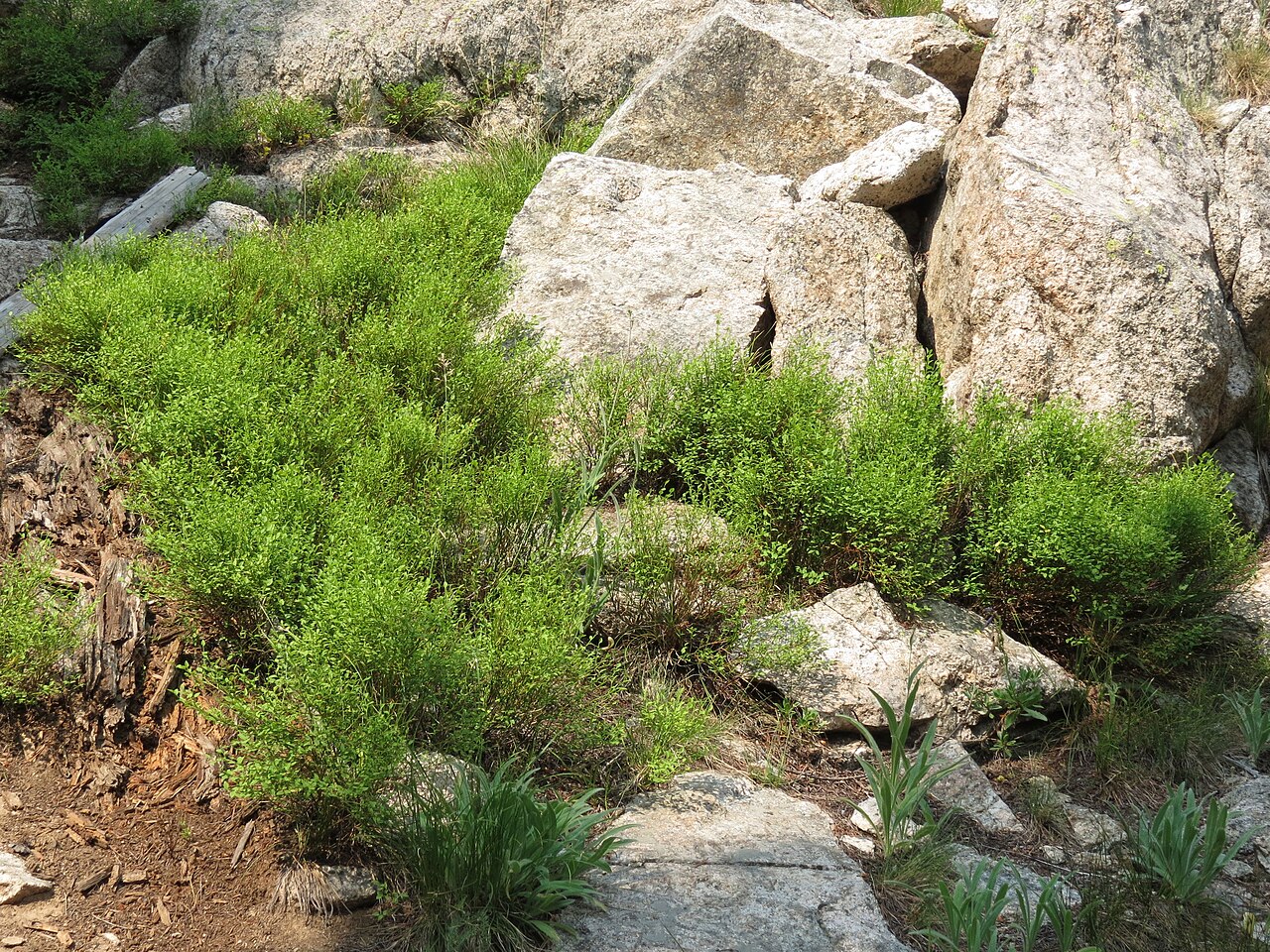
Vaccinium scoparium, known as Grouse Whortleberry, grouseberry or littleleaf huckleberry, is a low, broom-like shrub of high-elevation forests in the Rocky Mountains, Cascades and Sierra Nevada. It rarely grows more than a foot tall, but it spreads by underground stems into dense carpets that cover the floor of lodgepole pine and spruce-fir forests for acres.
Its many slender, bright green, angled twigs give it a broom-like look; scoparium means “broom-like”. In early summer it bears tiny pink, urn-shaped flowers, followed in late summer by small, bright red berries only about 1/8 to 1/5 inch across. The berries are sweet and tasty, though so small that picking enough for a meal takes patience.
Grouse whortleberry is a member of the heath family (Ericaceae) and a relative of blueberries and huckleberries. As the name suggests, its fruit and leaves are an important food for grouse, and many other birds and mammals eat the berries as well. This guide covers how to identify it, where it grows, how to grow it in a cold-climate garden, and its importance to wildlife.
Identification
Grouse whortleberry is easy to recognize: a low, bright green, broom-like carpet of tiny leaves and twigs, often under lodgepole pine. In late summer, the small red berries confirm it.
Growth Habit
It is a low, deciduous shrub, usually 4 to 12 inches tall and occasionally to about 20 inches, with many crowded, upright, slender branches. It spreads by rhizomes and forms dense, continuous mats. The twigs stay green and photosynthesize even after the leaves fall, which gives the plant its broom-like look in winter.
Twigs & Leaves
The twigs are thin, green and noticeably angled. The leaves are small, about 1/4 to 1/2 inch long, oval to lance-shaped, thin, light green and finely toothed. They turn yellow to reddish in fall.
Flowers
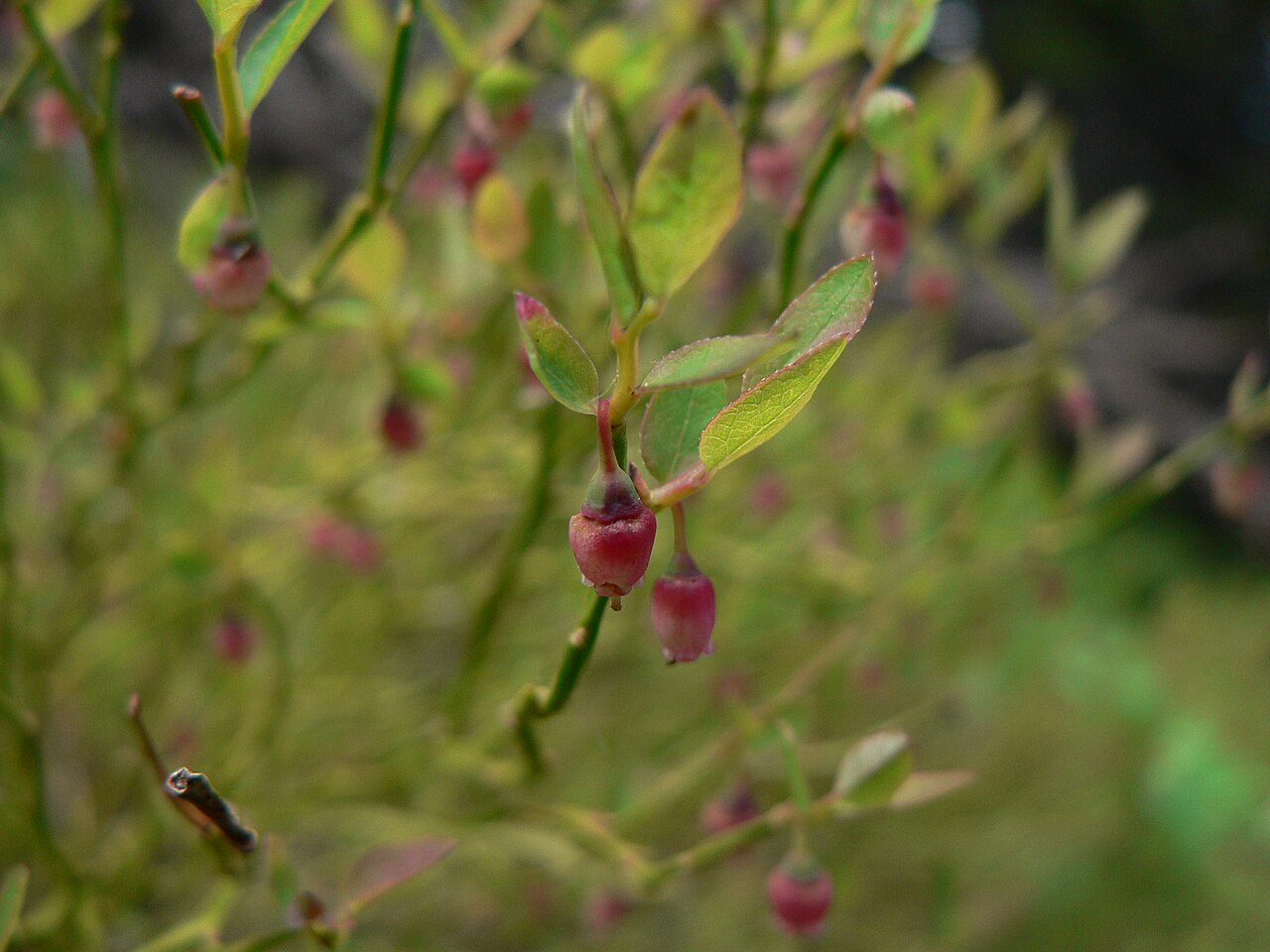
The flowers are tiny, about 1/8 inch long, urn-shaped, and pink to pinkish-white. They hang singly from the leaf axils from about June to July, often hidden among the leaves.
Fruit
The berries are round, bright red, and very small, about 1/8 to 1/5 inch across. They ripen from late July to September and are sweet when fully ripe.
Look-alikes
Dwarf bilberry (Vaccinium caespitosum) and blue huckleberries have blue fruits and lack the broom-like green twigs. Low bilberry (Vaccinium myrtillus) is similar in shape but somewhat larger, with larger leaves, and has dark red to bluish-black berries. Thinleaf huckleberry is a much taller shrub with large, purple-black berries.
Quick Facts
| Scientific Name | Vaccinium scoparium Leiberg ex Coville |
| Family | Ericaceae (heath family) |
| Plant Type | Low, deciduous, rhizomatous shrub |
| Mature Height | 4–12 in (occasionally to 20 in) |
| Mature Spread | Forms mats several feet across |
| Growth Rate | Slow |
| Sun Exposure | Part shade to full sun |
| Water Needs | Moderate; moist in spring, tolerates dry summers |
| Soil Type | Acidic, well-drained, coarse or rocky forest soils |
| Soil pH | Acidic, about 4.5–6.0 |
| Bloom Time | June–July |
| Flower Color | Pink to pinkish-white |
| Fall Color | Yellow to reddish leaves; green twigs |
| Fruit | Tiny, bright red, sweet berries (July–September) |
| Deer Resistant | No; browsed by deer and elk |
| USDA Hardiness Zones | 3–6 |
Native Range
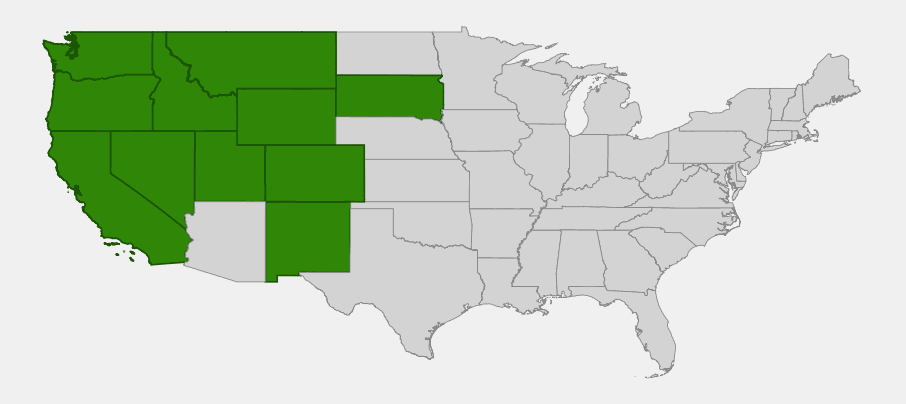
Grouse whortleberry is native to the mountains of western North America. USDA PLANTS lists it in California, Colorado, Idaho, Montana, Nevada, New Mexico, Oregon, South Dakota, Utah, Washington and Wyoming, and in Alberta and British Columbia in Canada.
It is most abundant in the Rocky Mountains, from the Canadian Rockies through Montana, Idaho and Wyoming to Colorado and Utah, and in the Cascades of Washington and Oregon. It also occurs in the Olympic Mountains, the high Sierra Nevada and Klamath region of California, the mountains of Nevada and northern New Mexico, and the Black Hills of South Dakota.
It grows in subalpine forests and openings, mostly from about 5,000 to 11,500 feet in the Rockies and lower in the north. It is a characteristic ground cover under lodgepole pine, subalpine fir, Engelmann spruce and whitebark pine, often on dry to moist, acidic, rocky soils.
📋 Regional plant lists featuring Grouse Whortleberry: Idaho, Eastern Oregon & Eastern Washington · Montana & Wyoming · Utah & Western Colorado · North Dakota, South Dakota & Western Minnesota · Western Oregon & Western Washington · California & Nevada
Growing & Care Guide
Grouse whortleberry is a ground cover for cold, high-elevation gardens with acidic soil, such as mountain cabins and native landscapes in the Rockies. It is seldom sold, but some native nurseries in the Rocky Mountain region offer it. It is slow to establish and does poorly at low elevations with hot summers.
Light
Plant it in part shade or in sun where summers are cool. Under open conifers, such as lodgepole pine, it gets the dappled light it grows in naturally.
Soil & Water
It needs acidic, well-drained, coarse or gravelly soil with some organic matter, like a conifer forest floor. Keep it moist while establishing. Once established, it tolerates dry summers but benefits from occasional deep watering in drought. Avoid alkaline soil and lime.
Planting Tips
Plant small potted plants or sods in spring or fall, spacing them 1 to 2 feet apart so they can knit together. Mulch with conifer needles. Do not disturb the shallow roots and rhizomes once planted.
Pruning & Maintenance
No regular pruning is needed. Remove any dead twigs in spring. Keep it free of competing grasses until it fills in.
Propagation
It is usually propagated from rhizome cuttings or divisions of nursery plants. Seed can be cleaned from the berries and sown in fall for cold stratification, but seedlings grow slowly. Do not dig plants from the wild; patches are slow to regrow.
Landscape Uses
- Mountain-cabin landscapes: a natural ground cover under pines and firs
- Wildlife gardens at high elevation: berries and foliage for grouse, songbirds and small mammals
- Erosion control on forest soils: rhizomes form dense mats that hold soil
- Revegetation of subalpine sites: resprouts after fire and disturbance
- Edible landscapes in cold climates: small but sweet berries for patient pickers
Wildlife & Ecological Value
Grouse whortleberry is one of the most important wildlife plants of high-elevation western forests, both for its fruit and for its year-round green twigs.
For Pollinators
The small, urn-shaped flowers are visited by bumble bees and other native bees, which can reach or shake out the pollen. They are an early-summer food source in the subalpine forest.
For Birds
Dusky grouse, spruce grouse and ruffed grouse eat the berries, leaves and buds, which explains the common name. Many songbirds, including thrushes, also eat the berries.
For Mammals
Black bears and grizzly bears eat the berries in late summer, as do chipmunks, squirrels and other small mammals. Deer and elk browse the twigs and foliage.
Ecosystem Role
Its dense mats of rhizomes hold forest soils on slopes and cover large areas of the forest floor. After fire, it often resprouts from surviving rhizomes. It is a defining ground cover of lodgepole pine and spruce-fir forests in the Rockies.
Cultural & Historical Uses
The species name scoparium comes from the Latin scopa, a broom, for the many slender, upright green twigs. The species was named from specimens collected by the botanist John Leiberg and published by Frederick Coville in the 1890s.
Indigenous peoples of the Rocky Mountains and interior Northwest gathered the small berries and ate them fresh or dried. Because the berries are so small, picking them by hand is slow work.
The name whortleberry is an old English word for the related bilberry. In western mountains, grouse whortleberry is familiar to hikers as the low, green carpet beneath lodgepole pines, and to hunters as a favorite food of grouse.
Frequently Asked Questions
Are grouse whortleberries edible?
Yes. The tiny red berries are sweet and edible, but they are so small that it takes a long time to gather a useful amount. Be sure of your identification before eating any wild fruit.
Why is it called grouse whortleberry?
Grouse eat its berries, leaves and buds, and whortleberry is an old name for related berries such as the bilberry.
Where does grouse whortleberry grow?
In subalpine forests of western North America, from British Columbia and Alberta south through the Rocky Mountains, Cascades and Sierra Nevada to Colorado, Utah, Nevada, California and northern New Mexico, and in the Black Hills.
Can I grow grouse whortleberry?
Yes, in cold, high-elevation gardens with acidic, well-drained soil. It struggles in hot, low-elevation gardens and in alkaline soil.
Why are its twigs green?
The slender twigs contain chlorophyll and stay green year-round, so the plant can photosynthesize even when it has no leaves.

Looking for a nursery that carries Grouse Whortleberry?
Browse our native plant nursery directory: California · Colorado · Idaho · Montana · Nevada & New Mexico · Oregon · South Dakota & Utah · Washington · Wyoming

