
Queen’s Crown (Rhodiola rhodantha)
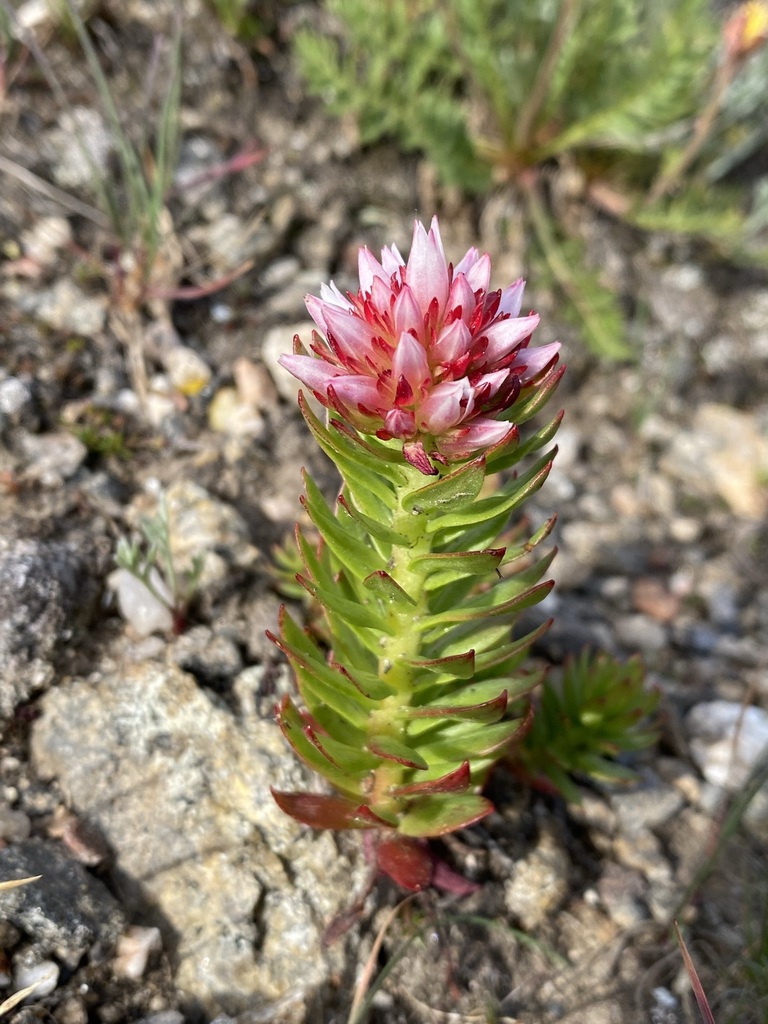
Rhodiola rhodantha, known as Queen’s Crown, rose crown or redpod stonecrop, is a succulent perennial of wet mountain meadows in the Rocky Mountains. It belongs to the stonecrop family (Crassulaceae). Leafy, unbranched stems 4 to 16 inches tall rise from a thick, fleshy rootstock, and each is topped in summer by a crowded, elongated cluster of small pink to rose flowers. It was long known as Sedum rhodanthum and, for a time, as Clementsia rhodantha.
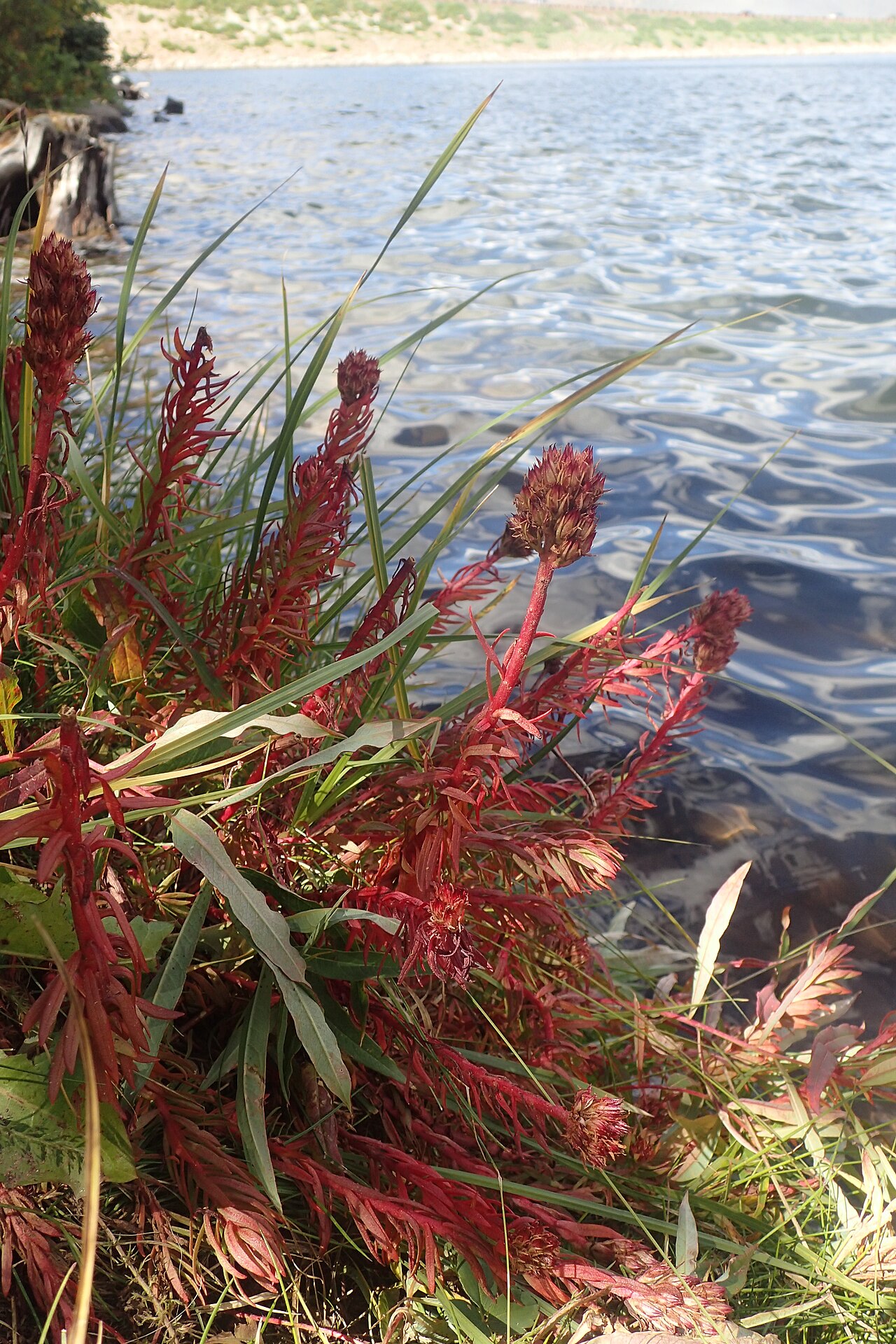
Unlike most stonecrops, which grow on dry rock, queen’s crown is a plant of wet ground. It grows along subalpine and alpine streams, in seepy meadows, bogs and willow thickets, and on lake and reservoir shores, usually between about 8,000 and 13,000 feet. Its flowers are followed by upright, red seed pods that keep the clumps colorful into late summer.
Queen’s crown is mostly a plant to admire in the high country. It is rarely sold and hard to keep in warm, low-elevation gardens, but it can be grown in cool mountain gardens with constant moisture. Never dig plants from the wild; grow it only from nursery stock or responsibly collected seed.
Identification
Look for fleshy, leafy stems standing in wet alpine meadows, each topped with an elongated, pink to rose cluster of small, five-petaled flowers.
Growth Habit
Several to many stems grow from a thick, branched, scaly rootstock, forming a clump. The stems are unbranched, erect, 4 to 16 inches tall (occasionally taller in lush sites), and die back to the ground each fall. In late summer the whole plant often turns red.
Leaves
The leaves are alternate, fleshy, flat and crowded along the whole stem. They are oblong to narrowly lance-shaped, about 1/2 to 1 inch long, smooth-edged or with a few small teeth, and green to bluish green.
Flowers
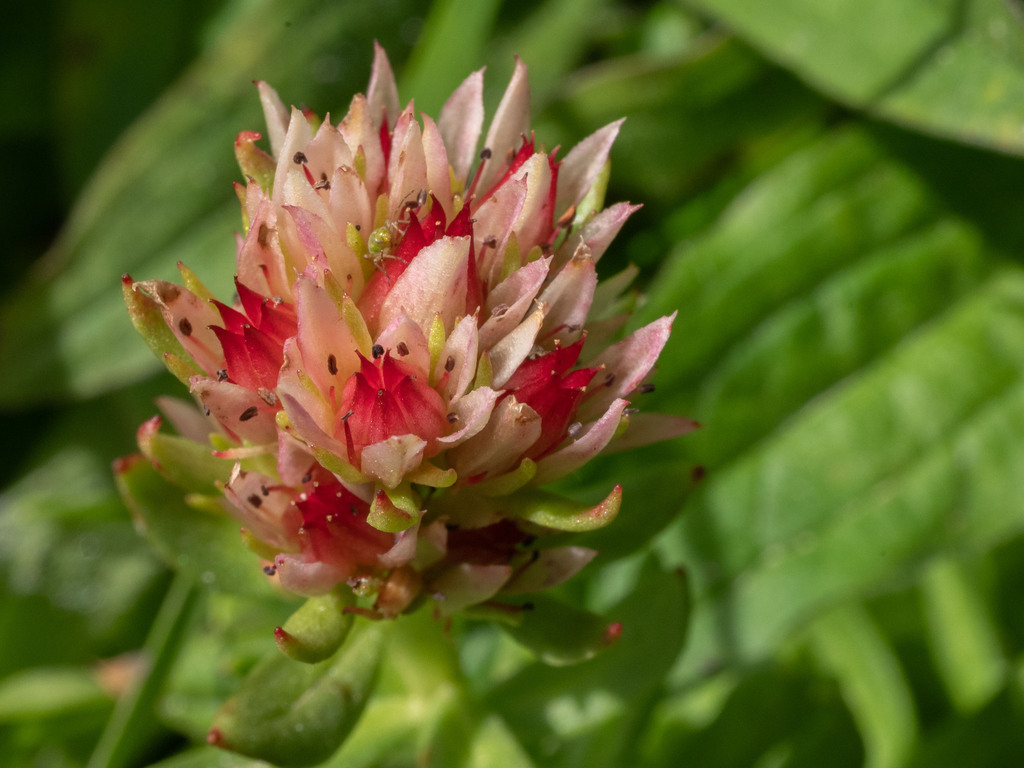
From June to September, each stem ends in a dense, elongated or rounded cluster of many small flowers. The flowers are bisexual, about 1/3 to 1/2 inch long, with five narrow, upright petals that are pink, rose or nearly white with darker veins, and five deep pink to red pistils. The tight, cone-like cluster gives the plant its “crown” name.
Fruit
The pistils develop into erect, reddish-purple follicles (small pod-like fruits) that split along one side to release tiny seeds. The red pods remain showy into early fall, which is why USDA calls it redpod stonecrop.
Look-alikes
Western roseroot or king’s crown (Rhodiola integrifolia) grows in the same mountains but has flat-topped clusters of dark red to purple flowers, with male and female flowers usually on separate plants. Elephant’s head (Pedicularis groenlandica) shares wet meadows and also has pink spikes, but its flowers are shaped like tiny elephant heads and its leaves are fern-like, not fleshy.
Quick Facts
| Scientific Name | Rhodiola rhodantha (syn. Sedum rhodanthum) |
| Family | Crassulaceae (stonecrop family) |
| Plant Type | Succulent herbaceous perennial |
| Mature Height | 4–16 in |
| Mature Spread | 6–12 in |
| Growth Rate | Slow |
| Sun Exposure | Full sun to part shade |
| Water Needs | High; constantly moist to wet soil |
| Soil Type | Wet, gravelly or peaty meadow and streambank soils |
| Soil pH | Slightly acidic to neutral (about 5.5–7.0) |
| Bloom Time | June–September |
| Flower Color | Pink, rose or nearly white |
| Fall Color | Stems and pods turn red in late summer |
| Fruit | Erect, reddish-purple follicles |
| Deer Resistant | Moderate; occasionally grazed by elk, deer and livestock |
| USDA Hardiness Zones | 3–6 |
Native Range
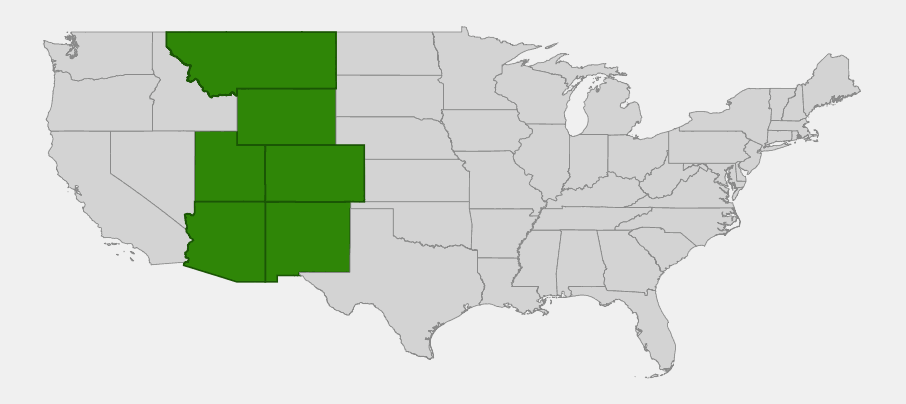
Queen’s crown is a plant of the Rocky Mountains. USDA PLANTS lists it as native in Montana, Wyoming, Colorado, Utah, New Mexico and Arizona. It is most common in the high mountains of Colorado, where it is a familiar wildflower along alpine streams, and extends north into southwestern Montana and south to the San Juan and Sangre de Cristo Mountains of New Mexico. In Arizona it is known from a few high peaks, such as the San Francisco Peaks and the White Mountains.
It grows mainly in the subalpine and alpine zones, usually from about 8,000 to 13,000 feet. Typical sites are wet meadows, seeps and springs, the banks of cold streams, willow carrs, fens, snowmelt basins and lake shores. It often grows in large numbers where cold water runs through gravel or wet turf.
Its range does not reach the Pacific Coast states or Canada. It is replaced at lower elevations and in drier, rocky places by other stonecrops, such as spearleaf stonecrop.
📋 Regional plant lists featuring Queen’s Crown: Montana & Wyoming · Utah & Western Colorado · Arizona & New Mexico
Growing & Care Guide
Queen’s crown is a specialist of cold, wet mountain soils and is not an easy garden plant. It does best in mountain and northern gardens with cool summers, where it can be grown in a bog garden, along a stream or at the edge of a pond.
Light
Full sun in cool mountain climates; part shade, especially in the afternoon, where summers are warmer. It does not tolerate hot, humid summers.
Soil & Water
Give it gritty or peaty soil that stays moist all summer, ideally with cold, moving water nearby, such as at a streamside or a constantly irrigated bog bed. It is less tolerant of drought than most stonecrops and will decline if the soil dries out while it is growing. It needs a cold winter dormancy.
Planting Tips
Plant nursery-grown plants in spring. Set the rootstock just at the soil surface in a damp, gravelly spot, and combine it with other wet-meadow plants such as marsh marigold and mountain bluebells. Never transplant plants from the wild; wild plants rarely survive the move and wild populations should be left intact.
Pruning & Maintenance
Cut the dead stems back in fall or early spring. Keep vigorous neighbors from crowding it, and watch for slugs, which can damage the fleshy shoots in spring.
Propagation
Grow from seed sown in fall or after cold-moist stratification, keeping the medium cool and damp. Established clumps can also be divided carefully in early spring, keeping a piece of rootstock with each division.
Landscape Uses
- Bog and streamside gardens: a colorful succulent for cold, wet ground in mountain gardens
- Alpine and rock gardens: for gardeners in high-elevation or cool-summer regions with irrigated scree
- Pollinator plantings: visited by bees and flies at high elevations
- Wildflower viewing: a classic wildflower of Rocky Mountain trails and alpine streams
- Late-summer color: red stems and seed pods after the flowers fade
Wildlife & Ecological Value
Queen’s crown is part of the wet-meadow community of the high Rockies, where the growing season lasts only a few months.
For Pollinators
Its flowers are visited by bumblebees, small native bees, flies and butterflies, which are important pollinators in alpine meadows where many insects are active only during short summer weeks.
For Birds
Wet meadows with queen’s crown are feeding grounds for white-tailed ptarmigan, American pipits, white-crowned sparrows and other birds of the high country, which feed on the insects and plants in these sites.
For Mammals
Pikas, marmots and elk graze its fleshy shoots and leaves, along with other meadow plants. Pikas collect alpine plants to store as hay for the winter.
Ecosystem Role
Its fleshy rootstock and dense clumps help bind wet, gravelly soils along streams and seeps. Along with willows, sedges and other wet-meadow plants, it is part of the alpine wetland communities that filter snowmelt and feed mountain streams.
Cultural & Historical Uses
The genus name Rhodiola comes from the Greek rhodon, rose, after the rose-scented roots of its relative, roseroot (Rhodiola rosea). The species name rhodantha means “rose-flowered.”
The plant was once placed in its own genus, Clementsia, named for the ecologist Frederic Clements, who worked extensively in the Colorado Rockies. Edith Clements, also a botanist, painted it for her book Rocky Mountain Flowers. Today it is again treated as a Rhodiola, and many field guides still list it as Sedum rhodanthum.
Some Rhodiola species, including roseroot, are used in herbal supplements, but queen’s crown has no such use and should not be collected. Like other mountain wildflowers, it is best enjoyed in place, along trails and streams in summer.
Frequently Asked Questions
What is the difference between queen’s crown and king’s crown?
Queen’s crown (Rhodiola rhodantha) has elongated clusters of pink flowers in which each flower is bisexual, and it grows in wet sites. King’s crown or western roseroot (Rhodiola integrifolia) has flat-topped clusters of dark red flowers, usually with male and female flowers on separate plants, and often grows in rockier, drier places.
Is queen’s crown a sedum?
It was long called Sedum rhodanthum and belongs to the same stonecrop family, but botanists now place it in the genus Rhodiola.
Where can I see queen’s crown?
Look for it in summer along streams and in wet meadows above about 8,000 feet in the mountains of Colorado, Wyoming, Montana, Utah, New Mexico and Arizona.
Can I grow queen’s crown in my garden?
Only in cool-summer gardens with soil that stays moist, such as a bog or streamside bed in the mountains. It struggles in hot, low-elevation gardens. Use nursery-grown plants or seed, never wild plants.
When does queen’s crown bloom?
It blooms from June to September, depending on elevation and snowmelt. The red seed pods follow and stay colorful into early fall.


