
Savannah Meadowbeauty (Rhexia alifanus)
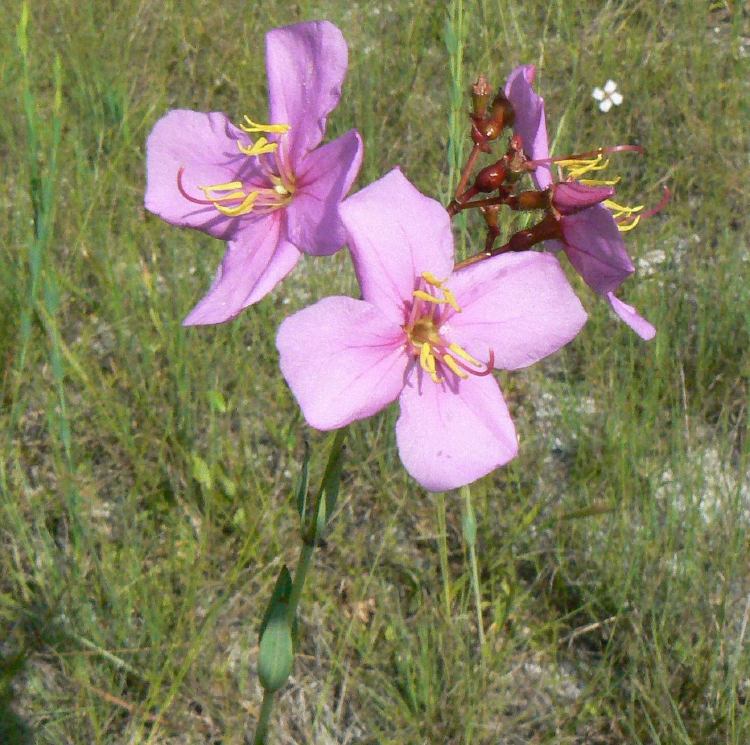
Rhexia alifanus, known as Savannah Meadowbeauty, is the tallest of the meadowbeauties, a perennial wildflower of wet pine savannas and flatwoods on the southeastern Coastal Plain. It grows from North Carolina south to northern Florida and west to east Texas. It belongs to the melastome family (Melastomataceae), a mostly tropical family. Rhexia is its only genus that is widespread in the United States and Canada.
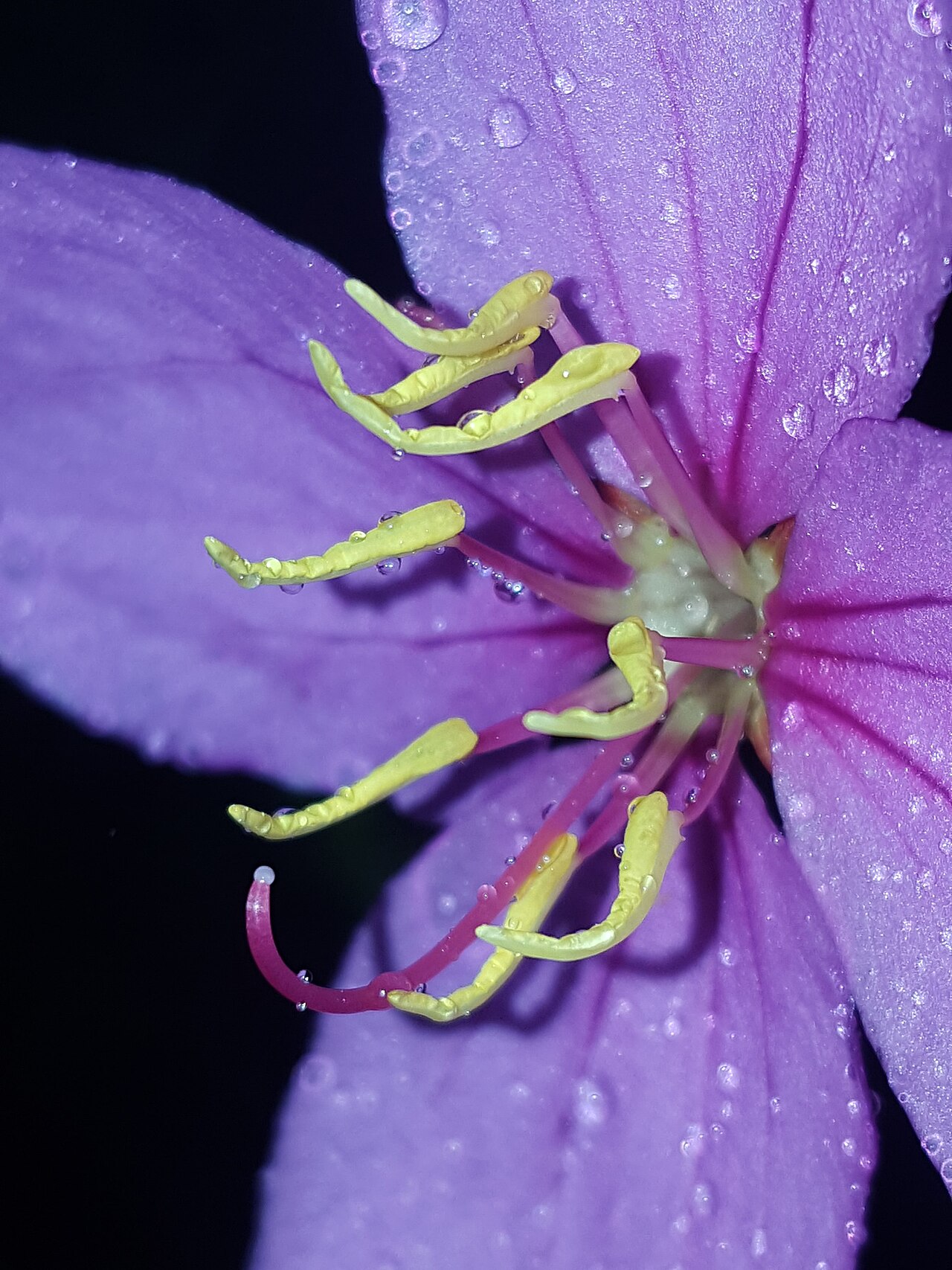
From late spring through summer it carries showy, four-petaled flowers, 1 1/2 to 2 inches across, in shades of rose-pink to lavender, with eight long, curved yellow anthers. The upright, unbranched or sparsely branched stems reach 2 to 3 feet or more and carry smooth, narrow, bluish-green leaves held stiffly up along the stem. The smooth leaves set it apart from most other meadowbeauties, which have hairy leaves.
In the wild it is a fire-loving plant of open, sunny, seasonally wet ground, and it often blooms most heavily after a prescribed burn. In gardens it suits a sunny bog garden, a wet meadow or a rain garden with acidic, sandy soil. Buy plants or seed from native plant nurseries; it is not hard to grow where its needs for sun and moisture are met.
Identification
Look for a tall, slender meadowbeauty with smooth, bluish-green, narrow leaves held upright along the stem and large pink four-petaled flowers in a wet, grassy pine savanna.
Growth Habit
Savannah meadowbeauty is an erect perennial, usually 1 1/2 to 3 feet tall and sometimes taller, with one or a few slender stems from a short, woody base. The stems are smooth and roundish, not strongly four-angled or winged as in several other Rhexia species. Plants are scattered through the grasses or grow in loose colonies.
Leaves
The leaves are opposite, lance-shaped to narrowly elliptic, about 1 1/2 to 3 inches long, and have three prominent veins running lengthwise. They are smooth (hairless), somewhat leathery and bluish-green or glaucous, and they are held upright, close to the stem. This smooth, upward-pointing foliage is the easiest way to tell it from other meadowbeauties.
Flowers
The flowers open in a loose cluster at the top of the stem from May to September, with peak bloom in early to mid summer. Each has four broad, rose-pink to lavender petals, about 3/4 to 1 inch long, and eight long, curved yellow anthers that stick out like little hooks. The petals drop quickly, often by afternoon, but new flowers open over several weeks. The flowers are buzz-pollinated: bees grip the anthers and vibrate to shake out pollen.
Fruit
After flowering, the base of the flower swells into an urn-shaped capsule with a flared neck, covered with gland-tipped hairs. It ripens brown and releases many tiny, curved seeds. The little “urns” are a good identification feature for all meadowbeauties.
Look-alikes
Maryland meadowbeauty (Rhexia mariana) is shorter, with hairy leaves and paler pink to white flowers. Virginia meadowbeauty (Rhexia virginica) has a square, winged stem and hairy leaves. Savannah meadowbeauty’s height, smooth bluish leaves and large flowers make it distinctive.
Quick Facts
| Scientific Name | Rhexia alifanus |
| Family | Melastomataceae (melastome family) |
| Plant Type | Herbaceous perennial wildflower |
| Mature Height | 1.5–3 ft (occasionally taller) |
| Mature Spread | 6–12 in |
| Growth Rate | Moderate |
| Sun Exposure | Full sun |
| Water Needs | Wet to moist; tolerates seasonal flooding and brief dry spells |
| Soil Type | Acidic sandy or peaty soils of pine savannas, flatwoods and bogs |
| Soil pH | Acidic (about 4.5–6.0) |
| Bloom Time | May–September |
| Flower Color | Rose-pink to lavender with yellow anthers |
| Fall Color | Foliage may redden in fall |
| Fruit | Urn-shaped, glandular-hairy capsule |
| Deer Resistant | Moderately |
| USDA Hardiness Zones | 7–9 |
Native Range
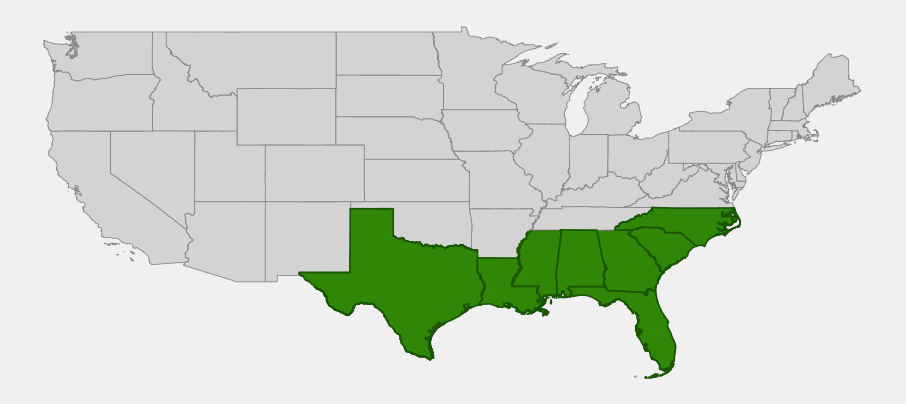
Savannah meadowbeauty is a plant of the southeastern Coastal Plain. USDA PLANTS lists it as native in Alabama, Florida, Georgia, Louisiana, Mississippi, North Carolina, South Carolina and Texas. It ranges from southeastern North Carolina south through the coastal plains of South Carolina and Georgia into northern and central Florida, and west along the Gulf Coast through Alabama, Mississippi and Louisiana.
In Texas it is limited to the pine savannas and bogs of the far eastern part of the state, in the Big Thicket and Pineywoods region, and does not reach central, south or west Texas. It is most common in the Florida Panhandle and along the Gulf Coast, where longleaf pine savannas and wet flatwoods are still widespread.
Its habitat is wet, open, sunny ground with acidic, sandy or peaty soil: wet longleaf pine savannas and flatwoods, pitcher plant bogs, seepage slopes, wet ditches, and the edges of cypress domes and bays. These habitats depend on frequent fire to stay open, and savannah meadowbeauty is one of many wildflowers that bloom best in the season after a burn.
📋 Regional plant lists featuring Savannah Meadowbeauty: Alabama, Georgia & Mississippi · North & South Florida · North & South Carolina · Arkansas, Louisiana, Eastern Oklahoma & Eastern Texas
Growing & Care Guide
Savannah meadowbeauty is an easy and rewarding plant for the right spot: full sun, acidic soil and steady moisture. It is a good choice for bog gardens, wet meadows and the wetter parts of rain gardens on the Coastal Plain.
Light
Full sun. In shade it gets leggy, flops and flowers poorly. In the wild it disappears from savannas that are not burned and become shaded by shrubs.
Soil & Water
Grow it in acidic, sandy or peaty soil that stays moist to wet for most of the year. It tolerates standing water in winter and spring and short dry spells in summer, but it does poorly in rich, heavy garden soil or alkaline soil. A bog garden mix of sand and peat, or a low, wet spot in a sandy yard, is ideal. Water during long droughts.
Planting Tips
Plant nursery-grown plants in spring or early fall, spacing them about 12 inches apart. Grouping several plants gives a better show because the individual stems are slender. Combine it with pitcher plants, grass pink, yellow-eyed grasses, wiregrass and other savanna plants that share its needs.
Pruning & Maintenance
Cut stems to the ground in late winter. In large meadow plantings, an occasional winter or early spring burn, where it is legal and safe, or a close mowing will mimic the fires it depends on and keep competing shrubs out. Do not fertilize.
Propagation
Sow the tiny seeds on the surface of moist, acidic, sandy-peaty mix in spring; they need light to germinate. Established clumps can be divided in early spring. Buy plants or seed from native nurseries, and never dig plants from the wild.
Landscape Uses
- Bog gardens: a tall, showy companion for pitcher plants and orchids
- Rain gardens: for the wetter zones of rain gardens with sandy, acidic soil
- Wet meadows and savanna restoration: a long-blooming wildflower for Coastal Plain savanna plantings
- Pond and ditch edges: for sunny, seasonally wet edges
- Pollinator gardens: a summer pollen source for bumble bees and carpenter bees
Wildlife & Ecological Value
Savannah meadowbeauty is one of the characteristic wildflowers of the fire-maintained longleaf pine ecosystem, one of the most species-rich plant communities in North America.
For Pollinators
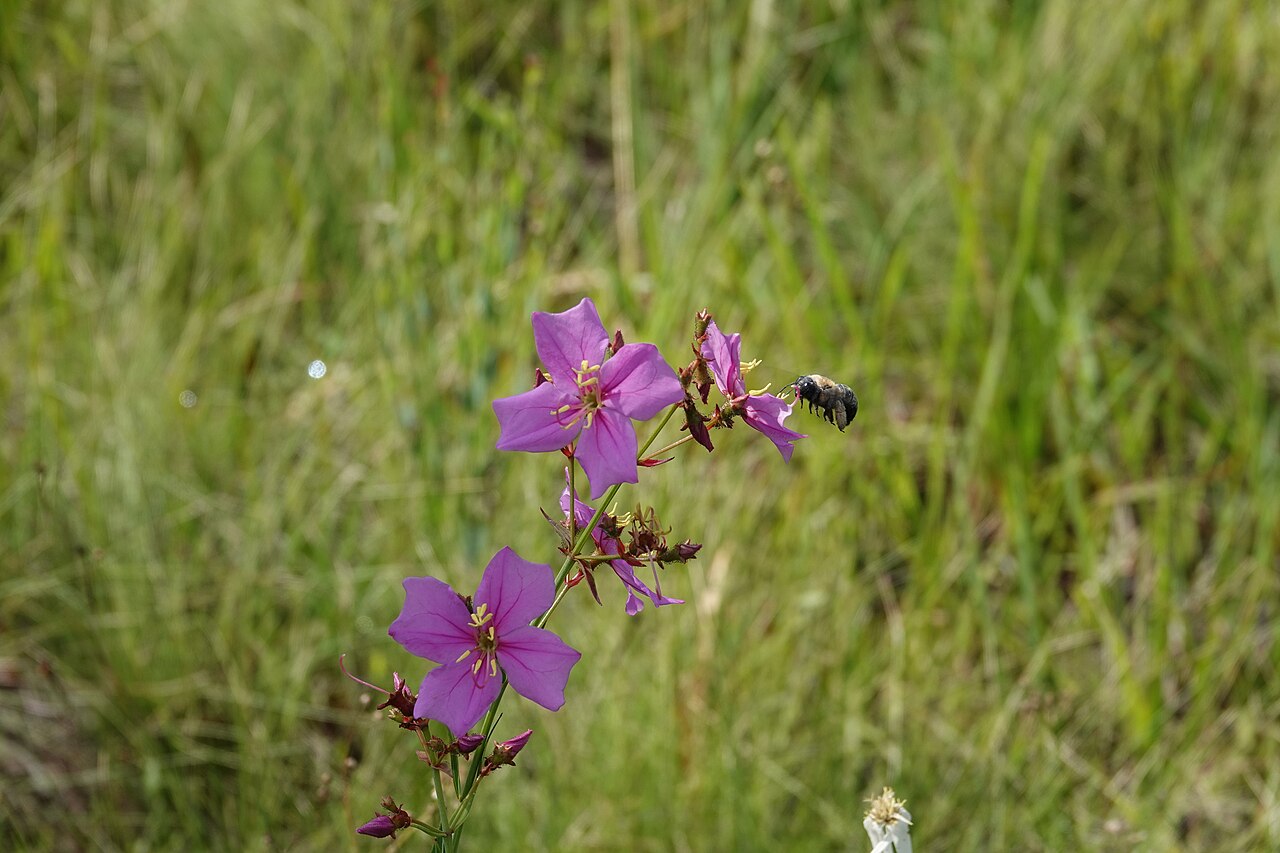
The flowers offer pollen but no nectar. They are buzz-pollinated: bumble bees, carpenter bees and other large native bees grab the anthers and vibrate their flight muscles to shake pollen out of tiny pores at the anther tips. Honey bees cannot do this and rarely collect much pollen from it.
For Birds
Its tiny seeds are of minor value to birds, but the open, grassy savannas where it grows are important habitat for Bachman’s sparrows, northern bobwhite and other grassland birds.
For Mammals
Deer may browse the tender tops. Its main value for mammals is as part of the diverse ground layer of pine savannas.
Ecosystem Role
It is a fire-adapted perennial that resprouts quickly after burns and flowers heavily in the following season. Its presence is a sign of a healthy, frequently burned savanna or bog. Where fire is suppressed and shrubs take over, it declines.
Cultural & Historical Uses
The genus name Rhexia comes from an old name used by the Roman writer Pliny for a different plant; Linnaeus applied it to the meadowbeauties. The origin of the species name alifanus is unclear. Botanists have given several explanations, and none is certain.
Meadowbeauties are sometimes called “deer grass.” They are the northern outliers of the melastome family, which has thousands of species in the tropics, many with the same distinctive curved anthers and three-veined leaves.
Savannah meadowbeauty is a familiar sight to people who walk the longleaf pine savannas of the Gulf Coast in summer. Its abundance after prescribed burns makes it a favorite example for land managers explaining how fire keeps these savannas full of wildflowers.
Frequently Asked Questions
How tall does savannah meadowbeauty grow?
Usually 1 1/2 to 3 feet, occasionally taller. It is the tallest of the native meadowbeauties.
How do I tell savannah meadowbeauty from other meadowbeauties?
Look at the leaves: savannah meadowbeauty has smooth, bluish-green leaves held upright along a round stem. Most other species have hairy leaves, and some have square or winged stems.
Can I grow savannah meadowbeauty in a regular garden bed?
Only if the soil is acidic and stays moist. It does best in a sunny bog garden, rain garden or wet meadow. Dry, rich or alkaline soils are not suitable.
Does savannah meadowbeauty grow in Texas?
Yes, but only in the pine savannas and bogs of far east Texas. It does not grow in central, south or west Texas.
Why do the petals fall off so quickly?
Each flower lasts only about a day, and the petals often drop by afternoon. New flowers open over many weeks, so plants stay in bloom through much of summer.

Looking for a nursery that carries Savannah Meadowbeauty?
Browse our native plant nursery directory: Alabama · Florida & Georgia · Louisiana & Mississippi · North Carolina · South Carolina & Texas

