
Wedgeleaf Goldenbush (Ericameria cuneata)
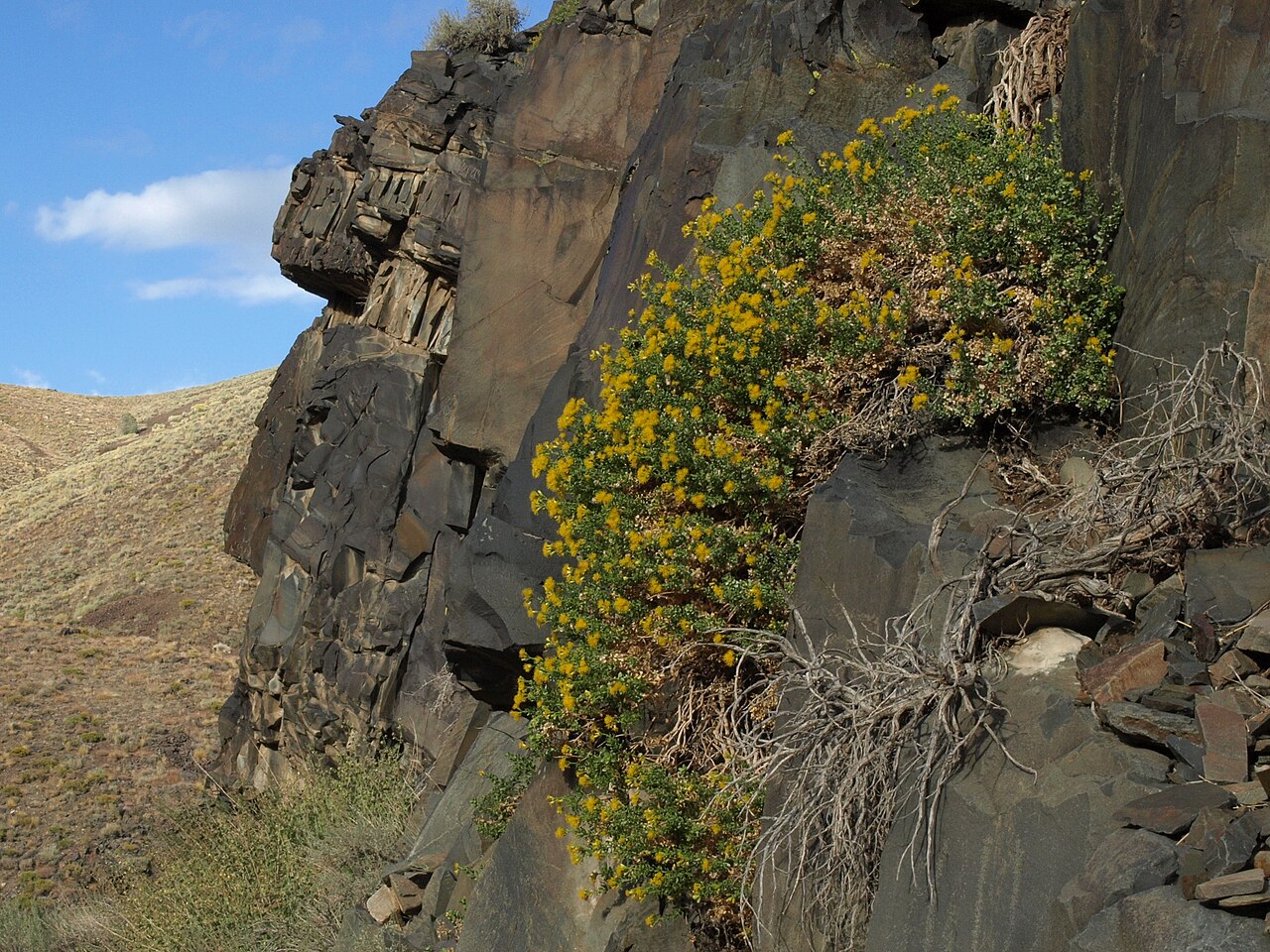
Ericameria cuneata, known as Wedgeleaf Goldenbush, cliff goldenbush (the USDA name) or rock goldenbush, is a small, rounded evergreen shrub of the aster family (Asteraceae). It grows in cracks of cliffs, boulders and rock outcrops in the mountains of California, Nevada, Arizona and New Mexico, and south into Baja California, Mexico. Older books list it as Haplopappus cuneatus.
Plants are usually 1 to 3 feet tall and wide, with stiff, many-branched stems and small, wedge-shaped leaves that are sticky with resin and dotted with glands. In late summer and fall, when most of its neighbors are dormant, it covers itself in small, button-like heads of bright yellow flowers, often with no ray petals at all. The sight of a golden goldenbush hanging from a granite cliff is one of the pleasures of an autumn hike in the Sierra Nevada or the desert mountains.
Wedgeleaf goldenbush is an excellent, little-known native for rock gardens, crevice gardens, walls and dry slopes in the Southwest and California. It needs sharp drainage and full sun, uses very little water once established, and provides late-season nectar for bees and butterflies when little else is in bloom.
Identification
Look for a compact, rounded shrub growing from rock crevices, with small, sticky, wedge-shaped leaves and clusters of small yellow flower heads in fall.
Growth Habit
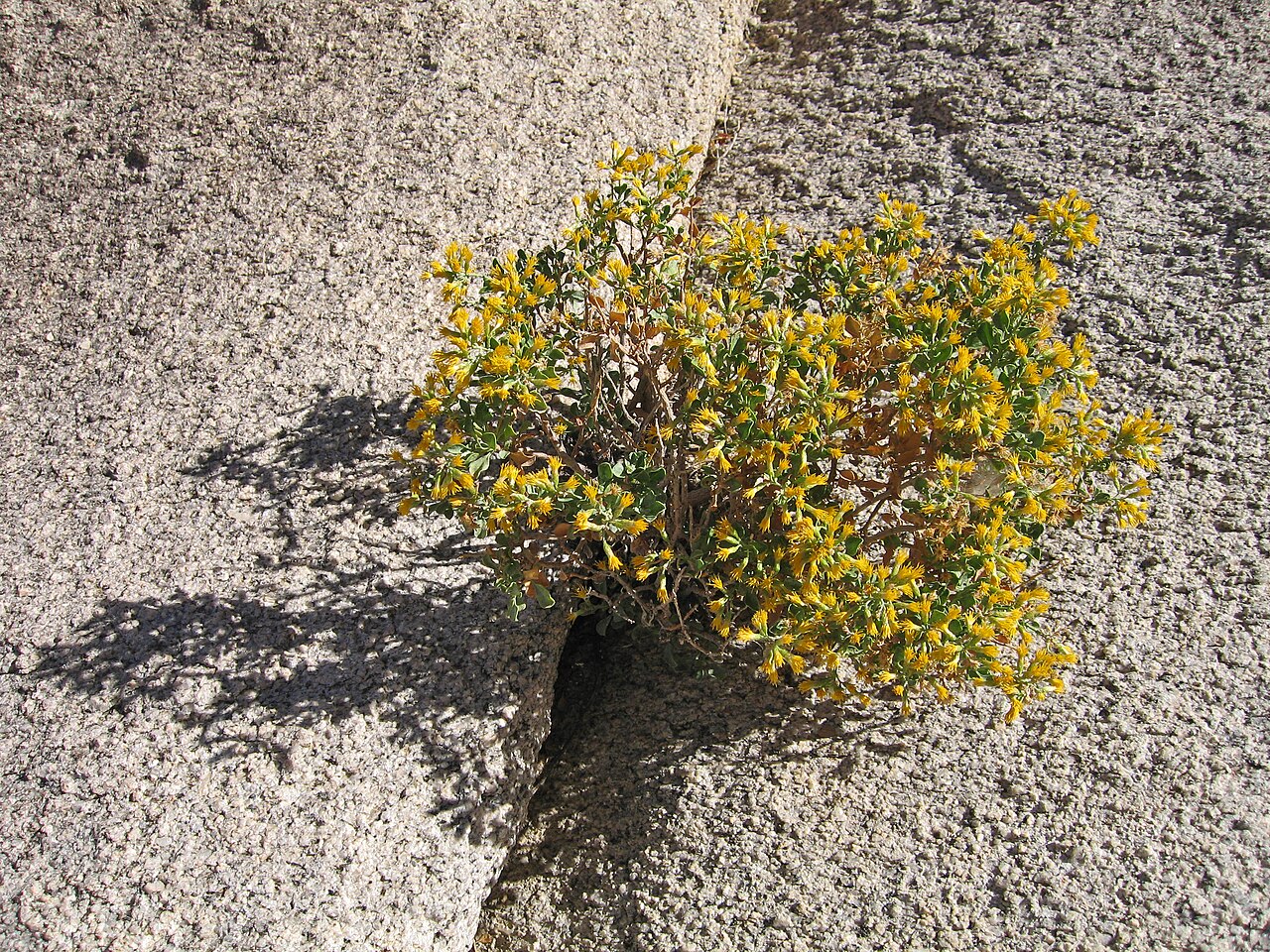
Wedgeleaf goldenbush is a compact, densely branched evergreen shrub, usually 1 to 3 feet tall and about as wide, sometimes hanging from cliffs or forming low mounds on boulders. The bark of older stems is gray to brown and shreddy, and young twigs are green and sticky.
Leaves
The leaves are alternate, about 1/4 to 1 inch long, wedge-shaped (cuneate) to spoon-shaped or oval, broadest near the tip and narrowing to the base. They are thick, bright to grayish green, often with slightly wavy edges, covered with tiny resin glands and sticky to the touch. Crushed leaves have a resinous, aromatic smell.
Flowers
From about August to December, flower heads are borne in small, rounded clusters at the branch tips. Each head is about 1/4 to 1/2 inch long, with a cylinder of overlapping, straw-colored to greenish bracts. The heads contain about 7 to 20 bright yellow disc florets; rays are usually absent, although var. spathulata of the desert mountains often has a few short yellow rays.
Seeds
The seeds are small, hairy achenes topped with a tuft of tan to reddish-brown bristles (pappus). The fluffy seed heads give the plant a soft, tawny look in early winter.
Varieties & Look-alikes
Three varieties are recognized: var. cuneata (widespread in California), var. spathulata (desert mountains of California, Nevada, Arizona and New Mexico) and var. macrocephala (with larger heads, in San Diego County and Baja California). Turpentine bush (E. laricifolia) has narrow, needle-like leaves. Other goldenbushes, such as narrowleaf goldenbush, have long, narrow leaves and large, showy rayed heads in spring.
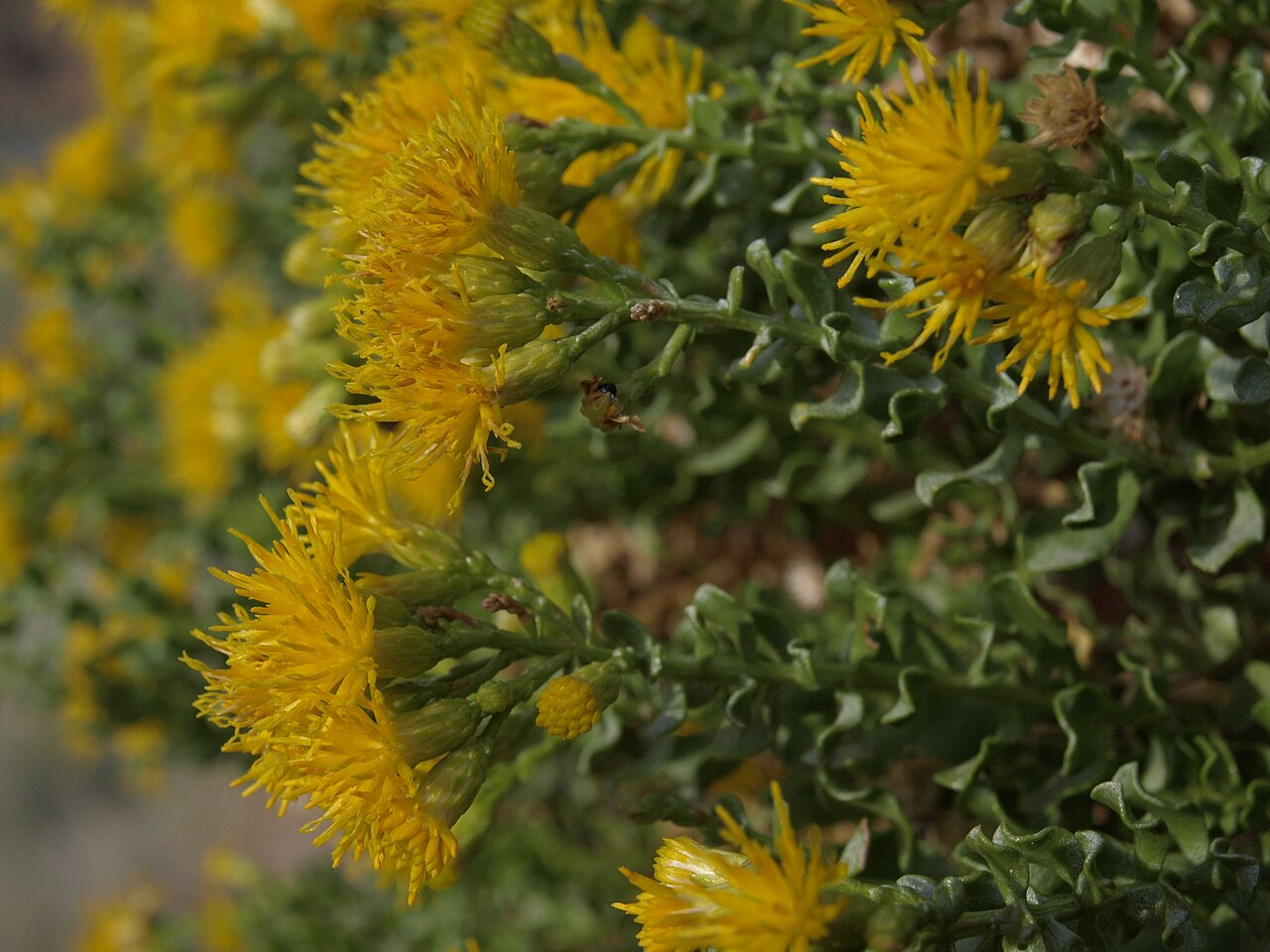
Quick Facts
| Scientific Name | Ericameria cuneata |
| Family | Asteraceae (aster family) |
| Plant Type | Small evergreen shrub |
| Mature Height | 1–3 ft |
| Mature Spread | 1–3 ft |
| Growth Rate | Slow to moderate |
| Sun Exposure | Full sun to light shade |
| Water Needs | Very low; sharply drained |
| Soil Type | Rock crevices, granite and volcanic outcrops, gravelly soil |
| Soil pH | Slightly acidic to alkaline (about 6.0–8.0) |
| Bloom Time | August–December |
| Flower Color | Bright yellow |
| Fall Color | Yellow flowers in fall; evergreen |
| Fruit | Achenes with tan to reddish bristles |
| Deer Resistant | Yes; resinous leaves are seldom browsed |
| USDA Hardiness Zones | 6–10 |
Native Range
Wedgeleaf goldenbush is native to the southwestern United States and Baja California, Mexico. USDA PLANTS lists it in Arizona, California, Nevada and New Mexico. It also grows in Baja California.
In California it is widespread in the Sierra Nevada foothills and canyons (including Kings Canyon and the Kern River country), the Inyo and White Mountains, the Transverse and Peninsular ranges and the mountains of the Mojave and Colorado deserts, such as Joshua Tree National Park and the Mojave National Preserve. Var. spathulata extends east through the desert ranges of southern Nevada and Arizona to southwestern New Mexico.
It grows almost exclusively on rock: cracks in cliffs, granite domes and boulders, volcanic outcrops, rocky canyon walls and talus, in chaparral, pinyon-juniper woodland, desert scrub and lower conifer forest, from about 1,500 to 8,000 feet.
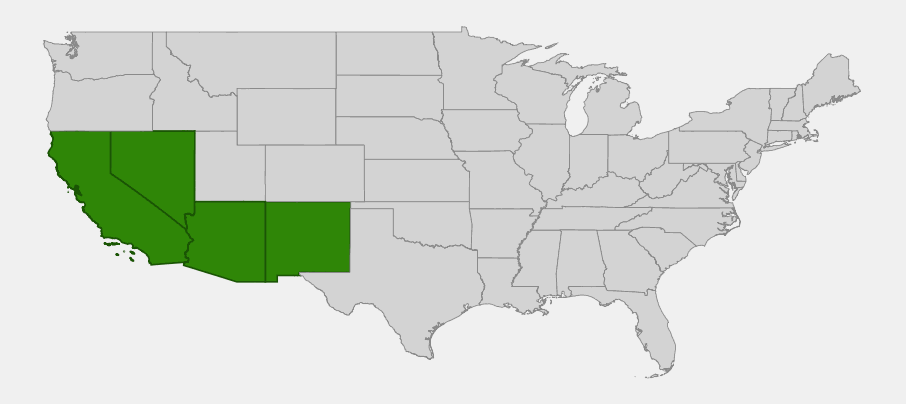
📋 Regional plant lists featuring Wedgeleaf Goldenbush: Arizona & New Mexico · California & Nevada
Growing & Care Guide
Wedgeleaf goldenbush is a natural for rock and crevice gardens. Its needs are simple: sun, rock, sharp drainage and very little water. It is occasionally available from California and Southwest native plant nurseries and botanic garden sales.
Light
Full sun is best. It tolerates light shade, such as the shadow of a large boulder, but flowers less.
Soil & Water
Plant it in coarse, gritty, fast-draining soil, ideally among rocks or in a crevice where its roots can follow cracks into cool, deeper soil. Water during the first summer; afterward, occasional deep watering in long droughts is enough. Wet, heavy soil will kill it.
Planting Tips
Plant in fall or winter. Tuck young plants between boulders, into a dry stone wall or a crevice garden, or on a gravelly slope. It pairs well with dudleyas, buckwheats, penstemons, cacti and small bunchgrasses.
Pruning & Maintenance
Little care is needed. Lightly shear spent flower heads in winter if you want a tidier look, and remove any dead branches. Do not fertilize.
Propagation
Grow from fresh seed sown in fall or winter on the surface of a gritty mix; germination is often modest. Semi-hardwood cuttings taken in late summer can also root.
Landscape Uses
- Rock and crevice gardens: a compact shrub that thrives among stones
- Late-season color: yellow flowers in fall and early winter
- Pollinator gardens: nectar for bees and butterflies late in the year
- Walls and slopes: grows in cracks and steep, rocky ground
- Low-water landscapes: very drought tolerant once established
Wildlife & Ecological Value
Blooming from late summer into winter, wedgeleaf goldenbush is an important late-season food source in rocky habitats.
For Pollinators
Bees, wasps, flies, beetles and butterflies visit the flowers in fall, when few other plants are blooming. Like other goldenbushes and rabbitbrushes, it supports late-flying native bees and migrating butterflies such as painted ladies and monarchs.
For Birds
Small birds such as rock wrens, canyon wrens and bushtits hunt insects among its branches, and seed-eating birds may take the seeds in winter.
For Mammals
Bighorn sheep, deer and woodrats may occasionally browse it, but the resinous leaves are not a preferred food. Its dense branches give cover in otherwise bare rocky sites.
Ecosystem Role
As one of the few shrubs that can grow in cracks of bare rock, it traps soil and organic matter in crevices and provides shade and shelter for lizards, insects and other small animals on cliffs and outcrops.
Cultural & Historical Uses
The genus name Ericameria means “heath-like parts,” for the small, crowded leaves of many species, which resemble those of heaths (Erica). The species name cuneata means “wedge-shaped,” for its distinctive leaves. The plant was long known as Haplopappus cuneatus, before botanists divided the large genus Haplopappus into several smaller genera.
In fall, its golden mounds on granite domes and cliffs are a familiar sight in places such as Sequoia and Kings Canyon National Parks, the Mojave National Preserve and Joshua Tree National Park, at a time of year when the surrounding hills are mostly brown.
Resinous, gland-dotted leaves are a common adaptation among shrubs of dry, sunny rock outcrops. The resin helps reduce water loss, shields the leaves from intense sunlight and discourages plant-eating animals.
Frequently Asked Questions
Where does wedgeleaf goldenbush grow?
In cracks of cliffs, boulders and rock outcrops in the mountains of California, Nevada, Arizona and New Mexico, and in Baja California.
When does wedgeleaf goldenbush bloom?
From late summer into early winter, usually August to December.
Does wedgeleaf goldenbush have ray petals?
Usually not. Most plants have rayless, button-like heads of yellow disc florets, although var. spathulata often has a few short rays.
Can I grow wedgeleaf goldenbush in a garden?
Yes, in a rock garden, crevice garden or wall with full sun, very good drainage and little water.
Is it the same as cliff goldenbush?
Yes. Cliff goldenbush is the USDA common name for Ericameria cuneata; it is also called rock goldenbush.

Looking for a nursery that carries Wedgeleaf Goldenbush?
Browse our native plant nursery directory: Arizona · California · Nevada & New Mexico

