
Narrowleaf Goldenbush (Ericameria linearifolia)
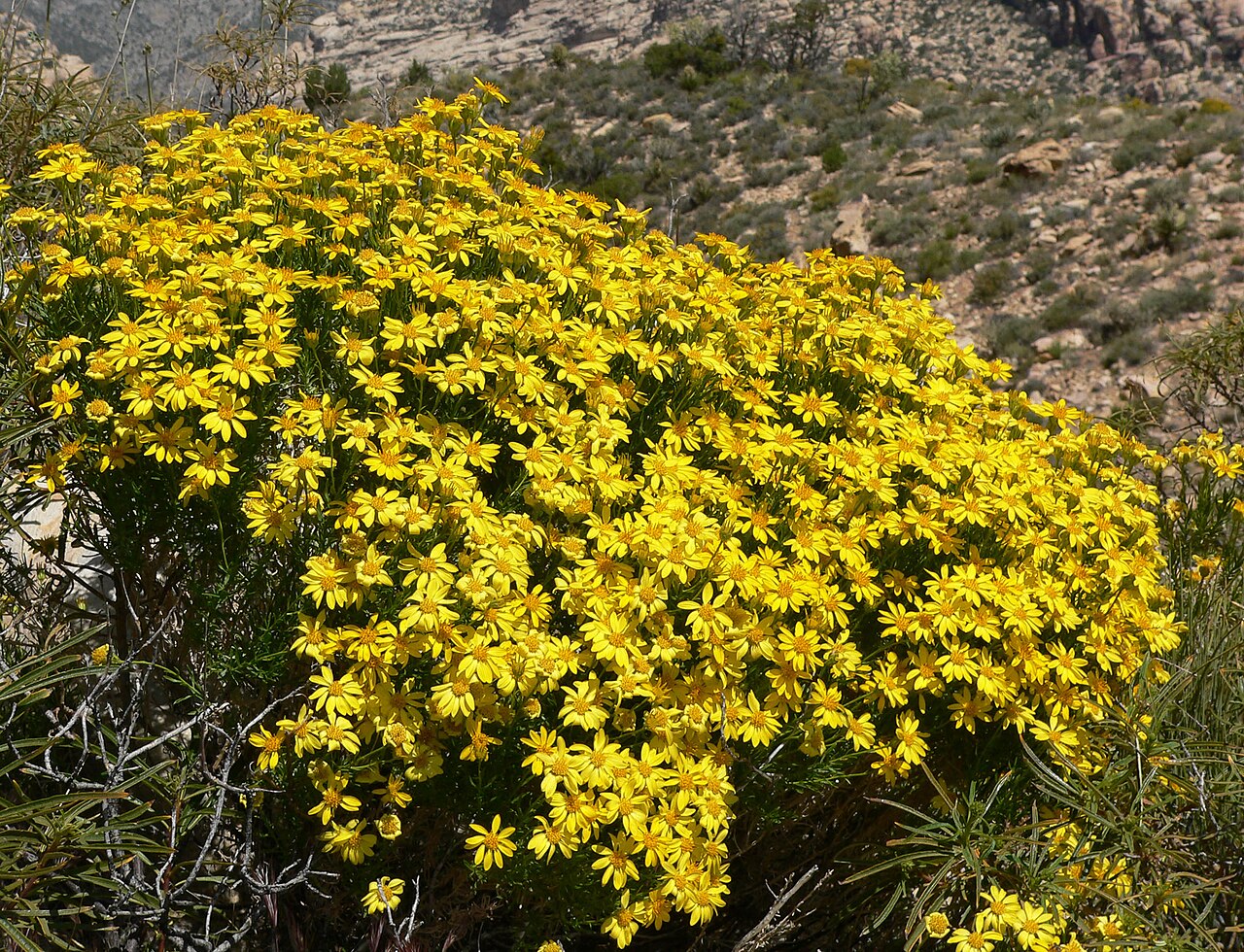
Ericameria linearifolia, known as Narrowleaf Goldenbush or interior goldenbush, is a native evergreen to drought-deciduous shrub in the aster family (Asteraceae). In spring it covers itself with bright yellow, daisy-like flower heads, each held alone at the end of a long, slender stalk, above a rounded mound of thread-thin, resinous leaves. It is one of the showiest spring-blooming shrubs of the Mojave Desert and the dry interior foothills of California. Older books call it Haplopappus linearifolius.
It is native to California, southern Nevada, southwestern Utah and western Arizona, where it grows on rocky slopes, sandy and gravelly washes, desert scrub, chaparral edges and the lower pinyon-juniper woodland. It reaches north along the inner Coast Ranges to Mount Diablo in the San Francisco Bay Area.
For gardeners in dry-summer and desert regions it is a tough, very low-water shrub with a spectacular spring show, and its flowers draw many native bees and butterflies. It wants sun, sharp drainage and little or no summer water.
Identification
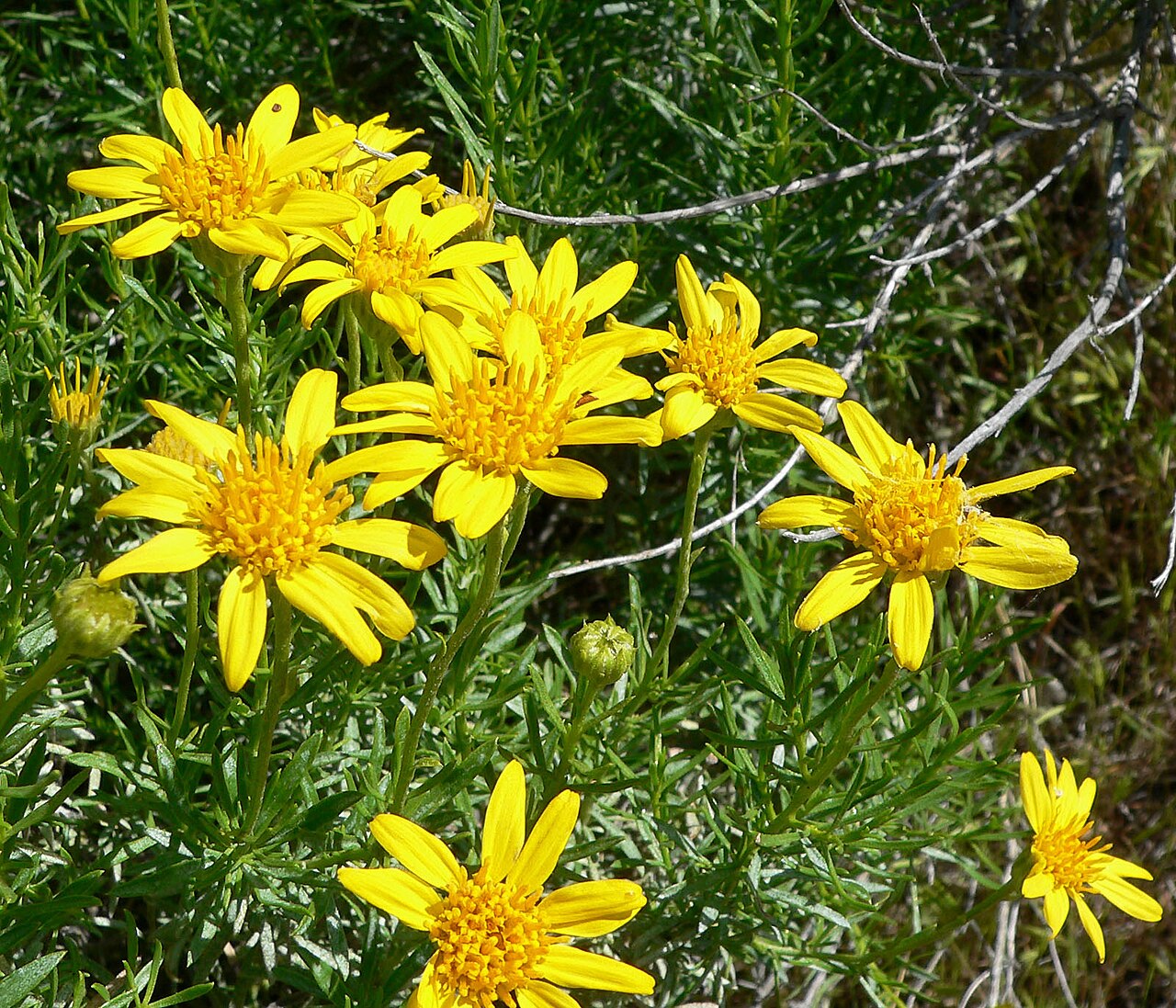
Look for a rounded, 2- to 5-foot shrub with very narrow, sticky leaves and single bright yellow daisies, each on its own long stalk, in spring.
Growth Habit
A rounded, many-branched shrub usually 2 to 4 feet tall, sometimes up to about 5 feet, and about as wide. The twigs and leaves are resinous and slightly sticky. In the heat of summer it often drops many leaves and looks grayish and dormant until rains return.
Leaves
The leaves are linear (thread-like), about 1/2 to 2 inches long and very narrow, bright green and dotted with resin glands, which gives them a faintly sticky feel and a resinous smell. The species name linearifolia means “with linear leaves.”
Flowers
The flower heads are about 1 to 1 1/2 inches across and borne singly at the tips of long, mostly leafless stalks, which sets this species apart from goldenbushes with clustered heads. Each head has up to about 18 bright yellow ray florets around a center of as many as 60 yellow disc florets. Flowering is mainly from March to May, a little later at higher elevations.
Fruit
The fruits are small, hairy achenes (cypselae) topped with a tuft of tan bristles (pappus) that carries them on the wind in late spring.
Look-alikes
Brittlebrush (Encelia farinosa) also has yellow daisies on long stalks, but its leaves are broad and silvery gray. Turpentine bush (Ericameria laricifolia) has similar narrow leaves but blooms in fall with small heads in dense clusters. Rubber rabbitbrush has rayless heads in fall and felted gray-green twigs.
Quick Facts
| Scientific Name | Ericameria linearifolia (syn. Haplopappus linearifolius) |
| Family | Asteraceae (aster family) |
| Plant Type | Evergreen to summer-deciduous shrub |
| Mature Height | 2–5 ft |
| Mature Spread | 2–4 ft |
| Growth Rate | Moderate |
| Sun Exposure | Full sun |
| Water Needs | Very low; no summer water once established |
| Soil Type | Sandy, gravelly or rocky, well-drained soil |
| Soil pH | Neutral to alkaline (about 6.5–8.5) |
| Bloom Time | Spring (March–May) |
| Flower Color | Bright yellow |
| Fall Color | None; may look gray and leafless in late summer |
| Fruit | Small achenes with tan, bristly pappus |
| Deer Resistant | Yes; resinous foliage is rarely browsed |
| USDA Hardiness Zones | 7–10 |
Native Range
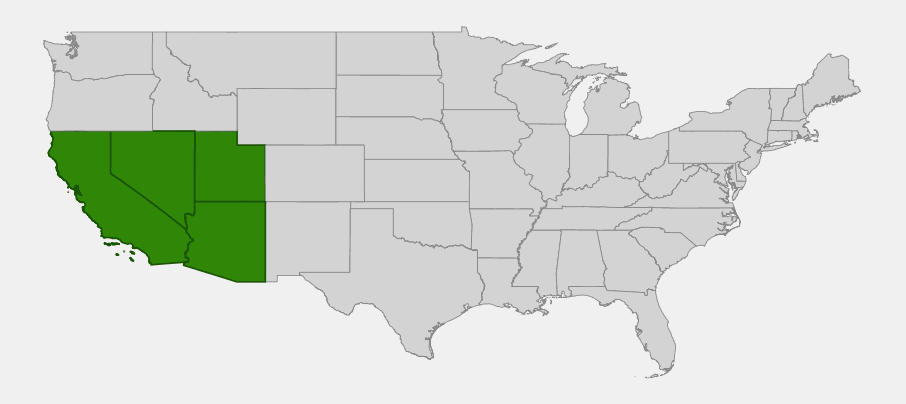
Narrowleaf goldenbush is native to the American Southwest. USDA PLANTS records it from four states: Arizona, California, Nevada and Utah. It also extends south into northern Baja California, Mexico.
Its center of abundance is the Mojave Desert and its margins: the Spring Mountains and Red Rock Canyon of southern Nevada, the desert slopes of the Tehachapi, San Gabriel, San Bernardino and Peninsular Ranges, and the hills of western Arizona. It reaches the far southwestern corner of Utah in Washington County. In California it also grows west of the deserts in the dry inner Coast Ranges, the foothills of the southern Sierra Nevada and the edges of the Central Valley, north to Mount Diablo.
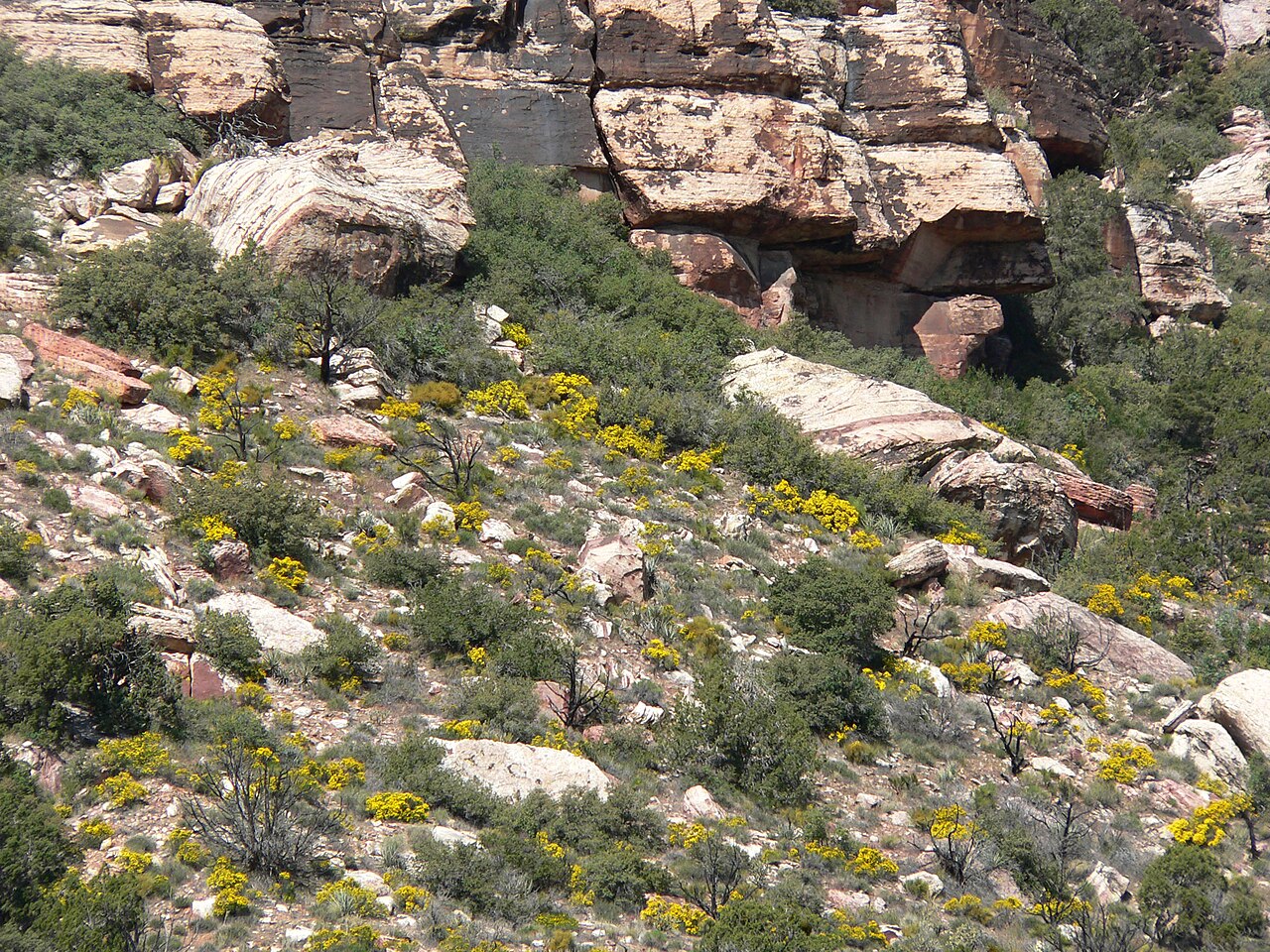
It grows among rocks, on coarse sandy and gravelly slopes and washes, in creosote bush and blackbrush scrub, Joshua tree woodland, chaparral and the lower pinyon-juniper woodland, from low desert elevations to roughly 6,500 feet.
📋 Regional plant lists featuring Narrowleaf Goldenbush: Utah & Western Colorado · Arizona & New Mexico · California & Nevada
Growing & Care Guide
Narrowleaf goldenbush is easy where its needs are met: hot sun, fast drainage and a dry summer. Overwatering and heavy, wet soil are the main ways to lose it.
Light
Full sun. In shade it becomes sparse and flowers poorly.
Soil & Water
Plant it in sandy, gravelly or rocky soil that drains quickly; a slope or raised mound helps in clay. Water young plants every week or two through their first spring and summer. Once established, it needs little or no supplemental water in desert and Mediterranean climates, and summer irrigation in hot weather can lead to root rot. A deep soak in a very dry winter improves the spring bloom.
Planting Tips
Plant in fall or early winter so roots can grow during the cool, rainy season. Space plants 3 to 4 feet apart. Use gravel or no mulch rather than thick organic mulch around the crown. It combines well with other desert and chaparral shrubs, wildflowers and cacti.
Pruning & Maintenance
Little care is needed. After flowering, you can lightly shear off spent flower stalks and tip back long stems to keep the shrub dense. Avoid cutting deep into old, leafless wood. Expect it to look gray and partly leafless in late summer; this is normal summer dormancy.
Propagation
Grow it from fresh seed sown in fall or winter, either on the surface or barely covered; germination is usually fair without treatment. Semi-hardwood cuttings taken in late spring or fall can also root.
Landscape Uses
- Desert and xeriscape gardens: a bright, very low-water spring accent
- Slopes and banks: a deep-rooted shrub for dry, rocky hillsides
- Pollinator gardens: abundant spring flowers for native bees and butterflies
- Habitat restoration: revegetation of desert and foothill scrub
- Mixed native borders: pairs with buckwheats, sages and desert wildflowers
Wildlife & Ecological Value
Narrowleaf goldenbush is a key spring nectar source in the desert and foothill shrublands where it grows.
For Pollinators
The flowers attract a wide range of native bees, including many solitary ground-nesting bees, as well as butterflies, bee flies and beetles. Mass bloom on a hillside can hum with insects on warm spring days.
For Birds
Small seed-eating birds such as sparrows and finches pick the seeds, and the dense shrubs give cover to birds and lizards on open desert slopes.
For Mammals
Its resinous foliage is little browsed, but the shrubs offer shade and shelter for desert rodents and other small mammals.
Ecosystem Role
As a long-lived, deep-rooted shrub, it helps stabilize rocky slopes and washes and is part of the diverse shrub mix of the Mojave Desert and interior California. It flowers at the same time as many annual wildflowers, adding to the spring food supply for pollinators.
Cultural & Historical Uses
The genus name Ericameria means “heath-like parts,” referring to the small, narrow, heather-like leaves of many species in the group. The species name linearifolia means “linear-leaved.”
This plant has carried several names over the years, including Haplopappus linearifolius, Stenotus linearifolius and Haplopappus interior, the source of the common name interior goldenbush. Botanists moved it into Ericameria in the 1990s based on studies of the goldenbush group.
It is a favorite of desert wildflower watchers because its mass bloom, as at Red Rock Canyon near Las Vegas, turns whole hillsides gold in a good spring.
Frequently Asked Questions
Is narrowleaf goldenbush evergreen?
Partly. It keeps its leaves through winter and spring, but often drops many of them in the heat of summer and looks gray until the rains return.
When does narrowleaf goldenbush bloom?
Mainly from March to May, with peak bloom in spring after winter rains.
How much water does narrowleaf goldenbush need?
Very little. Water it while it is young, then give little or no summer water once it is established.
Can I grow narrowleaf goldenbush in clay?
Only if drainage is good, such as on a slope or a raised mound. It does best in sandy, gravelly or rocky soil.
Does narrowleaf goldenbush attract pollinators?
Yes. Its spring flowers attract many native bees, butterflies and other insects.

Looking for a nursery that carries Narrowleaf Goldenbush?
Browse our native plant nursery directory: Arizona · California · Nevada · Utah