
Saltmarsh Morning-Glory (Ipomoea sagittata)
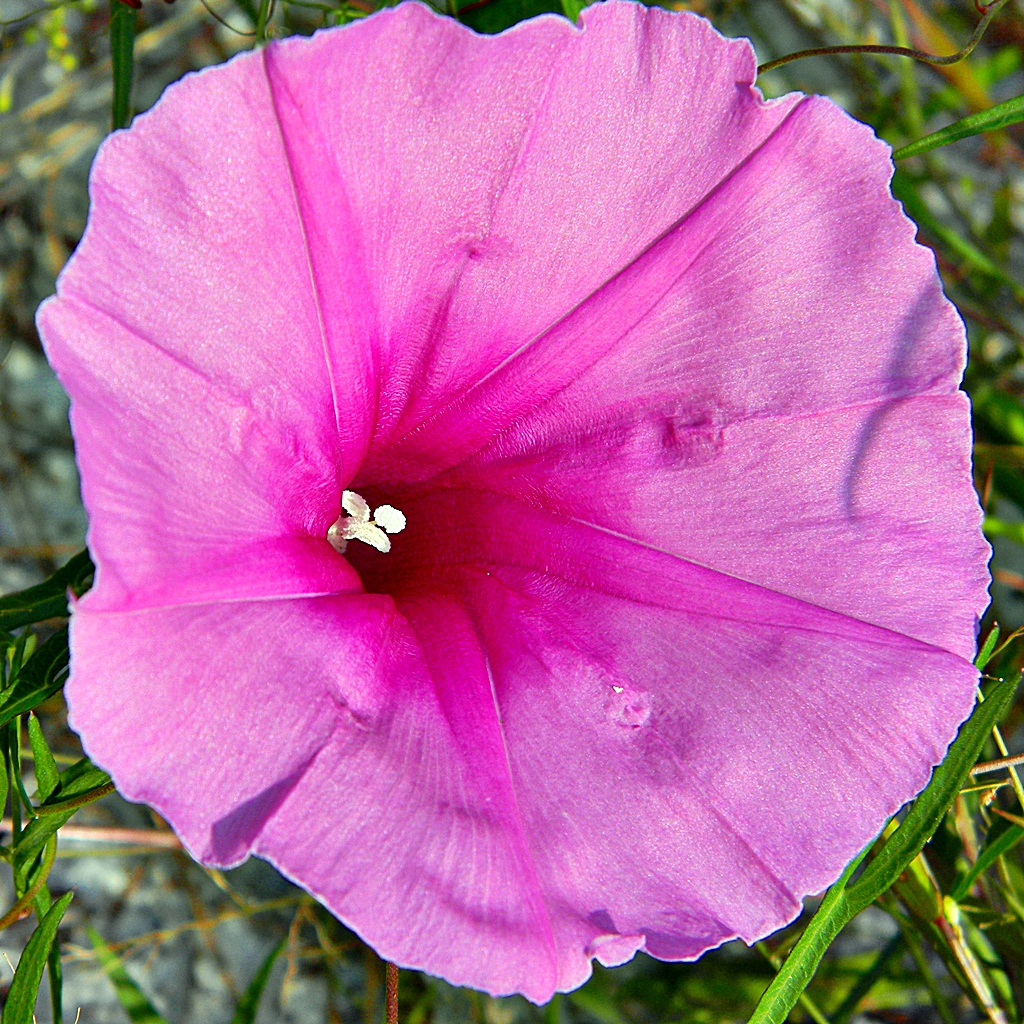
Ipomoea sagittata, known as Saltmarsh Morning-Glory (USDA: saltmarsh morning-glory), is a native perennial vine of the morning glory family (Convolvulaceae) that grows along the Atlantic and Gulf coasts of the southeastern United States. It is also called glades morning glory in Florida. Its slender stems twine through marsh grasses and shrubs or trail across sand, carrying big, funnel-shaped flowers of rosy pink to lavender with a dark magenta throat.
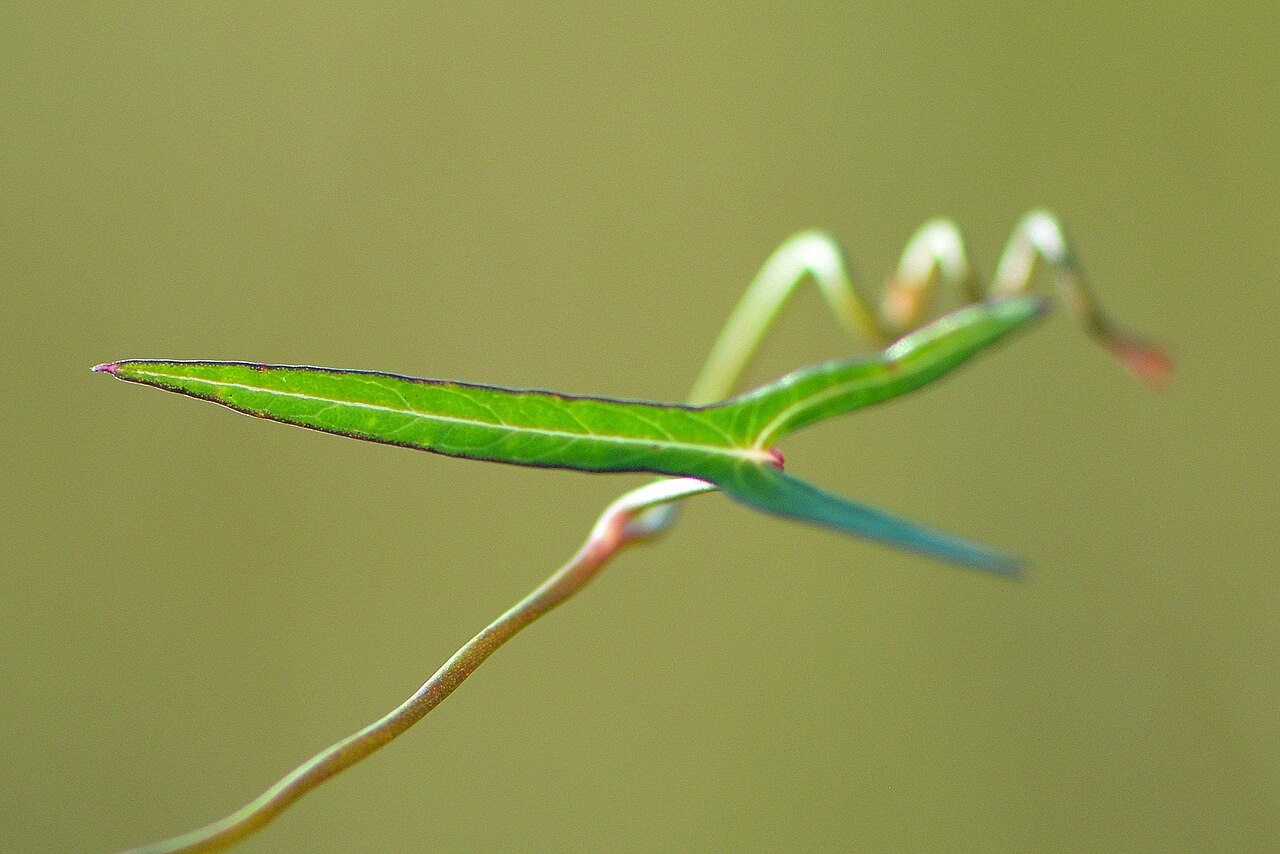
The plant is easiest to recognize by its leaves. Each one is narrow and shaped like an arrowhead, with two long, slender lobes that point backward from the base. That shape is where the scientific name comes from: sagittata means “arrow-shaped,” from the Latin sagitta, the same root as the arrowhead plants (Sagittaria) that often grow nearby. The flowers open in the morning and close by afternoon, and in warm climates the vine can bloom in almost any month.
Saltmarsh morning-glory tolerates salt spray, brackish water and wet, sandy soil, so it is a good choice for coastal gardens, rain gardens and the upper edges of salt marshes. It is not aggressive like some weedy morning glories, and it gives bees and other pollinators a long season of large, showy flowers. As with other morning glories, its seeds should not be eaten.
Identification
Saltmarsh morning-glory is a smooth, hairless vine with large pink flowers and narrow arrow-shaped leaves. It usually grows in sunny, moist, sandy or brackish spots near the coast.
Stems & Roots
The stems are slender, smooth and green to reddish. They twine around grasses, rushes and shrubs or sprawl across the ground, reaching several feet long, typically 3 to 10 feet. The plant is a perennial that comes back each year from its roots; in frost-free areas the stems may stay green all year, while farther north they die back in winter.
Leaves
The leaves are alternate and hairless, on short stalks. Each blade is about 1 1/2 to 4 inches long, long and narrow, with two backward-pointing basal lobes (sagittate to hastate). The central lobe and the side lobes are often linear, giving the leaf a very thin arrowhead or “wishbone” outline. Leaf width varies a lot between plants, but the arrow shape is consistent.
Flowers
The flowers are borne singly or in small clusters of two or three on stalks from the leaf axils. Each is a broad funnel 2 1/2 to 3 1/2 inches long and up to about 3 inches across, rose-pink, pink-purple or lavender with a darker magenta-purple center and white stamens. Like most morning glories, each flower lasts only a single morning. In Florida and South Texas flowers can appear year-round; farther north the main bloom is from late spring into fall.
Fruit & Seeds
After flowering, a rounded capsule about 1/2 inch across forms, holding up to four seeds. The capsules dry and split open, and the seeds can float and survive in seawater, which helps explain how the species spreads along coastlines.
Look-alikes
Beach Morning Glory (Ipomoea pes-caprae, railroad vine) has thick, rounded, notched leaves and grows on open beach sand. Fiddle-leaf beach morning glory (I. imperati) has white flowers. Tievine (I. cordatotriloba) and other pink morning glories have heart-shaped or three-lobed leaves rather than narrow arrowheads. Field bindweed (Convolvulus arvensis), a non-native weed, has arrow-shaped leaves too but much smaller, white to pale pink flowers.
Safety
Seeds of several morning glories contain alkaloids that can cause nausea, vomiting and other symptoms if eaten. The chemistry of this species has not been well studied, so treat it the same way: do not eat the seeds, and keep children and pets from chewing on seed capsules. Grazing animals rarely eat enough to cause problems, but large amounts of morning glory vines are best kept out of hay and pasture forage.
Quick Facts
| Scientific Name | Ipomoea sagittata |
| Family | Convolvulaceae (morning glory family) |
| Plant Type | Herbaceous perennial twining or trailing vine |
| Mature Height | Stems 3–10 ft long; climbs or trails, 1–3 ft tall when sprawling |
| Mature Spread | 3–10 ft |
| Growth Rate | Fast |
| Sun Exposure | Full sun |
| Water Needs | Medium to high; moist to wet sandy soil, tolerates brief flooding |
| Soil Type | Sand, sandy loam, brackish marsh edges; salt tolerant |
| Soil pH | About 6.0–8.0 |
| Bloom Time | Spring–fall; nearly year-round in Florida and South Texas |
| Flower Color | Rose-pink to lavender with a dark magenta throat |
| Fall Color | None; stems die back after frost in cooler areas |
| Fruit | Rounded capsule with up to 4 seeds |
| Deer Resistant | Moderate; occasionally browsed |
| USDA Hardiness Zones | 8–11 |
Native Range
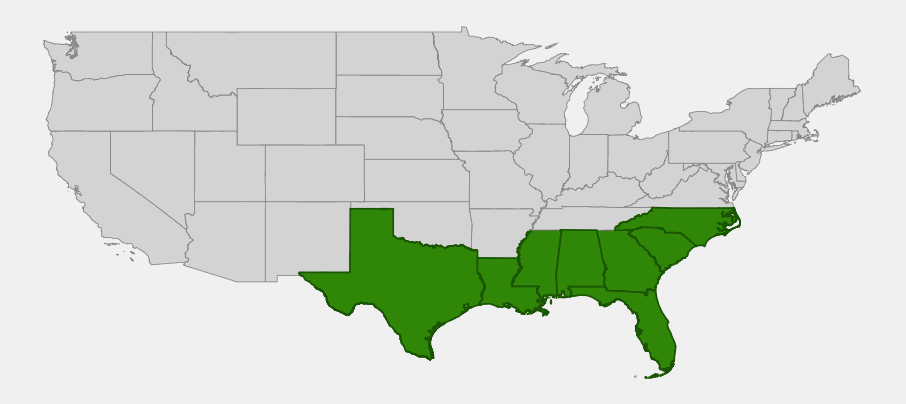
USDA PLANTS lists saltmarsh morning-glory as native to the lower 48 states, in Alabama, Florida, Georgia, Louisiana, Mississippi, North Carolina, South Carolina and Texas. The Lady Bird Johnson Wildflower Center describes its range as North Carolina south to Florida and west to Texas. Beyond the United States it grows in Mexico and the Caribbean. It was also carried to the Mediterranean region centuries ago and is naturalized in a few coastal spots there.
In the United States it is mostly a coastal plant. It grows on barrier islands and along the edges of salt and brackish marshes from the Outer Banks of North Carolina south through the Georgia and Carolina Lowcountry to all of peninsular Florida, including the Everglades and the Keys, then west along the Gulf Coast through the Florida Panhandle, Alabama, Mississippi and coastal Louisiana to the Texas coast and the lower Rio Grande Valley. In Florida it also occurs inland in wet prairies, marshes and ditches.
Typical habitats are open, sunny places with sandy or brackish soil: the upper edges of salt marshes, interdunal swales, coastal thickets and hammock edges, wet prairies, shores of brackish ponds and lagoons, and roadside ditches near the coast. It tolerates salt spray and occasional tidal flooding but not constant deep water.
📋 Regional plant lists featuring Saltmarsh Morning-Glory: Alabama, Georgia & Mississippi · North & South Florida · North & South Carolina · Arkansas, Louisiana, Eastern Oklahoma & Eastern Texas · South & West Texas
Growing & Care Guide
Saltmarsh morning-glory is easy to grow in warm coastal gardens with sun and moist, sandy soil. It is sold mainly by native plant nurseries in Florida and the Gulf Coast, and it is also easy to start from seed.
Light
Plant it in full sun. In shade it grows thin and flowers poorly. Flowers open in the morning, so a spot with good morning sun shows them off best.
Soil & Water
It does best in moist to wet sandy soil and tolerates brackish water, salt spray and short periods of flooding. It also grows in ordinary garden soil if watered during dry spells. It does not need fertilizer; rich soil produces leafy growth at the expense of flowers.
Planting Tips
Give it something to climb, such as a low fence, a trellis, tall grasses or shrubs, or let it scramble across the ground as a flowering cover. It works well along the edges of rain gardens, retention ponds and coastal plantings. Space plants about 3 feet apart. Avoid planting it where it can climb over small, slow-growing plants.
Pruning & Maintenance
Little care is needed. Trim stems that wander onto paths or neighboring plants. Where frost kills the tops, cut the dead stems back in late winter; new growth comes from the base in spring.
Propagation
Grow it from seed: nick or soak the hard seed coat overnight, then sow 1/4 inch deep in warm soil. Seeds germinate in one to two weeks. It can also be propagated from stem cuttings or by dividing established clumps.
Landscape Uses
- Coastal gardens: salt-tolerant flowering vine for sites near the beach or marsh
- Rain gardens and pond edges: moist, sunny margins of retention ponds and swales
- Living fences and trellises: twines up low fences, posts and arbors
- Pollinator gardens: large flowers visited by bees and other insects from spring to fall
- Marsh-edge restoration: upper salt marsh and brackish shoreline plantings
Wildlife & Ecological Value
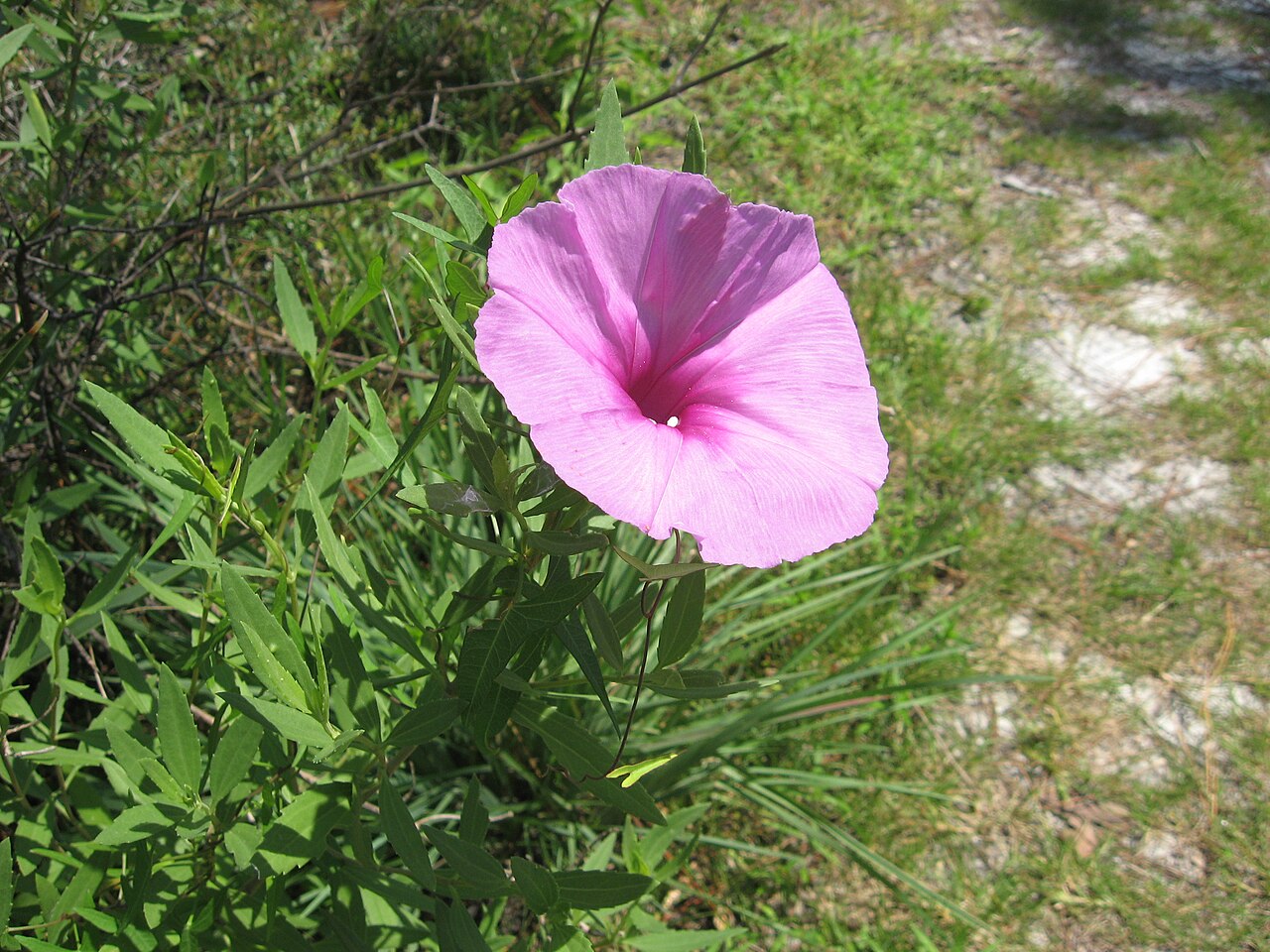
Saltmarsh morning-glory supports bees and other insects with its large flowers and provides cover along coastal marsh edges.
For Pollinators
The wide, open funnels are visited by bumble bees, carpenter bees and other native bees, which crawl deep into the throat for nectar and pollen. Specialist bees in the genus Melitoma, which collect pollen only from morning glories, forage on morning glories like this one. Butterflies and skippers also stop at the flowers.
For Birds
The tangle of stems among marsh grasses and shrubs offers cover for small birds such as marsh wrens and sparrows. The seeds are not a major bird food.
For Mammals
Rabbits and deer occasionally nibble the leaves and stems. Small mammals use the dense marsh-edge vegetation for shelter.
Ecosystem Role
As a vine of the upper marsh and dune swales, it helps hold sandy soil and adds diversity to coastal plant communities. Its leaves are eaten by tortoise beetles and other insects that specialize on the morning glory family, which in turn are food for birds and other predators.
Cultural & Historical Uses
The species was named by the French botanist Jean Louis Marie Poiret in the late 1700s. Its arrow-shaped leaves have been compared since then to those of arrowheads (Sagittaria), and the Lady Bird Johnson Wildflower Center notes that both names come from the Latin word for arrow. In Florida it is often called glades morning glory because of its abundance in the Everglades region.
Saltmarsh morning-glory is unusual among New World plants because it also grows naturally, or long naturalized, on Mediterranean coasts. Botanists think it reached Europe in the 1600s, possibly in ship ballast, as an ornamental or for medicinal uses, and the seeds’ ability to float may have helped it spread along shorelines there.
Several morning glories were used in traditional medicine and ceremonies, and some species are important crops, such as the sweet potato (Ipomoea batatas). Saltmarsh morning-glory itself has no important food use. Today it is valued mainly by coastal gardeners and restoration planners as a showy, salt-tolerant native vine.
Frequently Asked Questions
Is saltmarsh morning-glory invasive?
No. It is native to the Southeast and Gulf Coast and is not aggressive like the weedy, non-native morning glories and bindweeds. It spreads moderately by its stems and seeds in moist, sunny places.
Can it grow away from the coast?
Yes. It needs sun, warmth and moist soil rather than salt. It grows well in inland gardens within its hardiness range if the soil does not dry out for long.
Is saltmarsh morning-glory toxic?
Morning glory seeds can contain alkaloids that cause nausea and other symptoms if eaten. Do not eat any part of the plant, and keep the seeds away from children and pets.
How can I tell it from other pink morning glories?
Look at the leaves. Saltmarsh morning-glory has narrow, arrowhead-shaped leaves with long, slender basal lobes, while most other pink morning glories have heart-shaped or three-lobed leaves.
When does it bloom?
In Florida and South Texas it can bloom in almost any month. Farther north, it flowers mainly from late spring through fall. Each flower opens for one morning only.

Looking for a nursery that carries Saltmarsh Morning-Glory?
Browse our native plant nursery directory: Alabama · Florida & Georgia · Louisiana & Mississippi · North Carolina · South Carolina & Texas