
Clustered Mountainmint (Pycnanthemum muticum)
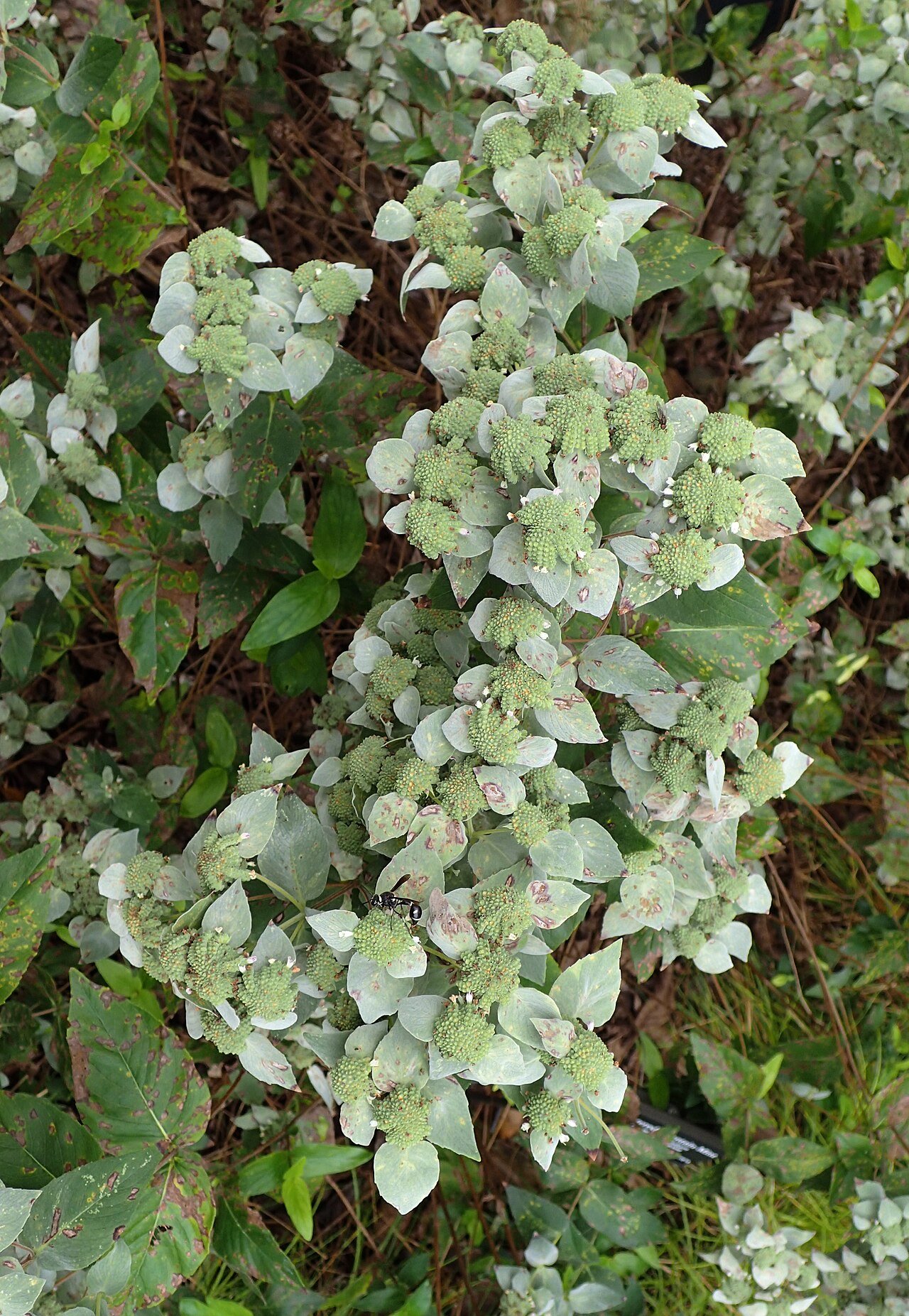
Pycnanthemum muticum, known as Clustered Mountainmint, short-toothed mountain mint or blunt mountain mint, is a bushy, fragrant perennial of moist meadows, woodland edges and thickets in the eastern United States. It belongs to the mint family (Lamiaceae). Its square stems grow 1 to 3 feet tall and carry broad, opposite leaves with a strong, minty scent.
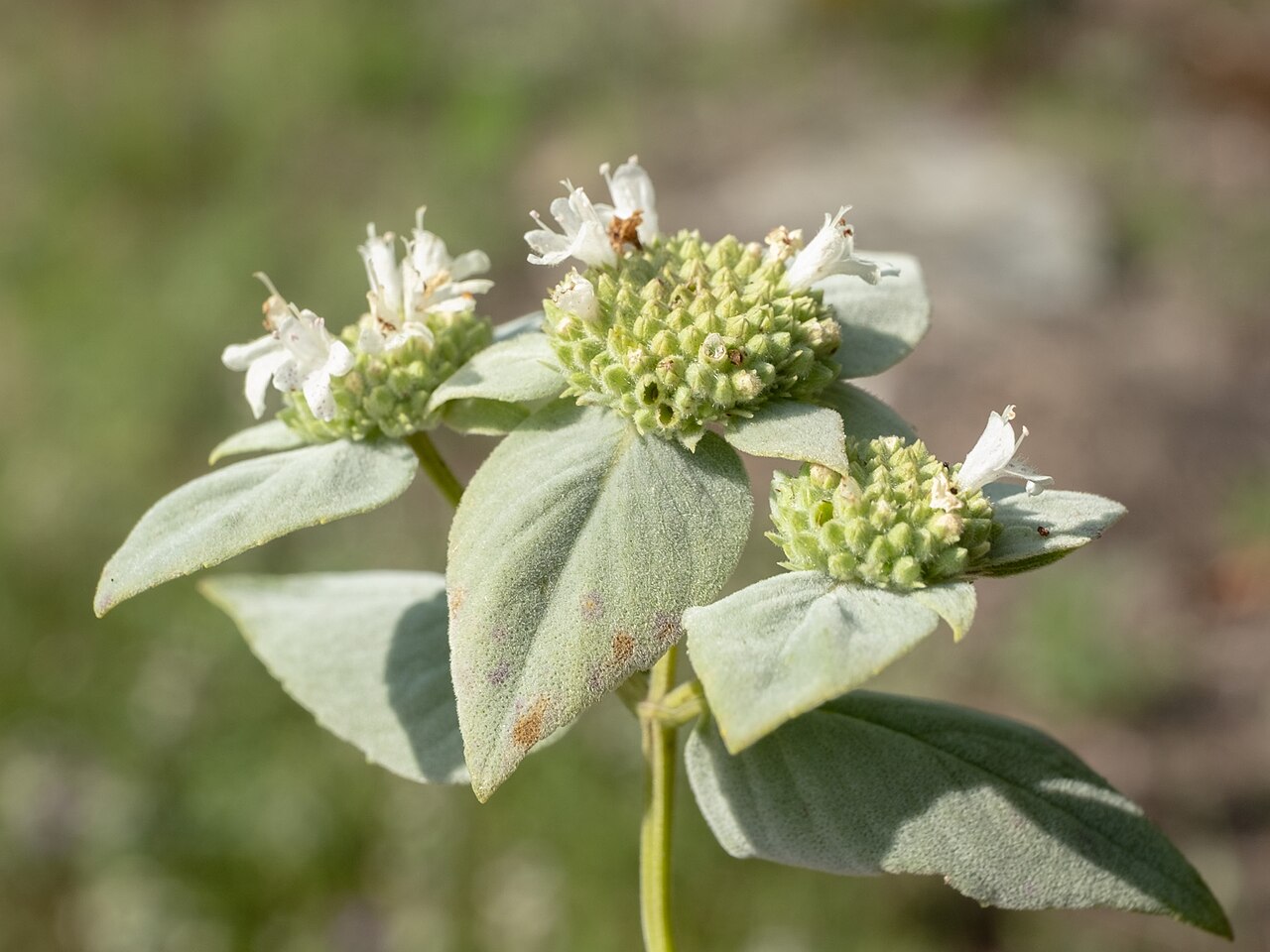
From July to September it produces dense, button-like heads of tiny white to pale pink flowers, clustered at the tops of the stems. The upper leaves and the bracts around the flower heads are dusted with a silvery-white coating, so the plants look as if they have been lightly frosted. The effect lasts for weeks and is one of the most striking sights in a summer garden.
Clustered mountainmint is one of the best native plants for pollinators. Its flowers draw an extraordinary variety of bees, wasps, flies, beetles and butterflies. It is easy to grow in sun or part shade, tolerates moist soils, and is rarely eaten by deer. It spreads by rhizomes, so give it room or plan to divide it.
Identification
Look for a bushy mint with broad, toothed leaves, a strong minty smell when crushed, and flat clusters of button-like flower heads surrounded by frosty, silvery-white bracts.
Growth Habit
An upright, clump-forming perennial with square, branching stems 1 to 3 feet tall, spreading by shallow rhizomes into colonies. The stems are covered with short hairs. All parts have a strong mint scent.
Leaves
The leaves are opposite, oval to lance-shaped, 1 to 3 inches long and relatively broad, with rounded to slightly heart-shaped bases, short stalks or none, and shallowly toothed edges. They are dark green below the flower clusters, while the upper leaves and bracts are coated with a silvery-white, powdery bloom in summer.
Flowers
From July to September, the stems end in branched, flat-topped clusters of dense, rounded heads about 1/2 inch wide. Each head holds many tiny, two-lipped flowers, about 1/4 inch long, white to pale pink or lavender with small purple spots on the lower lip. Only a few flowers in each head open at a time, so the bloom lasts a long time. The calyx teeth are short and blunt, which gives the species its name muticum, “blunt.”
Fruit
Each flower produces four tiny, dark nutlets, which ripen in fall inside the persistent calyx. The dry, brown flower heads stay on the plants into winter.
Look-alikes
Other mountainmints have narrower leaves. Virginia mountain mint (P. virginianum) and narrowleaf mountainmint (P. tenuifolium) have narrow, linear to lance-shaped leaves and lack the strong silvery bracts. Hoary mountain mint (P. incanum) has whitish upper leaves too, but its leaves are more densely hairy beneath and its flower clusters are looser.
Quick Facts
| Scientific Name | Pycnanthemum muticum |
| Family | Lamiaceae (mint family) |
| Plant Type | Herbaceous perennial |
| Mature Height | 1–3 ft |
| Mature Spread | 2–3 ft (spreads by rhizomes) |
| Growth Rate | Fast |
| Sun Exposure | Full sun to part shade |
| Water Needs | Medium to high; moist soil preferred |
| Soil Type | Loam, clay or sandy soil; tolerates wet soil |
| Soil pH | Acidic to neutral (about 5.0–7.0) |
| Bloom Time | July–September |
| Flower Color | White to pale pink, with silvery bracts |
| Fall Color | None notable; seed heads persist |
| Fruit | Tiny nutlets |
| Deer Resistant | Yes |
| USDA Hardiness Zones | 4–8 |
Native Range
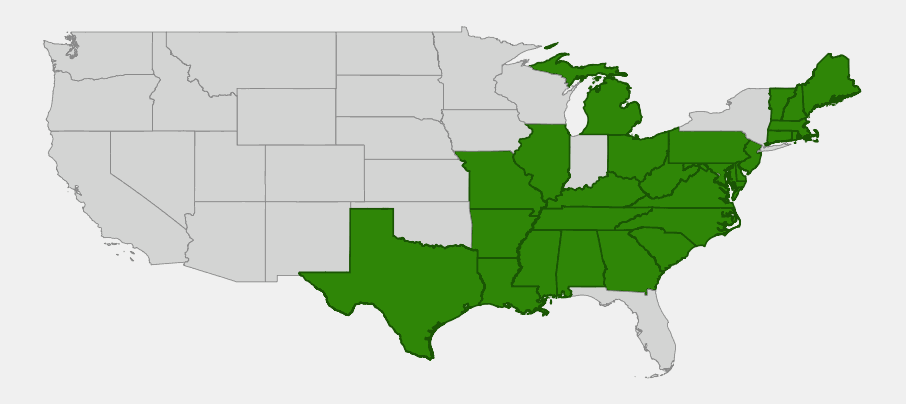
Clustered mountainmint is native to the eastern United States. USDA PLANTS lists it as native in 26 states, from southern Maine, New Hampshire and Vermont through southern New England, New Jersey and Pennsylvania, west to Ohio, southern Michigan, Illinois and Missouri, and south to Georgia, the Gulf states and eastern Texas. It is not native in Canada.
It is most common on the Atlantic Coastal Plain and Piedmont, from New Jersey to the Carolinas and Georgia, and in the Appalachian region. It is scattered and uncommon toward the edges of its range, such as northern New England, Michigan, Illinois, Missouri and Texas, where it grows mainly in the eastern part of the state.
It grows in moist to wet, sunny or partly shaded places: wet meadows, the edges of marshes, bogs and swamps, damp woodland openings and edges, stream banks, thickets, power-line corridors and moist roadsides. It is often found in acidic soils on the Coastal Plain.
📋 Regional plant lists featuring Clustered Mountainmint: New York, Pennsylvania & Northern New Jersey · Ohio & Indiana · Michigan, Wisconsin & Eastern Minnesota · Kentucky & Tennessee · Connecticut, Massachusetts & Rhode Island · New Hampshire, Maine & Vermont · Maryland, Virginia & West Virginia · Delaware, Southern New Jersey & Long Island · Illinois, Iowa & Missouri · Alabama, Georgia & Mississippi · North & South Carolina · Arkansas, Louisiana, Eastern Oklahoma & Eastern Texas
Growing & Care Guide
Clustered mountainmint is easy to grow and widely available from native plant nurseries. It is one of the most popular native perennials for pollinator gardens, both for its long bloom and its silvery summer display.
Light
Full sun to part shade. It flowers most heavily in full sun but still blooms well with a few hours of direct light.
Soil & Water
Grows in average to moist loam, clay or sandy soil, and tolerates wet soil and short flooding. Once established it also tolerates moderate drought, although it looks best with steady moisture.
Planting Tips
Plant in spring or fall, 2 to 3 feet apart. It spreads by rhizomes into a broad clump, so place it where it can fill in, such as a rain garden, meadow, pond edge or the back of a pollinator border. In smaller beds, plant it in a bottomless container sunk in the ground or divide it every few years.
Pruning & Maintenance
No pruning is needed. Leave the stems and seed heads standing over winter for structure, seeds and nesting sites for insects, and cut them back in spring. Dig out runners that spread beyond their space.
Propagation
It is easy to divide in spring or fall. It also grows from stem cuttings in early summer, and from seed, which is tiny and should be sown on the soil surface after cold stratification.
Landscape Uses
- Pollinator gardens: one of the best native plants for a wide variety of insects
- Rain gardens and wet meadows: thrives in moist and periodically wet soils
- Deer-resistant plantings: its strong scent deters deer and rabbits
- Silvery summer accent: frosted bracts light up the garden for weeks
- Herb and cut flower uses: fragrant leaves and long-lasting stems for arrangements
Wildlife & Ecological Value
Clustered mountainmint is famous among gardeners and naturalists for the number and variety of insects it attracts.
For Pollinators
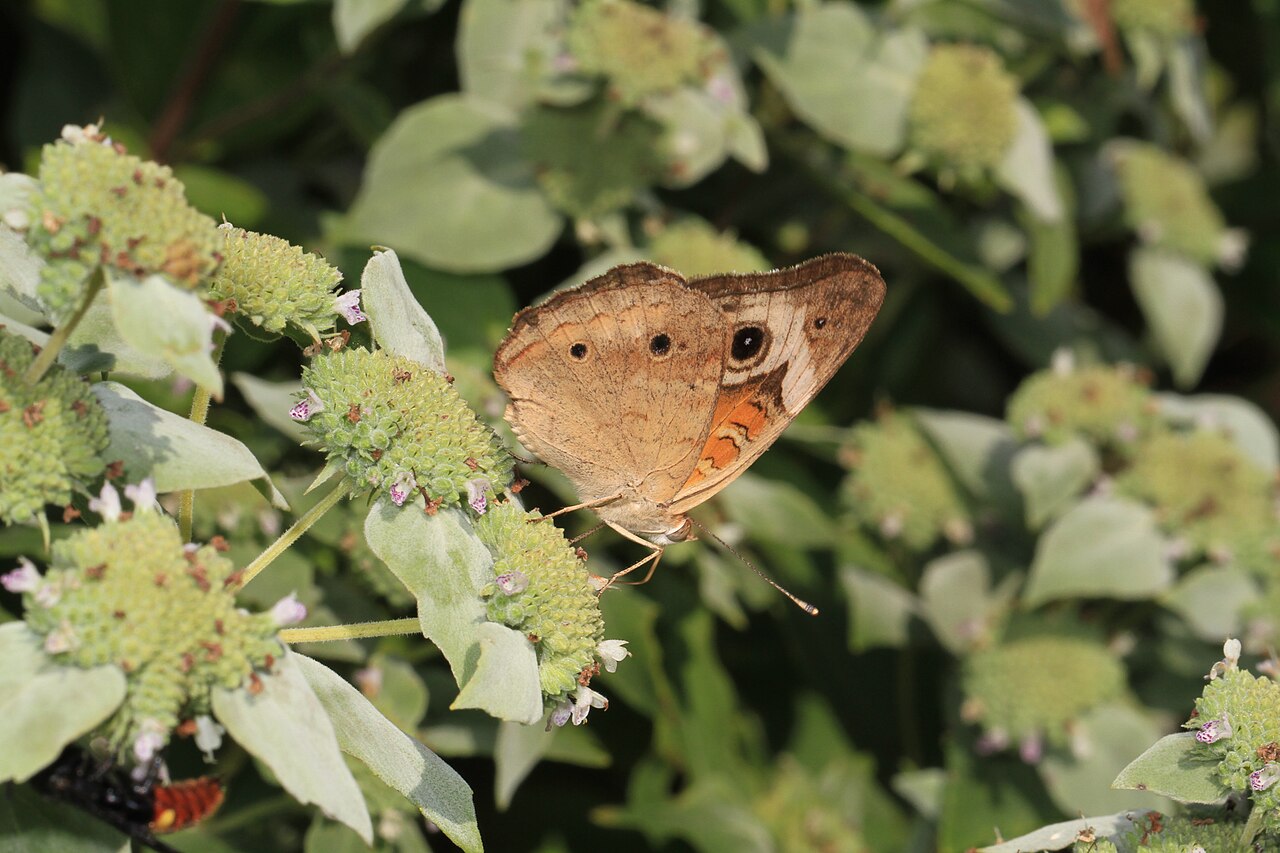
Its flowers are visited by an extraordinary range of insects, including honeybees, bumblebees, many small native bees, thread-waisted and other wasps, flower flies, tachinid flies, soldier beetles and butterflies such as hairstreaks, skippers and buckeyes. Because only a few flowers in each head open at a time, it supplies nectar for many weeks. Many of these wasps and flies are predators or parasitoids that help control garden pests.
For Birds
Birds eat the insects that visit the flowers, and some seed-eating birds pick at the dry seed heads in fall and winter.
For Mammals
Deer and rabbits usually avoid it because of its strong mint scent and oils.
Ecosystem Role
In wet meadows and woodland edges it supports a rich community of pollinators and beneficial insects. Its rhizomes help hold soil along stream banks and in rain gardens, and its standing stems shelter overwintering insects.
Cultural & Historical Uses
The genus name Pycnanthemum comes from the Greek pyknos, “dense,” and anthemon, “flower,” referring to the tightly packed flower heads. The species name muticum means “blunt,” for the short, blunt calyx teeth. The common name “mountain mint” is a bit of a misnomer, since most species grow in lowlands.
Mountain mints have a long history of use as tea and flavoring herbs, and their leaves have a strong, minty-pennyroyal scent. Like other mints with pulegone-rich oils, they should not be used in large amounts or by pregnant women.
The French botanist André Michaux, who explored eastern North America in the late 18th century, first described this plant in 1803 under the name Brachystemum muticum. Today it is a favorite of native plant gardeners and is widely sold as a pollinator plant.
Frequently Asked Questions
Is clustered mountainmint invasive?
It is native and not invasive, but it spreads by rhizomes and can form large clumps. Divide it every few years or give it room to spread.
Why are the leaves silvery?
The upper leaves and bracts are covered with a fine, silvery-white coating in summer, which is thought to make the small flowers more visible to pollinators.
Is clustered mountainmint deer resistant?
Yes. Its strong mint scent makes it unappealing to deer and rabbits.
Does clustered mountainmint need wet soil?
It prefers moist soil and tolerates wet conditions, but it grows well in average garden soil and tolerates some drought once established.
What insects visit clustered mountainmint?
Bees, wasps, flies, beetles and butterflies all visit it in large numbers, making it one of the top native plants for pollinator gardens.

Looking for a nursery that carries Clustered Mountainmint?
Browse our native plant nursery directory: Alabama & Arkansas · Connecticut, Delaware & Georgia · Illinois · Kentucky, Louisiana, Maine, Maryland, Massachusetts, Michigan, Mississippi & Missouri · New Hampshire, New Jersey, North Carolina & Ohio · Pennsylvania, Rhode Island, South Carolina, Tennessee, Texas, Vermont & Virginia · West Virginia

