
Coast Tarweed (Madia sativa)
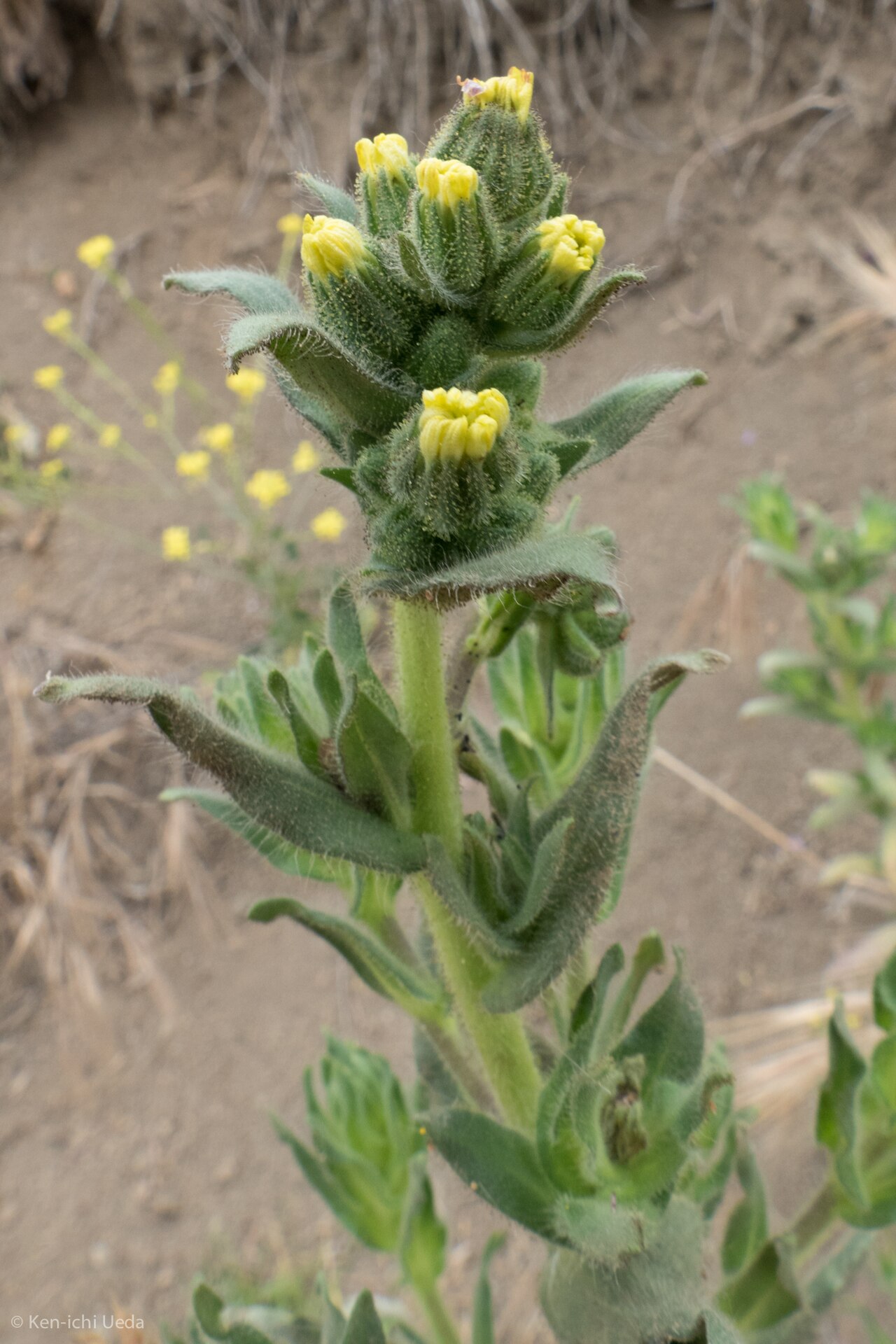
Madia sativa, known as Coast Tarweed or Chilean tarweed, is a sticky, strongly scented annual wildflower of the sunflower family (Asteraceae). It grows along the Pacific Coast of North America, mainly in California, Oregon and Washington, and also in Chile and Argentina, one of a number of plants that share this unusual split range between the two hemispheres.
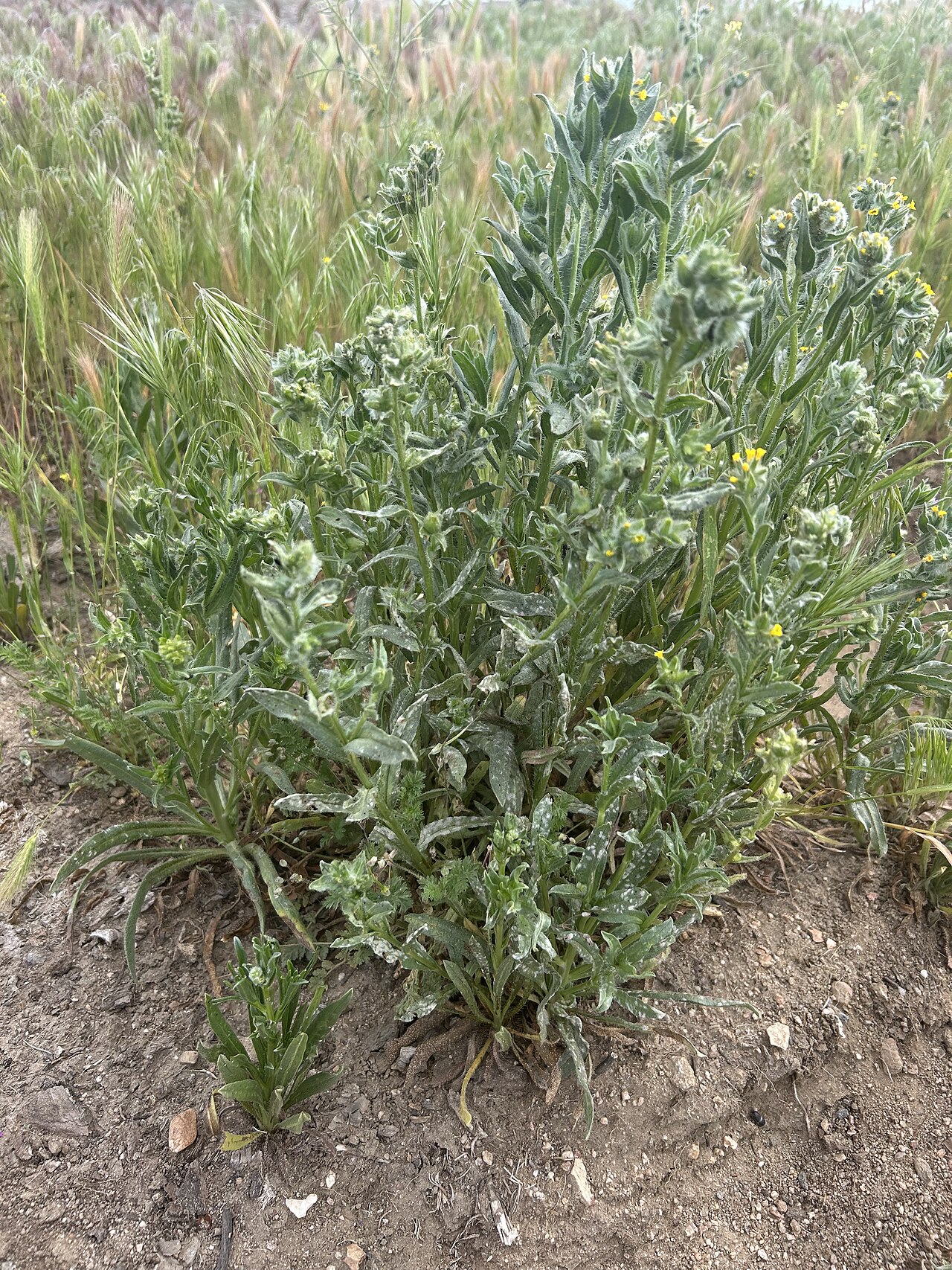
Coast tarweed is an upright, leafy plant, usually 1 to 3 feet tall but sometimes much taller, covered in glandular hairs that leave a resinous, tar-like smell on your hands. From late spring into fall it bears clusters of small yellow flower heads, each with a few short rays around a center of dark-tipped disc flowers. It is a plant of coastal grasslands, open slopes, valley meadows and disturbed ground, and it flowers in the dry season when most annuals are long finished.
It is not a showy garden flower, but it has a place in restoration plantings, meadows and wildlife gardens, where its late flowers feed bees and its oily seeds feed birds. Its seeds were once grown in Chile and Europe as an oil crop, which is where the name sativa, “cultivated”, comes from. This guide covers how to identify it, where it grows natively, how to grow it and its value to wildlife.
Identification
Coast tarweed is easy to recognize by touch and smell: the whole plant is sticky and has a heavy, resinous scent. Its small flower heads and dense, narrow leaves help separate it from the showier tarweeds.
Growth Habit
Coast tarweed is an annual that germinates with the winter rains, forms a low leafy rosette, and then sends up one or more erect, leafy stems in late spring. Plants are usually 1 to 3 feet tall; in rich or disturbed soil they can grow taller, and on poor coastal bluffs they may flower at only a few inches. The stems may be single or branched, giving a narrow, spiky look or a bushier clump.
Leaves
The leaves are narrow, linear to lance-shaped and stalkless, the lowest up to about 7 inches long and the upper ones shorter. They are crowded along the stem, hairy and gray-green, and like the stem they are covered with stalked, sticky glands that release the plant’s strong smell.
Flowers
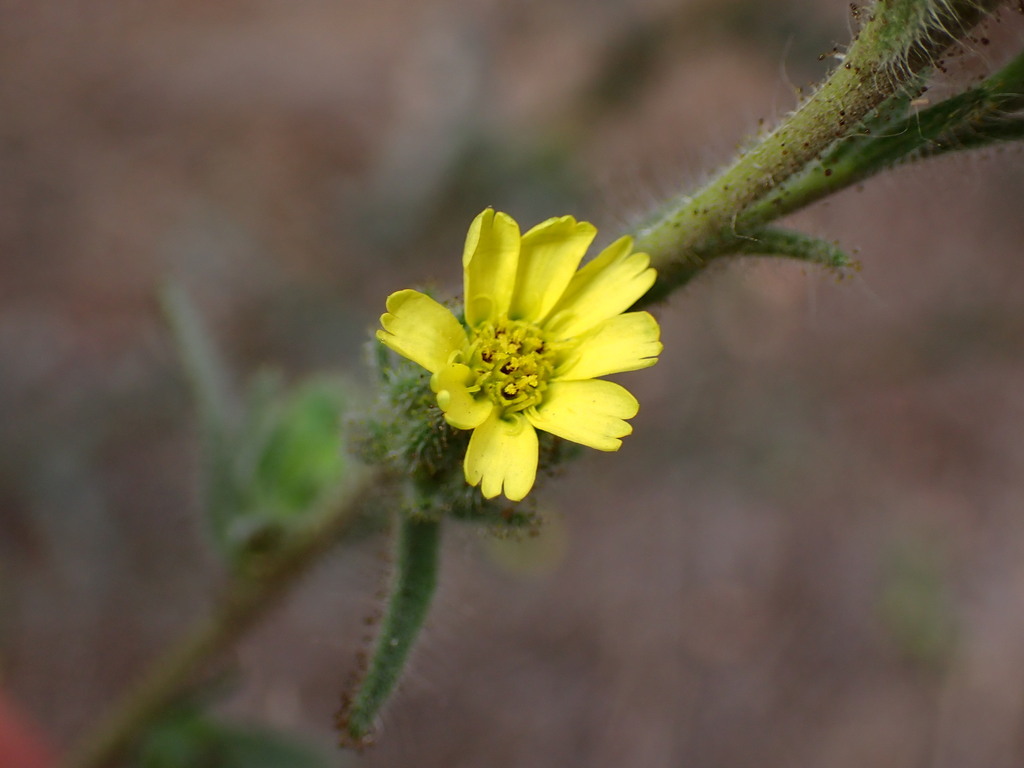
The flower heads are small, about 1/4 to 1/2 inch across, and are borne in tight clusters near the top of the stems or in the upper leaf axils. Each head has about 5 to 8 short, pale to bright yellow ray flowers around a few disc flowers with dark anthers. The bracts around the head are bristly and glandular. Flowering runs from about May to October, peaking in summer. Like other madias, the heads tend to open fully in cool or overcast weather and partly close in hot sun.
Fruit & Seeds
Each flower produces a flattened, dark, hairless seed-like fruit (an achene) with no pappus of bristles or scales. The seeds are rich in oil and are held inside the sticky bracts until they fall or are taken by birds.
Look-alikes
Common madia (Madia elegans) has much larger, showy flower heads with broad yellow rays, often with a maroon spot at the base. Slender tarweed (Madia gracilis) is a more slender, open-branched plant with heads on longer stalks. Gumplants such as coastal gumplant (Grindelia) are also sticky but have larger heads with gummy, curled bracts.
Quick Facts
| Scientific Name | Madia sativa Molina |
| Family | Asteraceae (sunflower family) |
| Plant Type | Annual herb (sometimes a winter annual) |
| Mature Height | 1–3 ft (rarely to 6 ft or more) |
| Mature Spread | 6–18 in |
| Growth Rate | Fast |
| Sun Exposure | Full sun to light shade |
| Water Needs | Low; grows on winter rain and stored soil moisture |
| Soil Type | Clay, loam or sandy soils; tolerates poor and disturbed ground |
| Soil pH | About 5.5–7.5 |
| Bloom Time | May–October |
| Flower Color | Yellow |
| Fall Color | None; plants dry to brown after seeding |
| Fruit | Flattened, dark, oily achenes without pappus |
| Deer Resistant | Generally avoided because of its sticky, strong-smelling foliage |
| USDA Hardiness Zones | Annual; native range roughly zones 7–10 |
Native Range
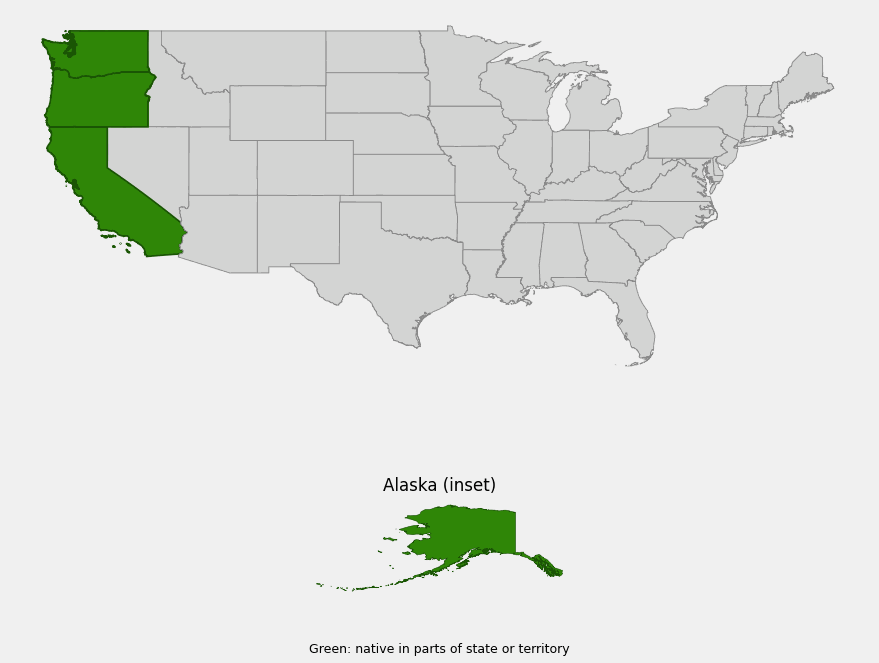
Coast tarweed is native to western North America and to southern South America. USDA PLANTS lists it as native in California, Oregon and Washington, and also in Alaska, where it is known only from outlying records at the far northern edge of its range. In California it is widespread in the coastal counties and in the foothills of the Coast Ranges and Sierra Nevada, and it extends south into Baja California.
In Oregon and Washington it grows mainly west of the Cascades, in the Willamette Valley, the Puget Trough and along the coast. It also occurs on southern Vancouver Island and the Gulf Islands in British Columbia; USDA treats the Canadian records as introduced, although other sources consider the plant native there. Records from the eastern United States, Hawaii, Ontario and Quebec are introductions, mostly from contaminated seed, and are not part of its native range. In South America it is native to Chile and Argentina.
Typical habitats are coastal prairies and bluffs, valley grasslands, open woodland edges, roadsides, field margins and other open, often disturbed ground, from sea level into the foothills.
📋 Regional plant lists featuring Coast Tarweed: Western Oregon & Western Washington · California & Nevada · Idaho, Eastern Oregon & Eastern Washington
Growing & Care Guide
Coast tarweed is an easy annual for sunny, informal plantings on the West Coast. It is rarely sold as a plant, but seed is sometimes available from native seed suppliers and in restoration mixes. It reseeds readily, so give it room where a little self-sowing is welcome.
Light
Grow it in full sun. It tolerates light shade near the coast, but plants in shade become lanky and flower less.
Soil & Water
Coast tarweed is not fussy about soil and grows in clay, loam or sand, including poor and compacted ground. Sow it in fall so winter rains establish the seedlings. Once growing, it needs no summer water: its deep taproot and sticky, water-conserving foliage let it flower through the dry season. Extra water and fertilizer only make it tall and floppy.
Planting Tips
Scatter seed on bare, lightly raked soil in fall, just before the rains, and press it in. Thin seedlings to 6 to 12 inches apart if you want bushier plants. Combine it with native bunchgrasses, common madia, hayfield tarweed, yarrow and other summer-flowering annuals and perennials in a meadow planting. Keep it away from paths, since the sticky foliage marks clothing and pet fur.
Pruning & Maintenance
No pruning is needed. Leave the plants standing after flowering so the seeds can ripen for birds and for next year’s plants, then pull or cut the dry stems in late fall. Wear gloves when handling it, as the resin is hard to wash off.
Propagation
Grow it from seed. Collect the dark achenes from dry heads in late summer and fall and sow them outdoors in fall. Germination is usually good with the first cool, wet weather. Plants do not transplant well once the taproot forms, so sow in place or move seedlings while small.
Landscape Uses
- Restoration plantings: a fast-growing native annual for coastal prairie and valley grassland restoration
- Meadow and wildlife gardens: late-season yellow flowers when most annuals are finished
- Bee gardens: summer and fall pollen and nectar for native bees
- Bird gardens: oily seeds for finches, sparrows and other seed-eating birds
- Difficult sites: tolerates poor, compacted and disturbed soils with no summer water
Wildlife & Ecological Value
As a summer- and fall-flowering annual, coast tarweed fills a seasonal gap in West Coast grasslands, when little else is in bloom.
For Pollinators
The small yellow heads are visited by native bees, including small sweat bees and other solitary bees, as well as flies and other insects. Tarweeds as a group are important late-season pollen sources in California grasslands, and some native bees specialize on plants of the tarweed tribe.
For Birds
The oily seeds are eaten by seed-eating birds such as goldfinches, sparrows and juncos, which pick them from the dry heads in late summer and fall.
For Mammals
Small mammals eat the fallen seeds. The sticky, strong-smelling foliage is not a preferred browse for deer or livestock.
Ecosystem Role
Coast tarweed quickly colonizes bare and disturbed ground, helping cover soil after fire, grazing or digging, and it adds late-season flowers and seeds to grassland food webs. Its sticky glandular hairs often trap small insects, a common feature of tarweeds.
Cultural & Historical Uses
The species name sativa means “cultivated”. The plant was grown in Chile for the oil pressed from its seeds, known as madi oil, and in the nineteenth century it was tried as an oil-seed crop in Europe. It was described by the Chilean naturalist Juan Ignacio Molina in 1782. The genus name Madia comes from madi, its Chilean name.
Native peoples of California gathered the oily seeds of several tarweeds, often by beating the heads into baskets, and parched and ground them into meal. Tarweed seeds were among the many wild seeds used in this way.
The common name “tarweed” refers to the sticky, resinous glands and heavy scent shared by Madia and its relatives. On a hot summer day, a field of tarweeds gives off a distinctive smell that many Californians associate with dry hills in late summer.
Frequently Asked Questions
Is coast tarweed native?
Yes, on the West Coast. It is native to California, Oregon and Washington (with outlying records in Alaska) and to Chile and Argentina. Populations in the eastern United States and Hawaii are introduced.
Why is it called tarweed?
The plant is covered with sticky glandular hairs that give it a resinous, tar-like smell and leave a residue on hands and clothing.
When does coast tarweed bloom?
Mainly from late spring through fall, about May to October, after most other annual wildflowers have finished.
Does coast tarweed need summer water?
No. It grows with the winter rains and flowers in the dry season on stored soil moisture. Summer water makes it tall and floppy.
Is coast tarweed good for wildlife?
Yes. Its late flowers feed native bees and other insects, and its oily seeds are eaten by finches, sparrows and small mammals.

Looking for a nursery that carries Coast Tarweed?
Browse our native plant nursery directory: Alaska · California · Oregon · Washington

