
Smooth Mule-Ears (Wyethia glabra)
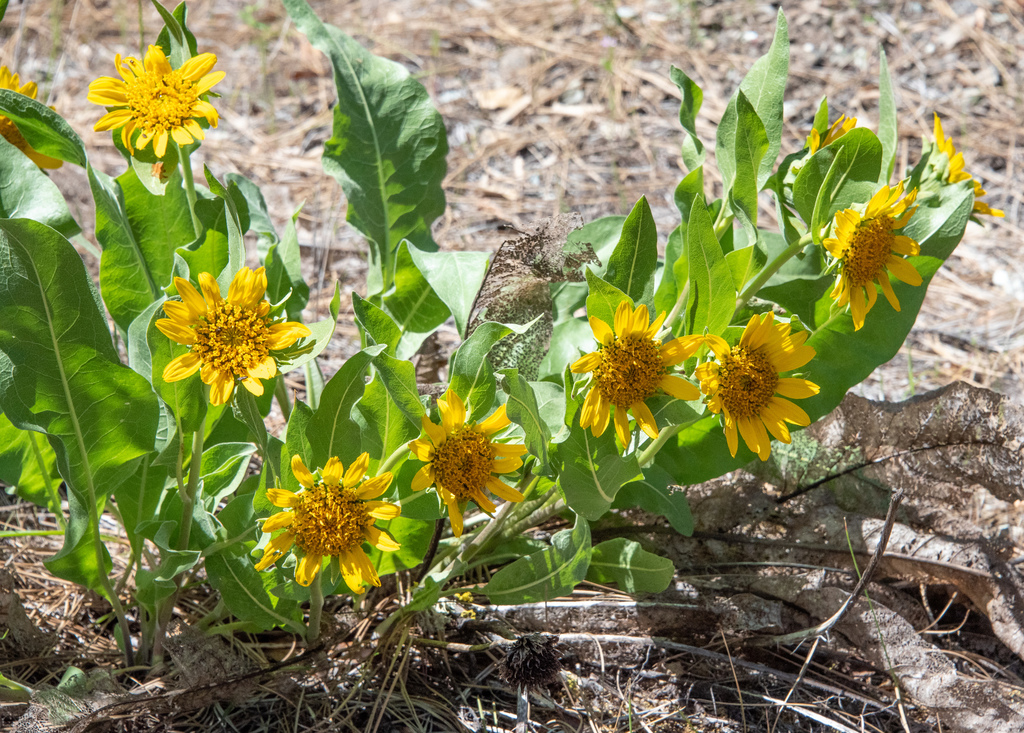
Wyethia glabra, known as Smooth Mule-Ears or Coast Range mule’s ears (the name used by USDA PLANTS), is a bold spring wildflower of the grasslands and oak woodlands of California’s Coast Ranges. From a deep taproot it sends up clumps of large, shiny, bright green leaves shaped like a mule’s ears, and in spring it opens big, sunflower-like heads of golden yellow rays that light up hillsides from the North Bay to the Central Coast.
It is one of about a dozen Wyethia species, all western North American members of the sunflower family (Asteraceae). Unlike its close relative woolly mule-ears (Wyethia mollis) of the Sierra Nevada, whose leaves are covered in white wool, smooth mule-ears has green leaves that are smooth to only slightly hairy, which gives it its name (glabra means “smooth” or “hairless”).
Smooth mule-ears is a California endemic, found nowhere else. It is long-lived, drought tolerant and summer-dormant, making it a striking, low-water plant for California native gardens that can handle its large leaves and deep root. This guide covers identification, range and how to grow it.
Identification
Smooth mule-ears is recognized by its big, upright, glossy green leaves in clumps and its large yellow sunflower-like heads in spring. It is easy to separate from most other Coast Range wildflowers by size alone.
Growth Habit
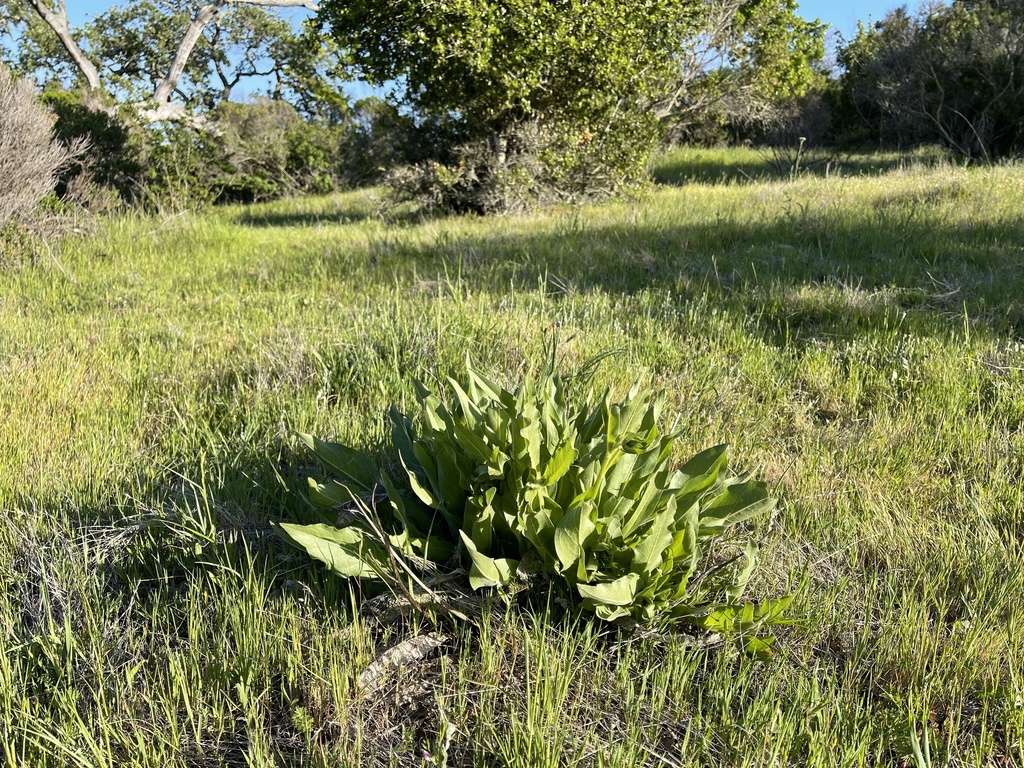
Plants grow from a thick, deep taproot and woody crown, forming clumps of large basal leaves 1 to 2 feet tall. Flowering stems rise to about 1 to 2½ feet, usually shorter than or about as tall as the leaves. Old plants can form broad clumps several feet across. The leaves die back and turn brown and papery in summer.
Leaves
The basal leaves are large, broadly lance-shaped to oval, up to about 18 inches long and 6 inches wide, with prominent pale midribs. They are bright green and smooth to sparsely hairy and somewhat glandular, often slightly shiny, and stand upright or arch outward. Smaller leaves grow along the flowering stems.
Flowers
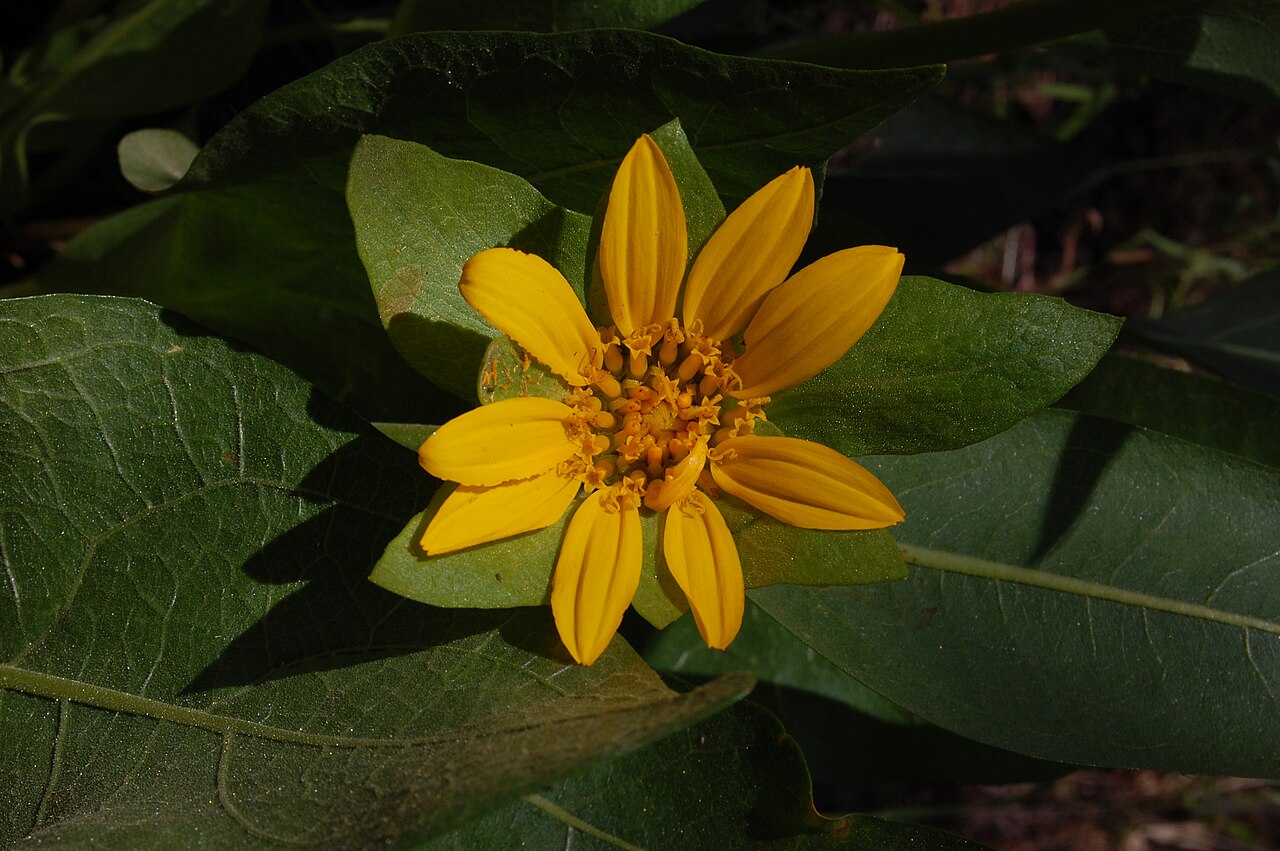
From about March to June, each stem bears one or sometimes a few large flower heads 2 to 4 inches across. Each head has up to about 21 golden-yellow ray florets, each up to 2 inches long, around a central disk of many small yellow disk florets. The heads are cupped by large, leafy, lance-shaped bracts (phyllaries).
Fruit & Seeds
The flower heads mature into bristly, brownish seed heads in early summer. The seeds (achenes) are fairly large, angled, and topped by a short crown of scales. They fall near the parent plant or are carried off by rodents and birds.
Look-alikes
Narrowleaf mule’s ears (Wyethia angustifolia) has narrower, rough-hairy leaves and grows in meadows and grasslands in central and northern California. Gray mule’s ears (Wyethia helenioides) has gray, woolly leaves. Woolly mule-ears (W. mollis) of the Sierra Nevada has densely white-woolly leaves. Arrowleaf balsamroot (Balsamorhiza sagittata) has arrow-shaped, silvery leaves.
Quick Facts
| Scientific Name | Wyethia glabra |
| Family | Asteraceae (sunflower family) |
| Plant Type | Herbaceous perennial with a deep taproot; summer-dormant |
| Mature Height | 1–2½ ft |
| Mature Spread | 2–3 ft |
| Growth Rate | Slow |
| Sun Exposure | Full sun to part shade |
| Water Needs | Low; dry in summer once established |
| Soil Type | Clay, loam or rocky soils; well-drained |
| Soil pH | About 6.0–7.5 |
| Bloom Time | March–June |
| Flower Color | Bright golden yellow |
| Fall Color | Leaves brown and papery in summer and fall |
| Fruit | Angled achenes in bristly seed heads |
| Deer Resistant | Moderate |
| USDA Hardiness Zones | 8–10 |
Native Range
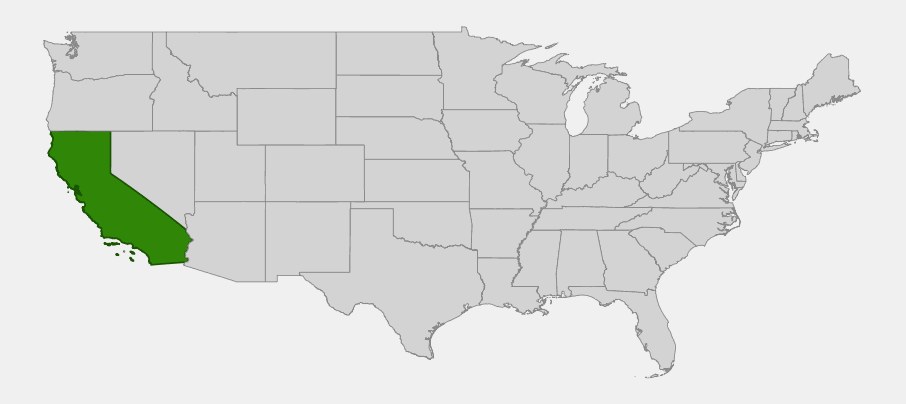
Smooth mule-ears is endemic to California. It grows in the North and Central Coast Ranges, from the hills around Napa, Sonoma and the San Francisco Bay Area south through the Santa Cruz Mountains, the Diablo Range and the Santa Lucia Range toward San Luis Obispo County. It is a familiar spring sight in many Bay Area parks and open space preserves.
It grows in open grasslands, oak savannas and woodlands, chaparral openings and on rocky or clay slopes, on a variety of soils including heavy clay. It is most common in the inner Coast Ranges, away from the immediate fog belt, where summers are warm and dry.
Because it is long-lived and deep-rooted, smooth mule-ears can persist for decades in grasslands, even where other native wildflowers have been crowded out by non-native annual grasses. Its large clumps can be a sign of old, undisturbed ground. It is not considered rare, but it has lost habitat to development in the Bay Area.
📋 Regional plant lists featuring Smooth Mule-Ears: California & Nevada
Growing & Care Guide
Smooth mule-ears is a tough, long-lived plant for dry California gardens, but it is not a quick or tidy one. It needs space, sun and a dry summer, grows slowly from seed, and goes dormant in summer, leaving bare ground or brown leaves until the rains return. Plant it where its bold spring foliage and big flowers can be enjoyed and its summer dormancy will not matter. Look for it at California native plant nurseries and native plant society sales.
Light
Full sun is best; it also grows in light, open shade near oaks. In too much shade it flowers sparingly.
Soil & Water
It grows in heavy clay, loam or rocky soils, as long as water does not stand around the crown. Water young plants through their first spring. Once established, give it no summer water: it is adapted to California’s dry summers, and summer irrigation can rot the crown. It will be dormant from about midsummer until the winter rains.
Planting Tips
Plant small container plants in late fall or early winter, after the rains begin, so roots can grow deep before summer. Its long taproot makes established plants nearly impossible to move, so choose the spot carefully. Combine it with native bunchgrasses, poppies, blue-eyed grass and bulbs in a meadow or oak-woodland planting.
Pruning & Maintenance
Little care is needed. Remove the dead, papery leaves in fall if you prefer a tidier look, or leave them as mulch. Keep the crown free of heavy mulch. Pocket gophers sometimes eat the roots, so protect young plants with wire baskets where gophers are common.
Propagation
Grow it from fresh seed sown outdoors in fall, or in deep pots to accommodate the taproot. A period of cold, moist conditions over winter helps germination. Seedlings grow slowly and usually take two or three years or more to flower. Mature plants do not divide well because of the taproot.
Landscape Uses
- California native gardens: bold spring foliage and big yellow flowers in dry, sunny sites
- Meadow and grassland plantings: with native bunchgrasses, poppies and spring bulbs
- Oak woodland gardens: under the edges of oaks that need dry summers
- Slopes and banks: its deep taproot holds soil on dry hillsides
- Habitat restoration: a long-lived component of Coast Range grassland restoration
Wildlife & Ecological Value
The big yellow flowers and large leaves of smooth mule-ears support a variety of wildlife in California’s grasslands and oak woodlands.
For Pollinators
The large, open flower heads attract native bees, including bumblebees and solitary bees, as well as beetles, flies and butterflies in spring.
For Birds
Seed-eating birds such as finches and sparrows feed on the seeds as they ripen in early summer.
For Mammals
Deer and livestock sometimes graze the young leaves. Pocket gophers and other rodents eat the roots and seeds.
Ecosystem Role
As a deep-rooted, long-lived perennial, smooth mule-ears helps stabilize soils on grassy slopes and survives drought and fire by resprouting from its crown. It is one of the native perennials that persists in California grasslands now dominated by non-native annual grasses.
Cultural & Historical Uses
The genus Wyethia honors Nathaniel Jarvis Wyeth, an American businessman and explorer who led expeditions to the Oregon country in the 1830s and collected plants for the botanist Thomas Nuttall. The common name mule’s ears refers to the large, upright leaves.
California Indian peoples used several Wyethia species for food and medicine; the seeds were gathered and eaten, and the roots were used in various preparations. These are historical uses and should not be tried without expert knowledge.
Smooth mule-ears is one of the showiest spring wildflowers in many Bay Area parks, including the Santa Cruz Mountains, Mount Hamilton and Diablo ranges, where its big yellow flowers bloom alongside poppies, lupines and blue-eyed grass.
Frequently Asked Questions
Why is it called mule-ears?
The large, upright leaves look like the ears of a mule.
What is the difference between smooth mule-ears and woolly mule-ears?
Smooth mule-ears (Wyethia glabra) has green, smooth to slightly hairy leaves and grows in the California Coast Ranges. Woolly mule-ears (W. mollis) has white-woolly leaves and grows in the Sierra Nevada and nearby mountains.
Is smooth mule-ears drought tolerant?
Yes. Its deep taproot lets it survive California’s dry summers. It goes dormant in summer and should not be watered once established.
When does smooth mule-ears bloom?
From about March to June, peaking in April and May.
Where does smooth mule-ears grow?
Only in California, in the North and Central Coast Ranges, from the North Bay through the Bay Area and the Santa Cruz Mountains south toward San Luis Obispo County.

Looking for a nursery that carries Smooth Mule-Ears?
Browse our native plant nursery directory: California

