
Gravel Ghost (Atrichoseris platyphylla)
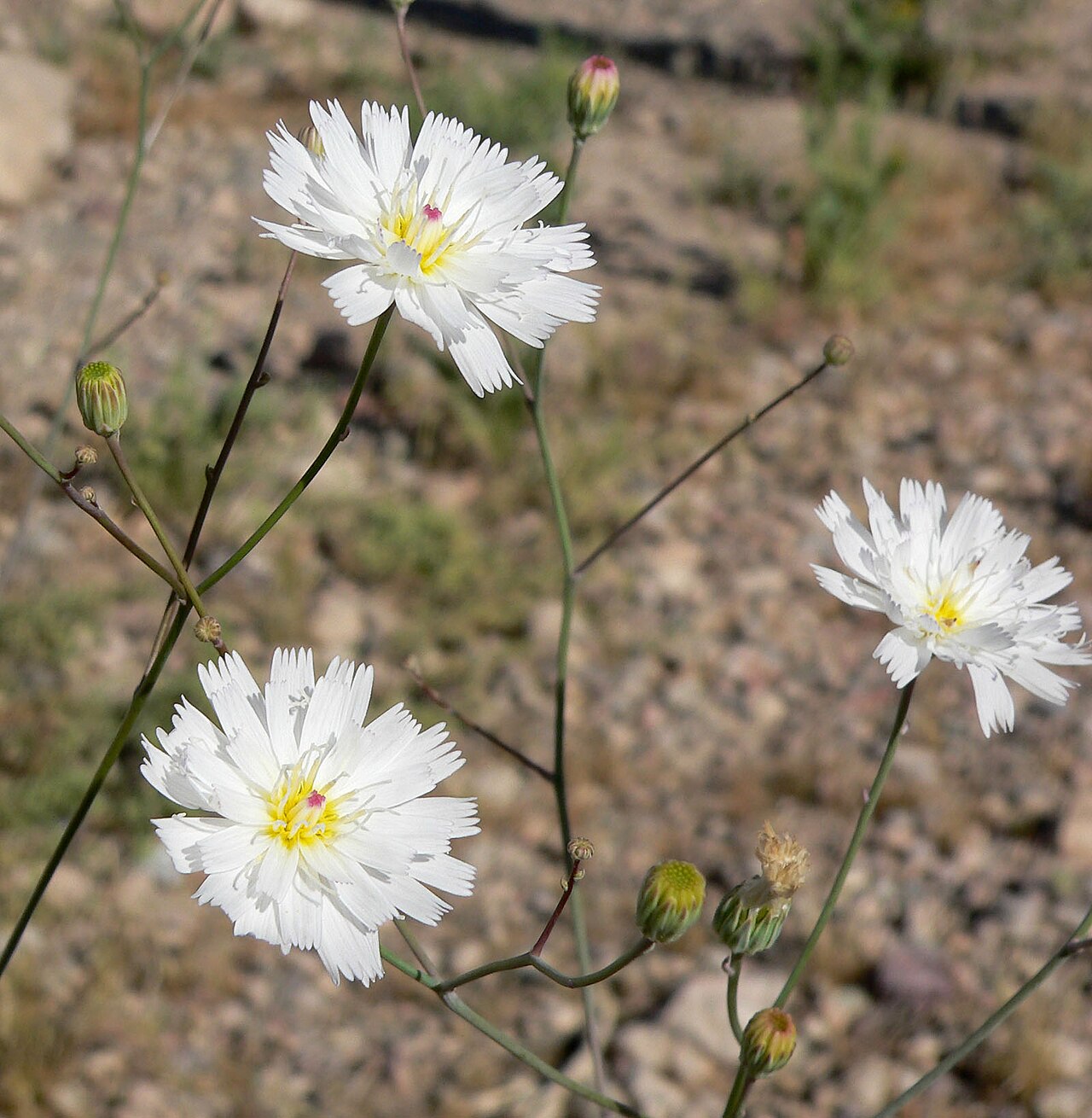
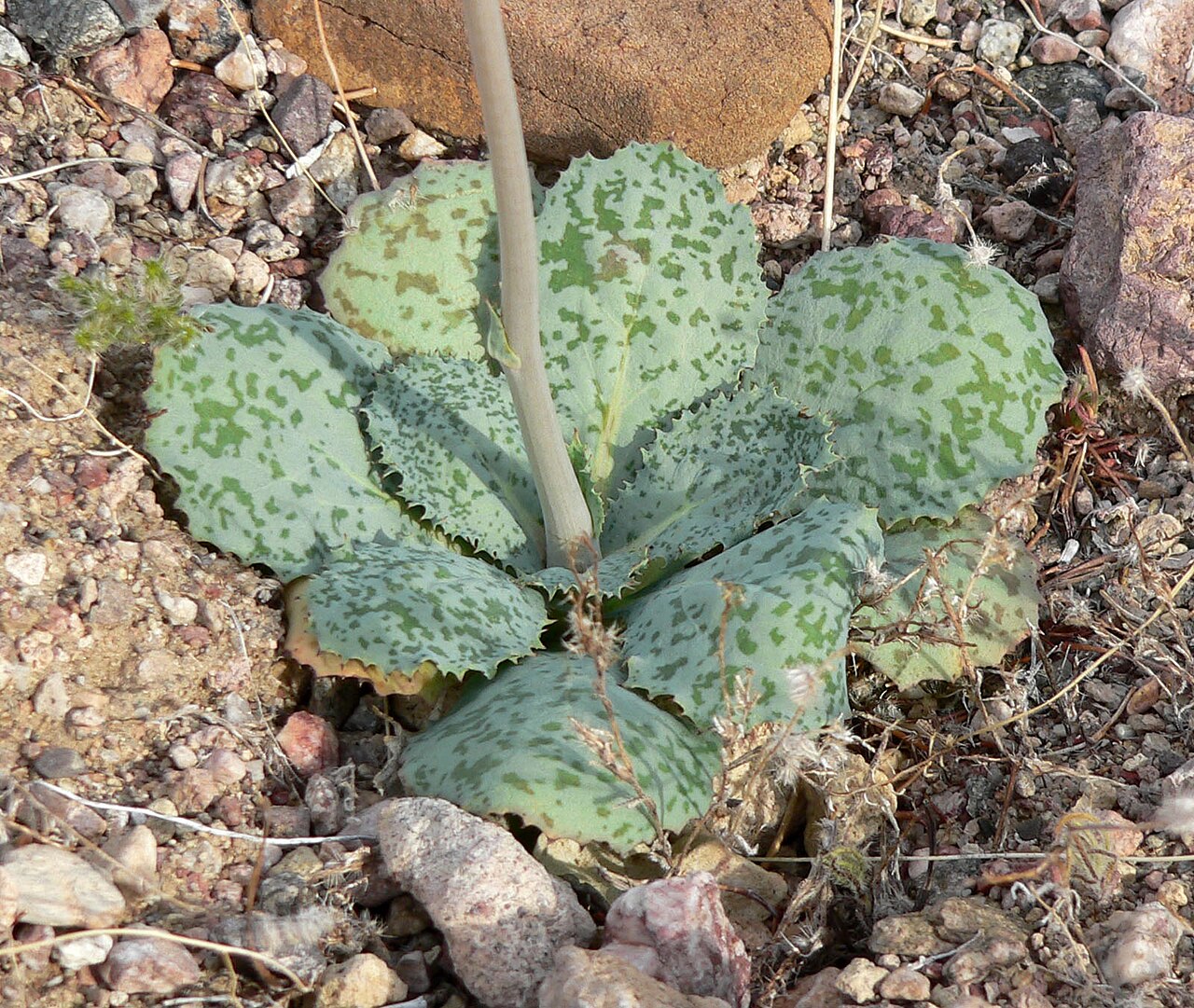
Atrichoseris platyphylla, known as Gravel Ghost and listed by USDA PLANTS as parachute plant, is a desert annual wildflower of the Mojave and Sonoran deserts. It begins as a flat rosette of round, toothed leaves mottled gray-green and purple that lies pressed against the gravel. In wet springs it sends up thin, nearly leafless, branching stems topped with fragrant white, fringed flower heads that seem to hover above the ground like ghosts, which gives the plant its best-known name. It is also called tobacco weed.
Gravel ghost is the only species in its genus, a member of the chicory tribe of the aster family (Asteraceae). Like dandelions and chicory, its heads are made entirely of strap-shaped florets and the plant has milky sap. Unlike most of its relatives, its seeds have no fluffy pappus, which explains the genus name, meaning “chicory without hairs.”
It is a plant to look for rather than plant: it is rarely available as seed and is best enjoyed in desert washes in a good wildflower year, from Death Valley and Joshua Tree to Lake Mead and the Arizona Strip. Desert gardeners with gravelly, well-drained soil can try it from seed sown in fall.
Identification
Look in sandy or gravelly desert washes in spring for flat rosettes of round, mottled, toothed leaves and, above them, slender stems carrying fragrant white or pink-tinged heads with fringed tips.
Growth Habit
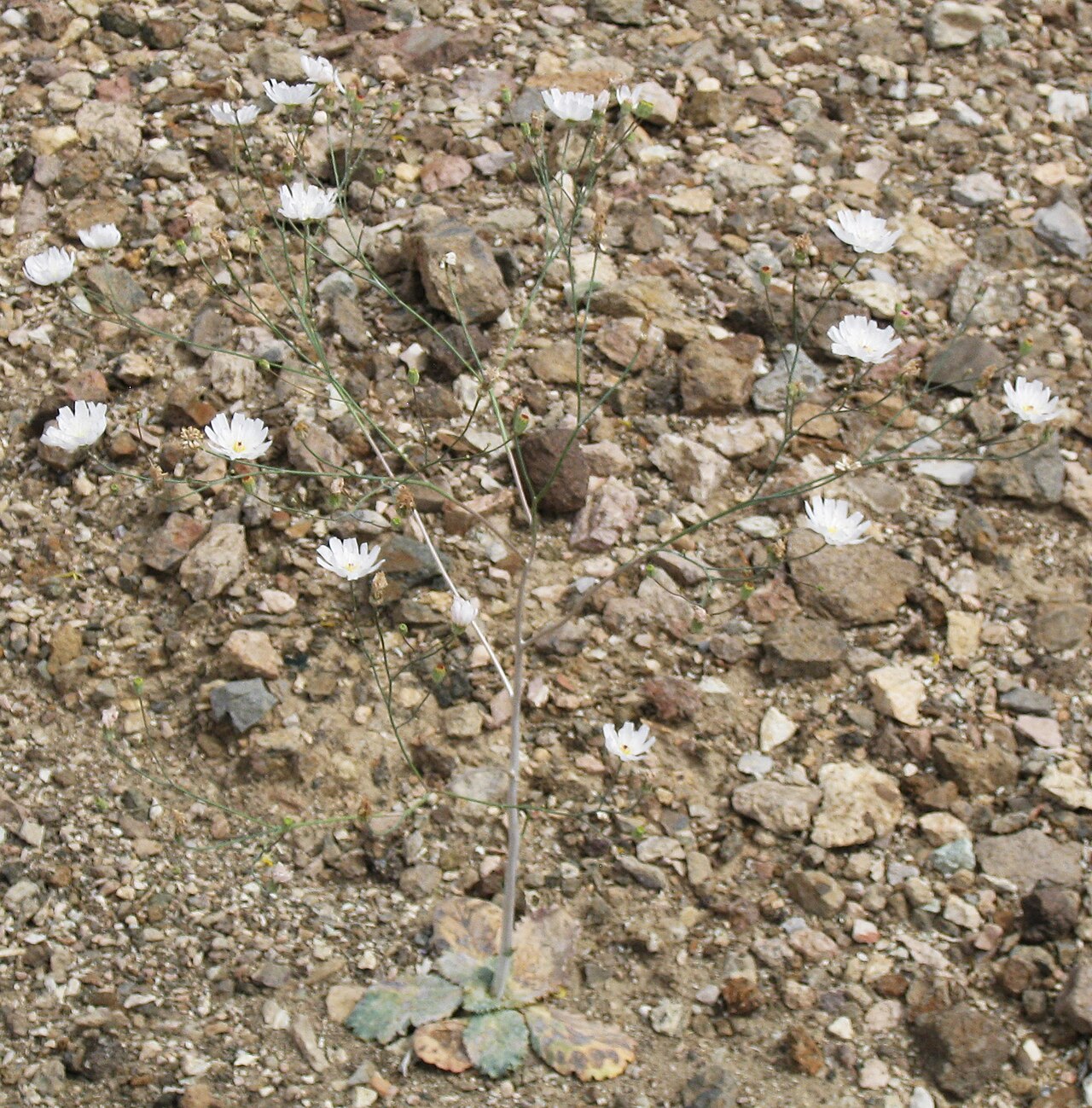
Gravel ghost is a winter annual. Seeds germinate after fall or winter rains and form a flat basal rosette. In spring a single, slender, hairless stem rises from the center and branches widely above, reaching about 4 inches to 2 feet tall depending on rainfall. The stems are smooth, blue-green and nearly leafless, so the flowers appear to float. In dry years plants may stay small and produce only a few heads.
Leaves
The basal leaves are round to broadly oval, about 1 to 4 inches long, flat, somewhat fleshy, with small, sharp-toothed edges. They are gray-green or blue-green and blotched with maroon to purplish patches, a camouflage pattern that blends with desert gravel. Stem leaves are reduced to tiny scales.
Flowers
The flower heads are about 1 to 1 1/2 inches across and made up of many white, strap-shaped florets, sometimes tinged pink beneath, each with a squared, finely toothed tip. The center has small yellow anthers and pinkish to purple styles. The heads have a sweet fragrance. Flowering runs from about February to May, sometimes into June after late rains.
Fruit
The fruits are small, five-angled, club-shaped achenes with no bristles or hairs at the top. Without a parachute of pappus, they fall close to the parent and are moved mostly by water flowing through washes.
Look-alikes
Desert chicory (Rafinesquia neomexicana) also has white heads but has leafy stems with deeply lobed leaves and seeds with feathery bristles. Desert dandelion has yellow heads and finely divided leaves. White tackstem (Calycoseris wrightii) has small white heads and tack-shaped glands on its stems. None has gravel ghost’s flat, round, mottled leaves.
Quick Facts
| Scientific Name | Atrichoseris platyphylla |
| Family | Asteraceae (aster family) |
| Plant Type | Desert winter annual wildflower |
| Mature Height | 4 in–2 ft |
| Mature Spread | 4–12 in |
| Growth Rate | Fast (completes its life cycle in one season) |
| Sun Exposure | Full sun |
| Water Needs | Low; depends on winter rain |
| Soil Type | Sandy or gravelly, fast-draining desert soil |
| Soil pH | Neutral to alkaline (about 7.0–8.5) |
| Bloom Time | February–May |
| Flower Color | White, sometimes pink-tinged |
| Fall Color | None (annual) |
| Fruit | Small angled achenes without pappus |
| Deer Resistant | Not applicable; desert annual |
| USDA Hardiness Zones | 8–10 (grown as a cool-season annual) |
Native Range
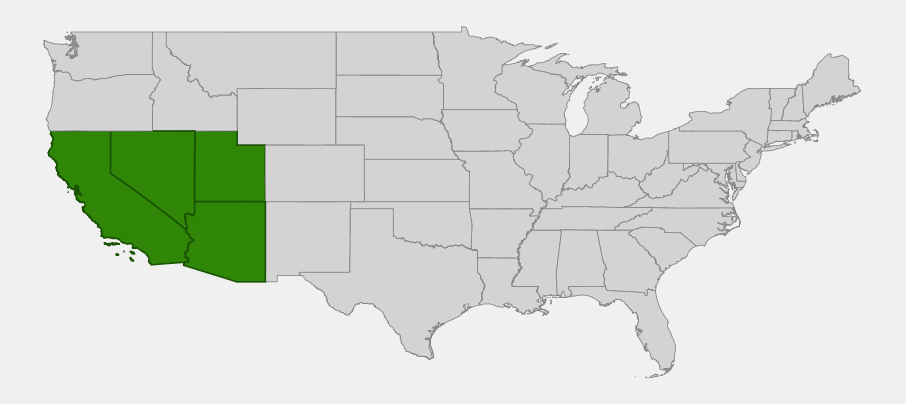
Gravel ghost is native to the deserts of the southwestern United States and northwestern Mexico. USDA PLANTS records it from four states: California, Nevada, Arizona and Utah. In California it grows in the Mojave and Colorado deserts, including Death Valley, the eastern Mojave and the Joshua Tree and Anza-Borrego regions. In Nevada it is found in the south, around Las Vegas and Lake Mead.
In Arizona it grows mainly in the west and northwest, from the Arizona Strip and Mohave County south through La Paz County and the deserts around Quartzsite. In Utah it reaches only the southwestern corner, in the Mojave Desert of Washington County near St. George. In Mexico it grows in Sonora and Baja California.
Its habitat is sandy and gravelly washes, alluvial fans, desert pavement and open flats among creosote bush and bursage, usually below about 4,000 feet. Like many desert annuals it is abundant in years with good fall and winter rain and may be almost absent in dry years.
📋 Regional plant lists featuring Gravel Ghost: Utah & Western Colorado · Arizona & New Mexico · California & Nevada
Growing & Care Guide
Gravel ghost is seldom grown and seed is rarely sold, but it can be tried in low-desert gardens that mimic a gravel wash. Use seed from a reputable native seed source; do not collect plants from the wild, and only collect seed where it is legal and plentiful.
Light
Full sun. It grows in open desert with no shade, and in shade the stems stretch and flop.
Soil & Water
Sow it in coarse sand or gravelly soil with excellent drainage, such as a gravel garden or the edge of a dry wash. Do not add compost or fertilizer. Winter rains are usually enough; in a dry winter, water deeply once or twice to mimic a good storm, then let the soil dry. Summer water is unnecessary because the plants die after setting seed.
Planting Tips
Scatter seed in fall, from October to December, on loosened gravelly soil and rake it in lightly. Germination depends on a soaking rain and cool temperatures, so results vary from year to year, just as in the wild.
Pruning & Maintenance
None. Leave plants in place until the seeds have dropped, then remove the dry stems if you like. Keep weedy grasses such as red brome and Mediterranean grass out of the area, since they crowd out native desert annuals.
Propagation
By seed only. Collect ripe achenes in late spring and store them dry until fall sowing. Seeds can stay dormant in the soil for several years, waiting for a wet winter.
Landscape Uses
- Desert wildflower gardens: fragrant white flowers among other spring annuals
- Gravel and wash gardens: suits rocky, fast-draining beds
- Native seed mixes: an unusual addition to Mojave and Sonoran annual mixes
- Wildflower viewing: a classic superbloom plant in Death Valley and the eastern Mojave
- Nature study: an example of a desert annual’s boom-and-bust life cycle
Wildlife & Ecological Value
Gravel ghost is part of the spring flush of desert annuals that feeds pollinators and seed-eaters in wet years.
For Pollinators
Its fragrant flowers are visited by native desert bees, bee flies and other insects for pollen and nectar. As with many white, scented flowers, some visits may come late in the day or at dusk.
For Birds
Seed-eating birds such as sparrows and quail forage for the fallen seeds of desert annuals, including gravel ghost.
For Mammals
Kangaroo rats, pocket mice and other desert rodents gather and cache annual seeds. Jackrabbits and desert tortoises eat the leaves of many spring annuals.
Ecosystem Role
Desert annuals like gravel ghost turn short periods of winter rain into a burst of food for insects, rodents, reptiles and birds. Their long-lived seed banks allow them to wait out droughts that may last for years.
Cultural & Historical Uses
The genus name Atrichoseris means “chicory without hairs,” a reference to its pappus-free seeds, and platyphylla means “flat-leaved,” describing the rosette pressed against the ground. Asa Gray first described the species from the desert Southwest in the 19th century.
The name gravel ghost comes from its white heads appearing to drift above bare gravel on nearly invisible stems. Parachute plant, the name used by USDA PLANTS, and tobacco weed are older common names for the same species.
Gravel ghost is a favorite of wildflower watchers during desert superblooms, when it can be common along roads and washes in Death Valley National Park.
Frequently Asked Questions
Why is it called gravel ghost?
Its white flower heads seem to float above bare desert gravel on thin, almost leafless stems, like small ghosts.
Is gravel ghost the same as parachute plant?
Yes. USDA PLANTS uses the name parachute plant for Atrichoseris platyphylla; gravel ghost and tobacco weed are other common names.
When does gravel ghost bloom?
From about February to May, depending on rainfall and elevation. It is most abundant after wet winters.
Can I grow gravel ghost?
You can try sowing seed in fall in a sunny, gravelly bed in a low-desert garden. It is an annual and depends on winter rain, so it may not appear every year.
Are gravel ghost flowers fragrant?
Yes. The white heads have a sweet fragrance, which helps attract insect pollinators.

Looking for a nursery that carries Gravel Ghost?
Browse our native plant nursery directory: Arizona · California · Nevada · Utah

