
Tall Green Milkweed (Asclepias hirtella)
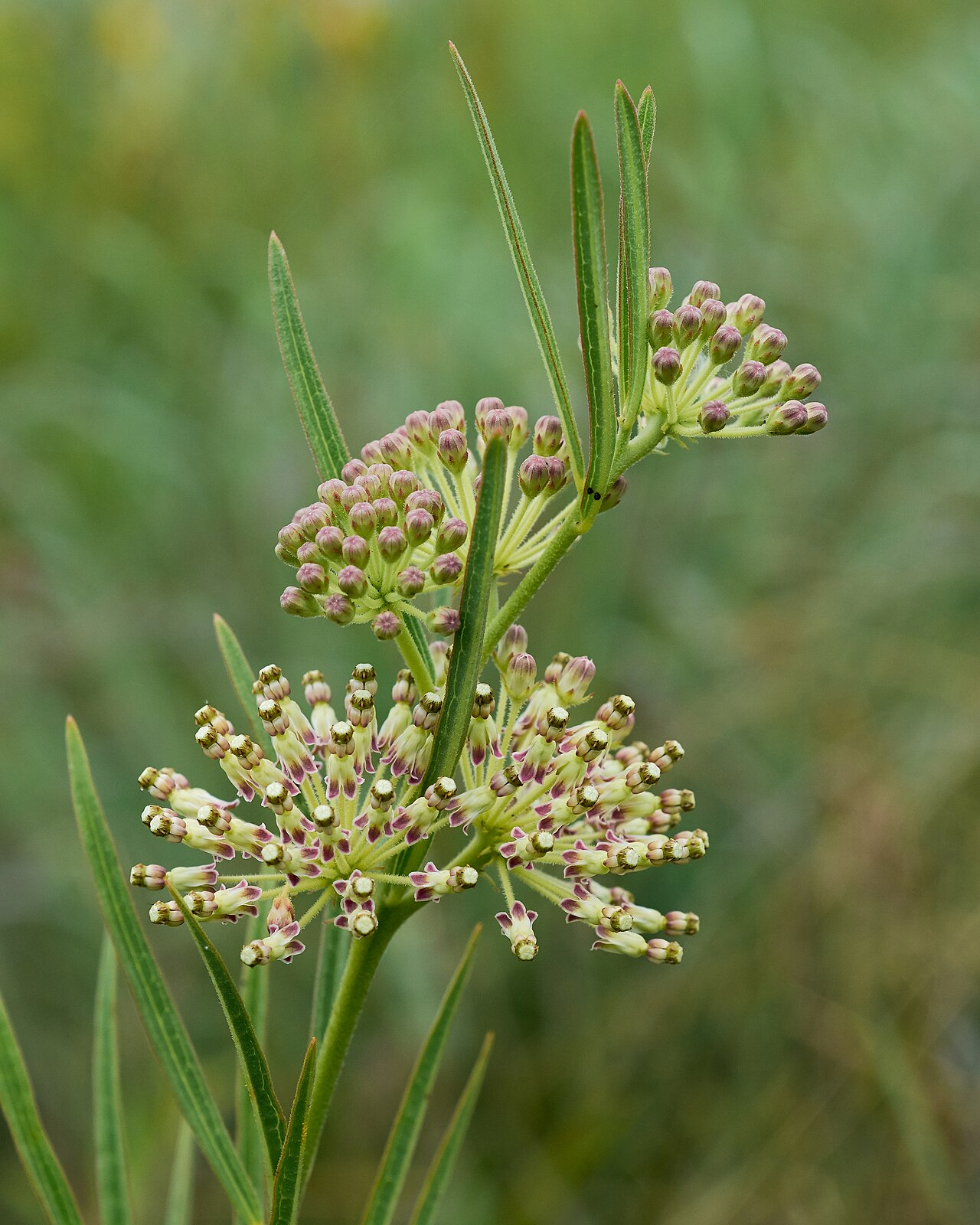
Asclepias hirtella, known as Tall Green Milkweed, green milkweed or prairie milkweed, is a native milkweed of prairies, glades, barrens and old fields in the central and eastern United States and southern Ontario. It grows 2 to 3 feet tall (occasionally more) on stiff, leafy stems with many long, narrow leaves, and in summer it bears numerous rounded clusters of small greenish-white flowers tinged with purple, tucked along the upper part of the stem.
It is less showy than butterfly weed or swamp milkweed, but it is a true monarch butterfly host plant and an excellent nectar plant for bees, wasps and other insects. USDA PLANTS calls it green milkweed, and older books list it as Acerates hirtella. It is considered rare at the northern edge of its range, for example in Michigan and Minnesota, so buy plants or seed from nursery-propagated stock.
Safety note: like other milkweeds, tall green milkweed contains toxic cardiac glycosides in its milky sap and leaves. It can poison livestock and pets that eat it, and the sap can irritate skin and eyes. Wash your hands after handling it. This guide covers how to identify it, where it grows, how to grow it, and its value to monarchs and other wildlife.
Identification
Tall green milkweed is one of several green-flowered milkweeds. Its narrow, alternate leaves and many small flower clusters along the upper stem set it apart.
Growth Habit
An upright, clump-forming perennial with one to a few stout, unbranched stems, usually 2 to 3 feet tall, from a deep taproot. Stems and leaves are rough with short hairs (the name hirtella means “somewhat hairy”), and all parts exude milky sap when broken.
Leaves
The leaves are numerous, mostly alternate (some may be nearly opposite), narrowly lance-shaped, about 4 to 6 inches long and up to 1 inch wide, with pointed tips and short stalks. They crowd the stem and point upward, giving the plant a leafy, bushy look.
Flowers
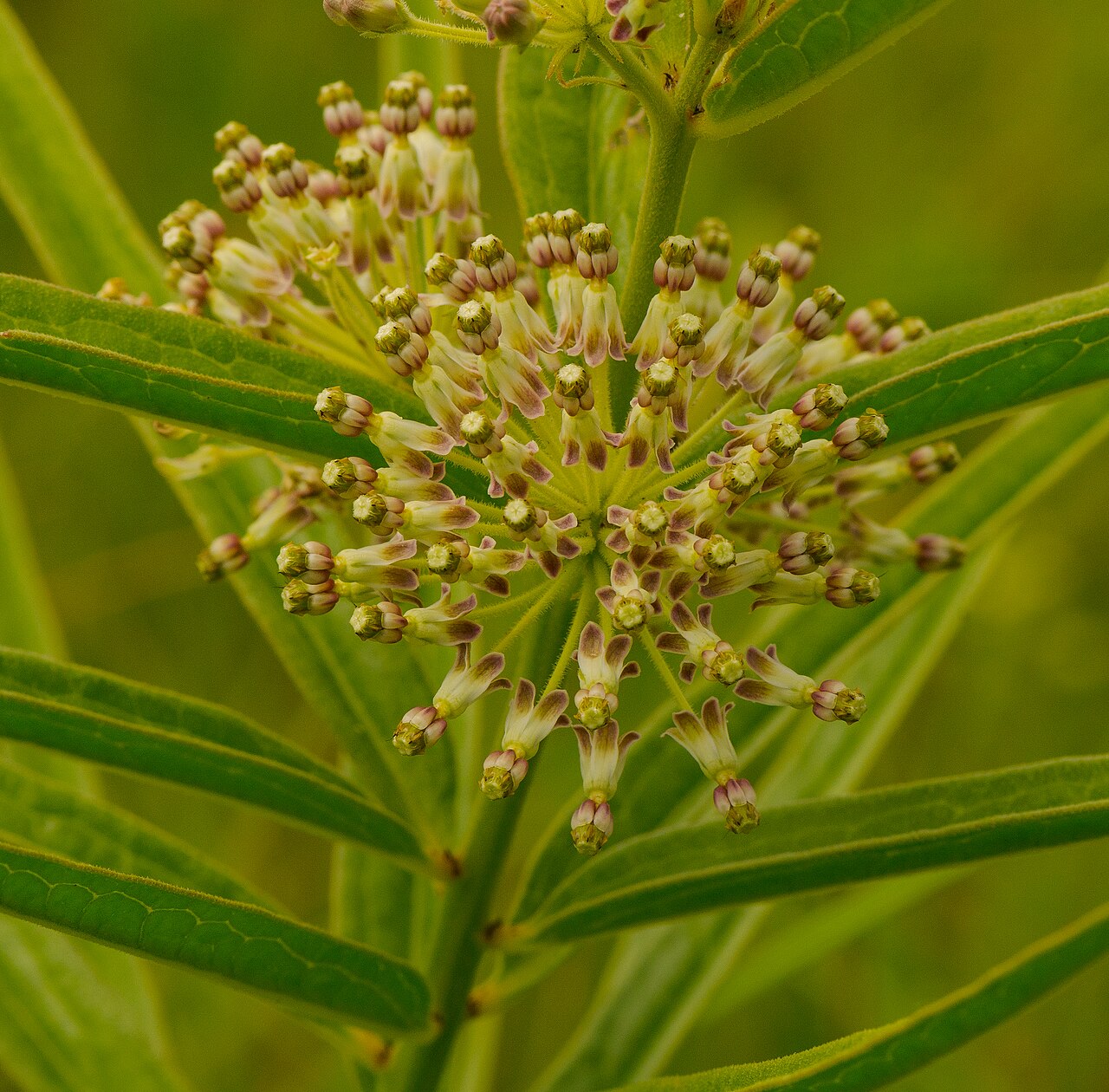
The flowers are borne in many rounded umbels about 1 to 2 inches across, which arise from the axils of the upper leaves rather than only at the top of the stem. Each small flower is greenish-white to pale green, with the reflexed petals often tinged purple and small, short hoods without horns. Bloom runs from June to August.
Fruit & Seeds
The fruits are slender, smooth, erect pods (follicles), up to about 4 inches long, that split in late summer or fall to release flat brown seeds with silky white tufts that float on the wind.
Look-alikes
Green antelopehorn (A. viridis) has larger, flatter flowers with purple centers in fewer clusters and broader leaves. Green comet milkweed (A. viridiflora) is shorter, with broader, wavy leaves and dense clusters of pale green flowers. Whorled milkweed has needle-like leaves in whorls and white flowers.
Quick Facts
| Scientific Name | Asclepias hirtella (Pennell) Woodson |
| Family | Apocynaceae (dogbane family; milkweed subfamily) |
| Plant Type | Herbaceous perennial |
| Mature Height | 2–3 ft (occasionally to 4 ft) |
| Mature Spread | 1–1.5 ft |
| Growth Rate | Slow to establish; moderate once rooted |
| Sun Exposure | Full sun |
| Water Needs | Low to medium |
| Soil Type | Dry to medium, well-drained soils; tolerates clay, gravel and thin glade soils |
| Soil pH | Slightly acidic to neutral (about 5.5–7.5) |
| Bloom Time | June–August |
| Flower Color | Greenish-white, tinged with purple |
| Fall Color | Yellow to tan |
| Fruit | Slender, smooth, erect pods with silky-tufted seeds |
| Deer Resistant | Yes; bitter, toxic sap |
| USDA Hardiness Zones | 4–9 |
Native Range
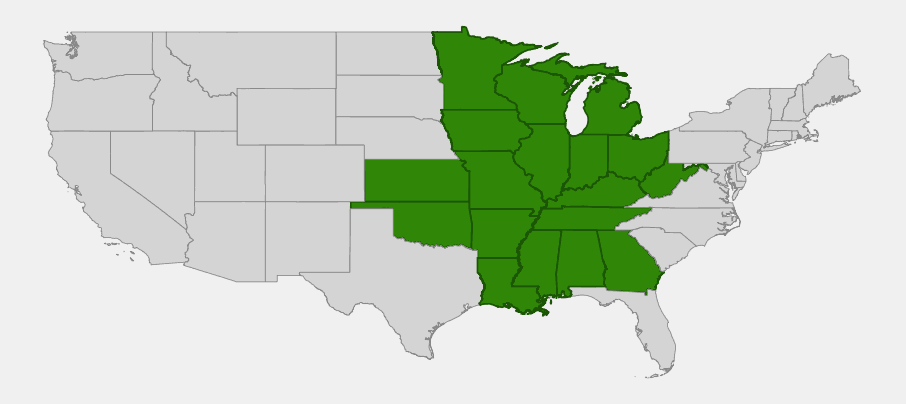
Tall green milkweed is native to the central and eastern United States and southern Ontario. USDA PLANTS lists it in 18 states, from Michigan, Wisconsin and Minnesota south to Georgia, Alabama, Mississippi and Louisiana, and west to Iowa, Kansas, Missouri, Arkansas and Oklahoma. Its center of abundance is the Ozarks and the Ohio and middle Mississippi valleys, especially Missouri, Arkansas, Illinois, Indiana, Kentucky and Tennessee.
It becomes scattered or rare toward the edges of its range. Michigan and Minnesota list it as a threatened species, and populations in the Southeast, West Virginia and Ontario are few and local.
Its habitats are open and sunny: tallgrass prairies, limestone and sandstone glades, oak barrens and savannas, old fields, pastures, roadsides and railroad rights-of-way. It often grows in dry to mesic soils that are thin or clayey, and like many prairie plants, it benefits from periodic fire or mowing that keeps woody plants from taking over.
📋 Regional plant lists featuring Tall Green Milkweed: Alabama, Georgia & Mississippi · Arkansas, Louisiana, Eastern Oklahoma & Eastern Texas · Illinois, Iowa & Missouri · Ohio & Indiana · Kentucky & Tennessee · Michigan, Wisconsin & Eastern Minnesota · Nebraska, Kansas & Eastern Colorado · Maryland, Virginia & West Virginia
Growing & Care Guide
Tall green milkweed is a good, if understated, choice for a prairie garden or pollinator meadow in the central and eastern states. Plants and seed are offered by some native plant nurseries that specialize in prairie species. Like most milkweeds with a taproot, it is slow to get going but long-lived once established.
Light
Full sun is best. It tolerates a little light shade but flowers less and may flop.
Soil & Water
It grows in average to dry, well-drained soils, including clay, gravel and rocky glade soils. Once established it is drought-tolerant and needs little or no supplemental water. Avoid soggy sites.
Planting Tips
Plant small container plants in spring, since the taproot makes older plants hard to move. Or sow seed outdoors in late fall so winter cold can break dormancy. Group several plants among prairie grasses such as little bluestem and wildflowers such as coneflowers and blazing stars, which help support the stems.
Pruning & Maintenance
Little care is needed. Leave the stems standing until the pods have opened if you want seed. Cut stems to the ground in late winter or early spring, or burn or mow a prairie planting in early spring. Watch for orange milkweed aphids, which are usually harmless and can be hosed off.
Propagation
Grow it from seed. Seeds need 30 to 60 days of cold, moist stratification (or fall sowing outdoors) to germinate well. Collect pods as they turn brown and start to split, before the seeds blow away. It does not divide well because of its taproot.
Landscape Uses
- Monarch and pollinator gardens: a host plant for monarch caterpillars and a long-blooming nectar source
- Prairie and meadow plantings: a native milkweed for dry to medium prairie mixes
- Glade and rock gardens: tolerates thin, rocky and clay soils
- Roadside and right-of-way plantings: tough, drought-tolerant and unpalatable to deer
- Restoration: useful in prairie, glade and savanna restorations within its range
Wildlife & Ecological Value
Milkweeds are some of the most important native plants for insects, and tall green milkweed supports both specialist milkweed insects and a wide range of pollinators.
For Pollinators
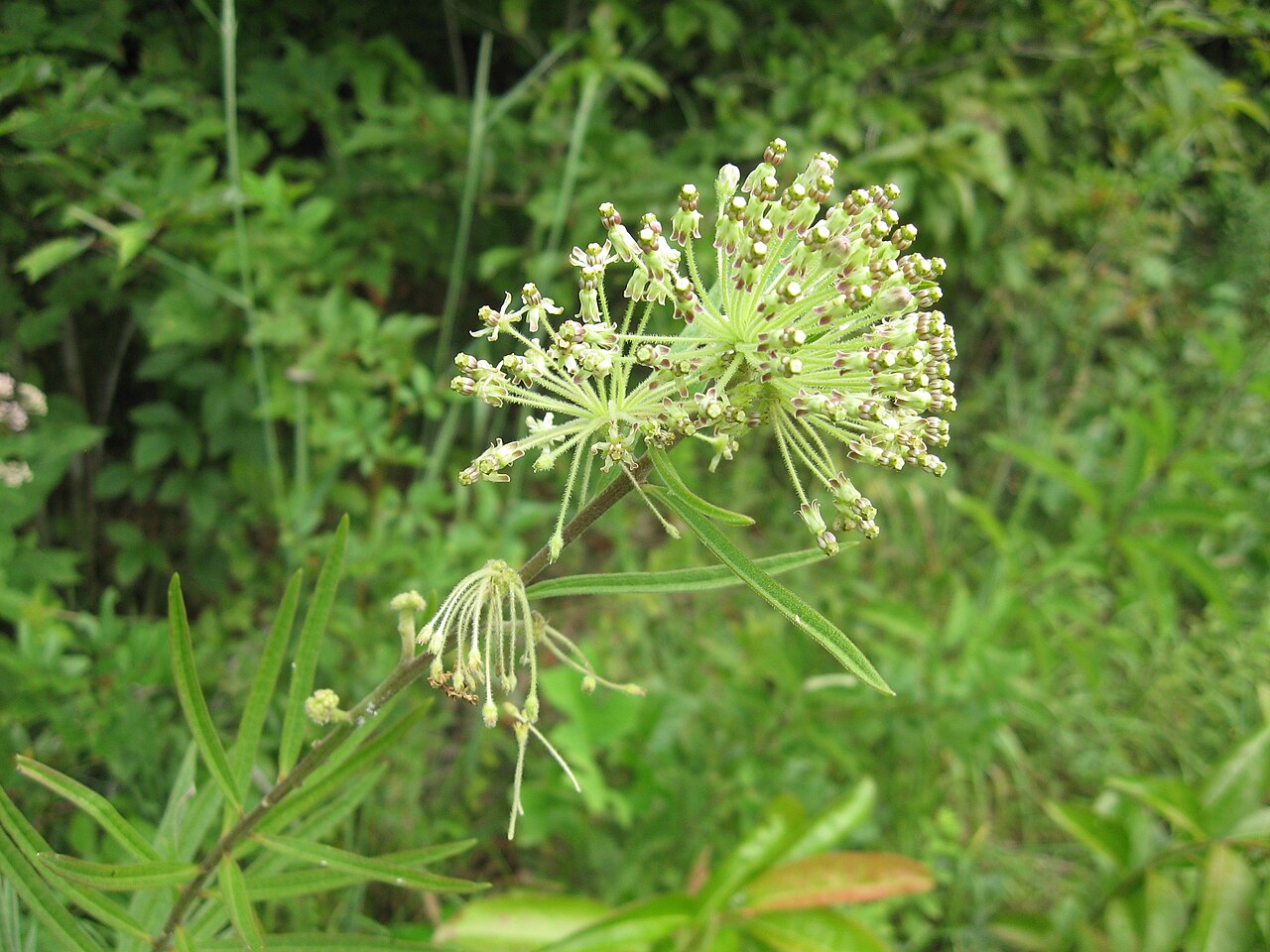
The Xerces Society lists tall green milkweed as having special value to native bees, bumblebees and honey bees, and as supporting conservation biological control by attracting predatory and parasitic insects that help control pests. Wasps, flies, beetles and butterflies also visit the flowers. As in all milkweeds, the pollen is packed into sacs (pollinia) that catch on the legs of visiting insects and are carried from flower to flower.
For Birds
Birds benefit indirectly from the many insects the plant supports. Some birds, such as goldfinches and orioles, collect the silky seed fluff for nesting material.
For Mammals
The toxic, bitter sap means deer, rabbits and livestock usually avoid it. Livestock may eat it when other forage is scarce, which can be dangerous.
Ecosystem Role
Tall green milkweed is a host plant for the monarch butterfly and for other milkweed specialists such as the milkweed tussock moth, red milkweed beetle and large milkweed bug. These insects store the plant’s toxins in their bodies as a defense against predators.
Cultural & Historical Uses
The genus Asclepias is named for Asklepios, the Greek god of medicine. Francis Pennell first described this plant in 1919 as Acerates hirtella, and Robert Woodson moved it to Asclepias in 1941 when he merged the green-flowered Acerates milkweeds into the larger genus.
Because of its green, unshowy flowers, tall green milkweed is often overlooked, even on prairies where it is fairly common. It has become better known as monarch conservation programs encourage planting a variety of native milkweeds suited to local conditions.
Milkweed floss has been used as a stuffing for pillows and, during World War II, as a substitute for kapok in life jackets. Common milkweed was the main source, but all milkweeds produce the same silky fibers.
Frequently Asked Questions
Is tall green milkweed a monarch host plant?
Yes. Monarch caterpillars feed on its leaves, and adult monarchs and many other insects visit its flowers for nectar.
Is tall green milkweed poisonous?
Yes. Like other milkweeds, its sap and leaves contain cardiac glycosides that can poison livestock and pets, and the sap can irritate skin and eyes. Wash your hands after handling it and keep children and pets from eating it.
How is it different from green antelopehorn?
Green antelopehorn (A. viridis) has larger, flatter flowers with purple centers in fewer clusters and broader leaves. Tall green milkweed has many small clusters of greenish flowers along the upper stem and narrow, crowded leaves.
Where does tall green milkweed grow?
In prairies, glades, barrens and old fields from Michigan, Wisconsin and Minnesota south to the Gulf states and west to Kansas and Oklahoma, mostly in the Ozarks and the Ohio and middle Mississippi valleys.
How do I grow tall green milkweed from seed?
Sow seed outdoors in late fall, or cold-stratify it for 30 to 60 days before sowing in spring. Plant seedlings in full sun and well-drained soil while they are small.

Looking for a nursery that carries Tall Green Milkweed?
Browse our native plant nursery directory: Alabama & Arkansas · Georgia · Illinois, Indiana, Iowa & Kansas · Kentucky, Louisiana, Michigan, Minnesota, Mississippi & Missouri · Ohio & Oklahoma · Tennessee · West Virginia & Wisconsin

