
Prairie Brazoria (Warnockia scutellarioides)
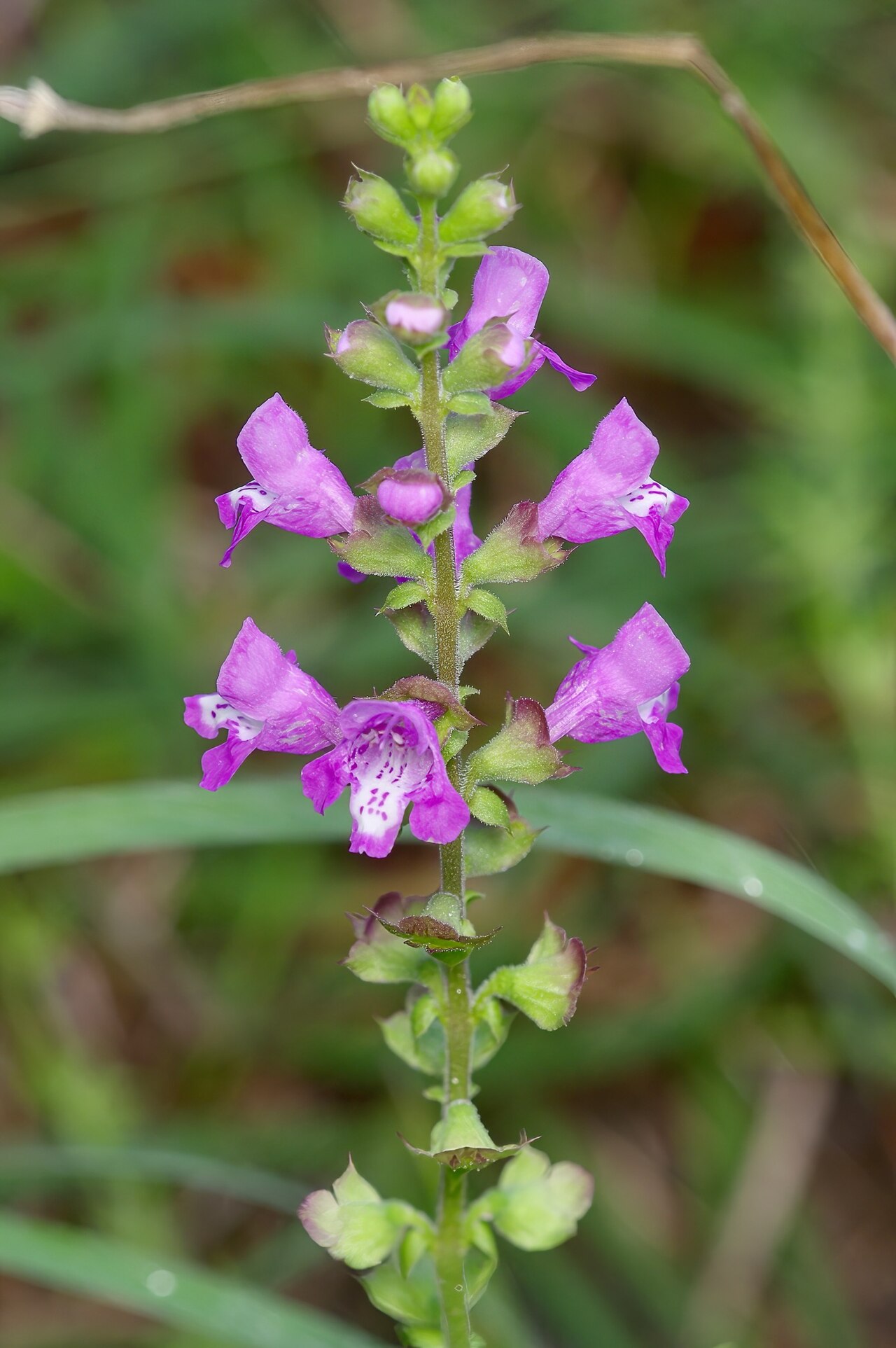
Warnockia scutellarioides, known as Prairie Brazoria or prairie brazosmint, is a small annual mint of the limestone hills and prairies of central Texas and south-central Oklahoma. In spring it raises slender spikes of bright pink-purple to lavender, two-lipped flowers, each with a spotted lower lip, over a low plant usually 4 to 18 inches tall.
It is the only species in its genus, which is named for Barton Warnock, the West Texas botanist. Older books list it as Brazoria scutellarioides, and USDA PLANTS uses the common name prairie brazosmint. Its flowers look a bit like a small skullcap or obedient plant, which is reflected in the species name scutellarioides, “like a skullcap (Scutellaria)”.
For gardeners in central Texas and Oklahoma, it is a charming, easy annual that reseeds into colonies in light shade under oaks and junipers or along the edges of beds. This guide covers how to identify it, where it grows, how to grow it from seed, and its value to bees.
Identification
Prairie brazoria is a small spring-flowering mint. Look for square stems, opposite leaves and slender spikes of pink-purple flowers.
Growth Habit
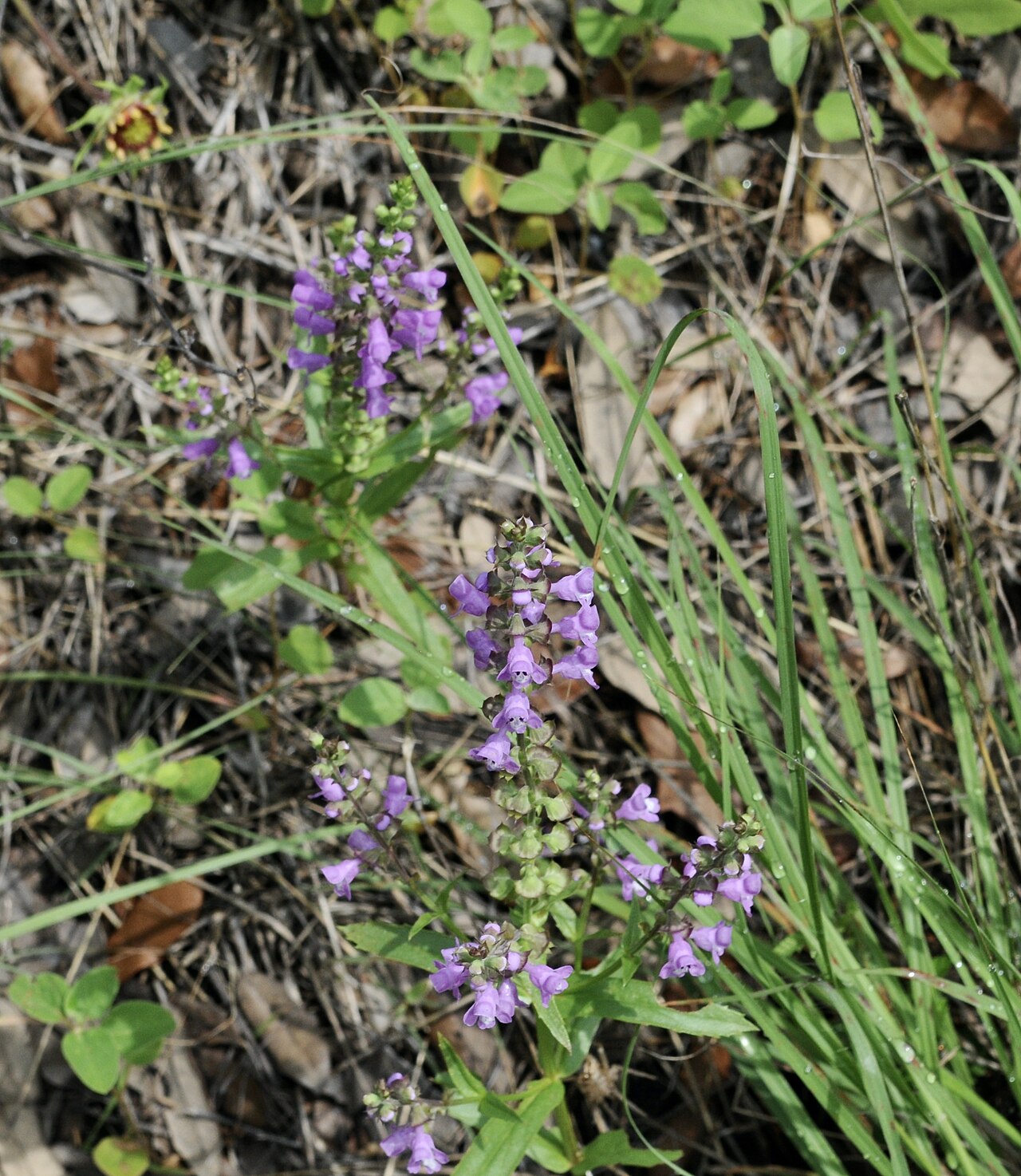
An annual herb, usually 4 to 18 inches tall, with one or several square stems branching from the base. Plants are often in loose colonies, since they reseed readily. They germinate in fall or winter, bloom in spring, and die back by early summer.
Leaves
The leaves are opposite, oval to lance-shaped, about ½ to 1½ inches long, with shallow teeth along the edges. The lower leaves have short stalks; the upper ones are smaller and nearly stalkless. Crushed leaves have a mild scent, like many mints.
Flowers
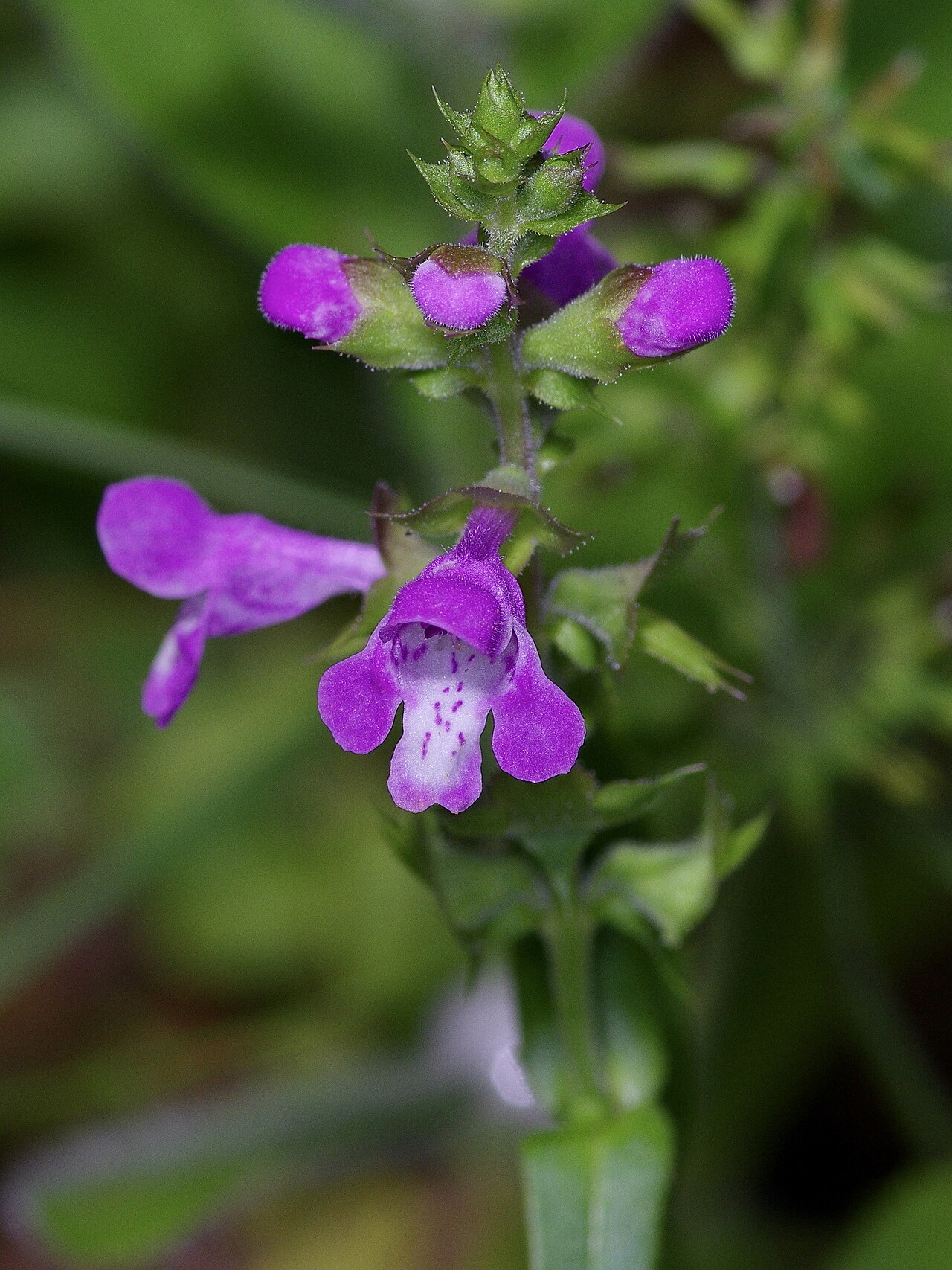
The flowers are borne in slender, spike-like clusters at the stem tips, usually in pairs at each node. Each flower is about ½ inch long, with a tube that opens into two lips: a hooded upper lip and a broader, three-lobed lower lip marked with darker spots or a pale patch. Color ranges from bright magenta-pink to lavender and purple, and occasional plants are white. Bloom runs from April to June.
Fruit & Seeds
After flowering, the small, bell-shaped calyx encloses four tiny nutlets, the typical fruit of the mint family. The nutlets drop near the parent plant, which is why the plant forms colonies.
Look-alikes
Drummond’s skullcap and other skullcaps have a small crest or bump on top of the calyx and often blue flowers. Henbit, a non-native mint, has flowers in whorls and round, scalloped leaves clasping the stem. Obedient plants (Physostegia) are perennials with much larger flowers and taller stems.
Quick Facts
| Scientific Name | Warnockia scutellarioides (Engelm. & A. Gray) M.W. Turner |
| Family | Lamiaceae (mint family) |
| Plant Type | Annual wildflower |
| Mature Height | 4–18 in |
| Mature Spread | 4–12 in |
| Growth Rate | Fast; germinates in fall or winter and blooms in spring |
| Sun Exposure | Part shade to full sun |
| Water Needs | Low to medium; moist in spring, dry in summer |
| Soil Type | Well-drained calcareous clay, loam or rocky limestone soils |
| Soil pH | Neutral to alkaline (about 7.0–8.5) |
| Bloom Time | April–June |
| Flower Color | Pink-purple to lavender; rarely white |
| Fall Color | None; annual |
| Fruit | Four small nutlets inside the calyx |
| Deer Resistant | Moderate; aromatic foliage is not a favorite |
| USDA Hardiness Zones | Annual; grown in zones 7–9 |
Native Range
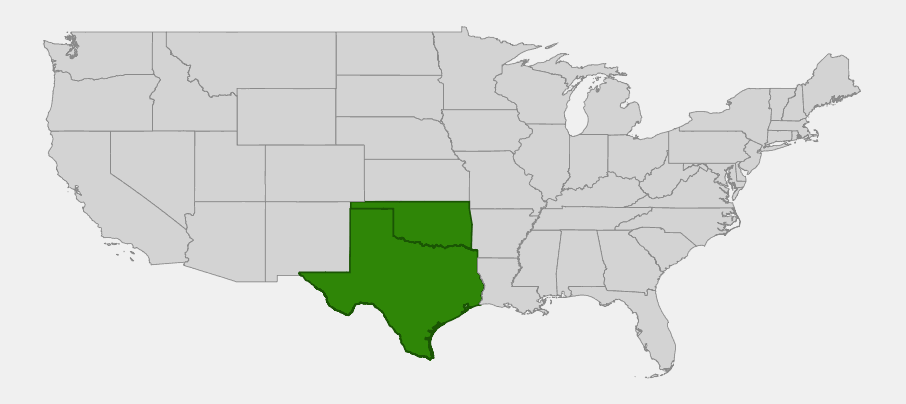
Prairie brazoria is native to the south-central United States. USDA PLANTS lists it only in Texas and Oklahoma. Its main range is central Texas: the Edwards Plateau and Texas Hill Country, the Lampasas Cut Plain, the Cross Timbers and the Grand Prairie, roughly from the San Antonio and Austin areas north toward the Fort Worth area and the Red River. In Oklahoma it grows mainly in the south-central part of the state, on limestone soils.
It is a plant of calcareous soils. Typical sites are openings and edges in oak and Ashe juniper woodland, rocky limestone slopes, shaded creek banks, and grassy openings on thin limestone soils. It often grows in dappled shade under trees, where it can form extensive spring colonies.
Like many annuals of the region, it depends on fall and winter rain to germinate, and its numbers vary from year to year.
📋 Regional plant lists featuring Prairie Brazoria: Arkansas, Louisiana, Eastern Oklahoma & Eastern Texas · South & West Texas
Growing & Care Guide
Prairie brazoria is an easy, self-sowing annual for gardens in central Texas and southern Oklahoma, especially in light shade where many spring wildflowers struggle. The Lady Bird Johnson Wildflower Center notes that it reseeds readily, so colonies are easy to establish. Seed is occasionally offered by Texas native seed suppliers.
Light
Part shade is ideal, such as dappled light under oaks or along the north or east side of a building. It also grows in full sun if the soil stays moist in spring.
Soil & Water
It prefers well-drained, calcareous clay, loam or rocky limestone soils. Moist soil in winter and spring helps it grow, and it needs no summer water because it dies back after setting seed.
Planting Tips
Sow seed in early fall directly on bare, lightly raked soil, and press it in without burying it deeply. Seedlings appear with the fall and winter rains. Combine it with cedar sage, Texas yellow star and other spring wildflowers of the Hill Country.
Pruning & Maintenance
No pruning is needed. Let the plants set seed before removing them in early summer, so the colony returns the next spring. Avoid mulching heavily where you want seedlings.
Propagation
Grow it from seed. Once established, it reseeds on its own. Collect dry stems in late spring and shake out the nutlets to sow elsewhere in fall.
Landscape Uses
- Shade gardens: spring color under oaks and junipers where few annuals thrive
- Wildflower meadows: a self-sowing annual for limestone soils
- Pollinator gardens: spring nectar for bees
- Woodland edges: naturalizes along paths and the edges of beds
- Hill Country restoration: a native annual of oak-juniper openings
Wildlife & Ecological Value
Prairie brazoria adds a pulse of spring flowers to the limestone hills of central Texas and southern Oklahoma.
For Pollinators
The two-lipped flowers are visited mainly by bees, which land on the lower lip and reach into the tube for nectar. Small butterflies and other insects may also visit.
For Birds
Seed-eating birds may pick up the small nutlets, and the insects that visit the flowers provide food for birds raising young in spring.
For Mammals
Like many mints, its aromatic foliage is not a favorite of deer, though they may browse it when other forage is scarce.
Ecosystem Role
As a spring annual of woodland openings and edges, prairie brazoria covers bare soil between perennials and trees and adds to the diversity of spring wildflowers in the Cross Timbers and Hill Country.
Cultural & Historical Uses
The genus Warnockia honors Barton H. Warnock (1911–1998), a longtime professor at Sul Ross State University in Alpine and an authority on the plants of the Trans-Pecos and Big Bend. The species name scutellarioides means “resembling Scutellaria“, the skullcaps.
The plant was first described by George Engelmann and Asa Gray in the 19th century from Texas collections. For many years it was placed in the genus Brazoria, named for the Brazos River, along with a few other Texas mints, which is why it is still called prairie brazoria. Botanists later found that it differed enough from them to deserve its own genus.
Prairie brazoria is one of many small native annuals that give the Texas Hill Country its spring wildflower season, alongside better-known plants such as bluebonnets and Indian paintbrush.
Frequently Asked Questions
Is prairie brazoria a perennial?
No. It is an annual that germinates in fall or winter, blooms in spring and dies after setting seed. It returns each year by reseeding.
Where does prairie brazoria grow?
In central Texas, from the Hill Country and Edwards Plateau north through the Cross Timbers, and in south-central Oklahoma, mostly on limestone soils in woodland openings and edges.
Can I grow prairie brazoria in shade?
Yes. It is one of the few native annuals that does well in part shade, for example under oaks and junipers.
Why does it have two names?
It was long placed in the genus Brazoria. Botanists later moved it to its own genus, Warnockia, named for the Texas botanist Barton Warnock.
What pollinates prairie brazoria?
Mainly bees, which land on the broad lower lip and reach into the flower tube for nectar.


