
Purple Paintbrush (Castilleja purpurea)
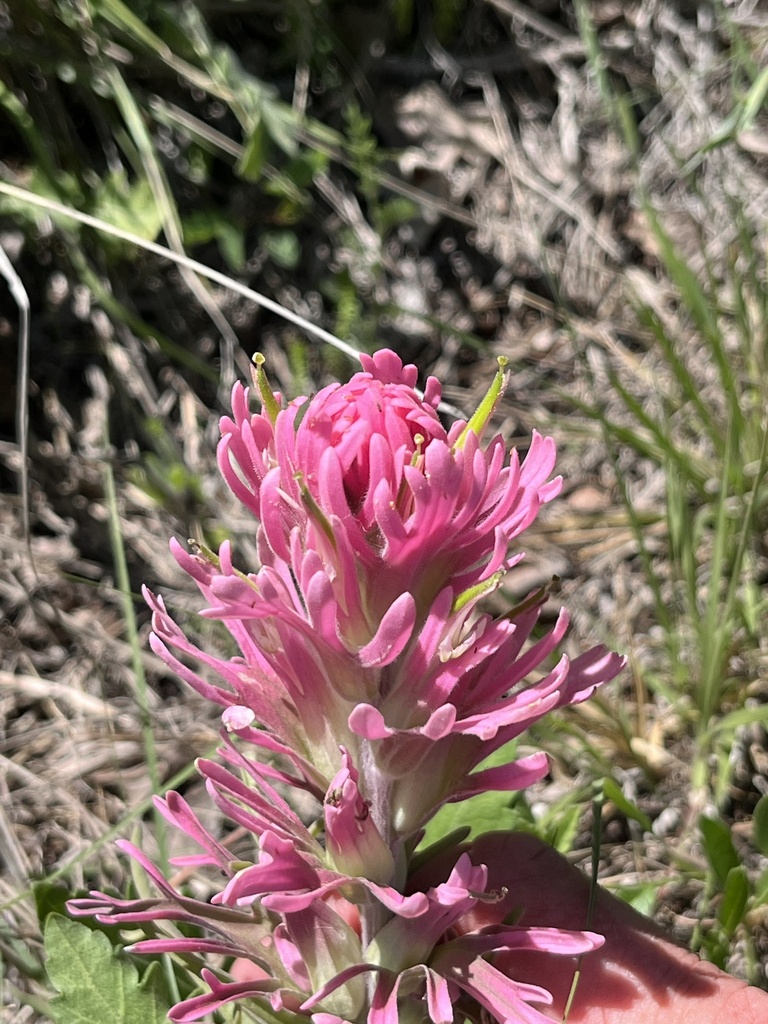
Castilleja purpurea, known as Purple Paintbrush, or prairie paintbrush, is a low, clump-forming perennial wildflower of the southern Great Plains, found mainly in Texas and Oklahoma. In spring its short, grayish, softly hairy stems end in dense spikes of colorful, deeply lobed bracts that look like brushes dipped in paint. In the typical variety they are rose-purple to magenta, but other varieties are yellow or orange. USDA PLANTS lists it under the common name downy Indian paintbrush.
Like all paintbrushes, it is a hemiparasite. It has green leaves and makes its own food, but its roots attach to the roots of nearby plants, especially native grasses such as little bluestem, and draw water and nutrients from them. It belongs to the broomrape family (Orobanchaceae). This partly parasitic lifestyle is the reason paintbrushes are so hard to grow in gardens and almost never survive transplanting.
This page is mainly a guide to recognizing and enjoying purple paintbrush in the wild, with honest advice for gardeners. It is a highlight of spring wildflower drives in the Texas Hill Country and the Cross Timbers. Enjoy it where it grows and never dig plants; it can sometimes be established from seed sown together with native grasses.
Identification
Look for low clumps of grayish, hairy stems with narrow, divided leaves, topped in spring by dense spikes of rose-purple (or yellow or orange), three-lobed bracts on dry, rocky or limestone prairies.
Growth Habit
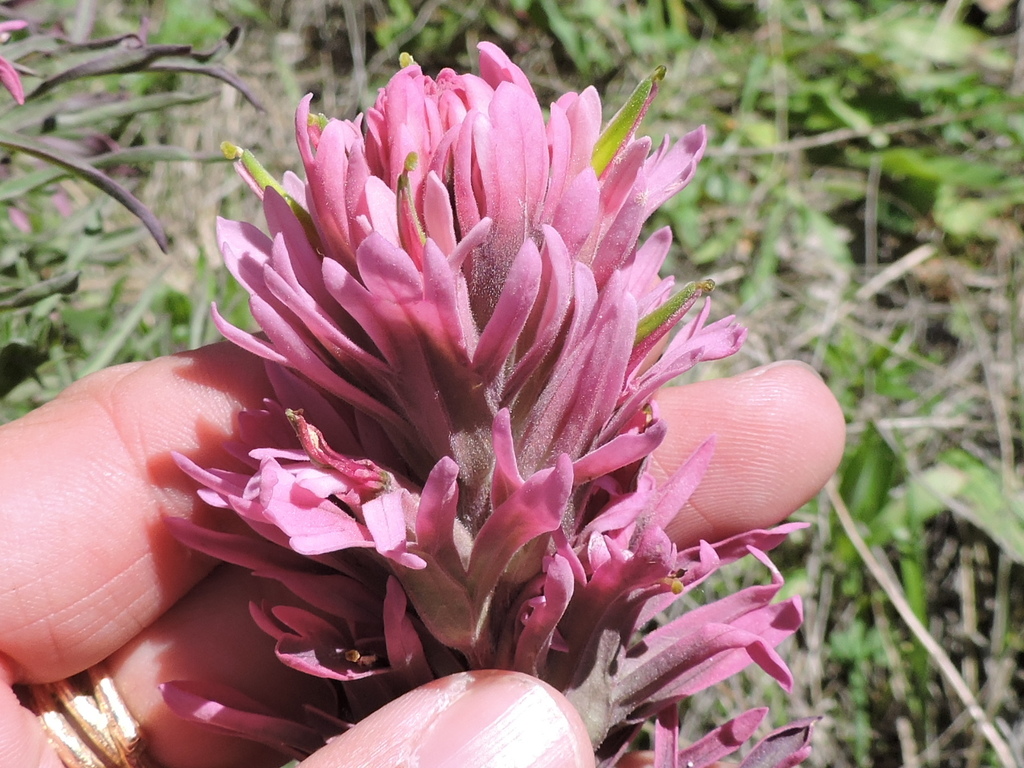
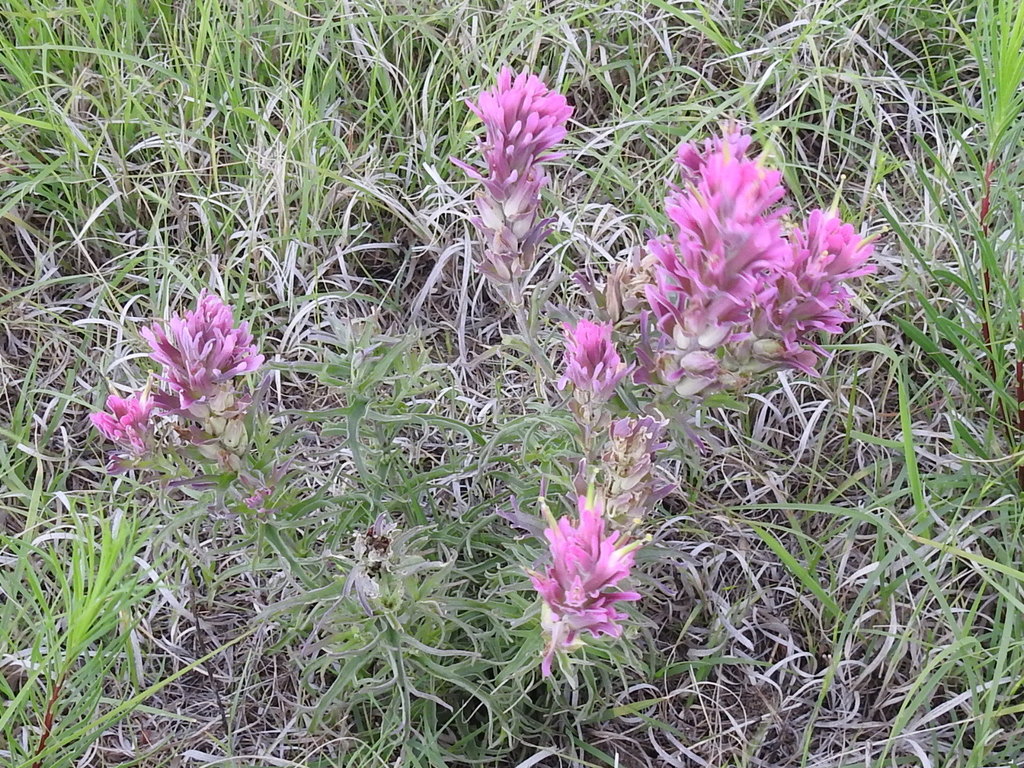
Plants are perennials from a woody root crown, with several to many unbranched stems in a clump, usually 6 to 12 inches tall (occasionally to 16 inches). The stems and leaves are covered with soft, spreading hairs that give the plant a grayish, downy look.
Leaves
The leaves are alternate, 1 to 3 inches long, and usually divided into three to five narrow, linear lobes, though the lowest leaves may be undivided. They are grayish green and hairy.
Flowers & Bracts
The showy color of the flower spike comes from broad, colored bracts, each divided into three narrow lobes. In the typical variety they are pink, rose-purple or magenta. The actual flowers are narrow, two-lipped tubes about 1 inch long, greenish to pale, partly hidden among the bracts. Bloom time is mostly March to May, sometimes again in fall after rain.
Varieties
Botanists recognize three varieties, which some treat as separate species. Variety purpurea has rose-purple to magenta bracts and is widespread in north-central Texas, Oklahoma and southern Kansas. Variety citrina has lemon-yellow bracts and grows mainly in west-central Texas and western Oklahoma. Variety lindheimeri, Lindheimer’s paintbrush, has orange to salmon or reddish bracts and is found mainly on the Edwards Plateau of Central Texas. Where varieties meet, mixed colors occur.
Look-alikes
Texas paintbrush (Castilleja indivisa) is an annual or short-lived plant with bright red-orange, undivided bracts and green, less hairy leaves; it grows on sandier soils and hybridizes with purple paintbrush, producing pink or coral forms. Scarlet Indian paintbrush (C. coccinea) has red bracts with broad, fan-shaped tips and a basal rosette. Downy paintedcup (C. sessiliflora) of the Plains has pale greenish-yellow bracts and long, curved flowers.
Quick Facts
| Scientific Name | Castilleja purpurea |
| Family | Orobanchaceae (broomrape family); formerly Scrophulariaceae |
| Plant Type | Herbaceous perennial; root hemiparasite |
| Mature Height | 6–12 in (occasionally to 16 in) |
| Mature Spread | 6–12 in |
| Growth Rate | Slow |
| Sun Exposure | Full sun |
| Water Needs | Low; dry, well-drained sites |
| Soil Type | Rocky, limestone or clay prairie soils |
| Soil pH | Neutral to alkaline (about 7.0–8.5) |
| Bloom Time | March–May |
| Flower Color | Rose-purple bracts (yellow or orange in other varieties) |
| Fall Color | None |
| Fruit | Small capsule with many tiny seeds |
| Deer Resistant | Moderately; occasionally browsed |
| USDA Hardiness Zones | 6–9 |
Native Range
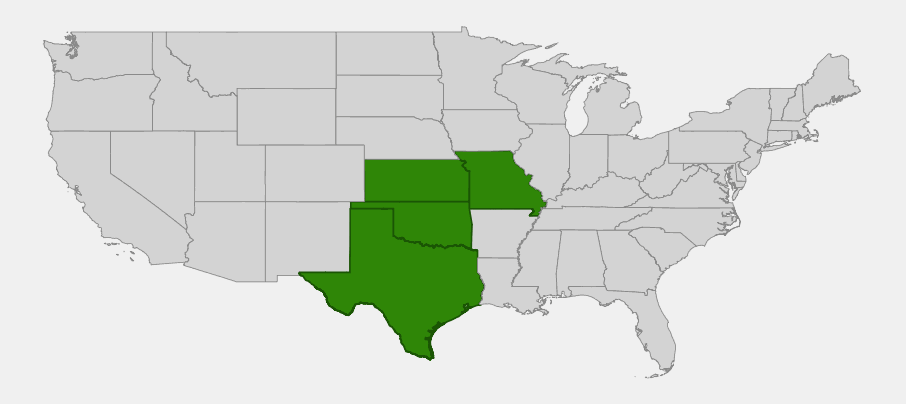
Purple paintbrush is native to the southern Great Plains of the United States. USDA PLANTS lists it as native in Kansas, Missouri, Oklahoma and Texas, and Lady Bird Johnson Wildflower Center describes its range as from southern Missouri and southern Kansas south to the upper Rio Grande plains of Texas. It is by far most common in Texas, especially in the Cross Timbers, the Grand and Blackland Prairies, the Rolling Plains and the Edwards Plateau, and in central and eastern Oklahoma.
In Texas, the purple form is common around the Dallas-Fort Worth area and in north-central Texas, the yellow form in west-central Texas, and the orange Lindheimer’s paintbrush on the Edwards Plateau and in the Hill Country. Records from Kansas and Missouri are few and lie at the northern edge of its range.
It grows in dry, open, often rocky prairies and grasslands, on limestone hills and ledges, in openings of oak and juniper savannas and on roadsides, usually on calcareous clay or rocky soils, from about 300 to 3,000 feet.
📋 Regional plant lists featuring Purple Paintbrush: Nebraska, Kansas & Eastern Colorado · Illinois, Iowa & Missouri · Arkansas, Louisiana, Eastern Oklahoma & Eastern Texas · South & West Texas
Can You Grow It?
Honestly, it is difficult. Purple paintbrush is a root hemiparasite that grows best attached to native grasses, so it rarely thrives as a single plant in a garden bed, and wild plants die when dug. It is occasionally grown from seed in prairie and meadow plantings in Texas and Oklahoma. If you try, buy seed from a native seed company and sow it among established native bunchgrasses.
Light
Full sun. In the wild it grows in open prairies and rocky grasslands with little shade.
Soil & Water
It needs very well-drained, rocky, clay or limestone soil that is dry for much of the year. Rich, watered garden soil favors its hosts and competitors and often leads to rot. Do not irrigate established plantings in summer.
Sowing with Hosts
Sow the tiny seed in fall on the surface of soil among established native bunchgrasses such as little bluestem or sideoats grama, and press it in lightly. Winter cold and moisture help it germinate. The seedlings must find and attach to host roots in their first season to survive. Some growers raise seedlings in pots together with a small host grass and plant the two out as a unit.
Pruning & Maintenance
No pruning is needed. Let plants set seed. Avoid mowing prairie plantings until after seed has dropped in early summer, and keep aggressive non-native grasses from taking over.
Propagation
It is propagated only from seed. Plants are rarely available in nurseries because they do not transplant well. Never dig wild plants: they leave their hosts behind and almost always die.
Where to See It
- Texas Hill Country: roadsides and parks around Fredericksburg, Kerrville and the Edwards Plateau (orange and purple forms)
- Dallas-Fort Worth prairies: remnant prairies such as Tandy Hills Natural Area and Fort Worth Nature Center
- Oklahoma grasslands: rocky prairies and roadsides in central and eastern Oklahoma
- Wildflower drives: often mixed with bluebonnets and Indian blanket in spring
- Best time: late March through May
Wildlife & Ecological Value
Purple paintbrush is part of the rich spring wildflower display of the southern Plains and has interesting relationships with both pollinators and its host plants.
For Pollinators
The narrow tubular flowers hide nectar that is reached by hummingbirds and by long-tongued bees such as bumblebees. Ruby-throated and black-chinned hummingbirds visit paintbrushes during spring migration. Paintbrushes are also host plants for caterpillars of checkerspot butterflies and some moths.
For Birds
Hummingbirds feed on the nectar, and small birds hunt for insects on the flower spikes.
For Mammals
Deer and livestock occasionally browse it. Some paintbrushes can absorb toxic compounds such as selenium or alkaloids from their hosts, which may make them less palatable.
Ecosystem Role
As a hemiparasite, it takes some water and nutrients from dominant grasses, slightly reducing their vigor and leaving more room for other wildflowers. Paintbrushes are thought to help maintain plant diversity in prairies in this way.
Cultural & Historical Uses
The genus Castilleja was named for the eighteenth-century Spanish botanist Domingo Castillejo. The name paintbrush comes from the colorful bract tips, which look as though they have been dipped in paint. Variety lindheimeri honors Ferdinand Lindheimer, a German-born botanist who collected plants in Texas in the nineteenth century and is often called the father of Texas botany.
Paintbrushes are among the most famous Texas wildflowers. Together with bluebonnets, they create the classic spring roadside displays that the Texas Department of Transportation has encouraged by delaying mowing and sowing wildflower seed along highways.
Some Indigenous peoples used paintbrushes in remedies and as a source of dyes, but there is little specific information for purple paintbrush. Because paintbrushes can absorb selenium and other compounds from their hosts, they should not be eaten or used as home remedies.
Frequently Asked Questions
Can I transplant purple paintbrush from the wild?
No. It is a root hemiparasite attached to nearby grasses, and dug plants almost always die. Digging also damages wild populations.
Can I grow purple paintbrush from seed?
Sometimes. Sow seed in fall among established native bunchgrasses such as little bluestem, which serve as host plants. Success is unpredictable.
Why are some purple paintbrushes yellow or orange?
The species has several color varieties: purple to magenta (var. purpurea), lemon-yellow (var. citrina) and orange (var. lindheimeri). Where they grow together, intermediate colors appear.
Where can I see purple paintbrush?
Look on rocky prairies and roadsides in north-central and central Texas and in Oklahoma from late March through May, especially in the Hill Country and around Fort Worth.
Is purple paintbrush the same as Texas paintbrush?
No. Texas paintbrush (Castilleja indivisa) has bright red-orange bracts and grows on sandier soils. The two can hybridize, producing pink or coral plants.


