
Switch Cane (Arundinaria tecta)
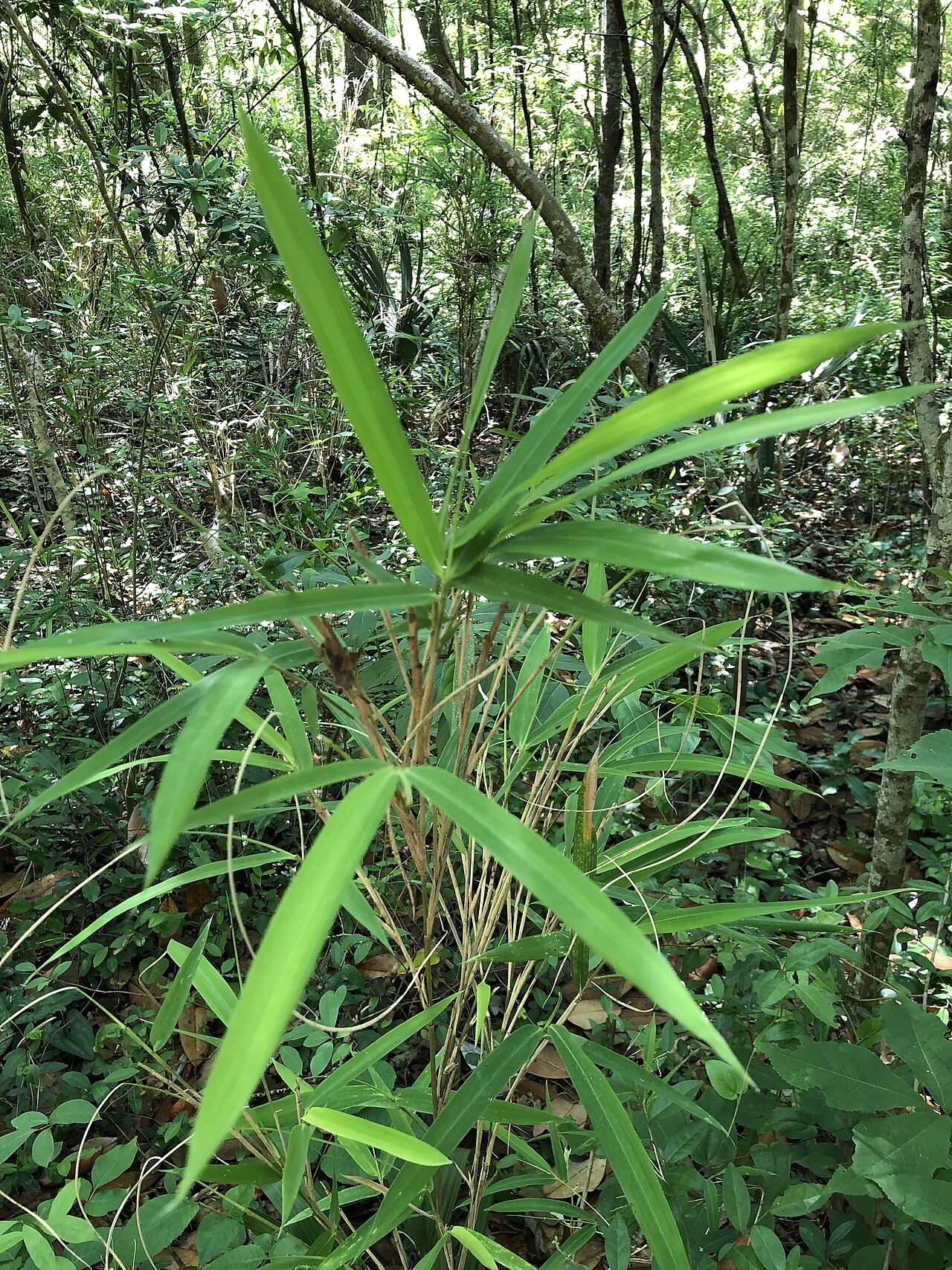
Arundinaria tecta, known as Switch Cane (USDA: switchcane), is one of only three bamboos native to North America. It belongs to the grass family (Poaceae) and grows on the Atlantic and Gulf Coastal Plain from Maryland south to Florida and west to Louisiana. Some botanists treat it as a subspecies of river cane, as Arundinaria gigantea subsp. tecta, but most current floras recognize it as a separate species.
Switch cane is a woody, evergreen grass usually 3 to 8 feet tall, with hollow, jointed stems (culms) and fans of long, narrow, bright green leaves. It spreads by underground rhizomes to form dense thickets known as canebrakes. Its rhizomes have air channels, an adaptation to the wet, poorly drained soils of swamps, bay forests, pocosins and stream margins where it grows. It flowers only rarely and unpredictably.
Canebrakes once covered vast areas of the Southeast, but most were lost to grazing, clearing, drainage and fire suppression. Switch cane is now valued for restoration, erosion control along streams and wildlife habitat. In gardens it makes a fine native alternative to invasive Asian bamboos, though it spreads and needs room.
Identification
Look for a native bamboo 3 to 8 feet tall forming thickets in swamps, wet woods and stream margins of the southeastern Coastal Plain, with jointed woody stems and fan-like sprays of long, narrow leaves.
Growth Habit
Switch cane grows from long, creeping rhizomes that send up many upright culms, forming colonies or dense canebrakes. Culms are usually 3 to 8 feet tall (rarely taller) and less than 1/2 inch thick, hollow between the nodes, and branch mainly in their upper part. It is evergreen in most of its range, though leaves may brown in hard winters at the northern edge.
Leaves
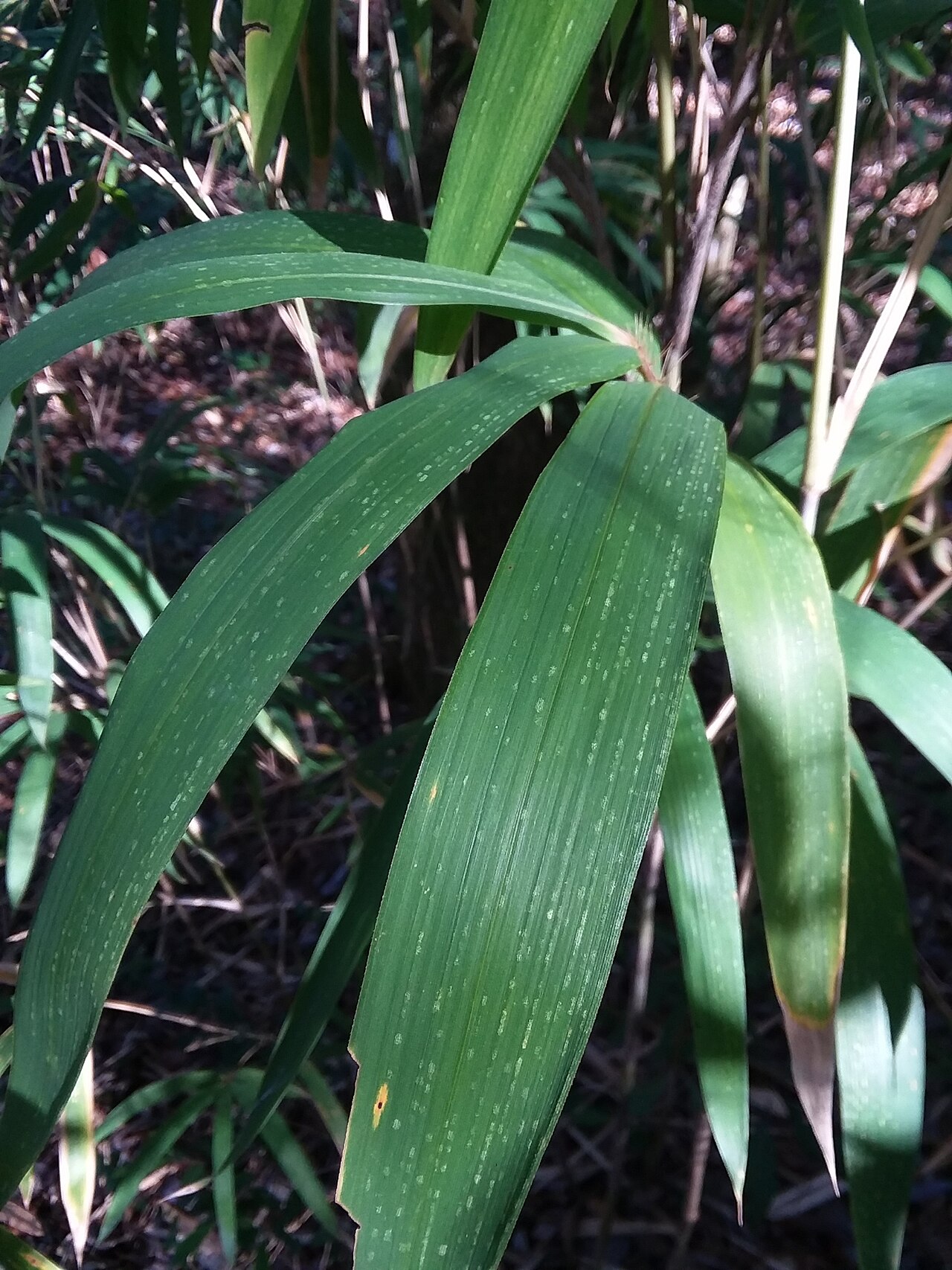
The leaves are lance-shaped, 3 to 8 inches long and up to about 1 inch wide, with fine parallel veins and a short stalk (petiole) where they join the sheath, a feature typical of bamboos. They are clustered in fan-like sprays at the ends of the branches.
Culms & Rhizomes
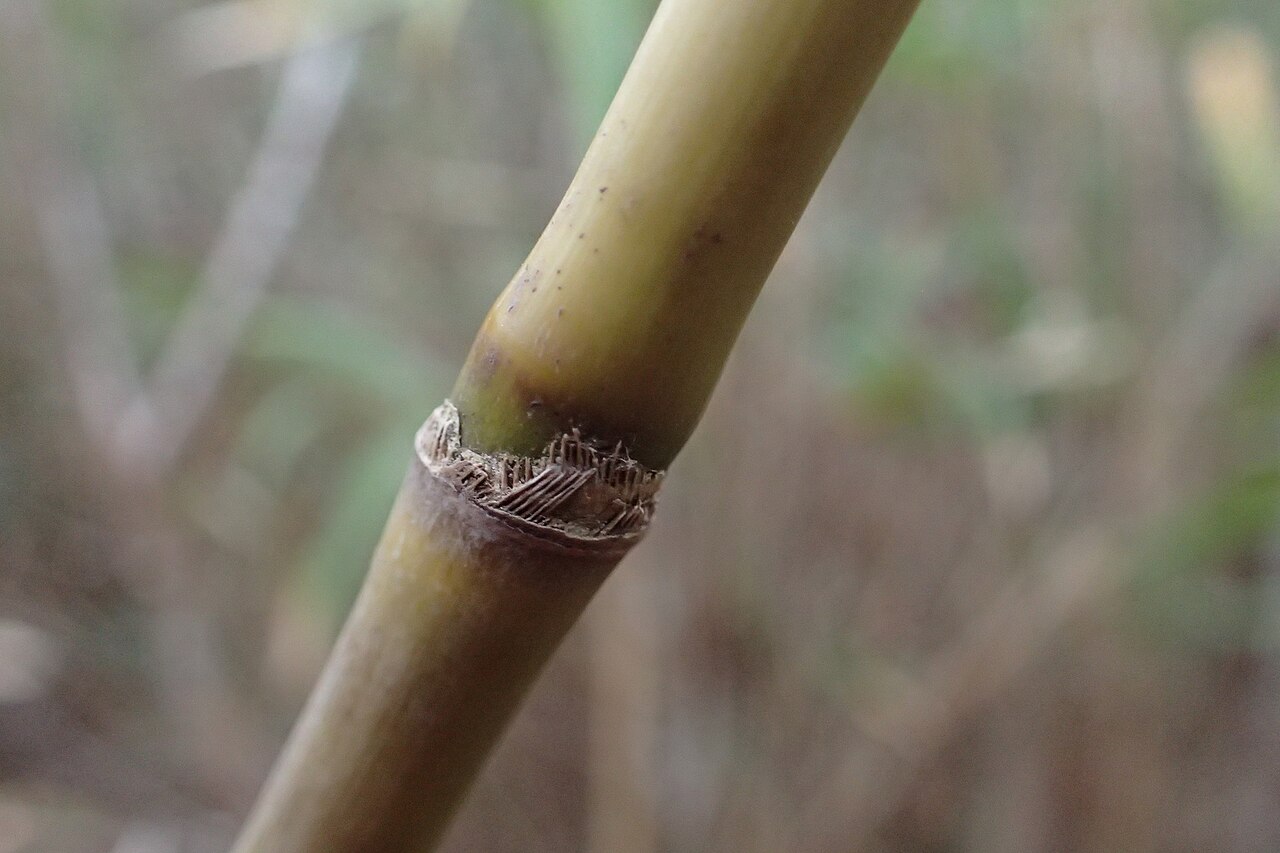
The culms are smooth and green, aging to yellowish or tan, with prominent nodes wrapped by papery sheaths. The rhizomes have air canals (visible in cross-section), which help supply oxygen to roots in waterlogged soil. River cane rhizomes lack these canals.
Flowers & Seeds
Flowering is rare and sporadic, sometimes in large patches at once, usually in spring. The flowers are in loose clusters of flattened spikelets at the tips of leafy or leafless shoots. The grain-like seeds are edible but seldom produced.
Look-alikes
River cane (Arundinaria gigantea) is taller (often 10 to 20 feet), grows on floodplains and stream terraces across a wider area, has rhizomes without air canals and branches along more of its culm. Hill cane (A. appalachiana) is smaller and deciduous and grows on slopes in the southern Appalachians. Non-native bamboos such as golden bamboo (Phyllostachys aurea) have grooved culms and are invasive.
Quick Facts
| Scientific Name | Arundinaria tecta (syn. A. gigantea subsp. tecta) |
| Family | Poaceae (grass family) |
| Plant Type | Native bamboo; woody, rhizomatous grass |
| Mature Height | 3–8 ft |
| Mature Spread | Spreads by rhizomes to form colonies |
| Growth Rate | Moderate to fast once established |
| Sun Exposure | Full sun to part shade |
| Water Needs | High; moist to wet soil |
| Soil Type | Wet, acidic sandy, peaty or mucky soils |
| Soil pH | Acidic (about 4.5–6.5) |
| Bloom Time | Rare and sporadic; usually spring |
| Flower Color | Green to purplish (inconspicuous) |
| Fall Color | Evergreen; may brown in cold winters |
| Fruit | Grain (caryopsis), rarely produced |
| Deer Resistant | No; browsed by deer and livestock |
| USDA Hardiness Zones | 6–9 |
Native Range
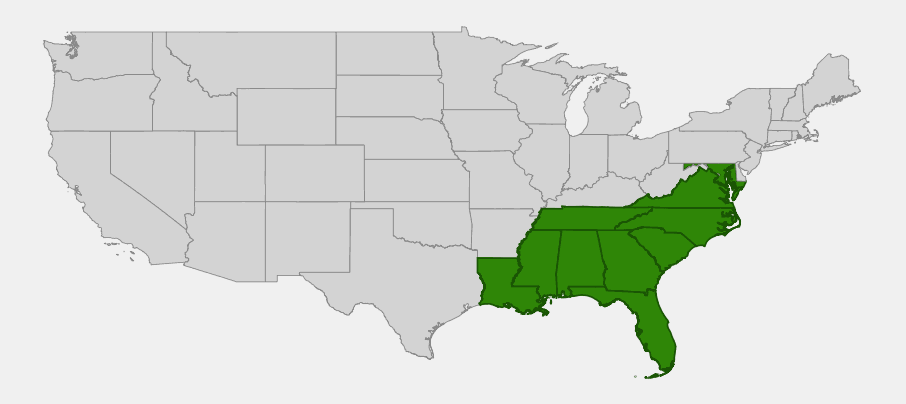
Switch cane is native to the southeastern United States, mostly on the Atlantic and Gulf Coastal Plain. It grows from Maryland and Virginia south through the Carolinas and Georgia to northern and central Florida, and west through Alabama and Mississippi to Louisiana, with scattered populations in Tennessee.
USDA PLANTS also lists New Jersey and New York. NatureServe treats the New Jersey records as exotic, and there are no native records from New York, so this page does not include them in the native range. Switch cane is rare at the northern and inland edges of its range, including Maryland and Tennessee.
It grows in wet, often acidic places: swamp forests, bay forests, pocosins, the edges of Carolina bays, blackwater stream margins, wet pine flatwoods and savannas, and seepage areas. Frequent natural fire helps canebrakes thrive by removing competing shrubs; without it, cane is gradually shaded out.
📋 Regional plant lists featuring Switch Cane: Kentucky & Tennessee · Maryland, Virginia & West Virginia · Alabama, Georgia & Mississippi · North & South Florida · North & South Carolina · Arkansas, Louisiana, Eastern Oklahoma & Eastern Texas
Growing & Care Guide
Switch cane is a tough, low-maintenance native bamboo for wet, sunny to partly shaded sites. Give it space: it spreads steadily by rhizomes and is best used for naturalizing, screens and stream banks.
Light
Full sun to part shade. It grows densest in sun or light shade and thins out in deep shade.
Soil & Water
Plant in moist to wet, acidic soil rich in organic matter. It tolerates seasonal flooding and saturated soil better than river cane. In drier garden soil, water regularly during establishment and drought.
Planting Tips
Plant rhizome divisions or container plants in late winter or early spring, 2 to 3 feet apart for a screen. Divisions with several nodes of rhizome establish best. To limit spread in a small garden, install a rhizome barrier or plant it where a mowed edge, path or water body will contain it.
Pruning & Maintenance
Remove old, dead culms at ground level in late winter to keep stands vigorous. In larger stands, cutting or prescribed burning every few years rejuvenates the cane, as natural fire once did.
Propagation
Propagate by dividing rhizomes in late winter, keeping several nodes and some culms on each piece. Seed is rarely available because the plant flowers so seldom.
Landscape Uses
- Stream bank stabilization: dense rhizomes hold soil along creeks and ditches
- Native screens and hedges: an evergreen, native alternative to invasive bamboo
- Rain gardens and wet areas: tolerates saturated soil and flooding
- Wildlife habitat: cover and nesting habitat for birds and other animals
- Canebrake restoration: restoring a lost southeastern plant community
Wildlife & Ecological Value
Canebrakes are a rich and now rare wildlife habitat, and switch cane supports several species found almost nowhere else.
For Pollinators
Switch cane is wind-pollinated and rarely flowers, so it offers little to bees. It is, however, a larval host plant for several butterflies, including the southern pearly-eye and creole pearly-eye, and for cane-feeding skippers such as the lace-winged roadside-skipper and Carolina roadside-skipper.
For Birds
Dense canebrakes are the preferred nesting habitat of the secretive Swainson’s warbler, and they shelter many other songbirds. The now-extinct Bachman’s warbler was also closely associated with southern canebrakes.
For Mammals
The evergreen leaves are high-quality winter browse for deer, and rabbits, swamp rabbits and other small mammals use canebrakes for food and cover.
Ecosystem Role
Its dense rhizome mats stabilize stream banks, filter runoff and reduce erosion. Canebrakes also provide cover for reptiles, including the timber rattlesnake, known in the Southeast as the canebrake rattlesnake.
Cultural & Historical Uses
The name Arundinaria comes from the Latin arundo, “reed.” The species name tecta means “covered” or “roofed,” possibly a reference to the persistent sheaths that cover the culms.
Native cane was one of the most important plants for Indigenous peoples of the Southeast, including the Cherokee, Chitimacha and Choctaw, who used it for baskets, mats, blowguns, arrow shafts, fish traps, flutes, housing and many other purposes. Rivercane and switch cane basketry is a living tradition today, and tribal cane restoration programs are working to bring canebrakes back.
Early European explorers described canebrakes stretching for miles across the Southeast. Settlers grazed livestock in them and cleared them for farmland. Detailed studies of the native bamboos in the 2000s led botanists to recognize three species: river cane, switch cane and hill cane, which was described as new in 2006.
Frequently Asked Questions
Is switch cane a true bamboo?
Yes. It is one of three bamboos native to North America, along with river cane and hill cane.
How is switch cane different from river cane?
Switch cane is shorter (usually 3 to 8 feet), grows in wetter Coastal Plain habitats and has air canals in its rhizomes. River cane is taller and grows on floodplains and stream banks over a wider range.
Is switch cane invasive?
No. It is native, but it spreads by rhizomes and can form large colonies, so give it space or contain it.
Can switch cane grow in wet soil?
Yes. It thrives in moist to wet, acidic soils and tolerates flooding.
Why is switch cane important for wildlife?
Canebrakes provide nesting habitat for Swainson’s warbler, food for pearly-eye and skipper caterpillars, winter browse for deer and cover for many other animals.

Looking for a nursery that carries Switch Cane?
Browse our native plant nursery directory: Alabama · Florida & Georgia · Louisiana, Maryland & Mississippi · North Carolina · South Carolina, Tennessee & Virginia

