
Prairie Bluebells (Mertensia lanceolata)
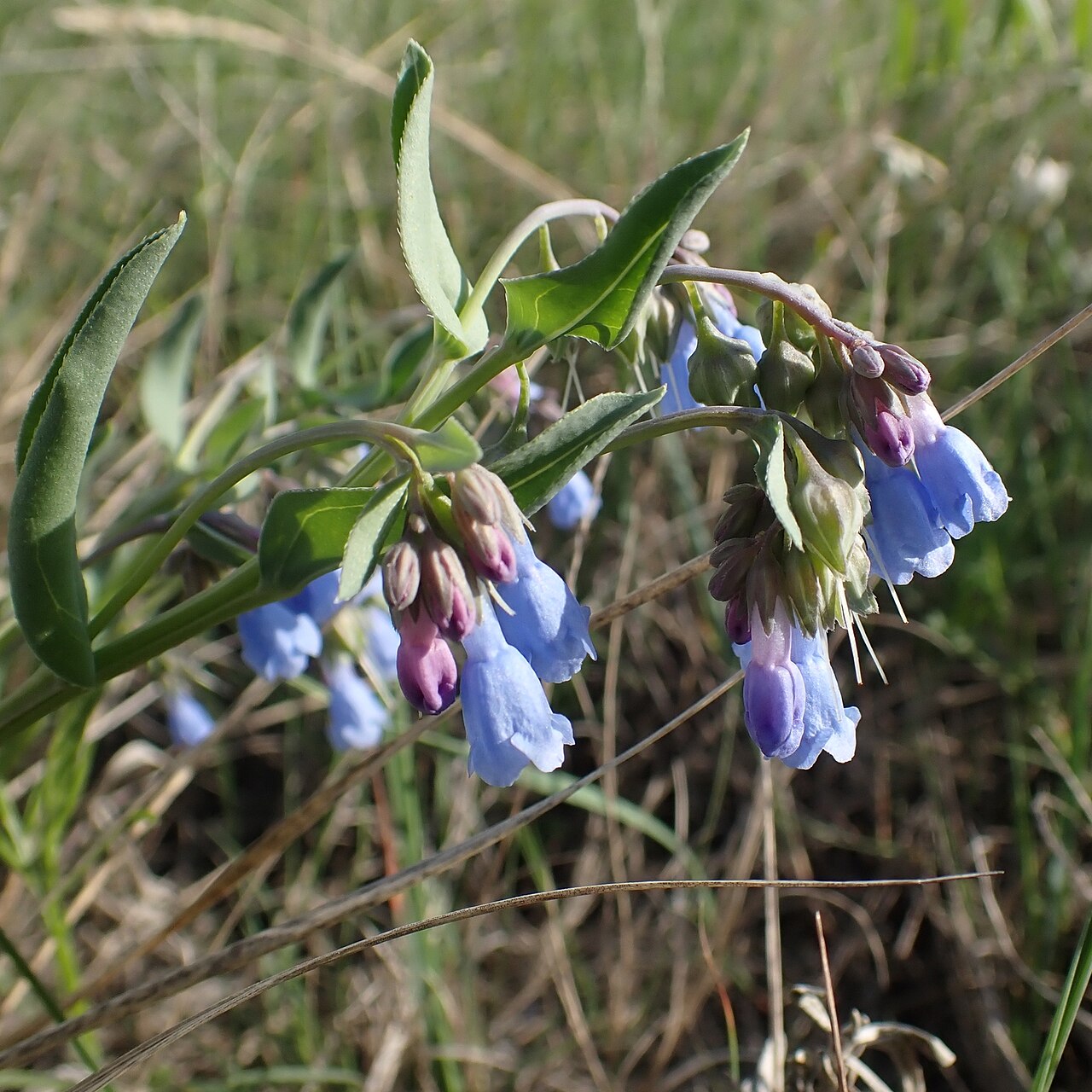
Mertensia lanceolata, known as Prairie Bluebells (also lanceleaf bluebells, lanceleaf chiming bells or foothill mertensia), is one of the first wildflowers to bloom on the plains and foothills of the Rocky Mountain region. In spring it sends up leaning stems, usually 4 to 16 inches tall, with blue-green, lance-shaped leaves and drooping clusters of small, trumpet-shaped flowers that open pink and turn sky-blue. It belongs to the borage family (Boraginaceae).
Prairie bluebells grow from a deep taproot in dry to moderately moist grasslands, sagebrush, open ponderosa pine woods and mountain meadows, from the northern Great Plains to high in the Rockies. Plants bloom for about a month, set seed and then go dormant by early summer, which lets them escape the hot, dry season.
This is a small, delicate plant, but a colony in full bloom is a lovely sight. Bumblebees and other long-tongued bees visit the nodding flowers, and the color change from pink buds to blue flowers makes each cluster look two-toned. For gardeners in the Plains and Intermountain West it is a charming, drought-tolerant spring ephemeral for rock gardens and dry meadows.
Identification
Look for a low, leaning plant with smooth, blue-green, lance-shaped leaves and nodding clusters of small, pink-budded, sky-blue tubular flowers in spring, on dry plains, foothills and open pine woods.
Leaves
The leaves are alternate, smooth or minutely bumpy, and distinctly blue-green from a waxy coating, with a prominent midvein. Young plants have a few long-stalked basal leaves that are ovate to lance-shaped. Stem leaves on flowering plants are narrower, lance-shaped to oblong, about 1 to 4 inches long, and usually stalkless.
Stems
Several stems rise from the top of the taproot, often leaning outward or sprawling, usually 4 to 16 inches long (sometimes to about 18 inches). They are smooth and unbranched below the flower clusters.
Flowers
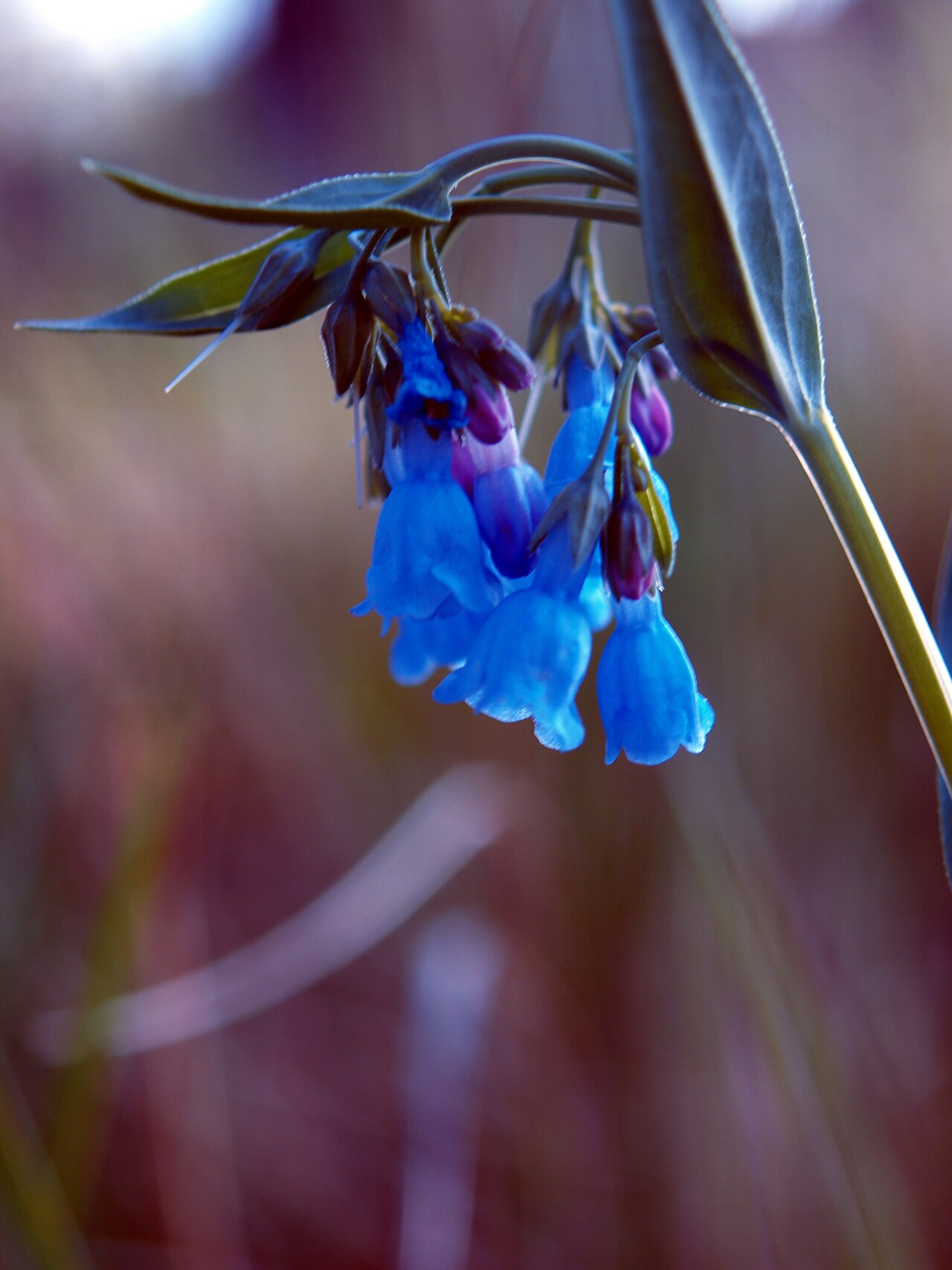
The flowers hang in dense clusters at the stem tips that loosen as they age. Each flower is about 1/3 to 1/2 inch long, with a short tube that flares into a bell-shaped, shallowly five-lobed rim. Buds are pink to purplish and open sky-blue, rarely white or deep blue. Bloom is mainly from April to June, depending on elevation and weather.
Fruit & Seeds
Each flower produces up to four small, wrinkled nutlets that ripen within a few weeks of flowering and drop near the plant. Plants then wither and go dormant until the next spring.
Look-alikes
Mountain Bluebells (M. ciliata) is a much taller plant, 1 to 4 feet, of wet mountain streambanks and meadows. Tall Bluebells (M. paniculata) is also tall, with broader, hairy leaves, in moist northern forests. Oblongleaf bluebells (M. oblongifolia) of the Great Basin and northern Rockies is similar in size but has a longer flower tube. Virginia Bluebells (M. virginica) grows only in the East.
Quick Facts
| Scientific Name | Mertensia lanceolata |
| Family | Boraginaceae (borage family) |
| Plant Type | Herbaceous perennial; spring ephemeral |
| Mature Height | 4–16 in |
| Mature Spread | 6–12 in |
| Growth Rate | Slow |
| Sun Exposure | Full sun to part shade |
| Water Needs | Low; dry to moderately moist |
| Soil Type | Well-drained sandy, gravelly or loamy soil |
| Soil pH | About 6.0–8.0 |
| Bloom Time | April–June |
| Flower Color | Sky-blue, from pink buds |
| Fall Color | None; dormant by summer |
| Fruit | Four small wrinkled nutlets |
| Deer Resistant | Moderate |
| USDA Hardiness Zones | 3–7 |
Native Range
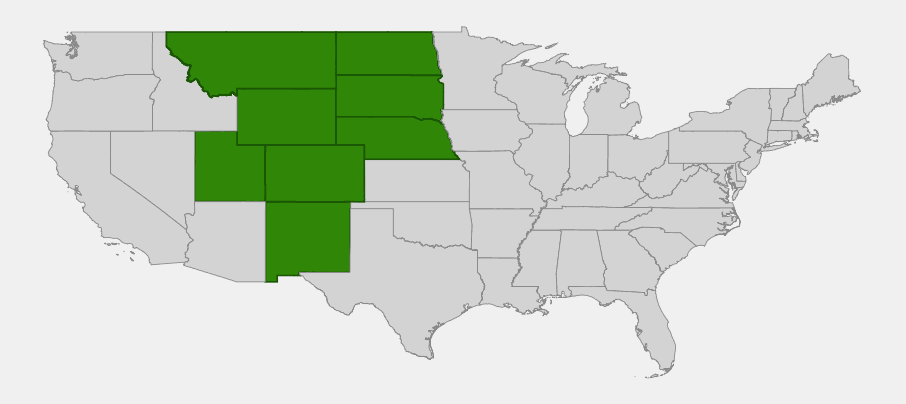
Prairie bluebells are native to the Rocky Mountains and the northern Great Plains. In the United States, USDA PLANTS lists them as native in Colorado, Montana, Nebraska, New Mexico, North Dakota, South Dakota, Utah and Wyoming. In Canada they grow in Alberta, Saskatchewan and Manitoba.
The range runs along the Rockies from northern New Mexico through Colorado, Wyoming and eastern Utah to Montana and Alberta, and spreads east onto the plains in the Dakotas, western Nebraska and the Canadian prairies. The Black Hills of South Dakota are another stronghold.
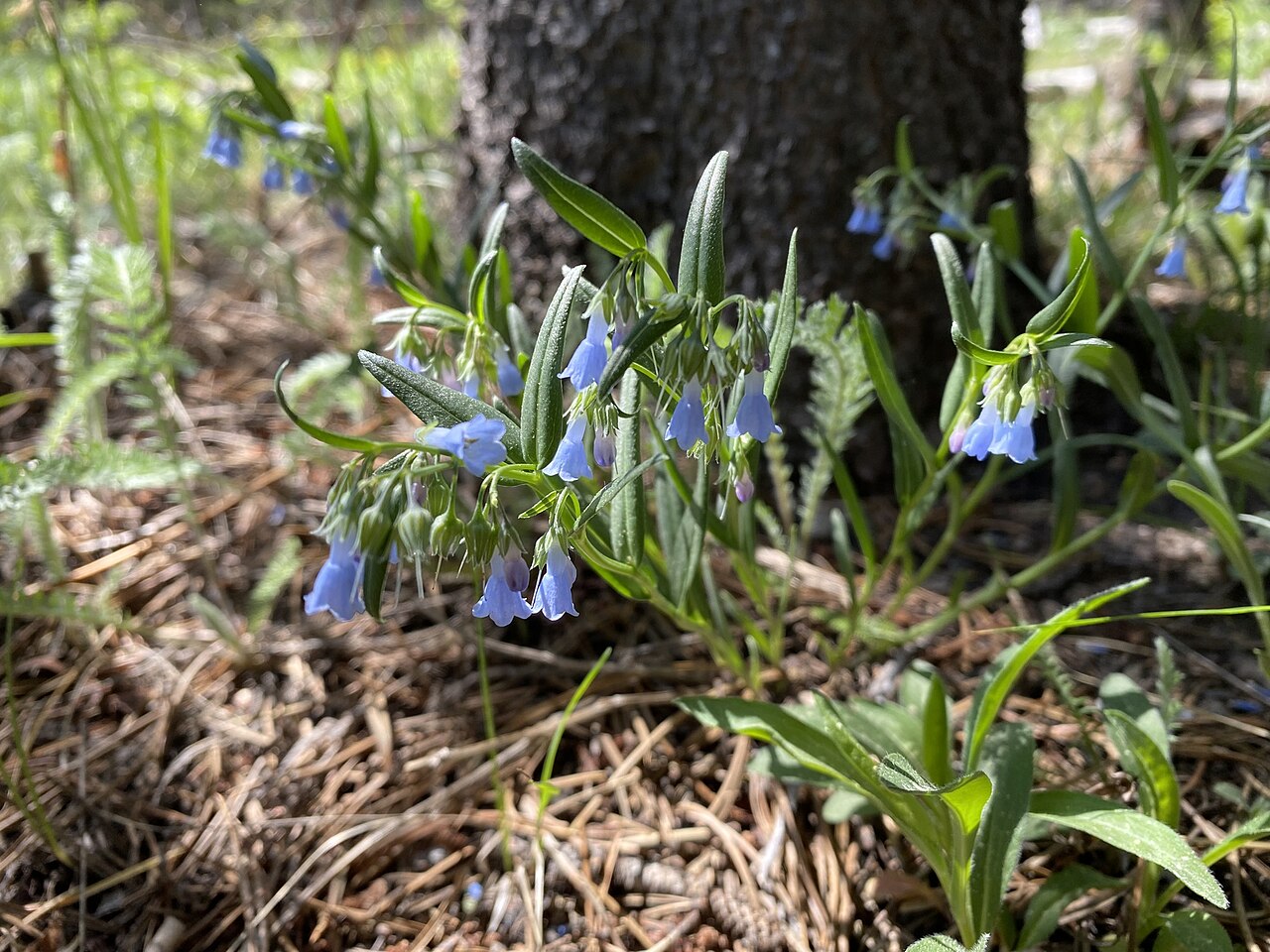
This species grows across a wide range of elevations, from the plains to the alpine. It is common in mixed-grass and foothill grasslands, sagebrush, mountain shrublands, open ponderosa pine and aspen woods, and dry to moist mountain meadows, usually on well-drained soils.
📋 Regional plant lists featuring Prairie Bluebells: Montana & Wyoming · Nebraska, Kansas & Eastern Colorado · Utah & Western Colorado · North Dakota, South Dakota & Western Minnesota
Growing & Care Guide
Prairie bluebells are best treated as a spring ephemeral for dry gardens in the Plains and Mountain West. Give them sharp drainage and leave them alone once they go dormant.
Light
Full sun to part shade. On the plains they grow in full sun; at lower elevations in hot climates, light afternoon shade such as that of open pines helps them bloom longer.
Soil & Water
Plant in well-drained sandy, gravelly or loamy soil. Water while plants are growing in spring if the season is dry, then let them dry out after they go dormant. Heavy, wet soil and summer irrigation can rot the taproot.
Planting Tips
Plant small container plants in fall or early spring, because the deep taproot makes larger plants hard to move. Mark their location so you do not dig into them while they are dormant. Combine them with bunchgrasses and later-blooming perennials that will fill the space in summer.
Pruning & Maintenance
No pruning is needed. Let the foliage wither on its own so the root can store energy. Avoid heavy mulch over the crown. Plants are long-lived once established and rarely need care.
Propagation
Grow from seed collected as soon as the nutlets ripen in early summer and sown outdoors in fall; the seed needs a cold, moist winter to germinate. Seedlings grow slowly and may take two or more years to bloom. Do not dig wild plants; the taproot rarely survives transplanting.
Landscape Uses
- Rock gardens: small, drought-tolerant spring bloomer for sharp drainage
- Prairie and meadow plantings: early color among bunchgrasses
- Pollinator gardens: early nectar for queen bumblebees
- Dry woodland edges: grows under open pines and aspens
- Native restoration: plains, foothill and mountain grassland seed mixes
Wildlife & Ecological Value
Prairie bluebells bloom early, when few other flowers are open, so they are valuable to spring pollinators.
For Pollinators
The tubular flowers hold nectar at the base, which is best reached by long-tongued bees. Bumblebee queens emerging from hibernation are frequent visitors, and mason bees, other native bees and butterflies also visit. Some bees rob nectar by biting through the side of the flower tube.
For Birds
The small nutlets are eaten by some ground-feeding birds, and early insects drawn to the flowers feed insect-eating birds in spring.
For Mammals
Deer, elk, pronghorn and livestock graze the tender spring foliage to some degree. Small mammals may eat the seeds.
Ecosystem Role
As an early-blooming perennial with a deep taproot, it adds diversity to grasslands and open forests and supports pollinators at the start of the growing season. Its early dormancy reduces competition with the warm-season grasses that dominate later in the year.
Cultural & Historical Uses
The genus Mertensia honors the German botanist Franz Carl Mertens. The species name lanceolata means “lance-shaped,” for the leaves. Frederick Pursh first described the plant in 1813 as Pulmonaria lanceolata, from material collected “in Upper Louisiana,” and Augustin Pyramus de Candolle moved it to Mertensia in 1846.
The plant is quite variable, and botanists have described several varieties. Variety coriacea, with smooth, leathery leaves, grows in Wyoming, Utah, Colorado and New Mexico, and variety secundorum, with bristly leaves, is known from Wyoming and Colorado. Many other forms once named as separate species are now included in M. lanceolata.
Its many common names, including chiming bells and languid ladies, describe the drooping flower clusters. On this site, related plants include Mountain Bluebells, Tall Bluebells and the eastern Virginia Bluebells.
Frequently Asked Questions
When do prairie bluebells bloom?
Mainly from April to June, depending on elevation. Plains plants bloom first; mountain plants bloom later, sometimes into July.
Why do the flowers change from pink to blue?
The pigments in the flowers change as they mature. The buds and young flowers are pink, and open flowers turn sky-blue.
Where do prairie bluebells grow?
From northern New Mexico north through the Rockies to Alberta, and east onto the northern Great Plains in the Dakotas, Nebraska, Saskatchewan and Manitoba.
Can I grow prairie bluebells in my garden?
Yes, in well-drained soil and sun or light shade within its native region. Start from seed or small plants, and expect it to go dormant in summer.
How are prairie bluebells different from mountain bluebells?
Prairie bluebells are short, usually under 16 inches, and grow in dry grasslands and open woods. Mountain bluebells grow 1 to 4 feet tall along wet mountain streams and meadows.

Looking for a nursery that carries Prairie Bluebells?
Browse our native plant nursery directory: Colorado · Montana · Nebraska, New Mexico & North Dakota · South Dakota & Utah · Wyoming

