
Pineland Daisy (Chaptalia tomentosa)
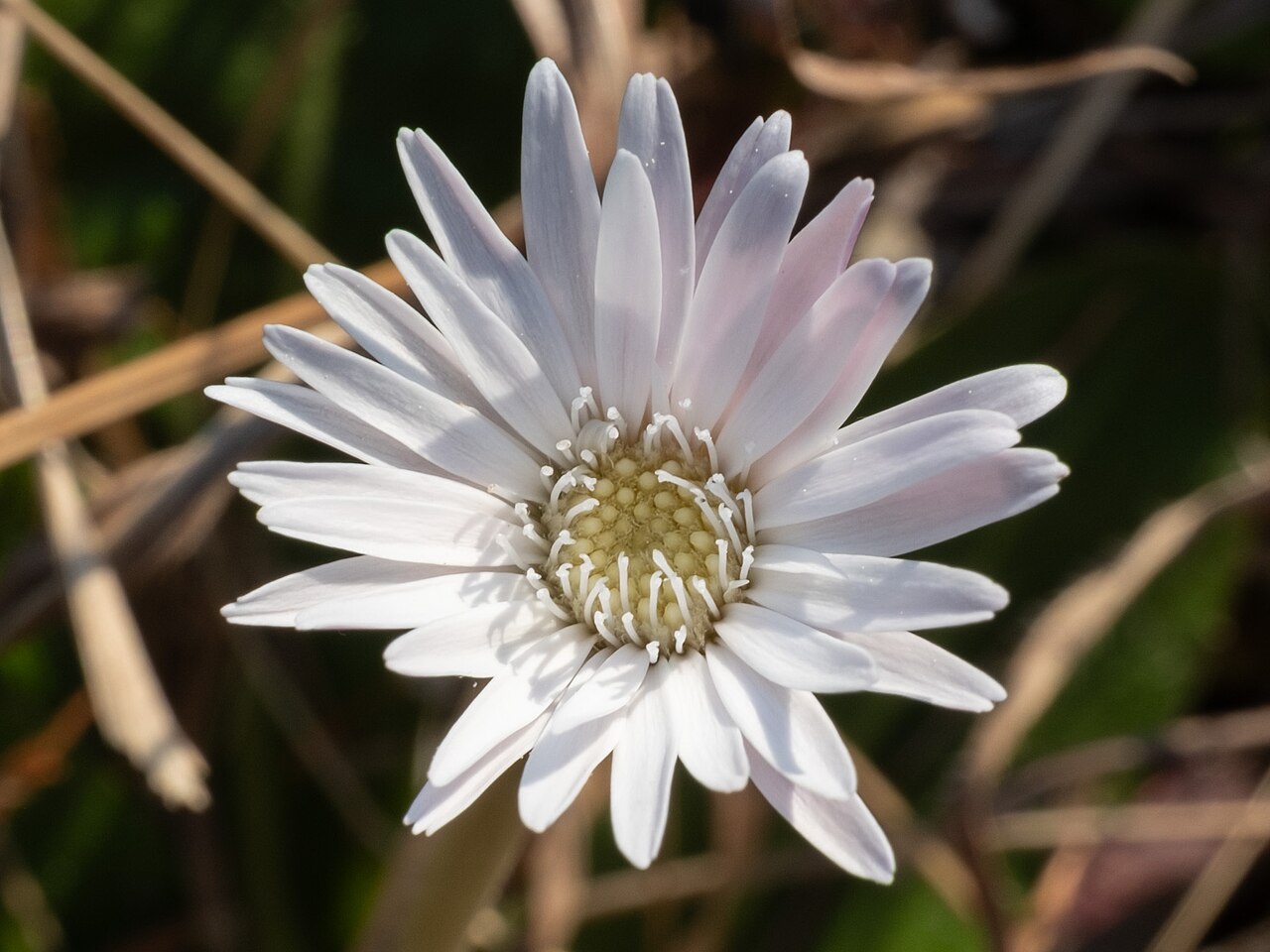
Chaptalia tomentosa, known as Pineland Daisy, woolly sunbonnets or night-nodding bog-dandelion, is a small perennial of the aster family (Asteraceae) native to the coastal plain of the southeastern United States, from North Carolina to Florida and west to East Texas. It forms a flat rosette of leathery leaves that are green on top and covered with white wool underneath. In late winter and spring it sends up single flower heads on woolly stalks 4 to 12 inches tall.
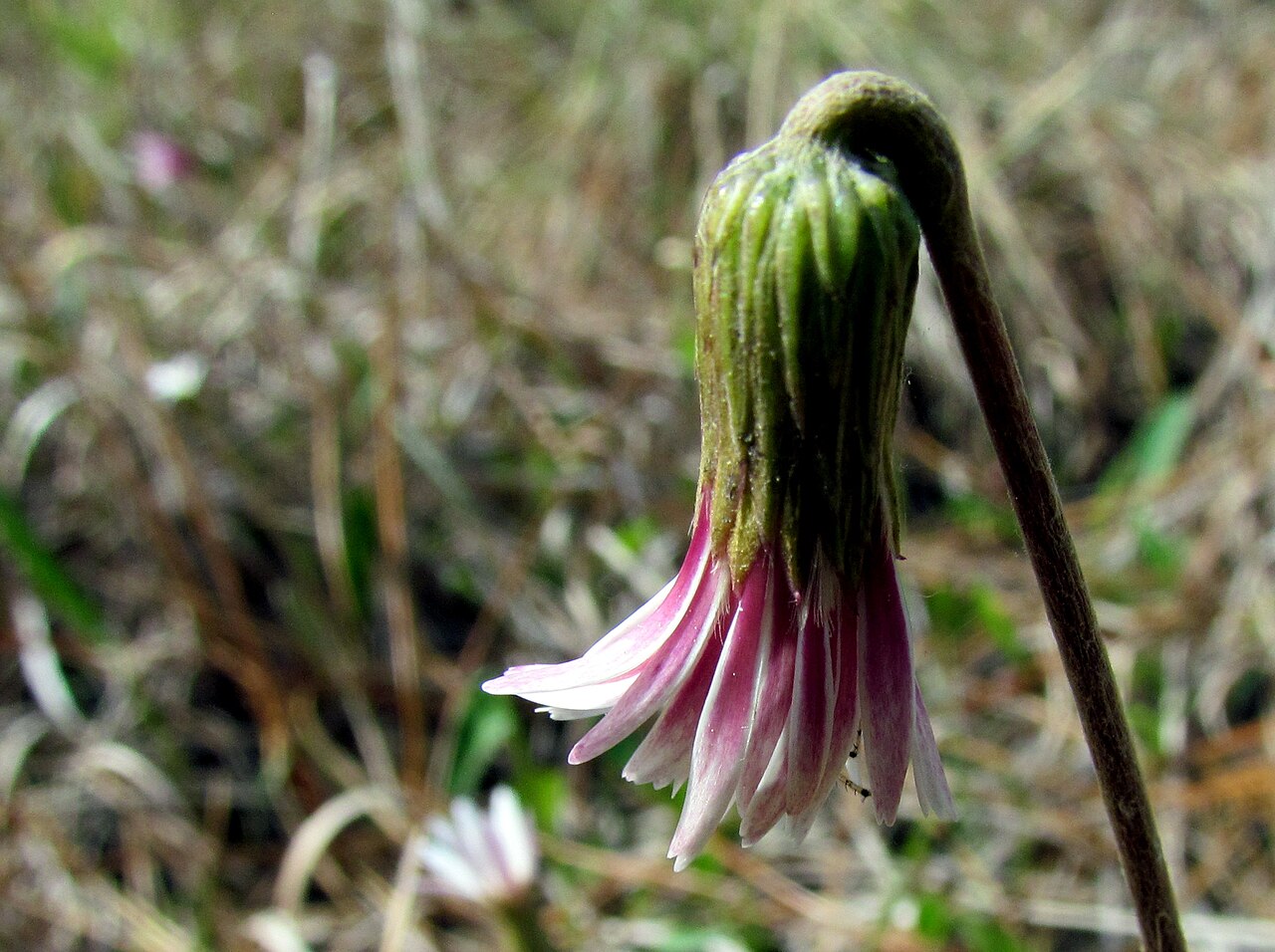
Each flower head has many narrow white rays that are pink to purple on the back. The heads nod and close at night and in cloudy weather, showing their purplish undersides, then turn upward and open into white daisies in the sun. It grows in wet pine savannas, flatwoods, bogs and seepage slopes, often near pitcher plants and sundews.
Pineland daisy is one of the earliest wildflowers in southern pinelands, and its two-toned flowers make it a delight to find on a winter walk. It depends on open, regularly burned wetland habitats, and it is a good indicator of healthy longleaf pine savannas and bogs.
Identification
Look for a flat rosette of leaves that are green above and white-woolly below, with single white daisies, purplish on the back, on leafless woolly stalks in wet pinelands in late winter or spring.
Growth Habit
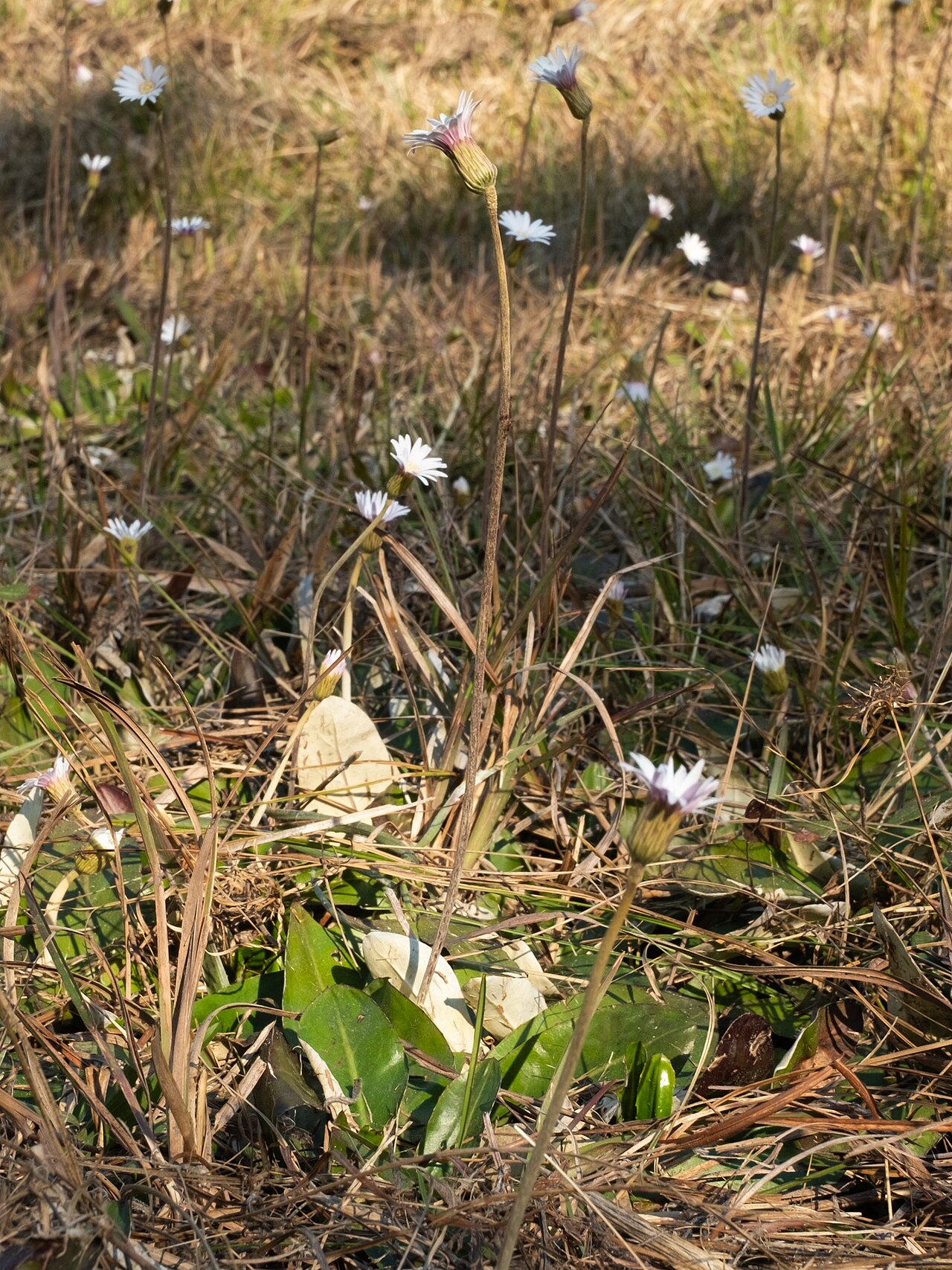
It is a low, stemless perennial. All the leaves grow in a basal rosette that lies close to the ground, and each flower head is borne singly on a leafless stalk (scape). Flowering stalks are usually 4 to 12 inches tall and may lengthen to about 16 inches as the seeds ripen.
Leaves
The leaves are elliptic to oblong or spoon-shaped, about 2 to 6 inches long, with slightly toothed edges. They are thick, dark green and smooth on top and densely covered with white, felt-like hairs underneath. The white undersides are easy to see when leaves curl or are turned over.
Flowers
The flower heads are about 1 inch across. The outer rays are narrow and white above, pink to purple on the back, and surround a small cluster of pale yellow disk flowers. The stalk and the bracts under the head are woolly. The heads nod and close at night and on cloudy days, then open upright in sunshine. Bloom time is January to May, earliest in Florida.
Fruit
After flowering, the head becomes a small, dandelion-like puff. Each tiny seed (cypsela) has a slender beak and a tuft of soft bristles that carries it on the wind.
Look-alikes
Dandelions (Taraxacum) have yellow flowers and leaves that are not white underneath. White-topped asters and fleabanes (Erigeron) have leafy stems and many flower heads. Pineland daisy is easy to recognize by its single woolly-stalked head, the purple backs of its rays, and the white-felted leaf undersides.
Quick Facts
| Scientific Name | Chaptalia tomentosa |
| Family | Asteraceae (aster family) |
| Plant Type | Rosette-forming perennial wildflower |
| Mature Height | 4–12 in (to 16 in in seed) |
| Mature Spread | 3–6 in |
| Growth Rate | Slow |
| Sun Exposure | Full sun to light shade |
| Water Needs | High; moist to wet soil |
| Soil Type | Acidic, sandy or peaty, wet soils |
| Soil pH | Acidic (about 4.5–6.0) |
| Bloom Time | January–May |
| Flower Color | White rays, pink to purple underneath |
| Fall Color | None; evergreen rosette |
| Fruit | Small beaked seeds with a fluffy pappus |
| Deer Resistant | Not known; rarely browsed |
| USDA Hardiness Zones | 7–10 |
Native Range
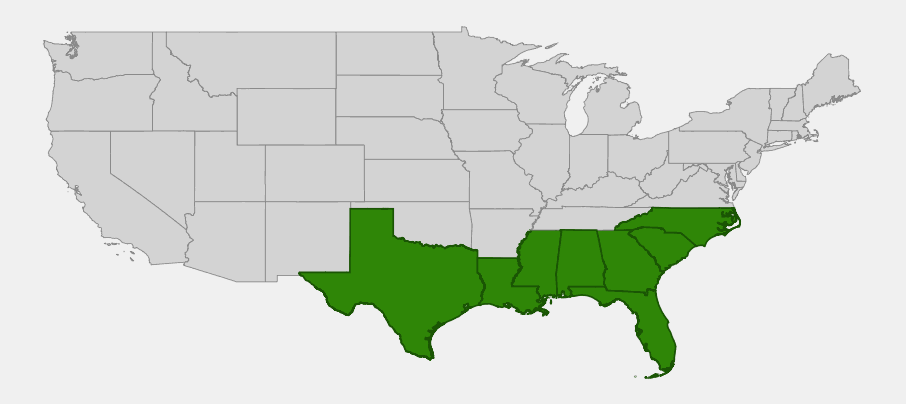
Pineland daisy is native to the southeastern coastal plain. USDA PLANTS lists it as native in Alabama, Florida, Georgia, Louisiana, Mississippi, North Carolina, South Carolina and Texas. The Atlas of Florida Plants lists it as native in Florida, where it grows through much of the state.
Its range follows the Atlantic and Gulf coastal plains from southeastern North Carolina south through Florida and west along the Gulf Coast to southeastern Texas. In Louisiana and Texas it grows in the wet pine savannas and bogs of the West Gulf Coastal Plain.
It grows in wet pine flatwoods, longleaf pine savannas, pitcher plant bogs, seepage slopes, wet prairies and the edges of cypress domes, on acidic, sandy or peaty soils. Like many savanna plants, it thrives where frequent fire keeps shrubs from shading the ground.
📋 Regional plant lists featuring Pineland Daisy: North & South Florida · Alabama, Georgia & Mississippi · North & South Carolina · Arkansas, Louisiana, Eastern Oklahoma & Eastern Texas
Growing & Care Guide
Pineland daisy is rarely sold and is best suited to bog gardens, wet savanna restorations and natural areas within its native range. It needs constantly moist, acidic soil and plenty of light.
Light
Full sun to light shade. In deep shade it declines and flowers poorly.
Soil & Water
Acidic, sandy or peaty soil that stays moist to wet, especially in winter and spring. A mix of peat and sand, like that used for pitcher plants, works well in a bog garden. It does not tolerate long dry periods or rich, limey garden soil.
Planting Tips
Plant in a sunny bog garden or wet spot alongside pitcher plants, sundews and butterworts. Keep taller plants from crowding the low rosettes. Buy plants or seed only from native nurseries; don’t dig plants from the wild.
Pruning & Maintenance
No pruning is needed. Remove fallen pine needles or leaves that bury the rosettes. In natural areas, prescribed fire every few years keeps the habitat open.
Propagation
Sow fresh seed on the surface of moist, acidic mix in late spring; seeds need light to sprout. Mature clumps can also be divided carefully in fall.
Landscape Uses
- Bog gardens: a low early-blooming companion for pitcher plants
- Savanna restoration: part of the native groundcover of wet longleaf pinelands
- Rain gardens: moist, sunny low spots with acidic sandy soil
- Early-season color: flowers in late winter when little else blooms
- Nature study: its nodding and opening flowers are fun to watch
Wildlife & Ecological Value
Pineland daisy is small, but its early flowers provide food when few other plants are blooming in southern wetlands.
For Pollinators
Small native bees, flies and early butterflies visit the flowers for nectar and pollen. Its late-winter bloom makes it one of the first food sources of the year in wet pinelands.
For Birds
Small seed-eating birds may eat the seeds, though it is not a major bird food.
For Mammals
Small mammals may graze the rosettes, but the woolly leaves are not favored browse.
Ecosystem Role
It is part of the diverse groundcover of fire-maintained pine savannas and bogs, one of the most species-rich plant communities in North America. Its presence usually signals a healthy, open wetland that is burned regularly.
Cultural & Historical Uses
The genus Chaptalia honors Jean-Antoine Chaptal, a French chemist and statesman of the Napoleonic era who is best known in winemaking for “chaptalization,” the practice of adding sugar to grape must. The species name tomentosa means woolly, describing the white felt on the leaf undersides and stalks.
The common name sunbonnets describes the nodding, closed flower heads, which look a little like old-fashioned bonnets. Another name, night-nodding bog-dandelion, describes how the heads droop each evening and rise again in the morning sun.
Pineland daisy has no known food or medicinal use of note. Today it is valued by naturalists and photographers as one of the first signs of spring in longleaf pine savannas and as a reminder of how much these fire-dependent habitats have declined.
Frequently Asked Questions
Why does pineland daisy nod?
The flower heads droop and close at night and in cloudy weather, then rise and open in sunshine. This helps protect the pollen and is why it is also called night-nodding bog-dandelion.
When does pineland daisy bloom?
From January to May, beginning earliest in Florida. It is one of the first wildflowers of the year in southern pinelands.
Can I grow pineland daisy in a garden?
Yes, but only in constantly moist, acidic, sandy or peaty soil in sun, such as a bog garden with pitcher plants. It does not do well in ordinary garden beds.
Is pineland daisy a dandelion?
No. It is in the same aster family, but it is a native wetland plant with white rays and white-woolly leaf undersides, not a weedy dandelion.
Where can I see pineland daisy?
Look in wet longleaf pine savannas, flatwoods and pitcher plant bogs from North Carolina to Florida and west to East Texas, especially in late winter after a prescribed burn.

Looking for a nursery that carries Pineland Daisy?
Browse our native plant nursery directory: Alabama · Florida & Georgia · Louisiana & Mississippi · North Carolina · South Carolina & Texas

