
Narrowleaf Yellowtops (Flaveria linearis)
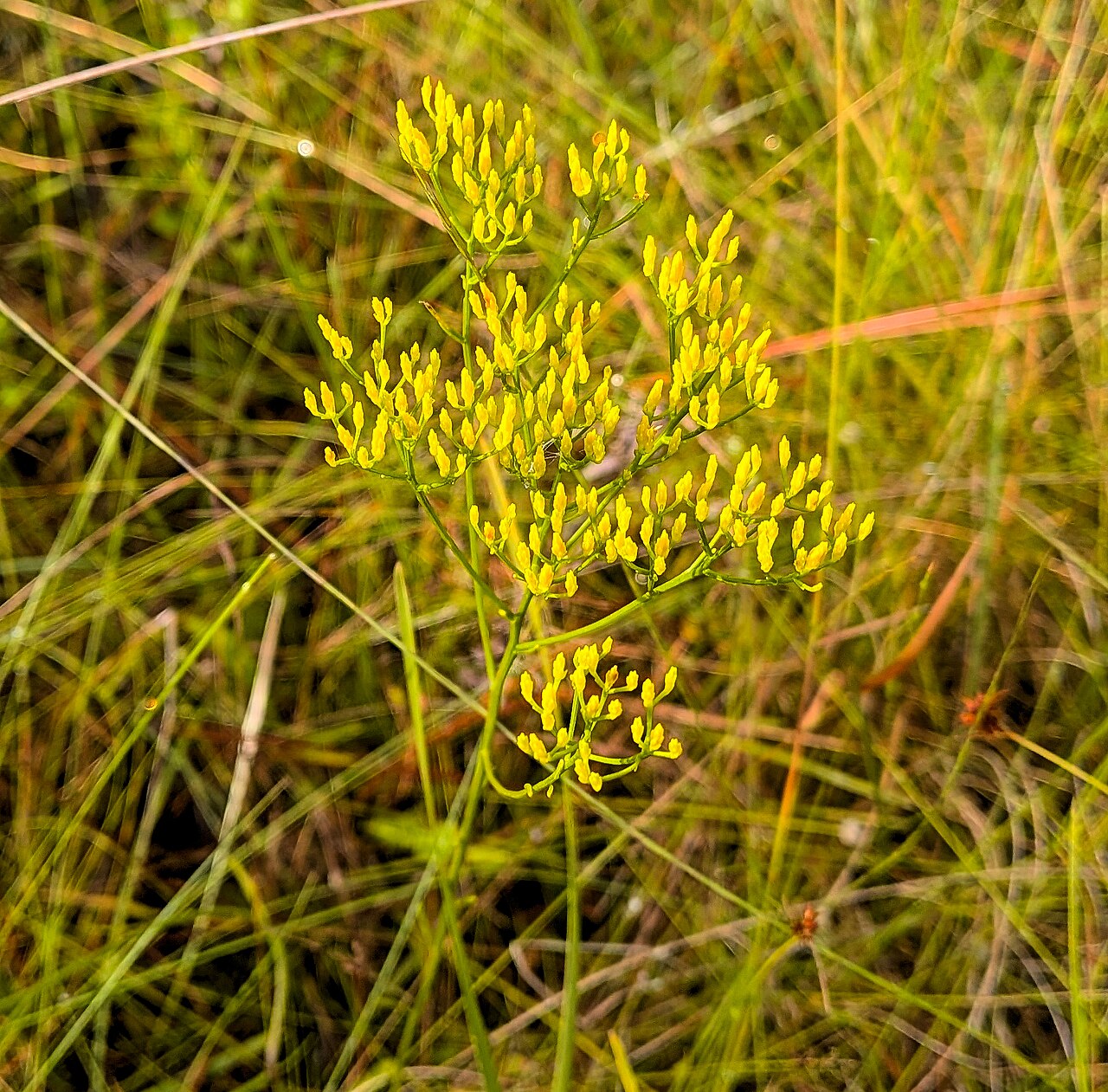
Flaveria linearis, known as Narrowleaf Yellowtops, is a native wildflower of Florida and the nearby Caribbean. It is a bushy perennial, usually 1 to 3 feet tall and sometimes woody at the base, with long, narrow, opposite leaves and flat-topped clusters of tiny, bright yellow flower heads. It belongs to the aster family (Asteraceae) and blooms over a long season, mainly from summer into fall and in frost-free areas through much of the year.
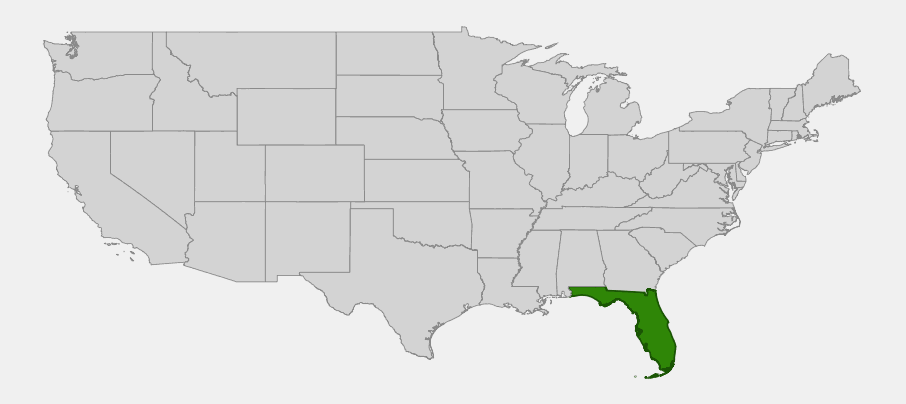
In the United States this plant grows only in Florida, from the Panhandle coast through the peninsula to the Florida Keys. It is at home in pine flatwoods and pine rocklands, on coastal strands, at the edges of salt marshes and mangroves, and in disturbed, sunny ground. Beyond Florida it ranges into the Bahamas, Cuba and the Yucatán Peninsula of Mexico.
Narrowleaf yellowtops is a superb butterfly plant. Its flat clusters of nectar-rich flowers are visited by a long list of butterflies, bees and wasps, and it tolerates salt spray, poor sandy or limestone soils and drought. It is a good choice for Florida pollinator gardens, coastal landscapes and restorations.
Identification
Look for a bushy, sun-loving plant with long, narrow, opposite leaves and dense, flat-topped clusters of very small, yellow flower heads, growing in Florida flatwoods, pine rocklands and coastal areas.
Leaves
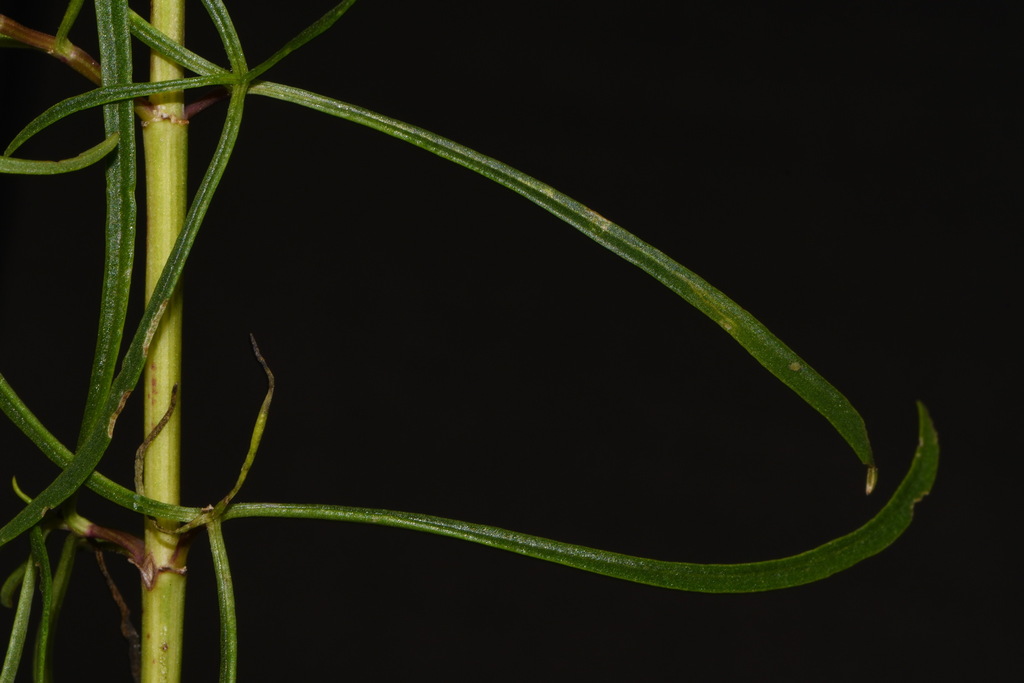
The leaves are opposite, linear to narrowly lance-shaped, about 2 to 5 inches long and usually less than 1/4 inch wide, with smooth or minutely toothed margins. They are smooth, somewhat fleshy and often joined around the stem at the base. Leaves are crowded below and become shorter in the flower clusters.
Stems
Several smooth, green to reddish stems branch from a woody or semi-woody base. Plants are usually 1 to 3 feet tall and often as wide, with a loose, bushy form.
Flowers
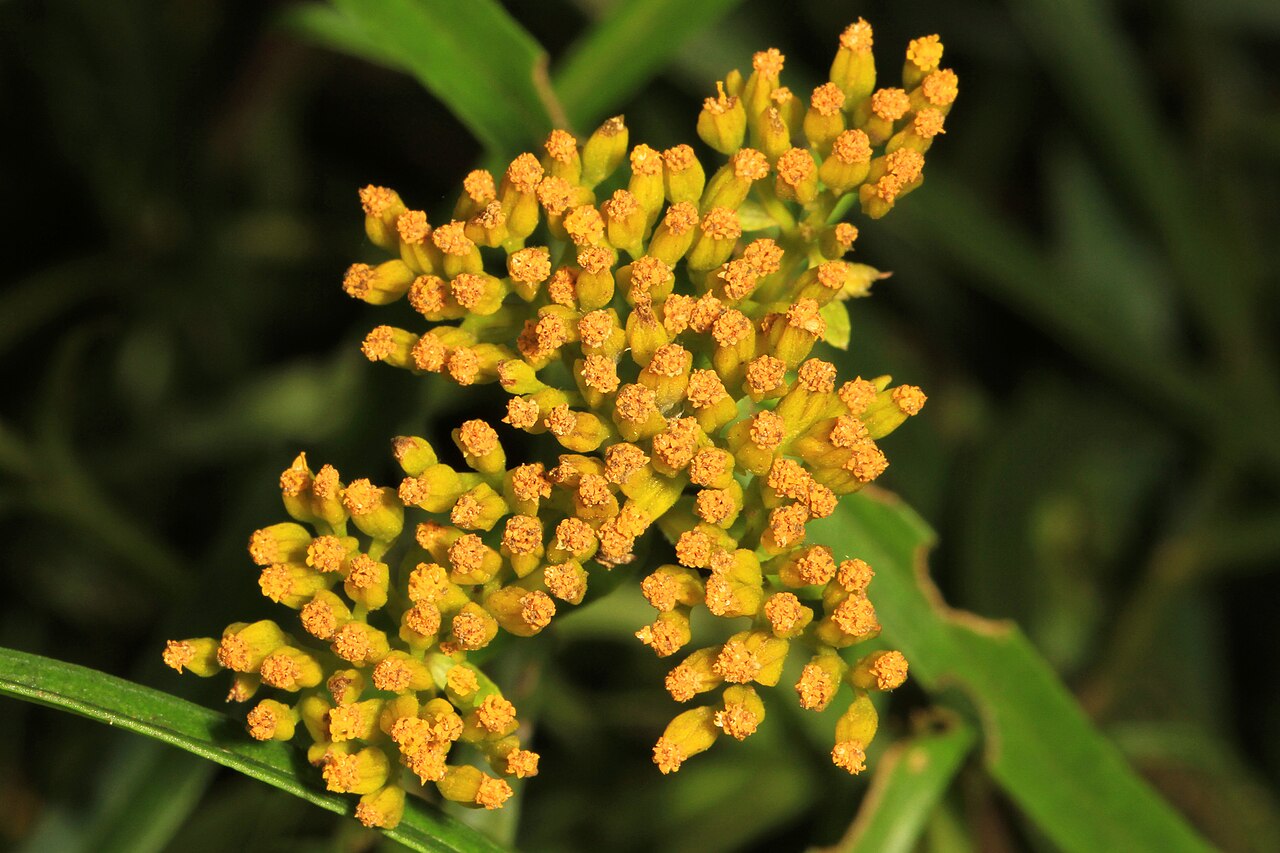
The flower heads are tiny, about 1/4 inch long, and each contains only a few yellow disk florets, sometimes with one short, yellow ray floret. Many heads are packed into dense, flat-topped or rounded clusters at the ends of the branches. Bloom is mainly from summer to fall, and in South Florida and the Keys plants can flower in almost any month.
Fruit & Seeds
Each floret produces a small, dark, ribbed achene without a pappus (no fluffy bristles), so seeds fall close to the parent plant.
Look-alikes
Goldenrods, such as Seaside Goldenrod, have alternate leaves and more open sprays of slightly larger heads. Clustered yellowtops (Flaveria trinervia), a weedy annual of disturbed ground, has broader, three-veined leaves and flower heads tucked into the leaf axils. Sea Oxeye Daisy grows in similar coastal places but has gray, fleshy leaves and larger, daisy-like heads with obvious rays.
Quick Facts
| Scientific Name | Flaveria linearis |
| Family | Asteraceae (aster family) |
| Plant Type | Herbaceous perennial or subshrub |
| Mature Height | 1–3 ft |
| Mature Spread | 1–3 ft |
| Growth Rate | Fast |
| Sun Exposure | Full sun to light shade |
| Water Needs | Low to medium |
| Soil Type | Sandy, limestone or marl soils; tolerates salt |
| Soil pH | About 6.0–8.5 |
| Bloom Time | Summer–fall; nearly year-round in South Florida |
| Flower Color | Bright yellow |
| Fall Color | None; evergreen in frost-free areas |
| Fruit | Small ribbed achene without pappus |
| Deer Resistant | Moderate |
| USDA Hardiness Zones | 8b–11 |
Native Range
Narrowleaf yellowtops is native to Florida, the only U.S. state where it grows. USDA PLANTS lists it as native to the lower 48 states, and the Atlas of Florida Plants treats it as a native Florida species. Outside the United States it grows in the Bahamas, Cuba and on the Yucatán Peninsula of Mexico.
In Florida it is widespread in the peninsula and the Keys and also occurs along the Gulf Coast of the Big Bend and eastern Panhandle. It is especially common in South Florida, in the Everglades region, the pine rocklands of Miami-Dade County and the Keys.
It grows in sunny, open habitats: pine flatwoods and pine rocklands, coastal strand and coastal hammock edges, the margins of salt marshes and mangrove swamps, marl prairies, shell mounds and disturbed areas such as roadsides and vacant lots. It tolerates salt spray, alkaline limestone soils and seasonal flooding.
📋 Regional plant lists featuring Narrowleaf Yellowtops: North & South Florida
Growing & Care Guide
Narrowleaf yellowtops is an easy, tough native for Florida gardens. Give it sun and decent drainage, and it will bloom for months and bring butterflies to the yard.
Light
Full sun gives the most compact plants and the most flowers. It tolerates light shade but becomes leggy and flowers less there.
Soil & Water
It grows in sandy, limestone or marl soils and tolerates salty, alkaline and seasonally wet conditions. Water young plants until they are established; afterward rainfall is usually enough, though occasional watering during long dry spells keeps it blooming.
Planting Tips
Plant nursery-grown plants any time of year in South Florida, or in spring farther north. Space them about 2 to 3 feet apart in butterfly gardens, coastal plantings and wildflower meadows. It mixes well with tickseeds, blanketflower, beach sunflower and native grasses.
Pruning & Maintenance
Cut plants back by about one-third in late winter or after a heavy flush of bloom to keep them bushy. Old plants can become woody and sprawling and may be replaced by seedlings. It has few pest problems.
Propagation
Grow from seed sown on the surface of moist soil; it germinates readily in warm weather. Plants also self-sow in open, sunny spots. Stem cuttings taken in spring or summer root easily.
Landscape Uses
- Butterfly gardens: long-blooming nectar plant for many butterfly species
- Coastal landscapes: tolerates salt spray, sand and limestone
- Wildflower meadows: fills sunny, open ground with yellow color
- Pine rockland and flatwoods restoration: native component of Florida pine communities
- Low-maintenance plantings: drought-tolerant once established
Wildlife & Ecological Value
Narrowleaf yellowtops is one of the best native nectar plants for insects in Florida.
For Pollinators
Its flat, crowded clusters of tiny flowers offer abundant nectar, and many butterflies use them, including swallowtails, sulphurs, hairstreaks, skippers, queens and monarchs. Native bees, wasps and flies are also frequent visitors. Its long bloom season makes it valuable for migrating butterflies in fall.
For Birds
Insects feeding on the flowers attract insect-eating birds, and the small seeds may be eaten by ground-feeding birds.
For Mammals
It is not a major food for mammals, though deer may browse it occasionally.
Ecosystem Role
As a long-blooming perennial of open pinelands and coastal habitats, it supports large numbers of pollinators. It readily colonizes disturbed sunny ground, helping to cover bare soil.
Cultural & Historical Uses
The genus name Flaveria comes from the Latin flavus, yellow; some species were once used as sources of yellow dye. The species name linearis refers to the long, narrow leaves.
The genus Flaveria is famous among plant scientists because it includes species that use the ordinary C3 type of photosynthesis, species that use the more efficient C4 type found in plants such as corn, and species with intermediate forms. Narrowleaf yellowtops is one of the intermediate species, and it has been used in research on how C4 photosynthesis evolved.
On this site, other native Florida wildflowers with similar uses include Leavenworth’s Tickseed, Beach Sunflower, Spanish Needles and Sea Oxeye Daisy.
Frequently Asked Questions
Where does narrowleaf yellowtops grow?
In the United States only in Florida, from the Gulf Coast of the Big Bend and eastern Panhandle through the peninsula to the Keys. It also grows in the Bahamas, Cuba and the Yucatán Peninsula.
Is narrowleaf yellowtops good for butterflies?
Yes. It is one of the best native nectar plants in Florida, visited by swallowtails, sulphurs, hairstreaks, skippers, monarchs and many others.
When does narrowleaf yellowtops bloom?
Mainly from summer to fall, and in South Florida and the Keys it can bloom in almost any month.
Is narrowleaf yellowtops salt-tolerant?
Yes. It grows naturally near salt marshes, mangroves and beaches and tolerates salt spray and alkaline soils.
How do I grow narrowleaf yellowtops?
Plant it in full sun in sandy, limestone or marl soil. Water it until established, then it needs little care. Cut it back in late winter to keep it bushy.

Looking for a nursery that carries Narrowleaf Yellowtops?
Browse our native plant nursery directory: Florida

