
Perfumeballs (Gaillardia suavis)
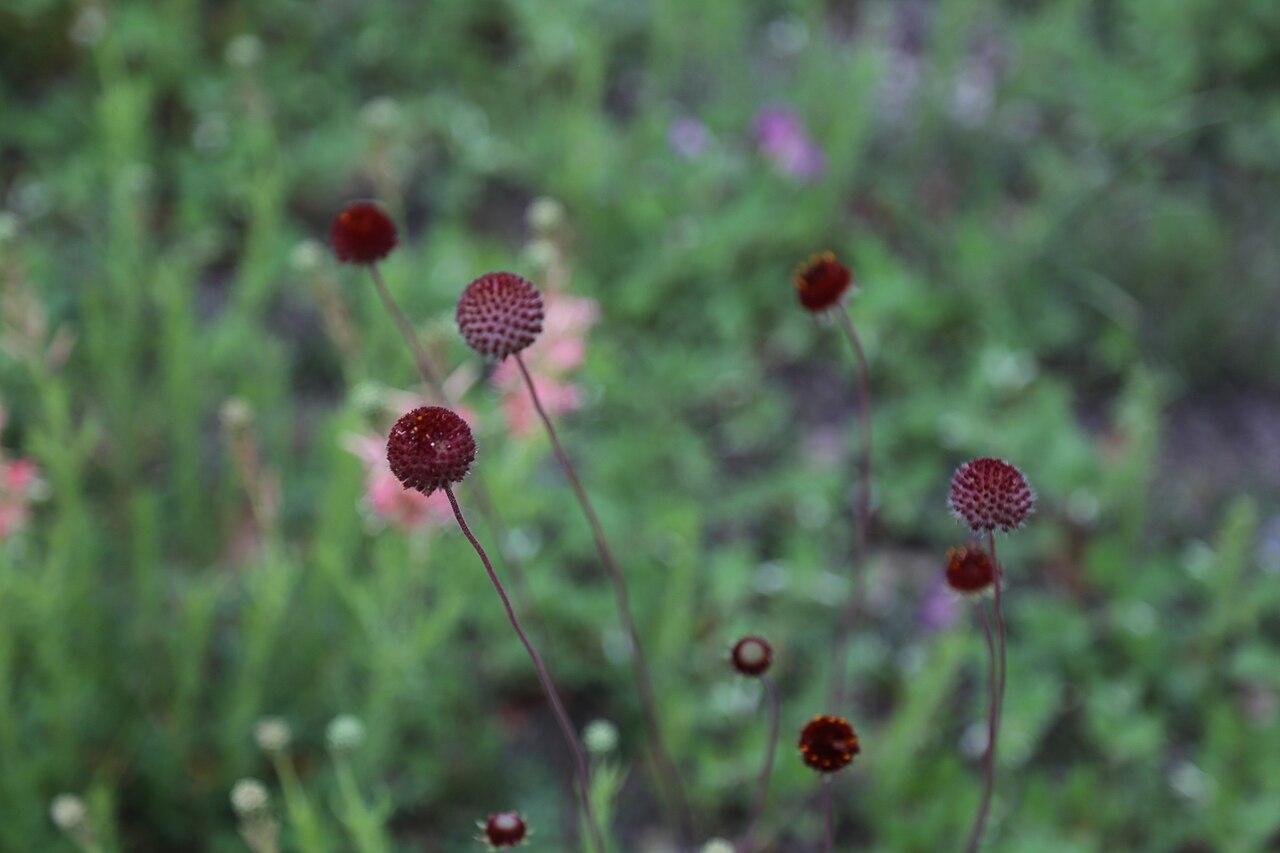
Gaillardia suavis, known as Perfumeballs, rayless gaillardia or fragrant gaillardia, is a native wildflower of the southern Great Plains, found in Texas, Oklahoma and southern Kansas and south into northeastern Mexico. Unlike its showy cousin Indian blanket, it usually has no petals at all, or only a few short ones. Instead, each slender, leafless stalk carries a round, button-like head of tiny maroon to reddish-brown flowers, and these heads have a sweet, spicy fragrance that gives the plant its name.
Perfumeballs is a member of the sunflower family (Asteraceae) and grows from a rosette of lobed leaves at ground level, so that in bloom the flower heads seem to float above the grass on stalks 8 to 24 inches tall. The species name suavis is Latin for “sweet” or “pleasant”, referring to the scent. After flowering, the heads turn into round, fluffy balls of seeds.
It grows in open grasslands, prairies, brushland, pastures and roadsides, mostly on sandy, rocky or limestone soils. This guide covers how to identify perfumeballs, where it grows, how to use it in a dry, sunny garden, and its value to pollinators.
Identification
Perfumeballs is easy to recognize once you know it: look for round, maroon or reddish heads without obvious petals, on tall, bare stalks rising from a low clump of lobed leaves, and sniff the flowers for their sweet scent.
Growth Habit
It is a perennial, sometimes short-lived, from a taproot. The leaves form a basal rosette, and the flowering stalks rise from the rosette, usually 8 to 24 inches tall, with few or no leaves along them.
Leaves
The leaves are mostly at the base, 1 1/2 to 6 inches long, and vary from nearly entire to deeply cut into lobes along the midrib. They are somewhat hairy and grayish green.
Flowers
The rounded flower heads are about 3/4 to 1 1/4 inches across and are made mostly of tiny tubular disc flowers, maroon, red-purple or brownish, often with yellow tips. Many heads have no ray flowers; others have a few short, inconspicuous yellowish or reddish rays. The heads are noticeably fragrant. It blooms mainly from March to June, with occasional flowers later after rains.
Fruit & Seeds
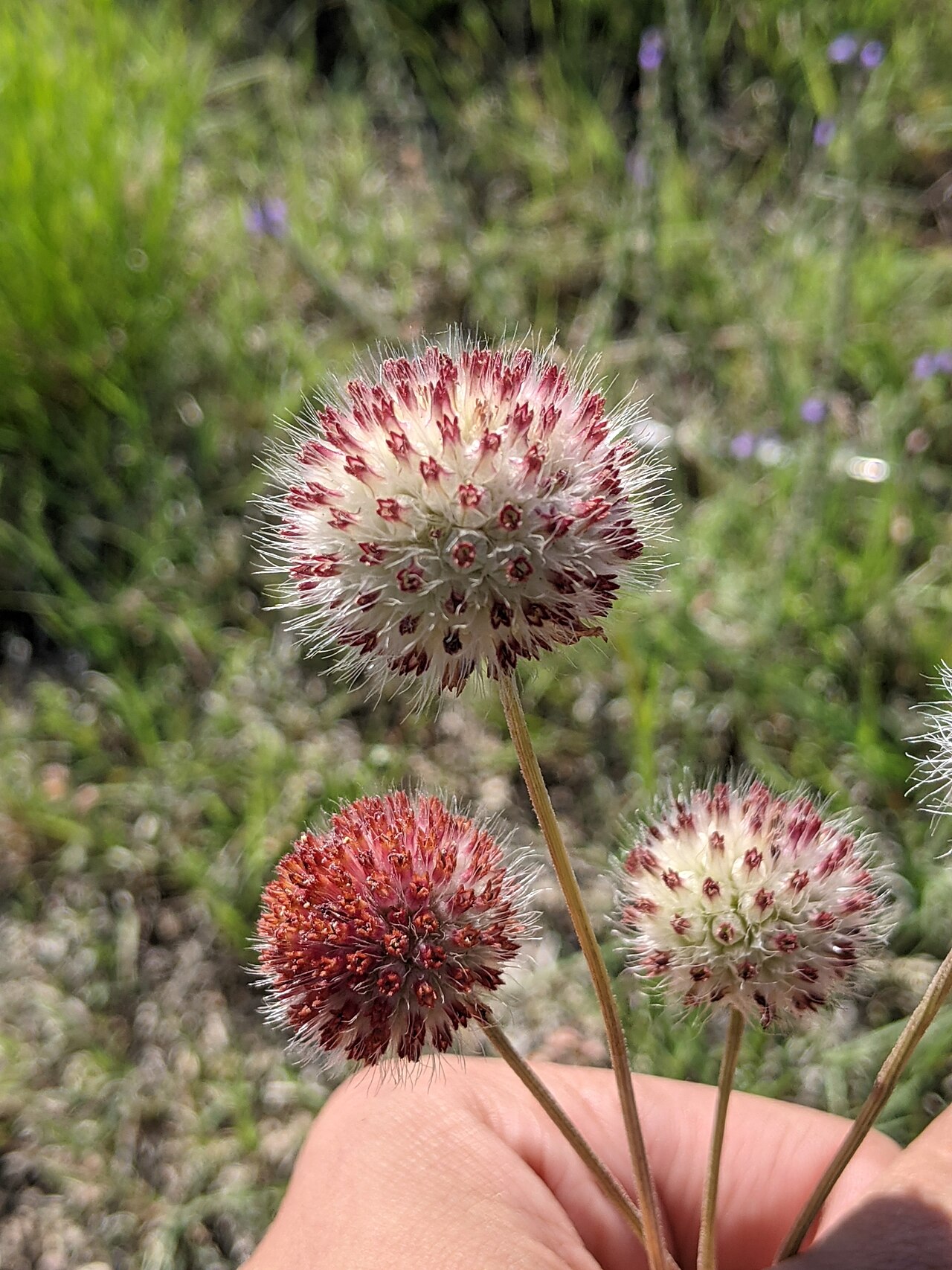
The seed heads become round, fuzzy, whitish to tan balls. Each small seed is tipped with papery scales (a pappus) that help it scatter on the wind.
Fragrance
The sweet, spicy scent is the plant’s best-known feature and is strongest on warm days. Few other Plains wildflowers combine a rayless, ball-shaped head with such a fragrance.
Look-alikes
Indian blanket (G. pulchella) has large, showy red and yellow rays and leafy stems. Red dome blanketflower (G. pinnatifida) has yellow, three-toothed rays around a reddish disc. Neither has the round, mostly rayless and strongly fragrant heads of perfumeballs.
Quick Facts
| Scientific Name | Gaillardia suavis (A. Gray & Engelm.) Britton & Rusby |
| Family | Asteraceae (sunflower family) |
| Plant Type | Herbaceous perennial (sometimes short-lived) |
| Mature Height | 8–24 in in flower |
| Mature Spread | 6–12 in |
| Growth Rate | Moderate |
| Sun Exposure | Full sun |
| Water Needs | Low; drought tolerant once established |
| Soil Type | Well-drained sandy, rocky, clay or limestone soils |
| Soil pH | About 6.0–8.5 |
| Bloom Time | March–June (occasionally later) |
| Flower Color | Maroon to reddish-brown, often with yellow tips |
| Fall Color | None notable; basal leaves may persist |
| Fruit | Round, fluffy seed head of small achenes with papery scales |
| Deer Resistant | Generally; seldom browsed |
| USDA Hardiness Zones | 6–9 |
Native Range
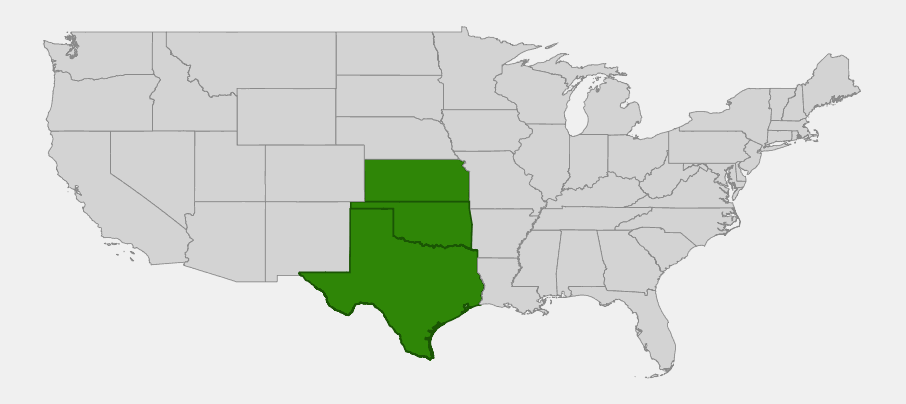
Perfumeballs is native to the southern Great Plains and adjacent regions. USDA PLANTS lists it in Texas, Oklahoma and Kansas, and it also grows in northeastern Mexico.
In Texas it is widespread across most of the state except the forested east: from the Panhandle and Rolling Plains through the Cross Timbers, Edwards Plateau and Hill Country to the South Texas Plains, the coastal bend and the lower Rio Grande Valley, and west into the Trans-Pecos. In Oklahoma it grows mainly in the western and central parts of the state, and in Kansas it reaches only the south-central counties near the Oklahoma line.
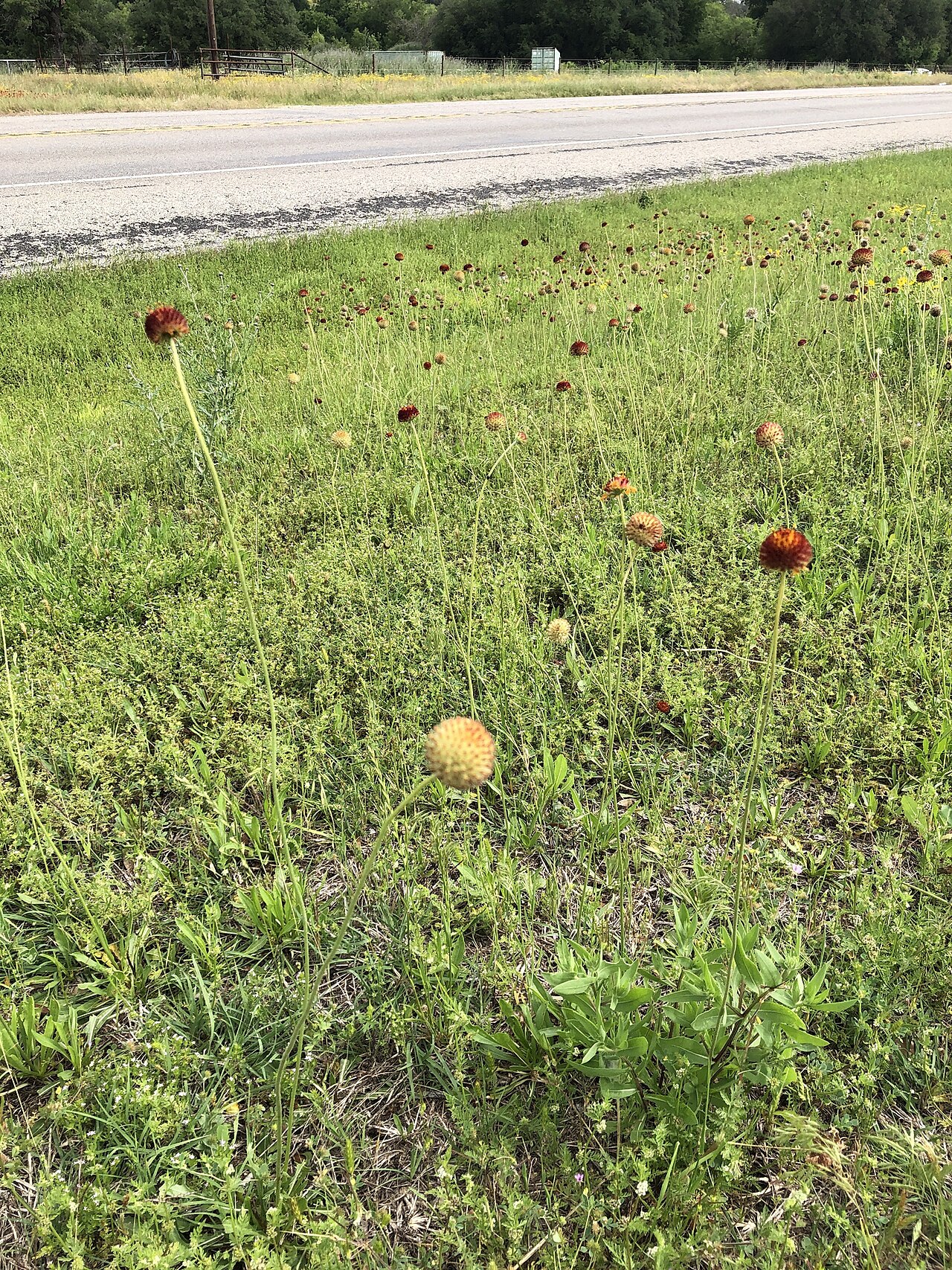
It grows in open grasslands, prairies, mesquite brushland, pastures, roadsides and disturbed openings, on sandy, gravelly, clay or limestone soils, mostly at low to moderate elevations.
📋 Regional plant lists featuring Perfumeballs: Nebraska, Kansas & Eastern Colorado · South & West Texas · Arkansas, Louisiana, Eastern Oklahoma & Eastern Texas
Growing & Care Guide
Perfumeballs is an easy, drought-tolerant wildflower for sunny native gardens and meadows in Texas and the southern Plains. It is offered by some native seed companies, usually as seed, and it is an unusual, conversation-starting plant for anyone who likes fragrant flowers.
Light
Plant it in full sun. In shade it becomes floppy and flowers poorly.
Soil & Water
It needs well-drained soil and does well in sandy, rocky or limestone soils, and in clay if it does not stay soggy. Water seedlings until they are established; after that, it needs little or no supplemental water except in extreme drought. Overwatering and rich soil lead to weak, short-lived plants.
Planting Tips
Sow seed in fall, scattering it on bare soil and pressing it in lightly. Combine it with other spring wildflowers such as bluebonnets, Indian blanket and greenthread, and with short native grasses like sideoats grama and buffalograss, so that its round heads stand out above them.
Pruning & Maintenance
Little maintenance is needed. Leave the seed heads to ripen and scatter if you want it to reseed. In meadows, mow after seed has dropped in early summer. Individual plants may be short-lived, but a stand keeps itself going by reseeding.
Propagation
Grow it from seed, sown in fall or early spring; no special treatment is usually needed. Collect seed from your own plants when the heads turn fluffy, or buy it from native seed suppliers.
Landscape Uses
- Fragrance gardens: its sweet-scented heads are unusual among prairie wildflowers
- Native wildflower meadows: spring color with bluebonnets, Indian blanket and short grasses
- Pollinator gardens: attracts bees, butterflies and other insects
- Xeriscapes and rock gardens: thrives in dry, rocky or limestone soil with little water
- Roadside and prairie restoration: a native forb for grassland seedings in Texas and Oklahoma
Wildlife & Ecological Value
Perfumeballs adds early-season nectar and pollen to southern Plains grasslands and is part of the rich spring wildflower display of Texas roadsides and prairies.
For Pollinators
Its fragrant flowers are visited by native bees, honey bees, butterflies, beetles and other insects. The scent likely helps attract pollinators to the otherwise rather dark, rayless heads.
For Birds
Seed-eating birds such as sparrows, finches and bobwhite quail feed on the seeds of gaillardias and other sunflower-family plants in grasslands.
For Mammals
It is seldom browsed by deer or livestock, but small rodents eat the seeds.
Ecosystem Role
As a deep-rooted perennial forb, it is part of the diverse wildflower component of southern Plains grasslands, providing nectar early in the season and seeds later. It tolerates disturbance and often colonizes roadsides and pastures.
Cultural & Historical Uses
The plant was first described from Texas collections by Asa Gray and George Engelmann in the nineteenth century, under another genus. It was later moved to Gaillardia, the genus named for Gaillard de Charentonneau, an eighteenth-century French patron of botany.
The common name perfumeballs captures the two things people notice most: the round, ball-like flower heads and their sweet fragrance. Other names include rayless gaillardia, fragrant gaillardia and pincushion daisy.
Gaillardias, including the familiar Indian blanket, are among the signature wildflowers of Texas and the southern Plains. Perfumeballs is the quiet member of the group, but its scent and unusual shape have earned it a following among native plant gardeners.
Frequently Asked Questions
Why is it called perfumeballs?
Its flower heads are round, like small balls, and have a sweet, spicy fragrance. The species name suavis also means “sweet”.
Does perfumeballs have petals?
Usually not. Most heads are made only of tiny maroon disc flowers, though some have a few short, inconspicuous rays.
Where does perfumeballs grow?
It grows in open grasslands, prairies, brushland and roadsides in Texas, western and central Oklahoma, south-central Kansas and northeastern Mexico.
Is perfumeballs easy to grow?
Yes. Sow seed in fall in a sunny spot with well-drained soil. It needs little water once established and reseeds itself.
When does perfumeballs bloom?
It blooms mostly from March to June, sometimes later after rains.


