
Glade Lobelia (Lobelia glandulosa)
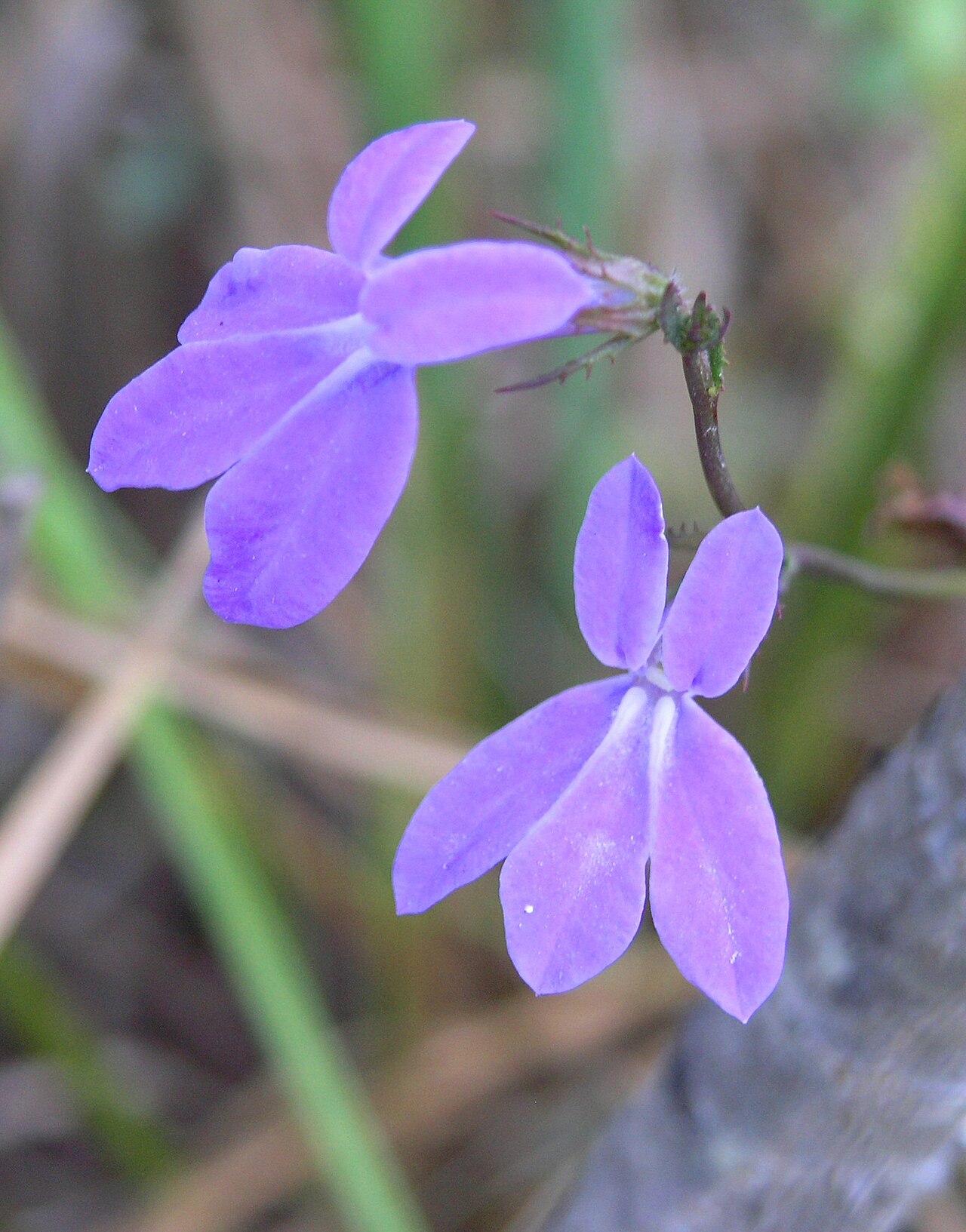
Lobelia glandulosa, known as Glade Lobelia, is a slender, wetland perennial in the bellflower family (Campanulaceae). It grows 1 1/2 to 4 feet tall, occasionally taller, with narrow, firm leaves and a loose spike of lavender-blue to violet flowers, each about an inch across with a white eye. It blooms late in the year, from late summer through fall and, in Florida, often into winter.
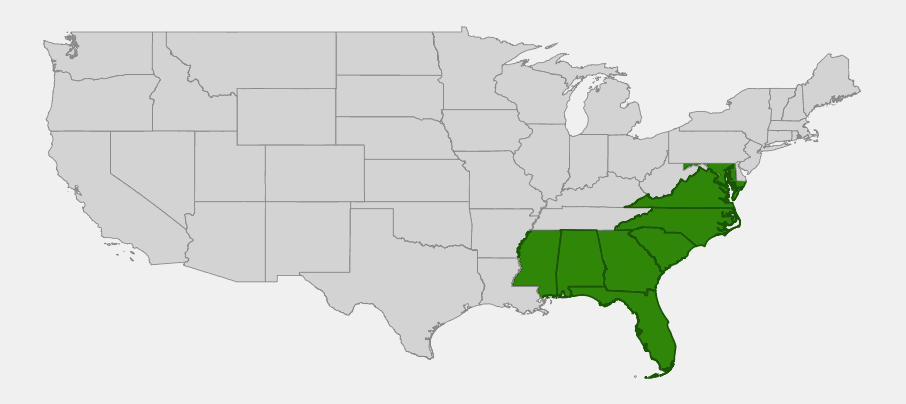
Glade lobelia is a plant of the southeastern Coastal Plain, from southeastern Virginia south to the Florida Everglades and west to Mississippi. It grows in wet pine flatwoods and savannas, seepage bogs, wet prairies, cypress domes and the marl prairies and glades of South Florida that give it its common name. It is one of the most common lobelias in Florida.
It is a lovely late-season plant for rain gardens, bog gardens and pond edges in the Southeast, and it is visited by bees and butterflies. Like other lobelias, it contains toxic alkaloids, so do not eat any part of it and keep it away from children and pets that might chew on plants.
Identification
Look for a slender, mostly unbranched wetland plant with narrow, thick, finely toothed leaves and a sparse spike of lavender-blue, two-lipped flowers in fall.
Growth Habit
Glade lobelia is a short-lived perennial that grows from a small base with fleshy roots. It sends up one or a few slender, erect stems, 1 1/2 to 4 feet tall (rarely to 5 feet), usually unbranched or with a few branches near the top. The stems are smooth or finely hairy.
Leaves
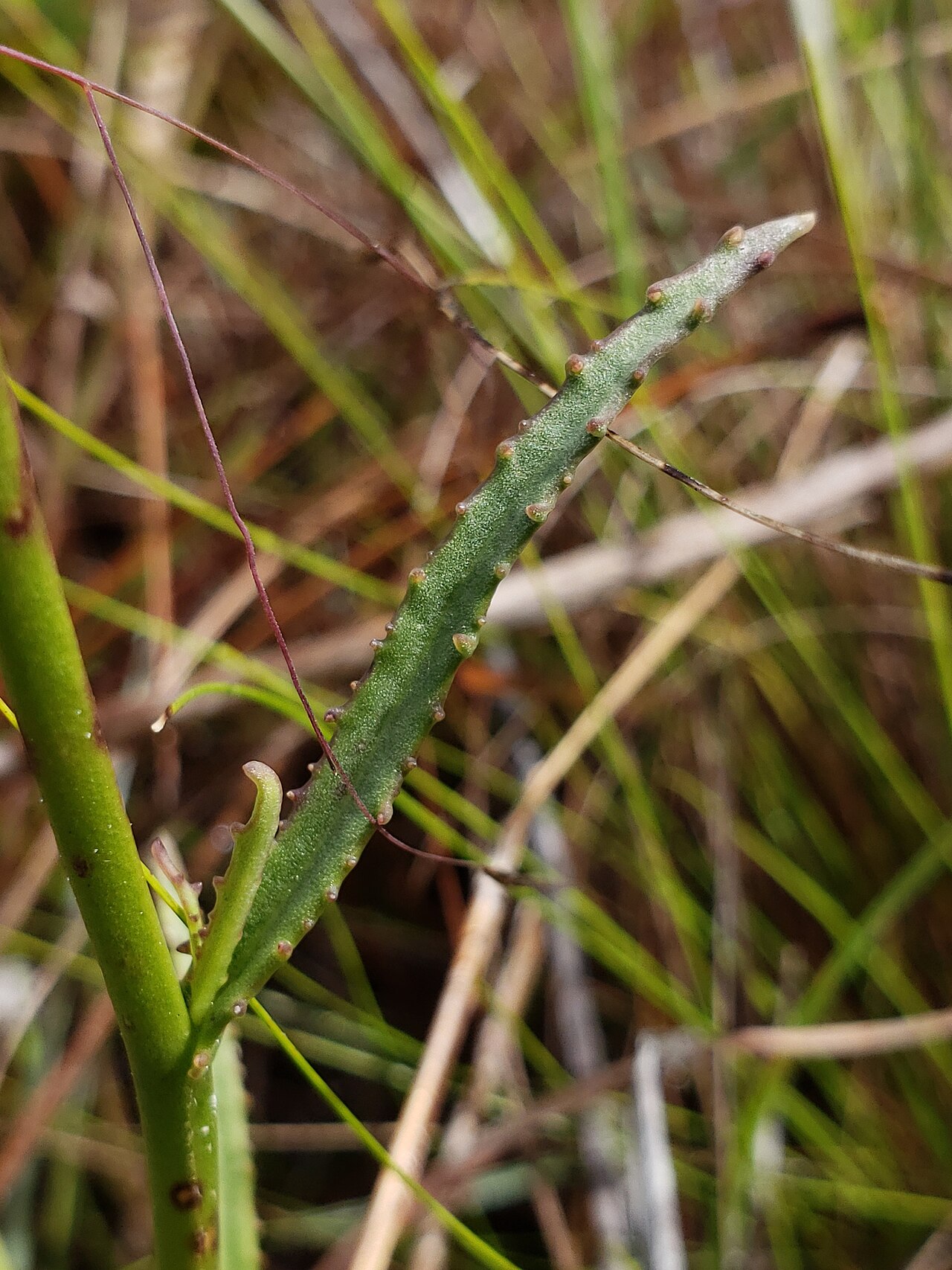
The leaves are alternate, linear to narrowly lance-shaped, 2 to 6 inches long and usually less than 1/2 inch wide, firm and somewhat thick. Their edges carry small, widely spaced teeth tipped with tiny glands, the feature behind the name glandulosa. Leaves become smaller and more widely spaced up the stem.
Flowers
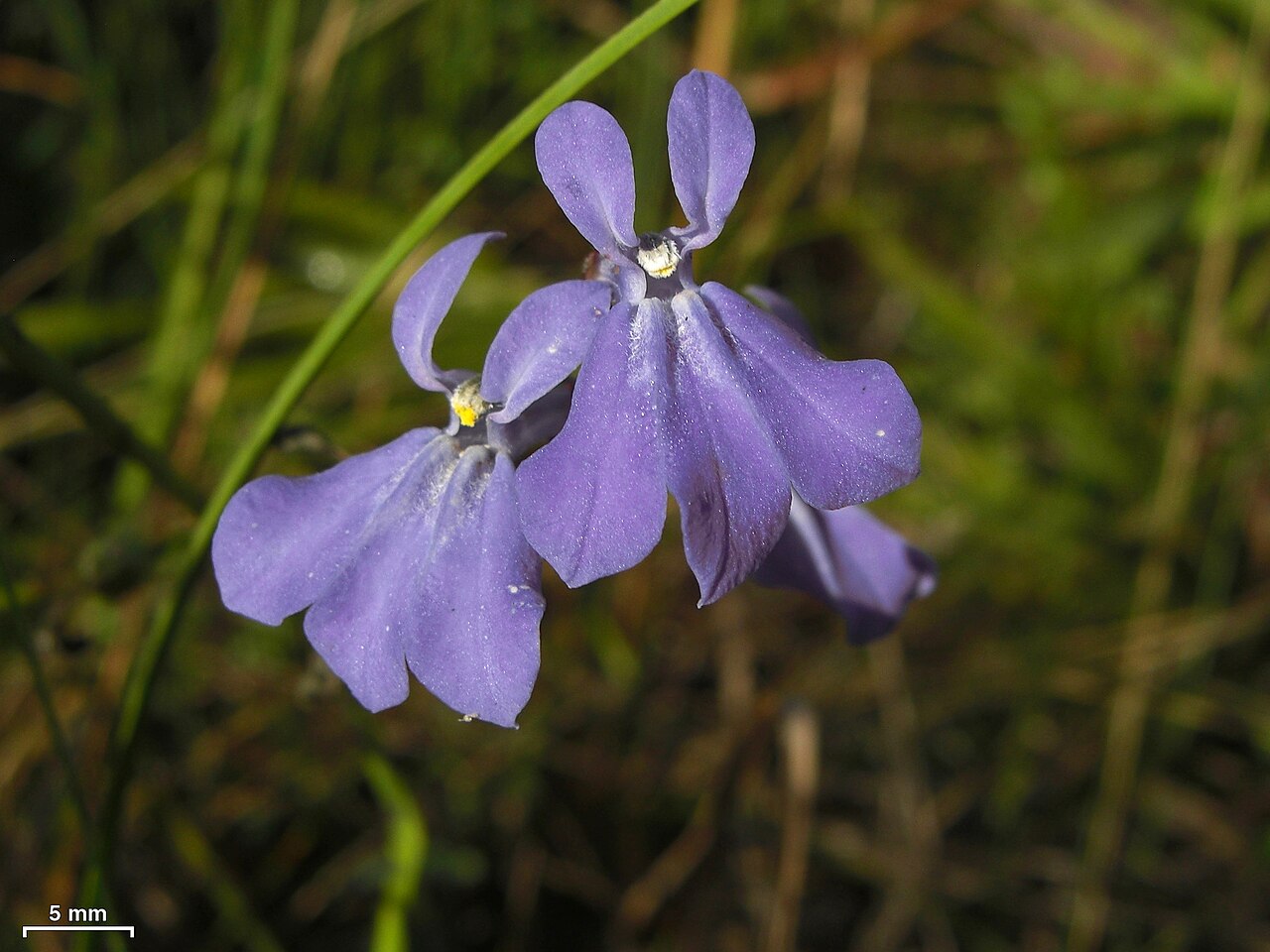
The flowers are borne in a loose, one-sided raceme of a few to about 20 blooms, each on a short stalk above a narrow, gland-toothed bract. Each flower is about 3/4 to 1 1/4 inches long and lavender-blue to violet, occasionally pale or whitish. Like all lobelias it is two-lipped: two narrow, upright upper lobes and three broad, spreading lower lobes with a white or pale eye near the throat and a hairy patch at the base of the lower lip. The calyx lobes are narrow and glandular. Bloom time is mainly August to December, but plants in South Florida may flower in almost any month.
Fruit & Seeds
The fruit is a small, round capsule that splits at the top to release many tiny seeds, which scatter in wind and water.
Look-alikes
Downy lobelia (Lobelia puberula) has broader, softly hairy leaves and a denser spike of flowers, and grows in drier woods and clearings as well as wet sites. Bay lobelia (L. feayana) is a small Florida plant with tiny flowers and roundish basal leaves. Canby’s lobelia (L. canbyi) has very narrow leaves and smaller, paler flowers. Great blue lobelia (L. siphilitica) is a stouter plant with broad leaves and crowded spikes, mainly north of glade lobelia’s range.
Quick Facts
| Scientific Name | Lobelia glandulosa |
| Family | Campanulaceae (bellflower family) |
| Plant Type | Short-lived herbaceous perennial wildflower |
| Mature Height | 1.5–4 ft |
| Mature Spread | 6–12 in |
| Growth Rate | Moderate |
| Sun Exposure | Full sun to part shade |
| Water Needs | High; wet to saturated soil |
| Soil Type | Wet sand, peat, muck or marl |
| Soil pH | Acidic to slightly alkaline (about 4.5–7.5) |
| Bloom Time | August–December (year-round in South Florida) |
| Flower Color | Lavender-blue to violet, with a white eye |
| Fall Color | None notable |
| Fruit | Small round capsule with tiny seeds |
| Deer Resistant | Yes; toxic alkaloids |
| USDA Hardiness Zones | 7–11 |
Native Range
Glade lobelia is native to the Coastal Plain of the southeastern United States. USDA PLANTS lists it from Virginia, North Carolina, South Carolina, Georgia, Florida, Alabama and Mississippi, and from Maryland. The Lady Bird Johnson Wildflower Center describes its range as the Coastal Plain and Piedmont from Florida to southeastern Virginia. It does not occur in Canada.
It is most common in Florida, where the Atlas of Florida Plants records it from more than 60 counties, from the Panhandle to the Everglades. It is also widespread in the Coastal Plain of Georgia and the Carolinas, becomes rare in southeastern Virginia at the northern end of its range, and reaches west to the Coastal Plain of Alabama and Mississippi. The Maryland record is an outlying one well north of its main range, and the plant is not currently known there.
It grows in wet, open places: wet pine flatwoods and savannas, seepage slopes and bogs, wet prairies, marl prairies and glades, ditches, and the margins of cypress domes, ponds and swamps. It needs the open conditions maintained by regular fire.
📋 Regional plant lists featuring Glade Lobelia: Maryland, Virginia & West Virginia · Alabama, Georgia & Mississippi · North & South Florida · North & South Carolina
Growing & Care Guide
Glade lobelia is a good choice for a sunny, wet spot in a southeastern garden. It is short-lived, so let it reseed to keep it going.
Light
Full sun gives the best flowering; it tolerates light or part shade, but flowers less.
Soil & Water
It needs constantly moist to wet, acidic or neutral soil: wet sand, sandy peat, muck or marl. It tolerates shallow, seasonal standing water but not drought. Never let it dry out for long during the growing season.
Planting Tips
Plant it in a rain garden, bog garden, pond margin, wet ditch or low spot that stays damp. Combine it with other wetland natives such as pitcher plants, meadowbeauties and wetland grasses. Plant in groups so the slender stems make a better show.
Pruning & Maintenance
Leave the seed stalks standing until the capsules have opened, then cut them back. Keep taller plants from crowding it. In natural areas, prescribed fire keeps its habitat open. Wear gloves when handling the cut stems if you have sensitive skin.
Propagation
Sow the tiny seeds on the surface of moist, peaty soil and do not cover them; they need light to germinate. Keep the soil constantly moist. Basal offsets can also be separated in late winter or early spring.
Landscape Uses
- Rain and bog gardens: late-season blue flowers for wet, sunny sites
- Pond and ditch margins: thrives in saturated soil
- Pollinator gardens: nectar for bees and butterflies in fall and winter
- Wetland restoration: a typical forb of wet pine savannas and flatwoods
- Coastal Plain gardens: a native alternative to non-native blue-flowered bedding plants
Wildlife & Ecological Value
Glade lobelia flowers when few other wetland plants are in bloom, giving pollinators a late-season food source in pine flatwoods and savannas.
For Pollinators
The flowers are pollinated mainly by bees, especially bumble bees and other medium-sized bees that land on the lower lip and push into the throat, where pollen is deposited on their backs. Butterflies and skippers also visit for nectar.
For Birds
It provides little direct food for birds, but the insects it attracts are eaten by wrens, warblers and other insect-eating birds that winter in southeastern wetlands.
For Mammals
Its toxic alkaloids make it unpalatable to deer and other mammals, which usually leave it alone.
Ecosystem Role
Glade lobelia is part of the diverse ground layer of fire-maintained longleaf pine flatwoods and savannas, some of the most species-rich plant communities in North America. Its presence is a sign of healthy, regularly burned wetland habitat.
Cultural & Historical Uses
The genus Lobelia is named after Matthias de l’Obel, a 16th-century Flemish botanist and physician. The species name glandulosa refers to the small glands on the teeth of the leaves, bracts and calyx.
Lobelias have a long history in traditional medicine, and Indian tobacco (Lobelia inflata) was once widely used as an herbal remedy. These uses can be dangerous and are not recommended.
Safety note: Glade lobelia, like other lobelias, contains lobeline and related alkaloids that are toxic if eaten. Symptoms can include nausea, vomiting, sweating and an irregular heartbeat. Do not use it as a medicine or food, and keep it away from children and pets.
Frequently Asked Questions
Where does glade lobelia grow?
It grows in wet pine flatwoods, savannas, bogs, wet prairies and glades on the Coastal Plain from southeastern Virginia to Florida and west to Mississippi.
When does glade lobelia bloom?
Mainly from late summer through fall and early winter. In South Florida it can bloom in almost any month.
Is glade lobelia poisonous?
Yes. Like other lobelias it contains toxic alkaloids. Do not eat it or use it as a home remedy, and keep it away from children and pets.
Can I grow glade lobelia in a regular garden bed?
Only if the soil stays consistently moist. It is best suited to rain gardens, bog gardens and pond edges.
How is glade lobelia different from downy lobelia?
Glade lobelia has narrow, firm, smooth leaves with gland-tipped teeth and grows mainly in wetlands. Downy lobelia has broader, softly hairy leaves and a denser flower spike.

Looking for a nursery that carries Glade Lobelia?
Browse our native plant nursery directory: Alabama · Florida & Georgia · Maryland & Mississippi · North Carolina · South Carolina & Virginia

