
Sapphire Woollystar (Eriastrum sapphirinum)
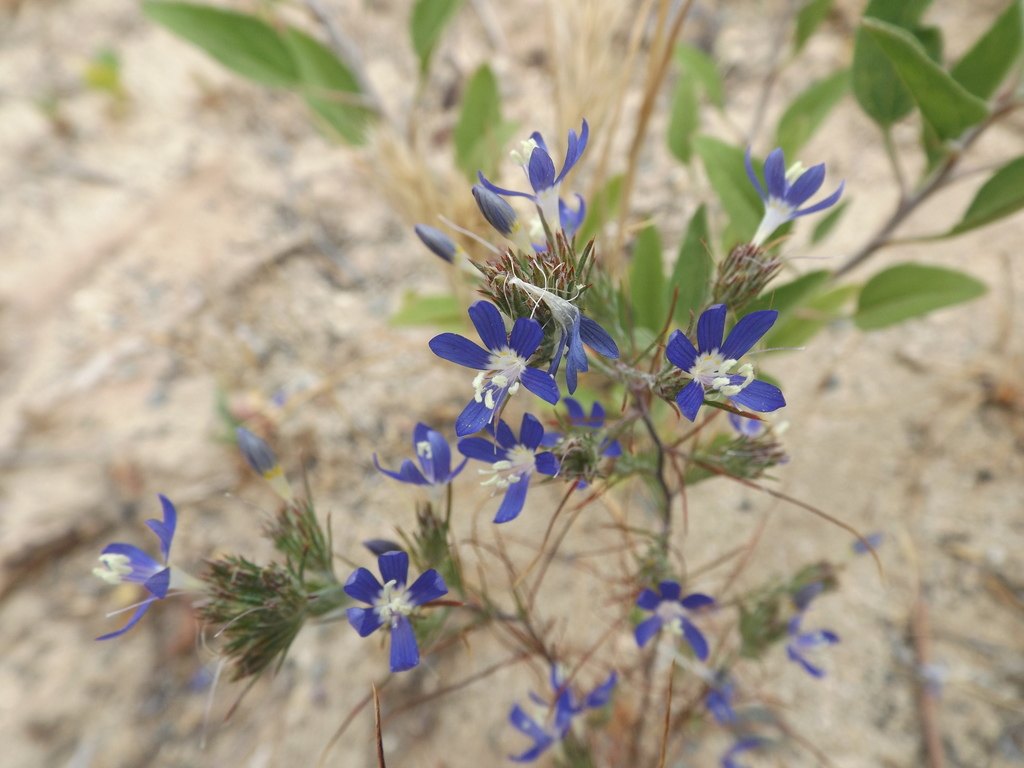
Eriastrum sapphirinum, known as Sapphire Woollystar or sapphire woolly-star, is a small annual wildflower of sandy and gravelly openings in the chaparral, sage scrub and woodlands of California. It is named for its flowers, which are a deep, gemlike blue. It blooms late, from late spring into summer, on dry, open ground after most other annuals have finished.
It belongs to the phlox family (Polemoniaceae), in the same genus as the larger, shrubby giant woollystar. The genus name Eriastrum means “woolly star,” for the woolly hairs among the bracts that surround the flower clusters and for the star-shaped flowers. Sapphire woollystar is wiry and much-branched, usually a few inches to about a foot tall, with very narrow leaves that make the plant almost disappear until it flowers.
It is native to California and northern Baja California and is one of the more widespread woollystars in the state. Gardeners can grow it from seed in dry, sandy, sunny spots as part of a native wildflower mix. This guide covers how to identify sapphire woollystar, where it grows, how to grow it from seed, and its role in dry California habitats.
Identification
Sapphire woollystar is easiest to find from May to July, when its small but intensely blue flowers dot dry, sandy openings. Out of flower, it is a slender, inconspicuous annual with thread-like leaves.
Growth Habit
It is an erect, much-branched annual, usually 2 to 16 inches tall, with slender, often reddish stems that branch from near the base. The stems are smooth to slightly woolly, especially near the flower clusters. The whole plant is airy and open rather than leafy.
Leaves
The leaves are alternate, very narrow and thread-like, about ½ to 1½ inches long. Most are entire, but some have one or two short, narrow side lobes near the base. They are green to grayish and sparsely hairy, and they often wither as the plant blooms in summer.
Flowers
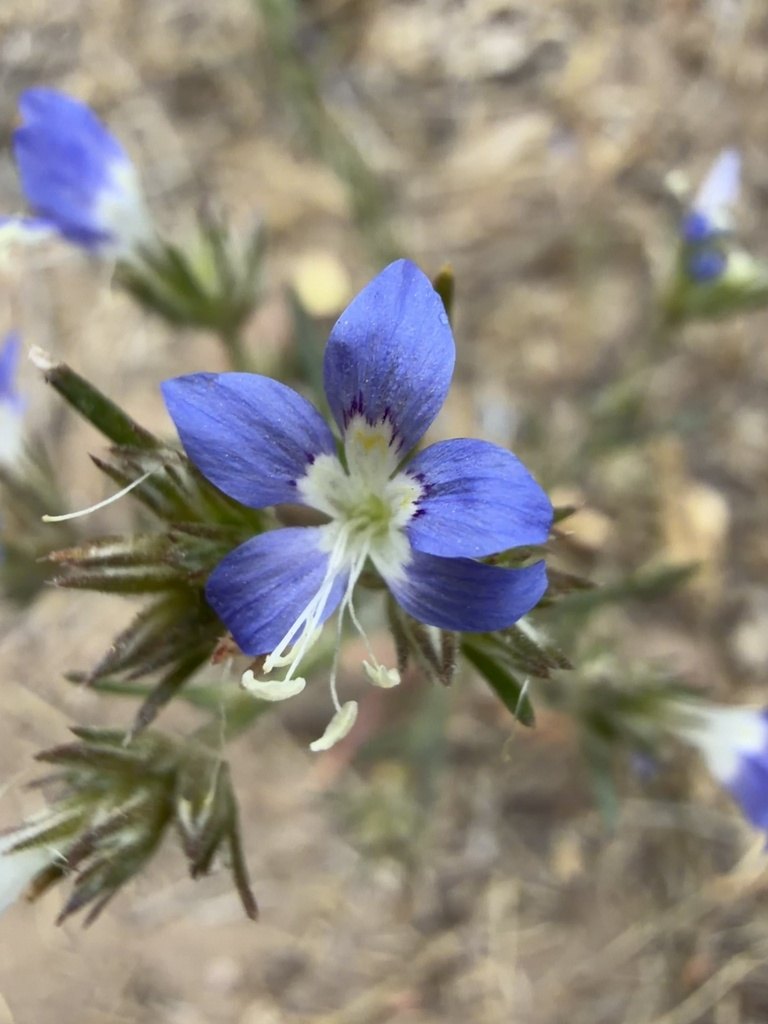
The flowers sit in small clusters at the branch tips, surrounded by narrow, pointed, leaf-like bracts with some cobwebby hairs. Each flower is funnel-shaped, about ½ inch long, with five spreading, pointed lobes of bright blue to blue-violet around a pale yellowish or whitish throat. The stamens stick out from the throat and are often slightly unequal. Flowering runs mainly from May to August.
Fruit & Look-alikes
The fruit is a small, three-chambered capsule with a few seeds. Giant woollystar (Eriastrum densifolium) is a much larger, woody-based perennial with dense woolly heads. Other annual woollystars are smaller-flowered or paler; sapphire woollystar is recognized by its relatively large, deep blue flowers with protruding stamens. Botanists use details of the stamens and flower size to separate it from close relatives.
Quick Facts
| Scientific Name | Eriastrum sapphirinum (Eastw.) H. Mason |
| Family | Polemoniaceae (phlox family) |
| Plant Type | Annual wildflower |
| Mature Height | 2–16 in |
| Mature Spread | 3–10 in |
| Growth Rate | Fast (completes its life cycle in one season) |
| Sun Exposure | Full sun |
| Water Needs | Very low; relies on winter rain |
| Soil Type | Sandy, gravelly or decomposed granite soils with excellent drainage |
| Soil pH | About 6.0–8.0 |
| Bloom Time | May–August |
| Flower Color | Deep sapphire blue to blue-violet with a pale throat |
| Fall Color | None; plants dry out after seeding |
| Fruit | Small three-chambered capsule |
| Deer Resistant | Generally not browsed; small and wiry |
| USDA Hardiness Zones | Annual; grows where zones 7–10 occur in California |
Native Range
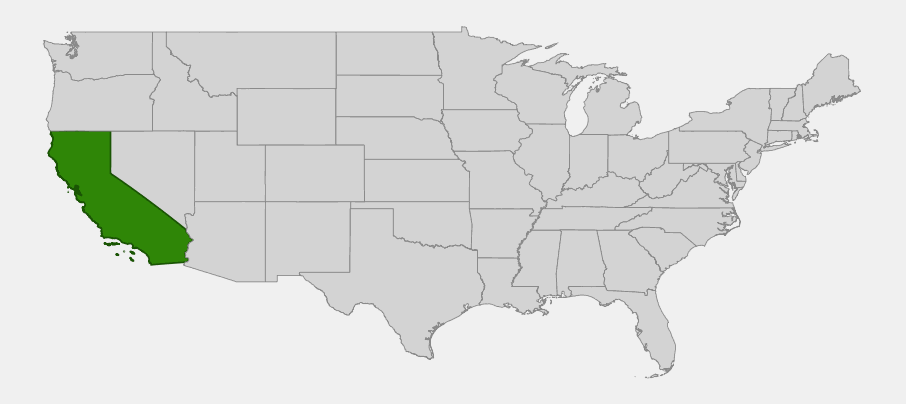
Sapphire woollystar is native to California and northern Baja California, Mexico. USDA PLANTS lists it only from California within the United States. It ranges through the foothills of the southern Sierra Nevada and the Tehachapi Mountains, the inner South Coast Ranges, the Transverse Ranges and the Peninsular Ranges, south through Los Angeles, Orange, Riverside and San Diego counties, and onto the margins of the western Mojave and Colorado deserts.
It grows in open, sunny places with loose, well-drained soil: sandy washes and benches, gravelly slopes, decomposed granite, burned or disturbed chaparral, coastal sage scrub, and openings in oak and pine woodland. It is found from low elevations near the coast to the higher mountains of southern California.
Like many California annuals, its numbers vary greatly from year to year depending on winter rainfall. After wet winters and especially after fires, it can be abundant in openings, while in dry years few plants appear.
📋 Regional plant lists featuring Sapphire Woollystar: California & Nevada
Growing & Care Guide
Sapphire woollystar is a charming addition to dry California wildflower plantings, valued for blooming late, after poppies and other spring annuals have faded. It is grown from seed, which is occasionally available from native seed companies. Use only commercially produced seed or seed from your own plants rather than collecting from wild populations.
Light
Grow it in full sun. In shade it becomes weak and flowers poorly.
Soil & Water
It needs very well-drained sandy, gravelly or decomposed granite soil and does best in poor, unamended ground. Winter rain is enough in most years. Extra summer watering is not needed and can cause seedlings to rot, especially in heavy soil.
Planting Tips
Scatter seed directly onto bare, loosened, sandy soil in fall or early winter so it germinates with the winter rains. Press it lightly into the surface rather than burying it. Sow it among other low annuals and perennials in a dry slope, sand garden or open area, where its blue flowers will add color in early summer.
Pruning & Maintenance
No pruning is needed. Leave plants in place after flowering until the seed capsules have released their seed, so it can reseed. Keep the area weeded and free of thick mulch, which prevents seedlings from establishing.
Propagation
It is grown only from seed. Collect capsules from garden plants once they dry in summer, store the seed dry, and sow it in fall. Seedlings resent transplanting, so direct seeding works best.
Landscape Uses
- Dry wildflower gardens: late-season blue color after spring annuals fade
- Sand and gravel gardens: thrives in lean, fast-draining soils where many plants fail
- Pollinator gardens: early summer nectar for native bees and bee flies
- Post-fire and slope restoration: a native annual of openings in chaparral and sage scrub
- Native seed mixes: pairs with other drought-adapted California annuals
Wildlife & Ecological Value
Sapphire woollystar flowers into summer, so it helps fill the gap in nectar when most California annuals have gone to seed.
For Pollinators
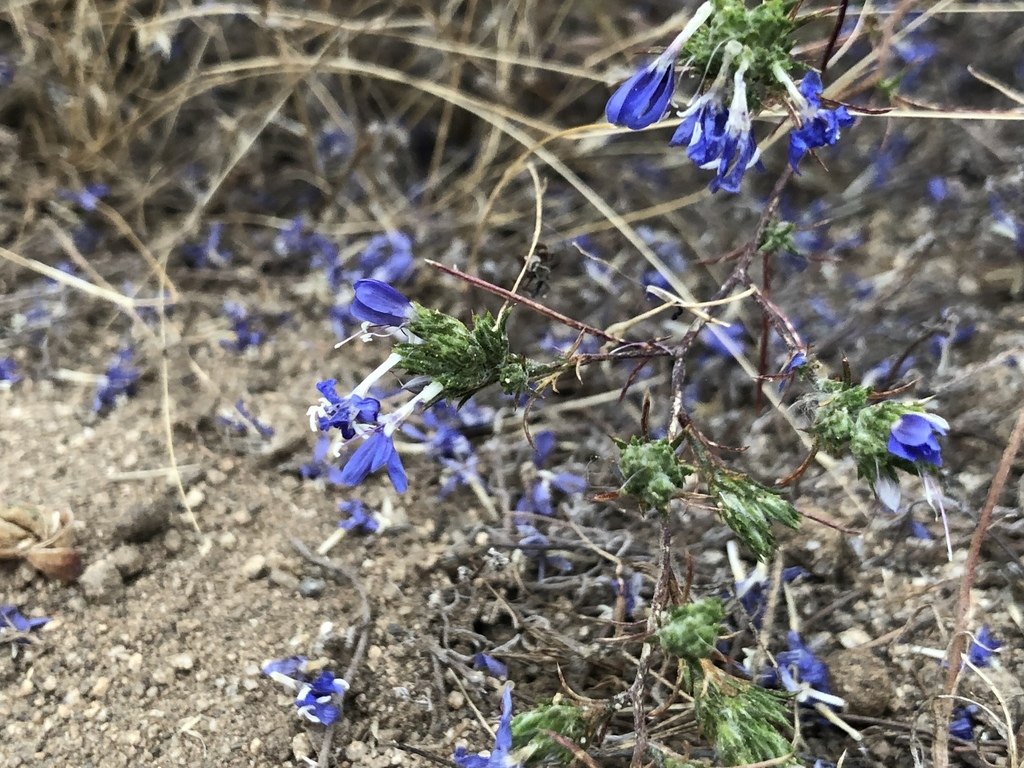
Its blue, funnel-shaped flowers are visited by small native bees, bee flies and other insects. Woollystars as a group are known to be important to solitary bees in dry California habitats.
For Birds
Seed-eating birds such as sparrows and finches may forage on the small seeds after the plants dry. It is not a major bird plant on its own.
For Mammals
The tiny seeds contribute to the seed bank gathered by kangaroo rats, pocket mice and harvester ants in sandy habitats. Its wiry stems offer little forage for browsing animals.
Ecosystem Role
As an annual of open, disturbed and burned ground, it is part of the community of short-lived wildflowers that colonize gaps in chaparral and scrub, helping cover bare soil and support pollinators until shrubs regrow.
Cultural & Historical Uses
Alice Eastwood, the pioneering curator of botany at the California Academy of Sciences, first described this plant in the early twentieth century under another genus. Herbert L. Mason later moved it to Eriastrum in his study of the woollystars.
The species name sapphirinum means “sapphire-like,” a fitting name for its small but strikingly blue flowers. Woollystars are a characteristic genus of the dry West, and California has more species than any other state.
For California wildflower enthusiasts, sapphire woollystar is a reward for those who keep looking for wildflowers into summer. It is often found along trails through sandy chaparral and burned areas when little else is in bloom.
Frequently Asked Questions
Is sapphire woollystar an annual?
Yes. It germinates with the winter rains, flowers from late spring into summer, sets seed and dies. It returns from seed in following years.
When does sapphire woollystar bloom?
Mainly from May to August, later than most California spring wildflowers, with timing depending on elevation and rainfall.
Where does sapphire woollystar grow?
In sandy and gravelly openings in chaparral, sage scrub and woodlands of central and southern California, from the southern Sierra Nevada foothills to San Diego County, and into northern Baja California.
How do I grow sapphire woollystar?
Scatter seed on bare, sandy, well-drained soil in full sun in fall or early winter, and let winter rains water it. Avoid summer water and thick mulch, and let plants reseed.
How is it different from giant woollystar?
Giant woollystar is a woody-based perennial up to 3 feet tall with dense woolly flower heads. Sapphire woollystar is a small, wiry annual with fewer, deeper blue flowers.

Looking for a nursery that carries Sapphire Woollystar?
Browse our native plant nursery directory: California

