
American Century Plant (Agave americana)
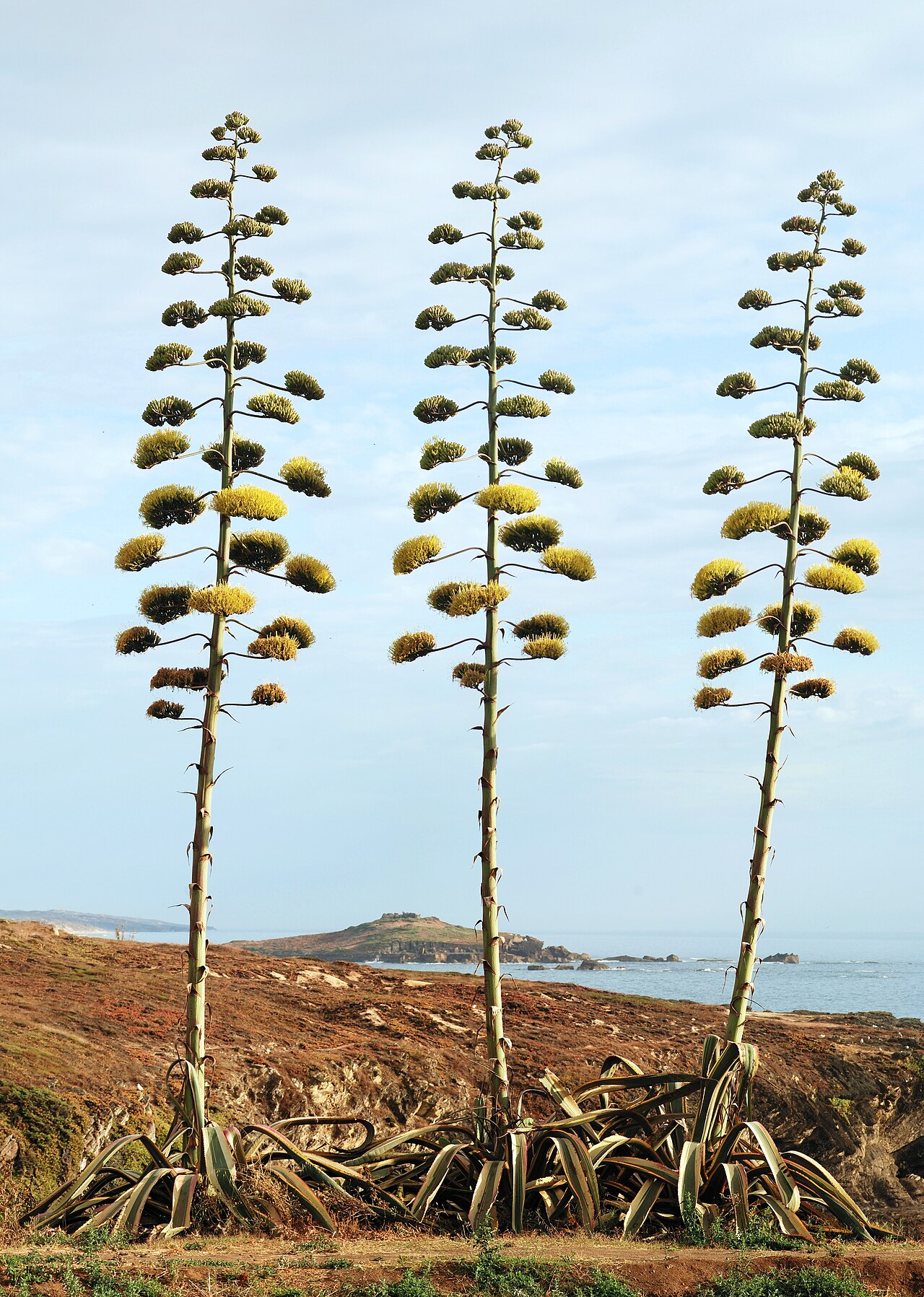
Agave americana, the American Century Plant, also called century plant, maguey or American aloe, is one of the most recognizable succulents in the world. It forms a huge, symmetrical rosette of thick blue-gray leaves, each edged with hooked teeth and tipped with a needle-sharp spine, and it can spread 6 to 10 feet across. After years of slow growth it sends up a single asparagus-like stalk that shoots 15 to 30 feet into the air in a few weeks and opens branched clusters of yellow flowers. Then the rosette dies, leaving a ring of offsets (“pups”) to carry on.
The name “century plant” exaggerates. In warm climates a rosette usually flowers when it is about 10 to 30 years old, and in pots or cooler gardens it can take longer. The species belongs to the asparagus family (Asparagaceae, formerly placed in its own family, Agavaceae). Its homeland is Mexico, and USDA PLANTS treats it as native in the lower 48 states. In the United States the wild-type plants of south Texas and the Rio Grande region are considered native, while the century plants seen along roadsides in California, Arizona, Florida and Louisiana are long-established garden escapes.
Few plants have been as useful to people. In Mexico the agaves, including this one, have been used for thousands of years for fiber, food, sweet sap and fermented drinks. Today it is a staple of xeriscapes, Mediterranean-style gardens and large containers, and young plants are grown as sun-loving houseplants. This guide covers identification, its native range, how to grow it safely (the spines and sap deserve respect), and its value to bats, hummingbirds and insects.
Identification
Century plant is the largest agave most Americans will ever see, and its sheer size is the first clue. Many other agaves are planted in Southwestern gardens, so check leaf color, the shape of the leaf margin, and the open, branched flower stalk.
Rosette & Leaves
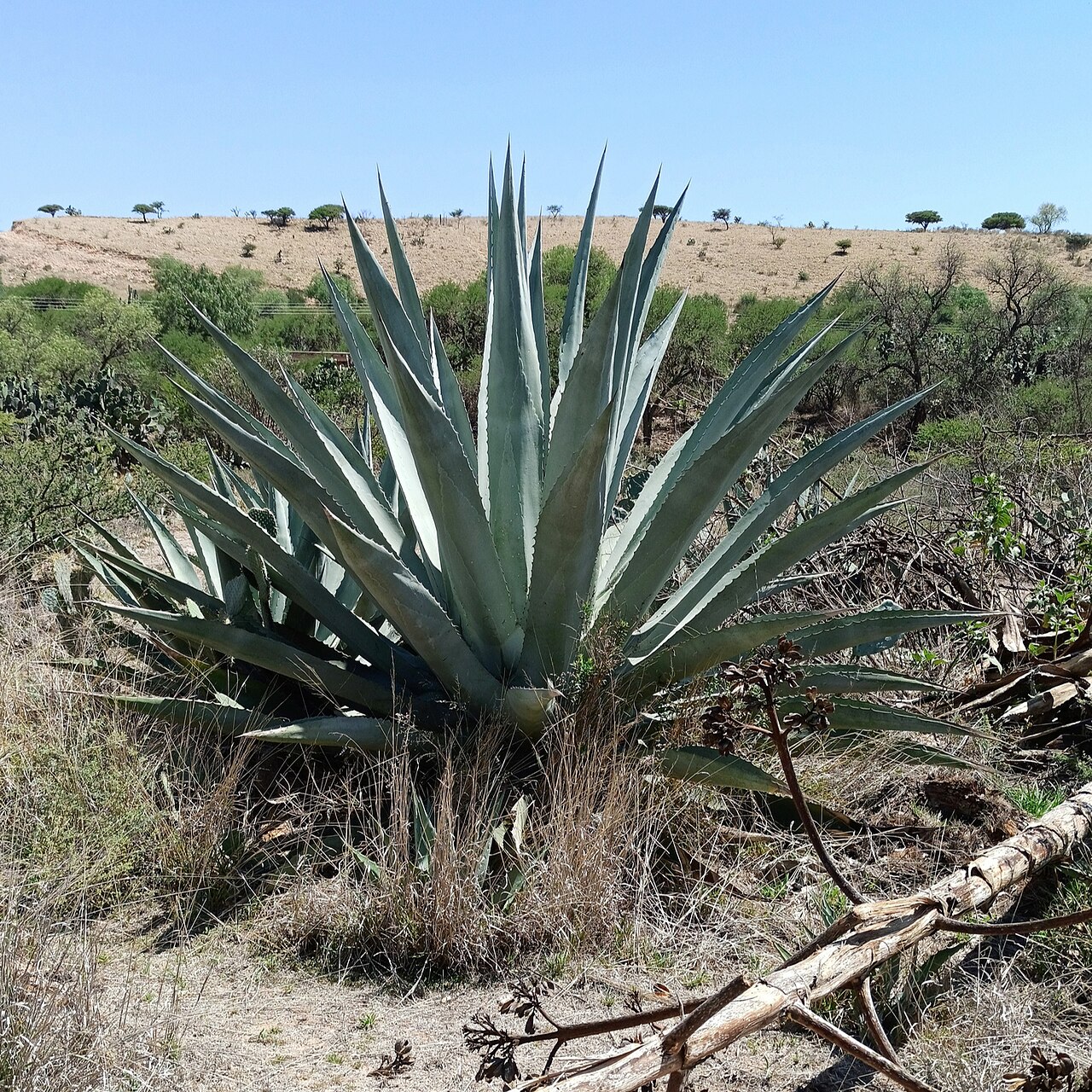
The plant is a stemless (or very short-stemmed) rosette usually 4 to 6 feet tall and 6 to 10 feet wide. The 20 to 40 or more leaves are thick, fibrous and gray-green to powdery blue-gray, typically 3 to 5 feet long and 6 to 10 inches wide. In the wild form the leaves often arch or fold back toward the tips. The margins carry hooked brown teeth spaced along the edge, and each leaf ends in a stiff dark spine 1 to 2 inches long. As young leaves unfold from the center of the rosette, the teeth of neighboring leaves press “ghost” imprints (bud prints) into the waxy surface, a feature shared by many agaves.
Garden forms are often variegated. ‘Marginata’ has yellow or cream leaf edges, and ‘Mediopicta’ has a broad pale stripe down the center of each leaf. These cultivars are usually smaller and less cold-hardy than the plain blue-gray form.
Flower Stalk
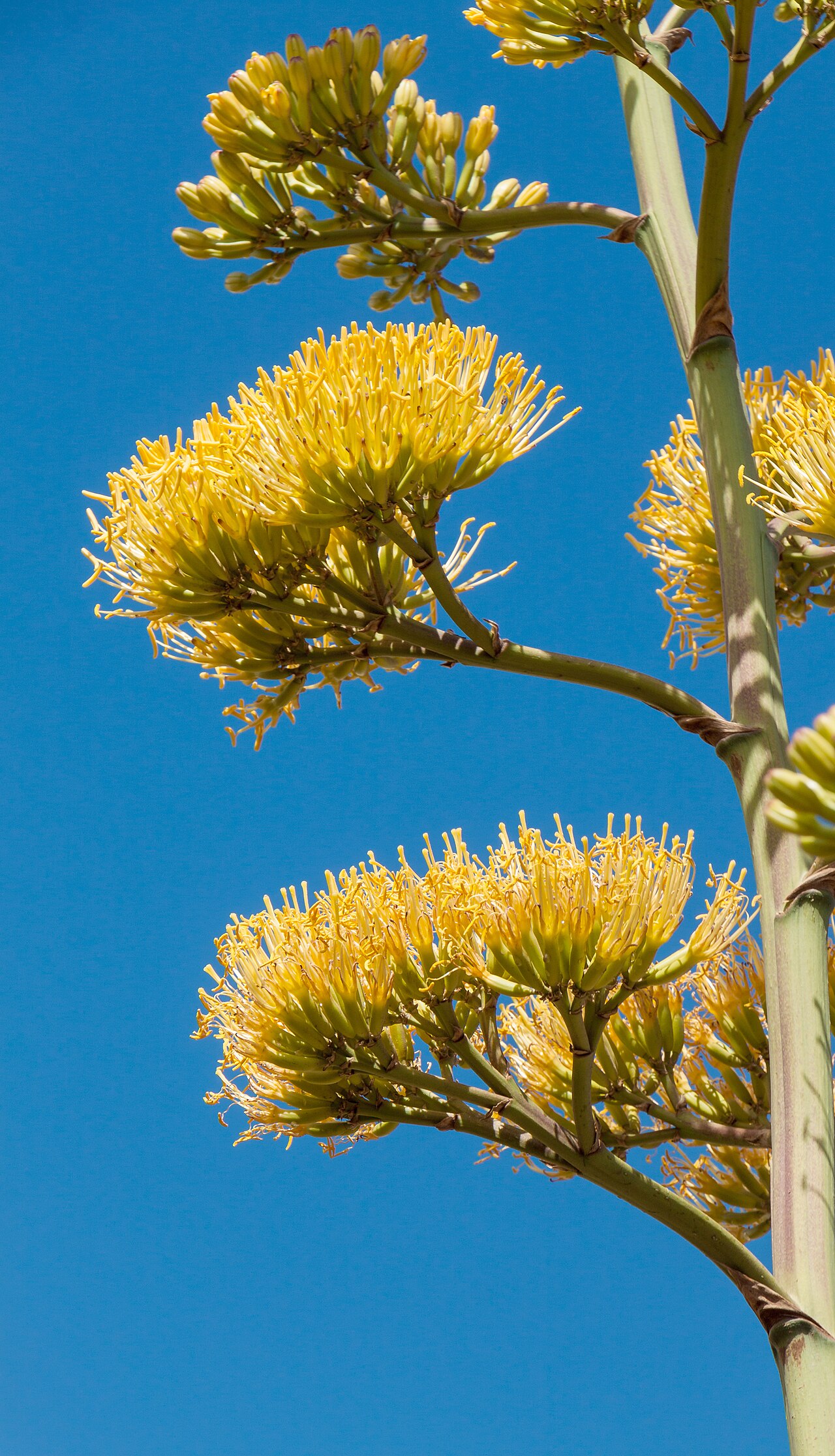
When a rosette is ready to bloom, the central leaves shorten and a thick, fleshy stalk emerges, growing several inches a day at first. It reaches roughly 15 to 30 feet tall (the Lady Bird Johnson Wildflower Center gives 12 to 25 feet or more). Along its upper half the stalk carries 15 to 35 horizontal side branches, each ending in a dense, flat-topped cluster of flowers. This open, candelabra-like inflorescence (a panicle) separates century plant from agaves with a narrow, unbranched spike, such as Lechuguilla.
Flowers
The flowers are upright, tubular and greenish yellow to bright yellow, about 3 to 4 inches long, with six short tepals and six long stamens that stick out well beyond them. They are full of nectar. In Texas the plant usually blooms in early to mid summer, roughly June and July, and the whole show lasts several weeks before the stalk begins to dry.
Fruit & Offsets
Pollinated flowers become oblong, three-parted capsules about 2 inches long that split to release flat black seeds. In cultivated plants seed set is often poor, and some stalks produce small plantlets (bulbils) instead. Most reproduction in gardens comes from the offsets that sprout from underground runners around the base of the mother plant, often for years before it flowers. After flowering the mother rosette slowly withers over several months.
Quick Facts
| Scientific Name | Agave americana L. (Texas native form often treated as subsp. protamericana Gentry) |
| Family | Asparagaceae (asparagus family; formerly Agavaceae) |
| Plant Type | Large monocarpic succulent forming an evergreen rosette |
| Mature Height | 4–6 ft (rosette); flower stalk 15–30 ft |
| Mature Spread | 6–10 ft, wider as offsets fill in |
| Growth Rate | Slow to moderate |
| Sun Exposure | Full sun (tolerates light afternoon shade) |
| Water Needs | Low; very drought tolerant once established |
| Soil Type | Sandy, gravelly, rocky or loamy soil with excellent drainage |
| Soil pH | About 6.0–8.5 (tolerates limestone soils) |
| Bloom Time | Once in its life, usually June–July, after about 10–30 years |
| Flower Color | Greenish yellow to bright yellow |
| Fall Color | None; evergreen blue-gray foliage |
| Fruit | Oblong 3-parted capsule with flat black seeds |
| Deer Resistant | Yes; the spines and bitter, irritating sap deter browsers |
| USDA Hardiness Zones | 8–11 (variegated forms about 9–11) |
Native Range
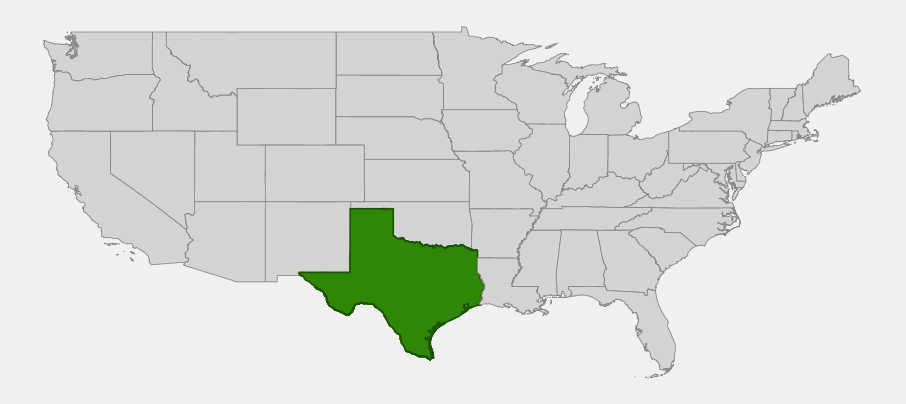
Century plant’s main native range is in Mexico, especially the dry uplands and the northeastern states of Coahuila, Nuevo León and Tamaulipas. USDA PLANTS lists the species as native to the lower 48 states, and iNaturalist’s Texas checklist treats it as native there. The wild-type plants of south Texas, near the Rio Grande, are generally referred to subsp. protamericana, which the agave specialist Howard Scott Gentry considered the closest living form to the ancestor of the cultivated century plant.
Outside Texas, the Lady Bird Johnson Wildflower Center also records century plant from Arizona, California, Florida and Louisiana. Those populations are naturalized escapes from cultivation, not native stands: state checklists for California and Arizona list it as introduced, and in Florida and the Gulf Coast it persists around old homesites, dunes and roadsides where it was planted. For that reason this page maps only Texas as native range.
People have carried century plant far beyond North America. It is naturalized around the Mediterranean, in the Canary Islands, southern Africa, Australia and parts of Asia, and in some of those places it is treated as an invasive plant. It is also cultivated and occasionally escaped in Puerto Rico, Hawaii and the Virgin Islands, where USDA classes it as introduced.
📋 Regional plant lists featuring American Century Plant: South & West Texas
Growing & Care Guide
Century plant is about as low-maintenance as a plant can be, as long as you give it sun, sharp drainage and plenty of room. Most problems come from planting it too close to a path, overwatering it, or underestimating how big it gets. Wear thick gloves, long sleeves and eye protection whenever you work near it.
Light
Plant it in full sun. It tolerates light afternoon shade in the hottest deserts, but in too much shade the rosette stretches, loses its tight shape and is more prone to rot. Indoors, young plants need the sunniest window you have, ideally a south- or west-facing one, or a strong grow light. Move potted plants outdoors for summer if you can, increasing sun exposure gradually to avoid scorching.
Soil & Water
Drainage matters more than fertility. Sandy, gravelly, rocky or loamy soils are all fine, and it tolerates alkaline, limestone-based soils. In heavy clay, plant on a mound or berm of gravelly soil so water never pools around the base. Water new plantings every week or two through their first summer, then taper off. Established plants in Texas, the Southwest and coastal California generally need no irrigation beyond an occasional deep soak in extreme drought. In pots, use a cactus and succulent mix with extra grit, water thoroughly only when the mix is completely dry, and water very sparingly in winter. Root and crown rot from wet soil is the most common way to kill it.
Planting Tips
Allow at least 8 to 10 feet of space, and keep it at least 5 feet from sidewalks, driveways, pool decks and play areas, because the leaf tips can injure people and pets. Plant at the same depth it grew in the pot; burying the base invites rot. Spring and early summer are the best planting times, so roots establish before winter. In zone 8, choose the plain blue-gray form, plant in the warmest, driest spot, and expect damage below about 10 to 15°F, especially when cold is combined with wet soil. In colder regions grow it in a large container and bring it into a bright garage, greenhouse or sunny room for winter.
Pruning & Maintenance
Remove only dead or damaged lower leaves, cutting close to the trunk with a pruning saw or long-handled loppers. Many gardeners also snip off the terminal spines of leaves near paths with heavy shears; it does not harm the plant. Offsets appear around the base every year, and removing them keeps the clump tidy. When a rosette flowers, enjoy the show, then cut down the stalk and remove the dying rosette once it has collapsed, leaving the best pup to replace it. Watch for the agave snout weevil, whose larvae tunnel into the base and can cause a sudden collapse; remove infested plants promptly.
Propagation
The easiest method is to dig and replant offsets. Cut a pup with some root from the runner, let the cut surface dry for a few days, and plant it in dry, gritty soil, watering lightly after a week. Bulbils from the flower stalk root just as easily. Fresh seed from wild-type plants germinates readily in warm, well-drained mix, but seedlings take many years to reach a large size, and garden plants often hybridize.
Landscape Uses
- Xeriscapes and dry gardens: a dramatic focal point that needs almost no water once established
- Large containers: young plants and variegated forms in big pots on sunny patios, moved under cover in cold areas
- Houseplant: small plants in a sunny window, repotted every few years until they outgrow the space
- Barrier planting: a living fence along property lines, well away from walkways
- Coastal and slope plantings: tolerant of salt spray, wind and rocky, eroding soils
Wildlife & Ecological Value
A century plant in bloom is one of the busiest feeding stations in a dry landscape. For a few weeks the stalk offers a huge supply of nectar and pollen high above the ground.
For Pollinators
In Mexico, agaves with branched, cupped flower clusters like this one are a classic example of bat pollination. Nectar-feeding bats visit the flowers at night, and the plants and bats have shaped each other’s range and seasons. By day, bees, wasps, beetles and other insects crowd the flowers, and in Texas and Southwest gardens hummingbirds and orioles visit them too.
For Birds
Hummingbirds, orioles, woodpeckers, finches and other birds sip nectar or catch the insects drawn to the flowers. After flowering the dead stalk is used as a perch, and woodpeckers sometimes excavate cavities in old stalks. The dense rosettes shelter lizards and ground-feeding birds.
For Mammals
The tough, spiny leaves are seldom eaten by deer, rabbits or livestock, which is one reason agaves survive in heavily browsed rangeland. Packrats and other rodents may shelter beneath the rosettes and sometimes gnaw on fallen flower stalks.
Ecosystem Role
Agaves are larval hosts for several native insects, including giant skippers (Agathymus species) whose caterpillars live inside the thick leaves, and the agave snout weevil. The plant stores water in its leaves and uses CAM photosynthesis, opening its pores at night to save water, so it stays green through drought and helps hold soil on rocky slopes.
Cultural & Historical Uses
Linnaeus named Agave americana in 1753. Agave comes from the Greek agauos, meaning noble or admirable, a fitting name for a plant that can raise a 25-foot flower stalk. Spanish explorers took it to Europe in the 1500s, and it quickly spread around the Mediterranean, where it is now so common on coastal cliffs that many visitors assume it is native.
In Mexico, the people of the central highlands have used magueys, including A. americana, for thousands of years. The roasted heart and leaf bases were eaten, the leaf fibers (pita) were made into rope, cloth, sandals and mats, and the spines were used as needles. When the developing flower stalk is cut out, the hollow heart fills with sweet sap called aguamiel (“honey water”), which can be drunk fresh, boiled into syrup, or fermented into pulque, the ancient drink of the Aztecs. Commercial agave syrup and mezcal come mostly from other agave species, and tequila comes only from blue agave (Agave tequilana).
Safety note: handle century plant with care. The leaf tips can puncture skin and eyes, and the fresh sap contains calcium oxalate crystals and saponins that cause burning, itching and blistering skin rashes in many people, sometimes severe. Wear gloves, long sleeves and eye protection when pruning, and wash exposed skin promptly. Do not let children or pets chew the leaves, which can irritate the mouth and stomach. Never eat any part of the plant raw.
Frequently Asked Questions
Does century plant really bloom once every 100 years?
No. Each rosette blooms only once, but usually after about 10 to 30 years, sooner in hot, sunny climates and later in pots or cooler gardens. After flowering the rosette dies, but the offsets around its base live on and will bloom in their turn.
Is Agave americana native to the United States?
USDA PLANTS lists it as native to the lower 48 states, and its wild-type form occurs in south Texas near the Rio Grande. Most of its native range is in Mexico. The century plants seen along roadsides in California, Arizona, Florida and Louisiana are escapes from cultivation.
Can I grow century plant indoors?
Yes, while it is young. Give it the sunniest window available, a gritty cactus mix in a pot with drainage holes, and water only when the soil is fully dry. It grows slowly in a pot, but eventually it outgrows indoor spaces and is best moved outdoors in a warm climate.
Is century plant poisonous?
The sap is a skin irritant and the spines are dangerous, so it is not a good choice next to play areas. Chewing the leaves can irritate the mouth and stomach of pets and people. Wear gloves and eye protection when handling it.
Is century plant an aloe?
No. Despite the old name “American aloe,” agaves are not closely related to aloes. Aloes come from Africa and Arabia and bloom year after year, while century plant comes from Mexico and Texas, is far larger, and dies after flowering once.

Looking for a nursery that carries American Century Plant?
Browse our native plant nursery directory: Texas

